
Opinion & Analysis
The Wedge Guy: Ball striking vs. Shot making


We often hear these two terms used to describe a given golfer’s particular skills, and sometimes they are used interchangeably. Today, I would like to discuss the difference and then pose a question to all of you to weigh in on, if you would please.
To get this conversation started, here’s how I would define each and explain the difference:
“Ball striking” refers to a golfer’s ability to make extremely solid contact with the ball shot after shot, club to club, with remarkable consistency. It is the core essence of the game, actually, because until you get reasonably consistent in making solid contact in the center of the face of the club, you really don’t know
what the ball is going to do.
“Shot making” on the other hand, is the golfer’s ability to make the ball do what he or she wants. Shaping shots to move the ball around – fades and draws, high and low, take a little off of it, amp it up a bit, etc. – these are the skills that define the highly accomplished player.
In discussions of “ball striking”, the same names come up time and again for the “legend” tour professionals–Hogan, Nelson, Tommy Bolt, Lee Trevino are maybe the most noted. One of the more common is also the legendary Moe Norman. It was said by those who had the opportunity to see him that he almost never mishit a shot, and every one took off on the same trajectory and flight. It was said that Mr. Norman never achieved financial fame on the golf course, and I have read it was because of his nerves and quirky nature. Nevertheless, he is the subject of countless legends.
In the modern game, I think nearly all the top professionals are great ball strikers, and maybe the LPGA Tour even takes that consistently solid contact to the next level. They simply have to, as they don’t have the physical strength to play their courses with too many unsolid hits.
Moving on to “shot making”, again we see many of the same names from the history books, but I would put Tiger Woods on a completely different level from most of his peers. For over two decades, he has shown us some remarkable imagination and execution of shots most wouldn’t even have the ability to see.
It was said about Ben Hogan that he was one of the very few that combined both skills. Ben Hogan was noted for this insightful piece of advice about how to approach a pin location:
”You work the ball toward the flag. If it is on the right side of the green, you hit a fade, and hit a draw to any left flag location. Pins in the front require a high shot with spin, and those toward the back of the green require a lower shot with less spin. You always work the ball flight from the center of the green toward the edges.”
Now that’s serious insight into how the game can be played…at least if you have complete control over the ball flight. Or at least want to. And that brings me to my question today; I would like for as many of you as possible to chime with your answer to this:
Do you ever try to hit various shots–draws, fades, high, low, “carve it”, etc.– and how often? Only when necessary, frequently, often. Please also indicate your handicap with your answer, OK?
Let’s have some fun with this.









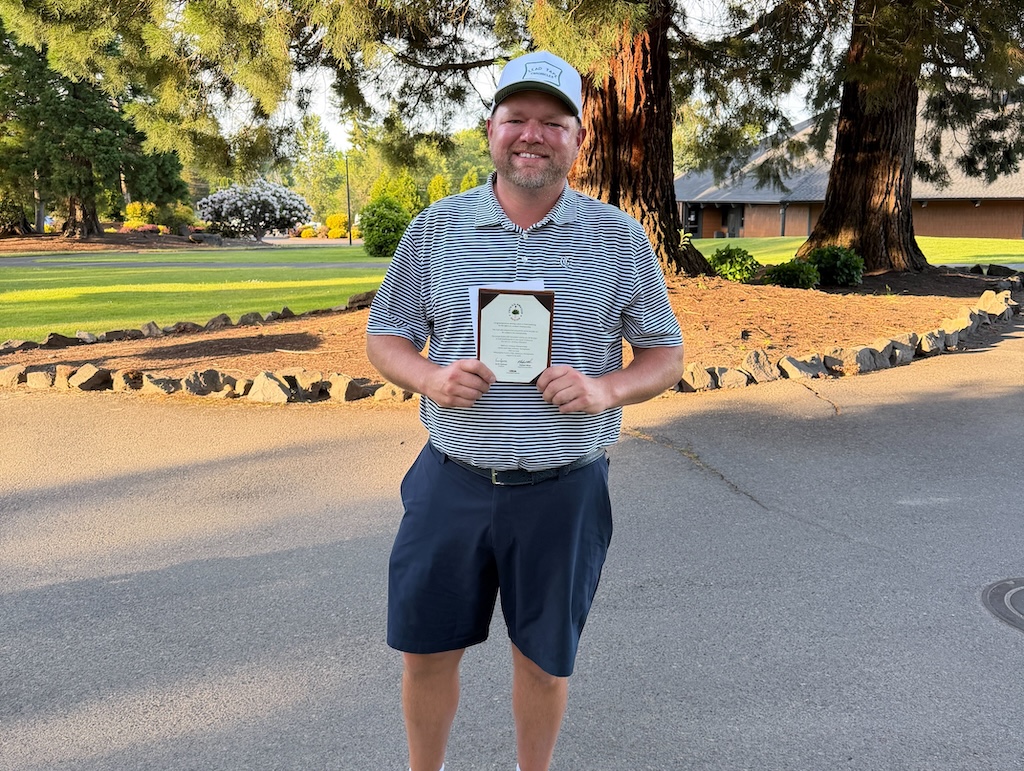
This past Monday, I played in the U.S. Amateur local qualifier at Rock Creek Country Club in Portland, Oregon. A full tee sheet from 7:30 a.m. to 1:55 p.m., the top 11 scores would make it to the U.S. Amateur final qualifying.
I teed off at 10:48 a.m.. With the 7:30 am tee time, you can get a feel for the leaders’ pace, and they were off and running on the challenging setup at Rock Creek.
View this post on Instagram
Getting to the highlight of the round on the par five 17th, a drive up the left side and 212 yards left to the front hole location. I took out a 5-iron with plans of middle of the green. The ball ended up 8 feet left of the hole, pin high. A slight downhill putt dropped in for an eagle 3 on the 17th. With the cut line looking to be anywhere from -2 to even par. This was the boost I had been waiting for all day.
With making par from the trees on 18, it was time to wait for a potential playoff with a posted score of one under par 71.
Three hours later, it was playoff time. 8 players for 6 spots. I made par on the playoff hole, which was good enough to advance to the U.S. Amateur final qualifying in July. USGA qualifiers sure deliver on all of the emotions in golf!
Club Junkie
Building my 2026 gamer WITB: Ranking the contenders and new putter projects – Club Junkie Podcast

The annual What’s In The Bag build is underway, and on this episode of Club Junkie, Brian breaks down the clubs currently leading the race for a spot in his 2026 gamer setup. From drivers and fairway woods to irons, wedges, and shafts, he ranks the equipment that’s performing best and explains what’s separating the front runners from the rest of the field.
Brian also heads into the workshop to discuss several putter projects currently on the bench. From head options and shaft choices to build ideas and testing plans, he shares what he’s working on and which putters could become serious contenders for the bag this season.
If you’re a gear junkie who loves equipment testing, club building, and the never-ending pursuit of the perfect setup, this episode is for you.
Follow Club Junkie:
Instagram: @clubjunkiepod
TikTok: @clubjunkiepod
Threads: @clubjunkiepod
X: @ClubJunkiePod
Club Junkie
Tour Edge Exotics mini driver review + TaylorMade Spider ZT Max first look – Club Junkie

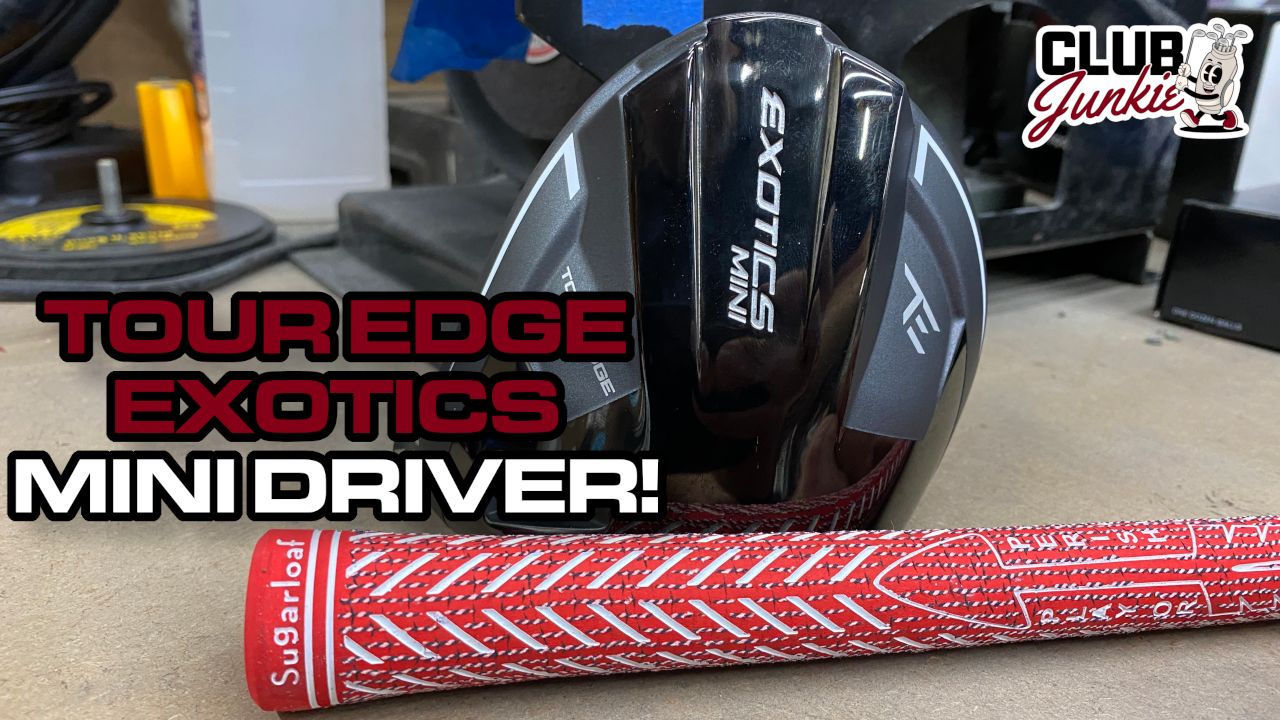
On this episode of Club Junkie, I put the new Tour Edge Exotics Mini Driver to the test and break down the performance, forgiveness, distance, and where it fits compared to a traditional driver or strong fairway wood. If you have been curious about adding a mini driver to the bag, this one is worth a look.
I also dive into the new TaylorMade Spider ZT Max putter that was recently spotted and discuss the growing zero torque putter trend. Plus, there is a closer look at the new Project X Titan Yellow shaft showing up on the PGA Tour and what makes it different from other profiles currently out there.

Justin Rose WITB 2026 (April): Full WITB breakdown with new McLaren irons

What’s the story behind Webb Simpson’s custom-stamped irons?

Memorial Tournament Tour Report: Rory McIlroy, Cameron Young switch up drivers, and more

Cadillac Championship Tour Report: Spieth’s sizable changes, McLaren Golf launches, and more

Russell Henley’s winning WITB: 2026 Charles Schwab Challenge

Kristoffer Reitan’s winning WITB: 2026 Truist Championship

Aaron Rai’s winning WITB: 2026 PGA Championship

Cameron Young’s winning WITB: 2026 Cadillac Championship

J.T. Poston’s winning WITB: 2026 Memorial Tournament

Best irons 2026: Best irons overall, most forgiving irons, and more


Bud Cauley WITB 2026 (June)
Bud Cauley had >14 clubs in his bag when photographed prior to the Memorial Tournament. Driver: Titleist GTS2 (8 degrees) Shaft: Fujikura...


Hannah Green WITB 2026 (June)
Driver: Titleist GTS3 (10 degrees, D4 SureFit setting) Shaft: Mitsubishi Chemical Diamana RB 53 S 3-wood: Titleist GT3 (15 degrees,...


Asterisk Talley WITB 2026 (June)
Driver: TaylorMade Qi4D (9 degrees) Shaft: Fujikura Ventus Blue 6 S 3-wood: TaylorMade Qi4D (16.5 degrees) Shaft: Fujikura Ventus Blue...


Brianna Do WITB 2026 (June)
Driver: Callaway Quantum Triple Diamond (9 degrees) Shaft: KBS PGW 3-wood: Callaway Elyte Titanium (15 degrees) Shaft: KBS PGW 5-wood:...
-
 Equipment5 days ago
Memorial Tournament Tour Report: Rory McIlroy, Cameron Young switch up drivers, and more
-
 News1 week ago
Russell Henley’s winning WITB: 2026 Charles Schwab Challenge
-
 Whats in the Bag3 days ago
J.T. Poston’s winning WITB: 2026 Memorial Tournament
-
 Equipment2 days ago
Best irons 2026: Best irons overall, most forgiving irons, and more
-

 Equipment1 week ago
Details on Jason Day’s latest prototype Avoda iron setup
-
 Equipment3 weeks ago
CJ Cup Byron Nelson Tour Report: Koepka and Kim’s newest putters finally get hot
-

 News2 weeks ago
Charles Schwab Challenge Tour Report: MacIntyre, Åberg and Spaun all switch putters, TaylorMade launches new Spider
-
 Equipment2 weeks ago
Details on J.J. Spaun’s surprise putter switch


ChipNRun
Apr 7, 2020 at 8:48 am
I’m now about 20 HDCP (as per initial report under new system).
For a long time I tried to hit “whatever shot shape was needed,” but a few years back I settled into the draw as my stock shot. I had problems with a recurring overswing + Over The Top move, and the in-to-out of the draw helped prevent this.
For tee shots, I vary tee height (for the day) based upon turf conditions. It it’s drier, I’ll tee it down so I have a flatter descent angle and can pick up more rollout. If it’s wet, I tee it higher to maximize carry.
That said, on tee shots I can produce a decent fade when needed. I mean, the tee surface is flat and the ball is on a wooden peg which you can adjust the height of. Anyone who understands the basics of ball flight should be able to hit a basic fade or draw under these conditions.
And, if I’m in the right first cut (typical miss for draw), I can hit a low slap slice to get the ball up toward the green. (A skill I picked up playing blades in the previous century…)
For partial wedges, I use a square or ever-so-slightly open set up. With a midspin ball (i.e. Callaway Superhot, TopFlite Gamer Tour), I can generally drop a partial wedge on the green with maybe three yards of rollout.
For really shaggy shots around the green, I get better control with SW than with a LW.
Roejye
Mar 27, 2020 at 12:27 am
I don’t have an official handicap as I didn’t really keep score, and when I did there were quite a few mulligans thrown in. Going by the calculation of score over par, I was about a 13 with my scoring so I’ll say minimum 18. I play a course where there isn’t much reason to shape my shots, and my ability level isn’t there yet, so I focus on ball striking. Closest thing to shot shaping is using a more lofted club to get over a bunker or mound to a tight pin.
Jim
Mar 25, 2020 at 11:36 am
Current index 8.8. I consider myself a pretty good ballstriker but not much of a shot maker. My natural ball flight is a draw and I can hook and slice it at will but I find a fade very difficult to hit. High and low shots are a bit easier to hit. Lucky for me, I’m a lefty and most of the courses I play (local green fee courses) have far more dogleg rights than dogleg lefts to accommodate slicing right handlers. When I do have to make a “shot” and pull it off, it’s very satisfying—and surprising!
Tim M.
Mar 24, 2020 at 2:06 pm
My index is 3.3. As I’ve gotten older, and the balls spin less than the old balata balls I grew up with, I’ve been more confident in hitting draws/fades. My stock shot is a very slight fade…and I agree with the idea that many times, it’s better to hit the stock shot to middle of green rather than trying hit something I’m not as comfortable with. I pay a lot of attention to my warmup, and how the ball is moving. Some days, I can see that my short irons are being drawn a bit…so I work with that. I think it’s fun to hit shots with various curves, and I always think about on the course. I just try to make good decisions about when to try a shot, and when to “settle” for safe, middle of green shot.
Mark M
Mar 24, 2020 at 1:20 pm
One of the main reasons I love golf is exactly what you’re talking about Terry … SHOTMAKING!
I’m definitely in your OFTEN + category – what’s more than often? When I’m on the course, I look at all the available ways to get the ball to go where I want. Sometimes it’s a stock shot but most of the time I’m trying to create a shot that fits the situation as I see it. Sometimes that can be up to 4 or 5 different shot options. Friends have told me that I might lower my scores more if I limited my options to one or two main shots, but what’s the fun in that?!
2waymiss
Mar 24, 2020 at 12:14 pm
Handicap- Hacker! If the toe was the center of the face then I’d be the best ball striker on the planet. I’d love to be able to execute 1 of each shape in the 9 ball flights w/ predictable control. Heck, I’d settle just for a draw (no gear effect) w/ my driver! Lol
Dill Pickelson
Mar 27, 2020 at 11:59 pm
I tweeted Adam Young and asked him how to not toe it and he had me put the ball inside of the rubber tee and hit both. The body adjusted and I could sense the difference. I immediately went from a 6 to a 2 and have been there for about 3 years now. Crazy simple solution for a life long problem.
Brian Terry
Mar 24, 2020 at 12:05 pm
I play to an 8 and only work the ball when I need to. However, I PRACTICE those shots regularly so that I have the confidence to pull them off when needed. I use trajectory manipulation far more than curvature. I like to work the trajectory and spin to control the rollout for front and back pins depending on the firmness of the greens. I usually only use draws and fades if a pin is tucked and I can depend on the release of the shot to get it back to the pin after landing. I plan the ball to land 10-15′ from the pin and roll to it as opposed to landing right on the pin. Nothing is worse than hitting a shot to curve the ball perfectly to the pin, only to have it hop off the edge of the green leaving me short-sided.
BT
William Terry
Mar 24, 2020 at 10:25 am
I’ve gone multiple routes over this in 20 years of playing golf fairly seriously… I’ve ranged from a 12-4 over that time, and currently sit at a 5.5. I’m now 38 and have less time to play and practice… I’ve also decided this season to spend more time on chipping and putting and less time on the range hitting full shots.
Tiger talks about 9 “windows” High, Low, Middle, Straight, Fade, Draw… and can hit all 9 of them. I can hit about 5 different shots with varying degrees of success… High, Low, Draw, Fade, “straight”. I default to a fade and have tried to eliminate a left miss from my game… This allows me to aim left and worry less about hazards.
I can hit a draw, but it lacks control… I’ve stopped “going for it” and forcing a draw and it has helped eliminate mistakes from my game… I will rarely flight the ball on a regular shot into a green. I will use trajectory to get around obstacles, including a higher shot to get over a bunker into a tight pin. That’s about as close to shot making as I get right now.
If I ever succeed in getting my short game to “good”, I will probably spend more time working on a dependable draw, just to add a shot to my bag. It would be nice to have confidence in different shots, but right now I play what I know… Honestly, I don’t think this will shave a significant amount of strokes off my game (other than working on shot making will improve my ball striking). I can’t see how mastering a “second” type of shot would shave more than a half stroke off my cap.
Brian
Mar 24, 2020 at 10:23 am
I play to a 6 and my stock shot – and really only shot – is a draw; I can’t hit a [decent] fade to save my life. Trust me, I’ve tried, but it ends poorly. Luckily, I can repeat a pretty similar [draw] ball flight shot after shot, so what I’ll change up is the height based on the conditions: windy – keep it low, wet – keep it high, etc.
Bart
Mar 24, 2020 at 9:48 am
I try to put a bit of “english” on every single shot outside of 100 yards. It makes the game more interesting to me and also makes the winds influence more predictable. Also if you know the slope of the green it gives you a better chance of getting it closer since you have an idea of the roll after it lands. 9.9 out of 10 shots will have some sort of bend so might as well have control over it.
Wasnt it Hogan that said “straight hitters NEVER hit it straight”?