
Opinion & Analysis
Behind the numbers: A road map for an 18 handicap to get down to a 9


I wrote an article four years ago for GolfWRX called “The statistical differences between a scratch golfer and a PGA Tour player.” This article became one of the most-viewed features for the site, totaling over 420,000 views to date. I recently consulted with Ben Alberstadt, GolfWRX’s Editor-in-Chief, about pulling together some numbers for handicap levels to which more of us can relate.
You might ask: How do I know the differences between these handicap levels? Well, it is my full-time job to know about the numbers behind the game of golf—at all levels. I have been a student of the game from a statistical standpoint for 30-plus years. I created the strokes gained analysis website, ShotByShot.com, used by thousands of amateur golfers to improve by isolating the strengths and weaknesses of their games. Additionally, I work with PGA Tour players to extract clear answers from the Tour’s overwhelming 650-plus ShotLink stats.
I’ve learned that there is no such thing as an “average” game, no matter the handicap level. We’re all snowflakes and find our own unique way to shoot our number. With that said, ShotByShot.com’s 384,000-plus round database enables us to create a composite of the average golfer at each level. One of the beauties is that our data is robust and smooth across all five major facets so that any golfer’s strengths and weaknesses—and we all have them—stand out clearly by comparison.
The Data We Used
- 18 Handicap: I averaged the 3,551 rounds in our database that match the 18 Differential from Slope Adjusted Course Rating. In other words, the Best eight of 20 rounds when Mr. 18 actually played to an 18 handicap.
- 9 Handicap: Similarly, his Best eight out of 20 using the 5,000 applicable rounds in our database.
As you might guess, the difference between these two in scores is nine strokes. So, if your snowflake matches or is close to Mr. 18’s, simply drop the shots below by facet and voila you are there.
The chart below shows the distribution of the strokes by facet that Mr. 18 needs to save to join Mr. 9.

Driving
Skill in this critical facet of the game is measured by distance and accuracy. But let’s take distance out of the equation by assuming we’re all playing the correct tees for our games and focus on accuracy.
As the chart above indicates, we are looking for 2.5 strokes on, what for a typical golf course, is 14 driving holes. The chart below shows results in the average round for Mr. 18 and Mr. 9. Note that both make at least one Driving Error* per round. Weed out that error and you can be more than halfway home, especially if it is a Penalty Error** that tends to carry a cost of between 1.3 strokes (penalty with drop) and two-plus strokes (stroke and distance).
*No Shot Driving Errors = Balls hit out of play that cannot return to normal play with an advancement shot.
**Penalty Error = a. Stroke with drop, or b. Stroke and distance.

This may be easier said than done, but sometimes the fix is as simple as target and club selection from the tee. Sure, it works to aim away from trouble but try choosing a club that cannot reach the trouble. Most holes that feature trouble off the tee will also be stroke holes, even for Mr. 9. Avoid the error and take double-bogey out of play. This is also a valuable strategy for match play situations.
Next, strive to hit at least one more fairway. The approach accuracy charts below show how many more greens are hit from the fairway vs. rough.
Approach Shots
Here we need to save 3 strokes. This facet involves the greatest number of long game opportunities–on average 17.6 full swing attempts per round. These attempts are generally split 70 percent from the fairway and 30 percent from the rough. Let’s ignore the sand for now as it accounts for approximately only 1 shot every three-plus rounds. Except to say that when you find yourself in a fairway bunker, it is usually a mistake, so take your medicine, get back in play and avoid doubling the pain.
So where to save three strokes? Avoid penalties and that’s at least one stroke. Then hit three more greens in regulation and you’re there–Mr. 18 averages five GIRs vs. Mr. 9’s eight. The key is to improve accuracy.
I recommend working on the distance ranges circled in the charts below and devoting 70 percent of your work to fairway shots. From distances longer than the circled ranges, make smart choices, play within your capabilities and avoid errors and penalties. Easy?! At either handicap level, from long-range you’ll miss more greens than you hit. Knowing this, work toward “good misses” – the fat side of the green, short but in the fairway, etc. Finally, my data supports that hitting the green is far more important than worrying about “proximity to the hole”. But that’s another article.


Chip/Pitch Shots (within 50 yards of the hole)
Here we are looking to save 2 strokes in a less frequently used part of the game–ten shots per round for Mr. 18 vs. eight shots for Mr. 9. Again, please start with avoiding Errors*. My pro and mentor spent hours on the short game with me. First, valuable technique instruction and then competitions @ $1.00 per shot—best lessons ever! His method was to break the shot opportunities into three categories, and this goes for the Sand game as well. Try it—it works.
- Green light: Good lie, no trouble–try to hole it
- Yellow light: Difficult but doable–play conservatively and try to be left with an uphill, makeable putt.
- Red light: Very difficult with looming downside–just get the ball on the green and avoid the error.
Next, practice the type of shots that you face the most and especially those that tend to give you problems. Bottom line, hit more shots closer to the hole and avoid costly errors. While this sounds like annoyingly obvious advice, maybe it will help to consider that Mr. 18 saves 20 percent of these opportunities vs. 32 percent for Mr. 9.
*Short Game Errors: The shot misses the green AND requires 4 or more strokes to hole out.

Sand Shots (within 50 yards of the hole)
Here we are looking to save half a shot in a very small part of the game—just 2 and 1.6 shots per round respectively for Mr. 18 and Mr. 9. I view this an underrated skill that definitely produces more errors per attempt than any other part of the game. When I was learning the game, I was afraid of the gaping bunkers that surrounded and protected ALL of our 18 greens. It wasn’t until I worked hard to gain real confidence from the sand that the greens seemed larger and easier to hit. Again, avoid errors and you’ll solve this portion of the puzzle. Mr. 18 saves 12 percent of his sand opportunities (with 28 percent errors) vs. 21 percent saves for Mr. 9 (15 percent errors).
*Short Game Errors: The shot misses the green AND requires 4 or more strokes to hole out.

Putting
Putting is 40 percent of the game at all levels and we need to save 1 stroke. EASY, Mr. 18 simply needs to reduce his 3-putts from 2.5 per round to 1.5. Do this by working on distance control from 20 to 50 feet. Beyond 50 feet think of it as more of an easy chip shot with your putter. You’re doing well if you leave it within 10 percent of the original distance and below the hole. Finally, work on your short putts in the three-to-10-foot ranges. I recommend starting with three feet, then move to four to five feet. If you can get those ranges to Mr. 9’s one-putt numbers, you’re well on your way.

Conclusion
Bottom line, I have laid out where, on average, Mr. 18 needs to improve to make the leap to Mr. 9. If you made it this far, you may be saying, “Why all the focus on errors?” Simple! They are important! Most stat programs ignore them—the PGA Tour certainly does. My studies show that the relative frequency and severity of errors do more determine one’s scoring level than do all the good and average shots played.
Your game will no doubt have different areas of strength and weakness. The key is to accurately identify them so that you can address them appropriately. This article has hopefully given you some ideas about how to do that.
For a complete strokes gained analysis of your game, go to: www.ShotByShot.com





This past Monday, I played in the U.S. Amateur local qualifier at Rock Creek Country Club in Portland, Oregon. A full tee sheet from 7:30 a.m. to 1:55 p.m., the top 11 scores would make it to the U.S. Amateur final qualifying.
I teed off at 10:48 a.m.. With the 7:30 am tee time, you can get a feel for the leaders’ pace, and they were off and running on the challenging setup at Rock Creek.
View this post on Instagram
Getting to the highlight of the round on the par five 17th, a drive up the left side and 212 yards left to the front hole location. I took out a 5-iron with plans of middle of the green. The ball ended up 8 feet left of the hole, pin high. A slight downhill putt dropped in for an eagle 3 on the 17th. With the cut line looking to be anywhere from -2 to even par. This was the boost I had been waiting for all day.
With making par from the trees on 18, it was time to wait for a potential playoff with a posted score of one under par 71.
Three hours later, it was playoff time. 8 players for 6 spots. I made par on the playoff hole, which was good enough to advance to the U.S. Amateur final qualifying in July. USGA qualifiers sure deliver on all of the emotions in golf!
Club Junkie
Building my 2026 gamer WITB: Ranking the contenders and new putter projects – Club Junkie Podcast

The annual What’s In The Bag build is underway, and on this episode of Club Junkie, Brian breaks down the clubs currently leading the race for a spot in his 2026 gamer setup. From drivers and fairway woods to irons, wedges, and shafts, he ranks the equipment that’s performing best and explains what’s separating the front runners from the rest of the field.
Brian also heads into the workshop to discuss several putter projects currently on the bench. From head options and shaft choices to build ideas and testing plans, he shares what he’s working on and which putters could become serious contenders for the bag this season.
If you’re a gear junkie who loves equipment testing, club building, and the never-ending pursuit of the perfect setup, this episode is for you.
Follow Club Junkie:
Instagram: @clubjunkiepod
TikTok: @clubjunkiepod
Threads: @clubjunkiepod
X: @ClubJunkiePod
Club Junkie
Tour Edge Exotics mini driver review + TaylorMade Spider ZT Max first look – Club Junkie

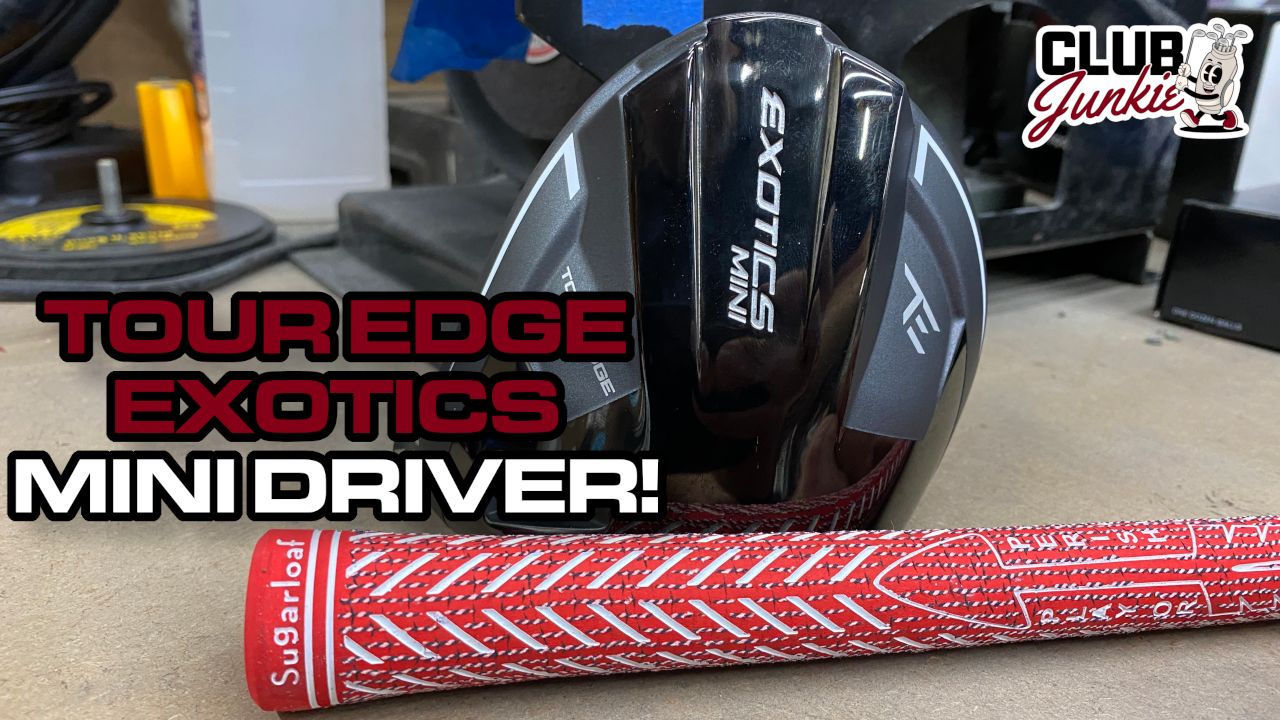
On this episode of Club Junkie, I put the new Tour Edge Exotics Mini Driver to the test and break down the performance, forgiveness, distance, and where it fits compared to a traditional driver or strong fairway wood. If you have been curious about adding a mini driver to the bag, this one is worth a look.
I also dive into the new TaylorMade Spider ZT Max putter that was recently spotted and discuss the growing zero torque putter trend. Plus, there is a closer look at the new Project X Titan Yellow shaft showing up on the PGA Tour and what makes it different from other profiles currently out there.

Justin Rose WITB 2026 (April): Full WITB breakdown with new McLaren irons

What’s the story behind Webb Simpson’s custom-stamped irons?

Memorial Tournament Tour Report: Rory McIlroy, Cameron Young switch up drivers, and more

Cadillac Championship Tour Report: Spieth’s sizable changes, McLaren Golf launches, and more

Russell Henley’s winning WITB: 2026 Charles Schwab Challenge

Kristoffer Reitan’s winning WITB: 2026 Truist Championship

Best irons 2026: Best irons overall, most forgiving irons, and more

J.T. Poston’s winning WITB: 2026 Memorial Tournament

Aaron Rai’s winning WITB: 2026 PGA Championship

Cameron Young’s winning WITB: 2026 Cadillac Championship


Ryan Palmer WITB 2026 (June)
Driver: Callaway Quantum Triple Diamond (9 degrees) Shaft: Project X HZRDUS Smoke Blue RDX 60 TX 3-wood: TaylorMade Qi10 (15 degrees) Shaft:...


Bud Cauley WITB 2026 (June)
Bud Cauley had >14 clubs in his bag when photographed prior to the Memorial Tournament. Driver: Titleist GTS2 (8 degrees) Shaft: Fujikura...


Hannah Green WITB 2026 (June)
Driver: Titleist GTS3 (10 degrees, D4 SureFit setting) Shaft: Mitsubishi Chemical Diamana RB 53 S 3-wood: Titleist GT3 (15 degrees,...


Asterisk Talley WITB 2026 (June)
Driver: TaylorMade Qi4D (9 degrees) Shaft: Fujikura Ventus Blue 6 S 3-wood: TaylorMade Qi4D (16.5 degrees) Shaft: Fujikura Ventus Blue...
-
 Equipment6 days ago
Memorial Tournament Tour Report: Rory McIlroy, Cameron Young switch up drivers, and more
-
 News2 weeks ago
Russell Henley’s winning WITB: 2026 Charles Schwab Challenge
-
 Equipment3 days ago
Best irons 2026: Best irons overall, most forgiving irons, and more
-
 Whats in the Bag4 days ago
J.T. Poston’s winning WITB: 2026 Memorial Tournament
-

 Equipment1 week ago
Details on Jason Day’s latest prototype Avoda iron setup
-

 Equipment3 weeks ago
CJ Cup Byron Nelson Tour Report: Koepka and Kim’s newest putters finally get hot
-

 News2 weeks ago
Charles Schwab Challenge Tour Report: MacIntyre, Åberg and Spaun all switch putters, TaylorMade launches new Spider
-

 Equipment2 weeks ago
Details on J.J. Spaun’s surprise putter switch


Jnak97
Apr 14, 2020 at 3:29 pm
I second the idea of doing another follow up article. Though, since your last article shows Mr. Scratch as a 73ish scoring average, maybe we could compare the single digit to someone that is averaging 1 or 2 under par. So I guess a +1 or +2 handicap would make a more informative comparison. We already have the stats for a 9 and 0 handicap based on this article and your previous, but it would be nice to have a reference for how to break par!
John Stafford
Mar 30, 2020 at 8:53 pm
Great analysis. I’ve learned (as a 20 handicapper) that I don’t need to hit the ball any longer (or even that much straighter) to be a 10 handicapper. All I need to do is take my best 9 holes and do it for 15 holes. No penalties. Quit using driver and switch to 3 wood at first sign of trouble (most holes only give you 0.2 strokes or so advantage with driver, one penalty outweighs the entire round). No muffed irons, no muffed chips, don’t hit into sand traps except with long irons. Aim for 2 putts instead of the cup. Wedge forward 70 yards from trouble vs. a low probability 150+ yard shot. If only my body wasn’t breaking down as I’m getting so much smarter.
Peter Sanders
Apr 3, 2020 at 10:38 am
Well done John, you solved the puzzle on your own just as I did years ago.
Chris G.
Mar 29, 2020 at 1:45 am
Is it possible to get the statistics to go from Mr. 9 to Mr. Scratch?
pls don’t make me wait 4 yrs, I could be an 18 by then
Peter Sanders
Mar 29, 2020 at 11:16 am
Chris,
Certainly possible. I discussed with the Editor following up with 5 handicap to Scratch. IF, this article were well received.
At the risk of sounding self-serving… If you subscribe to ShotByShot.com, you can select the lower handicap “Target” and the system will guide you to where you want to go. I suggest starting with the 6-9 Target range. When you get there, 4-5 and on down to 0-2 and even lower.
Thanks for your question and please let me know how you do.
Chris G.
Mar 29, 2020 at 12:05 pm
Thank you for the response Peter.
when my expendable income returns, I will give it a shot
Peter Sanders
Mar 30, 2020 at 10:09 am
I understand! Let’s hope it is still golf season!
Peter Sanders
Mar 30, 2020 at 10:10 am
Chris,
Are you somewhere where you can play now?
Chris G.
Mar 30, 2020 at 12:45 pm
The short answer is no. There is a golf course 1 hour away from me that is open, but I am only driving to work and the store. I rode my bike to my local muni but they are closed for now.
Bob Jones
Mar 27, 2020 at 10:15 am
I did just this. I did it by learning how to hit the ball straight, getting VERY good at approach putting and chipping, and learning how to play the game. There were other things, too, like learning how to hit from uneven lies, fairway bunkers, rough, greenside bunkers, chipping from strange places around the green, so I was seldom at a loss for how to stay on offense from challenging spots, but it was mainly those first three things.
Peter Sanders
Mar 28, 2020 at 10:52 am
Thanks Bob! Sounds like you worked hard and figured it out on your own. Well done!
Peter Sanders
Mar 27, 2020 at 9:50 am
I’m with you 100% Jack! My long time friends and I, that used to relish the challenge from the back tees, now unabashedly pass them and walk proudly to the Sr./forward tees. The game is still as fun and competitive!
Jack Nash
Mar 27, 2020 at 9:27 am
Great article
I haven’t used this tech language per say but over the years I’ve managed to play smarter. Getting older, having injuries and losing distance has taught me to use the right club(more club) more often and miss it on the proper side. Oh, and playing it forward makes the game fun again. If it’s feeling like work, you’re on the wrong tee box.