
Opinion & Analysis
The Wedge Guy: The difference between learning and practice


I’ve long been fascinated about the way the golf swing works, from full driver swings to the shortest chip shots. I’m sure that curiosity was embedded in me by my father as I began to get pretty serious about my own golf around the age of ten. His philosophy was that the more you know about how something works, the more equipped you are to fix it when it breaks. He applied that philosophy to many aspects of life, but we’re talking about the golf swing here.
As I grew up in the game, my father and I spent hours talking about golf and swing technique, from the grip to positions at impact, to conceptual aspects of the game and swing that guide you to learning faster and more accurately. I’ve continued to have those conversations with knowledgeable golf professionals and players for most of my life. But back to my father, one thing he made very clear to me early on is that there is a big difference between learning and practice.
Learning and practice are not the same thing, but rather two very different aspects of getting better at this game. The learning part is that process of becoming aware of and understanding new thoughts about the process of a golf swing, the internalizing of that knowledge, and the application of it to your swing and game. The practice part of the equation is the ingraining of that knowledge – after it is learned – so that it becomes second nature. Let’s start with learning.
The only sure way to make progress in your golf is through swing changes; it is very rare to find an accomplished player who simply practices the same wrong things over and over. Whether it is something as simple as a grip alteration or modification to your set up position, or as complex a new position or a new move in the swing, any of these changes require first that you clearly learn the new stuff. Only after it is learned can you begin to practice it so that it becomes ingrained.
Let’s talk about a swing change to illustrate this.
If you are trying to learn and perfect an improved path of your hands through impact, for example, the first step is to learn it. That means starting with stop-action posing in the positions so that your muscles and mind can absorb your new objectives. You can then progress to slow-motion swings that allow you the time and coordination to feel the muscles finding these new positions and producing this new coordinated motion through them. As your body begins to get familiar with this new muscle activity, you can gradually speed up the moves with your attention focused on making sure that you are performing just as you learned. I firmly believe that THE GOLF BALL IS NOT PART OF THIS PROCESS!!
Once you get familiar with the new muscle activity, you can begin making practice swings at half speed, then 3/4 speed, and finally full speed, all the time analyzing whether or not you are achieving your objectives of the new moves. This is the first stage of the practice process.
Only after you feel like you can really repeat the swing motion with your new method do you begin to put it into practice with a golf ball in the way. And even then, you should make your swings at half or ¾ speed so that you can concentrate on making the new swing – not hitting the ball.
The practice element of the process begins after the learning process is nearly complete. Practice allows you to ingrain this new learning so that it becomes the new habit. And to make sure your practice its most effective, make several practice swings for each ball you try to hit.
I hope all this makes sense. If you separate the learning process from the practice that makes it perfect, and get them in the proper sequence, and this game will get a great deal easier.



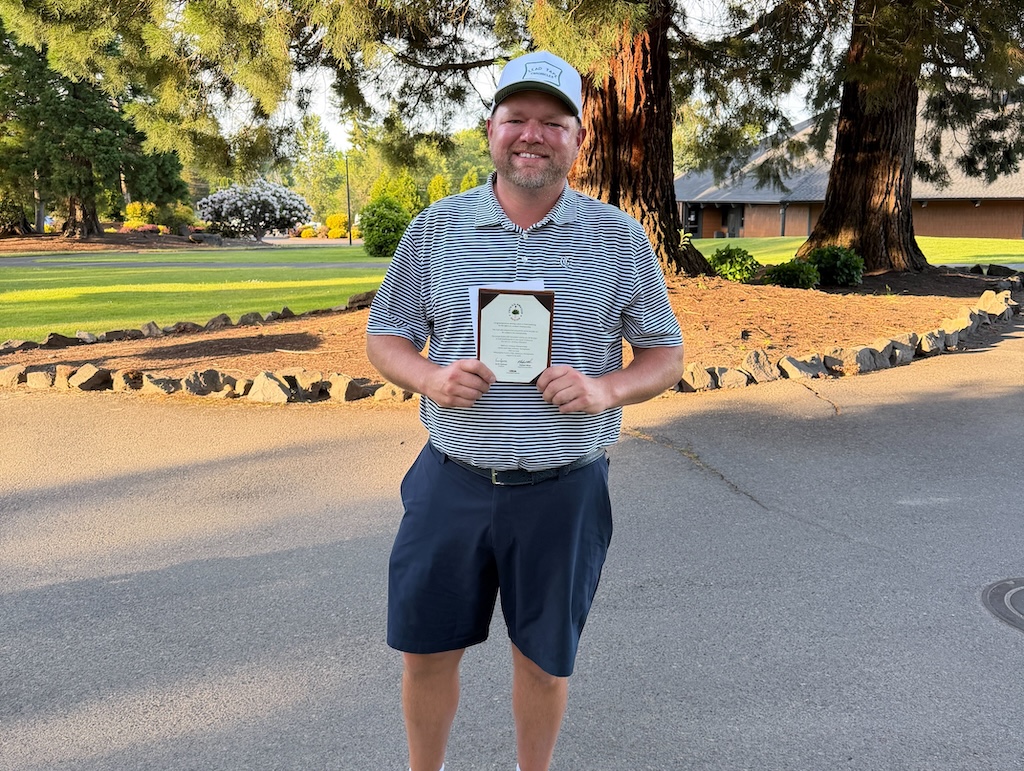
This past Monday, I played in the U.S. Amateur local qualifier at Rock Creek Country Club in Portland, Oregon. A full tee sheet from 7:30 a.m. to 1:55 p.m., the top 11 scores would make it to the U.S. Amateur final qualifying.
I teed off at 10:48 a.m.. With the 7:30 am tee time, you can get a feel for the leaders’ pace, and they were off and running on the challenging setup at Rock Creek.
View this post on Instagram
Getting to the highlight of the round on the par five 17th, a drive up the left side and 212 yards left to the front hole location. I took out a 5-iron with plans of middle of the green. The ball ended up 8 feet left of the hole, pin high. A slight downhill putt dropped in for an eagle 3 on the 17th. With the cut line looking to be anywhere from -2 to even par. This was the boost I had been waiting for all day.
With making par from the trees on 18, it was time to wait for a potential playoff with a posted score of one under par 71.
Three hours later, it was playoff time. 8 players for 6 spots. I made par on the playoff hole, which was good enough to advance to the U.S. Amateur final qualifying in July. USGA qualifiers sure deliver on all of the emotions in golf!
Club Junkie
Building my 2026 gamer WITB: Ranking the contenders and new putter projects – Club Junkie Podcast

The annual What’s In The Bag build is underway, and on this episode of Club Junkie, Brian breaks down the clubs currently leading the race for a spot in his 2026 gamer setup. From drivers and fairway woods to irons, wedges, and shafts, he ranks the equipment that’s performing best and explains what’s separating the front runners from the rest of the field.
Brian also heads into the workshop to discuss several putter projects currently on the bench. From head options and shaft choices to build ideas and testing plans, he shares what he’s working on and which putters could become serious contenders for the bag this season.
If you’re a gear junkie who loves equipment testing, club building, and the never-ending pursuit of the perfect setup, this episode is for you.
Follow Club Junkie:
Instagram: @clubjunkiepod
TikTok: @clubjunkiepod
Threads: @clubjunkiepod
X: @ClubJunkiePod
Club Junkie
Tour Edge Exotics mini driver review + TaylorMade Spider ZT Max first look – Club Junkie

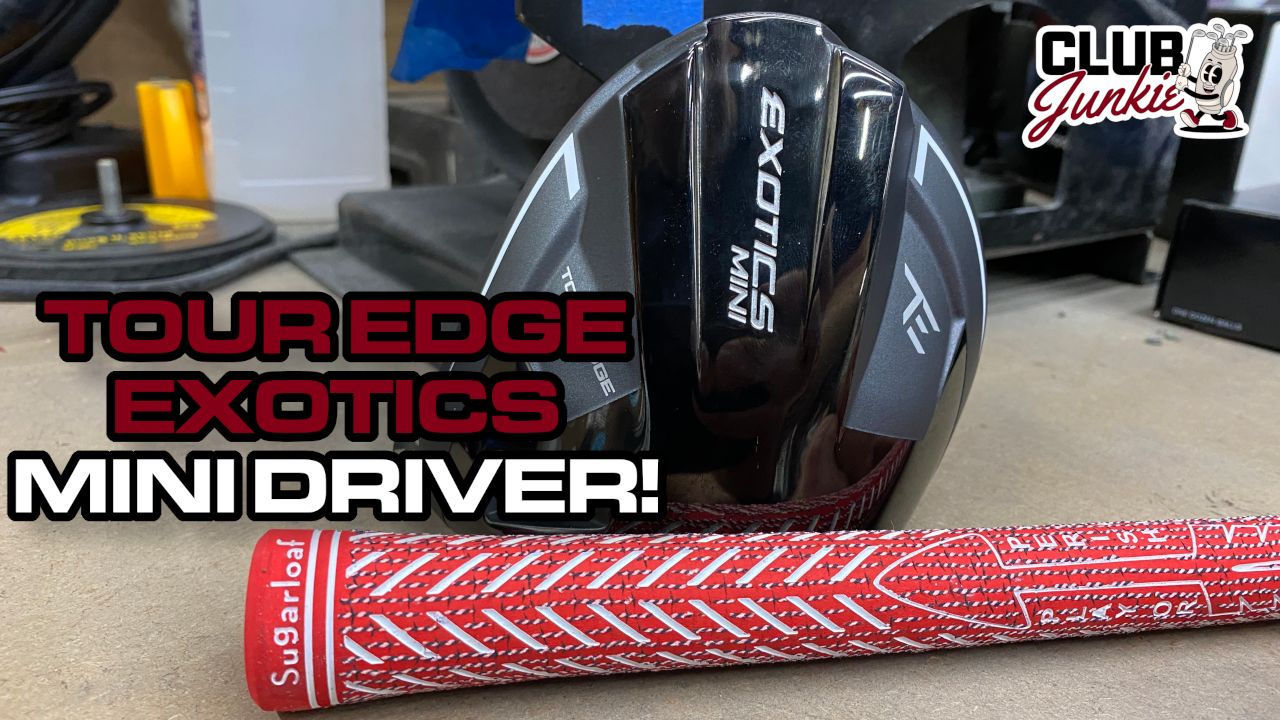
On this episode of Club Junkie, I put the new Tour Edge Exotics Mini Driver to the test and break down the performance, forgiveness, distance, and where it fits compared to a traditional driver or strong fairway wood. If you have been curious about adding a mini driver to the bag, this one is worth a look.
I also dive into the new TaylorMade Spider ZT Max putter that was recently spotted and discuss the growing zero torque putter trend. Plus, there is a closer look at the new Project X Titan Yellow shaft showing up on the PGA Tour and what makes it different from other profiles currently out there.

Justin Rose WITB 2026 (April): Full WITB breakdown with new McLaren irons

What’s the story behind Webb Simpson’s custom-stamped irons?

Memorial Tournament Tour Report: Rory McIlroy, Cameron Young switch up drivers, and more

Cadillac Championship Tour Report: Spieth’s sizable changes, McLaren Golf launches, and more

Russell Henley’s winning WITB: 2026 Charles Schwab Challenge

Kristoffer Reitan’s winning WITB: 2026 Truist Championship

Aaron Rai’s winning WITB: 2026 PGA Championship

J.T. Poston’s winning WITB: 2026 Memorial Tournament

Best irons 2026: Best irons overall, most forgiving irons, and more

Cameron Young’s winning WITB: 2026 Cadillac Championship


Bud Cauley WITB 2026 (June)
Bud Cauley had >14 clubs in his bag when photographed prior to the Memorial Tournament. Driver: Titleist GTS2 (8 degrees) Shaft: Fujikura...


Hannah Green WITB 2026 (June)
Driver: Titleist GTS3 (10 degrees, D4 SureFit setting) Shaft: Mitsubishi Chemical Diamana RB 53 S 3-wood: Titleist GT3 (15 degrees,...


Asterisk Talley WITB 2026 (June)
Driver: TaylorMade Qi4D (9 degrees) Shaft: Fujikura Ventus Blue 6 S 3-wood: TaylorMade Qi4D (16.5 degrees) Shaft: Fujikura Ventus Blue...
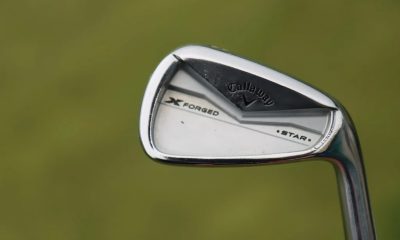

Brianna Do WITB 2026 (June)
Driver: Callaway Quantum Triple Diamond (9 degrees) Shaft: KBS PGW 3-wood: Callaway Elyte Titanium (15 degrees) Shaft: KBS PGW 5-wood:...
-
 Equipment6 days ago
Memorial Tournament Tour Report: Rory McIlroy, Cameron Young switch up drivers, and more
-
 News1 week ago
Russell Henley’s winning WITB: 2026 Charles Schwab Challenge
-
 Whats in the Bag3 days ago
J.T. Poston’s winning WITB: 2026 Memorial Tournament
-
 Equipment3 days ago
Best irons 2026: Best irons overall, most forgiving irons, and more
-

 Equipment1 week ago
Details on Jason Day’s latest prototype Avoda iron setup
-

 Equipment3 weeks ago
CJ Cup Byron Nelson Tour Report: Koepka and Kim’s newest putters finally get hot
-

 News2 weeks ago
Charles Schwab Challenge Tour Report: MacIntyre, Åberg and Spaun all switch putters, TaylorMade launches new Spider
-

 Equipment2 weeks ago
Details on J.J. Spaun’s surprise putter switch


geohogan
Dec 19, 2019 at 10:15 am
In this target article, Gabriele Wulf reviews her long-lasting re-search on attentional focus and motor learning. The essential finding of the reviewed studies is the enhancing effect of an ex-ternal (= movement-effect related) compared to an internal (= body-movement related) focus of attention for motor learnin
https://www.sportwissenschaft.de/fileadmin/pdf/BuT/hossner_wulf.pdf
Experts in clubmaking should leave theorizing about , “motor learning” to the experts.
Internal focus for complex movements, has been proven to be a waste of time and money.
ie dont believe the charlatans.
Sherm
Dec 17, 2019 at 10:21 pm
Id be curious to know if the new Ben Hogan company is profitable yet???
yertu
Dec 17, 2019 at 1:11 pm
This line of thinking when it comes to practice has been preached for years and years.
I think that most of the motor learning literature has actually shown that the “stop motion” drills are generally ineffective due to the fact that during performance of the full motor sequence, you are unlikely to actually hit those positions at all. The lack of context (what happens before and what happens after) in the pose position also has an effect which is ignored by stop and pose sorts of practice.
The same applies to practicing at slower speeds. When you take a professional golfer swinging a driver at what they feel is 50% speed and compare it to a swing at normal speed, you will see a huge difference in the motor pattern for each.