
Opinion & Analysis
Why aren’t more small golf companies making it big?


More and more in the golf industry, success is based on skills that are not required to make a birdie or par. The people who design today’s driver heads are in some cases, actual rocket scientists. A digital expert who has never been on a golf course is often more valuable to a company than a tour player. Yet when you look at the smaller companies that exist in the golf industry, and particularly in the golf equipment industry, you generally see companies that are heavy on golf passion and light on modern business expertise. It’s killing them.
Golf equipment, in particular, is now more driven by the big brands than it’s ever been, and this is totally the opposite of what’s happening in so many other industries. The food business is a wonderful example. I was in CVS last week and was surprised to see a “Keto” meal replacement shake being promoted on an end-cap. On the same end-cap was a vegan protein powder.
Five years ago, I had never heard of Keto. I knew very few vegans. Today, I know people on both diets. If you have an ability to surf the web, it’s been quite easy to take part in the food revolution that’s happening right now in the U.S. And one of the most interesting things about it is that it’s been almost entirely driven by small companies.
The big food business is hurting because it’s struggling to meet the evolving preferences of consumers. Smaller brands have been much more in touch with customers, and as a result, much more innovative with their products and marketing. There’s no disputing this. Many small food brands are crushing it.
And the same trend is happening in retail. Been to a Sears lately? Mine closed. When my wife wants to go to the mall, it’s only because of a product that was recommended by an Instagram influencer (think of Influencers as micro-brands). Usually, it’s something from Madewell. I digress.
Last month, I bought the most beautiful double-walled, glass coffee cups from Fellow, a premium coffee accessories brand that sells online. I had no way of knowing I could enjoy coffee cups this much. This little company knew what I wanted before I did. So like a lot of modern consumers, I took to Instagram to celebrate. I tagged the company. A few friends texted me to ask about them (many of my friends are very into coffee).
So how is it that people can buy the most wonderful products from small, innovative companies in nearly every space, but they struggle to do this in golf? Or is it just that they’ve never heard of all the great small golf companies. And if so, whose fault is this?
It’s true that with enough time the most serious golfers will eventually find out about the best small golf companies. But the problem isn’t that small companies can’t reach the most serious golfers. Many can. It’s that most small golf companies can’t reach anyone else.
Across the board, small golf companies are failing to embrace a strategy that would actually resonate with a sufficiently large audience. In most cases, this is because they’re trying to play the same game as the big boys. They’re obsessed with making products that they can say are “better.” That strategy can only work if you have a lot of money to spend.
When I worked with GolfWRX, one of my jobs was to speak with big and small golf companies and pen articles about their new products. And in most cases, the claims checked out. The smaller company’s clubs were sometimes 10 yards longer or 10 percent more forgiving, etc. as they said.
But I always had a feeling in these interviews and testing sessions that for certain companies, this extra performance wasn’t going to make a meaningful impact on sales. Not enough golfers were going to try it. Not enough golfers were going to talk about it. And the cycle would continue. I watched several of these companies run out of money only to blame “a slow down in the golf industry” for their failure.
What these companies were missing is that having an exceptional product is simply the cost of doing business. It’s not game-changing to make a product that’s as good or slightly better than the big boys. You won’t move the needle with products that are “just as good” but cost less. The only way small companies can make it big is to play a different game, and I believe it’s a better game.
Marketing works best when customers are willing participants in the process, and if you believe that, then the first step is obvious. A company has to find ways to make customers genuinely curious about its products or services. When customers feel this way, they’ll want to learn more. They’ll follow a company on social media. They’ll read a company’s website from cover to cover. They’ll often walk away liking a company so much that they can’t stop talking about it. Not just to their playing partners, but to their brother-in-law. Their friends at work. Their old college roommate. The guy sitting next to them on the plane.
We’ve all had these positive experiences with a brand or product at some point, and they’re magical. It’s exciting to share a great find, even if it’s something as trivial as a coffee cup.
What you’re seeing right now in other industries is small companies that are succeeding because they stand for excellence in a specialized way. To communicate their excellence, they’re not talking at their customers. Their communication feels like an invitation. It feels like the marketing campaign was designed with them in mind. And this strategy is even more effective when the product stands for an idea that’s bigger than golf, which isn’t as pie in the sky as it sounds.
For PXG, it’s status—and a bit of rebellion. For Titleist, it’s trust. And if these companies are doing their jobs well, these big-picture ideas are built into the product DNA—not attached ad hoc when it’s time to sell.
When companies create products that stand for something, it becomes so much easier for them to build authentic relationships with their customers. They suddenly have choices beyond beating their chest about their most recent accomplishment, which rarely works. Think about it this way; when your friends brag to you, you probably want to roll your eyes. When strangers do this to you, you quickly walk away. And when brands do this to you, you ignore them.
I believe that golfers want to change their buying habits in golf as they have in other industries. But they need more small companies to shake things up in a positive way. They’re waiting for the right message at the right time. And because that’s not happening, they can only hear the loudest voices in the room. And it’s a shame.





This past Monday, I played in the U.S. Amateur local qualifier at Rock Creek Country Club in Portland, Oregon. A full tee sheet from 7:30 a.m. to 1:55 p.m., the top 11 scores would make it to the U.S. Amateur final qualifying.
I teed off at 10:48 a.m.. With the 7:30 am tee time, you can get a feel for the leaders’ pace, and they were off and running on the challenging setup at Rock Creek.
View this post on Instagram
Getting to the highlight of the round on the par five 17th, a drive up the left side and 212 yards left to the front hole location. I took out a 5-iron with plans of middle of the green. The ball ended up 8 feet left of the hole, pin high. A slight downhill putt dropped in for an eagle 3 on the 17th. With the cut line looking to be anywhere from -2 to even par. This was the boost I had been waiting for all day.
With making par from the trees on 18, it was time to wait for a potential playoff with a posted score of one under par 71.
Three hours later, it was playoff time. 8 players for 6 spots. I made par on the playoff hole, which was good enough to advance to the U.S. Amateur final qualifying in July. USGA qualifiers sure deliver on all of the emotions in golf!
Club Junkie
Building my 2026 gamer WITB: Ranking the contenders and new putter projects – Club Junkie Podcast

The annual What’s In The Bag build is underway, and on this episode of Club Junkie, Brian breaks down the clubs currently leading the race for a spot in his 2026 gamer setup. From drivers and fairway woods to irons, wedges, and shafts, he ranks the equipment that’s performing best and explains what’s separating the front runners from the rest of the field.
Brian also heads into the workshop to discuss several putter projects currently on the bench. From head options and shaft choices to build ideas and testing plans, he shares what he’s working on and which putters could become serious contenders for the bag this season.
If you’re a gear junkie who loves equipment testing, club building, and the never-ending pursuit of the perfect setup, this episode is for you.
Follow Club Junkie:
Instagram: @clubjunkiepod
TikTok: @clubjunkiepod
Threads: @clubjunkiepod
X: @ClubJunkiePod
Club Junkie
Tour Edge Exotics mini driver review + TaylorMade Spider ZT Max first look – Club Junkie

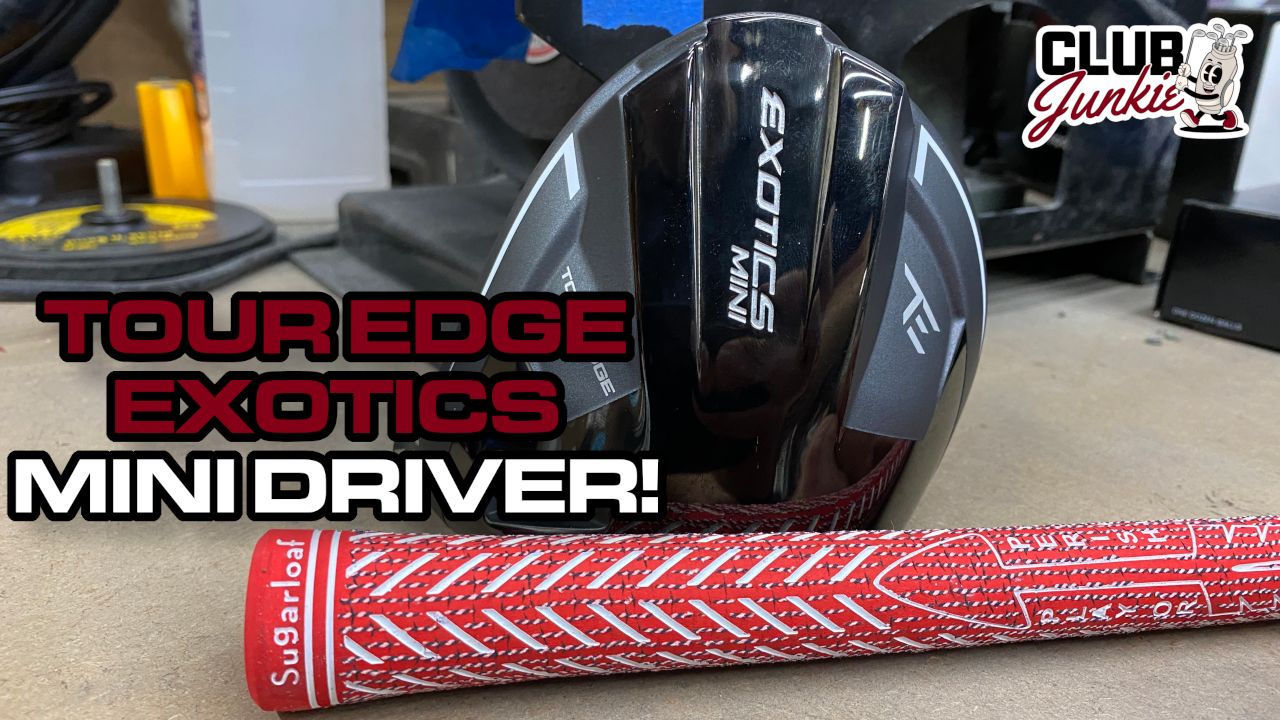
On this episode of Club Junkie, I put the new Tour Edge Exotics Mini Driver to the test and break down the performance, forgiveness, distance, and where it fits compared to a traditional driver or strong fairway wood. If you have been curious about adding a mini driver to the bag, this one is worth a look.
I also dive into the new TaylorMade Spider ZT Max putter that was recently spotted and discuss the growing zero torque putter trend. Plus, there is a closer look at the new Project X Titan Yellow shaft showing up on the PGA Tour and what makes it different from other profiles currently out there.

What’s the story behind Webb Simpson’s custom-stamped irons?

Memorial Tournament Tour Report: Rory McIlroy, Cameron Young switch up drivers, and more

Cadillac Championship Tour Report: Spieth’s sizable changes, McLaren Golf launches, and more

Russell Henley’s winning WITB: 2026 Charles Schwab Challenge

Kristoffer Reitan’s winning WITB: 2026 Truist Championship

Best irons 2026: Best irons overall, most forgiving irons, and more

J.T. Poston’s winning WITB: 2026 Memorial Tournament

Aaron Rai’s winning WITB: 2026 PGA Championship

Cameron Young’s winning WITB: 2026 Cadillac Championship

Details on Jason Day’s latest prototype Avoda iron setup


Christiaan Maas WITB 2026 (June)
Driver: TaylorMade Qi4D LS (8 degrees) Shaft: Fujikura Ventus TR Blue 6 X 3-wood: TaylorMade Qi10 (15 degrees) Shaft: Fujikura Ventus Black...


Ryan Palmer WITB 2026 (June)
Driver: Callaway Quantum Triple Diamond (9 degrees) Shaft: Project X HZRDUS Smoke Blue RDX 60 TX 3-wood: TaylorMade Qi10 (15 degrees) Shaft:...


Bud Cauley WITB 2026 (June)
Bud Cauley had >14 clubs in his bag when photographed prior to the Memorial Tournament. Driver: Titleist GTS2 (8 degrees) Shaft: Fujikura...


Hannah Green WITB 2026 (June)
Driver: Titleist GTS3 (10 degrees, D4 SureFit setting) Shaft: Mitsubishi Chemical Diamana RB 53 S 3-wood: Titleist GT3 (15 degrees,...
-
 Equipment6 days ago
Memorial Tournament Tour Report: Rory McIlroy, Cameron Young switch up drivers, and more
-
 News2 weeks ago
Russell Henley’s winning WITB: 2026 Charles Schwab Challenge
-
 Equipment4 days ago
Best irons 2026: Best irons overall, most forgiving irons, and more
-
 Whats in the Bag4 days ago
J.T. Poston’s winning WITB: 2026 Memorial Tournament
-
 Equipment1 week ago
Details on Jason Day’s latest prototype Avoda iron setup
-
 Equipment3 weeks ago
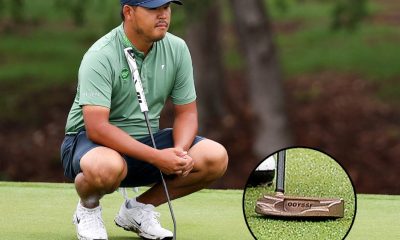
CJ Cup Byron Nelson Tour Report: Koepka and Kim’s newest putters finally get hot
-

 News2 weeks ago
Charles Schwab Challenge Tour Report: MacIntyre, Åberg and Spaun all switch putters, TaylorMade launches new Spider
-

 Equipment2 weeks ago
Details on J.J. Spaun’s surprise putter switch


Lefthack
Jun 13, 2021 at 9:27 am
So far I’ve bought from Lazrus and Byrdie Golf Designs, both I think are top notch. I am on the list for a set of Lefty Haywood MB’s at the end of this year. I made a point to try and support smaller companies, especially ones who support the tiny lefty market.
Michael Duranko
Dec 8, 2019 at 12:25 pm
Thanks…Interesting comparison and always looking for new, smaller companies.
But dont the samller guys get bought up by the big companies, like in other industries?
Bob
Dec 6, 2019 at 2:12 pm
Arias with their zero offset irons is probably the best new small company around.
JOE
Dec 6, 2019 at 11:40 am
The problem is all the smaller companies actually charge more than most of the big names.
Steve
Dec 5, 2019 at 11:05 pm
I bought my Piretti putter (Potenza Elite) because I know the owners and wanted something different, and liked the look of the brand. It’s the best putter I’ve ever had by a mile. Golfers should set a goal to have at least one non-major companies club in their bag, just to support the industry if nothing else.
Joe
Dec 5, 2019 at 8:02 pm
Can you name a few companies? I don’t mean this in a negative way but which small companies are putting out exceptional products?
Joe
Dennis
Dec 6, 2019 at 1:08 am
Single Length is a good example, isn‘t it? Most people only know about Cobra One Length but there are so much more out there: Sterling, Pinhawk, etc
MJD
Dec 6, 2019 at 8:09 am
There are a few good ones:
National Custom Works
Byron Morgan Putters
Carbon Putters
Bombtech
Artisan Wedges
Barrett
Dec 6, 2019 at 1:58 pm
“Exceptional” is subjective, but I recently found Sub70 and ordered a set of their irons and absolutely love them. Also being able to talk on the phone with their CEO and get advice was great.
DukeOfChinoHills
Dec 5, 2019 at 7:02 pm
Zak, in your opinion should smaller brands use/sponsor “influencers” to accelerate their online presence and growth? Or can their product and “brand” speak for itself? On the flip side, don’t you think golfer can see through the overt plugs influencers post?
Zak Kozuchowski
Dec 5, 2019 at 7:28 pm
Duke,
Thanks for your question. It’s a good one. A metaphor that comes to mind is building a house. If it’s to stand the test of time, it has to have a good foundation. And that means having a solid brand.
If the product is bad, it’s like building a house on quicksand. It doesn’t matter how good the branding is. The house will fall.
Let’s say the product is solid, but the foundation of the brand isn’t strong. If a lot money is spent on advertising (or influencers) too soon, it’s going to be hard for the brand to stand up to the growth. Somewhere cracks are going to form. Sometimes they’re manageable, and sometimes they’re not.
For our brands, we’re on the lookout for advertising partners and influencers who have organic interest in our clients — something about the brand or product suits their preferences or inspires them in some way. To us, those are the best partnerships — and usually the most successful ones. They don’t feel like plugs; they feel like relationships.
Desmond Grier
Dec 5, 2019 at 3:47 pm
Let’s not forget the impact of the golf rules on the small companies. The change in the groove rule required complete redesign of the casting or machining of iron faces. One small company I dealt was looking at millions in new costs. They made a quality iron but had to shut their doors. The groove rule gave the big companies (that change their lines every year for better or for worse, anyhow) a huge leg up on the small ones (and frankly, didn’t change the “smash and gouge” style of the top players a bit).
mattbear04
Dec 5, 2019 at 2:27 pm
Not a good comparison. The pie that the big food brands controlled is so large that there is room for disruption with smaller companies making their way. Plus society has shifted and is more focused than ever on food and nutrition, so the industry is in a growth phase again.
The golf industry as a whole is in a contraction/consolidation phase. Tough environment for a start-up. Has to be a home run or not going to last.
Ronald Montesano
Dec 5, 2019 at 2:23 pm
Keto is a diet; vegan/vegetarian is a life decision. Both focus on health, which matters way more to those who opt in than golf clubs or coffee cups.
Are there more than two types of consumers? The first would be the impulse/curious group; the second would be the loyalists. You need the first to establish the second.
When Nike dropped out of the hard-goods game, that opened up 10% of the market for smaller companies. Many of them have succeeded, knowing that 1% or 2% is enough to make a fine living. They don’t wish to supplant Titleist.
Brooks Koepka plays Mizuno. I bought Mizuno irons this fall from my local, independent golf dealer. Did Koepka influence me? A bit. My previous experience with them, moved me away from the Ping irons whose grooves had worn out. I have a friend who purchased Sub70 irons this fall, a complete, online sale. He fits the impulse/curious buyer attribute, while I was more of a returned loyalist.
I have more thoughts on this matter. Look forward to sharing them.
Prime21
Dec 5, 2019 at 6:02 pm
who asked this dude?
A. Commoner
Dec 7, 2019 at 7:54 pm
If of similar vein and fiber, please keep your “more thoughts” secret.
K
Dec 5, 2019 at 10:33 am
Good article.
There are lots of things a couple of the smaller brands could do to get more traction. But my family has to eat too i and charge for info like that.
You did a great job highlighting the fact that most of these smaller companies know TONS about golf yet know little or nothing about actual business. The fact a few of them are still around should be a sign for the bigger brands to stay on their toes if they dont want to lose market share. Might not be long until another Bob Parsons/PXG shows up and does more damage to their bottom line. It honestly wouldnt be very difficult to take some of Callaways “loyal” followers, eventually taking their spot. I believe they are stagnant and the weakest of the bigger brands. If they dont change a few things soon i would honestly be surprised if someone doesnt take their position in the next 5 or 10 years becoming the next Radio Shack…
From day 1 Apple hasnt always made the best products (certainly not the cheapest) in their market but they were always one of the best selling. Well least when Jobs was around, now its questionable. That has to tell you something….
I could go on and on for days about this boring whoever is reading this far but im not getting paid for this so its time to get back to work.
Say what?
Dec 5, 2019 at 6:06 pm
you could go on and yet nobody would pay attention. Hopefully your real work is better than your commentary.