
Opinion & Analysis
The Wedge Guy: Birdie holes and other myths


I am an ardent observer of self-destructive things I see golfers do and hear golfers say, and one that really gets me is when I hear someone stand on the tee and proclaim, “This is a birdie hole.”
Really? How do you know when you haven’t even hit your drive yet, much less your approach? If you’re a 12 handicap, let’s say, there are really only 5-6 “par” holes out here; how can you think this one is a “birdie hole”?
This game is tough, and making birdies is the toughest achievement out there. Very few are made without hitting two better-than-average shots, or at least one remarkable one, whether the approach or the putt. Think about that for a minute. You could be a scratch golfer and never make one! Eighteen pars and a bogey or or two will get you to scratch on most courses. If you are an 8 handicap, that means you average about 82 or so, which equates to 8 pars and 10 bogeys in a round – what are you doing thinking about making a birdie at all, much less while on the tee?
My advice is that if you are a 10 handicap or higher, your singular thought on the tee should be to not make a double or higher. Chances are you don’t hit the driver 280-plus and you don’t hit even half the fairways. If you track your rounds, I’d bet you will find a high relativity of drives out of the fairway to doubles (or worse) put on the scorecard.
So let’s assume you got off the tee well, now what? When you face your approach shot, my advice is to figure out which side of the green gives you the best chance of getting up and down and the least odds of facing a short-side difficult pitch. And there’s never anything wrong with targeting the fat middle of the green, regardless of where the pin is located. On most courses, a ball in the dead center of the green will give you a half dozen or more reasonable putts, and the rest will not be overly long or difficult. The next round you play, just stand in the middle of the green after you are done and survey the putt that ball position would have given you.
Here’s another interesting and enlightening drill for you if you find yourself out for a day of learning on the golf course. On each hole, after your drive and approach, play a second ball from the “safe” side of the green, just as if you had missed your approach to this safe side. Then hit a pitch or chip and putt it out. Keep that score on along with the score you actually made and see how you come out.
I’ve been blessed to have played to a low handicap my whole life, and I am an entrepreneur…but I really do not have a gambler personality. On the golf course, I want to have fun, and I’ve learned that trying to save pars from the short side really doesn’t deliver that. If I’m tuned in to my game, I play the safe side of fairways off the tee and the safe side of the hole with my approaches. I make my share of birdies, and keep big numbers and bogeys on short holes to a minimum by taking this approach.
Of course, I find a 73 or 74 with only one or two birdies more fun than a 78 with 3 or 4. You might not.




This past Monday, I played in the U.S. Amateur local qualifier at Rock Creek Country Club in Portland, Oregon. A full tee sheet from 7:30 a.m. to 1:55 p.m., the top 11 scores would make it to the U.S. Amateur final qualifying.
I teed off at 10:48 a.m.. With the 7:30 am tee time, you can get a feel for the leaders’ pace, and they were off and running on the challenging setup at Rock Creek.
View this post on Instagram
Getting to the highlight of the round on the par five 17th, a drive up the left side and 212 yards left to the front hole location. I took out a 5-iron with plans of middle of the green. The ball ended up 8 feet left of the hole, pin high. A slight downhill putt dropped in for an eagle 3 on the 17th. With the cut line looking to be anywhere from -2 to even par. This was the boost I had been waiting for all day.
With making par from the trees on 18, it was time to wait for a potential playoff with a posted score of one under par 71.
Three hours later, it was playoff time. 8 players for 6 spots. I made par on the playoff hole, which was good enough to advance to the U.S. Amateur final qualifying in July. USGA qualifiers sure deliver on all of the emotions in golf!
Club Junkie
Building my 2026 gamer WITB: Ranking the contenders and new putter projects – Club Junkie Podcast

The annual What’s In The Bag build is underway, and on this episode of Club Junkie, Brian breaks down the clubs currently leading the race for a spot in his 2026 gamer setup. From drivers and fairway woods to irons, wedges, and shafts, he ranks the equipment that’s performing best and explains what’s separating the front runners from the rest of the field.
Brian also heads into the workshop to discuss several putter projects currently on the bench. From head options and shaft choices to build ideas and testing plans, he shares what he’s working on and which putters could become serious contenders for the bag this season.
If you’re a gear junkie who loves equipment testing, club building, and the never-ending pursuit of the perfect setup, this episode is for you.
Follow Club Junkie:
Instagram: @clubjunkiepod
TikTok: @clubjunkiepod
Threads: @clubjunkiepod
X: @ClubJunkiePod
Club Junkie
Tour Edge Exotics mini driver review + TaylorMade Spider ZT Max first look – Club Junkie

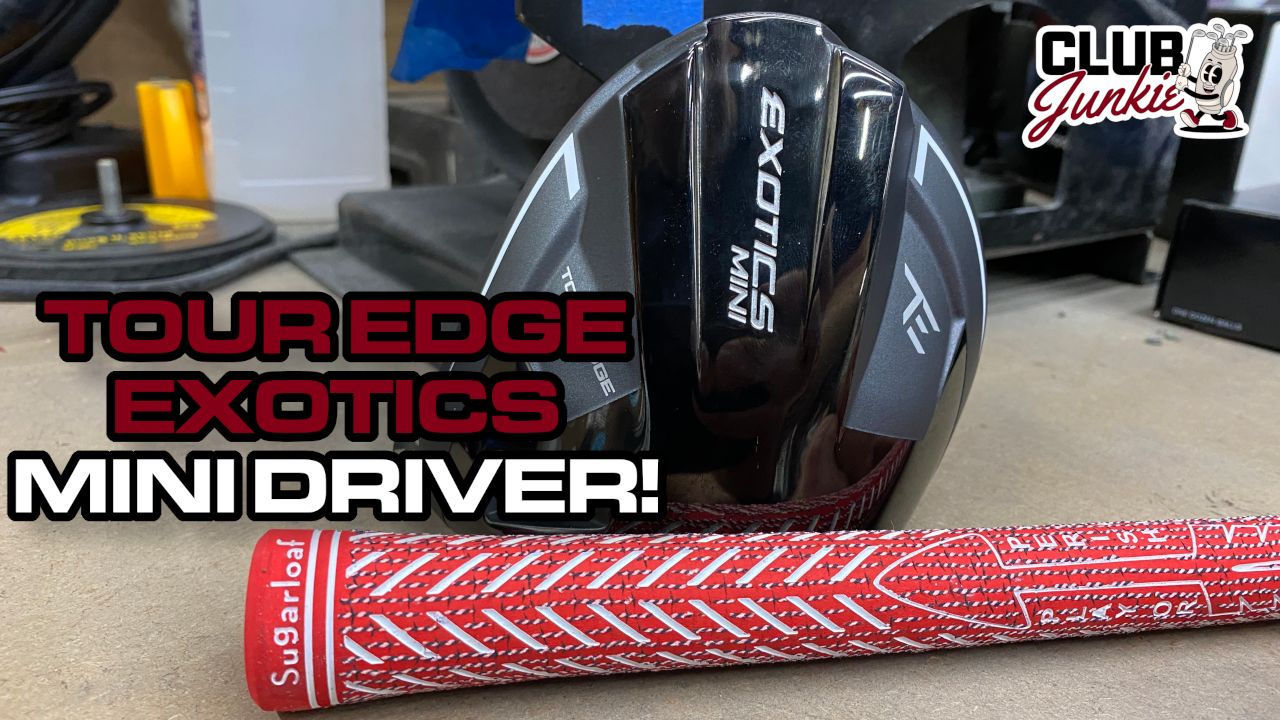
On this episode of Club Junkie, I put the new Tour Edge Exotics Mini Driver to the test and break down the performance, forgiveness, distance, and where it fits compared to a traditional driver or strong fairway wood. If you have been curious about adding a mini driver to the bag, this one is worth a look.
I also dive into the new TaylorMade Spider ZT Max putter that was recently spotted and discuss the growing zero torque putter trend. Plus, there is a closer look at the new Project X Titan Yellow shaft showing up on the PGA Tour and what makes it different from other profiles currently out there.

Justin Rose WITB 2026 (April): Full WITB breakdown with new McLaren irons

What’s the story behind Webb Simpson’s custom-stamped irons?

Memorial Tournament Tour Report: Rory McIlroy, Cameron Young switch up drivers, and more

Cadillac Championship Tour Report: Spieth’s sizable changes, McLaren Golf launches, and more

Russell Henley’s winning WITB: 2026 Charles Schwab Challenge

Kristoffer Reitan’s winning WITB: 2026 Truist Championship

J.T. Poston’s winning WITB: 2026 Memorial Tournament

Best irons 2026: Best irons overall, most forgiving irons, and more

Aaron Rai’s winning WITB: 2026 PGA Championship

Cameron Young’s winning WITB: 2026 Cadillac Championship


Bud Cauley WITB 2026 (June)
Bud Cauley had >14 clubs in his bag when photographed prior to the Memorial Tournament. Driver: Titleist GTS2 (8 degrees) Shaft: Fujikura...


Hannah Green WITB 2026 (June)
Driver: Titleist GTS3 (10 degrees, D4 SureFit setting) Shaft: Mitsubishi Chemical Diamana RB 53 S 3-wood: Titleist GT3 (15 degrees,...


Asterisk Talley WITB 2026 (June)
Driver: TaylorMade Qi4D (9 degrees) Shaft: Fujikura Ventus Blue 6 S 3-wood: TaylorMade Qi4D (16.5 degrees) Shaft: Fujikura Ventus Blue...


Brianna Do WITB 2026 (June)
Driver: Callaway Quantum Triple Diamond (9 degrees) Shaft: KBS PGW 3-wood: Callaway Elyte Titanium (15 degrees) Shaft: KBS PGW 5-wood:...
-
 Equipment6 days ago
Memorial Tournament Tour Report: Rory McIlroy, Cameron Young switch up drivers, and more
-
 News2 weeks ago
Russell Henley’s winning WITB: 2026 Charles Schwab Challenge
-
 Whats in the Bag4 days ago
J.T. Poston’s winning WITB: 2026 Memorial Tournament
-
 Equipment3 days ago
Best irons 2026: Best irons overall, most forgiving irons, and more
-

 Equipment1 week ago
Details on Jason Day’s latest prototype Avoda iron setup
-
 Equipment3 weeks ago
CJ Cup Byron Nelson Tour Report: Koepka and Kim’s newest putters finally get hot
-

 News2 weeks ago
Charles Schwab Challenge Tour Report: MacIntyre, Åberg and Spaun all switch putters, TaylorMade launches new Spider
-
 Equipment2 weeks ago
Details on J.J. Spaun’s surprise putter switch


Greg
Nov 19, 2019 at 9:13 pm
Let’s not ourselves, birdies are made by skilled players striking accurate shots and precise putting.
ChipNRun
Nov 19, 2019 at 1:40 pm
A birdie hole is one where you score one under-par. Birdies just land where they do.
My home course is Nicklaus-signature layout. And, the little “risk-reward” par 4 holes trip me up all the time.
Of the top six HDCP holes, five have decent-size greens. I got twice as many birdies there as I do on the little “risk-reward” birdie (?!) holes with the amoeba-shaped greens that bounce approaches off into bunkers and worse.
BP
Nov 20, 2019 at 1:47 am
What course? My home course is also Nicklaus designed.
ChipNRun
Nov 21, 2019 at 10:32 am
Stonewolf Golf Club in Fairview Heights, IL. It’s a mile north of the I-64 and Hwy. 159 intersection.
A mile northeast is Far Oaks Golf Club, designed by 1968 Masters champ Bob Goalby. (Goalby is the uncle of PGA tour veteran Jay Haas.)
Each course is the centerpiece of a residential development. Both ended up as semi-private clubs because not all of the lot-buyers were golfers.
STLgolfer
Nov 21, 2019 at 4:45 pm
Stonewolf is an incredibly tough layout and I am a 2 hdcp. Hole 7, 11 and maybe 10 and 17 are on the easier side but that course doesn’t let up. Far Oaks is much easier.