
Opinion & Analysis
The Wedge Guy: You and your wedges (survey results part 2)


As I promised last week when I presented the first layer overview of the GolfWRX/Wedge Guy survey, today I’m going to dive into the section of the survey where you shared your thoughts and feelings about wedges and your wedge play. I’ve made a study of golfers and their wedges for nearly 30 years now, and have always found it fascinating. It also has helped me immensely in breaking from traditional wedge design to address what golfers have told me about where they need help most.
I’m proud that this insight gained from golfers over those years led me to develop “the Koehler sole,” which I patented back in 1990, and have brought to market as both the “Dual Bounce Sole®” and the “V-SOLE®”. That insight also guided me to begin to introduce higher and higher CG in wedges since the mid-90s (which almost all wedge companies have finally begun to do to one degree or another), and to create the first progressively weighted wedges with the SCOR™ line in 2011.
But this is about you and your wedges, so let’s dive right into what you all shared in the surveys.
First of all, you GolfWRX readers are way ahead of rank-and-file recreational golfers in the respect you show for your wedges, with 70 percent or more of you carrying at least four wedges, counting the set match “pitching wedge” that came with your set of irons. I’ve long been an advocate of having more wedges in your bag to give you more options in prime scoring range. As manufacturers have continually strengthened the lofts of the set-match pitching wedge, down to as low as 43-44 degrees in some models, it just makes sense.
Partly as a result of this attention, you GolfWRXers rated your wedge play much higher than golfers at large, based on my prior research. What I found interesting is that fewer of you rated your wedges play outside 75-90 yards as a strength of your game (26 percent) than you did on your wedge play inside 75-90 yards (30 percent). Almost 30 percent of you said your wedge play outside of 75-90 yards was “not as good as it should be,” but just 21 percent said the same about your wedge play outside 75-90 yards. It is generally accepted that full swings are harder to master than the partial swings those short-range shots require.
I have an intern student at University of Houston-Victoria diving into these surveys to cross-tabulate all the answers to reveal more interesting insight for all of us to share, but that is going to take a few weeks, I’m sure, as there is a lot of data here. But what my takeaway from this question is that the vast majority of revealed you have lots of opportunity to improve this segment of your game, as 70-75 percent of you rated your wedge play in both categories as average or below-average. One way to do that is to re-allocate your practice time to hit more wedge shots of different distances, really focusing on distance control. Which brings me to the next couple of questions.
Two questions are very closely linked, as proven by the answers you shared. Nearly an identical number of you responded that your full-swing trajectories were “about right,” and your distance control was “pretty good.” But the majority of you said your trajectories trended too high and your misses come up short almost all the time. You are not alone—my experience with wedge design and golfer feedback is that this majority of you GolfWRX readers is actually much better than the majority of all golfers.
The harsh reality is that this is not all your fault. While mastering wedge play is probably the hardest part of the game, the design of wedges aggravates these two problems. Robotic testing of wedges indicates that essentially all models on the market are very unforgiving of impact moving around the face. We all know that low-face impact, nearly bladed wedge shot is going to fly low and have lots of spin (i.e. “thin to win”). And that likewise, that shot you catch high in the face is going to fly high, come up short and have much less spin.
Tour professionals spend countless hours working to perfect their wedge impact point to be low on the face, a goal helped by the very tight-cut fairways they play. But for the rest of us playing higher-cut fairways, the ball is sitting up more and we are much more likely to catch the ball higher in the face, which—by design—causes the ball to fly higher and have less spin. Conventional wedges have as much as a 20 percent lower smash factor when impacted just half an inch above the “sweet spot.”
The fact is that consistent wedge distance control requires a consistent impact point, lower on the face. One way to try to improve in that regard is to focus your eyes on the forward edge of the ball when you are hitting any wedge shot, but particularly on full swing wedges. From a technique standpoint, your left (or lead) side must be more influential on these shots. In other words, try to make impact with your hands ahead of the clubhead. I’ll dive into that whole subject in a dedicated article soon.
I believe that this challenge of wedge play is aggravated by when and where the majority of you purchase your wedges—let me explain that reasoning.
The vast majority of you are playing relatively new wedges, with 36 percent having purchased them in the last year, and another 43 percent playing wedges that are 1-3 years old. That’s the good news—your wedges are relatively fresh. But now for the bad news.
Almost 45 percent of you said you purchased your wedges at a large off-course retailer, which means you most likely purchased wedges with a heavy, stiff steel shaft—but how does that compare to the shafts in your irons? Is it a match or even close? If not, I’ve learned that the wrong shaft is a huge factor in wedge play, as it creates a feel disconnect in prime scoring range. My experience is that, for most golfers, a thoughtful re-shafting of your wedges to produce the same weight and flex as in your irons will make a huge difference in your wedge-range performance.
This is getting a bit long so let me share another interesting takeaway from this survey, then leave you with another question to sound off about.
Less than 18 percent of you said your last purchase was of a different brand with the goal of improving your performance. I find that puzzling, as I’ll bet nearly 100 percent of you chose your last driver, putter or irons specifically with that goal in mind.
I can only take that to mean that you have relatively low expectations of improvement when you buy wedges—can you all share some thought with me to help me understand why that is?
Thanks, and I look forward to some lively dialog this week. I don’t chime in often to your comments, but I will this week if you want to have a discussion. Should be fun!





This past Monday, I played in the U.S. Amateur local qualifier at Rock Creek Country Club in Portland, Oregon. A full tee sheet from 7:30 a.m. to 1:55 p.m., the top 11 scores would make it to the U.S. Amateur final qualifying.
I teed off at 10:48 a.m.. With the 7:30 am tee time, you can get a feel for the leaders’ pace, and they were off and running on the challenging setup at Rock Creek.
View this post on Instagram
Getting to the highlight of the round on the par five 17th, a drive up the left side and 212 yards left to the front hole location. I took out a 5-iron with plans of middle of the green. The ball ended up 8 feet left of the hole, pin high. A slight downhill putt dropped in for an eagle 3 on the 17th. With the cut line looking to be anywhere from -2 to even par. This was the boost I had been waiting for all day.
With making par from the trees on 18, it was time to wait for a potential playoff with a posted score of one under par 71.
Three hours later, it was playoff time. 8 players for 6 spots. I made par on the playoff hole, which was good enough to advance to the U.S. Amateur final qualifying in July. USGA qualifiers sure deliver on all of the emotions in golf!
Club Junkie
Building my 2026 gamer WITB: Ranking the contenders and new putter projects – Club Junkie Podcast

The annual What’s In The Bag build is underway, and on this episode of Club Junkie, Brian breaks down the clubs currently leading the race for a spot in his 2026 gamer setup. From drivers and fairway woods to irons, wedges, and shafts, he ranks the equipment that’s performing best and explains what’s separating the front runners from the rest of the field.
Brian also heads into the workshop to discuss several putter projects currently on the bench. From head options and shaft choices to build ideas and testing plans, he shares what he’s working on and which putters could become serious contenders for the bag this season.
If you’re a gear junkie who loves equipment testing, club building, and the never-ending pursuit of the perfect setup, this episode is for you.
Follow Club Junkie:
Instagram: @clubjunkiepod
TikTok: @clubjunkiepod
Threads: @clubjunkiepod
X: @ClubJunkiePod
Club Junkie
Tour Edge Exotics mini driver review + TaylorMade Spider ZT Max first look – Club Junkie

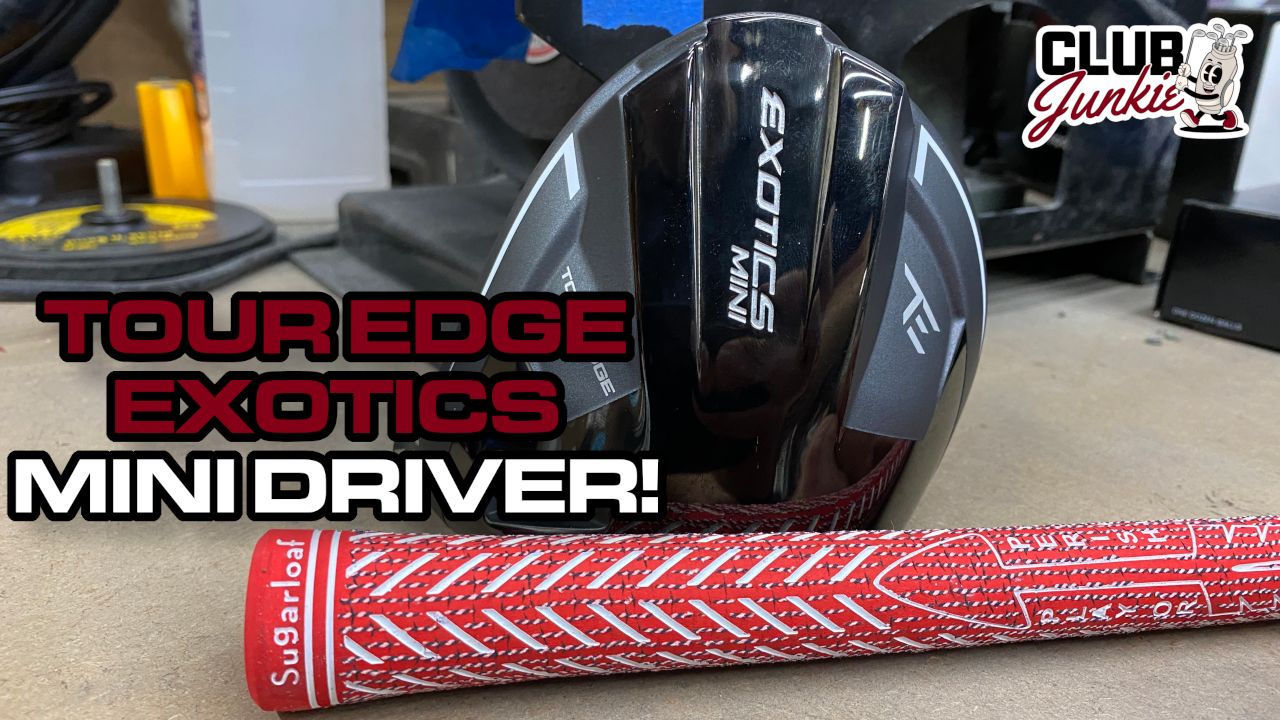
On this episode of Club Junkie, I put the new Tour Edge Exotics Mini Driver to the test and break down the performance, forgiveness, distance, and where it fits compared to a traditional driver or strong fairway wood. If you have been curious about adding a mini driver to the bag, this one is worth a look.
I also dive into the new TaylorMade Spider ZT Max putter that was recently spotted and discuss the growing zero torque putter trend. Plus, there is a closer look at the new Project X Titan Yellow shaft showing up on the PGA Tour and what makes it different from other profiles currently out there.

Justin Rose WITB 2026 (April): Full WITB breakdown with new McLaren irons

What’s the story behind Webb Simpson’s custom-stamped irons?

Memorial Tournament Tour Report: Rory McIlroy, Cameron Young switch up drivers, and more

Cadillac Championship Tour Report: Spieth’s sizable changes, McLaren Golf launches, and more

Russell Henley’s winning WITB: 2026 Charles Schwab Challenge

Kristoffer Reitan’s winning WITB: 2026 Truist Championship

Best irons 2026: Best irons overall, most forgiving irons, and more

J.T. Poston’s winning WITB: 2026 Memorial Tournament

Aaron Rai’s winning WITB: 2026 PGA Championship

Cameron Young’s winning WITB: 2026 Cadillac Championship


Ryan Palmer WITB 2026 (June)
Driver: Callaway Quantum Triple Diamond (9 degrees) Shaft: Project X HZRDUS Smoke Blue RDX 60 TX 3-wood: TaylorMade Qi10 (15 degrees) Shaft:...


Bud Cauley WITB 2026 (June)
Bud Cauley had >14 clubs in his bag when photographed prior to the Memorial Tournament. Driver: Titleist GTS2 (8 degrees) Shaft: Fujikura...


Hannah Green WITB 2026 (June)
Driver: Titleist GTS3 (10 degrees, D4 SureFit setting) Shaft: Mitsubishi Chemical Diamana RB 53 S 3-wood: Titleist GT3 (15 degrees,...


Asterisk Talley WITB 2026 (June)
Driver: TaylorMade Qi4D (9 degrees) Shaft: Fujikura Ventus Blue 6 S 3-wood: TaylorMade Qi4D (16.5 degrees) Shaft: Fujikura Ventus Blue...
-
 Equipment6 days ago
Memorial Tournament Tour Report: Rory McIlroy, Cameron Young switch up drivers, and more
-
 News2 weeks ago
Russell Henley’s winning WITB: 2026 Charles Schwab Challenge
-
 Equipment3 days ago
Best irons 2026: Best irons overall, most forgiving irons, and more
-
 Whats in the Bag4 days ago
J.T. Poston’s winning WITB: 2026 Memorial Tournament
-

 Equipment1 week ago
Details on Jason Day’s latest prototype Avoda iron setup
-
 Equipment3 weeks ago
CJ Cup Byron Nelson Tour Report: Koepka and Kim’s newest putters finally get hot
-

 News2 weeks ago
Charles Schwab Challenge Tour Report: MacIntyre, Åberg and Spaun all switch putters, TaylorMade launches new Spider
-
 Equipment2 weeks ago
Details on J.J. Spaun’s surprise putter switch


ChipNRun
Sep 24, 2019 at 10:10 am
Terry K. wrote…
“Less than 18 percent of you said your last purchase was of a different brand with the goal of improving your performance. I find that puzzling, as I’ll bet nearly 100 percent of you chose your last driver, putter or irons specifically with that goal in mind.”
In your Part 2 report, you said the WRXers seem to have better focus on wedges than the average golfer. Then you made the above “switching brands” statement.
As someone who tests out a lot of brands at expos and demo days, I can say that for IRONS most of the OEMs make at least one iron model I could play – as long as it had the right shaft. Not so for WEDGES.
For the most part, I rely on Cleveland and Callaway wedges. These two brands produce wedges that have worked in the past, so I mainly stay with them. It’s in part a time-saver. And, it’s easier to tweak the wedge game if you stick with a familiar hardware set.
My current wedge mix is Callaway MD3 48* and 54*, and MD-PM 60*. (I use 9i choke-down to bridge shortfalls with 48*). The shafts are all KBS Tour R-flex, 110 grams, slightly heavier than the KBS Tour 90 R-flex in my irons.
I had reshafted my Cle CG14 wedges with KBS Tour for their last two seasons, but was losing partial spin related to both used grooves and the ball I was playing.
In midspin balls, I went from Calla SuperSoft to SuperHot and picked up a bit more spin on partials from my MD3 family wedges. I wonder if part of my yardage gap in wedges may be due to ball cover.
I have a test pack of Ed Snell’s fairly hot MTB-X and MTB Black balls with the urethane covers. Ed suggests that golfers can get lower trajectory, better distance and more spin on their wedges with urethane covers, which grab the clubface better than midspin or certainly distance balls surlyn variants. He suggests part of the “high face” problem may be non-urethane balls climbing up the faces of wedges. BUT… due to real-life adventures I have not been able to test out the MTBs.
As for your other findings… on wedges I have the most distance control problems on my 3/4 wedge shots. It seems my 3/4 takeaway is the most difficult to manage for “top” position.
greg
Sep 22, 2019 at 1:09 pm
Terry
The Koehler design/comcept, compact head, higher CG, Vsole, thicker face, promote better ball striking. We have all owned/gamed low CG, thin faced blades, they just are not as efficient.
Promoting consistent, quality ball striking should be our highest priority.
Howard Theisman
Sep 20, 2019 at 4:50 pm
I went back to my PING EYE2 sand and lob wedges a couple years ago. Tried newer technology three times and found I’m more consistent with the EYE2s. And the grooves on cast iron clubs seem to wear considerably less. And some of the newer technology wedges have come out with the high toe design which is what the EYE2 wedges are. Interesting.
Jimmy Yoon
Sep 17, 2019 at 10:37 pm
How about kuch the douche? Kduooooooooooooche, kduooooooooooooooche, kduoooooooooooooche, kduooooooooooooooche, kduoooooooooooooche, kduooooooooooooooche, kduoooooooooooooche, kduooooooooooooooche. Kduooooooooooooche…..
BadAtWedging
Sep 17, 2019 at 7:59 pm
The idea that you don’t change brands is pretty simple… you have some major factors at play.
#1 people like having the same brand, generally. Switching brands is typically the 2nd factor when you feel like you can make a change. The PRIORITY is can you get a club that is obviously different. When it comes to something like irons, typically, you have to switch CATEGORIES to get different irons within the same brand.
When it comes to wedges, you can switch from a thin to a wide, a different grind, a different loft… all while maintaining the same brand. There’s not a lot of “super game improvement” wedges out there, and most people think nearly anyone can play a “normal” wedge. Thus, staying within brand is helpful for feel, and switching brands gains you little change. You can make those significant performance changes within brand, but if you want new GI irons because you don’t match well with a brand, you have to go to a different brand, generally.
George
Sep 17, 2019 at 7:48 pm
I play only partial shots once I get under 95 yards (GW)for the reasons Drew describes, distance control is too erratic. I disagree with the poster above about full vs. partial shots. Statistics prove that golfers are better off closer to the hole, so my strategy is get as close to the green as possible while avoiding any hazards.
Mike
Oct 12, 2019 at 8:04 am
Wow, interesting, I thought I was the only one not to ‘full swing’ under 100 yards.
Bob
Sep 17, 2019 at 5:43 pm
Thanks for all this work Terry… I find it fascinating. At the US Amateur, there was a story about one to the players whose highest lofted wedge was 56.. said his dad had told him if you have talent, you don’t need more than 56. I’ve never owned a 60 myself, playing PW, 52 & 56, and feel my short game is one of the strengths of my game. What are your thoughts on this set up strategy?
the dude
Sep 17, 2019 at 6:28 pm
ya…his dad is probably right…..(every tour player has a 58* or more in their bag)….fail.
ChipNRun
Sep 24, 2019 at 10:15 am
Golf Digest survey report: for half the tour players, 58* is their highest lofted wedge.
Rick McDowell
Sep 17, 2019 at 5:18 pm
Great insight as always on the topic of wedges.
With respect to the question of not buying wedges of a different brand to improve performance, I think many golfers don’t see or believe a company that claims there grooves present a significant advantage, etc.(ex. a reason to switch).In other words compared to say buying XYZ companies river because it goes further, there is no driving dynamic in most of our minds about switching brands to improve. What are you improving? This part of the game seems much more driven by what feels right than some marketing claim. I think some of us see this part of the game affected more by technique improvement than equipment enhancement. My 2 cents.
CarteDog350
Sep 17, 2019 at 4:13 pm
Well done Terry.
I carry four wedges and wedge play is probably strongest part of my game including putting. A friend of mine is a PGA instructor and he suggested I play the same shafts in my wedges as I do my irons. Can’t say enough ….Love the feeling of weight consistancy.
My instructor always said”You need a 50 yard shot” including the other clock positions to cover multiple yardages….Wedge play in my honest opinion is the best part of golf. It free’s the mind to hit shots that require imagination and finesse.
Keep up the good work.
Charlie Waffles
Sep 17, 2019 at 12:49 pm
I think our improvement in the wedge game goes hand in hand with how much we practice our mid and long range wedge shots. I for one put little time in my 60-95 3/4 wedge shot. Conversely I practice my shorter wedge and chip shots a lot. Being more accurate with the latter will get me into better scoring.
Scooter
Sep 17, 2019 at 12:03 pm
Terry, thanks for the article. With regards to your final question, I believe many GolfWRX-ers are brand centric, like and are comfortable with the brand they’re playing, and feel that their brand has a wide enough range of wedge options (lofts, grinds, shafts, profiles, cavity/blade etc.) to allow them to make any change they desire. Some is likely $$ driven, where breaking away from their comfort brand to another brand feels “risky”. Being able to demo new brands of interest on the course would help alot in this regard, but is often not viable. And I’m sure we’ve all had fittings that led us a bit astray. Personally, practice seems like the much bigger level to my improvement than wedge differences between various manufacturers.
Dan
Sep 17, 2019 at 10:41 am
I guess my question is related to shaft differences. I play SF i95 shafts in my irons, but play S400 shafts in my RTX4 wedges. Wedge play is a strong point in my game, and I think I like the heavier feel, especially on partial swings. Are you suggesting that reshafting wedges in a SF i95 may provide me a benefit? How? Commonality? I know a lot of players play with wedges shafts…. maybe I should try that.
Terry Koehler
Sep 19, 2019 at 9:12 am
Dan, my experience is that when golfers re-shaft their wedges to something that more closely resembles the weight and flex of their irons, they really like the improved feel and performance. It’s certainly worth a try. The reason most golfers play “wedge flex” shafts in their wedges is because that is what they come with at retail, and no one talks about the shaft — all the dialog from the OEMs is about bounce and grooves.
If you decide to try re-shafting your wedges, let us all know how the experiment works out.
brian
Sep 17, 2019 at 10:28 am
“It is generally accepted that full swings are harder to master than the partial swings those short-range shots require.”
I don’t know where this is “generally accepted”. Not a single golfer I play with would rather be 50-70 yards out over 100. Half-swings with wedges are the most uncomfortable shots in golf, if you ask me.
Drew
Sep 17, 2019 at 12:08 pm
I for one am in the boat described. I carry 4 wedges and I don’t trust anything below the pitching wedge to go the distance it should on full swings (pop them up). I’d rather have a partial wedge shot anyday.
I also didn’t carry a wedge until I was 17, so I learned to do a lot with a 9-iron. That may play a part with my comfort in partial swings and creativity in manipulating the club to get the results I want.
Terry Koehler
Sep 18, 2019 at 5:19 pm
Oops, that was meant to read “easier”. My bad, didn’t catch that in proofing. Thanks for pointing that out, Brian.