
Opinion & Analysis
The Wedge Guy: Is wind golf’s toughest challenge?


We all know this fascinating game we play can throw a wide variety of challenges at you, from trees to rough, to sand, to fast greens, narrow fairways…well, you get the picture. But maybe the toughest challenge of all is wind. And those who play in Texas, Florida, and other breezy places get more than their share of it.
Even on the PGA Tour, you typically do not see the super-low scoring when the wind picks up. Like many of the players said after the massacre at Medinah a couple of weeks ago, length doesn’t phase them anymore. Give them soft greens and it doesn’t matter how long the course is playing. But toss in a nice breeze of 15-20 mph or more, and that low scoring just doesn’t happen, does it?
There is even an old Scottish saying that goes something like: “If there be nay wind, there be nay golf.” A stout wind changes the game tremendously.
Having spent my whole life in Texas, playing in the wind is just as much a part of golf as grass. It is almost always blowing from one direction or another, and learning how to maneuver a small, light white ball through that wind adds a whole new dimension to the game. The two keys, of course, are to control trajectory and spin.
I will admit that the ball gurus have helped a lot with the newer golf balls, which spin a great deal less than our old balata balls that I learned with. That cuts down on both backspin and sidespin, which, in turn, makes hitting better golf shots into the wind or with crosswinds much easier.
But I’m finding that as the club manufacturers deal with that lower-spinning ball, they are producing clubs–from drivers to irons–that launch the ball a great deal higher than before. And to me at least, that makes filling in your set a much more challenging process.
I still prefer single-piece forged blade irons, as they allow you to have more control over trajectory in my opinion. (That’s why the majority of the best iron players on tour still play them as well). I watch friends fight the wind with their perimeter-weighted irons that were designed to put the ball as high into the air as possible. That’s what the designers were striving for, so it’s hard to fight all the science they have built into these new iron designs. I’ve gamed my irons for five years now—I designed them to be forgiving, while still allowing me a high degree of trajectory control.
Likewise for my driver—a prototype that never made it to production because of its small size (410 cc) and the fact that it was [maybe] not quite as “forgiving” as bigger designs. But it allows me to have a tremendous amount of trajectory control as well as the ability to work the ball in both directions off the tee, which is how I like to play the game.
However, my recent experience of trying to find the perfect fairway wood has been baffling and frustrating. As I’ve written, I’m a big fan of the 4-wood, and have had several I just loved—but I thought I would see about “upgrading” to one of the newer models that claim to be longer. I’ve tried several and all are long and solid, but they launch the ball so high, I cannot find a way to get the low, boring shot into the wind out of them. Comparing 17-degree models to one another, they all seem the same–long and high.
So, I have been forced to get creative with filling that gap in my set. And my solution was an early generation Sonartec NP-99 3-wood at 15 degrees (eBay: $45!), which I cut down to 42.5” in length. I can hit it high when I want, and have no problem hitting “stingers” or other lower-trajectory shots when called for into a stiff breeze.
All this to say you can still get creative when putting your set together to allow you to play the game the way you want.
Teasers from our survey
The GolfWRX editors and I thank you all who persevered our tech glitch and completed our survey. As we near 1,000 completed, the insight you all have provided will give us some deeper understanding of you and your games so that we can do our best to be more relevant to you going forward. I have a lot of work ahead of me to analyze and cross-tabulate your answers, but I will begin sharing insight you have given in the weeks ahead.
I can share that overall there were surprises, along with things we had pretty much figured out.
- The GolfWRX readers skew a bit younger than the golfer population at large. This is no surprise as the younger generations are much more engaged on forums like this in any discipline.
- The GolfWRX readers play much more golf than the golf population at large. Again, no surprise as you all are expressing your much deeper relationship with the game.
- Likewise, GolfWRXers average lower scores than the general golfer population, again as we suspected.
Over the next few weeks, I’m going to devote a portion of each blog article to sharing deeper insight into what we learned from you all. I think you will find this very interesting, so stay tuned.









This past Monday, I played in the U.S. Amateur local qualifier at Rock Creek Country Club in Portland, Oregon. A full tee sheet from 7:30 a.m. to 1:55 p.m., the top 11 scores would make it to the U.S. Amateur final qualifying.
I teed off at 10:48 a.m.. With the 7:30 am tee time, you can get a feel for the leaders’ pace, and they were off and running on the challenging setup at Rock Creek.
View this post on Instagram
Getting to the highlight of the round on the par five 17th, a drive up the left side and 212 yards left to the front hole location. I took out a 5-iron with plans of middle of the green. The ball ended up 8 feet left of the hole, pin high. A slight downhill putt dropped in for an eagle 3 on the 17th. With the cut line looking to be anywhere from -2 to even par. This was the boost I had been waiting for all day.
With making par from the trees on 18, it was time to wait for a potential playoff with a posted score of one under par 71.
Three hours later, it was playoff time. 8 players for 6 spots. I made par on the playoff hole, which was good enough to advance to the U.S. Amateur final qualifying in July. USGA qualifiers sure deliver on all of the emotions in golf!
Club Junkie
Building my 2026 gamer WITB: Ranking the contenders and new putter projects – Club Junkie Podcast

The annual What’s In The Bag build is underway, and on this episode of Club Junkie, Brian breaks down the clubs currently leading the race for a spot in his 2026 gamer setup. From drivers and fairway woods to irons, wedges, and shafts, he ranks the equipment that’s performing best and explains what’s separating the front runners from the rest of the field.
Brian also heads into the workshop to discuss several putter projects currently on the bench. From head options and shaft choices to build ideas and testing plans, he shares what he’s working on and which putters could become serious contenders for the bag this season.
If you’re a gear junkie who loves equipment testing, club building, and the never-ending pursuit of the perfect setup, this episode is for you.
Follow Club Junkie:
Instagram: @clubjunkiepod
TikTok: @clubjunkiepod
Threads: @clubjunkiepod
X: @ClubJunkiePod
Club Junkie
Tour Edge Exotics mini driver review + TaylorMade Spider ZT Max first look – Club Junkie

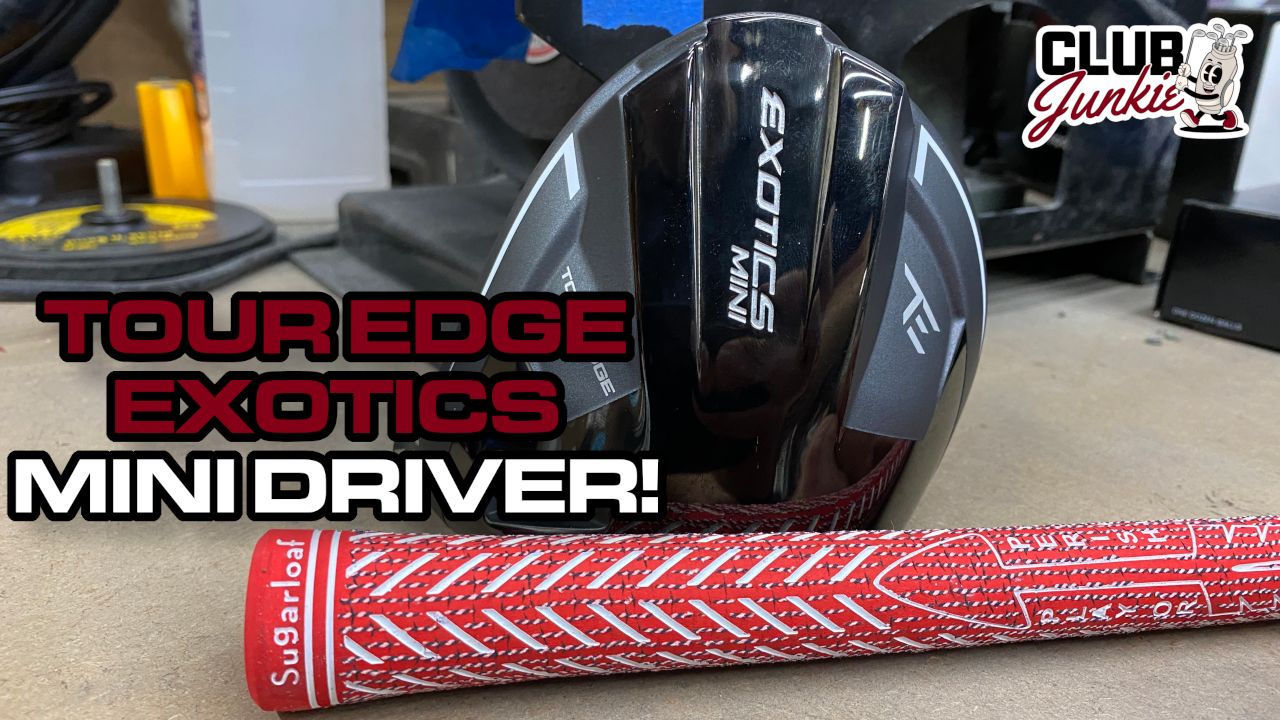
On this episode of Club Junkie, I put the new Tour Edge Exotics Mini Driver to the test and break down the performance, forgiveness, distance, and where it fits compared to a traditional driver or strong fairway wood. If you have been curious about adding a mini driver to the bag, this one is worth a look.
I also dive into the new TaylorMade Spider ZT Max putter that was recently spotted and discuss the growing zero torque putter trend. Plus, there is a closer look at the new Project X Titan Yellow shaft showing up on the PGA Tour and what makes it different from other profiles currently out there.

Justin Rose WITB 2026 (April): Full WITB breakdown with new McLaren irons

What’s the story behind Webb Simpson’s custom-stamped irons?

Memorial Tournament Tour Report: Rory McIlroy, Cameron Young switch up drivers, and more

Cadillac Championship Tour Report: Spieth’s sizable changes, McLaren Golf launches, and more

Russell Henley’s winning WITB: 2026 Charles Schwab Challenge

Kristoffer Reitan’s winning WITB: 2026 Truist Championship

J.T. Poston’s winning WITB: 2026 Memorial Tournament

Aaron Rai’s winning WITB: 2026 PGA Championship

Best irons 2026: Best irons overall, most forgiving irons, and more

Cameron Young’s winning WITB: 2026 Cadillac Championship


Bud Cauley WITB 2026 (June)
Bud Cauley had >14 clubs in his bag when photographed prior to the Memorial Tournament. Driver: Titleist GTS2 (8 degrees) Shaft: Fujikura...


Hannah Green WITB 2026 (June)
Driver: Titleist GTS3 (10 degrees, D4 SureFit setting) Shaft: Mitsubishi Chemical Diamana RB 53 S 3-wood: Titleist GT3 (15 degrees,...


Asterisk Talley WITB 2026 (June)
Driver: TaylorMade Qi4D (9 degrees) Shaft: Fujikura Ventus Blue 6 S 3-wood: TaylorMade Qi4D (16.5 degrees) Shaft: Fujikura Ventus Blue...
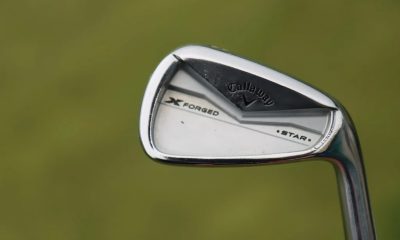

Brianna Do WITB 2026 (June)
Driver: Callaway Quantum Triple Diamond (9 degrees) Shaft: KBS PGW 3-wood: Callaway Elyte Titanium (15 degrees) Shaft: KBS PGW 5-wood:...
-
 Equipment6 days ago
Memorial Tournament Tour Report: Rory McIlroy, Cameron Young switch up drivers, and more
-
 News1 week ago
Russell Henley’s winning WITB: 2026 Charles Schwab Challenge
-
 Whats in the Bag3 days ago
J.T. Poston’s winning WITB: 2026 Memorial Tournament
-
 Equipment3 days ago
Best irons 2026: Best irons overall, most forgiving irons, and more
-

 Equipment1 week ago
Details on Jason Day’s latest prototype Avoda iron setup
-
 Equipment3 weeks ago
CJ Cup Byron Nelson Tour Report: Koepka and Kim’s newest putters finally get hot
-

 News2 weeks ago
Charles Schwab Challenge Tour Report: MacIntyre, Åberg and Spaun all switch putters, TaylorMade launches new Spider
-
 Equipment2 weeks ago
Details on J.J. Spaun’s surprise putter switch


Al
Sep 4, 2019 at 9:16 pm
The main point of Terry’s analysis is that if some have their way, weight would be taken out of the ball because the Pros hit it so far. If this insanity ever wins out, every one of the dissenting views of this article would completely evaporate..
Chimchim
Sep 4, 2019 at 5:23 pm
Wind is the hardest to play in, for sure. As much as I try, inevitably, the wind gets into my head at some point in the round – with not good results. No other condition does that. I will agree that inconsistent greens will impact putting, but I will take my chances once I am there.
I have a couple of the sonartec np woods. they are /were nice. I just get more distance out of my current 3 wood and hit hybrids for the “5 wood”.
gwelfgulfer
Sep 3, 2019 at 9:16 pm
The gap between the ears is the toughest challenge… How many million dollar swings are there out there with $2 brains…
drkviol801
Sep 3, 2019 at 8:23 pm
A solidly struck ball won’t move much in the wind, y’all are just hacks.
drkviol801
Sep 3, 2019 at 8:25 pm
*Wont move much in crosswind when compressed, into and with the wind are fairly easy to judge…
James
Sep 3, 2019 at 7:47 pm
So which would you rather: 30 mph wind or 20 yd wide fairways with 4 inch rough? I’ll take the wind.
Alex
Sep 3, 2019 at 2:56 pm
Heavy Wind is the hardest challenge in golf hands down imo. 12/15 mph is fine and a lot of courses are actually designed for it. Usually a south wind that longer holes play into that almost need the wind for it to play correctly. When it gets up around 30 that’s when it’s a curve ball. 12-15 is usually steady when it’s 30 you’ll get gusts in the 40s or it’ll swirl on you and wreck your yardage control. Gimmick pins are 2nd. When I say gimmick pins I mean holes that you’d rather be 20 feet below than 4 feet above. None of us are good enough to be upset hitting it to 4 feet and a bad hole location that doesn’t reward a good shot will make you want to walk off the course and scream at the superintendent. Pga tour guys have that game. I’’m gonna be extremely pissed off if I stuff a par 3 or approach on par 4 to have a defensive don’t make a bogey putt from inside 6 feet.
Ryan
Sep 4, 2019 at 10:11 am
I was playing with a group here in Texas one windy summer morning. We were on 17, which was a par 3. It was playing into the wind and although short, it was still a middle iron to long iron for a shorter hitter. Guy hit a great shot to 3 feet. I turned and said, “great shot, good luck with that putt though”. It was a full on gimmick pin. He barely tapped the putt, it missed the hole and went 10 feet by. He then missed the next one, for a nice little bogey. Thought he was going to strangle the super. He went in the clubhouse looking for the guy but didn’t find him. He gave them an ear full about the pin location. In his defense, it was a ridiculous pin. The flag was nearly at an angle.
ChipNRun
Sep 3, 2019 at 1:48 pm
Wind is a factor, but not the biggest challenge for everyday golfers. For us average WRXers, I would say inconsistent course manicure is the biggest challenge.
I played a tournament at a former country club that became a decent municipal course. Only problem – whether the rough got mowed the day before can make for a 2- to 4-stroke swing in scores. I mean, the “first cut” gets ankle deep really fast.
Two of the par 5 holes are notorious. No. 3 runs along the north edge of the course. It’s blind tee shot, and anything move than a foot into the left rough can end up being a lost ball. Same problem on No. 16 – a crowned fairway runs along the south edge of the course, and anything that bounces left seemingly leaves the planet.
As far as wind goes, around 35 MPH gets touchy – but I prefer not to play in such weather. Call me crazy, but in persimmon-headed driver days a player was expected to be able to handle the wind. For a head wind, tee the ball low, or punch up a tuft of grass about an inch to keep the ball low and hot. Last time I checked, the wind blows on everyone. Time of day can matter if the wind gets stronger in AM or PM – but that’s golf.
Being this is the Wedge Guy’s column, let’s talk cross winds. Inside 70 yards, if I’m facing a crosswind with an open green front, I may take 7i punch-and-run to keep the ball low.
For full iron shots, the iron designers suggest taking an extra club or two into a headwind rather than trying for an unpracticed knock-down. If it’s a cross wind, you can work it or fight it. One of my favorite shots in golf is an iron shot draw back against a left-to right crosswind.
Learning to handle the wind is part of GOLF. Learning to handle jungle rough… well, sometimes it can’t be handled.