
Opinion & Analysis
Hot Drivers: What’s really going on!


Thanks to the R & A and Xander Schauffele, along with (allegedly) at least three other players we don’t know about yet having drivers test over the CT limit for speed, the golf world has exploded with hot takes on the subject.
Did the players know? Did someone else know? Are OEMs building fast drivers to trick the machine?
I’m not here to make hot takes, I’m here to talk facts and truths about how we got here and how Xander Shauffele (and potentially others) arrived at Royal Portrush with drivers over the CT limit.
First, let me make one thing straight, I don’t believe Xander, or any of the other players, had any idea their drivers were illegal/over the limit. Did they know they had a great driver that performed? Yes, but golf is a game of integrity and like life, in golf your reputation is everything; I don’t believe for a second they thought they were getting a distinct advantage against their playing competition.
How Does This Happen?
Modern driver heads are complex things. The tolerances that the OEMs and their suppliers work with are extremely tight—like aerospace industry tight—one engineer I have spoken to many times has said its actually tighter. You have extremely thin yet strong titanium, moveable weights, carbon fiber, and more working together in a complex geometry. They are built to launch golf balls up to 185 MPH all while maintaining flexibility so as not to explode on impact. It’s not easy to make a good one but the good ones make it seem easy.
A driver face will eventually wear out, its a fact. It can only take so many impacts before it will fail. The number it takes is generally very high, so high that many golfers will switch before failure ever occurs. It is well known within the industry that as drivers are used they actually get FASTER! The fastest a driver will ever be for ball speed are the few balls before eventual failure because of the increased flex happening with the face and the great energy transfer… but where does this flex come from?
OEMs are in the business of distance, and making drivers as long as possible. Thanks to advanced manufacturing, processes, and materials, they can now make drivers right to the limit and truly push the envelope with every single head. TaylorMade, for example, even openly talks about how thanks to the new speed injection on the M5 and M6 drivers, they are building drivers beyond the limit and dialing them back—pretty cool technology if you ask me.

Fast drivers + high swing speed players = a perfect storm for drivers to become hot.
The CT (characteristic time ) limit is .239 with an allowance of .018, meaning the absolute limit the OEMs have to work with is .257. If you get a driver that was measured by both the factory and your tour department and deemed legal at say .255 then you are good to go. But, without daily testing, we dont’t know when this “hot” stage in the driver’s life occurs: 100 balls? 1,000? What if you test before and after a round and it only fails after? No way to tell when it failed, maybe it was after the final tee shot and it was never non-conforming during play, what is the outcome? It’s not like the .003 increase would offer any distinct advantage once you factor in player and environmental factors, but still under the rules it’s a NO-NO.
You could even go the other way when it comes to wedges. I’ve been suggested the hypothesis that you could mill illegal grooves into a wedge beyond the limit but after a single bunker practice session of say 150-200 shots it’s now legal and RIGHT at the limit because of wear. In reality, this CT limit-pushing greatly benefits the regular golfer and allows any players to get the absolute most out of their driver (legally) when they get fit for a new one. Tour players get this same advantage, but because of their swing speeds, the likelihood of then getting to the fastest/hottest point is going to happen, well…faster.
Obviously lots of discussion about fast (hot ????) drivers so let’s talk about that for a minute.
As they get used, a driver will get faster. The “hottest” a driver will be is right before the face fails!
To think this is a new thing is shortsighted, there are other examples…
— Ryan Barath ???????? (@RDSBarath) July 21, 2019
Tolerance, Tolerance, Tolerance…
With so much talk about the tolerances of each head, what about the CT measuring devices? We’re talking about .003 microseconds! One tiny change to the way the test is conducted by the user, or how the machine is calibrated and there will be variance.
It’s the same thing when talking about lies and lofts, if unknown to you, the machine you use is off by a single degree then at least the whole set is “off” which from a players perspective is fine as long as you are seeing the intended results. Unfortunately, when it comes to the rules this could be the difference between a driver passing and failing—that’s a big deal.
What this has exposed and shown the world is that modern drivers really are pushing the limit for all golfers. Does it mean we need a rule roll back or adjustment to the CT variance to get the “hot” driver okayed…OR, does this mean the governing bodies to need put a real clamp down of how and when a driver can be tested and what it really means to “be at the limit”?
There is certainly a lot to discuss on many sides of this issue from player, rules, technology perspectives, but if one thing is for sure, this really is just the tip of the iceberg to another element of the distance debate.





This past Monday, I played in the U.S. Amateur local qualifier at Rock Creek Country Club in Portland, Oregon. A full tee sheet from 7:30 a.m. to 1:55 p.m., the top 11 scores would make it to the U.S. Amateur final qualifying.
I teed off at 10:48 a.m.. With the 7:30 am tee time, you can get a feel for the leaders’ pace, and they were off and running on the challenging setup at Rock Creek.
View this post on Instagram
Getting to the highlight of the round on the par five 17th, a drive up the left side and 212 yards left to the front hole location. I took out a 5-iron with plans of middle of the green. The ball ended up 8 feet left of the hole, pin high. A slight downhill putt dropped in for an eagle 3 on the 17th. With the cut line looking to be anywhere from -2 to even par. This was the boost I had been waiting for all day.
With making par from the trees on 18, it was time to wait for a potential playoff with a posted score of one under par 71.
Three hours later, it was playoff time. 8 players for 6 spots. I made par on the playoff hole, which was good enough to advance to the U.S. Amateur final qualifying in July. USGA qualifiers sure deliver on all of the emotions in golf!
Club Junkie
Building my 2026 gamer WITB: Ranking the contenders and new putter projects – Club Junkie Podcast

The annual What’s In The Bag build is underway, and on this episode of Club Junkie, Brian breaks down the clubs currently leading the race for a spot in his 2026 gamer setup. From drivers and fairway woods to irons, wedges, and shafts, he ranks the equipment that’s performing best and explains what’s separating the front runners from the rest of the field.
Brian also heads into the workshop to discuss several putter projects currently on the bench. From head options and shaft choices to build ideas and testing plans, he shares what he’s working on and which putters could become serious contenders for the bag this season.
If you’re a gear junkie who loves equipment testing, club building, and the never-ending pursuit of the perfect setup, this episode is for you.
Follow Club Junkie:
Instagram: @clubjunkiepod
TikTok: @clubjunkiepod
Threads: @clubjunkiepod
X: @ClubJunkiePod
Club Junkie
Tour Edge Exotics mini driver review + TaylorMade Spider ZT Max first look – Club Junkie

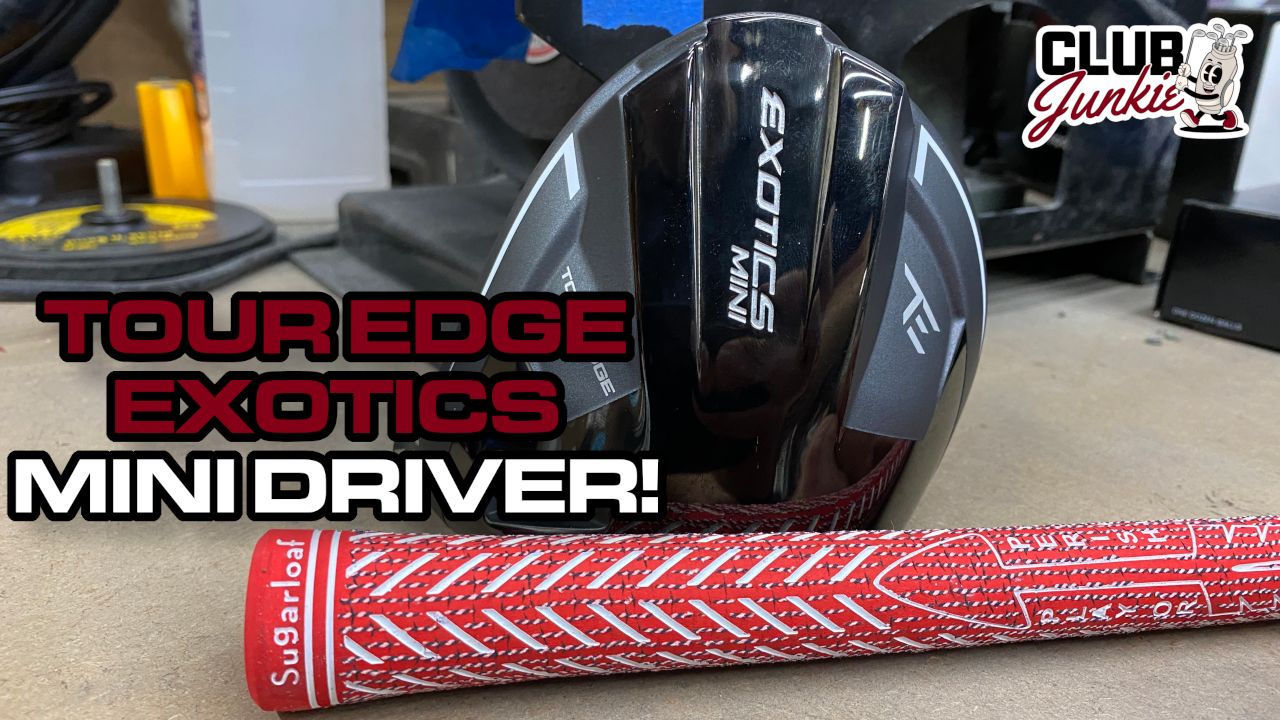
On this episode of Club Junkie, I put the new Tour Edge Exotics Mini Driver to the test and break down the performance, forgiveness, distance, and where it fits compared to a traditional driver or strong fairway wood. If you have been curious about adding a mini driver to the bag, this one is worth a look.
I also dive into the new TaylorMade Spider ZT Max putter that was recently spotted and discuss the growing zero torque putter trend. Plus, there is a closer look at the new Project X Titan Yellow shaft showing up on the PGA Tour and what makes it different from other profiles currently out there.

Justin Rose WITB 2026 (April): Full WITB breakdown with new McLaren irons

What’s the story behind Webb Simpson’s custom-stamped irons?

Memorial Tournament Tour Report: Rory McIlroy, Cameron Young switch up drivers, and more

Cadillac Championship Tour Report: Spieth’s sizable changes, McLaren Golf launches, and more

Russell Henley’s winning WITB: 2026 Charles Schwab Challenge

Kristoffer Reitan’s winning WITB: 2026 Truist Championship

Best irons 2026: Best irons overall, most forgiving irons, and more

J.T. Poston’s winning WITB: 2026 Memorial Tournament

Aaron Rai’s winning WITB: 2026 PGA Championship

Cameron Young’s winning WITB: 2026 Cadillac Championship


Ryan Palmer WITB 2026 (June)
Driver: Callaway Quantum Triple Diamond (9 degrees) Shaft: Project X HZRDUS Smoke Blue RDX 60 TX 3-wood: TaylorMade Qi10 (15 degrees) Shaft:...


Bud Cauley WITB 2026 (June)
Bud Cauley had >14 clubs in his bag when photographed prior to the Memorial Tournament. Driver: Titleist GTS2 (8 degrees) Shaft: Fujikura...


Hannah Green WITB 2026 (June)
Driver: Titleist GTS3 (10 degrees, D4 SureFit setting) Shaft: Mitsubishi Chemical Diamana RB 53 S 3-wood: Titleist GT3 (15 degrees,...


Asterisk Talley WITB 2026 (June)
Driver: TaylorMade Qi4D (9 degrees) Shaft: Fujikura Ventus Blue 6 S 3-wood: TaylorMade Qi4D (16.5 degrees) Shaft: Fujikura Ventus Blue...
-
 Equipment6 days ago
Memorial Tournament Tour Report: Rory McIlroy, Cameron Young switch up drivers, and more
-
 News2 weeks ago
Russell Henley’s winning WITB: 2026 Charles Schwab Challenge
-
 Equipment3 days ago
Best irons 2026: Best irons overall, most forgiving irons, and more
-
 Whats in the Bag4 days ago
J.T. Poston’s winning WITB: 2026 Memorial Tournament
-

 Equipment1 week ago
Details on Jason Day’s latest prototype Avoda iron setup
-

 Equipment3 weeks ago
CJ Cup Byron Nelson Tour Report: Koepka and Kim’s newest putters finally get hot
-

 News2 weeks ago
Charles Schwab Challenge Tour Report: MacIntyre, Åberg and Spaun all switch putters, TaylorMade launches new Spider
-
 Equipment2 weeks ago
Details on J.J. Spaun’s surprise putter switch


HoVidos
Apr 16, 2020 at 4:11 pm
Excellent website. Plenty of useful information here. I’m sending it
to some pals ans also sharing in delicious. And naturally, thanks for
your sweat!
Anonymous
Jul 29, 2019 at 2:41 pm
???å?????`T??????,?????????????`T??????,??????????T??-?????????????????????????å?????????????å? ??????????å? ????`????? ???å? ??å? ?????????????????????? ??????????å??????? ?(1) ?????å??`?????`???`???`??(20) ??????(2) ?L??T??????(2) ????T??????(10) ?????å?(5) ?????(3).
?????? ????`
Backshwing King
Jul 23, 2019 at 9:46 pm
Thank the golf God’s it wasn’t Eldrick’s driver that was found illegal. OMG, the world would have stopped spinning and they’d be trying to strip him of his umpteen majors!!
Lance
Jul 22, 2019 at 9:18 pm
There’s a reason they test a bunch of heads at a time. Looking for the hottest one or two
jgpl001
Jul 22, 2019 at 5:46 pm
Come on guys, get real
Do you think this would make ANY difference in The Open into a 25 mph headwind and/or heavy rain?
Even on a perfect day in perfect conditions its not even 1/2 club…and thats bang out of the middle
Non-story, move on
xander
Jul 22, 2019 at 3:23 pm
OEM?
chris
Jul 22, 2019 at 2:44 pm
I was curious about if or how then rules account for normal wear of a golf club potentially making said club illegal. Here’s what the rules officially say:
(1) Conforming Clubs. In making a stroke, a player must use a club that conforms to the requirements in the Equipment Rules:
A club used to make a stroke must conform not only when the club is new, but also when it has been deliberately or accidentally changed in any way. But if the performance characteristics of a conforming club change because of wear through normal use, it is still a conforming club.
Seems to me that it’s very unclear. If a driver is tested and deemed legal on day one and then becomes too hot over time due to normal use…is it conforming or not?
Ballstriker's R us
Jul 22, 2019 at 12:09 am
Wait a minute, pros are swingin’ illegal equipment?! No waaaaaaaay, it can’t be! I never thought it could even be a possibility!! Oh wait, and now you’re telling me they had NO IDEA? OMG! As good ‘ol John McEnroe would say, “You can’t possibly be serious!” These manufacturers and pros are a total crack up. We’re all being takin’ for fools!! Of course they know WTH they’re doing! The shock and awe of it all! The outrage! My innocence is now lost. Sooooo sad I am, thinking everybody was playing fair. Hahahaha!! Lol! What a crack’up
tis confusion
Jul 22, 2019 at 12:40 am
?…You’re incorrect
gery katona
Jul 21, 2019 at 9:13 pm
Rules are rules, but frankly the differences we’re talking here are pretty much meaningless and more about marketing. Back when COR was used as the metric to determine the trampoline effect there was a big deal about .083 COR vs .086, the old standard. It was determined that for every .001 COR, the difference in yardage was 1.5~2 yards. So, the range between .083 and .086 was 4.5~6 yards which is nothing. Now we’re are talking about even smaller ranges which frankly are meaningless in terms of benefit.
Phil
Jul 21, 2019 at 3:19 pm
> We’re talking about .003 microseconds!
3 microseconds = 0.003 milliseconds. hth.