
Opinion & Analysis
An interview with Jon Cavalier, amateur golf course photographer

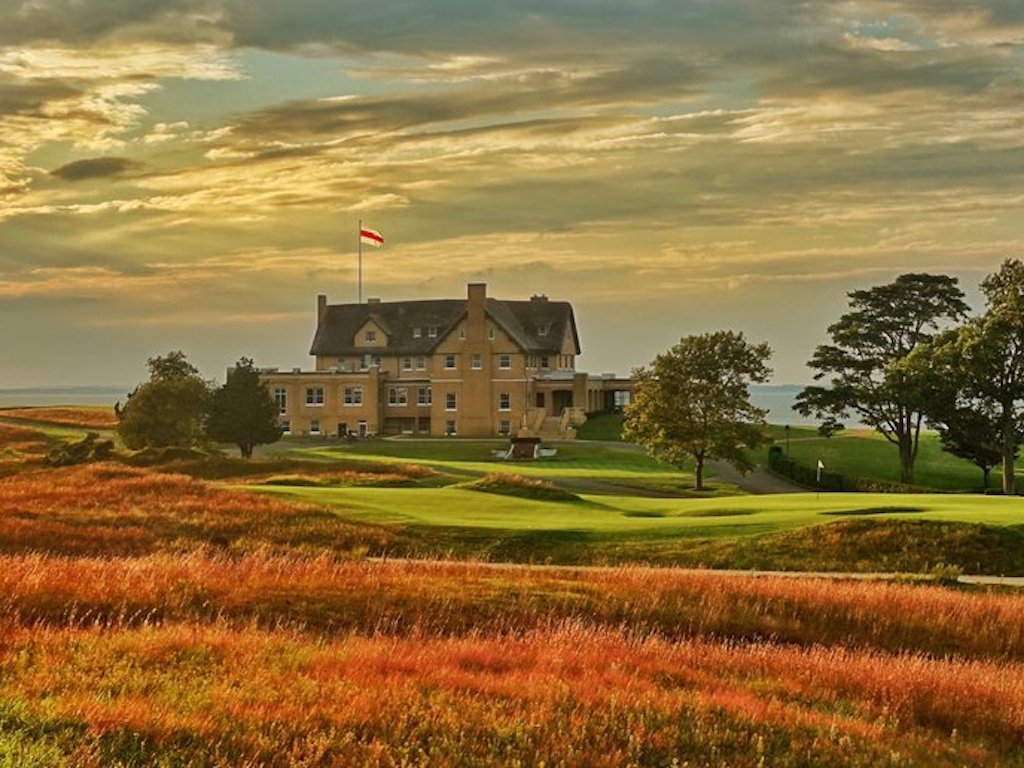
A congregation of golf course architecture aficionados gathers regularly on the internet, to preach the word of design. Their Stonehenge is a website called Golf Club Atlas, and when the denizens aren’t posting long-form pieces on golf course architecture history, they engage in smoldering debate on the origin, merit, and authenticity of architects, their decisions, and the outcome of those decisions. Members of the community often gather, site unseen, for events called the King’s Putter, the Midwest Mashie, and the Knockout. Their allegiance is unwavering, the stuff of legends, even when a match is on the line, or a favorite course’s origin is called into question.
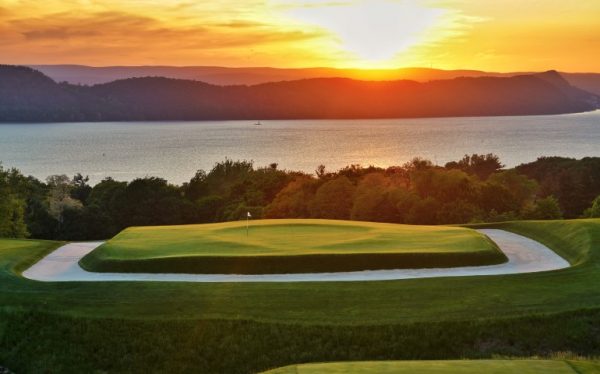
Sleepy Hollow
Many on the site have money and the wherewithal to join, or travel to as guests, the world’s the great clubs. Many others do not, and garner knowledge through the descriptions of these sojourners. To the great benefit of all, members like Joseph Bausch (a Villanova University professor) and this writer (not a Villanova University professor) post their images for all to view.
More than any other, and in a brief period of time, Jon Cavalier has emerged as the lens witness to the glory of golf course architecture. Cavalier shoots more courses, with greater frequency, than one might think humanly possible. What exceeds belief, is that photography is not his career. Cavalier is a lawyer, based in Philadelphia. One of his passions is golf course architecture and its photography. Without him, golfers on Golf Club Atlas and Instagram and Twitter (where he post as @linksgems) would not have access to the Pine Valleys, the Cypress Points, and the Yeaman’s Halls of this country and the world. It is our pleasure to present this interview with him, along with a dozen of his favorite photos. If you don’t know the spots, enjoy their beauty and follow Mr. Cavalier on social media for a daily dosage.
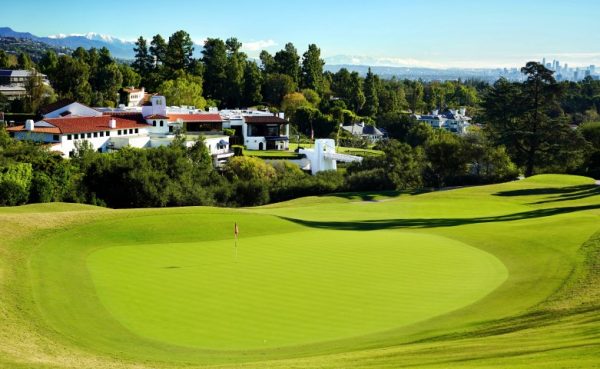
Bel-Air
1. How did you transition from just golfer to golfer and photographer?
I’ve been an avid golfer for about 20 years now. I picked the game up in college after aging out of traditional sports due to rapidly declining athleticism. I was hooked after my first round. At the same time, I’ve always had at least a passing interest in photography. And as best I can remember, I photographed a golf course for their website (I built the website too) back in 2002 or so. But for some reason, I never really combined the two until 2013 or so. As it happened, I was playing Somerset Hills on a gorgeous fall day and had a camera in the car – the fall colors were so beautiful that I decided to bring the camera out with me. Afterwards, I realized that I’d enjoyed taking the photos almost as much as I enjoyed playing the course. I’ve been doing both ever since.
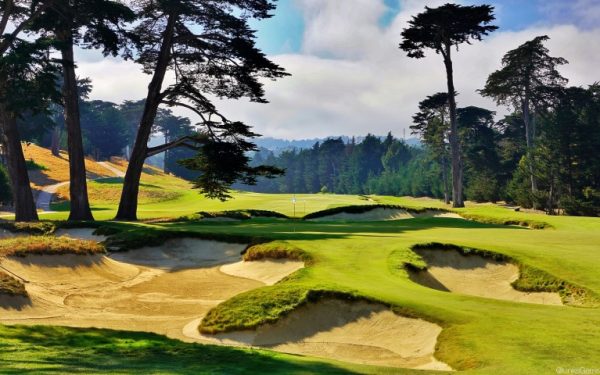
Cal Club
2. Who inspired/motivated you to undertake golf course photography?
I’ve always been inspired by the top golf photographers — guys like Walter Iooss, Evan Schiller (@Evan_Schilller_Photography) and Jacob Sjoman (@sjomanart), and other talented guys like Ben Peters (@thegolfhawk) and Mike Gibbons (@gibbonsphoto). Beyond that, my biggest source of both inspiration and motivation is the people who like seeing my photos and who asked to see more, especially those on the GolfClubAtlas forum and those who follow me on social media. My wife, who had already been putting up with my full blown golf habit, has always encouraged the photography as well.
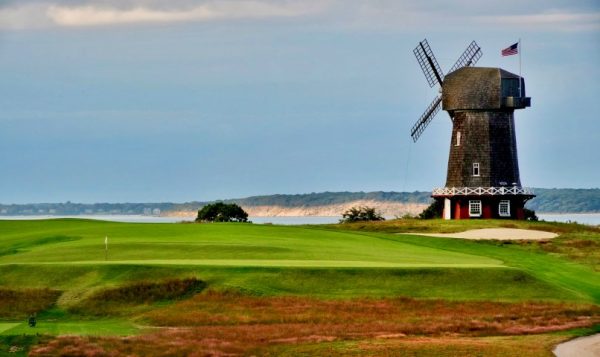
National Golf Links of America
3. When did it transition from more than something fun, to something bigger?
That’s a great question, and I suppose the answer depends on what is meant by “something bigger.” As it stands, even now, I take and share golf photos because it’s fun and I enjoy doing it. Taking photos adds to my enjoyment of a round of golf, and sharing them has led to interactions with so many great people, many of whom I am fortunate to now call dear friends. If golf photography ever stopped being fun, I’d stop doing it.

Shinnecock Hills
4. Talk equipment for a moment-what camera and lens do you love, and what software do you use for editing?
I’ve been shooting mostly Sony cameras for the past few years, and I’m a big fan. My go-to is a Sony a7Riii mirrorless with either a Sony OSS 24-240 or a Sony 24-105 G OSS lens. This combo offers great versatility and photo quality, and is perfect for golf photography.
When I want something smaller, I use a pocket-sized Sony RX-100 MK6, which is a terrific camera for its size. I’ve used the RX-100 series since the MK3, and they are excellent.
Occasionally, I’ll shoot with a small Leica, a Fuji X100, or my iPhone X.
For the aerial photography, I’ve always used DJI Phantom drones. I’m currently using a Phantom 4 Pro 2.0, but I’ve used, crashed and/or given away every model of Phantom going back to the original. The photo and video quality has improved by leaps and bounds in the latest models.

Ballyneal
5. You are a Golf Club Atlas participant. How did the discussion board of that site impact your growing enthusiasm for golf course photography?
Enormously, and in several different ways. First and most importantly, the GCA discussion board launched and nurtured my infatuation (and subsequent obsession) with golf course architecture. This led me to seek out golf courses that I otherwise might have ignored or about which I’d never have learned. I believe an understanding and appreciation of golf course architecture is essential for quality golf course photography, and there is no better resource for that than GCA.
Beyond that, the GCA forum was the first place I shared my photos. I believe the first photos I posted were from that round at Somerset Hills, and the response was overwhelmingly positive. The ability to share and subsequently discuss my photography and the subject course not only gave me an outlet for my shots, but it certainly encouraged me to take and share more. And the criticism helped me become a better photographer.
I similarly credit and appreciate Andy Johnson and Jason Way at The Fried Egg for the same reasons.
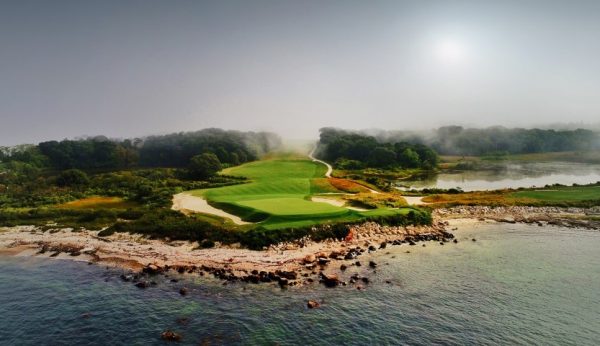
Fishers Island
6. At what point did you incorporate drone photography into your arsenal, and how did that change your approach to a complete shoot?
I was a very early adopter of drone technology to take aerial photos of golf courses. It was clear to me right away that this tech was perfectly suited to shoot golf. I don’t know that having the ability to shoot aerials changed my approach to photographing golf courses much, but it certainly gave me the ability to see and shoot courses from a different and unique perspective.
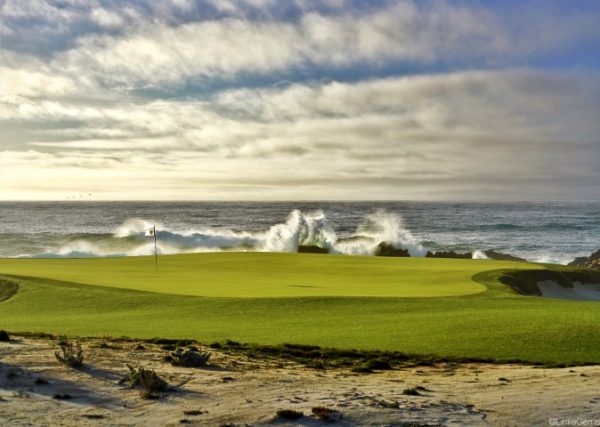
Monterey Peninsula
7. What do drone and ground photography offer, that the other does not?
Drone photography offers two main benefits that you just can’t get from the ground. First, aerial photography gives the ability to capture the entire golf course and its surrounds in one frame. We have all seen and love those old photos of classic courses taken from a low-flying airplane. Drone photography allows a “zoomed out” perspective of the course, which can show the full routing, how the holes and hazards interconnect, and how the course interacts with its environment. Second, drones allow us to capture a course from an infinite number of angles and perspectives. Ground photography is fundamentally two-dimensional – there are only so many places to stand and take a photo. Drones allow us to place a camera almost anywhere in three-dimensional space, which in turn allows for unlimited creativity and perspective. These angles, which we would never otherwise see, can be really compelling.
The advantage of “regular” photography is that it shows the course from the perspective of the golfer – the perspective we’re used to seeing. And so it’s ideal for taking shots that “transport” the viewer to the course.
For me, the ideal way to capture a course is through a mix of both forms.

National Golf Links of America
8. Which golf course has given you the greatest artistic experience in shooting?
That’s a tough question. The courses I most enjoy shooting tend to be the courses that have both compelling visuals and extremely interesting golf architecture. So the top of the list, you’d certainly find courses like National Golf Links of America, Sleepy Hollow, Cypress Point, Fishers Island, Shinnecock Hills, Eastward Ho, Maidstone, Monterey Peninsula CC and Sand Hills. These are all courses that are quite beautiful by any definition and are also outstanding examples of brilliant golf course design.
At the same time, I also really enjoy the challenge of photographing courses that lack ocean or mountain views and thus may not be considered traditionally beautiful by everyone, but that are excellent from an architecture standpoint – courses like Chicago Golf Club or Oakmont. After all, it’s hard to take a bad photo of a place next to the ocean like MPCC, but doing justice to the quality of the course at a place that doesn’t have the visuals to fall back on is very satisfying.
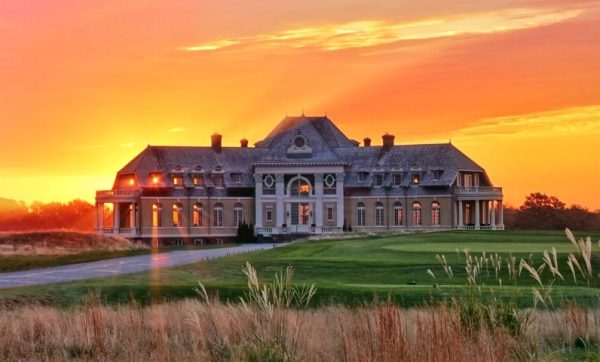
Newport
9. Is there a golf course that you have yet to shoot, that you would like to?
Too many to count. It’s certainly a fantasy to shoot (and play) Augusta National. Beyond that, it’s all international courses: The Old Course, North Berwick, Royal County Down, Dornoch, Portrush, Ballybunion, Lahinch and countless others in the UK, and Royal Melbourne, Kingston Heath, Tara Iti, Barnbougle Dunes, Cape Kidnappers, Jack’s Point, Cape Wickham, Kauri Cliffs and many others in Australia and New Zealand. I’d also love to shoot Morfontaine in France – from what I’ve seen, it looks amazing.

Sand Hills
10. BONUS QUESTION: What question haven’t we asked, that you wish we would? Ask it and answer it please. Thank you for your time.
What is the best thing that has come from your golf course photography?
As I mentioned above, I’ve met so many wonderful people as a result of my photography, and I’ve been able to see some of the best golf courses in the world. But even better still, thanks to the incredibly loyal and supportive people who follow me on twitter and Instagram, I’ve been able to financially support some charities that are important to my wife and me. For the last two years, I’ve sold a photo calendar that has enabled donations of over $15,000 to Woodstock Farm Sanctuary. Just recently, thanks to the work of my good friend Tyler Petrovich (@thetravellinggolfer), we auctioned off a glass print of Pebble Beach and raised almost $1500 for SLC6A1 Connect and Milestnes for Maxwell. It’s been truly gratifying to be able to use an avocation that I enjoy to support those who need a bit of a hand, and we’re always looking for new ways to do more of it.
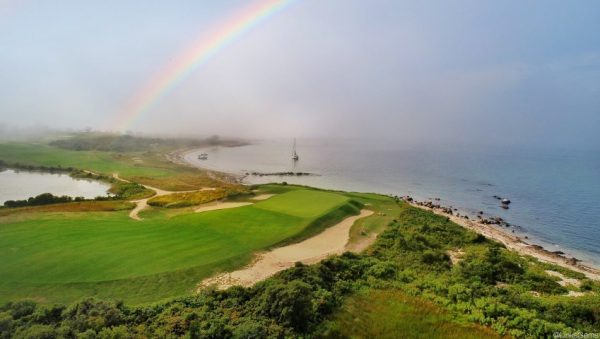
Fishers Island




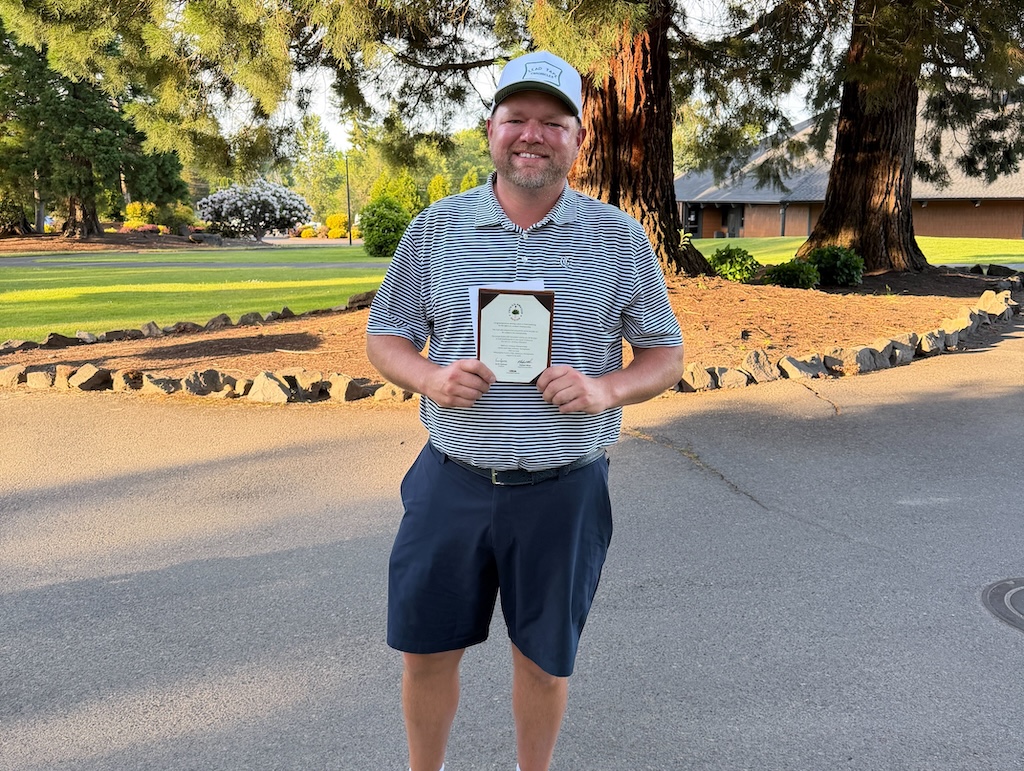
This past Monday, I played in the U.S. Amateur local qualifier at Rock Creek Country Club in Portland, Oregon. A full tee sheet from 7:30 a.m. to 1:55 p.m., the top 11 scores would make it to the U.S. Amateur final qualifying.
I teed off at 10:48 a.m.. With the 7:30 am tee time, you can get a feel for the leaders’ pace, and they were off and running on the challenging setup at Rock Creek.
View this post on Instagram
Getting to the highlight of the round on the par five 17th, a drive up the left side and 212 yards left to the front hole location. I took out a 5-iron with plans of middle of the green. The ball ended up 8 feet left of the hole, pin high. A slight downhill putt dropped in for an eagle 3 on the 17th. With the cut line looking to be anywhere from -2 to even par. This was the boost I had been waiting for all day.
With making par from the trees on 18, it was time to wait for a potential playoff with a posted score of one under par 71.
Three hours later, it was playoff time. 8 players for 6 spots. I made par on the playoff hole, which was good enough to advance to the U.S. Amateur final qualifying in July. USGA qualifiers sure deliver on all of the emotions in golf!
Club Junkie
Building my 2026 gamer WITB: Ranking the contenders and new putter projects – Club Junkie Podcast


The annual What’s In The Bag build is underway, and on this episode of Club Junkie, Brian breaks down the clubs currently leading the race for a spot in his 2026 gamer setup. From drivers and fairway woods to irons, wedges, and shafts, he ranks the equipment that’s performing best and explains what’s separating the front runners from the rest of the field.
Brian also heads into the workshop to discuss several putter projects currently on the bench. From head options and shaft choices to build ideas and testing plans, he shares what he’s working on and which putters could become serious contenders for the bag this season.
If you’re a gear junkie who loves equipment testing, club building, and the never-ending pursuit of the perfect setup, this episode is for you.
Follow Club Junkie:
Instagram: @clubjunkiepod
TikTok: @clubjunkiepod
Threads: @clubjunkiepod
X: @ClubJunkiePod
Club Junkie
Tour Edge Exotics mini driver review + TaylorMade Spider ZT Max first look – Club Junkie

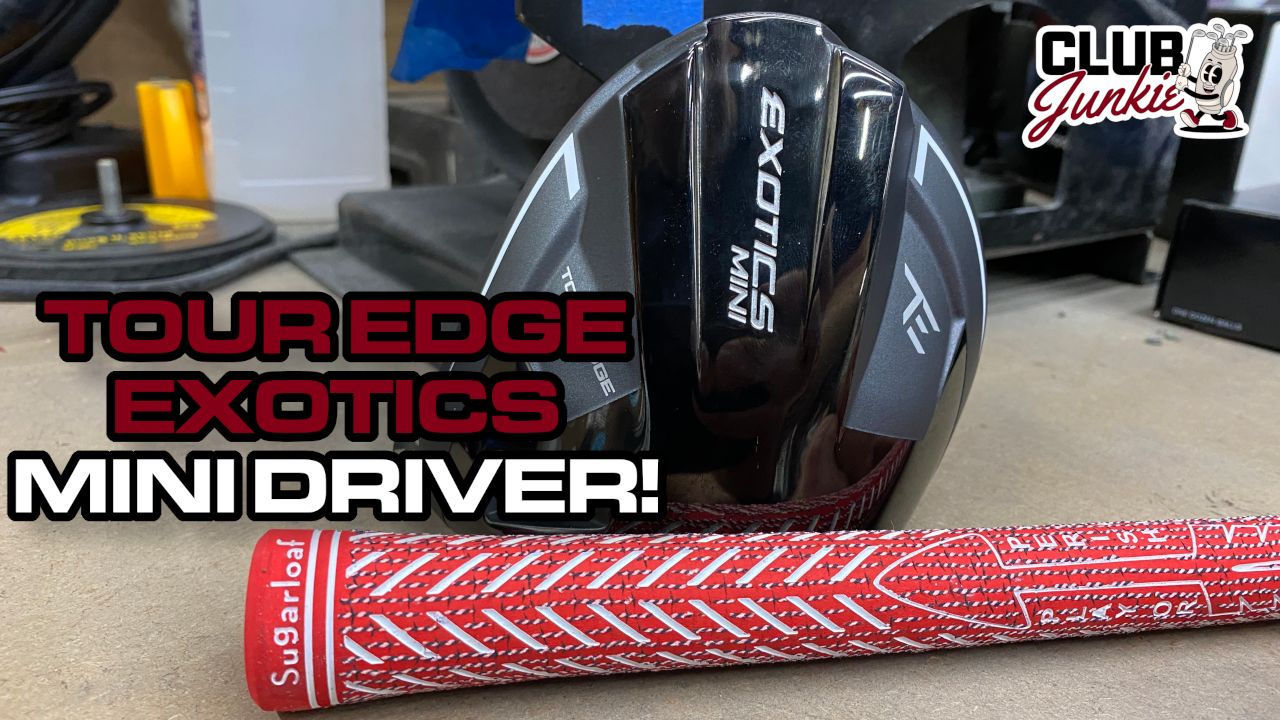
On this episode of Club Junkie, I put the new Tour Edge Exotics Mini Driver to the test and break down the performance, forgiveness, distance, and where it fits compared to a traditional driver or strong fairway wood. If you have been curious about adding a mini driver to the bag, this one is worth a look.
I also dive into the new TaylorMade Spider ZT Max putter that was recently spotted and discuss the growing zero torque putter trend. Plus, there is a closer look at the new Project X Titan Yellow shaft showing up on the PGA Tour and what makes it different from other profiles currently out there.

Justin Rose WITB 2026 (April): Full WITB breakdown with new McLaren irons

What’s the story behind Webb Simpson’s custom-stamped irons?

Memorial Tournament Tour Report: Rory McIlroy, Cameron Young switch up drivers, and more

Cadillac Championship Tour Report: Spieth’s sizable changes, McLaren Golf launches, and more

Russell Henley’s winning WITB: 2026 Charles Schwab Challenge

Kristoffer Reitan’s winning WITB: 2026 Truist Championship

Best irons 2026: Best irons overall, most forgiving irons, and more

J.T. Poston’s winning WITB: 2026 Memorial Tournament

Aaron Rai’s winning WITB: 2026 PGA Championship

Cameron Young’s winning WITB: 2026 Cadillac Championship


Ryan Palmer WITB 2026 (June)
Driver: Callaway Quantum Triple Diamond (9 degrees) Shaft: Project X HZRDUS Smoke Blue RDX 60 TX 3-wood: TaylorMade Qi10 (15 degrees) Shaft:...


Bud Cauley WITB 2026 (June)
Bud Cauley had >14 clubs in his bag when photographed prior to the Memorial Tournament. Driver: Titleist GTS2 (8 degrees) Shaft: Fujikura...


Hannah Green WITB 2026 (June)
Driver: Titleist GTS3 (10 degrees, D4 SureFit setting) Shaft: Mitsubishi Chemical Diamana RB 53 S 3-wood: Titleist GT3 (15 degrees,...


Asterisk Talley WITB 2026 (June)
Driver: TaylorMade Qi4D (9 degrees) Shaft: Fujikura Ventus Blue 6 S 3-wood: TaylorMade Qi4D (16.5 degrees) Shaft: Fujikura Ventus Blue...
-
 Equipment6 days ago
Memorial Tournament Tour Report: Rory McIlroy, Cameron Young switch up drivers, and more
-
 News2 weeks ago
Russell Henley’s winning WITB: 2026 Charles Schwab Challenge
-
 Equipment3 days ago
Best irons 2026: Best irons overall, most forgiving irons, and more
-
 Whats in the Bag4 days ago
J.T. Poston’s winning WITB: 2026 Memorial Tournament
-

 Equipment1 week ago
Details on Jason Day’s latest prototype Avoda iron setup
-
 Equipment3 weeks ago
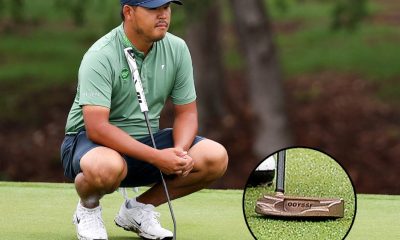
CJ Cup Byron Nelson Tour Report: Koepka and Kim’s newest putters finally get hot
-

 News2 weeks ago
Charles Schwab Challenge Tour Report: MacIntyre, Åberg and Spaun all switch putters, TaylorMade launches new Spider
-
 Equipment2 weeks ago
Details on J.J. Spaun’s surprise putter switch


gunmetal
Apr 2, 2019 at 10:21 am
As a fellow golfer and Landscape photographer, the post processing is a bit heavy handed for my taste but some of the compositions are wonderful. Really great shots and a very cool article and interview.
Ronald Montesano
Apr 5, 2019 at 6:21 am
What would you have differently? Asking sincerely for a friend. Thanks for your thoughts.
rm
Steve
Apr 1, 2019 at 5:46 pm
Enjoyed the interview Ron, very informative, especially having the Bonus Question finish!
Ronald Montesano
Apr 5, 2019 at 6:22 am
Thank you, Steve. The bonus question is always a favorite of mine. Interviewers mull which questions to ask, but invariably miss one. It is usually the favorite of most readers as well!
rm