
Opinion & Analysis
Phil Mickelson’s 6 mph clubhead speed gain just scratches the surface of what pros can achieve


The AT&T Pebble Beach National Pro-Am is always one of my favorite tournaments, in part because I lived there most of 2004-2006, and it brings up such nice memories.
At the top of the list of memories, of course, is meeting my future wife. I also remember jumping off my couch in 2004 when Phil Mickelson notched his first major at the Masters. I sprung off the couch in Carmel when he made that putt, similar to how he jumped in the air at Augusta National’s 18th green.
Anyway, I wanted to write today to talk about Phil Mickelson. As a long-time Phil fan, I was happy to see him pick up his 44th PGA Tour win and fifth victory at Pebble Beach.
As has been widely reported, at 48 years old, Phil’s club head speed had recently jumped up 6 mph. He led the field in driving distance at the Desert Classic, was leading in driving distance in Phoenix through that Friday’s cut, and his club head speed this year is averaging 120.92 mph, up from 116.48 mph in the 2017/2018 season.
As is becoming more well known, driving distance and clubhead speed are key factors in scoring potential, so the increase bodes well in Phil’s quest to reach 50 career PGA Tour wins and possibly pick up that missing U.S. Open trophy when he goes back to Pebble Beach in June.
While 6 mph in nine months is almost unheard of by overall golf and golf fitness industry standards, especially considering the average distance losses with age, I can say confidently: Quite frankly, he’s really just scratched the surface.
I’ve covered this in some of my other articles, so I’ll just refer you there for the details, but Phil’s win and swing speed gains are a good time for me to remind you that achieving 12-16 mph in 30-45 days is highly achievable with the right training. More is even there for the taking if you’re willing to put in a little elbow grease. I’ve even had some golfers go from the 90s all the way up in to the 130s and 140s.
Here are some starter keys.
Practice swinging faster
This may sound overly simple, and I suppose it is, but largely no one outside of professional long drivers do it. Gaining speed is similar to improving at other skills in that you’ll get better just by practicing.
Phil and a number of other tour players are starting to tap in to part of the speed equation here.
Part of the whole basis of Phil’s training has been practicing swinging faster with SuperSpeed sticks. The fact that he’s doing this type of training is good, although it doesn’t really matter so much whether you swing a heavy club, a light club, something with air resistance, etc.
The main thing is just that you are practicing swinging faster, and putting some time in to it as with any other component of your game like full swing, chipping, putting, etc.
Strengthen your downswing muscles
Based on his results and without knowing the full details of his training, a big key that he appears to be missing is doing something to strengthen his downswing muscles.
Every golfer, whether you are long drive champion or low swing speed amateur, starts at zero mph at the top of the backswing and gets to whatever speed they achieve at impact.
Long drivers tend to be very strong, but not necessarily big. Two-time World Long Drive Champion, Jamie Sadlowski, is a good example of this. He can do 480-pound hexbar deadlifts for reps. That takes tremendous strength in his hands, forearms, lower back, glutes, and hamstrings.
At my fastest, I could swing in the low 140s, and it’s no coincidence that I could also do over 700-lb half squats.

Were Phil to supplement his swing speed reps with doing more to specifically target gradually increasing the strength of his downswing muscles over time, there’s no reason why he couldn’t be swinging at Cameron Champ’s 130 mph level, or higher, even at 48 years old. Look no further than Senior World Long Drive Champion “Fast” Eddie Fernandes to find a guy who in his mid/late 40s and that can regularly swing in the 140s.
For that matter, Phil aside, there’s no reason why ANY tour player couldn’t be swinging at those speeds with proper training. Tour pros are definitely more fit that they used to be. That’s good, but the golf fitness industry is still very young and fit doesn’t necessarily mean fast.
To learn more about how to train to be fast, check out my other articles, visit Swing Man Golf, and/or work with an instructor or fitness trainer who is swing speed training certified.
Now is as good as time as any to get going on some swing speed training. By the time the Masters rolls around in April, you could easily be 30-40 yards longer and get your season started off with a boom.




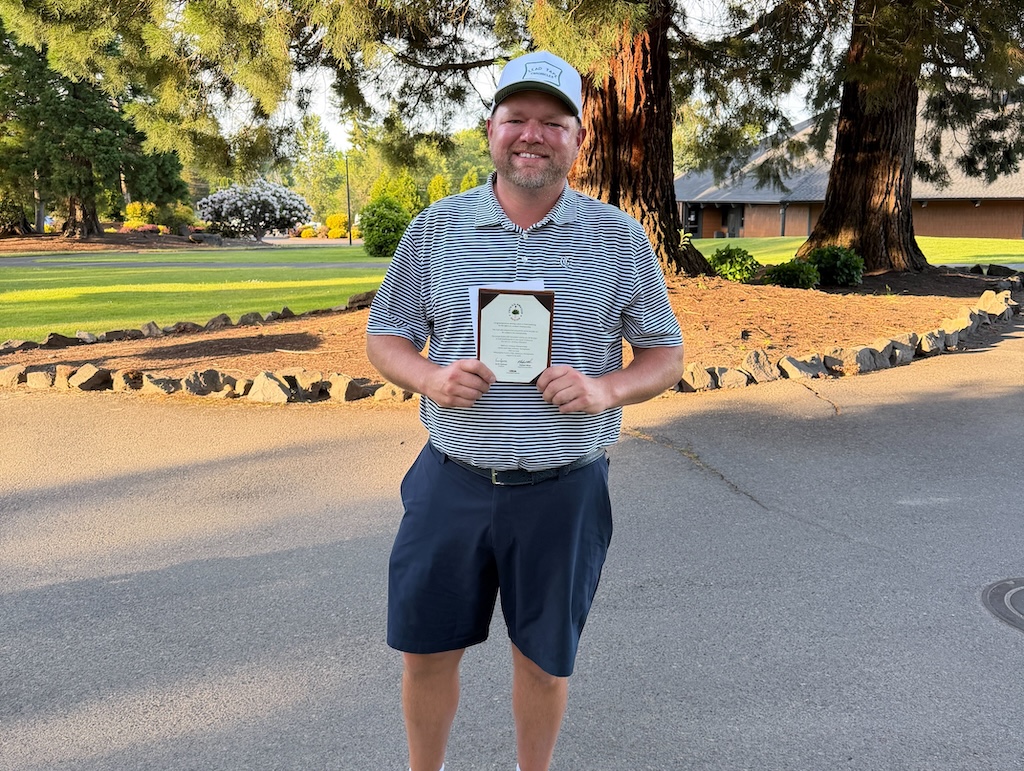
This past Monday, I played in the U.S. Amateur local qualifier at Rock Creek Country Club in Portland, Oregon. A full tee sheet from 7:30 a.m. to 1:55 p.m., the top 11 scores would make it to the U.S. Amateur final qualifying.
I teed off at 10:48 a.m.. With the 7:30 am tee time, you can get a feel for the leaders’ pace, and they were off and running on the challenging setup at Rock Creek.
View this post on Instagram
Getting to the highlight of the round on the par five 17th, a drive up the left side and 212 yards left to the front hole location. I took out a 5-iron with plans of middle of the green. The ball ended up 8 feet left of the hole, pin high. A slight downhill putt dropped in for an eagle 3 on the 17th. With the cut line looking to be anywhere from -2 to even par. This was the boost I had been waiting for all day.
With making par from the trees on 18, it was time to wait for a potential playoff with a posted score of one under par 71.
Three hours later, it was playoff time. 8 players for 6 spots. I made par on the playoff hole, which was good enough to advance to the U.S. Amateur final qualifying in July. USGA qualifiers sure deliver on all of the emotions in golf!
Club Junkie
Building my 2026 gamer WITB: Ranking the contenders and new putter projects – Club Junkie Podcast

The annual What’s In The Bag build is underway, and on this episode of Club Junkie, Brian breaks down the clubs currently leading the race for a spot in his 2026 gamer setup. From drivers and fairway woods to irons, wedges, and shafts, he ranks the equipment that’s performing best and explains what’s separating the front runners from the rest of the field.
Brian also heads into the workshop to discuss several putter projects currently on the bench. From head options and shaft choices to build ideas and testing plans, he shares what he’s working on and which putters could become serious contenders for the bag this season.
If you’re a gear junkie who loves equipment testing, club building, and the never-ending pursuit of the perfect setup, this episode is for you.
Follow Club Junkie:
Instagram: @clubjunkiepod
TikTok: @clubjunkiepod
Threads: @clubjunkiepod
X: @ClubJunkiePod
Club Junkie
Tour Edge Exotics mini driver review + TaylorMade Spider ZT Max first look – Club Junkie

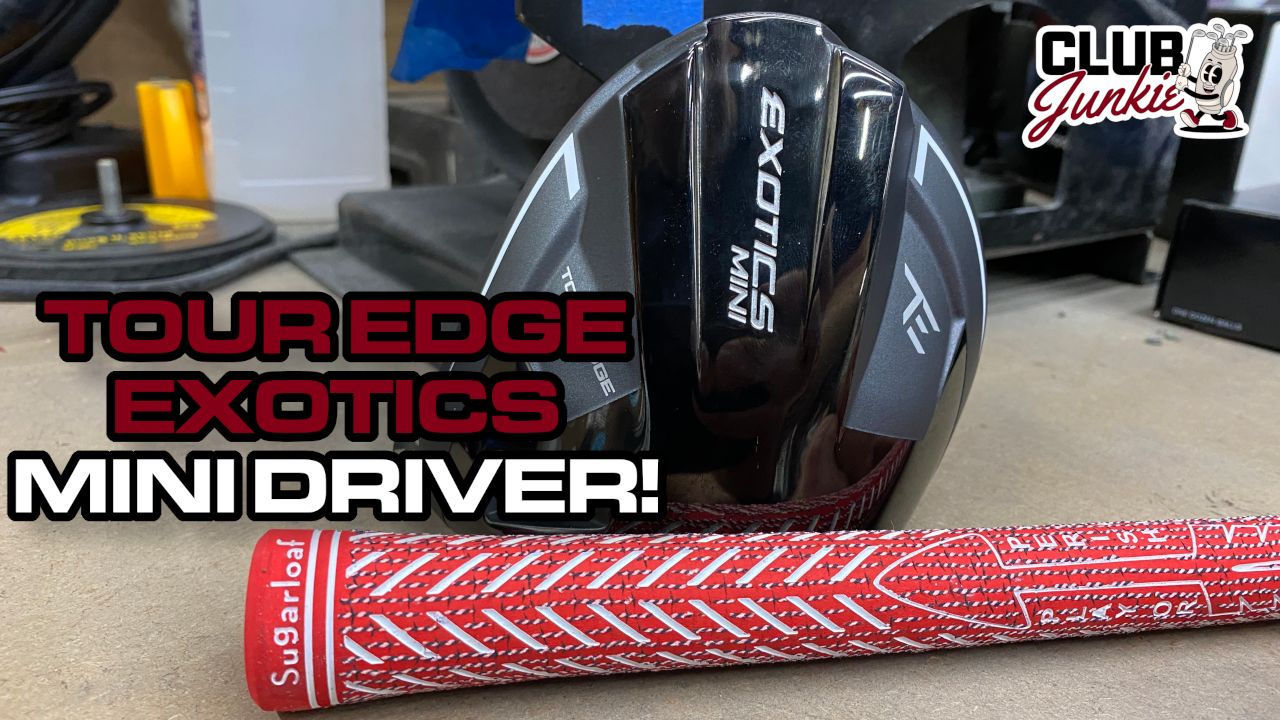
On this episode of Club Junkie, I put the new Tour Edge Exotics Mini Driver to the test and break down the performance, forgiveness, distance, and where it fits compared to a traditional driver or strong fairway wood. If you have been curious about adding a mini driver to the bag, this one is worth a look.
I also dive into the new TaylorMade Spider ZT Max putter that was recently spotted and discuss the growing zero torque putter trend. Plus, there is a closer look at the new Project X Titan Yellow shaft showing up on the PGA Tour and what makes it different from other profiles currently out there.

What’s the story behind Webb Simpson’s custom-stamped irons?

Memorial Tournament Tour Report: Rory McIlroy, Cameron Young switch up drivers, and more

Cadillac Championship Tour Report: Spieth’s sizable changes, McLaren Golf launches, and more

Russell Henley’s winning WITB: 2026 Charles Schwab Challenge

Kristoffer Reitan’s winning WITB: 2026 Truist Championship

Best irons 2026: Best irons overall, most forgiving irons, and more

J.T. Poston’s winning WITB: 2026 Memorial Tournament

Aaron Rai’s winning WITB: 2026 PGA Championship

Cameron Young’s winning WITB: 2026 Cadillac Championship

Details on Jason Day’s latest prototype Avoda iron setup


Christiaan Maas WITB 2026 (June)
Driver: TaylorMade Qi4D LS (8 degrees) Shaft: Fujikura Ventus TR Blue 6 X 3-wood: TaylorMade Qi10 (15 degrees) Shaft: Fujikura Ventus Black...


Ryan Palmer WITB 2026 (June)
Driver: Callaway Quantum Triple Diamond (9 degrees) Shaft: Project X HZRDUS Smoke Blue RDX 60 TX 3-wood: TaylorMade Qi10 (15 degrees) Shaft:...


Bud Cauley WITB 2026 (June)
Bud Cauley had >14 clubs in his bag when photographed prior to the Memorial Tournament. Driver: Titleist GTS2 (8 degrees) Shaft: Fujikura...


Hannah Green WITB 2026 (June)
Driver: Titleist GTS3 (10 degrees, D4 SureFit setting) Shaft: Mitsubishi Chemical Diamana RB 53 S 3-wood: Titleist GT3 (15 degrees,...
-
 Equipment7 days ago
Memorial Tournament Tour Report: Rory McIlroy, Cameron Young switch up drivers, and more
-
 News2 weeks ago
Russell Henley’s winning WITB: 2026 Charles Schwab Challenge
-
 Equipment4 days ago
Best irons 2026: Best irons overall, most forgiving irons, and more
-
 Whats in the Bag5 days ago
J.T. Poston’s winning WITB: 2026 Memorial Tournament
-
 Equipment1 week ago
Details on Jason Day’s latest prototype Avoda iron setup
-

 Equipment3 weeks ago
CJ Cup Byron Nelson Tour Report: Koepka and Kim’s newest putters finally get hot
-

 News2 weeks ago
Charles Schwab Challenge Tour Report: MacIntyre, Åberg and Spaun all switch putters, TaylorMade launches new Spider
-

 Equipment2 weeks ago
Details on J.J. Spaun’s surprise putter switch


Pingback: The 5 Best Golf Training Aids of 2021
Patricknorm
Feb 14, 2019 at 8:01 am
Going on the Titleist Performance Institute webpage , there are a few things that stand out with players who swing above 130 mph. First is lower body strength, hence the half squats, dead lifts. The other metric is your vertical jump., which is a measure of lower body power. The other metric is your ability to throw a ball or a javelin. Similar motion to hitting a baseball, tennis ball or golf ball.
The common factor to hitting a golf ball a long way , is ones lower body strength. Mickelson mentioned he was working on this aspect years ago and it’s no surprise along with his over speed training, he’s increased his clubhead speed. Tiger Woods clearly has been hitting the gym hard post lower back surgery and the results on the course speak for themselves.
JJ
Feb 13, 2019 at 11:10 pm
Half squats..? Who does half squats?
Alec
Feb 14, 2019 at 1:32 am
Not to mention, that based on the pin position in the rack in the picture he posted, he was doing quarter squats at best.
X
Feb 13, 2019 at 10:54 pm
Scratches the surface? What on Earth are you blathering about?
They’re athletes. This is their job. They had better try every bit of everything they can to stay in shape and to gain more to win more. Otherwise, why bother?
This is what we would expect from the top guys. Looking at it from our amateur fan perspective, if they’re not doing this to improve and winning, then we all can see that they just fall off the map and that’s how obvious it is. We don’t need any of this explained.
undercover
Feb 13, 2019 at 10:04 pm
This article is spot on. I was a college athlete and I’ve been a sub-scratch handicap player for nearly 30 years. I turn 50 later this year and I started worrying about losing speed and distance as I get older. I still play competitive tournament golf and often times against young college players. So, I been weight training and speed training a few years ago and find that I’m now swinging on average 121 MPH. I work on muscles that deal with the golf swing. I’ve gained muscle mass, speed and endurance. I would have to say core and lower body training has been key (box jumps are a must). For the skeptics, the majority of touring pros and college players are doing speed training to supplement their strength training. Jump in and give it a try, it works.
Simms
Feb 13, 2019 at 5:04 pm
Nice article…no doubt we see the younger players men/women in better shape and hitting the long drives…our 4 some followed a girl the other day that played the black tees and was over 270 on every driver hole..when we talked she was from South Korea 26 and been golfing sense she was 14..what was scary…her boyfriend was hitting over 300 yards every hole…thank goodness he could not putt.
Aaron Roth
Feb 13, 2019 at 2:50 pm
Well… what are the “downswing muscles”?
Jaacob Bowden
Feb 13, 2019 at 3:33 pm
We all swing the club differently, so, it depends…but, for example, some for me personally are:
– Trail Chest, trail triceps, and trail forearm (mostly palmar flexion – think slapping) – throwing motion
– Lead lat and lead forearm (mostly ulnar deviation – think chopping) – pulling motion
– General core, lower back, and butt
– Lead leg – internal hip rotation, quad, adductor
– Trail leg – external hip rotator, hamstring, abductor, and calve
Click on my author page and peruse some of my older articles. I get in to some other details there.
Nathan Andersen
Feb 13, 2019 at 2:39 pm
Agree wholeheartedly with everything you say (especially given your qualifications).
However, I think with all of this, do you think it would be desirable for Phil to pick up that speed? A 2-degree open face at impact is much more harmful at 140 mph SS compared to 122 SS, so although you hit it further, you miss more fairways.
I think an amateur going from 100 to 115 definitely wants that, but, at 122 (or 128, wherever he currently is), adding that distance may be more penal than for an amateur given the course differences.
Jaacob Bowden
Feb 13, 2019 at 3:23 pm
I get where you are coming from but having more speed at your disposal never hurts.
At that point, it comes down to a course management decision and understanding your shot dispersion.
If the area where you are hitting is big enough to safely contain your shot dispersion, it becomes a big advantage. You may be able to carry trouble and take more aggressive lines that others cannot which leads to shorter clubs in to greens and strokes gained over the season.
This won’t be the case in every situation, but sometimes the opportunity will be there to take advantage of the extra length.
In other cases where it would be too penal as you mentioned, the person with the extra speed can just take less club and hit to a strategically more safe area. Jamie, for example, will often hit irons off the tee to put the ball in play. You can see this is his Arccos stats. Cameron Champ will do the same. I was watching some highlights the other day of Cameron and he was simply hitting 3-wood where others were hitting driver. In other spots where it was safe for him, he would bomb driver way past everyone.
Jaacob Bowden, PGA
Feb 13, 2019 at 3:41 pm
Interestingly, I often find people hit more accurate too with training. All the swing-specific focus has various side benefits with balance, coordination, mental image of the swing, etc.
Ryan K
Feb 13, 2019 at 10:01 pm
You also have to remember that nearly all stats indicate you’re better off being closer to the hole than in the fairway, comparatively. Then it gets down to approach and short yardage of which it’s been established that Phil is pretty darn good at! This coming from not an ardent Phil fan mind you.