
Opinion & Analysis
Williams: Want to hit straight golf shots? Try learning to shoot straight!


Phil Mickelson got a lot of attention for a tweet that showed him spending time on a firing range to prepare for the Ryder Cup. Mickelson wrote, “How is today’s long-range sniper shooting preparing me for the Ryder Cup? Meditation, controlling my thoughts, breathing, heart rate and connecting with the target are critical for both!” While it ultimately didn’t do him a lot of good in France, the theory was a sound one. The roles of equipment, technique, and mindset are almost identical in shooting and golf. These crossovers exist between golf and most shooting sports, but Phil should have been practicing at a sporting clays course instead of a sniper range.
Per the National Sporting Clays Association, sporting clays is the fastest growing sport in America. The sport dates back to England in the early 1900s but gained in popularity with the introduction of low-cost clay targets and automatic clay target throwers. It’s recently become known as “golf with a shotgun,” and for good reason. As in golf, sporting clay facilities are arranged as courses, with between 10 and 20 stations comprising a course. Each station has machines that launch clay discs into the air and participants attempt to hit the clays using shotguns. Each station is unique, with varying levels of difficulty achieved by combining various speeds and angles of flight of the clay targets. And like golf course architecture, the quality of a sporting clays course is determined by terrain, course conditions and the imagination of the course designer to engage and challenge the player.
I first had the chance to try sporting clays a couple of years ago at a golf resort in Florida. It did not go well, partly because the coach was a post-divorce emotional wreck, but also because I sucked. While I was not afraid of guns, I was definitely unfamiliar with them so there was a steep learning curve. But eventually I did hit one of the clays, shattering it into a gazillion pieces. The tuning fork had gone off, just like the first time I hit a golf ball well. I was hooked.
My second opportunity was at Gleneagles, the posh resort in Scotland that has hosted everything from world political summits to Ryder Cups. I was determined to redeem myself, but I got off to a bad start, hitting only one of the first ten or so targets. Just like when your confidence leaves your golf swing, I had the feeling that I had no idea what I was doing.
Alan Dickson, the Director of Shooting Sports at Gleneagles, is a former British Marine who has been involved in shooting sports his whole life and has seen a lot of bad shooters. He stood behind me and asked me to shoot at a target that was arcing upward from left to right. After three of those, all misses, he asked me to shoot at the same target going in the opposite direction and I hit two of three. Dickson took a roll of black electrical tape from one of the 200 or so pockets in his shooting vest and covered the left lens of my protective eyewear with black tape. He gave them back to me and had me shoot the same six targets…I hit all six. It was like one of those days on the golf course when you figure something out and suddenly everything works.
From that point on, I took the opportunity to shoot whenever I could, and just like golf, I had good days and bad days. On a visit to The Omni Homestead in Hot Springs, Virginia, the Director of Shooting Sports David Judah explained to me that part of the reason that I had been erratic was that I hadn’t had a gun that truly fit me. “It’s just like with a golf club,” Judah explained. “Shotguns have different weights, dimensions and balance points. If you don’t have a tool that fits you, you will struggle to control it. With a tool that fits you, you will make a much more natural move to the target”. He had me try a number of shotguns of different brands, sizes and configurations before finally settling on a Beretta Silver Pigeon, a 12-gauge shotgun with a 35” over/under barrel. It felt just like a fitted set of irons. I took the Beretta out to the range where Judah had set up several stations with clays going everywhere. With a shotgun that fit perfectly I hit nine out of the first ten clays, “powdering” most of the them (powdering is when you hit the target so perfectly that it turns into a cloud of orange powder, and the feeling is identical to hitting a 3-iron on the center of the clubface). I shot at 50 clays that day and hit 44; for me, that’s about like shooting a 69 at Congressional from the tips. I was determined to carry my rhythm from the shooting range to the golf course. I played a round of golf in the afternoon on the beautiful Cascades course and I shot a 78. I was convinced that the rhythm and timing that I had developed earlier in the day on the shooting range was the reason.

I became determined to make a direct connection between the methodologies of shooting sports and golf. Enter Jason Gilbertson, Marketing Director at Winchester, one of the oldest and most respected names in firearms and shooting sports. We met at Big Cedar Lodge in Branson, Missouri, one of the nation’s best destinations for golf and outdoor sports. I told Jason about my experiences in golf and shooting, and my idea that there were definite crossovers between the two sports. He asked if I had spent any time with world-class marksmen and I acknowledged that while I had played with top professional golfers, I hadn’t spent any time with the best of the best in shooting sports. With that, Gilbertson arranged for me to spend time at the U.S. Olympic Training Center in Colorado Springs, Colorado, where the best athletes in the country go to dedicate their lives to excellence in their chosen sports, including the shooting sports.
At the U.S.O.T.C., I learned that as with golf, there are different mindsets and personalities in the shooting sports. The air pistol people are very quiet and methodical; they reminded me of great putters like Ben Crenshaw. The rifle specialists reminded me of gearheads like Phil Mickelson, always looking for just the right equipment tweak. But the trap shooters were the most interesting to me, since trap is the closest discipline to sporting clays. Trap shooting involves shooting clays that are moving much faster and at more severe angles than sporting clays. Like golf, a good trap shot “happens” before you make a move. A proper grip, balanced stance and consistent alignment assure that you will make a good shot. And like golf, it is important to keep the hands moving through the “swing” after the point of impact. And the best golfers and trap shooters in the world have a pre-shot routine that involves visualizing a desired result, slowing down the breathing, controlling your adrenalin, then executing. I had found the connection that I was looking for.
After a year of visiting first-class golf and shooting facilities I came to the Sandy Creek Sporting Grounds, the brand-new sporting center at Reynolds Lake Oconee. Located halfway between Atlanta and Augusta and boasting an established reputation as a golf destination, Reynolds recently added a shooting sports center that is among the finest I around. I met up with the director of the sporting center, Justin Jones, a decorated shooting champion who opened the very first shooting center based at a golf resort, the aforementioned Gleneagles.
There is a decidedly British feel to the structures and the landscape at Sandy Creek, with stacked stone shooting stations and lush landscaping that makes you feel like you are on the set of Downton Abbey. I shot well, bagging the easy clays on the first try and getting most of the difficult ones on the second try. Jones watched me quietly and then asked if I was willing to make a couple of changes. I was reluctant since I had been shooting well, but I remembered that golfers with bad habits can have a good day and listened to his advice. He adjusted my grip, stance and alignment; it felt more comfortable, and I turned clay after clay from disk to powder in rapid succession. Then came the final station, a pair more difficult than any I had faced. The first clay was a high lob to my right, followed by a “water rabbit”, a diabolical creation of Jones’. A rabbit is a clay that skips rapidly across the ground and is very hard to hit. The water rabbit skipped evasively across a pond for a second or two before diving under water like, well, like a scared rabbit.
“Not a lot of people can do this one,” warned Jones, which was all I needed to hear to know that I wasn’t leaving without bagging that pair. The first shot was a relatively easy one, and I powdered that clay almost every time. But the water rabbit eluded me time after time. After the fifth or sixth attempt I could almost swear that I heard the rabbit laugh as it slipped intact under the surface. I was down to my last couple of shells and feeling like Roy McAvoy in Tin Cup trying to get that 3-wood over the water. I took a deep breath and Jones reminded me, “Don’t aim at the target, point at it.” I took my stance and tried to remember what I had learned from Jones and from the U.S. Olympians. “Pull,” I said firmly, and I hit it the first clay dead center. I swung my gun to the point just ahead of the water rabbit on its third and final skip. I fired, and the target turned into a combination of orange powder and pond water, a sort of ballistic Tang. I looked at Jones, who was smiling like Obi-Wan Kenobi. I took a deep breath and bellowed, “Yeeeeeesss!!!” Not very British of me, but the feeling of nailing that pair was what I imagine a hole in one feels like. Hopefully I’ll get to make the comparison soon.
Golf and sporting clays are a natural fit, and even if you have never touched a firearm in your life you will enjoy the thrill of a shot well executed, just like golf.




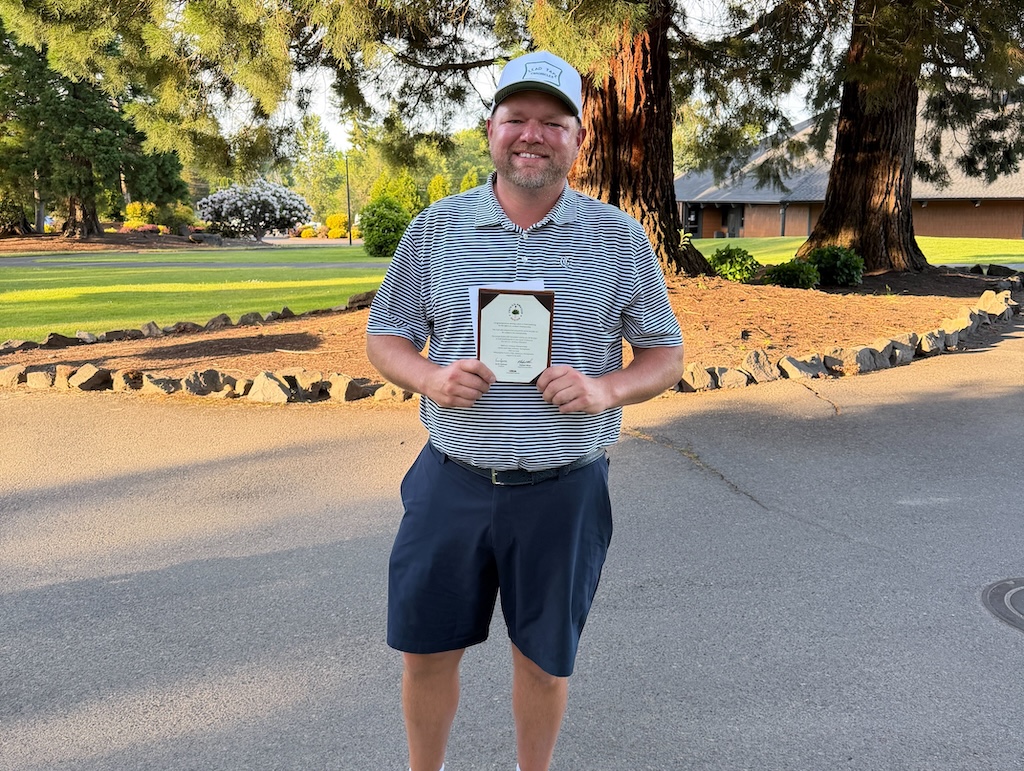
This past Monday, I played in the U.S. Amateur local qualifier at Rock Creek Country Club in Portland, Oregon. A full tee sheet from 7:30 a.m. to 1:55 p.m., the top 11 scores would make it to the U.S. Amateur final qualifying.
I teed off at 10:48 a.m.. With the 7:30 am tee time, you can get a feel for the leaders’ pace, and they were off and running on the challenging setup at Rock Creek.
View this post on Instagram
Getting to the highlight of the round on the par five 17th, a drive up the left side and 212 yards left to the front hole location. I took out a 5-iron with plans of middle of the green. The ball ended up 8 feet left of the hole, pin high. A slight downhill putt dropped in for an eagle 3 on the 17th. With the cut line looking to be anywhere from -2 to even par. This was the boost I had been waiting for all day.
With making par from the trees on 18, it was time to wait for a potential playoff with a posted score of one under par 71.
Three hours later, it was playoff time. 8 players for 6 spots. I made par on the playoff hole, which was good enough to advance to the U.S. Amateur final qualifying in July. USGA qualifiers sure deliver on all of the emotions in golf!
Club Junkie
Building my 2026 gamer WITB: Ranking the contenders and new putter projects – Club Junkie Podcast

The annual What’s In The Bag build is underway, and on this episode of Club Junkie, Brian breaks down the clubs currently leading the race for a spot in his 2026 gamer setup. From drivers and fairway woods to irons, wedges, and shafts, he ranks the equipment that’s performing best and explains what’s separating the front runners from the rest of the field.
Brian also heads into the workshop to discuss several putter projects currently on the bench. From head options and shaft choices to build ideas and testing plans, he shares what he’s working on and which putters could become serious contenders for the bag this season.
If you’re a gear junkie who loves equipment testing, club building, and the never-ending pursuit of the perfect setup, this episode is for you.
Follow Club Junkie:
Instagram: @clubjunkiepod
TikTok: @clubjunkiepod
Threads: @clubjunkiepod
X: @ClubJunkiePod
Club Junkie
Tour Edge Exotics mini driver review + TaylorMade Spider ZT Max first look – Club Junkie

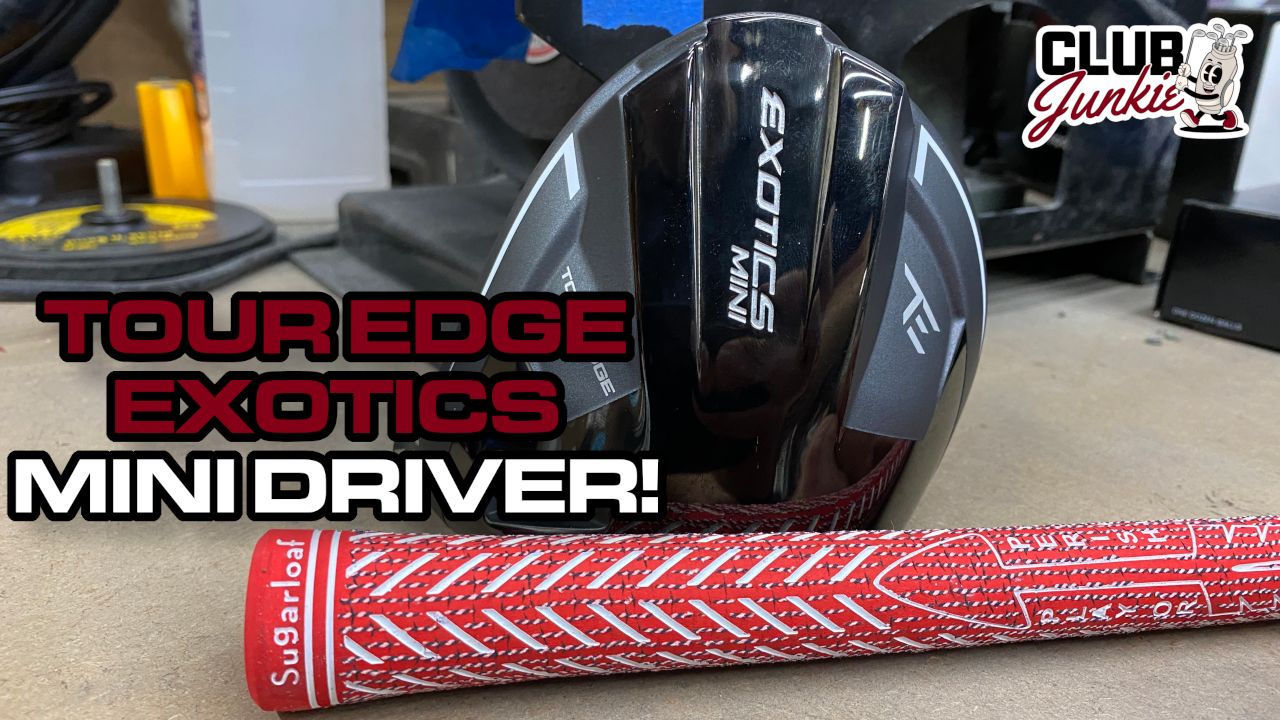
On this episode of Club Junkie, I put the new Tour Edge Exotics Mini Driver to the test and break down the performance, forgiveness, distance, and where it fits compared to a traditional driver or strong fairway wood. If you have been curious about adding a mini driver to the bag, this one is worth a look.
I also dive into the new TaylorMade Spider ZT Max putter that was recently spotted and discuss the growing zero torque putter trend. Plus, there is a closer look at the new Project X Titan Yellow shaft showing up on the PGA Tour and what makes it different from other profiles currently out there.

Justin Rose WITB 2026 (April): Full WITB breakdown with new McLaren irons

What’s the story behind Webb Simpson’s custom-stamped irons?

Memorial Tournament Tour Report: Rory McIlroy, Cameron Young switch up drivers, and more

Cadillac Championship Tour Report: Spieth’s sizable changes, McLaren Golf launches, and more

Russell Henley’s winning WITB: 2026 Charles Schwab Challenge

Kristoffer Reitan’s winning WITB: 2026 Truist Championship

J.T. Poston’s winning WITB: 2026 Memorial Tournament

Aaron Rai’s winning WITB: 2026 PGA Championship

Best irons 2026: Best irons overall, most forgiving irons, and more

Cameron Young’s winning WITB: 2026 Cadillac Championship


Bud Cauley WITB 2026 (June)
Bud Cauley had >14 clubs in his bag when photographed prior to the Memorial Tournament. Driver: Titleist GTS2 (8 degrees) Shaft: Fujikura...


Hannah Green WITB 2026 (June)
Driver: Titleist GTS3 (10 degrees, D4 SureFit setting) Shaft: Mitsubishi Chemical Diamana RB 53 S 3-wood: Titleist GT3 (15 degrees,...


Asterisk Talley WITB 2026 (June)
Driver: TaylorMade Qi4D (9 degrees) Shaft: Fujikura Ventus Blue 6 S 3-wood: TaylorMade Qi4D (16.5 degrees) Shaft: Fujikura Ventus Blue...


Brianna Do WITB 2026 (June)
Driver: Callaway Quantum Triple Diamond (9 degrees) Shaft: KBS PGW 3-wood: Callaway Elyte Titanium (15 degrees) Shaft: KBS PGW 5-wood:...
-
 Equipment6 days ago
Memorial Tournament Tour Report: Rory McIlroy, Cameron Young switch up drivers, and more
-
 News1 week ago
Russell Henley’s winning WITB: 2026 Charles Schwab Challenge
-
 Whats in the Bag3 days ago
J.T. Poston’s winning WITB: 2026 Memorial Tournament
-
 Equipment3 days ago
Best irons 2026: Best irons overall, most forgiving irons, and more
-

 Equipment1 week ago
Details on Jason Day’s latest prototype Avoda iron setup
-
 Equipment3 weeks ago
CJ Cup Byron Nelson Tour Report: Koepka and Kim’s newest putters finally get hot
-

 News2 weeks ago
Charles Schwab Challenge Tour Report: MacIntyre, Åberg and Spaun all switch putters, TaylorMade launches new Spider
-
 Equipment2 weeks ago
Details on J.J. Spaun’s surprise putter switch


benseattle
Nov 28, 2018 at 12:11 pm
Because I walk my dogs around the neighborhood for some two hours a day, listening to podcasts has become a staple. I tried fitting Michael Williams into the routine but I’m here FOR GOLF and this just doesn’t fit the bill. We don’t come to GOLFWRX for anecdotes about “shooting sports” and neither do we want to hear his constant plugs for obscure resorts or useless gear. I would like to know if William is getting kickbacks (payola) for featuring these people. This “golf” podcast is in the woods, thus I DO NOT LISTEN ANYMORE. (What’s more, we dial up a podcast KNOWING what we’re listening to; no reason for Williams to Say His Own Name a dozen times in an hour. Ego out of control.)
DaveJ
Nov 28, 2018 at 1:58 pm
Shank. There are plenty of golf-specific stories to read. If you have no interest in shooting sports, simply don’t click on the story.
UR
Nov 27, 2018 at 2:01 am
Playing soccer is a better way to learn to hit the ball and understand about weight shift and swinging something at a round object and moving it in the air
polarpete
Nov 26, 2018 at 5:41 pm
Moe “Pipeline” Norman, the greatest ball striker of all time, only hit straight shots. “Why hit curved shots unless you are in trouble?”, he asked. Listen to Moe, he knows.