
Opinion & Analysis
Women’s college golfers (and juniors) are getting significantly better, here are the stats

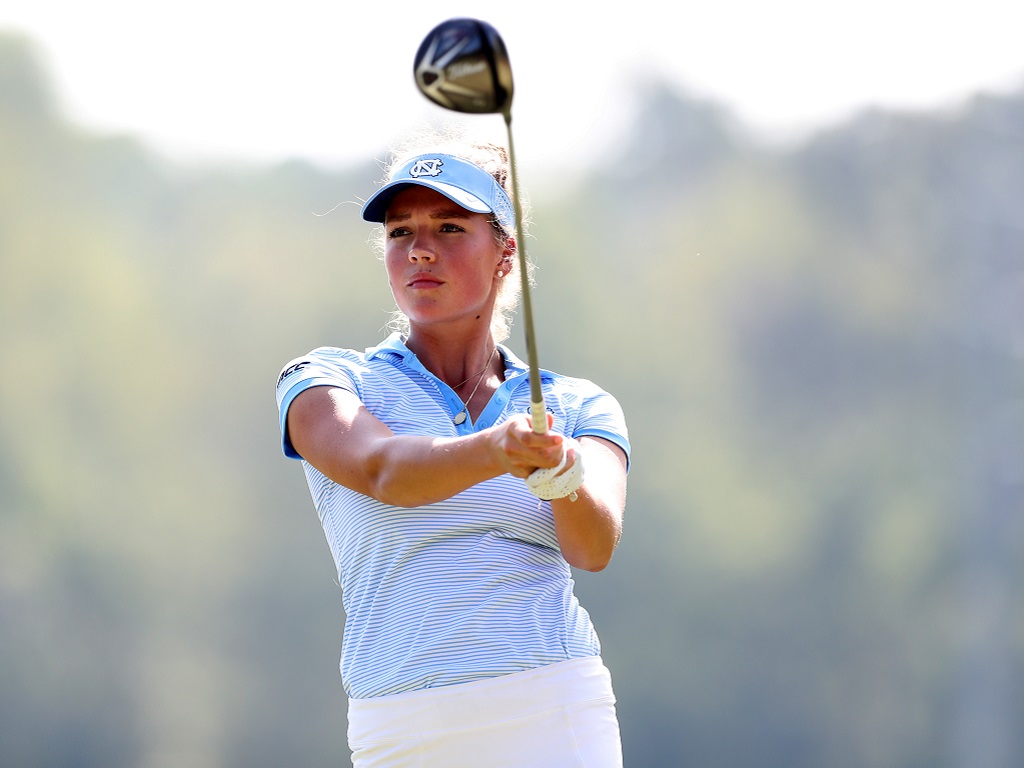
Here’s the deal: If you are talking about women’s golf these days, especially at the elite level, you are talking about superstars! These girls are crazy good, and I wanted to take an opportunity to highlight some of the data to help better inform everyone.
Let’s start with a couple key highlights from the first couple of weeks of the 2018-19 season
- Sierra Brooks fires 65-62 (-17) at College of Charleston
- Patty Tavatanakit from UCLA shoots 63, including 7 straight birdies
- Alabama shoots NCAA record -45 at Belmar Golf Club
- Atthaya Thitikul from Thailand shoots 60 in the final round of the World Junior Golf Championship to finish at 268 (-20)
- Lucy Li shot 62 in the first round of the U.S. Junior Girls at Poppy Hills
- Newly D1, California Baptist shoots -6 in the final round at University of South Alabama to finish -4 for the tournament
In 2018, Missouri women’s golf was likely the last team into the regional championship. To earn this right the team needed to average 295; scoring a decade earlier which would have likely made them a contender for being among the elite 10-15 teams in D1 golf! The fact is, in a little over a decade, the game has changed not a little, but a lot. Players from the past would have no chance to compete with today’s teams.
Why? Girls are simply stronger, better coached and more focused on golf. According to Joey Wuertemburger, a teaching professional with 100-plus college players
“The bar is getting raised every day, I’m seeing the next generation of women getting more athletic, which helps with the speed component but also with the ability to make changes quicker in their individual coaching programs.”
One example of the power of women’s golf is Emily Tubert. Emily, a former USGA champion, college golf standout at Arkansas and LPGA player recently hit it 322 yards in a nationally televised event. Emily is not even a complete outlier, look at club head speed data with driver collected by Trackman from the 2018-19 rosters at University of Arkansas
- Player A: 108 mph
- Player B: 106 mph
- Player C: 101 mph
- Player D: 97 mph
- Player E: 96 mph
- Player F: 93 mph
- Player G: 90 mph
Arkansas is not an outlier either. Troy women’s coach Randy Keck notes two players on his team with club head speeds of 103-ish with the driver and a team average in the upper 90s. This means that players are hitting the ball on average at least 225 in the air. When playing courses of 6,200 yards, this gives them lots of opportunities to have short irons and attack short par 5s.
At the end of last year, according to GolfStat, four women’s teams (Alabama, UCLA, Arkansas, and Duke) had adjusted scoring averages under par, with the University of Alabama leading with 70.93. According to Mic Potter, head women’s coach at the University of Alabama, “Through eleven tournaments in 2017-18, our team was 111 under par. Thirty years ago, if a school averaged 300, or roughly 12 over per round, they were winning tournaments. In 2018 they are more likely to finish last. Student-Athletes are entering college more physically fit, with better technique, and more prepared to play at the highest level. This is reflected in their ability to score.”
The transformation of women’s golf can be seen throughout D1, as well as into other levels. One amazing example is the University of Indianapolis, the 2018 D2 women’s national champions and likely among the best D2 teams ever. According to Golfstat, for the 2017-18 season the adjusted score for the team was 73.45 which helped them win 11 times. Likewise, the women at Savannah College of Art had an amazing year in NAIA women’s golf with an adjusted scoring differential of 75.32.
At the junior level, players are equally impressive. Data collected suggests that the average girl going to play major conference golf has a scoring differential of about minus three for the past three years. This means that they shoot about three shots better than the course rating. That’s impressive until you consider that the best player in ranked in junior golf in the U.S., Lucy Li, has a scoring differential of minus 8.53. That’s almost two shots better than the player ranked second — darn impressive!
Women’s golf is on an excellent trajectory, which includes so much more depth, competition, and superior athletes who are driven to make their mark on the sport. Over the next five to seven years, it will be interesting to see these players develop in their quest to become the best players in the world — I cannot wait to see what happens!






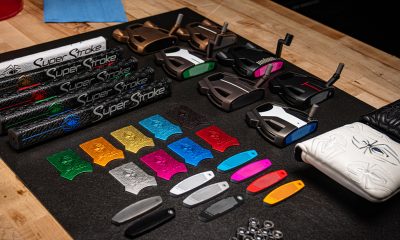



On this episode of Club Junkie, Brian dives into the all new TaylorMade Spider Tour Torched putters and breaks down everything from the unique torched finish to the performance, feel, and roll on the greens. Are these Spiders just a cosmetic upgrade, or is there more to the story?
Then, Brian is joined by Luke Williams from Odyssey Golf to discuss the highly anticipated Damascus Milled putters. Luke shares the inspiration behind the project, the challenges of working with Damascus steel, what makes these putters so special, and why collectors and players alike are excited about Odyssey’s latest premium offering.
Whether you’re a putter junkie, gear collector, or just looking for your next flatstick, this episode is packed with insights on two of the most talked-about putter releases of the year.

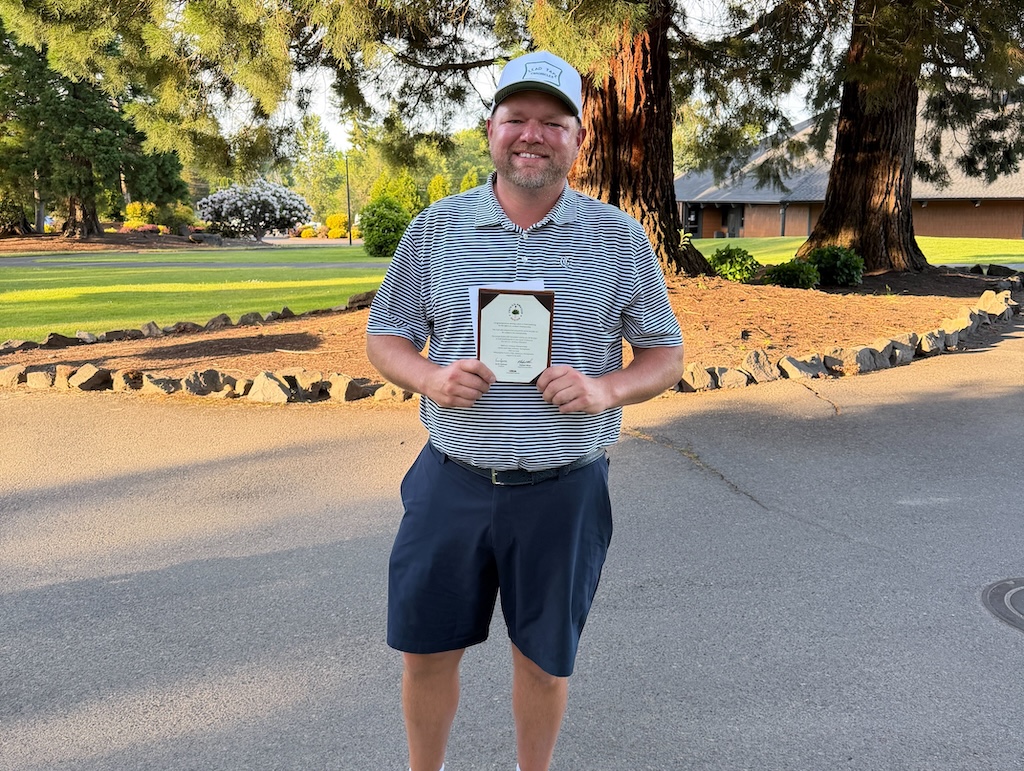
This past Monday, I played in the U.S. Amateur local qualifier at Rock Creek Country Club in Portland, Oregon. A full tee sheet from 7:30 a.m. to 1:55 p.m., the top 11 scores would make it to the U.S. Amateur final qualifying.
I teed off at 10:48 a.m.. With the 7:30 am tee time, you can get a feel for the leaders’ pace, and they were off and running on the challenging setup at Rock Creek.
View this post on Instagram
Getting to the highlight of the round on the par five 17th, a drive up the left side and 212 yards left to the front hole location. I took out a 5-iron with plans of middle of the green. The ball ended up 8 feet left of the hole, pin high. A slight downhill putt dropped in for an eagle 3 on the 17th. With the cut line looking to be anywhere from -2 to even par. This was the boost I had been waiting for all day.
With making par from the trees on 18, it was time to wait for a potential playoff with a posted score of one under par 71.
Three hours later, it was playoff time. 8 players for 6 spots. I made par on the playoff hole, which was good enough to advance to the U.S. Amateur final qualifying in July. USGA qualifiers sure deliver on all of the emotions in golf!
Club Junkie
Building my 2026 gamer WITB: Ranking the contenders and new putter projects – Club Junkie Podcast


The annual What’s In The Bag build is underway, and on this episode of Club Junkie, Brian breaks down the clubs currently leading the race for a spot in his 2026 gamer setup. From drivers and fairway woods to irons, wedges, and shafts, he ranks the equipment that’s performing best and explains what’s separating the front runners from the rest of the field.
Brian also heads into the workshop to discuss several putter projects currently on the bench. From head options and shaft choices to build ideas and testing plans, he shares what he’s working on and which putters could become serious contenders for the bag this season.
If you’re a gear junkie who loves equipment testing, club building, and the never-ending pursuit of the perfect setup, this episode is for you.
Follow Club Junkie:
Instagram: @clubjunkiepod
TikTok: @clubjunkiepod
Threads: @clubjunkiepod
X: @ClubJunkiePod

What’s the story behind Webb Simpson’s custom-stamped irons?

Memorial Tournament Tour Report: Rory McIlroy, Cameron Young switch up drivers, and more

Cadillac Championship Tour Report: Spieth’s sizable changes, McLaren Golf launches, and more

Russell Henley’s winning WITB: 2026 Charles Schwab Challenge

Kristoffer Reitan’s winning WITB: 2026 Truist Championship

Best irons 2026: Best irons overall, most forgiving irons, and more

J.T. Poston’s winning WITB: 2026 Memorial Tournament

Aaron Rai’s winning WITB: 2026 PGA Championship

Cameron Young’s winning WITB: 2026 Cadillac Championship

Details on Jason Day’s latest prototype Avoda iron setup


Christiaan Maas WITB 2026 (June)
Driver: TaylorMade Qi4D LS (8 degrees) Shaft: Fujikura Ventus TR Blue 6 X 3-wood: TaylorMade Qi10 (15 degrees) Shaft: Fujikura Ventus Black...


Ryan Palmer WITB 2026 (June)
Driver: Callaway Quantum Triple Diamond (9 degrees) Shaft: Project X HZRDUS Smoke Blue RDX 60 TX 3-wood: TaylorMade Qi10 (15 degrees) Shaft:...


Bud Cauley WITB 2026 (June)
Bud Cauley had >14 clubs in his bag when photographed prior to the Memorial Tournament. Driver: Titleist GTS2 (8 degrees) Shaft: Fujikura...


Hannah Green WITB 2026 (June)
Driver: Titleist GTS3 (10 degrees, D4 SureFit setting) Shaft: Mitsubishi Chemical Diamana RB 53 S 3-wood: Titleist GT3 (15 degrees,...
-
 Equipment7 days ago
Memorial Tournament Tour Report: Rory McIlroy, Cameron Young switch up drivers, and more
-
 News2 weeks ago
Russell Henley’s winning WITB: 2026 Charles Schwab Challenge
-
 Equipment4 days ago
Best irons 2026: Best irons overall, most forgiving irons, and more
-
 Whats in the Bag5 days ago
J.T. Poston’s winning WITB: 2026 Memorial Tournament
-
 Equipment1 week ago
Details on Jason Day’s latest prototype Avoda iron setup
-

 Equipment3 weeks ago
CJ Cup Byron Nelson Tour Report: Koepka and Kim’s newest putters finally get hot
-

 News2 weeks ago
Charles Schwab Challenge Tour Report: MacIntyre, Åberg and Spaun all switch putters, TaylorMade launches new Spider
-

 Equipment2 weeks ago
Details on J.J. Spaun’s surprise putter switch


MJ Waite
Oct 15, 2018 at 1:17 pm
Excellent Coaching, Strength training,Positive reinforcement, Focus, Determination, Respect for others, Respect for the Game, Confidence, Never Yield…. it’s all good! WoooPig! ?????????????
Christopher James
Oct 14, 2018 at 2:20 pm
As a parent to two daughters who are just getting into golf, this was a great read and exciting to think about the positive changes women golfers are making. Just as important as the stats, there are more positive role models in golf for young women. I cannot also wait to see what happens!
Johnny Penso
Oct 14, 2018 at 12:34 am
Sorry but it grinds my gears to read poorly written nonsense. Players from the past would have no chance to compete with today’s teams because girls are stronger is nonsense. Girls aren’t stronger because genetics don’t change in 30 years. What they are is better able to take advantage of today’s knowledge of physical conditioning which has advanced tremendously in the digital age, and far better able to take advantage of club technology and and the club building process.
Tiger Noods
Oct 14, 2018 at 2:27 am
Actually, girls are stronger. You’ve basically said so yourself. Before Nebraska in the 1950s, football players were DIScouraged from working out because they thought it would slow them down. In recent years, strength and conditioning has shown to provide a scoring advantage in golf – the TW phenomenon. This is the trickle down effect. So they enter Uni stronger *because* the regimens and process has filtered down to every level now.
Saying they aren’t stronger because of genetics is a false equivalency.
Brad
Oct 14, 2018 at 5:14 am
I believe you are misconstruing Johny’s statement. Girls are not innately “stronger” today than they were 30 years ago. In fact, there is evidence that humans are in fact less physically adept on average than in the past.
https://www.voanews.com/a/modern-human-weaker-than-ancestors/1903847.html
https://phys.org/news/2009-10-modern-men-wimps.html
https://www.businessinsider.com/olympics-athletics-sports-performance-history-world-records-2016-8?IR=T
No, players are better today than they were 30 years ago because they are better PREPARED with more scientific training and nutritional regimens as well as better equipment. Coaching has also improved because of the development of launch monitors, which helped to re-write the ball flight laws and dispel many myths about what creates optimal launch conditions, etc.
So, these female golfers are not better or stronger today because of any inherent improvements that there predecessors were not able to take advantage of. Take most of the good players from 30 years ago and prepare them like golfers are today – and the results would be similar. It is as simple as that.
Smith
Oct 15, 2018 at 1:57 pm
That’s an argument of semantics.
What you’re saying is that if I spend 4 hours lifting weight at the gym for the next 6 months, I’ll be just as strong as I am today, but I’ll just be better PREPARED to lift weights?
When you condition through weights and other gym routines, you become stronger. The girls now are able to take advantage of better training, nutrition etc. and as a result, they are stronger.
I can’t believe this is even a discussion.
JD
Oct 13, 2018 at 6:14 pm
Props to them. These ladies can probably squat and deadlift more than the average golfwrx’er
CrashTestDummy
Oct 13, 2018 at 3:40 pm
108 mph. Wow. That is some serious speed and faster than few guys on PGA tour.
Paul Booij
Oct 13, 2018 at 12:45 pm
“Here are a bunch of stats of outliers!”