
Opinion & Analysis
Tips for playing true links golf courses in Ireland and Scotland

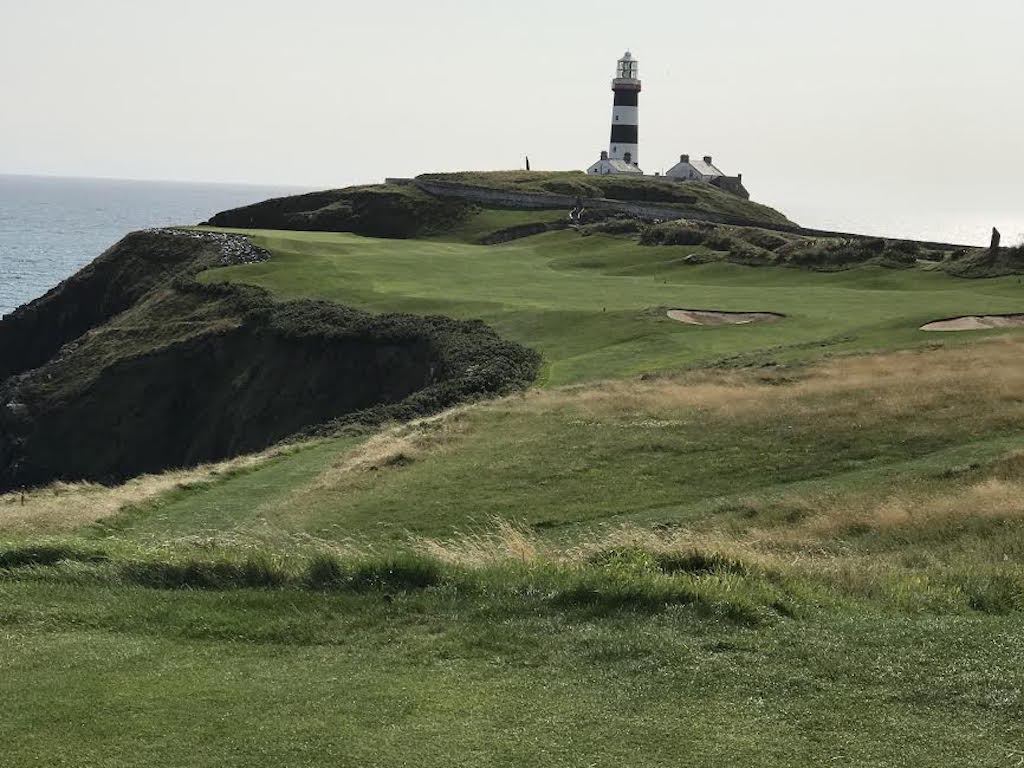
l just returned from two weeks in the UK where I played nine of the greatest links golf courses of the world. This was my third year in a row of exploring links golf, as the two years prior I went to Bandon Dunes and Cabot Links, which are probably the two places in North America that most closely resemble links turf.
The term “links” has been widely used in our country to mean several things, which it really is not, such as “I’m hittin’ the links tomorrow.” In other words, playing golf. But the term has a more precise definition: Links land is land that links the sea to the arable land further on shore. The area where the sea was, has receded and now leaves an expanse of turf which will only support the growth of some reddish brown fescue grasses. So if the color green is what you like on a golf course, stay home.
The growth is very low, the land is very rolling and hilly, firm, and the ground is simply whatever the sea has left on its retreat. While the golf courses on this land are pretty much whatever nature left there, a human being had to come and decide where tees, greens, bunkers etc., should be placed. It is even likely that many of the bunkers on the old courses might have been naturally dug by sheep and other animals seeking shelter from the harsh winds that blow in these area. Folklore? Fact? Who knows. But I do know this, the game that is played on this land is a whole other game than what many of us have come to know. The most we get in North America are “links style” or “links like” courses, usually meaning the absence of trees. These are not links courses. Here are some notable differences in how true links courses play.
First of all, because of the wind and the tight, firm turf, the golf ball flies lower. My advice is do not try to do anything about this, it’s simply a matter of the ballistics of impact. Think about shots you have played here in the U.S. from “hard pan” — they fly lower. You do not have the one inch or so grass under the golf ball as a launching pad, so accept lower flight…on ALL shots from the turf, not just around the green.
Now this works in your favor, because much of the time, we don’t want the golf ball to fly too high with the ever-present winds blowing. Most mistakes are made by players who try to hit high shots off very tight lies. Around the greens, putt whenever you can! When I did chip, I had some success with the ball slightly back, weight forward and hands ahead but… very little wrist set on most shots around the green, regardless of club selection. This keeps the hands in front, but avoids getting too steep into the firm turf. So if you closely observe elite-level players they are hitting de-lofted, low shots with a shallow somewhat shallow attack angle. I think anyone wishing to improve their iron game should learn to play links-land golf courses. There is far more putting and chipping with hybrids and 6-irons from off the green than in the U.S.
The second thing to be aware of is the line of play. It is critical in links golf. Take for example. a bunker guarding a green on one side. If you are forced to play over that bunker for your approach, you are faced with a very difficult shot, which invariably bounces over the green and into some heather or gorse behind the green making for an impossible up and in. My advice is play away from the bunker and short of the green for a much simpler short chip or putt. Here at home we can play over bunkers when forced to (it’s not optimal) because the softer greens mostly hold shots. Not in links golf! So try and check the hole location to know what side of the fairway to play in from. Yes, I know most of you are thinking, “I just wanna hit it solid,” but these observations could help, when you CAN control your tee ball. Try your level best to come into the green from the open, unprotected side.
Another word to the wise: avoid the heather (high rough fescue) and REALLY avoid the gorse bushes (unplayable lies to be sure). These grasses often cross the fairways so, when you play there, be sure to know how far they are from you; treat them like the hazards they are. You’ll need to lay well back of them if you can. I’d advise having 180 in from the fairway over 140 in the fescue. It is that different. Of course we can’t simply control tee shots, I’m referring more to the lay up shots. A bogey is NOT a bad score. Doubles and “others” come from the gorse, deep fairway bunkers and the heavy rough.
Which brings me to my next point, the roll of the golf ball. A shot on a links course is never good until it stops rolling! I hit a few drives 300 yards (I’m 70 years old). I hit what I thought were good draws right down the middle only to find them in the left fescue. If you do have a swing from the light rough (fescue) and the grass is growing toward the green, allow for “flyers” that might run 50 yards after landing. I hit an 8-iron that ended up near 200 yards once!
Avoid the fairway pot bunkers at all costs. If you get in one, take your sand wedge and play back to the fairway. I observed a number of players trying to play at the green. This is a HUGE mistake. Forget your distance to the hole, forget the green and get back on the fairway. It will save you a lot of strokes. Bobby Jones once remarked that the toughest shot in golf is the “pitch back to the fairway.”
In the greenside bunkers, there is less of a problem, but I might offer this advice: You are likely to find wetter, heavier sand than you might in the U.S. These shots require less bounce on the sand wedge or lob wedge, so one might consider that in your club selection. If you play your regular sand wedge, you may want to open it less at address and not “fan it” as much taking it back. This will minimize the bounce, let the leading edge work a little more than we might in fine, loose sand and help you explode better on to the green.
Another distinction…actual yardage means less than it does here at home. The wind, the elevation, the roll of the golf ball, all affect your club selection much more so than the actual yardage. The best advice here is get a good caddy who knows the actual distance, but will give you the real playing yardage.
The greens are large, quite undulating amd MUCH less defined. They also roll slower than out golf courses, because they are so exposed. A green speed over 10 is unlikely. The biggest difference we encounter is the effect of the wind on putts. If you get an experienced caddie, he/she is likely to remind you FIRST of the wind factor on the putts. For those of us who play in the states, wind is not the first thought we have on the putting surface. But it needs to be on the seaside fine fescue links greens. If those greens were at the speed of some creeping bent grasses, rounds might take in excess of six hours!

If you love of the game, and it is at all possible, go play golf in Scotland and or Ireland. There is something mystical about crossing the Swilcan Bridge, or playing out of the road hole bunker that no other place in golf offers. Walking the ancient fairways of Ballybunion or St. Andrews, where it is likely that every great player who has ever lived has played, (Augusta by comparison has been played by every great since 1934; Old Tom Morris was long gone by then) is a truly memorable experience.
These countries gave us our game game as we know it, and it is their national pasttime. I do not mean to discredit Cypress Point or Pine Valley, Merion or Oakmont one bit. They are wonderful fields of play (and much more difficult in my opinion) but they go back 100 years, not perhaps 500 years or more. The hallowed grounds that comprise the old links courses have been there since time began, and the idea of hitting a ball in a hole with a stick started there, and these things are palpable when you play there. But be prepared, it is a different game to be sure. And be sure to pack for every weather situation you can imagine. Even in the same day! I asked my caddie at the Old Course what the weather forecast was. He replied, “I can give you a 3-hole forecast at best.” And right he was. There were at least six weather changes that day. Anyway, I hope these tips help you if you ever get across the pond.
PS: Be prepared for five-plus hour rounds. Most of these courses are “bucket list” destinations and tourists take their time!









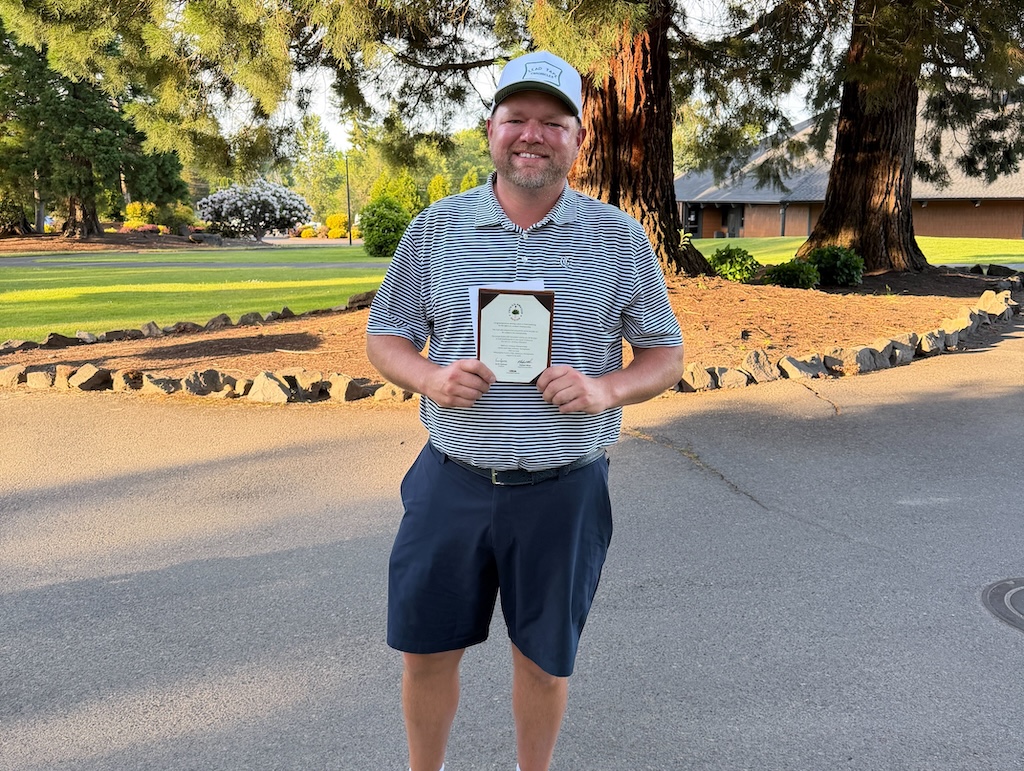
This past Monday, I played in the U.S. Amateur local qualifier at Rock Creek Country Club in Portland, Oregon. A full tee sheet from 7:30 a.m. to 1:55 p.m., the top 11 scores would make it to the U.S. Amateur final qualifying.
I teed off at 10:48 a.m.. With the 7:30 am tee time, you can get a feel for the leaders’ pace, and they were off and running on the challenging setup at Rock Creek.
View this post on Instagram
Getting to the highlight of the round on the par five 17th, a drive up the left side and 212 yards left to the front hole location. I took out a 5-iron with plans of middle of the green. The ball ended up 8 feet left of the hole, pin high. A slight downhill putt dropped in for an eagle 3 on the 17th. With the cut line looking to be anywhere from -2 to even par. This was the boost I had been waiting for all day.
With making par from the trees on 18, it was time to wait for a potential playoff with a posted score of one under par 71.
Three hours later, it was playoff time. 8 players for 6 spots. I made par on the playoff hole, which was good enough to advance to the U.S. Amateur final qualifying in July. USGA qualifiers sure deliver on all of the emotions in golf!
Club Junkie
Building my 2026 gamer WITB: Ranking the contenders and new putter projects – Club Junkie Podcast

The annual What’s In The Bag build is underway, and on this episode of Club Junkie, Brian breaks down the clubs currently leading the race for a spot in his 2026 gamer setup. From drivers and fairway woods to irons, wedges, and shafts, he ranks the equipment that’s performing best and explains what’s separating the front runners from the rest of the field.
Brian also heads into the workshop to discuss several putter projects currently on the bench. From head options and shaft choices to build ideas and testing plans, he shares what he’s working on and which putters could become serious contenders for the bag this season.
If you’re a gear junkie who loves equipment testing, club building, and the never-ending pursuit of the perfect setup, this episode is for you.
Follow Club Junkie:
Instagram: @clubjunkiepod
TikTok: @clubjunkiepod
Threads: @clubjunkiepod
X: @ClubJunkiePod
Club Junkie
Tour Edge Exotics mini driver review + TaylorMade Spider ZT Max first look – Club Junkie

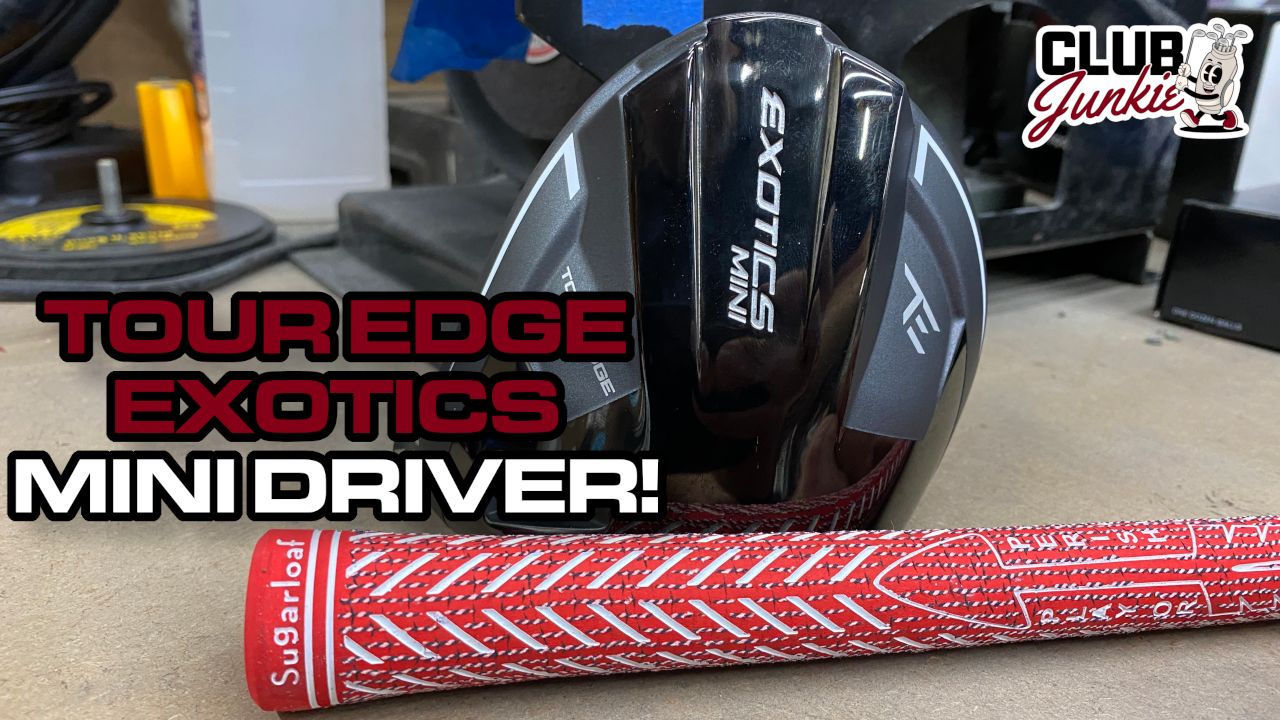
On this episode of Club Junkie, I put the new Tour Edge Exotics Mini Driver to the test and break down the performance, forgiveness, distance, and where it fits compared to a traditional driver or strong fairway wood. If you have been curious about adding a mini driver to the bag, this one is worth a look.
I also dive into the new TaylorMade Spider ZT Max putter that was recently spotted and discuss the growing zero torque putter trend. Plus, there is a closer look at the new Project X Titan Yellow shaft showing up on the PGA Tour and what makes it different from other profiles currently out there.

Justin Rose WITB 2026 (April): Full WITB breakdown with new McLaren irons

What’s the story behind Webb Simpson’s custom-stamped irons?

Memorial Tournament Tour Report: Rory McIlroy, Cameron Young switch up drivers, and more

Cadillac Championship Tour Report: Spieth’s sizable changes, McLaren Golf launches, and more

Russell Henley’s winning WITB: 2026 Charles Schwab Challenge

Kristoffer Reitan’s winning WITB: 2026 Truist Championship

J.T. Poston’s winning WITB: 2026 Memorial Tournament

Aaron Rai’s winning WITB: 2026 PGA Championship

Best irons 2026: Best irons overall, most forgiving irons, and more

Cameron Young’s winning WITB: 2026 Cadillac Championship


Bud Cauley WITB 2026 (June)
Bud Cauley had >14 clubs in his bag when photographed prior to the Memorial Tournament. Driver: Titleist GTS2 (8 degrees) Shaft: Fujikura...


Hannah Green WITB 2026 (June)
Driver: Titleist GTS3 (10 degrees, D4 SureFit setting) Shaft: Mitsubishi Chemical Diamana RB 53 S 3-wood: Titleist GT3 (15 degrees,...


Asterisk Talley WITB 2026 (June)
Driver: TaylorMade Qi4D (9 degrees) Shaft: Fujikura Ventus Blue 6 S 3-wood: TaylorMade Qi4D (16.5 degrees) Shaft: Fujikura Ventus Blue...


Brianna Do WITB 2026 (June)
Driver: Callaway Quantum Triple Diamond (9 degrees) Shaft: KBS PGW 3-wood: Callaway Elyte Titanium (15 degrees) Shaft: KBS PGW 5-wood:...
-
 Equipment6 days ago
Memorial Tournament Tour Report: Rory McIlroy, Cameron Young switch up drivers, and more
-
 News1 week ago
Russell Henley’s winning WITB: 2026 Charles Schwab Challenge
-
 Whats in the Bag3 days ago
J.T. Poston’s winning WITB: 2026 Memorial Tournament
-
 Equipment3 days ago
Best irons 2026: Best irons overall, most forgiving irons, and more
-

 Equipment1 week ago
Details on Jason Day’s latest prototype Avoda iron setup
-
 Equipment3 weeks ago
CJ Cup Byron Nelson Tour Report: Koepka and Kim’s newest putters finally get hot
-

 News2 weeks ago
Charles Schwab Challenge Tour Report: MacIntyre, Åberg and Spaun all switch putters, TaylorMade launches new Spider
-

 Equipment2 weeks ago
Details on J.J. Spaun’s surprise putter switch


Bob P
Dec 19, 2018 at 10:40 am
Dennis,
What were the 9 courses you played
RFP
Dec 19, 2018 at 9:27 am
Dennis, which 9 course did you play?
Debtor
Sep 9, 2018 at 10:19 pm
Lost all credibility with the photo of Old Head to lead the story off…
Tartan Golf Travel
Sep 9, 2018 at 10:56 am
I own a Golf Travel company and we specialize in trips to Scotland and Ireland. A couple of tips. 1. Forget your umbrella and just have great waterproofs. 2. Find some hidden gems which will offset the costs of playing some of the high $ must play courses. 3. Take caddie. A lot of tee shots are blind.
I just sent a group over last week. 7 days all in St. Andrews. (Kingsbarns, Old Course, New , Jubilee, Castle, Carnoustie, North Berwick. £2000
SV
Sep 9, 2018 at 10:27 am
First, I have only once encountered a round close to five hours, even playing Carnousie, St. Andrews Old and others. Second, lower your score expectations. A low handicap golfer will generally shoot from 5-10 strokes above their normal score. Higher handicaps will generally be even more above their norm.
As opposed to the US you can easily play private clubs, although some require proof of handicap. Most of all it is a great experience.
T
Sep 9, 2018 at 8:39 am
Ireland is not the UK.
And why do you Yanks always have to add extra bits like “true” before the actual subject and embellish it? It’s a links course. That’s it. That’s all it is. No need for true. So much hyperbolic language in the US and you fool each other thinking there are fake things in the world to trick you or something. Weird culture you got.
Dennis clark
Sep 9, 2018 at 11:01 am
True that. I mistakenly referred to Ireland in UK which in fact iinckudes Northern Ireland. True is an adjective to distinguish Links from faux links and to identify the turf on which it lies. That is hardly an embellishment or hyperbole. Regarding to the culture here as “weird” seems uniquely hyperbolic however.
Johnny Penso
Sep 9, 2018 at 8:03 pm
I believe his point is that the adjective is not necessary. A course is either a links or it is not. So one only need say, “these are the features of a links type of golf course” and if you want to juxtapose that with what we North Americans would commonly call a “links style” course you would simply say it isn’t a links course because it doesn’t have the aforementioned features of a links course. Or you could say it’s no more a links course than a copy of the Mona Lisa is a “Mona Lisa style” painting. I live in Canada and it is weird to me. I especially love the double adjective.
“How was the course today”
“It wasn’t hard hard but it was still pretty hard”
Drives me a little batty when I hear people talking like that and it happens all the time…lol.
Lo T
Sep 9, 2018 at 10:27 pm
Eh? lol
James
Sep 8, 2018 at 5:47 pm
… and always remember to bring along a flask of a good single-malt scotch.
Dennis clark
Sep 8, 2018 at 4:26 pm
I didn’t go there. Or I would have written about them.
Luke
Sep 8, 2018 at 1:17 pm
Why exclude England and Wales. There are plenty of great links course in those countries.