
Opinion & Analysis
Are you really too good for Division II golf?

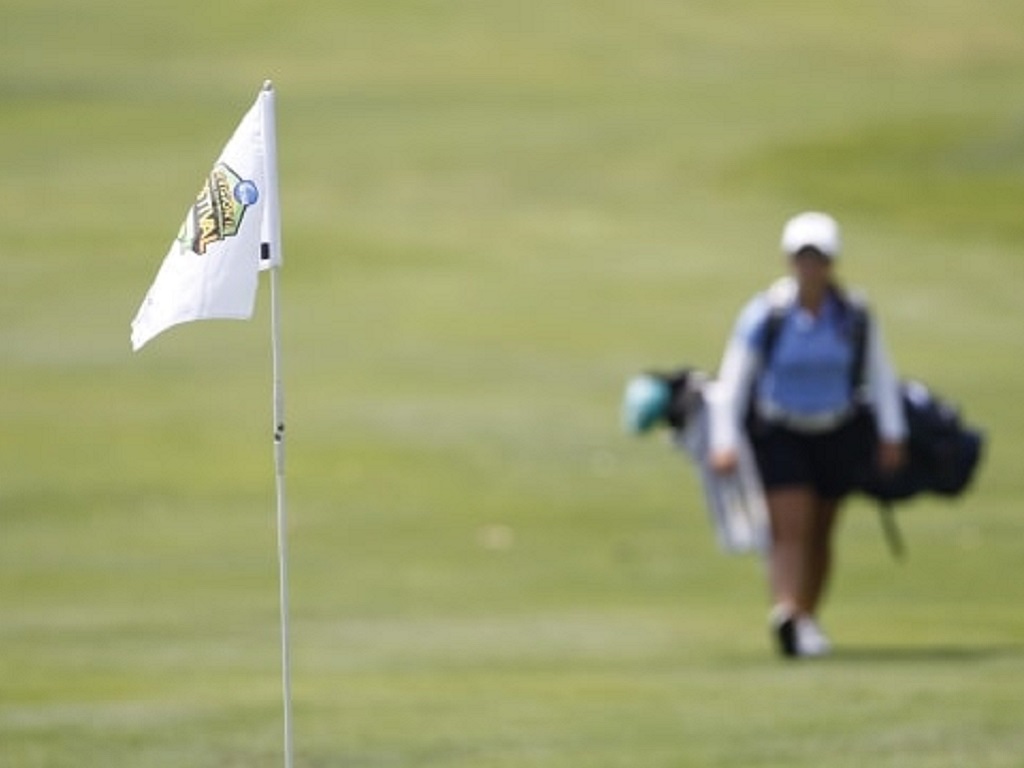
Here’s a simple question for you: What does it take to be competitive in women’s Division II golf? How about win the team national championship? How about the individual national championship? While many female junior golfers set their sights to play for a Division I program, they may be missing out on an opportunity to play at a school that provides them the best fit, while still experiencing some highly competitive golf. Many people see Division I programs as the pinnacle but the top Division II can compete and beat Division I teams.
By the numbers
Data from the last five years of NCAA Women’s Golf Division II Championship suggests “these girls have game.” The 2018 Champions, University of Indianapolis (UINDY), tallied a winning score of 1157 – 289.25 per round, which is slightly above 72 for each player’s score counting towards the team score. According to Golfstat.com, the official rankings of college golf, these scores would be comparable to Division I teams like Southern California whose players average 72.21, or NCAA Division I champs Arizona, whose players average 72.69.
Such scores are not the outliers. Florida teams that have taken home the title in the last five years have similar scores. In 2017, Barry won the championship with a team total of 1222 (highest of the five years) — team average of 305.5 per round and player average of just a little north of 76. Powerhouse Rollins (six time national champions) took the title in 2016, shooting 1173 — 293.25 team average per round and 73.3 player average. And finally Lynn won the title in 2014 posting a team score of 1164 — team average of 291 and player average of 72.75.
On the individual side, 2018 champion Katharina Keilich of UINDY was crowned the individual champion with a total score of 287 (-1). In 2017 Marie Coors of St Leo posted a score of 295 (+7), while Gabrielle Shipley of Grand Valley State had an impressive tournament in 2016, shooting 282 (-6) to win. Brenna Moore in 2015 brought home the individual title for Midwestern State with a score of 297 (+9). And to round out the last five individual champions, Lousie Manalo of Lynn shot 287 (+3). This means the average score to win is 289.6 and almost half the time, the winner breaks par!
D II Overview
The fact is that in D2 Women’s Golf, there are a number of really good teams. Here are the top 5 ranked season averages from 2017-2018:
- UINDY – 293.2
- Nova Southeastern – 295.5
- Dallas Baptist – 293.7
- Barry – 299.4
- St. Leo – 302.3
How about teams ranked 20th-24th?
- Missouri St Louis – 305.2
- St Edwards – 306.9
- Cal State Monterey Bay – 311.1
- Lenoir Rhyne – 309.8
- West GA – 311.3
As you get to teams ranked closer to 50th you’ll see team scoring averages in the 315 range and teams ranked closer to 100th team scoring averages move up to 330 range. Golfstat ranks over 180 programs for Division II women’s golf.
Funded vs. Non-Funded
According to Brendan Ryan of Golf Placement Services, it is important that prospective student athletes and their families understand the idea of funded vs. non-funded programs. Over the past decade, golf has seen an drastic increase in the commitment of schools which has resulted in better facilities and more professional coaches at almost every level of the sport.
However, this does not mean that all programs are appropriately funded. While it is impossible to know the exact numbers, Brendan suggests that approximately 60% of Division 1 schools, 20% of Division 2 schools and 10% of Division III schools are funded with either the appropriate number of scholarships or the funding to travel and equip the players properly or both.
Knowing that not all programs, regardless of division are not fully funded with both athletic and aid and budget money it is important for the student athlete to think through the overall experience they want and how the financial side fits their needs.
Advice in pursuing D II Options
Everything in the recruitment process begins with research to ensure you find a place where you can succeed academically, athletically and socially. Make sure each school you are considering has the major you plan on studying. Next consider athletically; is it a school you’d be able to earn a travel spot or is your scoring average towards the 4th or 5th player’s score? Remember great coaches recruit number one players (difference makers)!




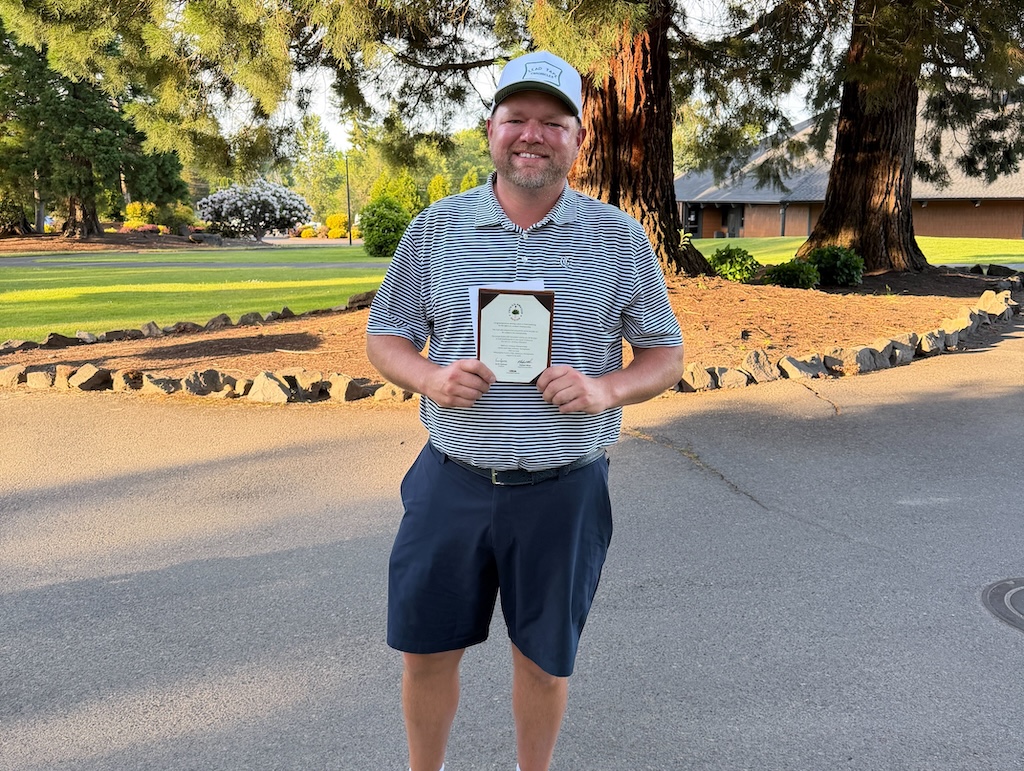
This past Monday, I played in the U.S. Amateur local qualifier at Rock Creek Country Club in Portland, Oregon. A full tee sheet from 7:30 a.m. to 1:55 p.m., the top 11 scores would make it to the U.S. Amateur final qualifying.
I teed off at 10:48 a.m.. With the 7:30 am tee time, you can get a feel for the leaders’ pace, and they were off and running on the challenging setup at Rock Creek.
View this post on Instagram
Getting to the highlight of the round on the par five 17th, a drive up the left side and 212 yards left to the front hole location. I took out a 5-iron with plans of middle of the green. The ball ended up 8 feet left of the hole, pin high. A slight downhill putt dropped in for an eagle 3 on the 17th. With the cut line looking to be anywhere from -2 to even par. This was the boost I had been waiting for all day.
With making par from the trees on 18, it was time to wait for a potential playoff with a posted score of one under par 71.
Three hours later, it was playoff time. 8 players for 6 spots. I made par on the playoff hole, which was good enough to advance to the U.S. Amateur final qualifying in July. USGA qualifiers sure deliver on all of the emotions in golf!
Club Junkie
Building my 2026 gamer WITB: Ranking the contenders and new putter projects – Club Junkie Podcast


The annual What’s In The Bag build is underway, and on this episode of Club Junkie, Brian breaks down the clubs currently leading the race for a spot in his 2026 gamer setup. From drivers and fairway woods to irons, wedges, and shafts, he ranks the equipment that’s performing best and explains what’s separating the front runners from the rest of the field.
Brian also heads into the workshop to discuss several putter projects currently on the bench. From head options and shaft choices to build ideas and testing plans, he shares what he’s working on and which putters could become serious contenders for the bag this season.
If you’re a gear junkie who loves equipment testing, club building, and the never-ending pursuit of the perfect setup, this episode is for you.
Follow Club Junkie:
Instagram: @clubjunkiepod
TikTok: @clubjunkiepod
Threads: @clubjunkiepod
X: @ClubJunkiePod
Club Junkie
Tour Edge Exotics mini driver review + TaylorMade Spider ZT Max first look – Club Junkie

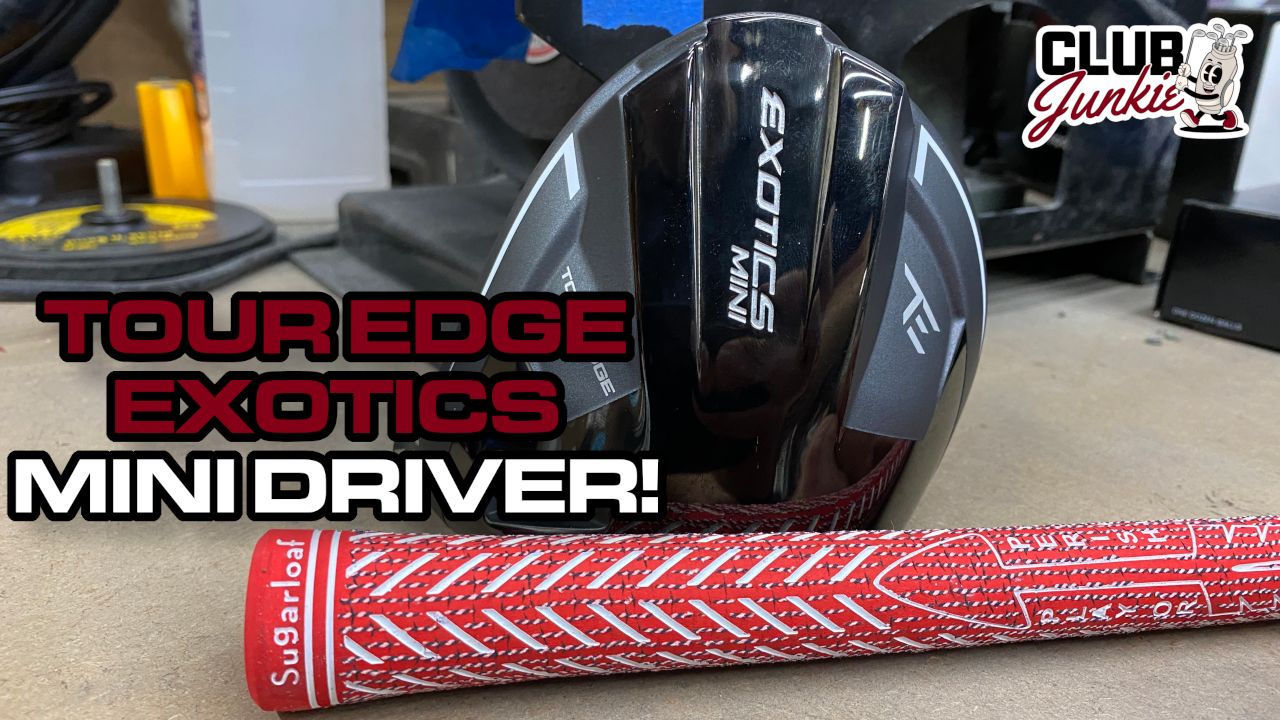
On this episode of Club Junkie, I put the new Tour Edge Exotics Mini Driver to the test and break down the performance, forgiveness, distance, and where it fits compared to a traditional driver or strong fairway wood. If you have been curious about adding a mini driver to the bag, this one is worth a look.
I also dive into the new TaylorMade Spider ZT Max putter that was recently spotted and discuss the growing zero torque putter trend. Plus, there is a closer look at the new Project X Titan Yellow shaft showing up on the PGA Tour and what makes it different from other profiles currently out there.

Justin Rose WITB 2026 (April): Full WITB breakdown with new McLaren irons

What’s the story behind Webb Simpson’s custom-stamped irons?

Memorial Tournament Tour Report: Rory McIlroy, Cameron Young switch up drivers, and more

Cadillac Championship Tour Report: Spieth’s sizable changes, McLaren Golf launches, and more

Russell Henley’s winning WITB: 2026 Charles Schwab Challenge

Kristoffer Reitan’s winning WITB: 2026 Truist Championship

Best irons 2026: Best irons overall, most forgiving irons, and more

J.T. Poston’s winning WITB: 2026 Memorial Tournament

Aaron Rai’s winning WITB: 2026 PGA Championship

Cameron Young’s winning WITB: 2026 Cadillac Championship


Ryan Palmer WITB 2026 (June)
Driver: Callaway Quantum Triple Diamond (9 degrees) Shaft: Project X HZRDUS Smoke Blue RDX 60 TX 3-wood: TaylorMade Qi10 (15 degrees) Shaft:...


Bud Cauley WITB 2026 (June)
Bud Cauley had >14 clubs in his bag when photographed prior to the Memorial Tournament. Driver: Titleist GTS2 (8 degrees) Shaft: Fujikura...


Hannah Green WITB 2026 (June)
Driver: Titleist GTS3 (10 degrees, D4 SureFit setting) Shaft: Mitsubishi Chemical Diamana RB 53 S 3-wood: Titleist GT3 (15 degrees,...


Asterisk Talley WITB 2026 (June)
Driver: TaylorMade Qi4D (9 degrees) Shaft: Fujikura Ventus Blue 6 S 3-wood: TaylorMade Qi4D (16.5 degrees) Shaft: Fujikura Ventus Blue...
-
 Equipment6 days ago
Memorial Tournament Tour Report: Rory McIlroy, Cameron Young switch up drivers, and more
-
 News2 weeks ago
Russell Henley’s winning WITB: 2026 Charles Schwab Challenge
-
 Equipment3 days ago
Best irons 2026: Best irons overall, most forgiving irons, and more
-
 Whats in the Bag4 days ago
J.T. Poston’s winning WITB: 2026 Memorial Tournament
-

 Equipment1 week ago
Details on Jason Day’s latest prototype Avoda iron setup
-

 Equipment3 weeks ago
CJ Cup Byron Nelson Tour Report: Koepka and Kim’s newest putters finally get hot
-

 News2 weeks ago
Charles Schwab Challenge Tour Report: MacIntyre, Åberg and Spaun all switch putters, TaylorMade launches new Spider
-

 Equipment2 weeks ago
Details on J.J. Spaun’s surprise putter switch

