
Opinion & Analysis
Want to be an elite junior golfer? Play a shorter and easier home course


Let’s start with a thought experiment: You’re building a long-term plan with your parents to become a world-class golfer. You create a list. How important is being a member of a nice golf course? Is it worth the money to join somewhere swanky, or will the local muni do?
If you are like most junior golfers I have spoken to, facilities matter, and you want to be a member of that 7400-yard course with perfect greens. Based on this preference, I wanted to look at the data; what type of courses produce PGA Tour players? What can we learn from them? With the help of many of my friends in golf, I started to compile a list of PGA Tour players and their home golf courses when they were between 12-16 years old.
Here is what I came up with
- Justin Thomas – Harmony Landing: 6,645 (130 course rating)
- Justin Rose – North Hants: 6,250
- Brooks Koepka – Bear Lakes: 7,439 (141)
- Jordan Spieth – Brookhaven: 6,820 (133)
- Rory McIlroy – Hollywood Golf Club: 6,056
- Bubba Watson – Tanglewood Golf Club: 6,302 (124)
- Phil Mickelson – Stardust: 6,550 (126)
- Zach Johnson – Elmhurst: 6,500 (128)
- Webb Simpson – Raleigh Golf: 6,869 (135)
- Bryson DeChambeau – Dragon Fly: 7,273 (135)
- Ryan Moore – The Classic: 6,903 (134)
- Tiger Woods – Navy Golf Course: 6,780 (129)
- Ollie Sciednerjans – Bentwater: 6,741 (142)
- Xander Schauffele – Bernardo Heights: 6,679 (131)
- Chez Reavie – Dobson Ranch: 6,630 (121)
- Patrick Cantlay – Virginia Country Club: 6,633 (130)
- Jason Dufner – Weston Hills: 7,060 (129)
- Adam Hadwin – Morgan Creek: 6,948 (136)
- Emiliano Grillio -Chaco Golf Club: 6,749 (130)
- Charles Howell III – Augusta Country Club: 7,125 (136)
- Julian Suri – South Hampton: 7,028 (138)
- Aaron Wise – Eagle Glen: 6,869 (139)
- Peter Uihlein – IMG Academy: 6,842 (136)
- Brandon Stone – Centurion: 6,830 (131)
Starting to notice something? Based on the data of these 24 PGA Tour players, their average home course has a yardage of 6,772 and slope of 132. Wowzers! Can’t believe it? It makes perfect sense: To be competitive in golf, you must shoot under par. Shooting under par, like riding a bike, or walking, or writing, is a skill. It is developed through a combination of repetition and feedback.
Easier golf courses allow players the opportunity to shoot lower scores and build confidence. Over time, these skills become habit. When players enter tournaments, it is more likely they shoot under par. Breaking par at your home golf course is only the first step towards becoming an elite junior golfer. The data suggests that players (both boys and girls) need to average approximately 69 per round to win on the AJGA — on 6,800-yard courses for boys and just under 6,000 yards for girls.
No major championship venue has ever had a junior member go on to win, or even play, the PGA Tour. That’s right: the PGA Tour is not filled with junior members from Augusta National. Why? Because while playing Shinnecock Hills is an absolute treat, the course is extremely difficult, and 74 is a great score. Junior members at such courses create habits of shooting 74, and when they enter tournaments, like the AJGA, in general, they get beat.
So where should you be a member if you are a junior golfer with aspirations of college golf or beyond? Great question. In an ideal world the course would have the following:
- Unlimited access to a facility that is approximately 6,700 yards long with a slope of about 130. The goal on this golf course is to break par often and work towards a handicap of +3 by your 18th birthday.
- Somewhere with other talented players. Although, it would be great if they are other juniors, more importantly you want players of about the same skill who will offer you a competitive match a couple times a week.
As always, if you have any feedback on this article or a story idea, please feel free to reach out to me! Always love hearing from people and helping them connect with schools that meet their academic, athletic, social and financial needs!




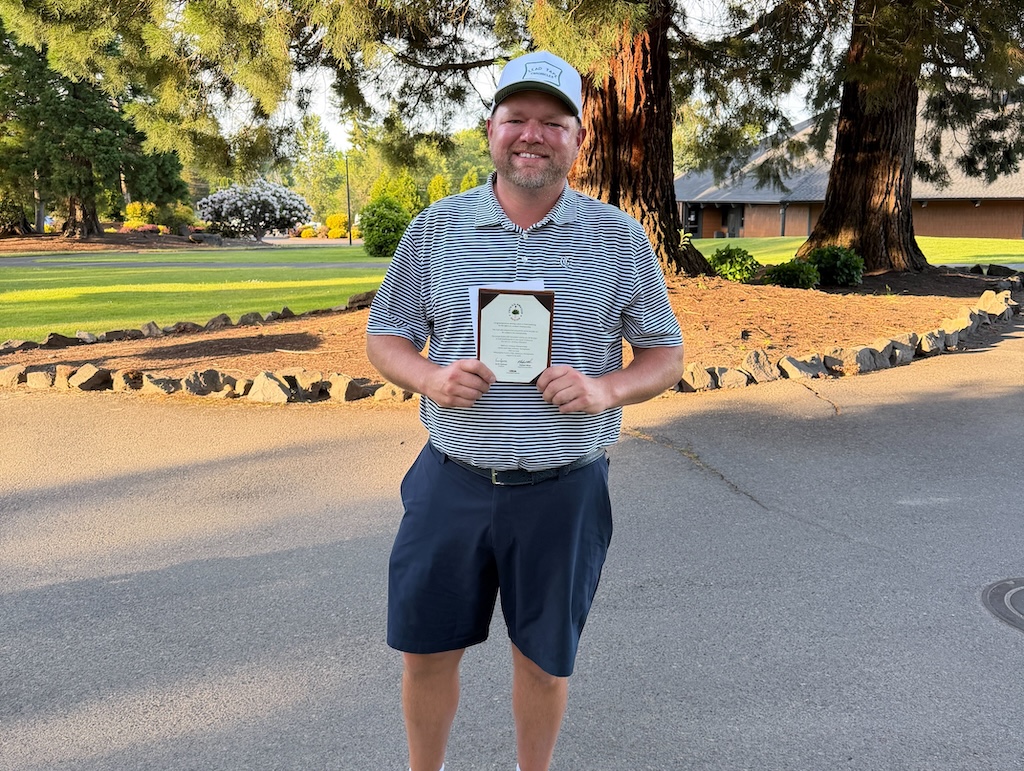
This past Monday, I played in the U.S. Amateur local qualifier at Rock Creek Country Club in Portland, Oregon. A full tee sheet from 7:30 a.m. to 1:55 p.m., the top 11 scores would make it to the U.S. Amateur final qualifying.
I teed off at 10:48 a.m.. With the 7:30 am tee time, you can get a feel for the leaders’ pace, and they were off and running on the challenging setup at Rock Creek.
View this post on Instagram
Getting to the highlight of the round on the par five 17th, a drive up the left side and 212 yards left to the front hole location. I took out a 5-iron with plans of middle of the green. The ball ended up 8 feet left of the hole, pin high. A slight downhill putt dropped in for an eagle 3 on the 17th. With the cut line looking to be anywhere from -2 to even par. This was the boost I had been waiting for all day.
With making par from the trees on 18, it was time to wait for a potential playoff with a posted score of one under par 71.
Three hours later, it was playoff time. 8 players for 6 spots. I made par on the playoff hole, which was good enough to advance to the U.S. Amateur final qualifying in July. USGA qualifiers sure deliver on all of the emotions in golf!
Club Junkie
Building my 2026 gamer WITB: Ranking the contenders and new putter projects – Club Junkie Podcast

The annual What’s In The Bag build is underway, and on this episode of Club Junkie, Brian breaks down the clubs currently leading the race for a spot in his 2026 gamer setup. From drivers and fairway woods to irons, wedges, and shafts, he ranks the equipment that’s performing best and explains what’s separating the front runners from the rest of the field.
Brian also heads into the workshop to discuss several putter projects currently on the bench. From head options and shaft choices to build ideas and testing plans, he shares what he’s working on and which putters could become serious contenders for the bag this season.
If you’re a gear junkie who loves equipment testing, club building, and the never-ending pursuit of the perfect setup, this episode is for you.
Follow Club Junkie:
Instagram: @clubjunkiepod
TikTok: @clubjunkiepod
Threads: @clubjunkiepod
X: @ClubJunkiePod
Club Junkie
Tour Edge Exotics mini driver review + TaylorMade Spider ZT Max first look – Club Junkie

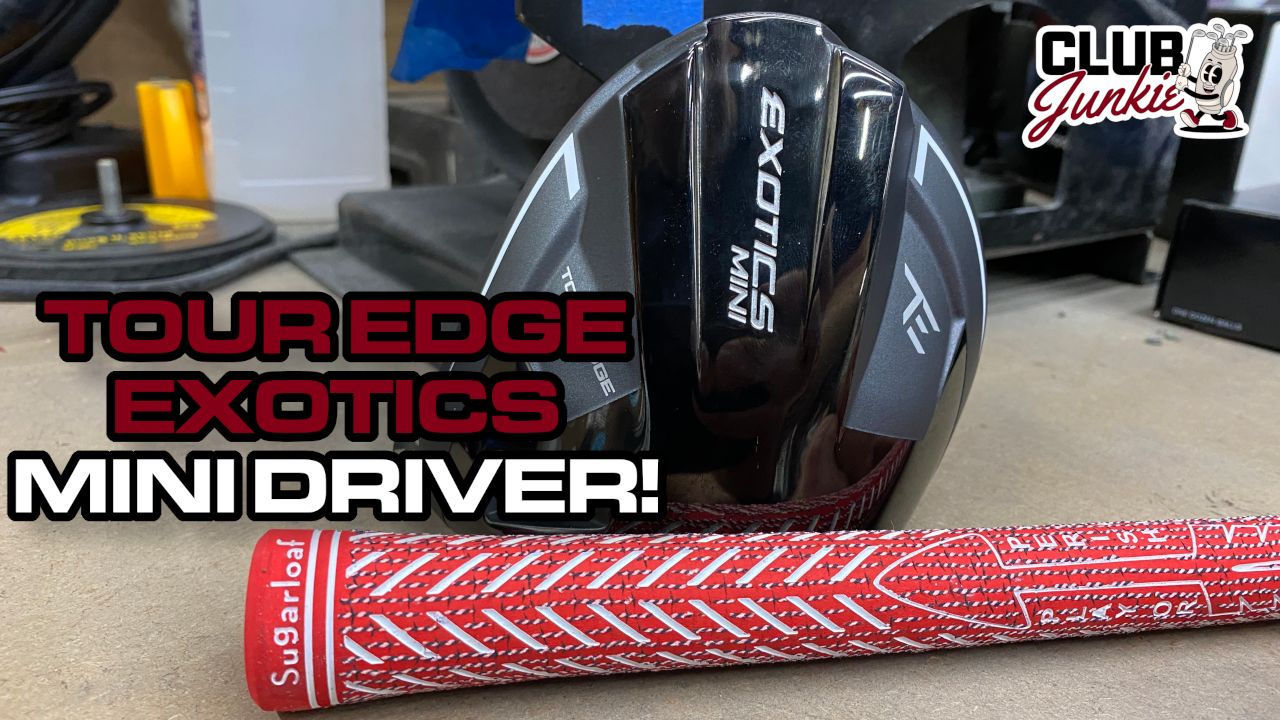
On this episode of Club Junkie, I put the new Tour Edge Exotics Mini Driver to the test and break down the performance, forgiveness, distance, and where it fits compared to a traditional driver or strong fairway wood. If you have been curious about adding a mini driver to the bag, this one is worth a look.
I also dive into the new TaylorMade Spider ZT Max putter that was recently spotted and discuss the growing zero torque putter trend. Plus, there is a closer look at the new Project X Titan Yellow shaft showing up on the PGA Tour and what makes it different from other profiles currently out there.

Justin Rose WITB 2026 (April): Full WITB breakdown with new McLaren irons

What’s the story behind Webb Simpson’s custom-stamped irons?

Memorial Tournament Tour Report: Rory McIlroy, Cameron Young switch up drivers, and more

Cadillac Championship Tour Report: Spieth’s sizable changes, McLaren Golf launches, and more

Russell Henley’s winning WITB: 2026 Charles Schwab Challenge

Kristoffer Reitan’s winning WITB: 2026 Truist Championship

Best irons 2026: Best irons overall, most forgiving irons, and more

J.T. Poston’s winning WITB: 2026 Memorial Tournament

Aaron Rai’s winning WITB: 2026 PGA Championship

Cameron Young’s winning WITB: 2026 Cadillac Championship


Ryan Palmer WITB 2026 (June)
Driver: Callaway Quantum Triple Diamond (9 degrees) Shaft: Project X HZRDUS Smoke Blue RDX 60 TX 3-wood: TaylorMade Qi10 (15 degrees) Shaft:...


Bud Cauley WITB 2026 (June)
Bud Cauley had >14 clubs in his bag when photographed prior to the Memorial Tournament. Driver: Titleist GTS2 (8 degrees) Shaft: Fujikura...


Hannah Green WITB 2026 (June)
Driver: Titleist GTS3 (10 degrees, D4 SureFit setting) Shaft: Mitsubishi Chemical Diamana RB 53 S 3-wood: Titleist GT3 (15 degrees,...


Asterisk Talley WITB 2026 (June)
Driver: TaylorMade Qi4D (9 degrees) Shaft: Fujikura Ventus Blue 6 S 3-wood: TaylorMade Qi4D (16.5 degrees) Shaft: Fujikura Ventus Blue...
-
 Equipment6 days ago
Memorial Tournament Tour Report: Rory McIlroy, Cameron Young switch up drivers, and more
-
 News2 weeks ago
Russell Henley’s winning WITB: 2026 Charles Schwab Challenge
-
 Equipment3 days ago
Best irons 2026: Best irons overall, most forgiving irons, and more
-
 Whats in the Bag4 days ago
J.T. Poston’s winning WITB: 2026 Memorial Tournament
-

 Equipment1 week ago
Details on Jason Day’s latest prototype Avoda iron setup
-
 Equipment3 weeks ago
CJ Cup Byron Nelson Tour Report: Koepka and Kim’s newest putters finally get hot
-

 News2 weeks ago
Charles Schwab Challenge Tour Report: MacIntyre, Åberg and Spaun all switch putters, TaylorMade launches new Spider
-

 Equipment2 weeks ago
Details on J.J. Spaun’s surprise putter switch


Craig
Oct 6, 2018 at 7:23 am
I totally agree with this article. I remember watching the doco The Short Game and those kids were playing ridiculously short courses (3000 yrds), but they learned to go low. I compare to my own junior experience playing off the back tees as a 10 year old, breaking 80 was a miracle, let along 70, when you can only drive it 180 yds on a 400 yd hole. Getting close to shooting par was as stressful as shooting 59.
R k
Sep 18, 2018 at 12:25 pm
Nicely done. One must walk before run.
Pissant
Sep 18, 2018 at 1:37 am
Completely meaningless article
Scheiss
Sep 18, 2018 at 1:36 am
That’s HOLYwood, not Hollywood, ya Yankee moron
Ryan
Sep 17, 2018 at 9:57 pm
Since when is a 130 ish 6700 ish course easy?
Also you are averaging a data set with a huge standard deviation… 7400 on the top end and 6000 on the short end that is a +/- of 700 yards for a total difference of 1400 yards! You can’t draw any conclusions from this data.
Timothy Ahline
Sep 17, 2018 at 4:17 pm
Zach Johnson grew up playing Elmcrest Country Club in Cedar Rapids Iowa not Elmhurst
Brandon
Sep 17, 2018 at 2:55 pm
Webb Simpson didn’t grow up on Raleigh golf.
Reid Thompson
Oct 5, 2018 at 12:29 pm
Agreed, pretty sure it was Carolina. Which tips out at 6200 ish. Interesting.
John
Sep 17, 2018 at 1:00 pm
Cool article. I don’t have personal experience but I’ve been around enough elite players who have and they all agree, it’s a real thing to get to -4 to -7 and feel comfortable, and getting that comfort at a young age cannot hurt. Obviously I think the perfect situation is to grow up on a course with maybe 12 holes are really “getable”, and 6 of them are stout “par” holes.
JS
Sep 17, 2018 at 10:53 am
I have two identical players. One plays a longer, harder course where 74 is a great score and once plays a shorter, easier course where 68 is a good score. According to this article, the player on the easier course will be better prepared for Tour by virtue of being accustomed to breaking par. There’s nothing in the article to support that conclusion.
First, the article doesn’t show what these golfers shot on those courses. For all the reader knows, some of the golfers on the longer, harder courses could have been breaking par and the some of the golfers on the shorter, easier courses were not breaking par.
Second, the golfers on the longer, harder could have played from a forward tee, which would make the course both shorter and easier.
Third, perhaps the reason golfers on shorter courses do better is because they have more opportunity to play shots that are important to scoring. For example, perhaps the short course golfers hit approach shots with wedges and short irons, which are more important to scoring due to ability to hit shots close to the flag, whereas the long course golfers hit approach shots with hybrids and long irons, which are less important to scoring due to the difficulty in shots close to the flag (Even the PGA Tour leader in proximity to the hole from 175-200yd averages a 27′ first putt).
A. Commoner
Sep 17, 2018 at 2:15 pm
JS raises some valid questions. Overall, I just consider such “insightful” writing as confirmation of the old axiom: “paper will hold still for anything.”
Jack
Sep 18, 2018 at 3:11 am
I think it’s more start from the shorter tees, and get used to scoring well, and slowly move outwards. Rather than start from the blue tees and shoot 80. Go from the red tees and shoot 70 or lower. Then slowly move to the whites.
Basically what the author is trying to say. Not just play short courses forever. I don’t know why so many are missing his perfectly logical article.
GK
Sep 17, 2018 at 1:08 am
I don’t disagree and it’s an interesting theory as I’ve wondered what is important in courses for juniors. In fairness, Shinnecock, like many major championship venues, probably doesn’t have the best junior program that gives a lot of access to aspiring young players. I would imagine many of these courses would have forward tee options that would meet your suggested criteria but the culture of some of these clubs (And a smaller pool of players) may have a bigger role in the lack of players from major championship venues.
Although no current PGA players, Olympic has had Johnny Miller, Bob Rosburg and Michael Allen who were junior members that played on tour. It is interesting to note that Miler often states that he developed many skills at the nearby San Francisco Club which kind of fits the criteria you advocate although developing future tour players isn’t their MO.
Finally, although those courses listed aren’t LA North or Oakland Hills, they aren’t exactly push over courses w/ most slopes in the 130s especially for 12-16 year olds. (I guess right balance b/t challenging and not too challenging). I played golf w/ a D1 head coach from an elite university a few years ago and asked a similar question. Although he didn’t specify re: slope/length b/c he wasn’t asked & that he wished that it wasn’t this way, but most of the kids he recruited were members of a private club.
TwoLegsMcManus
Sep 16, 2018 at 10:29 pm
Calculating averages is fine – it’s a good skill to have. Drawing conclusions from “average”, however, does not always make sense. Only a small percentage of people, for example, are exactly average height – even fewer are exactly average weight.
Two of the longest hitters in golf – Keopka and McIlroy – illustrate the problem. Brooks’ course was 7439, Rory’s 6056. That averages to 6747, but that number says nothing about either course. How often did these players actually play their home course? The course where I “keep my (online) handicap is one I haven’t played in years.
I think an elite junior golfer would be best served playing a variety of courses; long, short, trees, links, high-end, cheap… and vary their choice of tees to create different challenges. Sticking to one course would seem to be key to be that club’s champion, but not necessarily a game that will translate.
Prime21
Sep 16, 2018 at 9:39 pm
Andrew Svoboda played out of Winged Foot. Spend a little more time on research prior to making blanket statements, as a writer, that is part of your job.
Bert
Sep 17, 2018 at 9:46 pm
Who?
Matt Ball
Sep 16, 2018 at 9:12 pm
Brendan, Meadowbrook CC outside Richmond at about 6,600 yards par 71 produced Lanny and Bobby Watkins and John Rollins. 3 kids in recent years have gone on to division 1 scholarships. This club has no time restrictions for juniors to play even weekends. Course record 59 just shot by one of those scholarship players now on mini tours. Your article I believe is dead on.
Point misser
Sep 17, 2018 at 7:36 pm
Lanny & Bobby Wadkins. And that kid who shot 59 needs to tuck in his shirt tail and tighten up his act now that he’s a “pro”
Point Misser Missed The Point
Sep 18, 2018 at 5:30 am
Shut up Point Misser you moron and tuck your tail in between your legs
Peter
Sep 16, 2018 at 8:52 pm
I had a 15 year old girl send me her info last week and she listed her eagles. One hole stated she had driver,sw,putt. Maybe that is overdoing it on the shorter, easier home course?
Bryan Montgomery
Sep 16, 2018 at 9:47 pm
There is a lot that can be learned from shorter courses. Tour players on the LPGA and PGA have amazing short games. If you are use to playing a course that has you playing long and mid irons at all times you are not getting the wedge work that players on the shorter courses are. This article does a great job of scraping the surface of the data that is available. I would not shy away from someone who is playing a shorter course because in my experience it is easier to teach long game management over the touch that is needed in the short game.
Looper
Sep 17, 2018 at 12:01 pm
Completely agree Peter. What about talent and skill?