
Opinion & Analysis
3 reasons why you shouldn’t model your golf swing after a Tour player’s swing


Are you attempting to model your swing after a tour player? In my experience, that is not a good idea. There are at least three reasons why.
1. You don’t have the talent
Please do not be offended, but let’s be honest. I accepted this fact myself years ago. We as everyday golfers have very little in common with touring professionals, aside from that we both put our pants on one leg at a time. Tour players are vastly different than we are for several reasons. They have, for the most part, played golf their entire life. The game has become as natural as breathing to them. They are also talented athletes who possess physical qualities that most of us do not possess. Those qualities include physical strength, flexibility, balance, coordination, stamina, dexterity, and rhythm all working in perfect balance. They are mentally, neurologically, and emotionally wired for competition. In the event that you are a scratch player, even then, you are still lightyears away from the Tour Pro level of talent. Be realistic with who you are as a golfer before you try to precisely emulate a golfer of supreme gifts and talents.
2. You don’t play by position
The golf swing is an entire motion in which you pass through a series of positions seamlessly from beginning to end. In the event that a position is incorrect, the proper way to modify it is to change the motion rather than attempting to achieve a position. In the past, the positions through which a golfer passed as they swung the club were not visible to the naked eye. That changed with the advent of the slow-motion video-camera, which gave teachers a tool they could use to help their students bridge the gap between feel and real.
At the very same time, the video-camera also bred the culture of monkey-see monkey-do, where players were encouraged to adopt isolated positions in the golf swing. The camera has since become a “crutch” for less progressive teachers whose approach became comparing a student’s swing to a Tour Professional.
After seeing their swing, a student might ask, “What am I doing wrong?” The teacher might show the student a stop-action picture of Jordan Spieth or any other professional model and then point out the difference between their two positions. “You should look like Jordan right here,” the teacher might say as he points at the screen. And then he sends the student off to work on duplicating that same position.
What does your common sense tell you? Can you think of any other sport where you would focus on achieving a specific position within a given motion? Baseball? Tennis? Hockey? Of course not, and so why would golf be any different? I’m sorry, but that isn’t teaching. The monkey-see-monkey-do approach produces students who are obsessed with achieving a position that they believe is going to lead them to the “promised land. “What they don’t know, until they arrive there, is that that road leads to nothing more than a dead end. Instead, focus on the actual motion of the golf swing and how you can improve impact with the golf ball; this is what actually matters and can help you improve.
3. No two golf swings are alike
The biomechanics of each and every golfer are different. Based on this principle, the attempt to copy another player’s swing makes no sense once it is understood that there are simply too many variables. They include:
- Height
- Build
- Arm Length
- Hand Size
- Torso Length
- Leg Length
- Physical Strength
- Flexibility
- Nervous System
- Athleticism
- Mental Acuity
These are just a few of the many variables that make each player’s swing unique. And while there may be two swings that look alike, for example, Tiger Woods and Adam Scott at one point in time, they are in their own ways very different.
In Summary
- There is nothing wrong with using a professional swing model for purposes of general comparison, provided you do not attempt to duplicate a specific position.
- The best approach when working toward eliminating a fault in your swing is not to focus on a specific position in the model’s swing, but rather to mimic the total swing motion in the area of concern.
- In the end, the best approach is not to try and copy another player’s swing.
Your “natural swing” must fit within the perimeters of your own biomechanics. As Popeye, the Sailor Man once said, “I yam what I yam.” Popeye had it right. You are what you are, and that is all you can be. Your goal then should be to create a better you, not a new you!




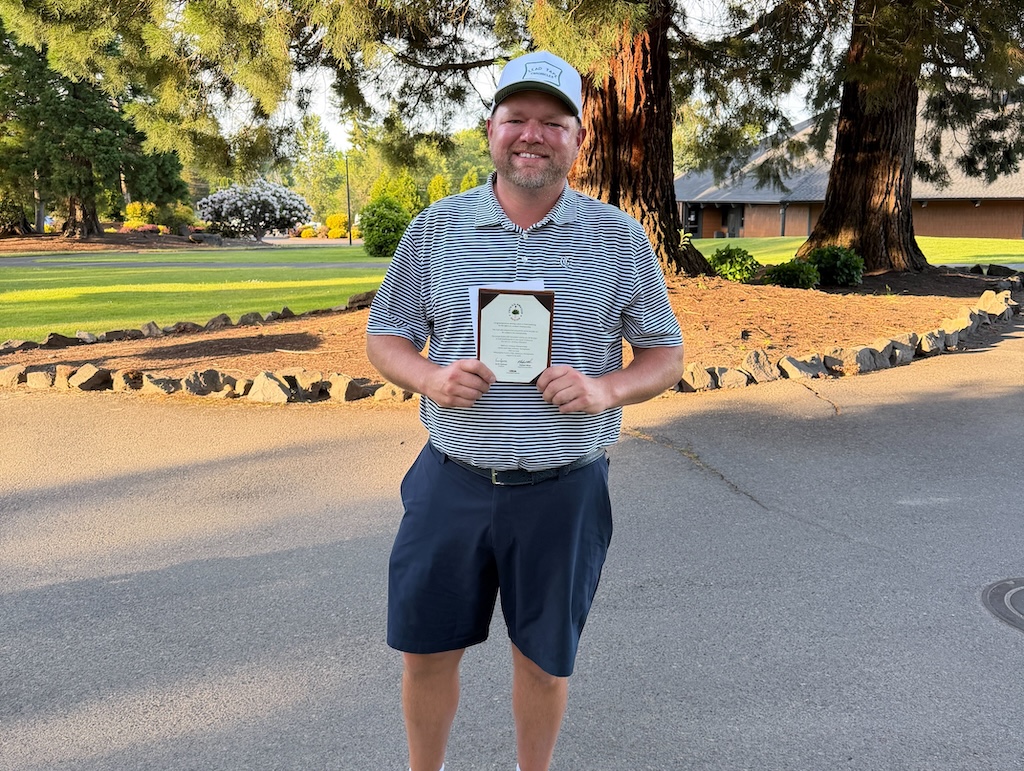
This past Monday, I played in the U.S. Amateur local qualifier at Rock Creek Country Club in Portland, Oregon. A full tee sheet from 7:30 a.m. to 1:55 p.m., the top 11 scores would make it to the U.S. Amateur final qualifying.
I teed off at 10:48 a.m.. With the 7:30 am tee time, you can get a feel for the leaders’ pace, and they were off and running on the challenging setup at Rock Creek.
View this post on Instagram
Getting to the highlight of the round on the par five 17th, a drive up the left side and 212 yards left to the front hole location. I took out a 5-iron with plans of middle of the green. The ball ended up 8 feet left of the hole, pin high. A slight downhill putt dropped in for an eagle 3 on the 17th. With the cut line looking to be anywhere from -2 to even par. This was the boost I had been waiting for all day.
With making par from the trees on 18, it was time to wait for a potential playoff with a posted score of one under par 71.
Three hours later, it was playoff time. 8 players for 6 spots. I made par on the playoff hole, which was good enough to advance to the U.S. Amateur final qualifying in July. USGA qualifiers sure deliver on all of the emotions in golf!
Club Junkie
Building my 2026 gamer WITB: Ranking the contenders and new putter projects – Club Junkie Podcast

The annual What’s In The Bag build is underway, and on this episode of Club Junkie, Brian breaks down the clubs currently leading the race for a spot in his 2026 gamer setup. From drivers and fairway woods to irons, wedges, and shafts, he ranks the equipment that’s performing best and explains what’s separating the front runners from the rest of the field.
Brian also heads into the workshop to discuss several putter projects currently on the bench. From head options and shaft choices to build ideas and testing plans, he shares what he’s working on and which putters could become serious contenders for the bag this season.
If you’re a gear junkie who loves equipment testing, club building, and the never-ending pursuit of the perfect setup, this episode is for you.
Follow Club Junkie:
Instagram: @clubjunkiepod
TikTok: @clubjunkiepod
Threads: @clubjunkiepod
X: @ClubJunkiePod
Club Junkie
Tour Edge Exotics mini driver review + TaylorMade Spider ZT Max first look – Club Junkie

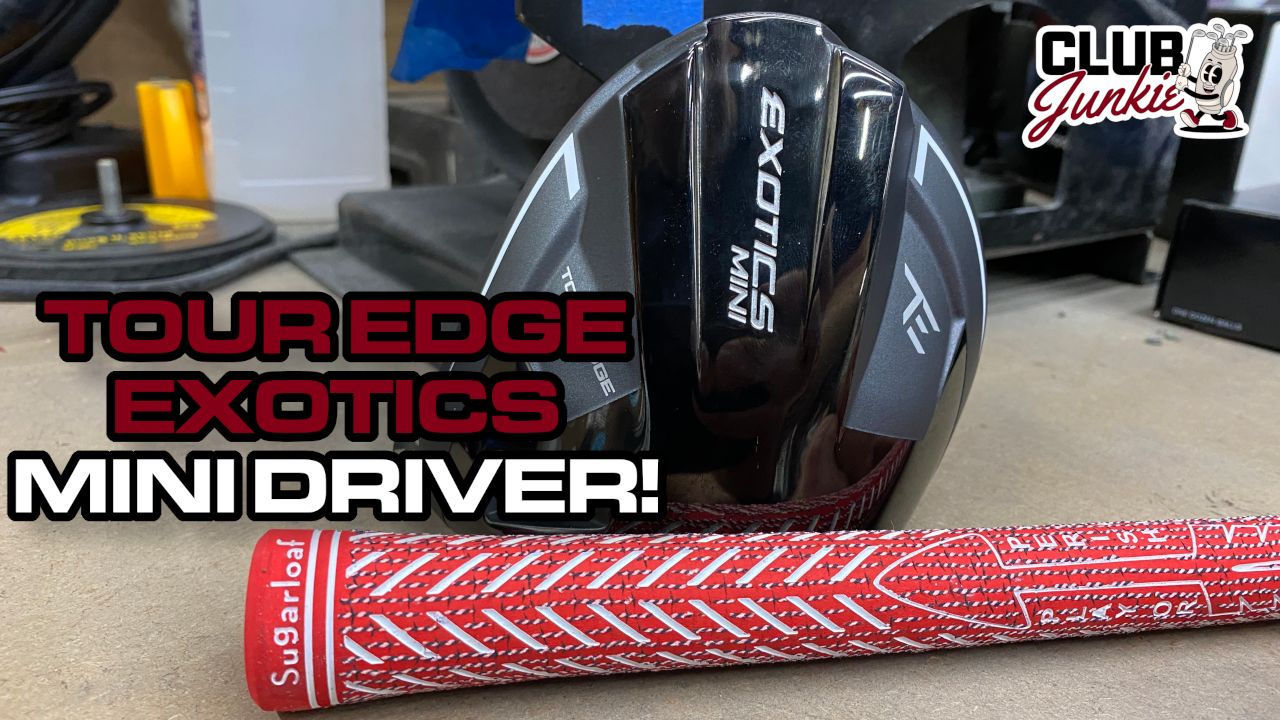
On this episode of Club Junkie, I put the new Tour Edge Exotics Mini Driver to the test and break down the performance, forgiveness, distance, and where it fits compared to a traditional driver or strong fairway wood. If you have been curious about adding a mini driver to the bag, this one is worth a look.
I also dive into the new TaylorMade Spider ZT Max putter that was recently spotted and discuss the growing zero torque putter trend. Plus, there is a closer look at the new Project X Titan Yellow shaft showing up on the PGA Tour and what makes it different from other profiles currently out there.

Justin Rose WITB 2026 (April): Full WITB breakdown with new McLaren irons

What’s the story behind Webb Simpson’s custom-stamped irons?

Memorial Tournament Tour Report: Rory McIlroy, Cameron Young switch up drivers, and more

Cadillac Championship Tour Report: Spieth’s sizable changes, McLaren Golf launches, and more

Russell Henley’s winning WITB: 2026 Charles Schwab Challenge

Kristoffer Reitan’s winning WITB: 2026 Truist Championship

Best irons 2026: Best irons overall, most forgiving irons, and more

J.T. Poston’s winning WITB: 2026 Memorial Tournament

Aaron Rai’s winning WITB: 2026 PGA Championship

Cameron Young’s winning WITB: 2026 Cadillac Championship


Ryan Palmer WITB 2026 (June)
Driver: Callaway Quantum Triple Diamond (9 degrees) Shaft: Project X HZRDUS Smoke Blue RDX 60 TX 3-wood: TaylorMade Qi10 (15 degrees) Shaft:...


Bud Cauley WITB 2026 (June)
Bud Cauley had >14 clubs in his bag when photographed prior to the Memorial Tournament. Driver: Titleist GTS2 (8 degrees) Shaft: Fujikura...


Hannah Green WITB 2026 (June)
Driver: Titleist GTS3 (10 degrees, D4 SureFit setting) Shaft: Mitsubishi Chemical Diamana RB 53 S 3-wood: Titleist GT3 (15 degrees,...


Asterisk Talley WITB 2026 (June)
Driver: TaylorMade Qi4D (9 degrees) Shaft: Fujikura Ventus Blue 6 S 3-wood: TaylorMade Qi4D (16.5 degrees) Shaft: Fujikura Ventus Blue...
-
 Equipment6 days ago
Memorial Tournament Tour Report: Rory McIlroy, Cameron Young switch up drivers, and more
-
 News2 weeks ago
Russell Henley’s winning WITB: 2026 Charles Schwab Challenge
-
 Equipment3 days ago
Best irons 2026: Best irons overall, most forgiving irons, and more
-
 Whats in the Bag4 days ago
J.T. Poston’s winning WITB: 2026 Memorial Tournament
-

 Equipment1 week ago
Details on Jason Day’s latest prototype Avoda iron setup
-
 Equipment3 weeks ago
CJ Cup Byron Nelson Tour Report: Koepka and Kim’s newest putters finally get hot
-

 News2 weeks ago
Charles Schwab Challenge Tour Report: MacIntyre, Åberg and Spaun all switch putters, TaylorMade launches new Spider
-
 Equipment2 weeks ago
Details on J.J. Spaun’s surprise putter switch


Pingback: 3 reasons why you shouldn’t model your golf swing after a Tour player’s swing - ClickitGolf
lance
Sep 7, 2018 at 1:50 pm
I went for lessons from a Top 100 Golf Instructor who also helped a top tour pro with his golf swing. I got parts of that top pro’s swing into my swing and I am so happy with my semi-pro golf swing.
shawn
Sep 8, 2018 at 1:50 pm
So tell us… are you half-lance and half-tiger ….????
NTL2
Sep 6, 2018 at 5:39 pm
Golf is all about hand eye coordination. Athleticism can help no doubt but if you have mediocre hand eye coordination you will not have a great swing.
shawn
Sep 6, 2018 at 6:03 pm
Only eyes and hands? You forgot feet, legs, hips, torso and arms… where all the problems occur… 😮
Bob Jones
Sep 6, 2018 at 11:40 am
Good advice.
shawn
Sep 6, 2018 at 6:04 pm
…. and everybody reading the article will bookmark it under “Advice”… 😛
John
Sep 6, 2018 at 8:58 am
Hahaha…. hilarious
Tour pros have physical strength, flexibility, stamina….
Last I saw…tour pros were just golfers…not elite CrossFit people.
Bob Denby
Sep 6, 2018 at 10:46 am
The DYNAMICS of the ‘energy transfer’ (between the club and the ball) at impact are all that matter, however achieved. There are too many glaring differences between the pros to justify anything more than attempting to copy any of them in any but the most general way (how often is Craig Stadler used as a model?). How we get to ‘impact’ is all that counts.
stevet
Sep 6, 2018 at 3:41 pm
How we get to ‘impact’ is the Kinetic Chain dynamics that occurs between the ground and feet all the way to the wrists and hands. Impact is a minor 50/10,000th consequence of the golf swing.
greg
Sep 6, 2018 at 1:20 pm
Fully clothed tour pros don’t fully reveal their physical attributes … except for Phil…
RQ
Sep 6, 2018 at 6:17 pm
Yes… Phil’s tour body has matured perfectly over the years ….
Daniel
Sep 6, 2018 at 7:28 pm
So you dont think tour players have increased strength flexibility and stamina.. especially compared to the average amateur golfer.. ill bet greg norman still blows all of us out of the water in those aspects, and he doesnt even play anymore… stupid comment
Coop
Sep 6, 2018 at 8:08 am
Great article Rod. General stuff is ok, but getting into specific positions within the motion and you’re on shaky ground. One thing leads to another, leads to another.. and so much of what we see is simple cause and effect. You can’t shoehorn tour player moves (e.g. shallowing the shaft, using the ground, holding lag…) into a < 1.5 second motions. So much of what we see in pros' swings is pure natural athletic sense and actions and reactions – the "correct" positions then show up.
shawn
Sep 6, 2018 at 6:08 pm
… and then there is the tried and true approach of trial and error and error and error method …. 😀
Jack
Sep 6, 2018 at 4:09 am
LOL true and not true, but mostly true. Most people would give up golf before they could get their swing to look like a pro’s, much less be a poor man’s version of one. I’ve gone down that road, and although my swing still looks nothing like a pro’s, it’s better in some ways but still so far from it and my game suffered hugely for a long while. It’s probably useless for weekend warriors to expect to achieve that kind of change and still enjoy golf. To be a handicapped golfer you can have imperfect swings. If we had great swings we’d be pro’s, and well like the author said we will never be.
Cod
Sep 6, 2018 at 3:18 am
What a load of codswallop
shawn
Sep 6, 2018 at 6:09 pm
… nonsense… !!!!!
Daniel Forbes
Sep 6, 2018 at 7:29 pm
Why???
XOXO
Sep 6, 2018 at 3:02 am
Didn’t almost all of the current PGA tour players live in an age in which they had cameras and teaching pros who used cameras/videos to teach and shape theirs swings?
I was an ex-minor league baseball player, and through my playing career (HS, college, pro) cameras, videos and photos were used to illustrate proper positions when you are doing things right in the swing.
I think emulating someone’s swing is wrong because of the parameters listed, but learning from it to achieve a better swing is certainly not
greg
Sep 6, 2018 at 1:29 pm
“proper positions” = snapshot stills = statue positions
All athletics is dynamic, not static. The mind only feels motion.
XOXO
Sep 6, 2018 at 10:44 pm
“statue positions” to know where you are during the swing, and to “feel” that position in an effort to achieve a better dynamic swing. Like baseball. Or a basketball player looking at still shots of their shooting elbow.
Sometimes trying or even forcing these positions and sometimes exaggerating them through practice leads to better dynamic motion and performance.
I dont think the guy who comes over the top will ever hit a golf ball any better performance-wise doing what he does dynamically. So how does he learn? Watch a split second movement in motion from a teacher or live tv? I don’t think he will even capture what is being done accomplished
reggie
Sep 6, 2018 at 1:48 am
I model my golf swing after the Tour player’s swing… but I start with the clubs, shafts, balls, shoes, clothes… and that’s about as far as I get… 🙁
greg
Sep 6, 2018 at 1:15 pm
LOL
Caroline
Sep 6, 2018 at 12:12 am
Hitting the ball clean going toward where you want it to go and distance you want it to go is the right swing for you…finding a way to hit the ball the same every swing is the answer…Moe Norman knew that his right hand came back to the same position 99.9% of the time in effect tossing the ball toward his target every time…
greg
Sep 6, 2018 at 1:23 pm
Moe Norman altered his swing for his portly old age body. He had to add his right hand into the downswing because he couldn’t hit the ball over 200 yards. It didn’t work.
jack
Sep 6, 2018 at 6:19 pm
How can you say that about Moe “Pipeline” Norman… the Greatest Ball Striker of All Time … according to him.
JM
Sep 5, 2018 at 10:24 pm
Physical qualities are not talent. This article is ridiculous in certain parts. What’s wrong with emulating parts of their swings if its achievable. Being realistic doesn’t mean you have to accept less than your best or can’t set reach/stretch goals. How about a more positive attitude towards improvement instead of this condescending article. Plenty of good things to copy in tour pros swings for the average golfer, tempo, clubhead path, sequence of motion, etc. Who do propose they attempt to emulate as an alternative?
SImmm
Sep 6, 2018 at 12:05 am
There are a million golf instructors out there that love your reply…..
freowho
Sep 6, 2018 at 3:32 am
Physical qualities are talent! Do you think a 2 foot midget with incredible skill could hit the ball as far as Dustin Johnson?
PineStreetGolf
Sep 6, 2018 at 8:38 am
Yes, that midgets nam is Justin Thomas
Julie
Sep 5, 2018 at 7:13 pm
Btsgolf.com for information
chris
Sep 5, 2018 at 6:56 pm
Test for adults who want to take up golf. Stand naked in front of a full length mirror and ask yourself the question: “Is that an athletic golf body, or what?”
J
Sep 5, 2018 at 7:43 pm
Exactly my point. If a fat or old person who doesn’t exercise tried to copy a NBA or NFL “juke” move, he would break his own ankles.
“natural swing” = practice short game and putting if you cant see your belt at address.
greg
Sep 6, 2018 at 1:26 pm
Fat and old adults who attempt golf live in a fantasy world where the entry fee is a set of golf clubs and green fees… they litter the golf courses flailing!
orville
Sep 5, 2018 at 6:54 pm
The guy at the golf store sold me a set of clubs that he said were powerful and straight and that’s why I bought them. They are no good and I want to get my money back. Golf is tough.
Ab
Sep 6, 2018 at 12:15 am
Oh shuddup you Nancy
RQ
Sep 6, 2018 at 5:59 pm
Ab = Nancy2… sooo obvious
J
Sep 5, 2018 at 6:42 pm
If you have a fat belly where you can’t see your belt buckle or over 45 years old and do not exercise, this article applies.
K
Sep 6, 2018 at 6:15 pm
check.. check… and check…. now where do I get my Tour player’s swing?? 😎
Carson Henry
Sep 5, 2018 at 4:59 pm
Fantastic article
Scott
Sep 5, 2018 at 4:21 pm
Yes, yes, and yes.
BJ
Sep 5, 2018 at 4:19 pm
I would also add that, especially for iron and wedge play, effective launch conditions are related to ball speed. And for that reason, attempting to achieve “tour pro” like impact if you don’t have tour pro speed is fraught with danger.
Mike the OK Golfer
Sep 6, 2018 at 2:46 pm
Yes, but what of Calvin Peete or Paul Goydos? Not a lot of “tour pro speed” there. And yet, obviously tremendous impact, Peete was world #1 for a time, I believe.
Bryson DeShamwow
Sep 5, 2018 at 3:44 pm
Nothing you write will tell me that my perfect replica of Furyk’s swing with custom single length Miura’s isn’t what is best for me. Who cares if I take 6 hours a round and shoot 130’s, you’re a joke Rod.