
Opinion & Analysis
GolfWRX Fitters Survey 2018: The ultimate golf-fitting survey

Recently, we asked some of the top fitters in the country burning questions that golfers have about golf club fitting. Their responses were eye-opening. Top fitters from the following fitting locations participated in this extensive survey:
- Club Champion
- Felix Clubworks
- Joe Kwok Golf
- Miles of Golf
- Modern Golf
- 2nd Swing Golf
- The Tour Van
- True Spec Golf
Thank you to all of the fitters who took the time to help us with this survey, and took the time to answer.
Here are the questions we asked, and the answers from the top golf fitters in the nation.
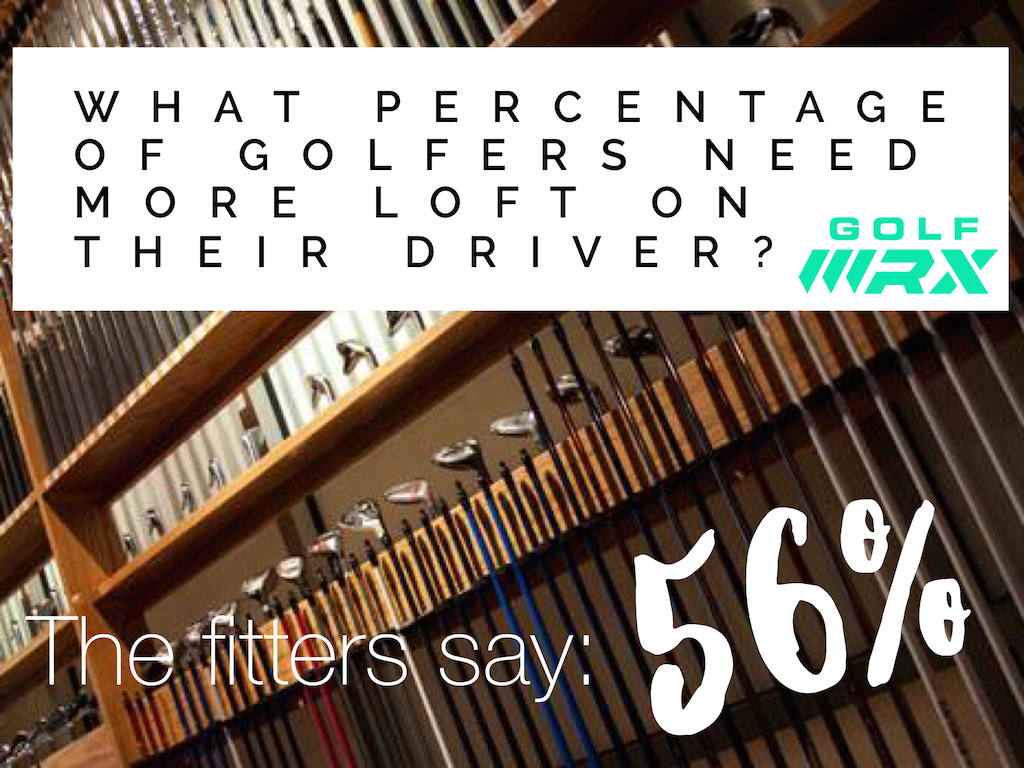
1) What percentage of golfers need more loft on their driver?
2) What percentage of golfers need LESS loft on their driver?
- Average answer: 35 percent
3) What percentage of golfers play shafts that are too stiff?
- Average answer: 50 percent
4) What percentage of golfers play shafts that are too whippy?
- Average answer: 35 percent
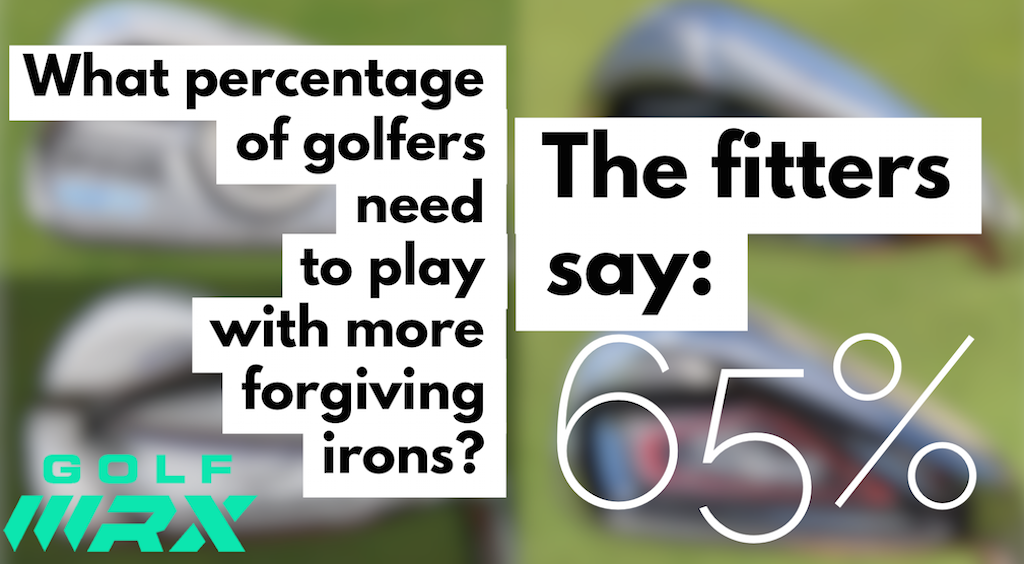
5) What percentage of golfers need to play with more forgiving irons?
6) What percentage of golfers need to play with LESS forgiving irons?
- Average answer: 14 percent
7) What percentage of golfers play the wrong wedge grind?
- Average answer: 64 percent
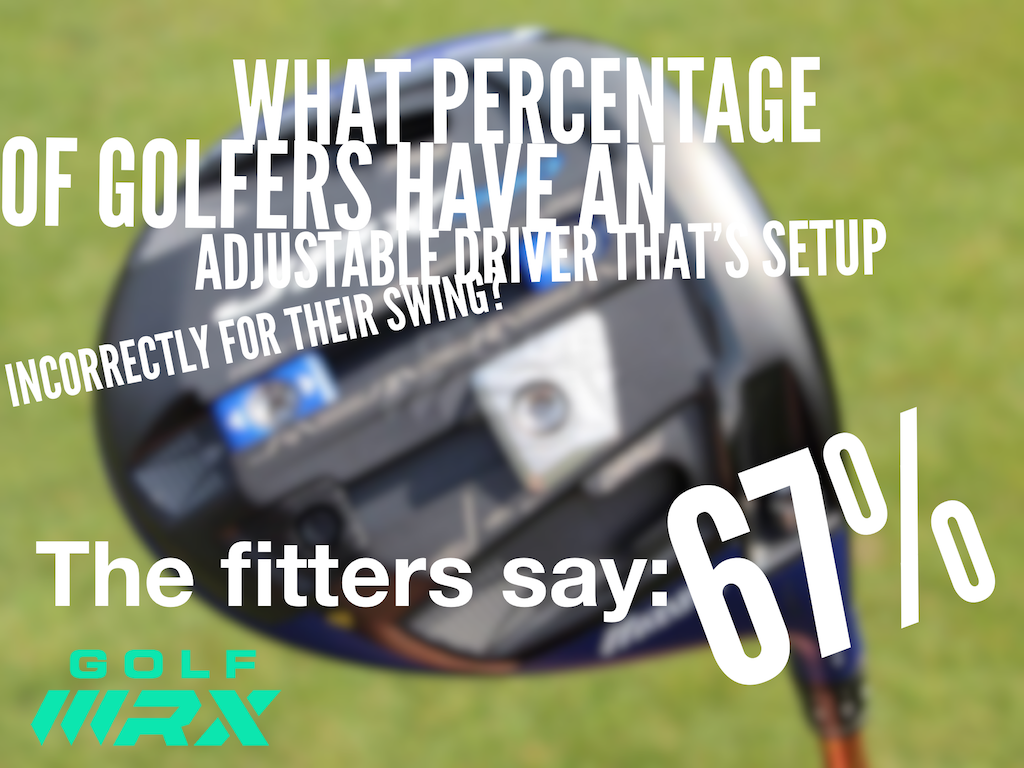
8) What percentage of golfers have an adjustable driver that’s setup incorrectly for their swing?
9) What’s the one part of the bag that golfers would benefit most from after a proper fitting?
- Driver: 8.33 percent of answers
- Fairway wood/hybrid: 0 percent
- Irons: 0 percent
- Wedges: 16.67 percent
- Putter: 75 percent
10) With the choice of only one to fill a yardage gap, should a high-handicap golfer choose a fairway wood, hybrid, or driving iron?
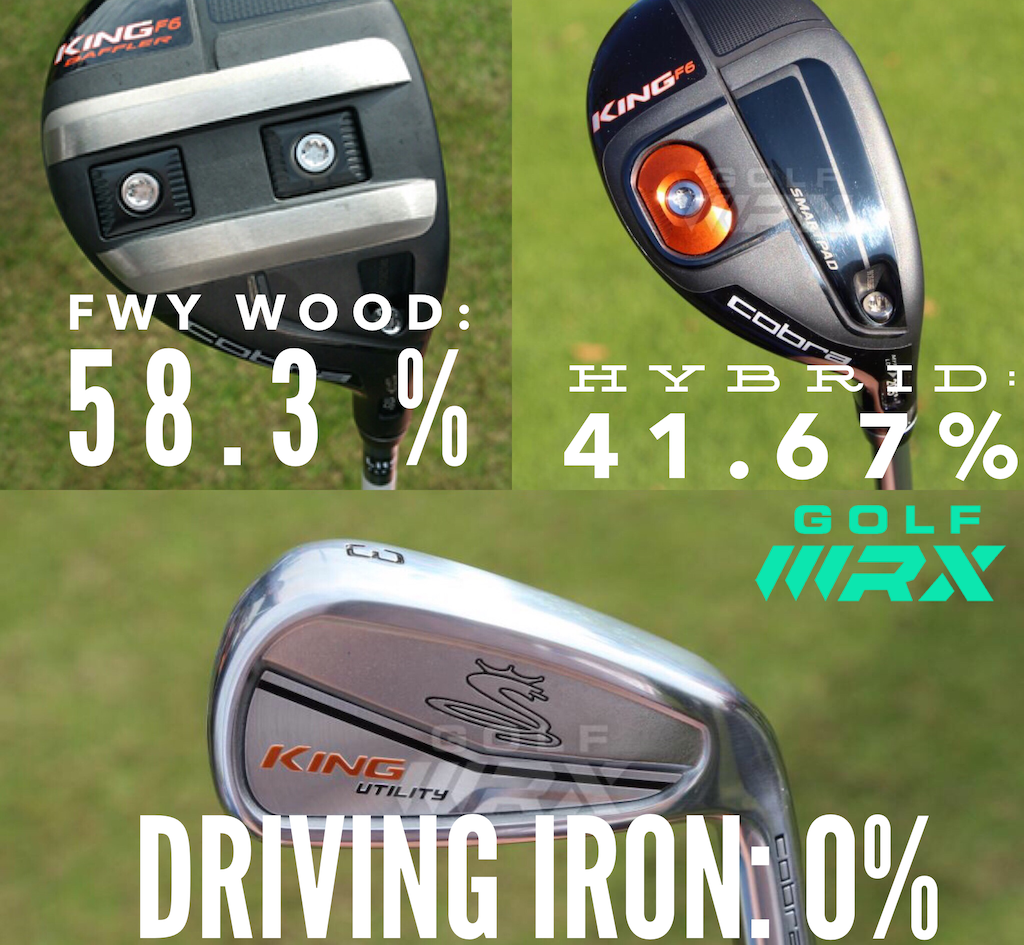
11) What will lower scores more quickly, a fitting or a lesson?
- Fitting: 75 percent
- Lesson: 25 percent
12) In your own words, is grip size important to the fitting process?
- Yes, but it can be tricky. I think incorrect sizing can cause a player to “hang on” to the club or limit their release. At the end of the day, the player needs to have a grip that gives them the “warm and fuzzy” feeling. If the club feels good in their hands, they are more likely to produce a better swing.
- Yes, grip size influences grip pressure. Grip pressure can influence face angle, club head speed, and other factors that directly lead to ball flight. Grip style may be mostly player preference, but grip size should be constant and correct on all your full swing clubs.
- Yes, it can have a dramatic effect on performance depending on the circumstances.
- Grip size is important. Having a grip that allows you to feel more comfortable or relaxed results in better shots.
- Grip size is important because it is the only thing that we touch while swinging a golf club. Traditional grip sizing metrics might be a little out of date. I do believe golfers have a misconception on what grip size does to ball flight (oversized grips fade/undersized grips draw). Everyone is unique and you can see different results by testing size.
- For sure it is important. Over 75 percent of my fittings play the wrong size grips.
- Very, but no proof that hand size measurements are exactly what the player needs.
- Yes, it is the only connection to the club.
- Very important.
- Yes it is extremely important. It will allow you to hold on to the club with the proper pressure and still maintain control. Also grip size can help you let your hands be more active to help square the face or slow them down to help slow down a draw.
- Of course. Though the traditional trend that big grips prevent hooks and little grips prevent slices is a very broad and inaccurate generalization. Grip fitting is very important and has a huge effect on swing weighting.
- Somewhat. It depends on the player and their tendencies… doesn’t have to be spot on, but needs to be close.
13) In your own words, how often should golfers change wedges?
- Depends on how much they play, but an avid golfer who practices a few days a week should likely switch once a year. Most tour players switch 3-4 times per/year.
- When distance and spin are noticeably affected.
- Once every 100-150 rounds
- Every 50 rounds or even less. For golfers who practice a lot, even sooner.
- Depends on how the golfer enjoys the game. Someone who is playing in local events or club events would usually want pure performance. In that instance, I would change out what ever club they use around the green every 75-100 rounds.
- For those playing 50+ rounds a year, changes wedges every other year can help consistency with short pitches & chips.
- Every year.
- Depends on how much golf they play, but every year is a good time frame.
- Every 100 rounds + 40 Range sessions.
- Depends on how many rounds they play. Just keep an eye on the grooves and as long as they are playing the correct bounce.
- When the groove texture on the face is no longer effective, or if their playing conditions or angle of attack change significantly, which would change the bounce and grinds they need to play.
- When their wedge stops hitting the shots they intended to hit.
14) In your own words, how often should golfers change drivers?
- If launch, spin and speed numbers are as good, they may not need to upgrade. In general, I’d say they should entertain new technology every 18-24 months.
- When a player can see evidence of improved ball flight, consistency, or feel and upgrade is appropriate. Until then, keep what you have and work with a fitter to determine what changes will benefit your tee game.
- Only when they find one that can beat what they have.
- To have more noticeable gains, every 2-3 years. Technology is improving way too fast to not keep up.
- If they are playing something from 2012 or newer, they should only be looking to switch if their ball speed, launch or spin are out of whack.
- As a fitter, if I am able to maximize ball speed, optimize launch angle & the spin rate it could be every year. Most often I find 85-90 percent of players are able to gain accuracy & distance when taking part in a fitting.
- 3-year check up.
- When they find something that is an improvement.
- Every 2500-3000 hits.
- Every 2 to 3 years if they were originally fitted correctly.
- Only after testing and fitting all available options to see if it is better than their current driver.
- When performance starts decay, or their swing has changed enough that they aren’t hitting their desired shot.
15) In your own words, how often should golfers change irons?
- Similar to the wedge answer, it really depends on how frequently they play/practice. Assuming all things are equal, a player should entertain new irons every 2/3 years.
- When distance and ball flight become unreliable, and as a result your confidence in hitting greens suffers, it’s time to look at different irons. Consider set make-up and even combo sets to improve long and short irons appropriately. Look for consistency, and stopping power, not just distance.
- Depends on how often the golfer plays, but about every two years, or once significant wear is appearing on the face and effecting backspin.
- Most golfers should change every 4-5 years.
- Tournament players every 3 years Competitive golfers 5 years. Weekend warrior every 10 years.
- Depends on what the player is looking for. If they want distance over accuracy, it can be done. If they are trying to gain accuracy, that can me a bit more of a challenge, but I’d suggest every other year is a good place to start.
- 2-year check up; irons are changing quicker than drivers.
- Grooves wear out after a season or 2, or when they find something that is an improvement.
- 150-200 rounds.
- Again depends on how many rounds they play and how their game changes, but I would say 3 to 5 years.
- Only after testing and fitting all available options of irons and shafts and identifying which could be better than what they currently play.
- When performance starts decay, or their swing has changed enough that they aren’t hitting their desired shot.
16) In your own words, what is the biggest mistake golfers have in their bag when they come to you for a fitting?
- Set makeup. Often times players arrive with the wrong configuration of golf clubs for their game.
- Too many clubs that go a similar distance. Either too many head covers or too many longer irons. Often too much neglect for wedges and putter design.
- Driver shafts that are too long, irons with incorrect lie angles, and too many clubs that do the same thing in the top of their bag.
- Most golfers are typically playing one to two longer irons vs having more hybrids in their bag.
- Typically they have clubs that just aren’t useful. Usually you will find 3 clubs in the bag that all carry the same distance. Most of my fittings never have had a gapping analysis. When you can show them how everything carries and how everything stops, it is eye opening for them and helps build a set where all the clubs have a purpose.
- Too many long clubs such as fairway woods or hybrids. Many would shoot lower scores by taking out a low lofted fairways and add a wedge.
- Long irons.
- Loft and lie gapping.
- Loft selections on their wedges.
- Gapping issues, clubs that are similar, not having clubs that help them correctly for their misses, trying to match every club from the same OEM.
- Set makeup, and a set that is not built consistently.
17) In your own words, when is swing weight incorporated into the fitting process?
- Throughout.
- Feel and tempo changes.
- All the time with every club. It is vital for feel and making the golf club perform properly!
- Throughout the entire process… from start to finish it needs to be considered.
- From the start.
- The player will initially give you feedback when you are comparing current vs new. We find swing weight is an important part of the process.
- Great question… only if my customer seems to very tech-y or if we go longer or shorter than standard. Most OEM’s do a wonderful job with swing weight.
- Not always a specific time. Would depend on which club we are using. The biggest thing is during the fitting process when you find the setup that works is to make sure that the build matches those specs.
- Swing weight is a tough road to go down. Most players can adapt to how different clubs feel without discussing why. Once you start going into a lot of detail as to why or how swing weight is changed it becomes more complicated then it needs to be. I would say that swing weight is discussed about 25 percent of the time.
- Swing weight should be considered during the entire process. The fitter should be looking for constant feedback on how the weight of the club feels.
- Once the winning combination of head, shaft, lie and loft are established. Swing weight can help create confidence in feel, and consistent swing weights help players replicate their swing and tempo from club to club.
- Swing weight is a result of the overall fitting process. There are too many variables to mention that can influence swing weight.
18) In your own words, what are the signs that a golfer has the wrong sole width on their irons?
- If the club doesn’t go through the ground properly, typically the club will stick in the ground.
- Hit location is consistently high or low on the face. Turf interaction has too much bearing on the ball flight.
- The sound of impact will be off, often times sounding muted or heavy. A low flight despite a wide sole.
- The most telling sign is turf interaction. Swing speed with Angle of Attack tell me a lot. Slower and more shallow players can benefit a lot from more width.
- If the set is more experienced, you can show them the wear patterns on the old set. When I start talking about sole widths/bounce of irons and how it can change the contact point on face, I will usually start talking about wedges. Most golfers understand why is important in wedges but do not realize that the same applies to irons.
- If they struggle getting the ball in the air or we see several shots being hit heavy or fat. Also depends on turf conditions.
- Turf interaction and impact location (launch/spin).
- How high or low on the face.
- Attack angle, divot and trajectory are producing inconsistent distance control.
- When their attack angle is too steep or shallow. Finding out what course conditions they play mostly. Bad ball position.
- Improper turf interaction and ball contact.
- Inconsistency at impact.







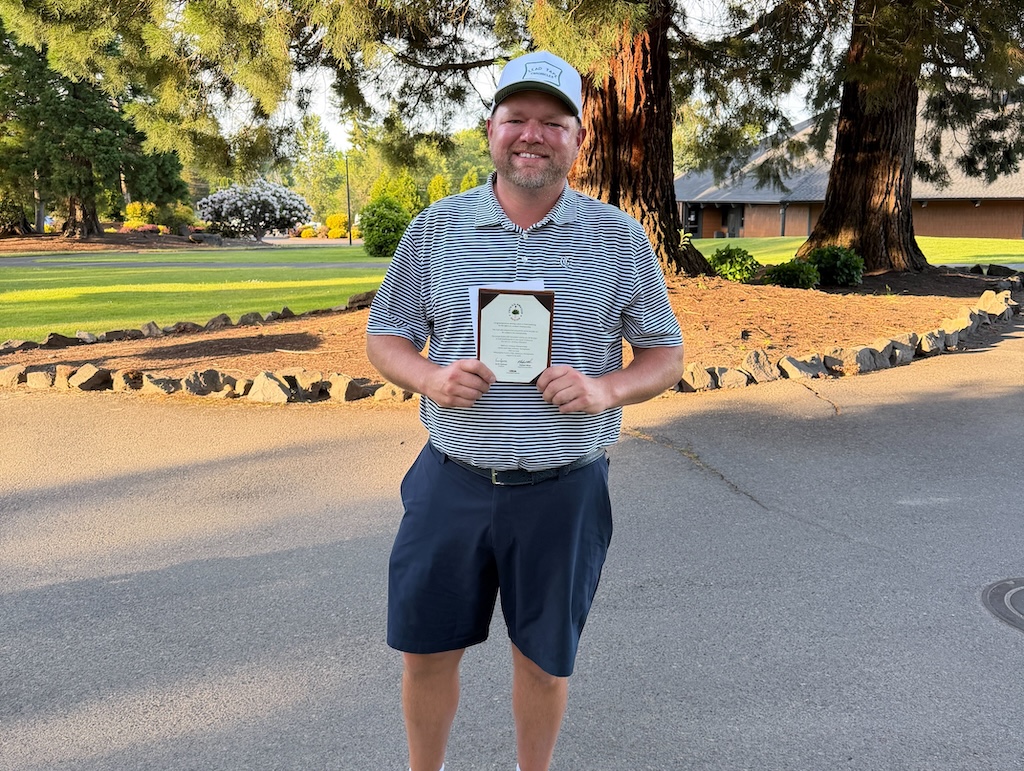
This past Monday, I played in the U.S. Amateur local qualifier at Rock Creek Country Club in Portland, Oregon. A full tee sheet from 7:30 a.m. to 1:55 p.m., the top 11 scores would make it to the U.S. Amateur final qualifying.
I teed off at 10:48 a.m.. With the 7:30 am tee time, you can get a feel for the leaders’ pace, and they were off and running on the challenging setup at Rock Creek.
View this post on Instagram
Getting to the highlight of the round on the par five 17th, a drive up the left side and 212 yards left to the front hole location. I took out a 5-iron with plans of middle of the green. The ball ended up 8 feet left of the hole, pin high. A slight downhill putt dropped in for an eagle 3 on the 17th. With the cut line looking to be anywhere from -2 to even par. This was the boost I had been waiting for all day.
With making par from the trees on 18, it was time to wait for a potential playoff with a posted score of one under par 71.
Three hours later, it was playoff time. 8 players for 6 spots. I made par on the playoff hole, which was good enough to advance to the U.S. Amateur final qualifying in July. USGA qualifiers sure deliver on all of the emotions in golf!
Club Junkie
Building my 2026 gamer WITB: Ranking the contenders and new putter projects – Club Junkie Podcast
The annual What’s In The Bag build is underway, and on this episode of Club Junkie, Brian breaks down the clubs currently leading the race for a spot in his 2026 gamer setup. From drivers and fairway woods to irons, wedges, and shafts, he ranks the equipment that’s performing best and explains what’s separating the front runners from the rest of the field.
Brian also heads into the workshop to discuss several putter projects currently on the bench. From head options and shaft choices to build ideas and testing plans, he shares what he’s working on and which putters could become serious contenders for the bag this season.
If you’re a gear junkie who loves equipment testing, club building, and the never-ending pursuit of the perfect setup, this episode is for you.
Follow Club Junkie:
Instagram: @clubjunkiepod
TikTok: @clubjunkiepod
Threads: @clubjunkiepod
X: @ClubJunkiePod
Club Junkie
Tour Edge Exotics mini driver review + TaylorMade Spider ZT Max first look – Club Junkie

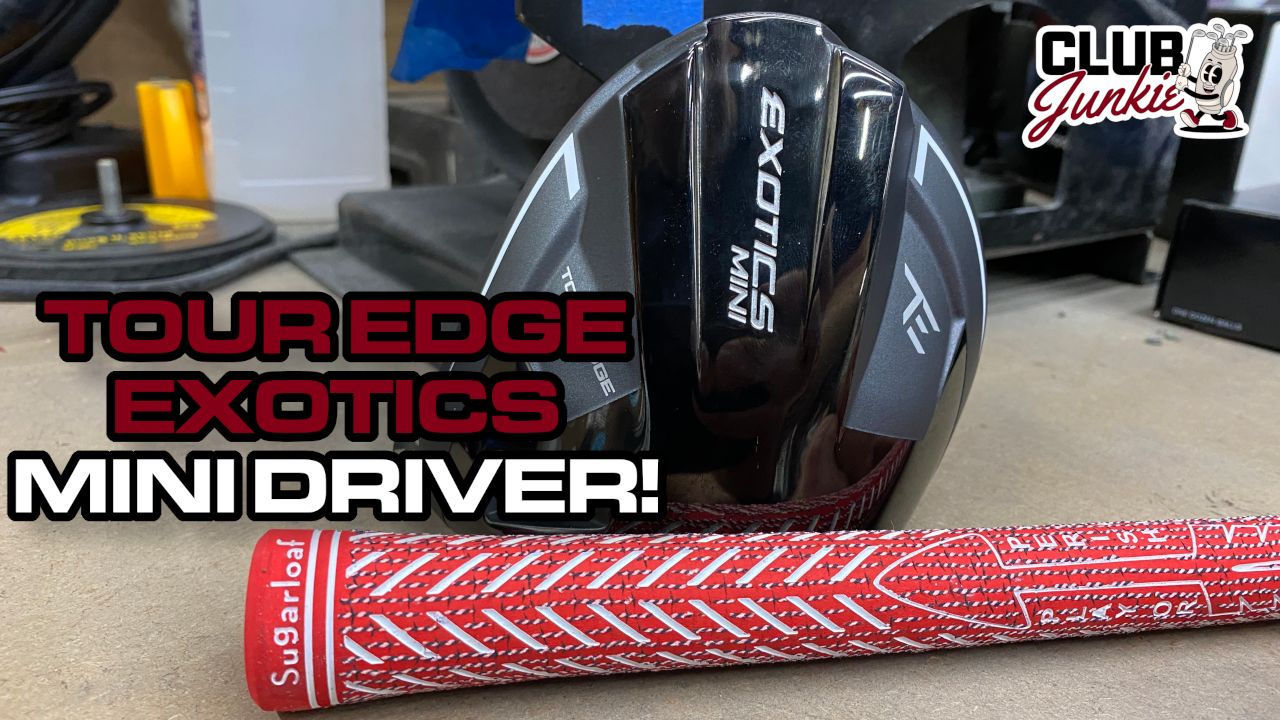
On this episode of Club Junkie, I put the new Tour Edge Exotics Mini Driver to the test and break down the performance, forgiveness, distance, and where it fits compared to a traditional driver or strong fairway wood. If you have been curious about adding a mini driver to the bag, this one is worth a look.
I also dive into the new TaylorMade Spider ZT Max putter that was recently spotted and discuss the growing zero torque putter trend. Plus, there is a closer look at the new Project X Titan Yellow shaft showing up on the PGA Tour and what makes it different from other profiles currently out there.

Justin Rose WITB 2026 (April): Full WITB breakdown with new McLaren irons

What’s the story behind Webb Simpson’s custom-stamped irons?

Memorial Tournament Tour Report: Rory McIlroy, Cameron Young switch up drivers, and more

Cadillac Championship Tour Report: Spieth’s sizable changes, McLaren Golf launches, and more

Russell Henley’s winning WITB: 2026 Charles Schwab Challenge

Kristoffer Reitan’s winning WITB: 2026 Truist Championship

Aaron Rai’s winning WITB: 2026 PGA Championship

J.T. Poston’s winning WITB: 2026 Memorial Tournament

Cameron Young’s winning WITB: 2026 Cadillac Championship

Best irons 2026: Best irons overall, most forgiving irons, and more


Bud Cauley WITB 2026 (June)
Bud Cauley had >14 clubs in his bag when photographed prior to the Memorial Tournament. Driver: Titleist GTS2 (8 degrees) Shaft: Fujikura...


Hannah Green WITB 2026 (June)
Driver: Titleist GTS3 (10 degrees, D4 SureFit setting) Shaft: Mitsubishi Chemical Diamana RB 53 S 3-wood: Titleist GT3 (15 degrees,...


Asterisk Talley WITB 2026 (June)
Driver: TaylorMade Qi4D (9 degrees) Shaft: Fujikura Ventus Blue 6 S 3-wood: TaylorMade Qi4D (16.5 degrees) Shaft: Fujikura Ventus Blue...

Brianna Do WITB 2026 (June)
Driver: Callaway Quantum Triple Diamond (9 degrees) Shaft: KBS PGW 3-wood: Callaway Elyte Titanium (15 degrees) Shaft: KBS PGW 5-wood:...
-
 Equipment6 days ago
Memorial Tournament Tour Report: Rory McIlroy, Cameron Young switch up drivers, and more
-
 News1 week ago
Russell Henley’s winning WITB: 2026 Charles Schwab Challenge
-
 Whats in the Bag3 days ago
J.T. Poston’s winning WITB: 2026 Memorial Tournament
-
 Equipment3 days ago
Best irons 2026: Best irons overall, most forgiving irons, and more
-

 Equipment1 week ago
Details on Jason Day’s latest prototype Avoda iron setup
-

 Equipment3 weeks ago
CJ Cup Byron Nelson Tour Report: Koepka and Kim’s newest putters finally get hot
-

 News2 weeks ago
Charles Schwab Challenge Tour Report: MacIntyre, Åberg and Spaun all switch putters, TaylorMade launches new Spider
-

 Equipment2 weeks ago
Details on J.J. Spaun’s surprise putter switch


Chisag
Jun 29, 2018 at 11:33 am
99% of the 65% that should be playing more forgiving irons can be found in the MB threads on RX.
Mike Mason
Jun 27, 2018 at 11:55 pm
I have attempted to get fitting/evaluation at 2 local SoCal fitters and all they wanted to was to sell me a new set right away. I have XR pro irons and XR16 driver it’s hard to believe they need to be replaced. Tuned or adjusted yes but replaced..? If any honest fitters are in the Inland Empire,Orange County or San Deigo and are willing to evaluate/adjust rather then just replace every thin I’m Willing to try again.
Mike
Bob Jones
Jun 27, 2018 at 4:48 pm
I average 83 for 18 holes. The new technology would have to cut that down to 77 or 78 by itself for me to be interested in investing $1,400 for new irons and a new driver. I know that’s asking a lot, but if the difference would be only two or three strokes, I have much better uses for that $1,400.
BTW, I play a Titleist 975D driver and Hogan Apex Red Line irons.
John
Jun 27, 2018 at 2:28 pm
Not buying that irons need to be replaced every 2 years. I just bought a set of 1970 hogans and honestly they fly the same distance and have better dispersion than my “fitted” callaways.
The Dude
Jun 27, 2018 at 8:15 pm
you and you only…………. are the exception. Can I ask WHY!!!>>>you bought a set of 70s BH’s..???
Spitfisher
Jun 27, 2018 at 1:41 pm
” In your own words, what is the biggest mistake golfers have in their bag when they come to you for a fitting?”
Noticeably absent to this question and one that I get a lot as a fitter of 1000s per year. Amatuers need the eradicate the idea of what a set make up is. Clubs need to be gaped accordingly. An inline 50* gap wedge ( part of a set) may go 12-15 yards longer than a vokey , cleveland wedge in the same loft. An amateur may have both a 5 hybrid and 5 iron Players have the misconception that a new driver or irons will always go further than their last. I’m looking at consistency and dispersion which is far more important than long and inaccurate. Head, shaft, lie, loft, length all play a role in this.
joro
Jun 27, 2018 at 10:23 am
Having been a club maker, fitter, teacher and player I have found and believe that a well fitter set does more for the game than a lesson. I would and did recommend that a player get his/her clubs fitted properly and then take some lessons. After that retune the clubs to adjust to whatever the swing has become. As for the Driver, it changes and they get better year after year. If you like the head, and they are all up to max, a shaft change could do the trick without the expense of a whole new club.
these fixes can make a big difference but depends on your time and desire to play better. You have to practice what you have been taught and most don’t.
Tourgrinder
Jun 27, 2018 at 9:34 am
Not all fitting pros and clubfitters are simplistic, but many are. As an advertising and promotional writer, I used to work with many pros helping to write and create some ads and brochures for their services. Head pros and teaching pros at courses are still the best in my opinion. As an injured player who now only plays 6-10 times a year, I already know my clubhead speed probably doesn’t “fit” with a stiff shaft, either woods or irons. Yet, I’m willing to give up some distance for the definitely improved accuracy and dispersion pattern. However, recently I went into one of the “big box” golf retailers just for fun. The “fitting pro” was a young 20-something who asked me to take one or two swings with a couple demo clubs, then told me I was XX mph on the clubhead speed monitor and THIS (whippy regular shaft) was the ideal shaft for me. Then he told me the specific brand of driver I should buy, (most likely because that was the brand that needed moving that day). And that was my more recent fitting experience. I didn’t buy anything. On the other hand, my first fitting experience was with a pro at a major golf club in the area…out on their grass range with an entire set of demo fitting clubs and various shaft flexes. It took about an hour and even then the customizing of the lie angle still needed tweaking. I would say proper fitting rarely happens that way today and probably happens more like the big-box store experience. Lesson to be learned: golfers still should be trying various clubs and shafts on grass ranges, looking at carry distance; launch angle and “window” by sight, not just monitor; and also dispersion pattern by shaft and clubhead type. Computer monitor stats are a good place to start, not start and finish.
Matt
Jun 26, 2018 at 8:21 pm
Geeeezus, who did the graphic design for this article? A serial killer?
SV
Jun 26, 2018 at 2:12 pm
It is not a surprise fitters think clubs should be replaced every 1-3 years, you have to keep the money coming in. Other than maybe wedges, I would think a 5 year turn on clubs would be sufficient for most people. A putter could last forever(or 1 round depending on how faithful it is). I am thinking of an average golfer with a 15-20 handicap playing 15 to 25 times a year, not a tournament player.
juststeve
Jun 26, 2018 at 10:45 am
Question 11. What a surprise, fitters thing fitting will result in quicker improvement than lessons. I wonder what teachers would think.
SG
Jun 26, 2018 at 1:11 pm
Even knowing they are biased, it’s telling that 25% don’t think equipment will lead to fast improvement.
Thomas A
Jun 26, 2018 at 3:43 pm
Well, quicker is the key word. Carrying out the result of a lesson could take time.
Bobtrumpet
Jun 26, 2018 at 5:51 pm
Considering that (1) many teachers are also fitters, or at least understand the importance of clubs that fit the player, and see the improvement when the player is using properly fit equipment, and (2) knowing how most students don’t bother practicing what they are taught in lessons, many (most?) would probably agree with the fitters. 🙂
joro
Jun 27, 2018 at 10:26 am
A lot of “Teachers” I have seen have no clue how to really teach or fit.
The Dude
Jun 27, 2018 at 8:20 pm
what’s “A Lot??”
Tom Wishon
Jul 10, 2018 at 5:36 pm
Based on having taught many educational seminars on clubfitting to PGA pros around the world during my career, I will put the number of teaching pros who cannot fit properly at 90% at least. And that’s being kind, it really is. It’s because the vast majority of pros get very poor fitting instruction in their training curriculum for membership. But another problem with that is the fact that so many pros think they know how to fit just because they themselves are good players. Wrong.
Europe is getting better at this but not the US PGA. When OEMs donate money to the US PGA sections for the pros to be able to tee it up in sectional events for a little cash, that buys the PGA’s loyalty to not seek out proper fitting instruction in their member training curriculum. The other way is by giving the pro a nice big bag with his name on it. Why piss off the hand that feeds you by teaching the pros how bad 45-46″ drivers are, how bad 43+” 3-woods are, hybrids that are too long, irons that are too low in loft and custom programs that mainly feature $200+ shafts and little else.
You’d think pros would at least be trained and encouraged to fit and bend lie on irons. If you told me 10% of the pros owned a LL machine, I’d raise the eyebrows in serious skepticism at that. If 10% own an LL machine, I’ll bet less than half use it or know how to. If the pros knew decent fitting knowledge there would be no such thing as 45-46″ drivers, adjustable hosels, iron sets with anything lower than a 5 iron and on and on.