
Opinion & Analysis
Shinnecock Hills and a Golf Pioneer

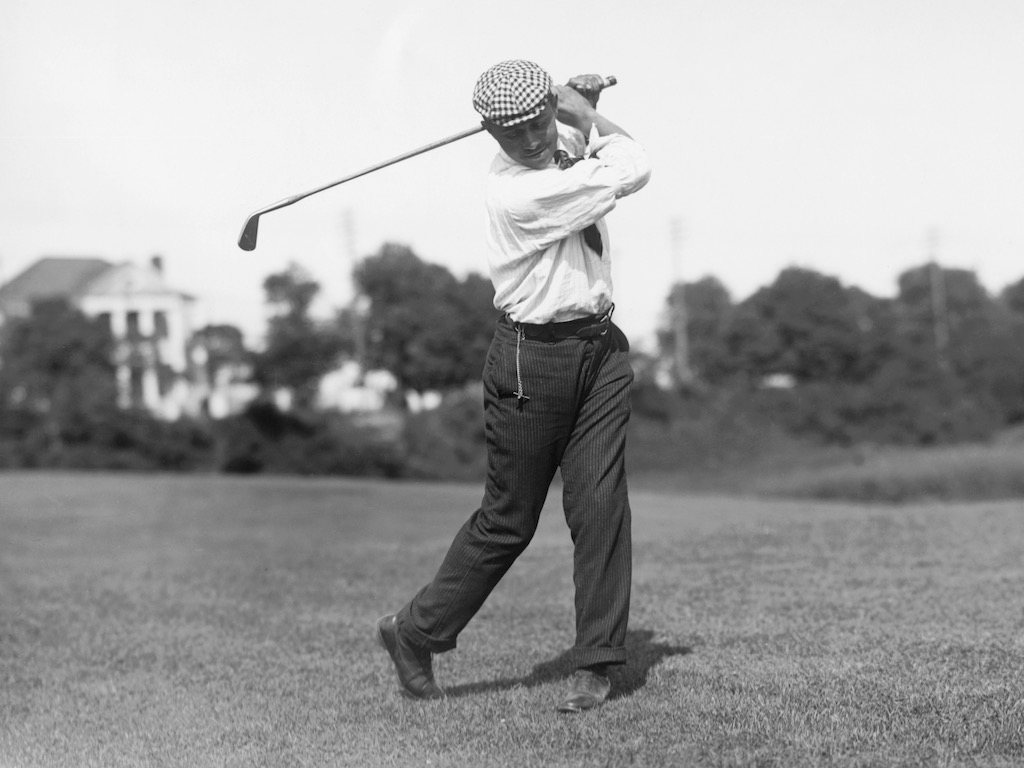
There are a handful of courses throughout the United States that stand out as keepers and curators of golf history. Chief among those courses is Shinnecock Hills Golf Club. Founded in 1891, Shinnecock is four years older than the United States Golf Association and is one of the five founding member clubs of the USGA. As were many courses before the turn of the 20th century and many of the clubs in Scotland, Shinnecock was originally designed as a 12-hole course by architect Willie Davis, but six holes were added in the spring of 1895 with the anticipation of the following year’s U.S. Open.
In the second year of the USGA’s existence, it hosted by the Men’s U.S. Open and the Men’s U.S. Amateur in 1896. Since Shinnecock hosted its first U.S. Open, it has hosted several more USGA events over the past 122 years. The club’s championship resume includes U.S. Opens in 1896, 1986, 1995, 2004 and 2018, U.S. Amateurs in 1896 and 1900 (Women’s U.S. Amateur) and a Walker Cup in 1977.
The course we know today as Shinnecock is quite different from the original 12-hole design from 1891 by Mr. Davis. William Flynn conducted a complete redesign of the course prior to it being reopened for the 1931 season, bringing to life the natural topography and embedding the DNA of a true links course. And while the design history of both the course and clubhouse are remarkable, there are a few other details that make this course a pioneer in the golf history books.
John Shippen Jr. was born in Washington, D.C. in the winter of 1879 to John Shippen Sr. and Eliza Spotswood Shippen. His father was an African American Presbyterian Minister, and his mother was a Native American. Sometime in 1888, John Shippen Sr. was called to serve a congregation on the Shinnecock Indian Reservation just outside of the property that would soon become the famed golf course. When the course opened, John Jr. worked as a caddie. The club’s Scottish-born professional, Willie Dunn Jr., taught Shippen Jr. how to play the game.
As Shippen Jr. progressed, his golf game became superb. When the 1896 U.S. Open rolled around, several club members at Shinnecock offered to pay Shippen’s entry fee. At that time, golf was still an “exclusive” game in the U.S. and Shippen was allowed to enter the tournament only if he registered as a Native American along with another Native American caddie, Oliver Dunn. As one would expect in 1896, Shippen and Dunn’s registration sparked a minor racial controversy. When the other professionals found out Shippen and Dunn had entered the event and that they were not Caucasian, they threatened to boycott the event. When the USGA President at the time, Theodore Havemeyer, learned of the impending boycott, he informed the players that the tournament would continue even if it were only contested between Shippen and Dunn. The professionals backed down and play began.
Shippen Jr. made a name for himself that week as he finished fifth in the tournament and contested as a professional. He became the first African-American to tee it up in a U.S. Open, he also became the first American-born professional golfer.
John Shippen Jr. would go on to play in four more U.S. Opens in 1899, 1900, 1902 (where he finished fifth once again) and 1913. Shippen continued to live and work in the Shinnecock area until he retired from competition in 1924. In 1931, he became the head Professional and Greenskeeper at Shady Rest Golf and Country Club, the first African-American country club, where he worked until 1964.
Shippen would be the only African-American to compete in a U.S. Open until 1948 when Ted Rhodes qualified and entered the tournament. Shippen was barred from membership into the PGA of America because of its “Caucasian-only” clause, which was eradicated in 1961, only seven years before his death in 1968. It wasn’t until 2009 that the PGA of America bestowed posthumous membership to Shippen along with fellow African-American pioneers, Ted Rhodes and Bill Spiller.
Shinnecock was also a pioneer in another way. As with our country’s open race bias, turn of the century America had a clear opinion on the place women held in society. At the time the USGA was founded, it was incredibly difficult to find locations for women’s golf tournaments to take place. And even when they did find locations, the support they received from the local community and the course itself was diminished in comparison to their male counterparts. Not only was it difficult for women to host tournaments, it was nearly impossible to find a club where women could be members outside the “social” side of the memberships their husbands maintained. Shinnecock Hills, however, admitted women into its club from the day it was founded.
As we watch the U.S. Open this week, we’ll hear a lot about the conditions in 2004. We’ll hear a hundred times how the USGA had to water the seventh green in between groups on Sunday. We’ll see clips of Corey Pavin’s walk up No. 18 on Sunday in 1995 to win his first and only major championship. Maybe we’ll also see a little glimpse of the pioneer John Shippen Jr. and the first women members into the club.








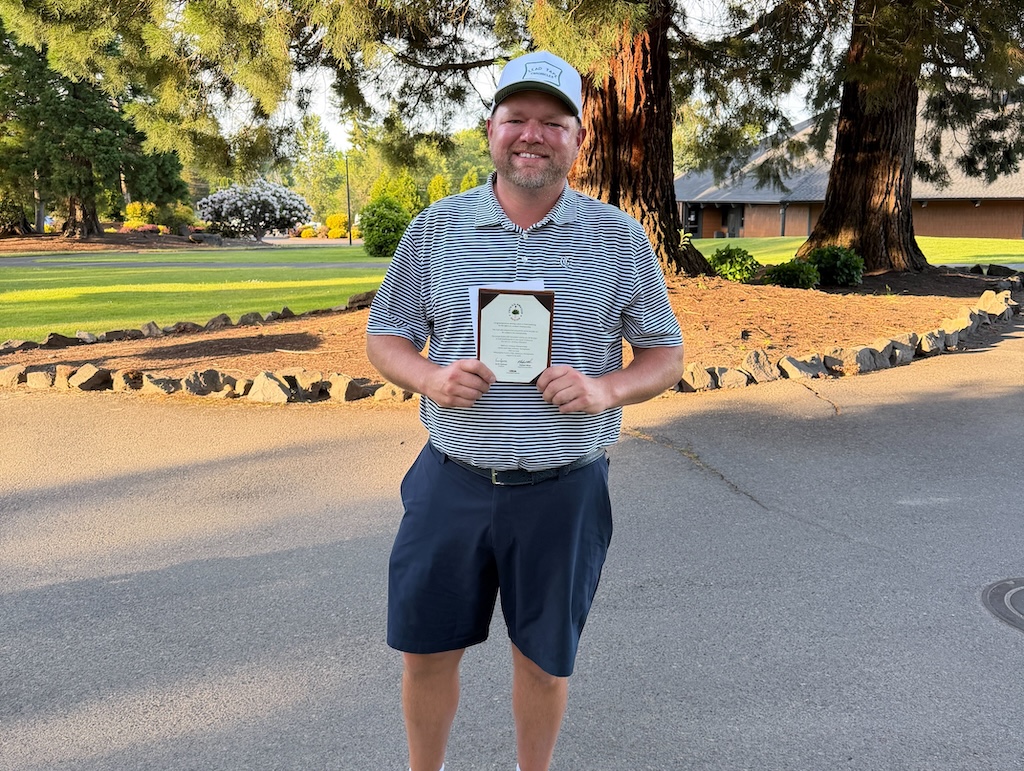
This past Monday, I played in the U.S. Amateur local qualifier at Rock Creek Country Club in Portland, Oregon. A full tee sheet from 7:30 a.m. to 1:55 p.m., the top 11 scores would make it to the U.S. Amateur final qualifying.
I teed off at 10:48 a.m.. With the 7:30 am tee time, you can get a feel for the leaders’ pace, and they were off and running on the challenging setup at Rock Creek.
View this post on Instagram
Getting to the highlight of the round on the par five 17th, a drive up the left side and 212 yards left to the front hole location. I took out a 5-iron with plans of middle of the green. The ball ended up 8 feet left of the hole, pin high. A slight downhill putt dropped in for an eagle 3 on the 17th. With the cut line looking to be anywhere from -2 to even par. This was the boost I had been waiting for all day.
With making par from the trees on 18, it was time to wait for a potential playoff with a posted score of one under par 71.
Three hours later, it was playoff time. 8 players for 6 spots. I made par on the playoff hole, which was good enough to advance to the U.S. Amateur final qualifying in July. USGA qualifiers sure deliver on all of the emotions in golf!
Club Junkie
Building my 2026 gamer WITB: Ranking the contenders and new putter projects – Club Junkie Podcast

The annual What’s In The Bag build is underway, and on this episode of Club Junkie, Brian breaks down the clubs currently leading the race for a spot in his 2026 gamer setup. From drivers and fairway woods to irons, wedges, and shafts, he ranks the equipment that’s performing best and explains what’s separating the front runners from the rest of the field.
Brian also heads into the workshop to discuss several putter projects currently on the bench. From head options and shaft choices to build ideas and testing plans, he shares what he’s working on and which putters could become serious contenders for the bag this season.
If you’re a gear junkie who loves equipment testing, club building, and the never-ending pursuit of the perfect setup, this episode is for you.
Follow Club Junkie:
Instagram: @clubjunkiepod
TikTok: @clubjunkiepod
Threads: @clubjunkiepod
X: @ClubJunkiePod
Club Junkie
Tour Edge Exotics mini driver review + TaylorMade Spider ZT Max first look – Club Junkie

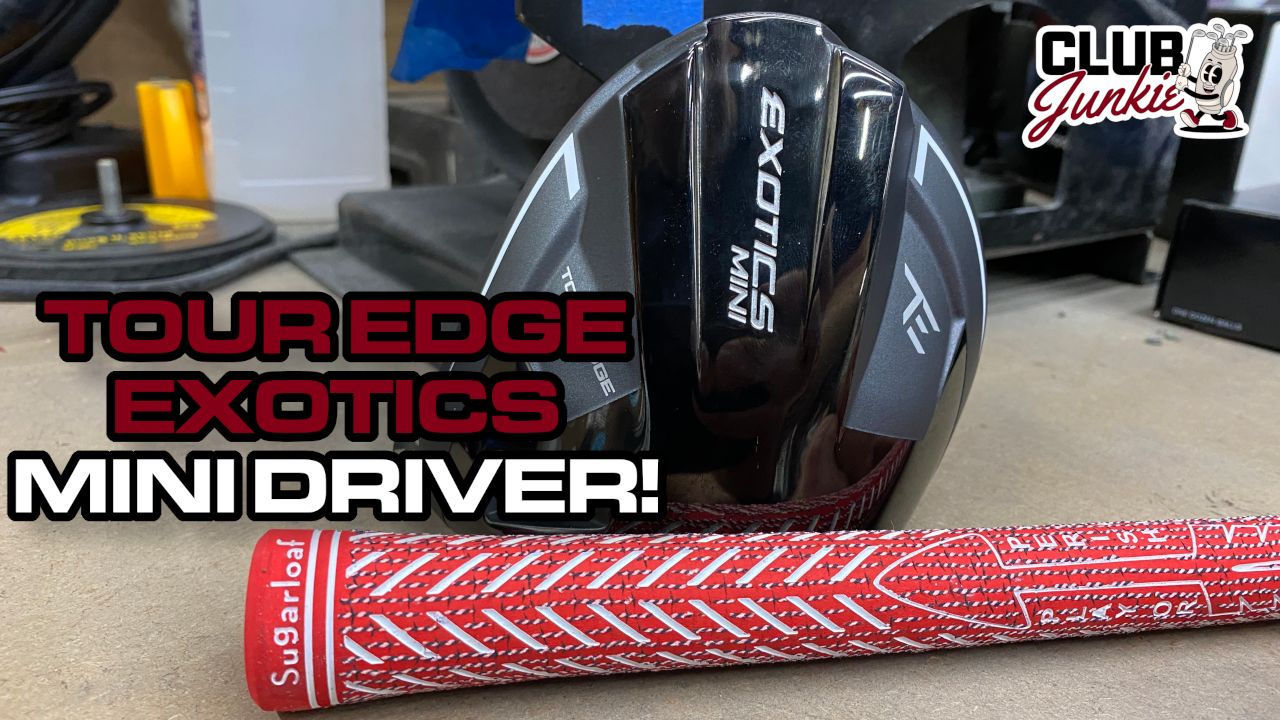
On this episode of Club Junkie, I put the new Tour Edge Exotics Mini Driver to the test and break down the performance, forgiveness, distance, and where it fits compared to a traditional driver or strong fairway wood. If you have been curious about adding a mini driver to the bag, this one is worth a look.
I also dive into the new TaylorMade Spider ZT Max putter that was recently spotted and discuss the growing zero torque putter trend. Plus, there is a closer look at the new Project X Titan Yellow shaft showing up on the PGA Tour and what makes it different from other profiles currently out there.

Justin Rose WITB 2026 (April): Full WITB breakdown with new McLaren irons

What’s the story behind Webb Simpson’s custom-stamped irons?

Memorial Tournament Tour Report: Rory McIlroy, Cameron Young switch up drivers, and more

Cadillac Championship Tour Report: Spieth’s sizable changes, McLaren Golf launches, and more

Russell Henley’s winning WITB: 2026 Charles Schwab Challenge

Kristoffer Reitan’s winning WITB: 2026 Truist Championship

J.T. Poston’s winning WITB: 2026 Memorial Tournament

Best irons 2026: Best irons overall, most forgiving irons, and more

Aaron Rai’s winning WITB: 2026 PGA Championship

Cameron Young’s winning WITB: 2026 Cadillac Championship


Bud Cauley WITB 2026 (June)
Bud Cauley had >14 clubs in his bag when photographed prior to the Memorial Tournament. Driver: Titleist GTS2 (8 degrees) Shaft: Fujikura...


Hannah Green WITB 2026 (June)
Driver: Titleist GTS3 (10 degrees, D4 SureFit setting) Shaft: Mitsubishi Chemical Diamana RB 53 S 3-wood: Titleist GT3 (15 degrees,...


Asterisk Talley WITB 2026 (June)
Driver: TaylorMade Qi4D (9 degrees) Shaft: Fujikura Ventus Blue 6 S 3-wood: TaylorMade Qi4D (16.5 degrees) Shaft: Fujikura Ventus Blue...

Brianna Do WITB 2026 (June)
Driver: Callaway Quantum Triple Diamond (9 degrees) Shaft: KBS PGW 3-wood: Callaway Elyte Titanium (15 degrees) Shaft: KBS PGW 5-wood:...
-
 Equipment6 days ago
Memorial Tournament Tour Report: Rory McIlroy, Cameron Young switch up drivers, and more
-
 News1 week ago
Russell Henley’s winning WITB: 2026 Charles Schwab Challenge
-
 Whats in the Bag3 days ago
J.T. Poston’s winning WITB: 2026 Memorial Tournament
-
 Equipment3 days ago
Best irons 2026: Best irons overall, most forgiving irons, and more
-
 Equipment1 week ago
Details on Jason Day’s latest prototype Avoda iron setup
-
 Equipment3 weeks ago
CJ Cup Byron Nelson Tour Report: Koepka and Kim’s newest putters finally get hot
-

 News2 weeks ago
Charles Schwab Challenge Tour Report: MacIntyre, Åberg and Spaun all switch putters, TaylorMade launches new Spider
-
 Equipment2 weeks ago
Details on J.J. Spaun’s surprise putter switch


Darren W McGowen
Jun 13, 2018 at 1:06 pm
It was Oscar Bunn, not Oliver Dunn.