
Opinion & Analysis
Hear It, Feel It, Believe It: A Better Bunker Method

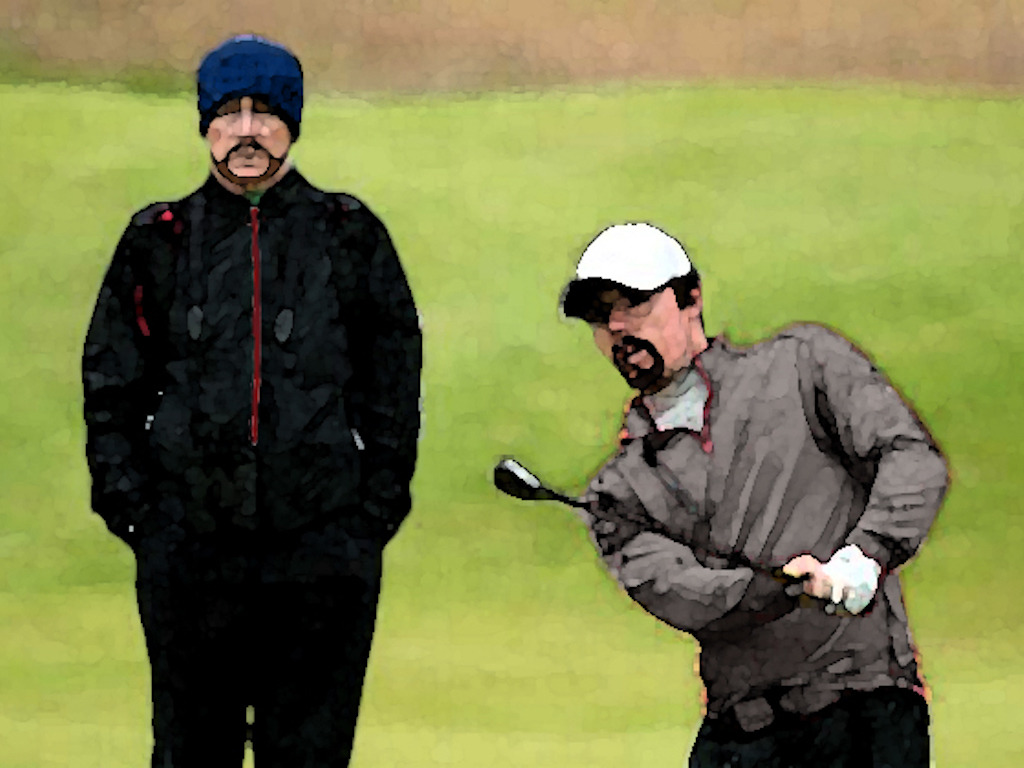
The following is an excerpt from Mike Dowd‘s upcoming novel, “Coming Home.”
After picking the last of the balls on the driving range, Tyler cornered Mack as he hit a few shots from the old practice bunker to wind down at the end of the day. Mack was hitting one after another, alternating between the three flags on the practice green and tossing them up about as softly as if he was actually lobbing them each up there underhanded.
Tyler just stood there, mesmerized at first by the mindless ease with which Mack executed the shot. Bunker shots, Tyler silently lamented, were likely the biggest hole in his game, and so after Mack had holed his third ball in a couple of dozen, Tyler finally decided he had to ask him a question.
“What are you thinking about on that shot, Mack?” Tyler interrupted him suddenly.
Mack hit one more that just lipped out of the closest hole, paused a few seconds, and then looked up at his protégé in what Tyler could only interpret as a look of confusion.
“What am I thinking about?” he finally replied. “I don’t know, Tyler… I’d hate to think how I’d be hittin’ ‘em if I actually started thinking.”
Tyler gave Mack a slightly exasperated look and put his hands on his hips as he shook his head. “You know what I mean. Your technique. I guess I should have said what exactly are you doing there from a mechanics standpoint? How do you get it to just land so softly and roll out without checking?”
Mack seemed to be genuinely considering Tyler’s more elaborately articulated question, and after a moment began, more slowly this time, as if he was simplifying his response for the benefit of a slightly thick-headed young student who wasn’t getting his point.
“You can’t think about technique, Tyler… at least not while you’re playing,” Mack replied. “There’s no quicker path back to your father’s garage than to start thinking while you’re swinging, especially thinking about technique. That’s my job.”
“Mack,” Tyler insisted, “How am I supposed to learn to hit that shot without understanding the technique? I’ve got to do something different than what I’m doing now. I’m putting too much spin on my shots, and I can’t always tell when it’s going to check and when it’s going to release a little. How do I fix that?”
“Well, not by thinking, certainly,” Mack fired right back as if it was the most ridiculous line of inquiry he’d ever heard. “A good bunker shot can be heard, Tyler, and felt, but you can’t do either of those if you’re focused on your technique. You feel it inside of you before you even think about actually hitting it. Watch, and listen.”
With that Mack swung down at the sand and made a thump sound as his club went through the soft upper layer of sand and bounced on the firmer sand below.
“You hear that?” Mack asked. “That’s what a good bunker shot sounds like. If you can hear it, then you can feel it. If you can feel it, then you can make it, but you can’t make that sound until you hear it first. Your body takes care o’ the rest. You don’t have to actually tell it what to do.”
Tyler still looked puzzled, but, knowing Mack as he did, this was the kind of explanation he knew he should have expected. Coach Pohl would have gone into an eight-part dissertation on grip, stance, club path, release points, weight transfer, and so forth, and Tyler suddenly realized how much he’d come to adopt his college coach’s way of thinking in the past four years. Mack though? He just said you’ve got to hear it.
“Get in here,” Mack said suddenly, gesturing to the bunker and offering the wedge to Tyler. “Now close your eyes.”
“What?!” Tyler almost protested.
“Just do it, will ya’?” Mack insisted.
“Okay, okay,” Tyler replied, humoring his coach.
“Can you hear it?” Mack asked.
“Hear what?” Tyler answered. “All I hear is you.”
“Hear that sound, that thump.” It was Mack’s turn to be exasperated now. “It was only moments ago when I made it for you. Can’t you still hear it?”
“Oh, remember it you mean,” Tyler said. “Okay, I know what you mean now. I remember it.”
“No, you obviously don’t know what I mean,” Mack replied. “I wanted to know if you can hear it, in your mind, hear the actual sound. Not remember that I’d made it. There’s a big difference.”
Tyler suddenly did feel kind of dumb. He wasn’t picking up what Mack was getting at, at least not exactly how he wanted him to get it, and so he sat there with his eyes closed and gripped the club like he was going to hit a shot, waggled it a bit as if he was getting ready, and then opened his eyes again.
“Okay,” he said suddenly. “I think I can hear it now.”
“Don’t open your eyes,” Mack almost hissed. “Now make it, make that sound. Make that thump.”
Tyler swung down sharply and buried the head of the wedge into the sand where it almost stopped before exiting.
“That’s not a thump,” Mack said shaking his head. “That’s a thud. You can’t even get the ball out with that pitiful effort. Give me that!”
He took the wedge back from Tyler and said, “Now watch and listen.”
Mack made a handful of swings at the sand, each one resulting in a soft thump as the club bottomed out and then deposited a handful of sand out of the bunker. Tyler watched each time as the head of the club came up sharply, went down again, hit the sand, and came back up abruptly in a slightly abbreviated elliptical arc. Each time Tyler listened to the sound, embedding it as he studied how the club entered and exited the sand. Mack stopped suddenly and handed the club back to Tyler.
“Now you make that sound,” he said, “and as you do remember how it feels in your hands, your forearms, your chest, and most importantly in your head.”
“What?” Tyler asked, looking back up at Mack, confused at his last comment.
“Just do it,” Mack said. “Hear it, feel it, then do it, but don’t do it before you can hear it and feel it. Now close your eyes.”
Tyler did as he was told, closing his eyes and then settling his feet in as he tried to picture in his mind what Mack had been doing. At first, he just stood there waggling the club until he could see the image in his mind of Mack hitting the sand repeatedly, and then he could hear the soft thump as the club hit the sand. He started to swing but was interrupted by Mack’s voice.
“Can you feel it?” Mack said. “Don’t go until you can feel it.”
“Well, at first I could see the image in my mind of you hitting that shot over and over again,” Tyler said, opening his eyes and looking at Mack, “and then I could hear it. It sort of followed right in behind it.”
“Ah, the image is a good starting point, but you can’t just see it and hear it, you need to feel it,” Mack replied, pointing to his head. “Feel it in here, and then you can feel it here,” he continued, putting his hands together like he was gripping a club. “Now close your eyes again.”
“Okay,” Tyler said, not sure he was getting it, but finally bought in. He settled in again and began waggling the club until he could see Mack swinging and hear the subtle thump of the sand. He let it just loop in his mind, over and over again, until suddenly he could feel it like he was the one doing it, and then he swung.
Thump came the sound as the flange of his wedge hit the sand. It was his swing, but it was different, maybe not to the naked eye, but in the speed, the level of tension, and the release. He opened his eyes again, almost tentatively, and looked at Mack with a combination of curiosity and amazement.
“I felt it that time,” Tyler said in a voice that seemed to resonate within from somewhere in the past. It almost sounded like Jackie’s in its exuberance.
“Yes… good,” Mack replied patiently. “Now close your eyes and do it again, but make sure you can feel it before you pull the trigger.”
Tyler settled in again, waited until, like the last time, he could see it, hear it, and then finally feel it… Thump… Something was slightly different this time, though, and Tyler opened his eyes to notice Mack kneeling down next to him. He had quietly deposited a ball into the place where Tyler had swung. Tyler looked up in the direction of the green and the target flag he had been aiming toward just in time to see a ball slow to a gentle stop about four inches from the flag.
“How’d you do that?” Tyler said, almost in wonder now.
“I didn’t,” Mack replied. “You did. You just had to stop thinking. See it, hear it, and feel it. Once you feel it, you can believe it. Anything more is more than we need. Any questions?”
As Mack turned to walk up out of the bunker, Tyler just stood there shaking his head a moment, looking at the spot in the sand, and then back up at the green as if to confirm the ball he’d seen roll to stop was still there. “I guess I’ve still got a lot to learn.”
“Well… yes and no,” Mack said cryptically as he turned back to look at him. “You pretty much know how to hit all the shots, Tyler. You’ve hit every one of them at one time or another. You’ve just got to learn how to empty your head of all those instructions so you can focus on finding the shot you need when you need it. It’s in there somewhere.”
“It’s hard to explain,” Tyler said, “but a lot of times I walk up and think I somehow just instinctively know what shot to hit without even thinking about it. I just kind of see it and feel it. It’s when I start to analyze things a bit more closely, factoring in all the things I know are important to consider like the wind, keeping away from the short side, where I want to putt from, and the best trajectory or shot shape for the situation, that I often start to second guess that feeling.”
“Ever heard the saying paralysis from analysis?” Mack asked. “It pretty much describes those moments.”
“Yeah, I get it,” Tyler replied, “but all that information is important. You have to consider everything and not just make a rash decision.”
“Sure, information is important, but you can’t get lost in it,” Mack countered. “Whether it’s golf, or just about anything else in life, Tyler, you need to learn to trust your gut. You’ve hit hundreds of thousands of shots in your life, Tyler. All those shots leave a mark. They leave an indelible little mark that gets filed away in your brain subconsciously, getting stacked one on top of the other. And after years of playing the game, those stacks and stacks of shots create an instinctive reaction to each situation. It’s like gravity. It pulls you in a certain direction so much that most of the time you almost know what club you should hit before you even know the yardage. Trust that, Tyler. Go with it, and know that first instinct comes from experience. There’s more wisdom in those gut reactions than just about anything else.”
“Thank you,” Tyler said after considering it a moment. “I think that’ll really help.”
“You’re welcome,” Mack replied. “Now rake that bunker for me and clean the balls off the green. I want to get things closed up before dark.”



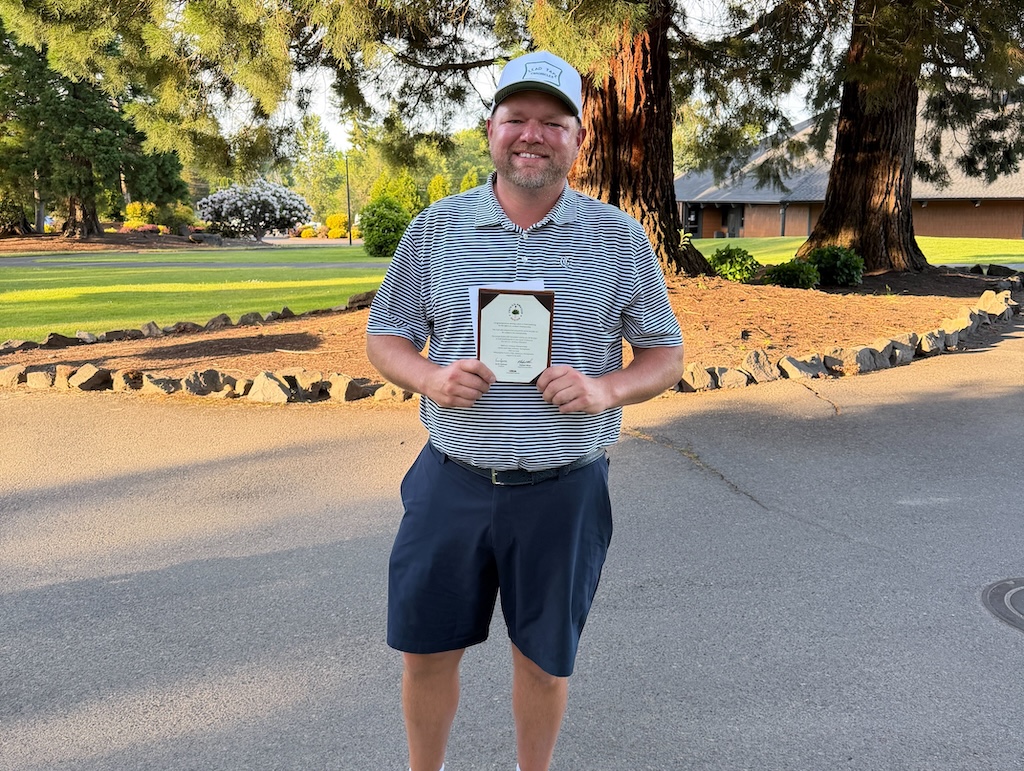
This past Monday, I played in the U.S. Amateur local qualifier at Rock Creek Country Club in Portland, Oregon. A full tee sheet from 7:30 a.m. to 1:55 p.m., the top 11 scores would make it to the U.S. Amateur final qualifying.
I teed off at 10:48 a.m.. With the 7:30 am tee time, you can get a feel for the leaders’ pace, and they were off and running on the challenging setup at Rock Creek.
View this post on Instagram
Getting to the highlight of the round on the par five 17th, a drive up the left side and 212 yards left to the front hole location. I took out a 5-iron with plans of middle of the green. The ball ended up 8 feet left of the hole, pin high. A slight downhill putt dropped in for an eagle 3 on the 17th. With the cut line looking to be anywhere from -2 to even par. This was the boost I had been waiting for all day.
With making par from the trees on 18, it was time to wait for a potential playoff with a posted score of one under par 71.
Three hours later, it was playoff time. 8 players for 6 spots. I made par on the playoff hole, which was good enough to advance to the U.S. Amateur final qualifying in July. USGA qualifiers sure deliver on all of the emotions in golf!
Club Junkie
Building my 2026 gamer WITB: Ranking the contenders and new putter projects – Club Junkie Podcast

The annual What’s In The Bag build is underway, and on this episode of Club Junkie, Brian breaks down the clubs currently leading the race for a spot in his 2026 gamer setup. From drivers and fairway woods to irons, wedges, and shafts, he ranks the equipment that’s performing best and explains what’s separating the front runners from the rest of the field.
Brian also heads into the workshop to discuss several putter projects currently on the bench. From head options and shaft choices to build ideas and testing plans, he shares what he’s working on and which putters could become serious contenders for the bag this season.
If you’re a gear junkie who loves equipment testing, club building, and the never-ending pursuit of the perfect setup, this episode is for you.
Follow Club Junkie:
Instagram: @clubjunkiepod
TikTok: @clubjunkiepod
Threads: @clubjunkiepod
X: @ClubJunkiePod
Club Junkie
Tour Edge Exotics mini driver review + TaylorMade Spider ZT Max first look – Club Junkie

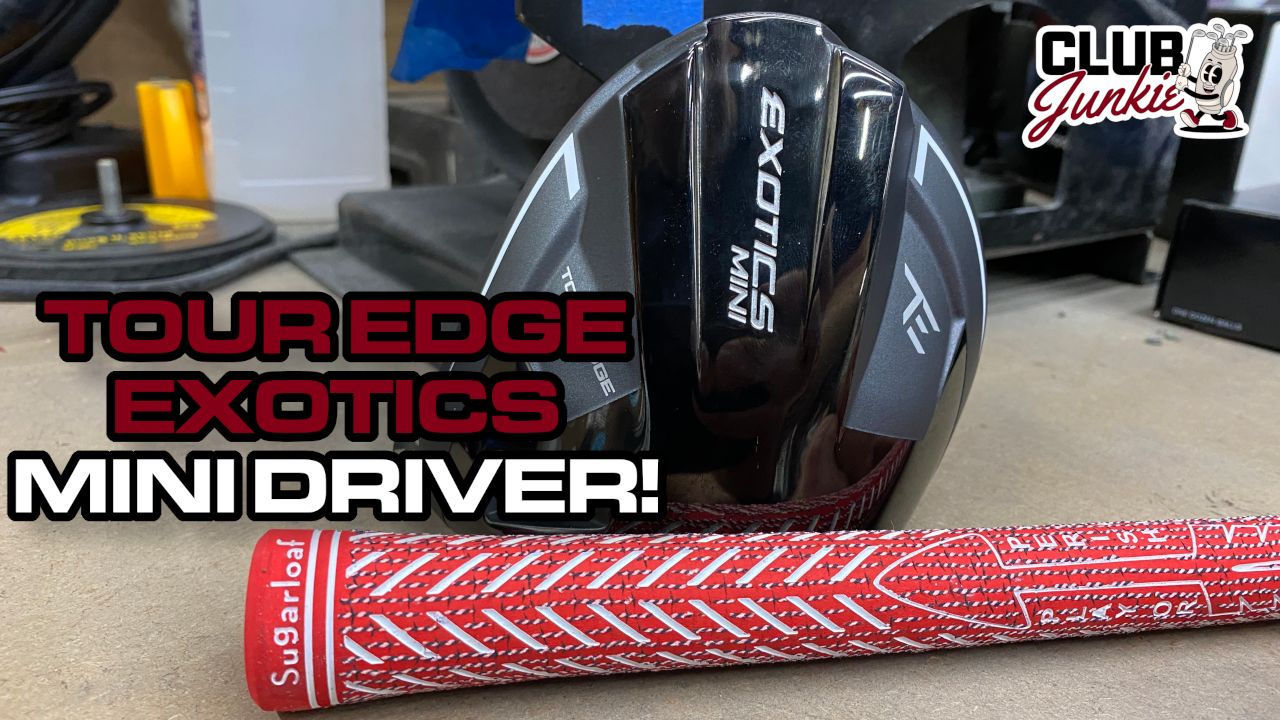
On this episode of Club Junkie, I put the new Tour Edge Exotics Mini Driver to the test and break down the performance, forgiveness, distance, and where it fits compared to a traditional driver or strong fairway wood. If you have been curious about adding a mini driver to the bag, this one is worth a look.
I also dive into the new TaylorMade Spider ZT Max putter that was recently spotted and discuss the growing zero torque putter trend. Plus, there is a closer look at the new Project X Titan Yellow shaft showing up on the PGA Tour and what makes it different from other profiles currently out there.

Justin Rose WITB 2026 (April): Full WITB breakdown with new McLaren irons

What’s the story behind Webb Simpson’s custom-stamped irons?

Memorial Tournament Tour Report: Rory McIlroy, Cameron Young switch up drivers, and more

Cadillac Championship Tour Report: Spieth’s sizable changes, McLaren Golf launches, and more

Russell Henley’s winning WITB: 2026 Charles Schwab Challenge

Kristoffer Reitan’s winning WITB: 2026 Truist Championship

Best irons 2026: Best irons overall, most forgiving irons, and more

J.T. Poston’s winning WITB: 2026 Memorial Tournament

Aaron Rai’s winning WITB: 2026 PGA Championship

Cameron Young’s winning WITB: 2026 Cadillac Championship


Ryan Palmer WITB 2026 (June)
Driver: Callaway Quantum Triple Diamond (9 degrees) Shaft: Project X HZRDUS Smoke Blue RDX 60 TX 3-wood: TaylorMade Qi10 (15 degrees) Shaft:...


Bud Cauley WITB 2026 (June)
Bud Cauley had >14 clubs in his bag when photographed prior to the Memorial Tournament. Driver: Titleist GTS2 (8 degrees) Shaft: Fujikura...


Hannah Green WITB 2026 (June)
Driver: Titleist GTS3 (10 degrees, D4 SureFit setting) Shaft: Mitsubishi Chemical Diamana RB 53 S 3-wood: Titleist GT3 (15 degrees,...


Asterisk Talley WITB 2026 (June)
Driver: TaylorMade Qi4D (9 degrees) Shaft: Fujikura Ventus Blue 6 S 3-wood: TaylorMade Qi4D (16.5 degrees) Shaft: Fujikura Ventus Blue...
-
 Equipment6 days ago
Memorial Tournament Tour Report: Rory McIlroy, Cameron Young switch up drivers, and more
-
 News2 weeks ago
Russell Henley’s winning WITB: 2026 Charles Schwab Challenge
-
 Equipment3 days ago
Best irons 2026: Best irons overall, most forgiving irons, and more
-
 Whats in the Bag4 days ago
J.T. Poston’s winning WITB: 2026 Memorial Tournament
-

 Equipment1 week ago
Details on Jason Day’s latest prototype Avoda iron setup
-

 Equipment3 weeks ago
CJ Cup Byron Nelson Tour Report: Koepka and Kim’s newest putters finally get hot
-

 News2 weeks ago
Charles Schwab Challenge Tour Report: MacIntyre, Åberg and Spaun all switch putters, TaylorMade launches new Spider
-

 Equipment2 weeks ago
Details on J.J. Spaun’s surprise putter switch

