
Opinion & Analysis
The effect that the NCAA’s new recruiting rules will have on college golf

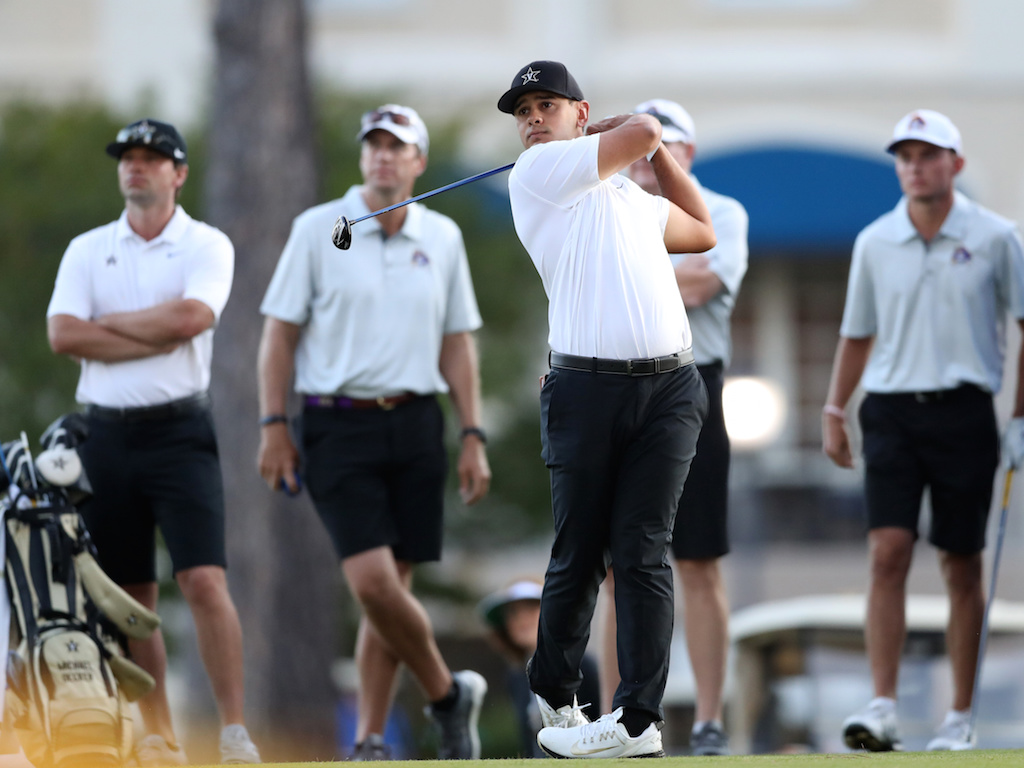
The current NCAA rules allow students to make unofficial visits any time, and make official visits (definitions for “visits” at the bottom of the article) starting September 1 of the player’s Senior year. Over the past five years, these unofficial visits have started earlier and earlier, as the sport has started to experience younger athletes making commitments. Last week that rule changed; the new rule, effective immediately, will prevent student athletes from making visits involving athletic staff before September 1 of their junior year, however coaches will be able to pay for official visits starting September 1 of the players Junior year.
In summation:
- Old Rule: Prospective Student Athletes (PSA) can make unofficial visits any time. They can make official visits starting September 1 of their Senior year of High School.
- New Rule: Effective immediately, PSA cannot meet on campus with a coach until September 1 of their Junior Year, however coaches can start to pay for official visits starting September 1 of the prospective student athlete’s junior year.
The adoption of this legislation signals a major paradigm shift in recruiting among college coaches. Data collected by GolfWRX,suggests that not all coaches support the new rule, however. Through an online, optional survey, GolfWRX was able to collect feedback from 60 NCAA Men’s and Women’s coaches; 51 percent of respondents identified themselves as women’s coaches, and 49 percent of respondents identified themselves as men’s coaches.
The first question we asked coaches: “Are you in favor of the resolution which prevents players from visiting before September 1 of their Junior year?” In response, 51 percent of respondents suggested they where in favor, including Bradley women’s coach Mary Moan.
“The more time we can give athletes to explore their options thoughtfully the better,” Moan said. “There is such an urgency to verbally commit that players may not be making the best choice with the limited information they have. In the long run, this rule, allows players to mature and have more time to explore options.”
The second question we asked coaches: “Do you think the rule will prevent early commitments?” Nearly 60 percent of respondents said, “No.” According to comments collected anonymously as part of the survey, many coaches think the legislation will simply nudge coaches to use other methods to interact with recruits, such as camps. Steve Runge, the Head Men’s Coach at University of Central Arkansas and former college standout at Ohio State said, “while you want to do what’s right for the student athlete, it is important that coaches keep to the intention of the rule and allow young people the time to properly develop, as well as explore all their options”.
As a former college coach myself, and someone with an academic training and strong interest in behavioral economics, it will be interesting to see the long-term impact of the rule. Colleagues in other sports where this legislation has been adopted have suggested similar rules in their sports have not been overly effective, as coaches simply have more camps and clinics where they can not only interact with younger players but can also make money. The new rule also opens potential interference from either club reps/apparel reps, college advisors, high school coaches and swing instructors who could look to capitalize on the later time table, acting as middle men in the recruitment process.
While the rules do take a step towards protecting PSA from making decisions early, they don’t fully address the problem facing the typical recruit, which is the issue of bad information. At the root of the issue is the lack of useful information for PSA, their families and coaches. It’s important for PSA to use a wide range of resources to help them make the best choice for them and thirr future.
As the rule nudges visits after September 1 of players Junior Year, it may also have a fiscal and scheduling impacts. These visits, funded fully or in part by the college or university, have been significantly decreasing as the time table for players have moved up. Shifting the timing back makes it more likely they will again be a part of both recruiting, as well as a line item in budgets. For some schools, this will mean they can make less investment in the student athlete experience. The rule may also have a significant impact on Fall schedules as many schools such as Norte Dame, Stanford and Alabama look to make sure they can entertain their best recruits on major football weekends.
One cannot help but applaud the intentions of the NCAA; to serve the best interest of the student athlete. However, one can question their understanding of the process; while coaches need to be held accountable, so do college advisors, media outlets, agents, industry reps and others. This rule does nothing to better frame their roles and accountability in the process and it is my feeling that until that happens, it will be much of the same.
In the future there is also talk of other significant rules changes. New legislation likely to become effective in early August will limit the days coaches can recruit off-campus to 45 days. To put this in perspective, when I coached at the University of Kentucky, I recruited approximately 150 days per year. Cutting those days by a third will handcuff coaches; they will need to make quicker decisions, which could result in earlier offers with shorter windows to accept. It could also lead to a lot of offers on players who coaches have not watched, which over the long term could lead to an increase in transfers.
Another potential rule will limit recruiting during the month of December, allowing coaches to have more of a break during the holidays. During my 8 years of college coaching, I was never home once at Christmas. Instead I was at either Doral, the South Beach Amateur, the Orange Bowl or watching National teams at training camps. I can therefore appreciate how this can impact the quality of family life, however, I think the rule will have significant consequences for the late developer who uses tournaments like the AJGA Senior Showcase and Doral (both in December) to demonstrate to coaches their skill. This is particularly true for players from outside the United States, who might not be as savvy with the NCAA rules.
Definitions
- Unofficial Visit: when the recruit, and their family, pay for all costs associated with visiting a school. During the visit the prospective student athlete can meet coaches and teams, as well as tour academic and athletic facilities within a 30-mile radius.
- Official Visit: When the athletic department pay for part or all the cost associated with the trips for the student athlete. The parents must pay their own costs.



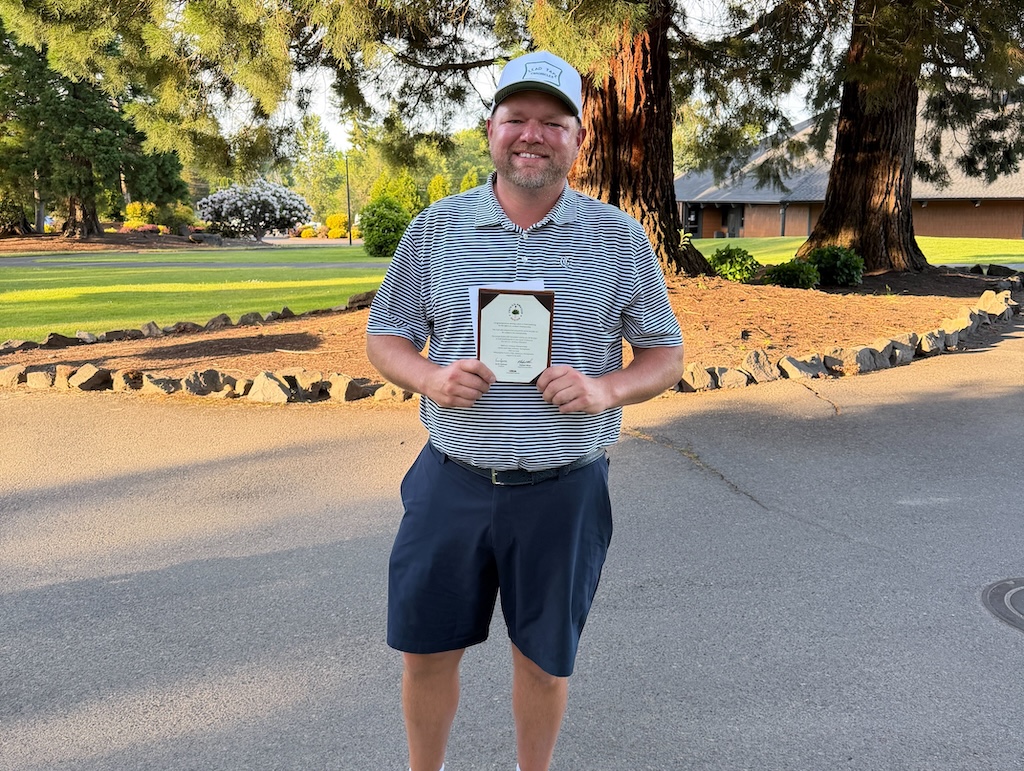
This past Monday, I played in the U.S. Amateur local qualifier at Rock Creek Country Club in Portland, Oregon. A full tee sheet from 7:30 a.m. to 1:55 p.m., the top 11 scores would make it to the U.S. Amateur final qualifying.
I teed off at 10:48 a.m.. With the 7:30 am tee time, you can get a feel for the leaders’ pace, and they were off and running on the challenging setup at Rock Creek.
View this post on Instagram
Getting to the highlight of the round on the par five 17th, a drive up the left side and 212 yards left to the front hole location. I took out a 5-iron with plans of middle of the green. The ball ended up 8 feet left of the hole, pin high. A slight downhill putt dropped in for an eagle 3 on the 17th. With the cut line looking to be anywhere from -2 to even par. This was the boost I had been waiting for all day.
With making par from the trees on 18, it was time to wait for a potential playoff with a posted score of one under par 71.
Three hours later, it was playoff time. 8 players for 6 spots. I made par on the playoff hole, which was good enough to advance to the U.S. Amateur final qualifying in July. USGA qualifiers sure deliver on all of the emotions in golf!
Club Junkie
Building my 2026 gamer WITB: Ranking the contenders and new putter projects – Club Junkie Podcast


The annual What’s In The Bag build is underway, and on this episode of Club Junkie, Brian breaks down the clubs currently leading the race for a spot in his 2026 gamer setup. From drivers and fairway woods to irons, wedges, and shafts, he ranks the equipment that’s performing best and explains what’s separating the front runners from the rest of the field.
Brian also heads into the workshop to discuss several putter projects currently on the bench. From head options and shaft choices to build ideas and testing plans, he shares what he’s working on and which putters could become serious contenders for the bag this season.
If you’re a gear junkie who loves equipment testing, club building, and the never-ending pursuit of the perfect setup, this episode is for you.
Follow Club Junkie:
Instagram: @clubjunkiepod
TikTok: @clubjunkiepod
Threads: @clubjunkiepod
X: @ClubJunkiePod
Club Junkie
Tour Edge Exotics mini driver review + TaylorMade Spider ZT Max first look – Club Junkie


On this episode of Club Junkie, I put the new Tour Edge Exotics Mini Driver to the test and break down the performance, forgiveness, distance, and where it fits compared to a traditional driver or strong fairway wood. If you have been curious about adding a mini driver to the bag, this one is worth a look.
I also dive into the new TaylorMade Spider ZT Max putter that was recently spotted and discuss the growing zero torque putter trend. Plus, there is a closer look at the new Project X Titan Yellow shaft showing up on the PGA Tour and what makes it different from other profiles currently out there.

Justin Rose WITB 2026 (April): Full WITB breakdown with new McLaren irons

What’s the story behind Webb Simpson’s custom-stamped irons?

Memorial Tournament Tour Report: Rory McIlroy, Cameron Young switch up drivers, and more

Cadillac Championship Tour Report: Spieth’s sizable changes, McLaren Golf launches, and more

Russell Henley’s winning WITB: 2026 Charles Schwab Challenge

Kristoffer Reitan’s winning WITB: 2026 Truist Championship

Aaron Rai’s winning WITB: 2026 PGA Championship

J.T. Poston’s winning WITB: 2026 Memorial Tournament

Cameron Young’s winning WITB: 2026 Cadillac Championship

Best irons 2026: Best irons overall, most forgiving irons, and more


Bud Cauley WITB 2026 (June)
Bud Cauley had >14 clubs in his bag when photographed prior to the Memorial Tournament. Driver: Titleist GTS2 (8 degrees) Shaft: Fujikura...


Hannah Green WITB 2026 (June)
Driver: Titleist GTS3 (10 degrees, D4 SureFit setting) Shaft: Mitsubishi Chemical Diamana RB 53 S 3-wood: Titleist GT3 (15 degrees,...


Asterisk Talley WITB 2026 (June)
Driver: TaylorMade Qi4D (9 degrees) Shaft: Fujikura Ventus Blue 6 S 3-wood: TaylorMade Qi4D (16.5 degrees) Shaft: Fujikura Ventus Blue...


Brianna Do WITB 2026 (June)
Driver: Callaway Quantum Triple Diamond (9 degrees) Shaft: KBS PGW 3-wood: Callaway Elyte Titanium (15 degrees) Shaft: KBS PGW 5-wood:...
-
 Equipment6 days ago
Memorial Tournament Tour Report: Rory McIlroy, Cameron Young switch up drivers, and more
-
 News1 week ago
Russell Henley’s winning WITB: 2026 Charles Schwab Challenge
-
 Whats in the Bag3 days ago
J.T. Poston’s winning WITB: 2026 Memorial Tournament
-
 Equipment3 days ago
Best irons 2026: Best irons overall, most forgiving irons, and more
-

 Equipment1 week ago
Details on Jason Day’s latest prototype Avoda iron setup
-
 Equipment3 weeks ago
CJ Cup Byron Nelson Tour Report: Koepka and Kim’s newest putters finally get hot
-

 News2 weeks ago
Charles Schwab Challenge Tour Report: MacIntyre, Åberg and Spaun all switch putters, TaylorMade launches new Spider
-

 Equipment2 weeks ago
Details on J.J. Spaun’s surprise putter switch


MIKE
May 2, 2018 at 9:16 am
Well written article but I think it misses the point that this is only a D1 rule change. Both D2 and D3 allow unofficial at any time. D2 allows official starting June 15 after sophomore year. D3 allows official starting Jan 1 of junior year.
Gregg grost
May 1, 2018 at 10:45 pm
New rule change the landscape but recruiting calendar in Div I is the game changer….
2putttom
Apr 30, 2018 at 5:15 pm
don’t call me, I’ll call you
squeezefade
Apr 30, 2018 at 4:43 pm
Still won’t prevent college coaches from finding ways to meet with recruits on campus before Sept. 1 of their junior year. Host a golf prospect camp, invite Fr. and So. recruits, and talk/tour recruits when they are there for the camp. I’d be surprised if this isn’t done already.