
Opinion & Analysis
The Frost Delay: Setting up an indoor hitting area

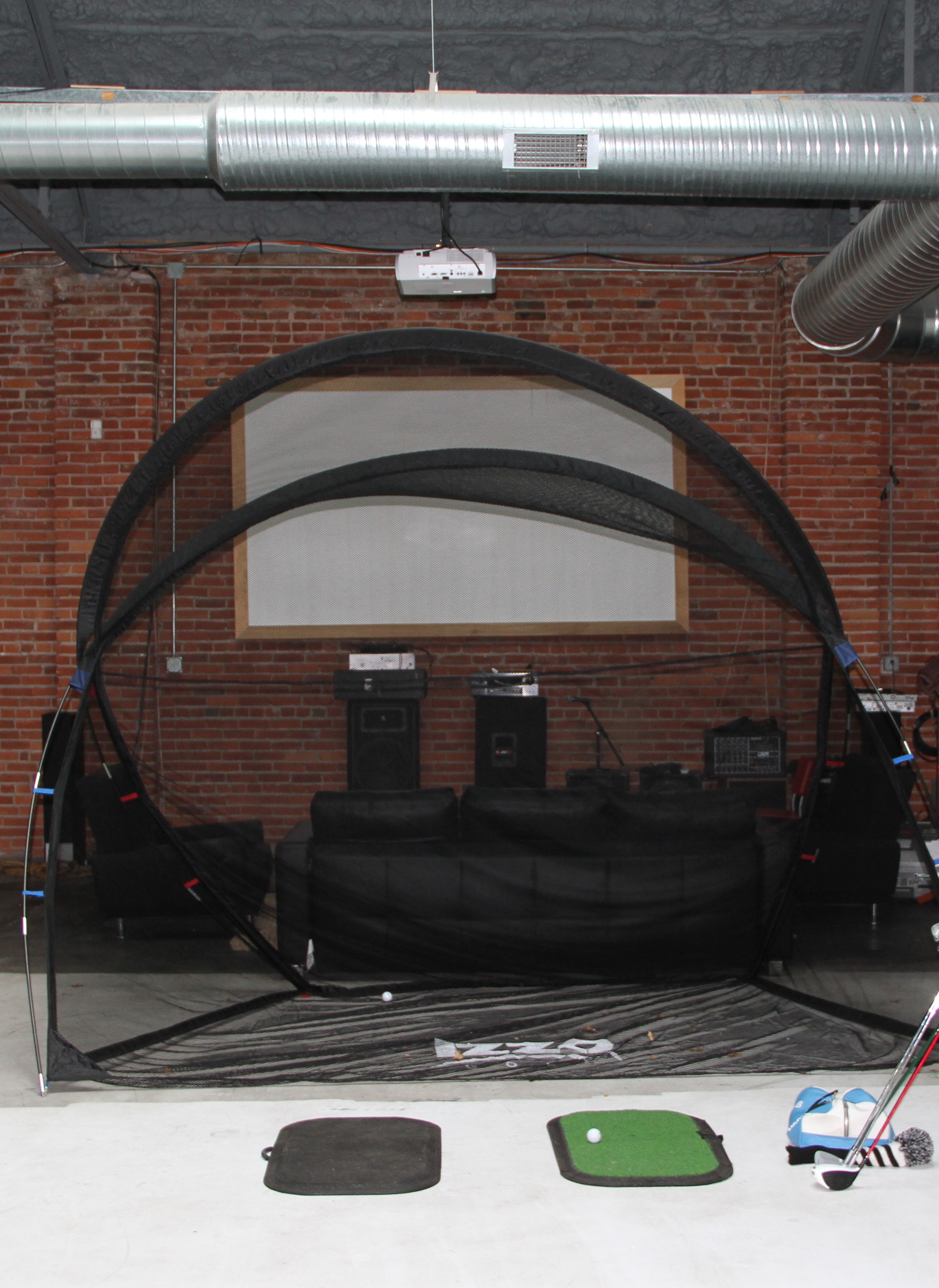
This is Part Two of Gedman’s Series, “The Frost Delay: A Winter Golf Survival Plan.” Click here to read Part 1.
When I was in high school I used to carry an old Wilson Staff 4 wood with a ridiculously whippy aluminum shaft. I loved it because I could hit a big, high 215-yard fade that would check in a couple feet or a low bullet hook that would often roll out north of 250 yards (that was a big poke in the days of the Maxfli HT). Looking back, I might have been way ahead of the curve on this whole hybrid thing, but I digress.
The actual point of this anecdote is what this 4 wood did to the ceiling of my childhood bedroom. I’m not sure if this was just the club I always grabbed when I was working on my swing or if the Staff’s black paint just left the most convincing marks, but my ceiling looked like pit row at a NASCAR track. In fact, I still blame my tendency to go flat on my parent’s lack of foresight in not building 9 foot ceilings into my childhood bedroom, which brings us neatly to the first thing I learned when trying to put my indoor hitting area together.
Make sure you have enough space to do it.
After a couple dings and mild cussings from my normally lovely wife, I swiftly realized that there is no place in my current house that I can safely swing anything longer than a wedge. On to plan B. My business is headquartered in an old barrel building in downtown Kansas City with 20 foot ceilings. We have a 5000 square foot room we use for video production, making it the perfect candidate for my range. But using shared space came with its on batch of problems: I needed a net that was large enough to catch any ball fired at it (the last thing I need is a drunk intern shanking an 8 iron off a 25K camera lens) and portable enough that I can bag it in five minutes.
I started by shopping at my usual local haunts (Golf Galaxy, Edwin Watts and Golfsmith), and both had a pretty limited selection in-store. After taking my search online I quickly landed on something called the Izzo Giant Hitting net on ebay.
This thing is, in fact, giant. I’m not sure that I needed to go this big (the poles are easily 20 feet before you bend them to shape), but like I said, while space wasn’t a limitation, catching moron shanks was. It goes up and down in under 5, so all in all, the net felt like a win. When it arrived via UPS we were in the middle of an Indian Summer, so I set it up in my driveway. I quickly ran to Target to grab a mat (for $15) and grabbed a wedge to hit a couple warm up shots. It took me two balls (and the resulting pain they sent up my tendinitis-prone elbow) to realize that a mat from Target wasn’t even a short-term solution.
Assuming that I wasn’t the first person to find this a problem, I popped on the old internets in an attempt to dig a bit deeper into hitting mats. Truth be told, I had never even considered the fact that there were different kind of mats — I thought it was a one-size fits all kind of thing. Wow, was I ever wrong. Nets go from $15 on ebay to thousands of dollars from several specialty manufacturers. Some are large enough to take over a backyard, some are as little as the strip I bought from target.
My research told me that I need something sturdy enough so that it wouldn’t move when I hit it, soft enough that it wouldn’t destroy my joints and engineered well enough that I’d get realistic feedback on fat shots. In addition, I knew that I needed it to be portable (and not $500).
I settled in on a two-mat system from a company called Birdie Ball. By all accounts, their birdieturf mat system met all my needs and was available on Amazon for $100. It arrived a couple days ago and it’s almost perfect. My only complaint is its interaction with 8-PW — it’s a bit on the firm side. It was an easy problem to fix, though.
While searching for mats, I had previously come across the Real Feel Country Club Elite mats. As a single solution, they didn’t quite work for me (not super portable and they were a bit out of my price range), but after digging down on the page, I noticed that they sell 10-inch by 30-inch hitting strips for $46. This worked out as a perfect solution for two reasons: First off, the interaction with the turf on this mat with wedges is significantly more realistic, and second, by setting this on the inside of the dual mat Birdieturf setup, I can move through my golf bag without ever having to move the foot mat. All in all, I’m extremely happy with the setup, and after some clever shopping came it at under $250 (without shipping).
Now I’m just waiting for it to cool down again as I’m binging on as much fall golf as I can right now. I’m hitting the ball better than I have in years, and I’m finally seeing the results of my swing changes translate to better scoring. My last two rounds have been a respectable 77 and 78 with plenty of shots left out on the course.
Next column: Developing a golf-specific workout for a dude that hates working out.




This past Monday, I played in the U.S. Amateur local qualifier at Rock Creek Country Club in Portland, Oregon. A full tee sheet from 7:30 a.m. to 1:55 p.m., the top 11 scores would make it to the U.S. Amateur final qualifying.
I teed off at 10:48 a.m.. With the 7:30 am tee time, you can get a feel for the leaders’ pace, and they were off and running on the challenging setup at Rock Creek.
View this post on Instagram
Getting to the highlight of the round on the par five 17th, a drive up the left side and 212 yards left to the front hole location. I took out a 5-iron with plans of middle of the green. The ball ended up 8 feet left of the hole, pin high. A slight downhill putt dropped in for an eagle 3 on the 17th. With the cut line looking to be anywhere from -2 to even par. This was the boost I had been waiting for all day.
With making par from the trees on 18, it was time to wait for a potential playoff with a posted score of one under par 71.
Three hours later, it was playoff time. 8 players for 6 spots. I made par on the playoff hole, which was good enough to advance to the U.S. Amateur final qualifying in July. USGA qualifiers sure deliver on all of the emotions in golf!
Club Junkie
Building my 2026 gamer WITB: Ranking the contenders and new putter projects – Club Junkie Podcast

The annual What’s In The Bag build is underway, and on this episode of Club Junkie, Brian breaks down the clubs currently leading the race for a spot in his 2026 gamer setup. From drivers and fairway woods to irons, wedges, and shafts, he ranks the equipment that’s performing best and explains what’s separating the front runners from the rest of the field.
Brian also heads into the workshop to discuss several putter projects currently on the bench. From head options and shaft choices to build ideas and testing plans, he shares what he’s working on and which putters could become serious contenders for the bag this season.
If you’re a gear junkie who loves equipment testing, club building, and the never-ending pursuit of the perfect setup, this episode is for you.
Follow Club Junkie:
Instagram: @clubjunkiepod
TikTok: @clubjunkiepod
Threads: @clubjunkiepod
X: @ClubJunkiePod
Club Junkie
Tour Edge Exotics mini driver review + TaylorMade Spider ZT Max first look – Club Junkie

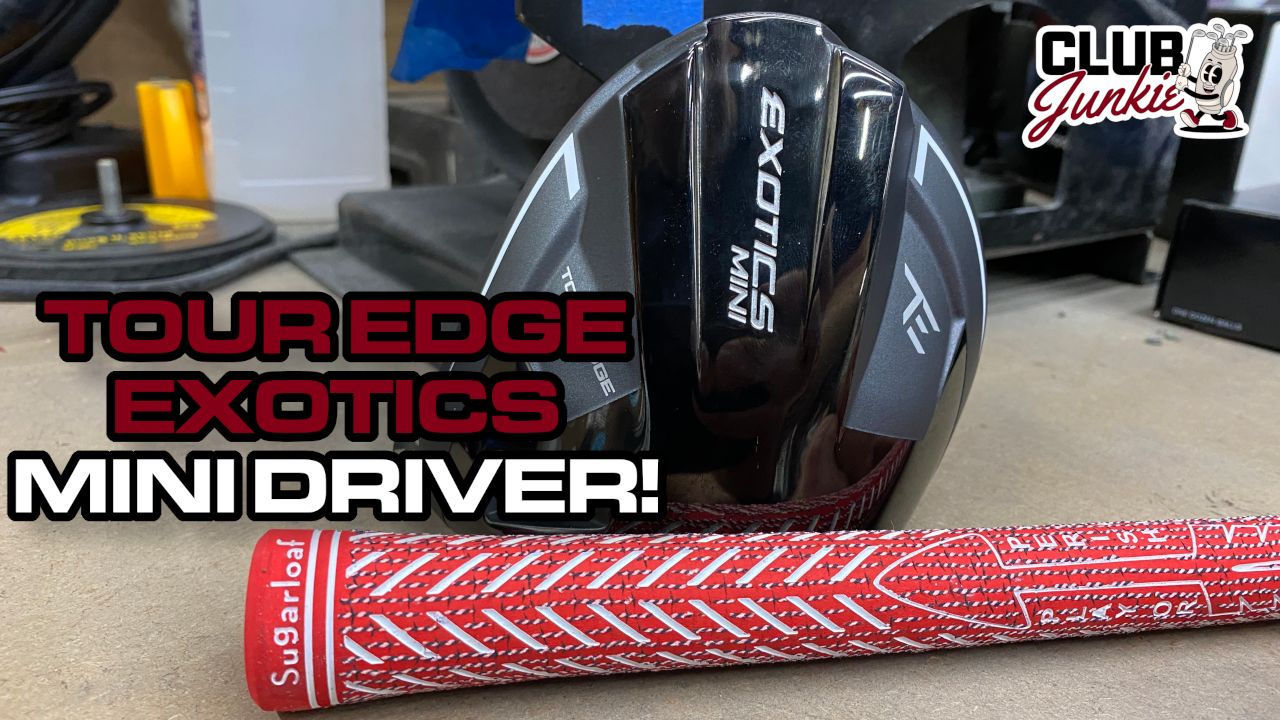
On this episode of Club Junkie, I put the new Tour Edge Exotics Mini Driver to the test and break down the performance, forgiveness, distance, and where it fits compared to a traditional driver or strong fairway wood. If you have been curious about adding a mini driver to the bag, this one is worth a look.
I also dive into the new TaylorMade Spider ZT Max putter that was recently spotted and discuss the growing zero torque putter trend. Plus, there is a closer look at the new Project X Titan Yellow shaft showing up on the PGA Tour and what makes it different from other profiles currently out there.

Justin Rose WITB 2026 (April): Full WITB breakdown with new McLaren irons

What’s the story behind Webb Simpson’s custom-stamped irons?

Memorial Tournament Tour Report: Rory McIlroy, Cameron Young switch up drivers, and more

Cadillac Championship Tour Report: Spieth’s sizable changes, McLaren Golf launches, and more

Russell Henley’s winning WITB: 2026 Charles Schwab Challenge

Kristoffer Reitan’s winning WITB: 2026 Truist Championship

Best irons 2026: Best irons overall, most forgiving irons, and more

J.T. Poston’s winning WITB: 2026 Memorial Tournament

Aaron Rai’s winning WITB: 2026 PGA Championship

Cameron Young’s winning WITB: 2026 Cadillac Championship


Ryan Palmer WITB 2026 (June)
Driver: Callaway Quantum Triple Diamond (9 degrees) Shaft: Project X HZRDUS Smoke Blue RDX 60 TX 3-wood: TaylorMade Qi10 (15 degrees) Shaft:...


Bud Cauley WITB 2026 (June)
Bud Cauley had >14 clubs in his bag when photographed prior to the Memorial Tournament. Driver: Titleist GTS2 (8 degrees) Shaft: Fujikura...


Hannah Green WITB 2026 (June)
Driver: Titleist GTS3 (10 degrees, D4 SureFit setting) Shaft: Mitsubishi Chemical Diamana RB 53 S 3-wood: Titleist GT3 (15 degrees,...


Asterisk Talley WITB 2026 (June)
Driver: TaylorMade Qi4D (9 degrees) Shaft: Fujikura Ventus Blue 6 S 3-wood: TaylorMade Qi4D (16.5 degrees) Shaft: Fujikura Ventus Blue...
-
 Equipment6 days ago
Memorial Tournament Tour Report: Rory McIlroy, Cameron Young switch up drivers, and more
-
 News2 weeks ago
Russell Henley’s winning WITB: 2026 Charles Schwab Challenge
-
 Equipment3 days ago
Best irons 2026: Best irons overall, most forgiving irons, and more
-
 Whats in the Bag4 days ago
J.T. Poston’s winning WITB: 2026 Memorial Tournament
-

 Equipment1 week ago
Details on Jason Day’s latest prototype Avoda iron setup
-

 Equipment3 weeks ago
CJ Cup Byron Nelson Tour Report: Koepka and Kim’s newest putters finally get hot
-

 News2 weeks ago
Charles Schwab Challenge Tour Report: MacIntyre, Åberg and Spaun all switch putters, TaylorMade launches new Spider
-

 Equipment2 weeks ago
Details on J.J. Spaun’s surprise putter switch


pg
Nov 28, 2012 at 12:35 am
Thanks for the post, Dan. I just moved to Seattle and while it stays temperate enough to get out and play year round, it’s certainly almost always going to be a damp round. I’ll likely take some of your ideas to set up a garage hitting area.