
Opinion & Analysis
How about that latest swing tip you just saw?

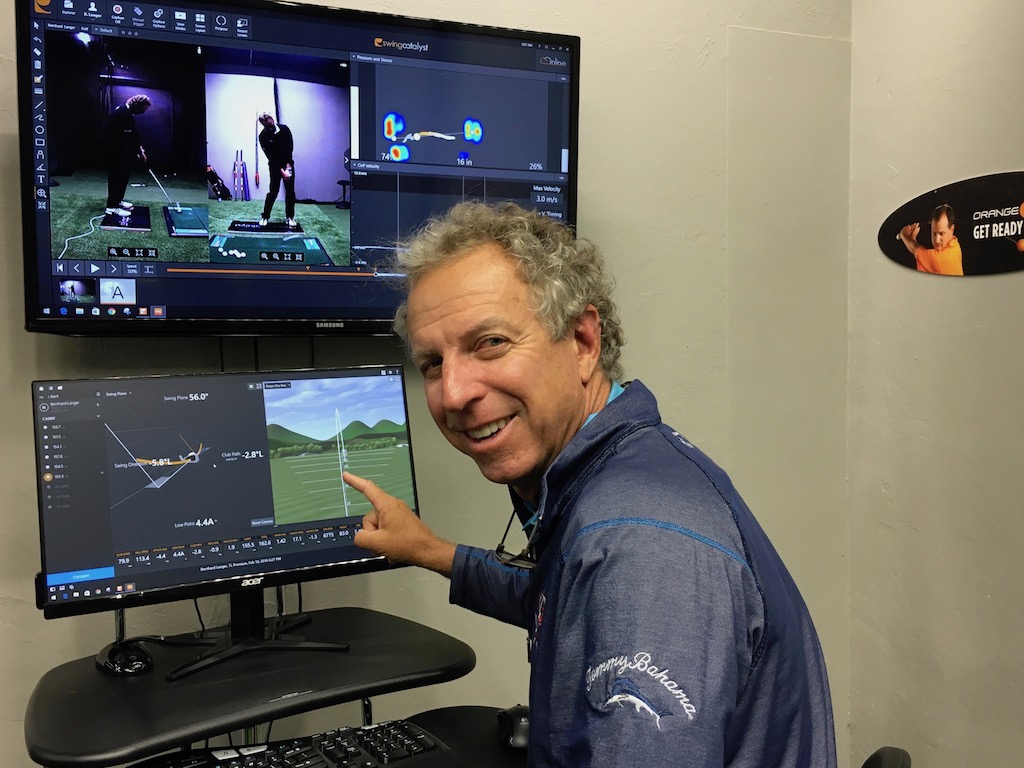
When I hear that golf is too hard, I reflect back to the hundreds of conversations I have had with pro-am participants with whom I played and observed. Having recently played in over 200 pro-ams during my five years on the PGA Champion’s Tour (that’s 800 golfers) and with my experience teaching clients in golf schools and private instruction, I feel I have a good sample of golfers from which I’m basing the following theory. What I discovered was an increased frustration level among golfers when their games were not improving over time as they had expected.
Many had tried lessons that didn’t help. Most were listening to various television programs, watching YouTube, getting email tips or reading golf magazines and trying to apply those tips to improve their games. All of that wasn’t necessarily helping, however, and in most cases it was making their games worse. So… why is that?
Golfers have been bombarded with information about how to improve their games. Today, there is more information available at your fingertips than at any other time in golf history. Much of this information is contradicting and conflicting. One instructor suggests that the bowed left wrist position at the top is preferred, while another suggests a flat wrist or even a cupped position. Similarly, one instructor suggests that the proper plane of the backswing is with the shaft pointing outside the target line, while another suggest inside or pointing to the plane line.
Some of the information out there could be helpful, but golfers generally aren’t able to discern what information is pertinent to them without help. Confusion results; they don’t improve and their frustration level grows.
Recently, one of my pro-am players had read an article and watched a video that claimed the key to game improvement was “going left through the ball.” The instruction he received was telling golfers to get the hips to move like the tour players, rotating strongly to the left through the ball and letting the hands go with it. Clearly, Tour players exhibit this kind of move and the instruction isn’t wrong. But this particular player who watched the video had an “over-the-top” swing path, which was then exacerbated when he tried to rotate the hips more and move the hands more left through the ball. He didn’t understand how to apply the lesson, and therefore the result was a bigger slice, weaker shots and more inconsistency. He was clearly frustrated with his game.
Another frustrated student read an article that suggested making a bigger shoulder turn would increase clubhead speed and add distance. Again, this isn’t necessarily wrong advice, but in this student’s case, a bigger shoulder turn put his hands and arms out of sequence, moving his swing bottom farther behind at impact. The result for him was an increase in fat and thin shots — ultimately less distance and more inconsistency.
The key to understanding if a tip or move will be beneficial for YOU is in understanding your impact and then relating what affect a move change will have on your impact. If your impact is improved with this move change, one’s game will improve. If the move change is being done because it’s what the pro’s do, chances are it will make things worse.
I’ve seen golfers improperly interpret and apply information for years, and I’ve witnessed the frustration that results. One can enjoy the entertainment of reading or watching all of these instructional tips, but remember, swing tips will only improve your game if they improve your impact.
The key to playing better golf is to work with a qualified instructor; one with whom you really connect and has a proven track record of helping all types of golfers lower their scores. In my opinion, the instructors who will help you the most are the ones that won’t make you conform to their preferred style of swing (which I can tell you can be a very arduous process), but rather will focus on what changes you can do to specifically improve your impact conditions.
Good instructors have the ability to relate the movement change they want their student to make to what aspect of their impact they want to improve. Good instructors understand all those elements of impact, as well as where the student is deficient and how to most effectively change the swing pattern to fix that aspect of impact.
Golf is a game of “impact” much more than it is a game of “style.” The greats of the game have had some rather strange swings, but they all share great impact dynamics. Poor golfers can even have a pretty looking swing, but their impact conditions are often very different from the best players. Technology can now illuminate this and should only be used by good instructors who can interpret the data correctly to support, measure and verify that the student’s impact is improving.
I’ve seen it over and over again; improve a student’s impact and they shoot lower scores. Conversely, work on their style of swing to make it look better and it may or may not improve their impact. Good instructors understand the difference and can prove to their students whether they are getting better or not.
When students become familiar with all the aspects of their impact and begin to improve each aspect, they become empowered. They begin to understand that golf is no longer a mysterious game full of subjective opinions, but rather a game that can be completely understood, rid of all enigmas. This is the cornerstone of true game improvement. The golf ball goes where we hit it… every time! It is the conditions of impact that our swing creates that send the ball exactly where it goes.
So, enjoy watching those shows and videos, and reading the latest tips, but don’t run off to implement them until you visit your trusted coach and instructor.




This past Monday, I played in the U.S. Amateur local qualifier at Rock Creek Country Club in Portland, Oregon. A full tee sheet from 7:30 a.m. to 1:55 p.m., the top 11 scores would make it to the U.S. Amateur final qualifying.
I teed off at 10:48 a.m.. With the 7:30 am tee time, you can get a feel for the leaders’ pace, and they were off and running on the challenging setup at Rock Creek.
View this post on Instagram
Getting to the highlight of the round on the par five 17th, a drive up the left side and 212 yards left to the front hole location. I took out a 5-iron with plans of middle of the green. The ball ended up 8 feet left of the hole, pin high. A slight downhill putt dropped in for an eagle 3 on the 17th. With the cut line looking to be anywhere from -2 to even par. This was the boost I had been waiting for all day.
With making par from the trees on 18, it was time to wait for a potential playoff with a posted score of one under par 71.
Three hours later, it was playoff time. 8 players for 6 spots. I made par on the playoff hole, which was good enough to advance to the U.S. Amateur final qualifying in July. USGA qualifiers sure deliver on all of the emotions in golf!
Club Junkie
Building my 2026 gamer WITB: Ranking the contenders and new putter projects – Club Junkie Podcast

The annual What’s In The Bag build is underway, and on this episode of Club Junkie, Brian breaks down the clubs currently leading the race for a spot in his 2026 gamer setup. From drivers and fairway woods to irons, wedges, and shafts, he ranks the equipment that’s performing best and explains what’s separating the front runners from the rest of the field.
Brian also heads into the workshop to discuss several putter projects currently on the bench. From head options and shaft choices to build ideas and testing plans, he shares what he’s working on and which putters could become serious contenders for the bag this season.
If you’re a gear junkie who loves equipment testing, club building, and the never-ending pursuit of the perfect setup, this episode is for you.
Follow Club Junkie:
Instagram: @clubjunkiepod
TikTok: @clubjunkiepod
Threads: @clubjunkiepod
X: @ClubJunkiePod
Club Junkie
Tour Edge Exotics mini driver review + TaylorMade Spider ZT Max first look – Club Junkie

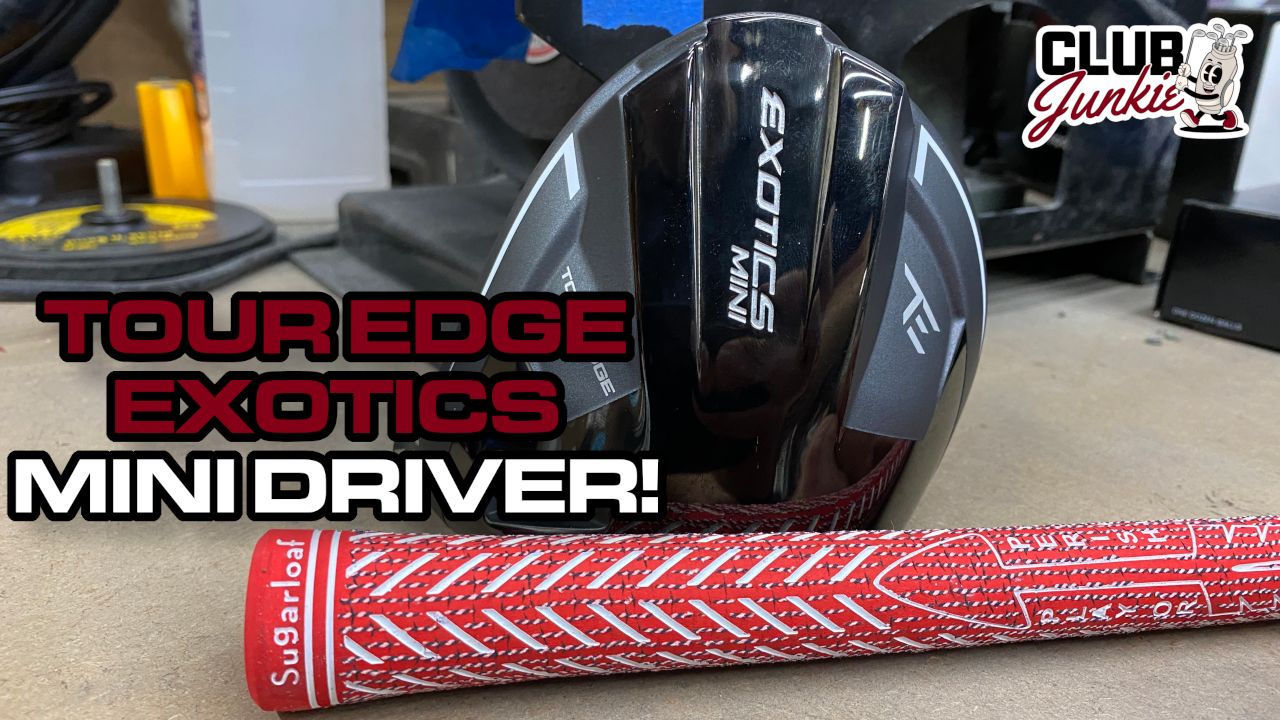
On this episode of Club Junkie, I put the new Tour Edge Exotics Mini Driver to the test and break down the performance, forgiveness, distance, and where it fits compared to a traditional driver or strong fairway wood. If you have been curious about adding a mini driver to the bag, this one is worth a look.
I also dive into the new TaylorMade Spider ZT Max putter that was recently spotted and discuss the growing zero torque putter trend. Plus, there is a closer look at the new Project X Titan Yellow shaft showing up on the PGA Tour and what makes it different from other profiles currently out there.

Justin Rose WITB 2026 (April): Full WITB breakdown with new McLaren irons

What’s the story behind Webb Simpson’s custom-stamped irons?

Memorial Tournament Tour Report: Rory McIlroy, Cameron Young switch up drivers, and more

Cadillac Championship Tour Report: Spieth’s sizable changes, McLaren Golf launches, and more

Russell Henley’s winning WITB: 2026 Charles Schwab Challenge

Kristoffer Reitan’s winning WITB: 2026 Truist Championship

Aaron Rai’s winning WITB: 2026 PGA Championship

J.T. Poston’s winning WITB: 2026 Memorial Tournament

Cameron Young’s winning WITB: 2026 Cadillac Championship

Best irons 2026: Best irons overall, most forgiving irons, and more


Bud Cauley WITB 2026 (June)
Bud Cauley had >14 clubs in his bag when photographed prior to the Memorial Tournament. Driver: Titleist GTS2 (8 degrees) Shaft: Fujikura...


Hannah Green WITB 2026 (June)
Driver: Titleist GTS3 (10 degrees, D4 SureFit setting) Shaft: Mitsubishi Chemical Diamana RB 53 S 3-wood: Titleist GT3 (15 degrees,...


Asterisk Talley WITB 2026 (June)
Driver: TaylorMade Qi4D (9 degrees) Shaft: Fujikura Ventus Blue 6 S 3-wood: TaylorMade Qi4D (16.5 degrees) Shaft: Fujikura Ventus Blue...


Brianna Do WITB 2026 (June)
Driver: Callaway Quantum Triple Diamond (9 degrees) Shaft: KBS PGW 3-wood: Callaway Elyte Titanium (15 degrees) Shaft: KBS PGW 5-wood:...
-
 Equipment6 days ago
Memorial Tournament Tour Report: Rory McIlroy, Cameron Young switch up drivers, and more
-
 News1 week ago
Russell Henley’s winning WITB: 2026 Charles Schwab Challenge
-
 Whats in the Bag3 days ago
J.T. Poston’s winning WITB: 2026 Memorial Tournament
-
 Equipment3 days ago
Best irons 2026: Best irons overall, most forgiving irons, and more
-

 Equipment1 week ago
Details on Jason Day’s latest prototype Avoda iron setup
-

 Equipment3 weeks ago
CJ Cup Byron Nelson Tour Report: Koepka and Kim’s newest putters finally get hot
-

 News2 weeks ago
Charles Schwab Challenge Tour Report: MacIntyre, Åberg and Spaun all switch putters, TaylorMade launches new Spider
-

 Equipment2 weeks ago
Details on J.J. Spaun’s surprise putter switch


david
Mar 8, 2018 at 11:09 am
Thanks Bobby, echoing an above sentiment, this is the ONLY instruction article I’ve read that’s worth reading!
Ray Bennett
Mar 7, 2018 at 4:36 pm
Finally an article on instruction worth reading. True old teachers taught learning impact positions in the short game before moving on to the long game.That is how most professional golfers learnt to play at an early age. Those coming to golf as adults from other sports learn the game from the other end, thinking that if hey can master the long clubs everything else will fall into place. Good luck with that!!
steve
Mar 7, 2018 at 11:45 pm
Adults taking up golf want instant gratification, just like kids. Harvey Penick said it best in his Little Red Book… “Golfers are gullible.”…. and boy does it show up on this gearhead forum.
Bob Jones
Mar 7, 2018 at 11:14 am
Or the tip might describe something you’re already doing but aren’t aware of, and you end up overdoing it and think you shouldn’t do it at all.
Brett Weir
Mar 6, 2018 at 9:09 am
You’re my hero Mr. Clampett.
gord
Mar 6, 2018 at 11:37 am
Is Booby Clampett still a proponent of Homer Kelley’s TGM – the stupidest golf book ever written? :-p
hal
Mar 6, 2018 at 12:21 pm
Real golfers don’t read books…. they find The Secret in the Dirt…. along with pigs and burrowing creatures.
Nick
Mar 8, 2018 at 4:51 pm
I think Clampett does a good job distilling TGM down to key points. The stupidest book ever written is “What Happened” the stupidest golf book was Square to Square.
acew/7iron
Mar 6, 2018 at 7:42 am
The “Secret in the Dirt” is in one of those youtube videos…You just have to find that needle in the haystack.
gord
Mar 6, 2018 at 11:30 am
sure sure… just bury your head in the dirt and hope….
OB
Mar 6, 2018 at 1:42 am
If your body is not athletically conditioned and trained for rotary motion you will never “improve”. You can’t just patch in a golf “tip” for instant success, and no amount of lessons will rescue the golf swing of a decrepit person. That’s the brutal bitter truth.
hal
Mar 6, 2018 at 12:20 pm
‘truth’ on a golf forum? you gotta be sick.