
Opinion & Analysis
Book Review: The Life and Times of Donald Ross


The Life and Times of Donald Ross is a successful golf history, in that it holds one’s attention, regardless of one’s level of enthusiasm or interest for the subject. It can hardly avoid doing so, as it traces the life of a man who lived through both world wars, emigrated from the old country to the new, and championed a sport that grew from infancy to maturity in the USA, during his earthly run. The loss of two wives to uncontrollable circumstances, the raising of a child essentially on his own, and the commitment to the growth of golf as an industry add to the complexity of the life of Donald J. Ross Jr. Within the cover of this tome, through words and images, the life and times of the man are communicated in fine fashion.
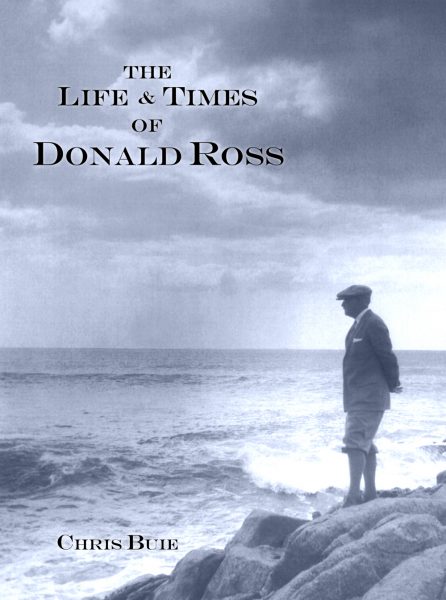
The book was published in 2016, by Chris Buie of Southern Pines, North Carolina. Buie is not a professional writer in the traditional sense. He does not solicit contracts for books, but instead, writes from a place of passion and enthusiasm. This is not to say that he is not a writer of professional quality. Instead, it isolates him among those who turn out high-level prose, scholarly research, with attention-holding results.
Before I opened the book, it was the cover that held my attention for much longer than a single, fleeting moment. The solitary figure, staring out across the ocean. Was he gazing toward the Americas, or toward his birthplace, in Scotland? And that blend of blue shades, like something out of Picasso’s 1901-1904 period of monochromatic azures, proved to be equal parts calming and evocative. Those years, by the way, correlate with the 29th to the 32nd years of Ross’ life. During that period, Ross lost a brother (John) to injuries suffered in the Boer War, and married his first wife, Janet. With care like that for the cover art, what marvelous research awaited within the binding?

After a number of readings, I’m uncertain as to the greater value of the words or the pictures. Perhaps it’s the codependency of one on the other that leads to the success of the effort. The book is the culmination of 5 months of exhaustive research, followed by 7 months of intense writing, on Buie’s part. The author made up his mind to match as many images as possible with his descriptors, so as to create both visual and lexical collections to stand time’s test. Maps, paintings, photos, newspaper clippings, postcards, etchings and course routes were collected and reproduced within the covers. Throughout the process, so much of Ross’s life and craft, previously unrecognized in publication, were revealed to Buie. Ross’s ability to make the unnatural look natural when necessary, is hardly equaled in the annals of golf course architecture. According to Buie,
Growing up all I’d heard was natural. Certainly he incorporated as much of the existing terrain and environment as possible. But given how much other work went into the courses, it would be more accurate to say his courses were naturalistic.
Buie also scrapes away at the misplaced notion that Ross was a one-dimensional golf course architect. After all, what else did Shakespeare do besides write plays and sonnets? Well, Ross did so much more, in addition to building some of the world’s great member and tournament golf courses, shaping the Pinehurst Resort experience, and running an in-town hotel in the process. Again, Buie comments,
His greatest contribution was the role he played in the overall establishment of the game in the United States. He was involved in every aspect (caddymaster, greenkeeper, teacher, player, mentor, tournaments, clubmaking, management, etc). The theme that went through his efforts was that he was adamant all be done “the right way”. Given the breadth and enduring nature of his efforts I don’t think anyone else did more to establish the game in America. That makes him the “Grand Old Man of the American Game” – not just a prolific architect.
What was it about Ross, that separated him from the many compatriots who journeyed from Scotland to the USA? They were content to compete and run golf clubs, but Ross sought so much more. His early years involved much successful competition, including top-10 finishes in the US Open. He was also a competent instructor, manifested in the ability of his students to learn both the swing and its competitive execution. And yet, Pinehurst is so different from any other place in the Americas. And so much of what it is, is due to the influence of Donald Ross.
In a nod to the accepted round of golf across the planet, the book contains 18 chapters, including the appendices. At locomotive pace, the mode of transportation utilized by Ross to traverse the lower 48 of the USA and Canada, the reader gathers a proper awareness of the great man’s living arc. Beginning with the hike from the train station in Boston to the Oakley Country Club, the emigration of the Scotsman from the highlands of Caledonia to the next hemisphere was a fairly simple affair, with unexpected, poignant, and far-reaching consequences. Donald J. Ross, jr., would complete the shaping of american golf that was assisted (but never controlled) by architectural peers. Men like Walter Travis, Albert Tillinghast, Charles Blair Macdonald, Alister MacKenzie and Tom Bendelow would build courses of eternal worth, but none would shape in the far-reaching manner of Ross.
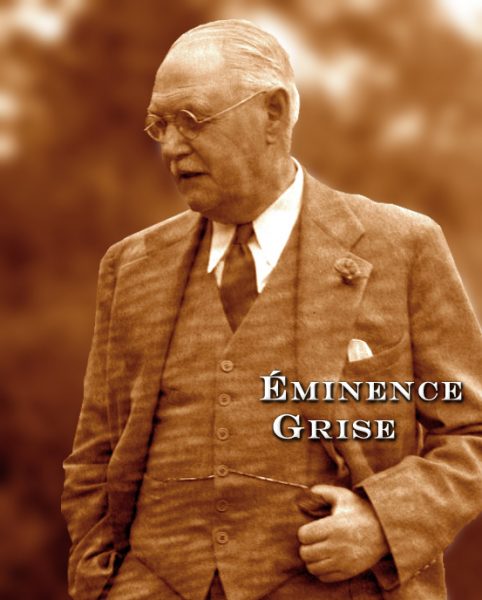
It’s tempting to make a larger portion of this story about Buie, but he wouldn’t have it so. A Pinehurst native, Buie’s blend of reverence and understanding of his home region are evident and undeniable. One almost thinks that a similar history might have been written about any number of characters charged with the stewardship of the Sandhills region of North Carolina. Fortunately for aficionados of golf and its course architecture, Buie is a golfer, and so we have this tome.
Donald J. Ross, jr. was a man of principle, a man of faith, a man of belief. When those beliefs came into conflict with each other, which they seldom did, he had an instinct for elevating one over the other. No other place is this more evident that in his routing of the Sagamore course in Lake George, in the Adirondack mountains of New York state. Faced with the conundrum of how to begin the course, his daughter remembers the sage words of the father. Despite contradicting his belief that a course should never begin in the direction of the rising sun, Ross commented I can’t start it anywhere but looking out at that lake and those mountains. Indeed, Sagamore would be a poorer place for an alternate opening, and this review would have less of a way to reach its end.
My recommendation: read the book.



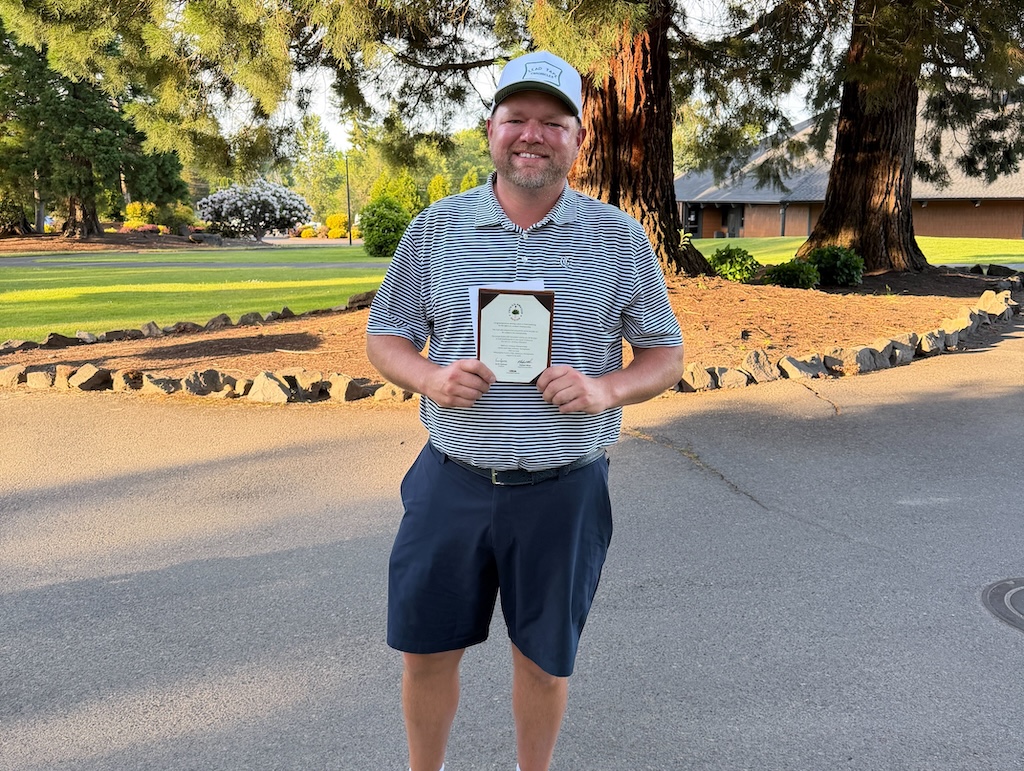
This past Monday, I played in the U.S. Amateur local qualifier at Rock Creek Country Club in Portland, Oregon. A full tee sheet from 7:30 a.m. to 1:55 p.m., the top 11 scores would make it to the U.S. Amateur final qualifying.
I teed off at 10:48 a.m.. With the 7:30 am tee time, you can get a feel for the leaders’ pace, and they were off and running on the challenging setup at Rock Creek.
View this post on Instagram
Getting to the highlight of the round on the par five 17th, a drive up the left side and 212 yards left to the front hole location. I took out a 5-iron with plans of middle of the green. The ball ended up 8 feet left of the hole, pin high. A slight downhill putt dropped in for an eagle 3 on the 17th. With the cut line looking to be anywhere from -2 to even par. This was the boost I had been waiting for all day.
With making par from the trees on 18, it was time to wait for a potential playoff with a posted score of one under par 71.
Three hours later, it was playoff time. 8 players for 6 spots. I made par on the playoff hole, which was good enough to advance to the U.S. Amateur final qualifying in July. USGA qualifiers sure deliver on all of the emotions in golf!
Club Junkie
Building my 2026 gamer WITB: Ranking the contenders and new putter projects – Club Junkie Podcast


The annual What’s In The Bag build is underway, and on this episode of Club Junkie, Brian breaks down the clubs currently leading the race for a spot in his 2026 gamer setup. From drivers and fairway woods to irons, wedges, and shafts, he ranks the equipment that’s performing best and explains what’s separating the front runners from the rest of the field.
Brian also heads into the workshop to discuss several putter projects currently on the bench. From head options and shaft choices to build ideas and testing plans, he shares what he’s working on and which putters could become serious contenders for the bag this season.
If you’re a gear junkie who loves equipment testing, club building, and the never-ending pursuit of the perfect setup, this episode is for you.
Follow Club Junkie:
Instagram: @clubjunkiepod
TikTok: @clubjunkiepod
Threads: @clubjunkiepod
X: @ClubJunkiePod
Club Junkie
Tour Edge Exotics mini driver review + TaylorMade Spider ZT Max first look – Club Junkie

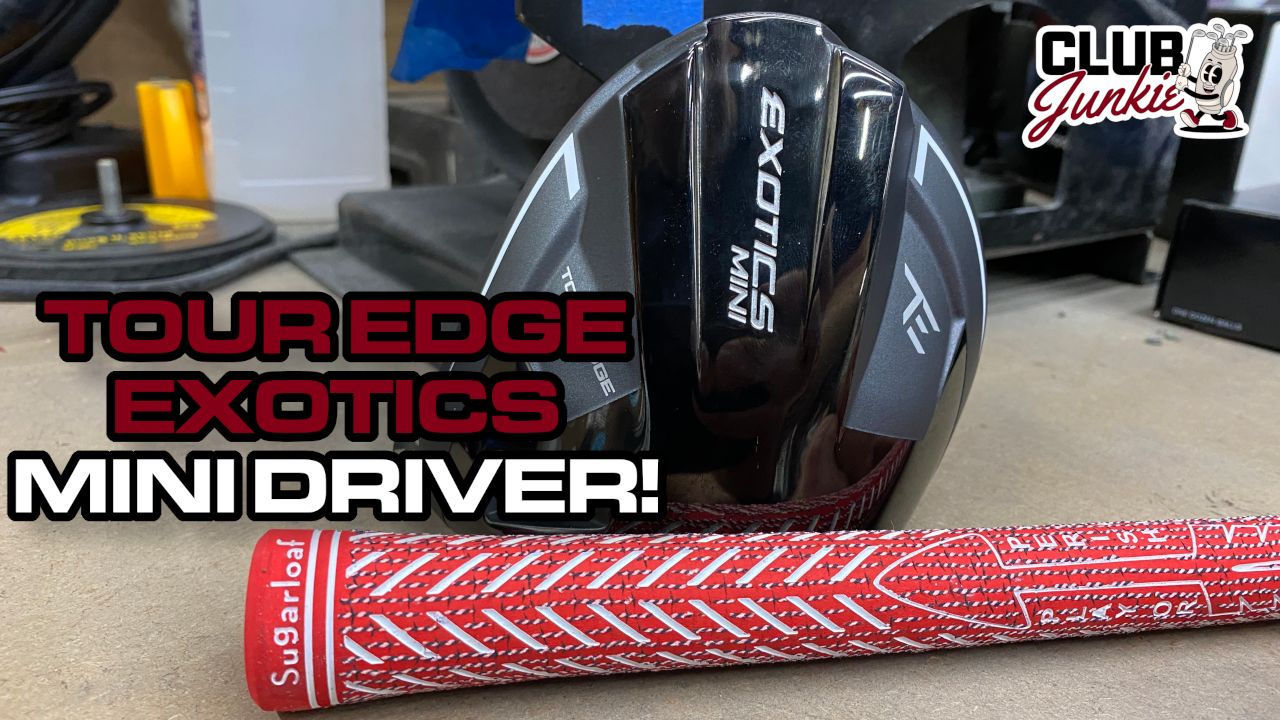
On this episode of Club Junkie, I put the new Tour Edge Exotics Mini Driver to the test and break down the performance, forgiveness, distance, and where it fits compared to a traditional driver or strong fairway wood. If you have been curious about adding a mini driver to the bag, this one is worth a look.
I also dive into the new TaylorMade Spider ZT Max putter that was recently spotted and discuss the growing zero torque putter trend. Plus, there is a closer look at the new Project X Titan Yellow shaft showing up on the PGA Tour and what makes it different from other profiles currently out there.

What’s the story behind Webb Simpson’s custom-stamped irons?

Memorial Tournament Tour Report: Rory McIlroy, Cameron Young switch up drivers, and more

Cadillac Championship Tour Report: Spieth’s sizable changes, McLaren Golf launches, and more

Russell Henley’s winning WITB: 2026 Charles Schwab Challenge

Kristoffer Reitan’s winning WITB: 2026 Truist Championship

Best irons 2026: Best irons overall, most forgiving irons, and more

J.T. Poston’s winning WITB: 2026 Memorial Tournament

Aaron Rai’s winning WITB: 2026 PGA Championship

Cameron Young’s winning WITB: 2026 Cadillac Championship

Details on Jason Day’s latest prototype Avoda iron setup


Christiaan Maas WITB 2026 (June)
Driver: TaylorMade Qi4D LS (8 degrees) Shaft: Fujikura Ventus TR Blue 6 X 3-wood: TaylorMade Qi10 (15 degrees) Shaft: Fujikura Ventus Black...


Ryan Palmer WITB 2026 (June)
Driver: Callaway Quantum Triple Diamond (9 degrees) Shaft: Project X HZRDUS Smoke Blue RDX 60 TX 3-wood: TaylorMade Qi10 (15 degrees) Shaft:...


Bud Cauley WITB 2026 (June)
Bud Cauley had >14 clubs in his bag when photographed prior to the Memorial Tournament. Driver: Titleist GTS2 (8 degrees) Shaft: Fujikura...


Hannah Green WITB 2026 (June)
Driver: Titleist GTS3 (10 degrees, D4 SureFit setting) Shaft: Mitsubishi Chemical Diamana RB 53 S 3-wood: Titleist GT3 (15 degrees,...
-
 Equipment7 days ago
Memorial Tournament Tour Report: Rory McIlroy, Cameron Young switch up drivers, and more
-
 News2 weeks ago
Russell Henley’s winning WITB: 2026 Charles Schwab Challenge
-
 Equipment4 days ago
Best irons 2026: Best irons overall, most forgiving irons, and more
-
 Whats in the Bag4 days ago
J.T. Poston’s winning WITB: 2026 Memorial Tournament
-
 Equipment1 week ago
Details on Jason Day’s latest prototype Avoda iron setup
-
 Equipment3 weeks ago
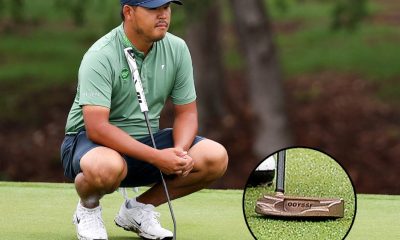
CJ Cup Byron Nelson Tour Report: Koepka and Kim’s newest putters finally get hot
-

 News2 weeks ago
Charles Schwab Challenge Tour Report: MacIntyre, Åberg and Spaun all switch putters, TaylorMade launches new Spider
-

 Equipment2 weeks ago
Details on J.J. Spaun’s surprise putter switch

