
Opinion & Analysis
NASA and Your Golfing Longevity

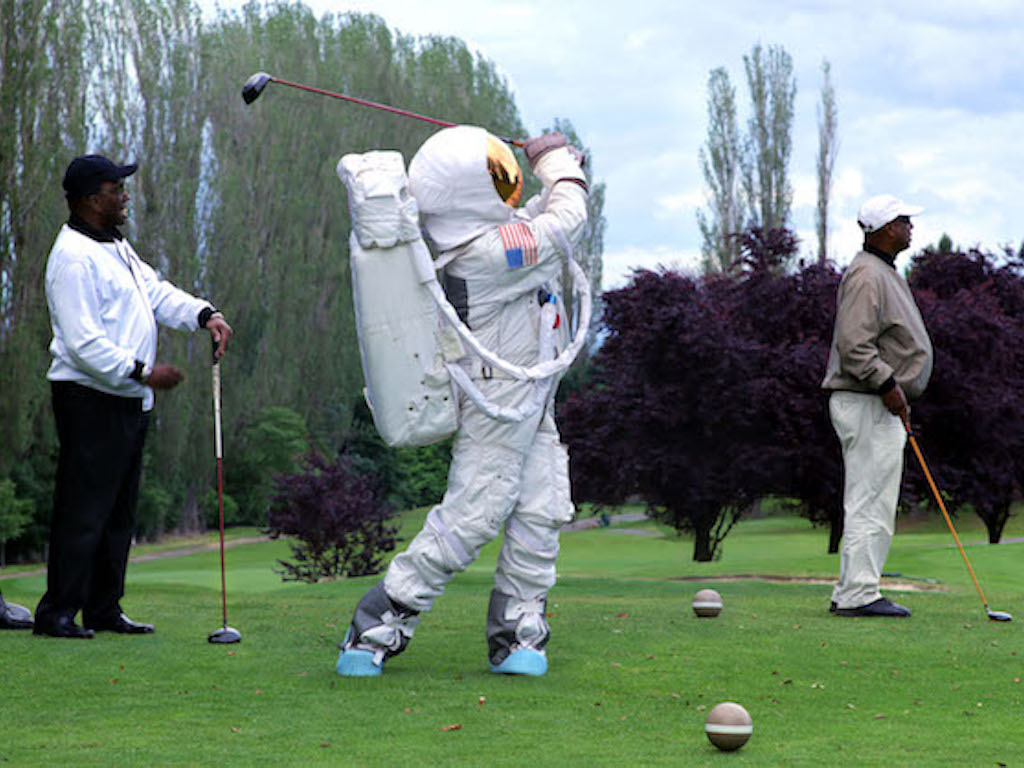
As our lives get longer, we should in theory be getting more years to enjoy golf well into retirement. But this isn’t always the case; too many retirees are being forced to quit the game due to injuries from general wear and tear on the spine and joints.
You would be excused for thinking that the organization that won the space race and put the first man on the moon has absolutely nothing to do with our back, joint injury issues and consequent golfing longevity. But NASA astronauts have been fighting the same musculo-skeletal problems as golfers for years, only in a greatly accelerated manner.
It’s not commonly known that going into space is actually terrible for your spine and joint health. Astronauts, after spending a concentrated amount of time in space, are actually unable to walk off the shuttle when they land. They have to literally be carried off to undergo extensive rehabilitation and often sustain long-term damage to their bodies.
Dr. Carolyn Richardson has spent her working life investigating how gravity affects our health and why this phenomenon occurs in space. Her research with the University of Queensland, European Space Agency and NASA regarding the effect of gravity on our muscles and bones has laid the foundation for finding out why this happens and how to fix it.
Dr. Richardson found that gravity is the key stimulus that our bones and deep muscle system need to provide stability to our limbs, joints and spine. She termed this stimulus Gravity Sensory Information (GSI), and the lack of GSI in space causes the breakdown of the musculo-skeletal system in astronauts. If spending extended periods of time in space, astronauts need to increase GSI as part of their exercise programs in order to maintain their musculo-skeletal health.

Since we aren’t in the habit of boarding space shuttles, you might still be wondering what this has to do with us golfers. Well, it turns out that our modern sedentary lifestyles are essentially replicating the zero-gravity environment of space that is so damaging to astronauts, although it occurs over a much longer period of time here on Earth. When adding the potentially damaging musculo-skeletal load of performing many hours hitting golf balls and certain gym work, it’s a recipe for injuries to spines and joints.
An increasing number of “everyday” activities and popular training programs are significantly reducing the amount of GSI to our bodies and causing a growing number of joint and spinal problems, particularly back pain. Spending more and more time lying on the couch, sitting with poor posture, driving cars, and doing certain kinds of traditional gym training and repetitive skills training (practicing and playing golf) is reducing GSI levels and causing the gradual breakdown of our bodies.

The GravityFit Exercise Model, developed by Dr. Richardson, is based on the principle that gradually increasing GSI to the body can reverse the process of joint and spine degeneration, restore joint stability and strengthen the deep muscle system to improve performance. GravityFit training involves specific slow and controlled movements in good posture while adding low-load resistance to the limbs and spine to increase GSI levels.
This unique system of exercise and rehabilitation has been developed by Dr. Richardson to protect the body against injury and pain and improve musculo-skeletal health in modern life. While providing postural feedback and adding GSI with some simple equipment, you can start with an easy GravityFit walking program and work all the way up to fully functional and complex whole-body movements. From there you can even start getting golf specific, training your posture and golf movement patterns.
I have been using the GravityFit equipment and exercise model for 5 years with my golfers. After seeing the incredibly positive impact it had on the players, I came onboard as an ambassador in 2017 to help spread the message to the wider golfing population.
One of the best examples of how effective the training can be is when I used it with Jonas Blixt to rehab from a career-threatening back injury to a PGA Tour win in just six months. I initially tested Jonas’ baseline posture, stability and balance. Then I prescribed a very simple bodyweight program that used the GravityFit equipment throughout. It helped bring awareness to his posture and movement quality while training his deep stabilizer muscles — especially in his lumbar core (think abs and low back). As he improved in the basic exercises and started experiencing less back discomfort, we gradually progressed the movements and added load to provide more Gravity Sensory Information and balance requirement.
Now pain-free and with a recent PGA Tour win under his belt, Jonas is one of about a dozen U.S. Tour pros who use the GravityFit equipment on a daily basis to keep awareness of good lumbar core while working on shoulder stability and training golf movement patterns. Its simple and intuitive application seems to capture the imagination of golfers, while its scientific backing and quality ensure it isn’t simply a short-term purchase that gets discarded after a few uses.
Click here for more information on GravityFit and how it can help prolong your golfing lifespan. The tailored options for equipment and detailed instructional videos ensure that you can get the right gear and use it with correct form and technique.









This past Monday, I played in the U.S. Amateur local qualifier at Rock Creek Country Club in Portland, Oregon. A full tee sheet from 7:30 a.m. to 1:55 p.m., the top 11 scores would make it to the U.S. Amateur final qualifying.
I teed off at 10:48 a.m.. With the 7:30 am tee time, you can get a feel for the leaders’ pace, and they were off and running on the challenging setup at Rock Creek.
View this post on Instagram
Getting to the highlight of the round on the par five 17th, a drive up the left side and 212 yards left to the front hole location. I took out a 5-iron with plans of middle of the green. The ball ended up 8 feet left of the hole, pin high. A slight downhill putt dropped in for an eagle 3 on the 17th. With the cut line looking to be anywhere from -2 to even par. This was the boost I had been waiting for all day.
With making par from the trees on 18, it was time to wait for a potential playoff with a posted score of one under par 71.
Three hours later, it was playoff time. 8 players for 6 spots. I made par on the playoff hole, which was good enough to advance to the U.S. Amateur final qualifying in July. USGA qualifiers sure deliver on all of the emotions in golf!
Club Junkie
Building my 2026 gamer WITB: Ranking the contenders and new putter projects – Club Junkie Podcast

The annual What’s In The Bag build is underway, and on this episode of Club Junkie, Brian breaks down the clubs currently leading the race for a spot in his 2026 gamer setup. From drivers and fairway woods to irons, wedges, and shafts, he ranks the equipment that’s performing best and explains what’s separating the front runners from the rest of the field.
Brian also heads into the workshop to discuss several putter projects currently on the bench. From head options and shaft choices to build ideas and testing plans, he shares what he’s working on and which putters could become serious contenders for the bag this season.
If you’re a gear junkie who loves equipment testing, club building, and the never-ending pursuit of the perfect setup, this episode is for you.
Follow Club Junkie:
Instagram: @clubjunkiepod
TikTok: @clubjunkiepod
Threads: @clubjunkiepod
X: @ClubJunkiePod
Club Junkie
Tour Edge Exotics mini driver review + TaylorMade Spider ZT Max first look – Club Junkie

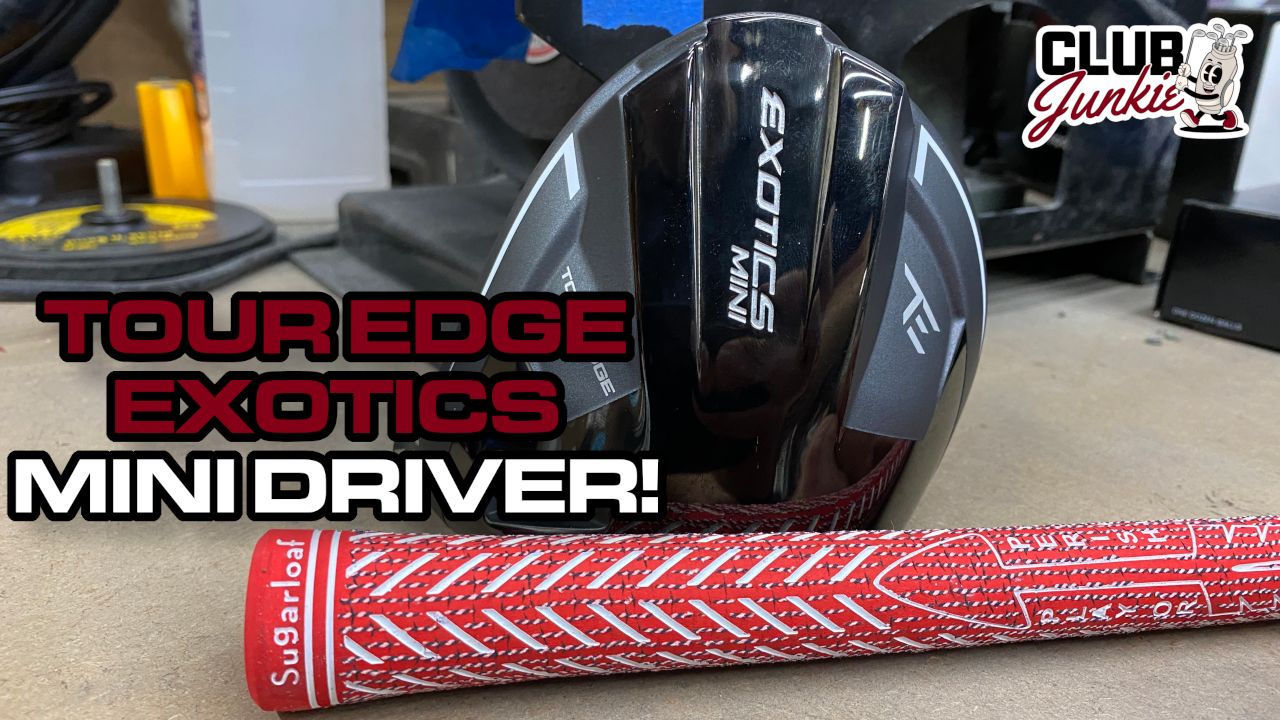
On this episode of Club Junkie, I put the new Tour Edge Exotics Mini Driver to the test and break down the performance, forgiveness, distance, and where it fits compared to a traditional driver or strong fairway wood. If you have been curious about adding a mini driver to the bag, this one is worth a look.
I also dive into the new TaylorMade Spider ZT Max putter that was recently spotted and discuss the growing zero torque putter trend. Plus, there is a closer look at the new Project X Titan Yellow shaft showing up on the PGA Tour and what makes it different from other profiles currently out there.

Justin Rose WITB 2026 (April): Full WITB breakdown with new McLaren irons

What’s the story behind Webb Simpson’s custom-stamped irons?

Memorial Tournament Tour Report: Rory McIlroy, Cameron Young switch up drivers, and more

Cadillac Championship Tour Report: Spieth’s sizable changes, McLaren Golf launches, and more

Russell Henley’s winning WITB: 2026 Charles Schwab Challenge

Kristoffer Reitan’s winning WITB: 2026 Truist Championship

Aaron Rai’s winning WITB: 2026 PGA Championship

Cameron Young’s winning WITB: 2026 Cadillac Championship

J.T. Poston’s winning WITB: 2026 Memorial Tournament

Best irons 2026: Best irons overall, most forgiving irons, and more


Bud Cauley WITB 2026 (June)
Bud Cauley had >14 clubs in his bag when photographed prior to the Memorial Tournament. Driver: Titleist GTS2 (8 degrees) Shaft: Fujikura...


Hannah Green WITB 2026 (June)
Driver: Titleist GTS3 (10 degrees, D4 SureFit setting) Shaft: Mitsubishi Chemical Diamana RB 53 S 3-wood: Titleist GT3 (15 degrees,...


Asterisk Talley WITB 2026 (June)
Driver: TaylorMade Qi4D (9 degrees) Shaft: Fujikura Ventus Blue 6 S 3-wood: TaylorMade Qi4D (16.5 degrees) Shaft: Fujikura Ventus Blue...


Brianna Do WITB 2026 (June)
Driver: Callaway Quantum Triple Diamond (9 degrees) Shaft: KBS PGW 3-wood: Callaway Elyte Titanium (15 degrees) Shaft: KBS PGW 5-wood:...
-
 Equipment6 days ago
Memorial Tournament Tour Report: Rory McIlroy, Cameron Young switch up drivers, and more
-
 News1 week ago
Russell Henley’s winning WITB: 2026 Charles Schwab Challenge
-
 Whats in the Bag3 days ago
J.T. Poston’s winning WITB: 2026 Memorial Tournament
-
 Equipment3 days ago
Best irons 2026: Best irons overall, most forgiving irons, and more
-

 Equipment1 week ago
Details on Jason Day’s latest prototype Avoda iron setup
-

 Equipment3 weeks ago
CJ Cup Byron Nelson Tour Report: Koepka and Kim’s newest putters finally get hot
-

 News2 weeks ago
Charles Schwab Challenge Tour Report: MacIntyre, Åberg and Spaun all switch putters, TaylorMade launches new Spider
-

 Equipment2 weeks ago
Details on J.J. Spaun’s surprise putter switch


Bob Jones
Dec 4, 2017 at 11:57 am
Sitting is the new smoking.