
Opinion & Analysis
The Kids Are Alright: Spike in Junior Golf Participation a Good Sign for Game’s Future

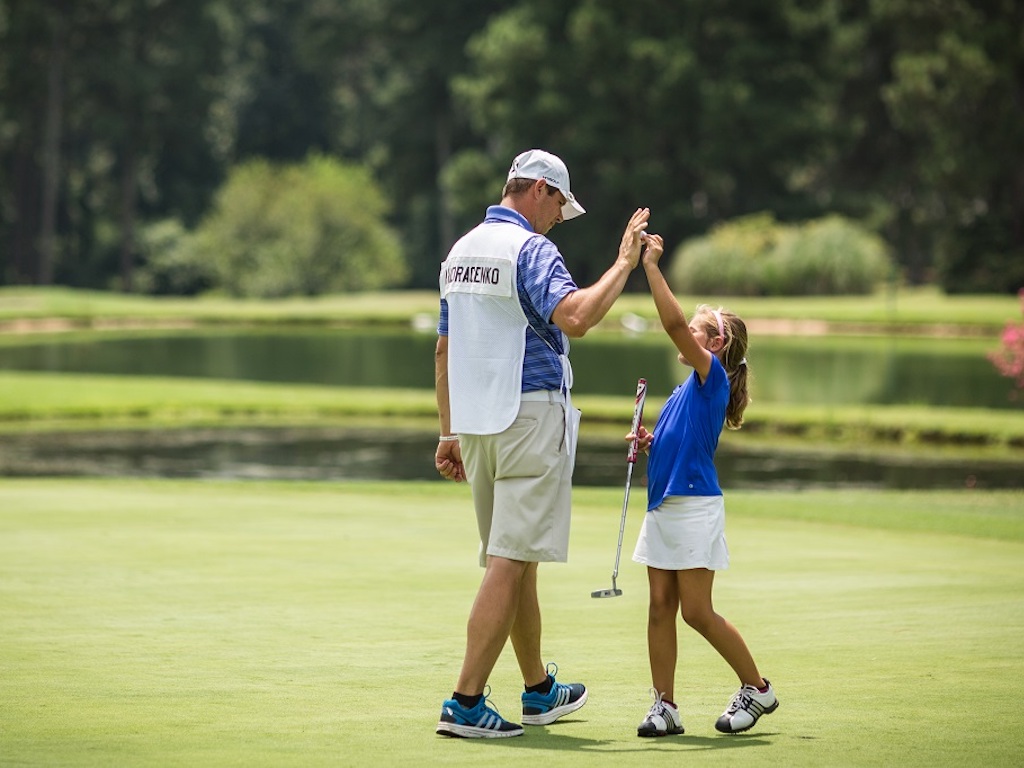
This week, eight 10-player All-Star teams representing regions from across the country will converge upon Grayhawk Golf Club in Scottsdale, Ariz., to compete in the 6th PGA Junior League Championship.
The teams – New Hampshire (Northeast), California (West), Georgia (Southeast), Ohio (Mideast), Illinois (Midwest), New Jersey (Mid-Atlantic), Arkansas (Mississippi Valley), and Texas (Southwest) – will be divided into two divisions where they will face off in round-robin, 9-hole matches using a two-person, scramble format of play. Teams are captained by PGA/LPGA Professionals.
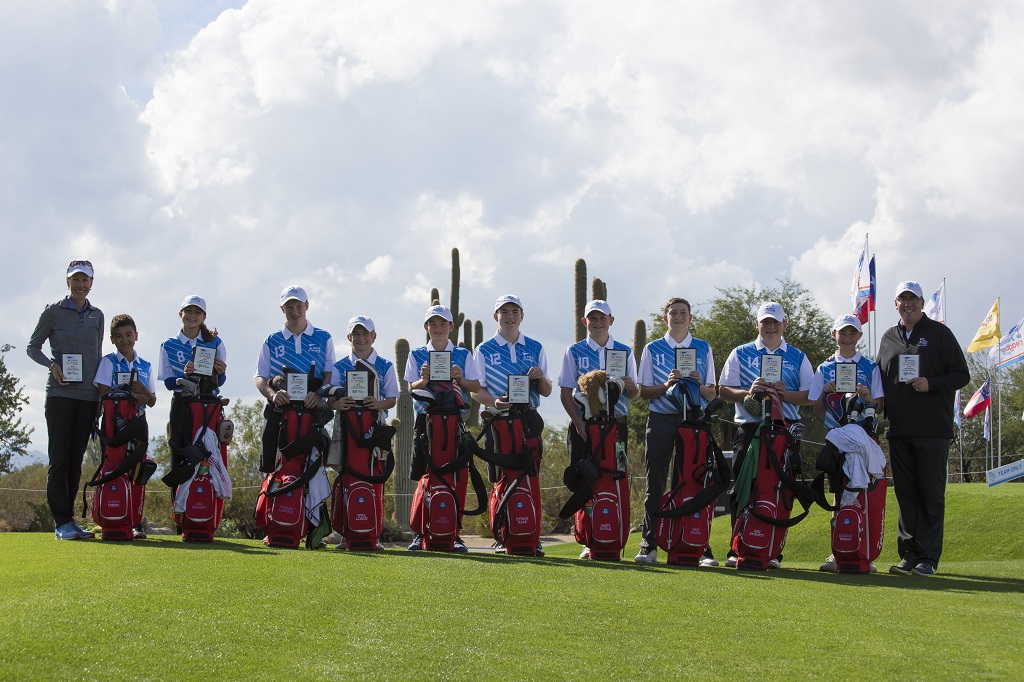
Since the PGA of America launched PGA Junior League in 2012, participation has skyrocketed from about 1,800 players the first year to a record-setting 42,000 boys and girls age 13 and under participating on 3,400 teams across the country this year.
“Junior golf is a key priority of the PGA of America and we recognize that increasing youth participation in the game is essential to the future of our industry and sport,” said Suzy Whaley, PGA of America Vice President and PGA Director of Instruction at Suzy Whaley Golf in Connecticut.
“PGA Jr. League is a fun and welcoming opportunity for boys and girls of all backgrounds and skill levels to learn, play, and love golf under the expert instruction and guidance of PGA and LPGA Professionals. It’s team-oriented and kids wear numbered jerseys. It’s transforming traditional junior golf and the numbers prove it.”
Whaley believes the team concept and scramble format are major factors in PGA Jr. League’s rapid growth over the last five years. In fact, she says, the program is re-shaping the golf industry’s view of the way junior golf is typically learned and played.
“Other youth sports have been utilizing the team format for years and it’s a natural fit for golf,” said Whaley, who has taken three teams to the Jr. League Championships. “The scramble format provides for a low-pressure environment. We’ve created a team atmosphere that has broad appeal. Parents and kids enjoy being a part of the community that PGA/LPGA Professional Captains create. In this team setting, older, more experienced players mentor the younger, beginner golfers. There’s no pressure on any one player, and it’s great to see kids pull for one another versus the individual focus generally associated with golf.”
“It is a program that creates a family-centered atmosphere that encourages mom, dad, brothers, sisters, and grandparents to become involved, as well. During PGA Jr. League matches, the parents are part of the match keeping score, posting photos on social media and encouraging all players. PGA Jr. League grows lifetime interest in the game across multiple generations.”

Matthew Doyle of the Connecticut team gathers for a photo with team captain, Suzy Whaley during session three for the 2016 PGA jr. League Golf Championship presented by National Rental Car held at Grayhawk Golf Club on November 20, 2016 in Scottsdale, Arizona. (Photo by Traci Edwards/PGA of America)
Fourteen-year-old Cullen Laberge from Farmington, Conn., is a student in the Suzy Whaley Golf program and has competed at the PGA Jr. League Championships for Team Connecticut. Laberge has been playing for four years and says his Jr. League experience really sparked his interest in the game and his desire to become a better player and ultimately a golf teacher one day.
“It has taught me so much about golf, while keeping it fun and interesting,” Laberge said. “The thing I enjoy the most is playing competitive golf without the stress that tournament golf can sometimes bring. No matter age or skill level, Jr. League keeps it fun and no matter how a player is playing there is another player to pick them up. That national championship was the best experience of my life. It was like I was playing on the PGA Tour. I loved the amazing competition; those players were good.”

And it’s not just golf’s executives and Jr. League participants who have taken notice of the program’s growth and the ultimate importance that growth represents for the future of the game. PGA and LPGA professionals including Rory McIlroy, Ricky Fowler, Lexi Thompson and Michelle Wie have all joined as ambassadors for the program.
“I want to do everything I can to be a positive influence on kids who are interested in the game and serving as an ambassador for PGA Jr. League is a great fit,” said Wie. “There are so many lessons that kids can learn and that adults can reinforce through the game of golf – good sportsmanship, honesty, integrity, work ethic. Golf can help you learn how to react when things don’t go your way which I think is a really important skill to have in life.”
“Golf can definitely mirror life. You can work incredibly hard and still fall short, but how do you bounce back? How do you overcome a mistake or a bad break and still succeed? It’s important for kids to grow up with a good work ethic and the right attitude to face challenges. Golf is a great game to teach those lessons.”

Copyright Picture : Mark Pain / IMG (www.markpain.com)
Wie says the more inclusive and welcoming the golf community in general can be, the better.
“Especially as a young female, I have experienced plenty of times where I did not feel welcome or felt like I had to prove myself more than the guys did,” Wie said. “Golf is a game that should be available to everyone and I think it’s important to make it accessible to kids whether they are a future tour pro or a future 20-handicapper.”
The folks over at the USGA know a thing or two about growing the game and making it more accessible and they should, they’ve been doing it since the association’s founding in 1894.
The inaugural three USGA championships – the U.S. Open, U.S. Amateur and U.S. Women’s Amateur in 1895 – did not have age limits, each simply aiming to identify the champion golfer. In 1948, the USGA held the first United States Junior Amateur solely open to players under the age of 18 and just one year later the association conducted the first United States Girls’ Junior Championship.
In addition to helping fund The First Tee, LPGA-USGA Girls Golf, and the Drive, Chip and Putt Championships, the USGA recently introduced its “For the Good of the Game” grant program to promote a more welcoming and accessible game at the local level with millions of dollars offered to local communities to build programs.
“The greatest misperception is accessibility,” says Beth Major, Director of Community Outreach at the USGA. “Two-thirds of all golf courses in America are open to the public. Kids and parents still believe it is a country club sport and we need to change that.”
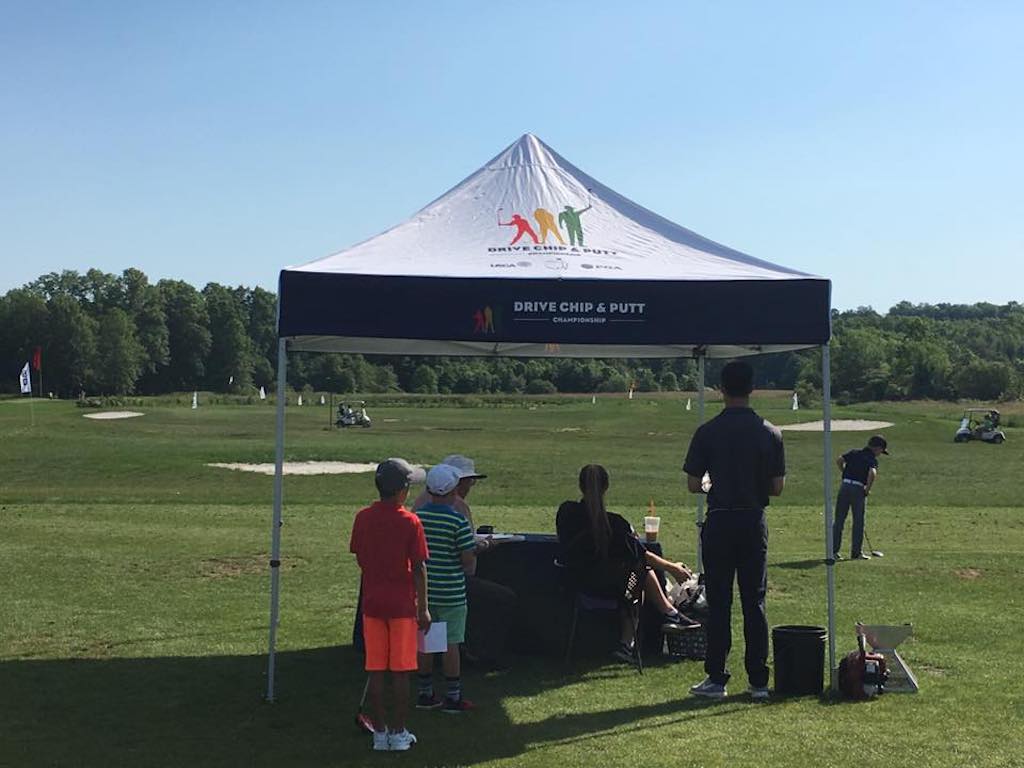
Founded in 2013 as a joint initiative between the USGA, the Masters Tournament, and the PGA of America, the Drive, Chip and Putt Championship is a free nationwide junior golf competition for boys and girls ages 7-15 aimed at growing the game. Participants who advance through local, sub-regional and regional qualifying earn a place in the National Finals, which is conducted the Sunday before The Masters at Augusta National Golf Club.
Drive, Chip and Putt qualifying is offered in all 50 states and participation in the event has increased each year.
“We have a great partnership with our friends at the PGA of America and the Masters Tournament,” Major said. “Our leaders realized that by pooling our resources at the national level while activating at the local level, we could quickly scale the program and get more kids involved.”
“Going into our sixth year, it is amazing to see how far the program has grown and the entry point we’ve created together to keep our youth engaged. We look forward to continuing to evolve the program to welcome more youth to the sport.”
The USGA, in partnership with the LPGA, the Masters Tournament, the PGA of America, and the PGA TOUR, founded The First Tee in 1997 specifically to answer the call for diversity and inclusion. The program has welcomed millions of new players to the game in the past 20 years by focusing not only on teaching golf skills but life and social skills such as etiquette, honesty, respect, confidence and responsibility.

Founded in 1989, the LPGA-USGA Girls Golf program is aimed at girls ages 6-17 and has played a critical role in not only welcoming girls and women to the game, but perhaps equally importantly keeping them in the game.
“Statistics continually show us that the social aspects of the game drive girls and women to play golf,” Major said. “That sense of camaraderie and building friends greatly outweighs their need to compete at the entry level. LPGA-USGA Girls Golf, quite simply, has made it fun and cool for girls to play – and play together. And the results are astounding. We have traced more than 100 girls who started in an LPGA-USGA Girls Golf program that played in a USGA championship last year. They have not only introduced the game to girls and young women, they kept them in the game, and that is very exciting and inspiring.”
One company is tackling growth of the game from another angle – the equipment side.
Since its very beginning back in 1997, U.S. Kids Golf has been focused on its mission, “To help kids have fun learning the lifelong game of golf and to encourage family interaction that builds lasting memories.”
To that end, the company began developing youth clubs starting out with just three sizes and one product line initially.
“Over time, through watching youth golfers, we came to realize that we were not serving them as well as we would like,” said Dan Van Horn, U.S. Kids Golf founder. “Looking at how the best players in the world – LPGA and PGA Tour – are fit for clubs, we discovered the proportion of their drive length to height was from 60-70 percent. From that we created what we term the ‘2/3 solution.’ Simply put, for every 3 inches a player grows, we offer a set that has a driver that is 2 inches longer.”
Importantly, it is not just the length of the clubs that increase as the player grows but also the overall club weight, grip size and shaft stiffness. At the same time, the loft on woods decreases providing additional distance.
“One of the key benefits of correctly fit clubs that are lightweight is the ability for players to learn a correct and powerful swing at a young age,” Van Horn said. “Clubs that are too long and/or heavy slows the golf swing itself and creates bad habits that are difficult to change later in life.”
Beyond the importance of young golfers needing properly fit equipment, Van Horn believes strongly in the need for juniors to compete in tournament play to facilitate aspirational goals and to measure progress. Going hand in hand with this is proper instruction from coaches who understand how young players learn and develop.

“After a few years of producing equipment, we realized more needed to be done to serve our market so we formed a nonprofit foundation,” Van Horn said. “Immediately we created our World Championship in 2000 so that young golfers would have an aspirational goal, much like the Little League World Series is to baseball players. We also realized that golf professionals and coaches lacked an organized incentive-based learning program to truly engage players in the game so we created one that same year.”
A longtime proponent of having players play from appropriate yardages, U.S. Kids Golf developed the Longleaf Tee System which uses a mathematical formula to “scale” any golf course for up to eight different tee locations per hole so all players have options based upon how far they carry the ball with a driver. Yardages start at 3,200 yards for 18 holes and increase up to Tour distances of 7,400 yards.
“What we need is a focus by all golf facilities and coaches to provide quality, enjoyable experiences to our youth,” Van Horn said. “This means incorporating game-based learning with a measurable, learning program so that players and their parents know how they are progressing. And, of course, shorter tees need to be available so we can get kids on a ‘field’ that fits them like other sports. There’s no question it can be done.”
The National Golf Foundation’s annual report for 2016 revealed that participation in junior golf programs remained steady at 2.9 million likely due in part to the success of the programs mentioned above and others just like them. Importantly, the number of female junior golfers has increased to a third of all participants and the number of non-Caucasion players has risen to a quarter, four times what it was a couple of decades ago.
While time will ultimately judge whether these programs and offerings serve not only to retain current players but continue to attract new ones, the state of junior golf in the country appears strong and on the right track for now.
To Learn More



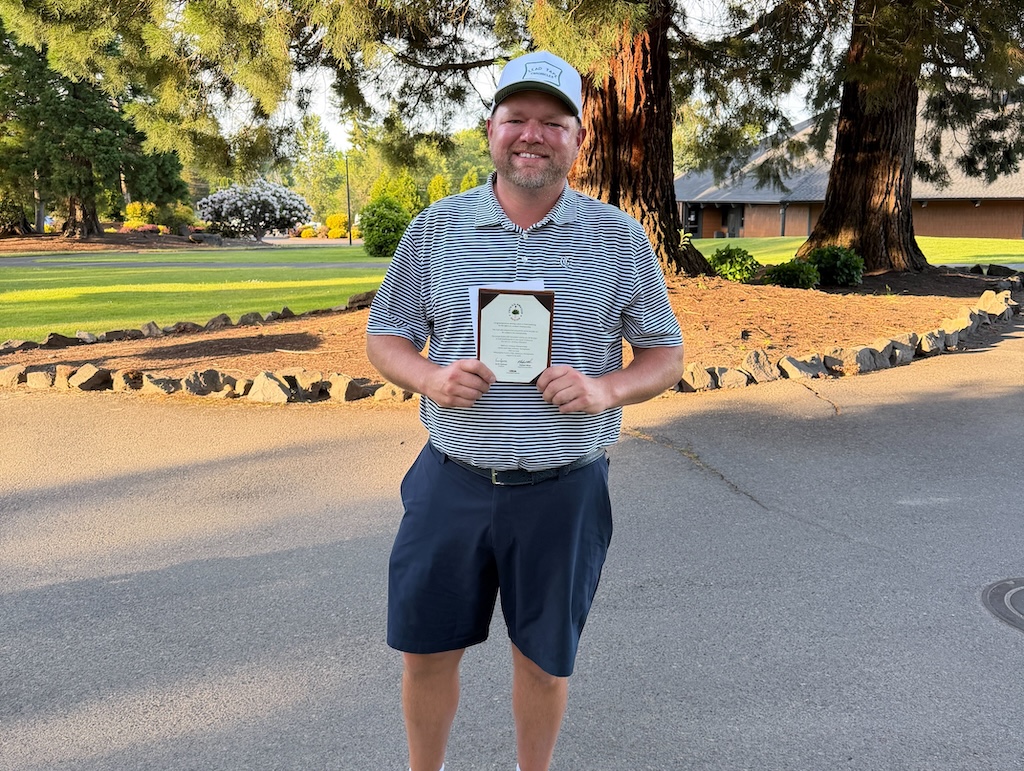
This past Monday, I played in the U.S. Amateur local qualifier at Rock Creek Country Club in Portland, Oregon. A full tee sheet from 7:30 a.m. to 1:55 p.m., the top 11 scores would make it to the U.S. Amateur final qualifying.
I teed off at 10:48 a.m.. With the 7:30 am tee time, you can get a feel for the leaders’ pace, and they were off and running on the challenging setup at Rock Creek.
View this post on Instagram
Getting to the highlight of the round on the par five 17th, a drive up the left side and 212 yards left to the front hole location. I took out a 5-iron with plans of middle of the green. The ball ended up 8 feet left of the hole, pin high. A slight downhill putt dropped in for an eagle 3 on the 17th. With the cut line looking to be anywhere from -2 to even par. This was the boost I had been waiting for all day.
With making par from the trees on 18, it was time to wait for a potential playoff with a posted score of one under par 71.
Three hours later, it was playoff time. 8 players for 6 spots. I made par on the playoff hole, which was good enough to advance to the U.S. Amateur final qualifying in July. USGA qualifiers sure deliver on all of the emotions in golf!
Club Junkie
Building my 2026 gamer WITB: Ranking the contenders and new putter projects – Club Junkie Podcast

The annual What’s In The Bag build is underway, and on this episode of Club Junkie, Brian breaks down the clubs currently leading the race for a spot in his 2026 gamer setup. From drivers and fairway woods to irons, wedges, and shafts, he ranks the equipment that’s performing best and explains what’s separating the front runners from the rest of the field.
Brian also heads into the workshop to discuss several putter projects currently on the bench. From head options and shaft choices to build ideas and testing plans, he shares what he’s working on and which putters could become serious contenders for the bag this season.
If you’re a gear junkie who loves equipment testing, club building, and the never-ending pursuit of the perfect setup, this episode is for you.
Follow Club Junkie:
Instagram: @clubjunkiepod
TikTok: @clubjunkiepod
Threads: @clubjunkiepod
X: @ClubJunkiePod
Club Junkie
Tour Edge Exotics mini driver review + TaylorMade Spider ZT Max first look – Club Junkie

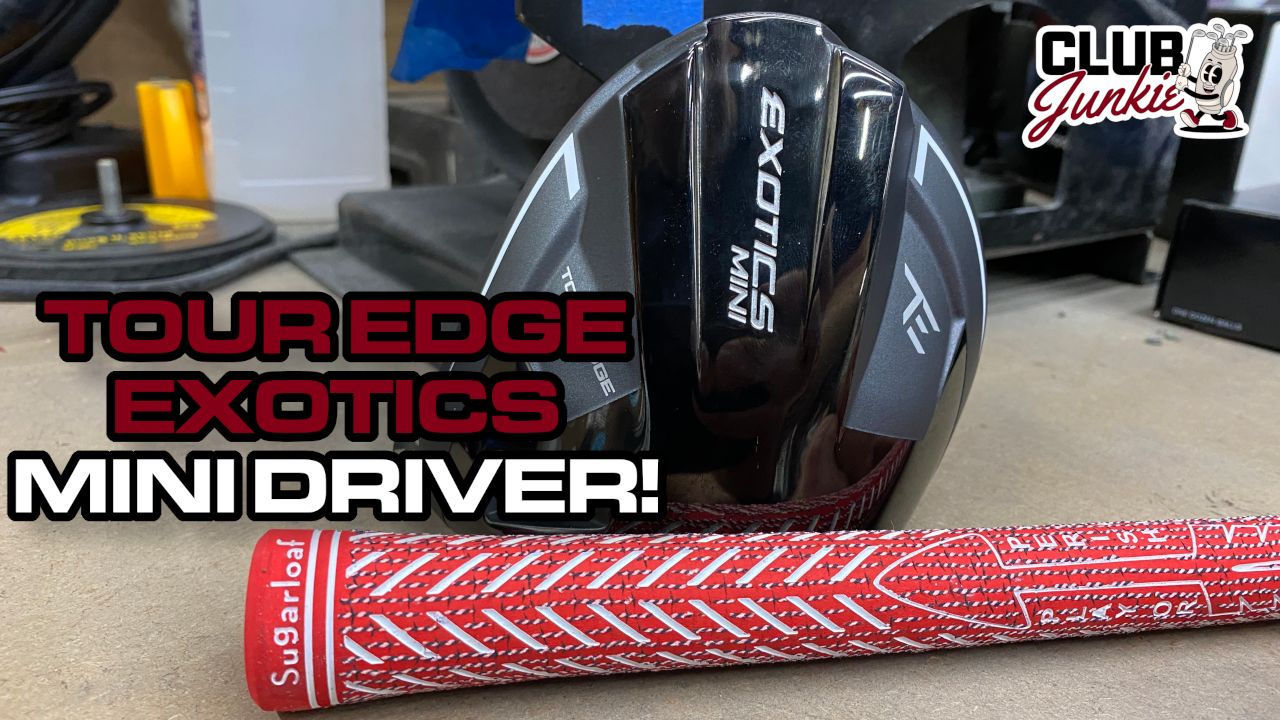
On this episode of Club Junkie, I put the new Tour Edge Exotics Mini Driver to the test and break down the performance, forgiveness, distance, and where it fits compared to a traditional driver or strong fairway wood. If you have been curious about adding a mini driver to the bag, this one is worth a look.
I also dive into the new TaylorMade Spider ZT Max putter that was recently spotted and discuss the growing zero torque putter trend. Plus, there is a closer look at the new Project X Titan Yellow shaft showing up on the PGA Tour and what makes it different from other profiles currently out there.

What’s the story behind Webb Simpson’s custom-stamped irons?

Memorial Tournament Tour Report: Rory McIlroy, Cameron Young switch up drivers, and more

Cadillac Championship Tour Report: Spieth’s sizable changes, McLaren Golf launches, and more

Russell Henley’s winning WITB: 2026 Charles Schwab Challenge

Kristoffer Reitan’s winning WITB: 2026 Truist Championship

Best irons 2026: Best irons overall, most forgiving irons, and more

J.T. Poston’s winning WITB: 2026 Memorial Tournament

Aaron Rai’s winning WITB: 2026 PGA Championship

Cameron Young’s winning WITB: 2026 Cadillac Championship

Details on Jason Day’s latest prototype Avoda iron setup


Christiaan Maas WITB 2026 (June)
Driver: TaylorMade Qi4D LS (8 degrees) Shaft: Fujikura Ventus TR Blue 6 X 3-wood: TaylorMade Qi10 (15 degrees) Shaft: Fujikura Ventus Black...


Ryan Palmer WITB 2026 (June)
Driver: Callaway Quantum Triple Diamond (9 degrees) Shaft: Project X HZRDUS Smoke Blue RDX 60 TX 3-wood: TaylorMade Qi10 (15 degrees) Shaft:...


Bud Cauley WITB 2026 (June)
Bud Cauley had >14 clubs in his bag when photographed prior to the Memorial Tournament. Driver: Titleist GTS2 (8 degrees) Shaft: Fujikura...


Hannah Green WITB 2026 (June)
Driver: Titleist GTS3 (10 degrees, D4 SureFit setting) Shaft: Mitsubishi Chemical Diamana RB 53 S 3-wood: Titleist GT3 (15 degrees,...
-
 Equipment7 days ago
Memorial Tournament Tour Report: Rory McIlroy, Cameron Young switch up drivers, and more
-
 News2 weeks ago
Russell Henley’s winning WITB: 2026 Charles Schwab Challenge
-
 Equipment4 days ago
Best irons 2026: Best irons overall, most forgiving irons, and more
-
 Whats in the Bag4 days ago
J.T. Poston’s winning WITB: 2026 Memorial Tournament
-
 Equipment1 week ago
Details on Jason Day’s latest prototype Avoda iron setup
-

 Equipment3 weeks ago
CJ Cup Byron Nelson Tour Report: Koepka and Kim’s newest putters finally get hot
-

 News2 weeks ago
Charles Schwab Challenge Tour Report: MacIntyre, Åberg and Spaun all switch putters, TaylorMade launches new Spider
-

 Equipment2 weeks ago
Details on J.J. Spaun’s surprise putter switch

