
Opinion & Analysis
4 Critical Fitness Tests to Compare Yourself to the Pros


We’ve all seen a slow-motion swing analysis of a PGA Tour golfer on TV; inevitably, the commentators say something about how flexible the player is, which is why they can make that huge turn and generate so much speed. They almost always follow it up with something like, “This ability to turn is what separates these guys from most amateurs.”
What does this even mean? Where do the pros turn from that we can’t? Don’t they have the same anatomy as us amateurs? Do they have special joints that allow them to do this?
We are going to answer all these questions. By the end of this article, you will know and understand how pros create that much turn. You’ll also learn what 4 major areas you can test yourself on to see where you can improve, as well as how you compare to the pros on Tour.
All the research done on the best golfers in the world has led to some very interesting findings, the most important of which for us are these four statistics:
- Most professionals can turn their thoracic spine (most instructors call this a “shoulder turn”) at least 60 degrees
- Most can rotate their hip internally at least 45 degrees
- Most can externally rotate their shoulder beyond spine angle when in golf posture
- Most can touch their chin to their collarbone
I intentionally use the qualifier “most” because there are some professionals that struggle in some of these areas, but they’re are able to overcome deficits with compensations. Just because you can pass these tests doesn’t mean you’ll play on Tour, but if you can pass these tests it means you have the flexibility and mobility to achieve the positions necessary in the golf swing for it to be repeatable, consistent, powerful and pain-free.
If you fail any of the following tests, I would strongly recommend you be careful when taking your next lesson to make sure that the professional working with you knows your restrictions. If they do not and they try to get you into certain positions, it often ends poorly for both of you. You can end up hurting yourself… and the professional loses a potential repeat client. Not to mention your golf swing and scores will probably not get much better.
Test 1: Seated Trunk Rotation
Seated in a chair, cross your arms across your chest so that your hands are resting on your shoulders. Rotate your torso to the right and then the left keeping your knees together. Your goal is to rotate 60 degrees in each direction.
If you cannot reach 60 degrees, the absolute minimum to swing safely is 45 degrees. If you are at 45 or below, you are in serious risk of injury and are going to have a very hard time getting into the most efficient and effective positions in the golf swing. The most common swing faults seen with people who have this limitation are loss of posture and standing up in the backswing. There are others, but these are the most common. The most common injury associated with golfers who fail this test are low back pain because the body tries to use the low back to make up for the lack of motion in the upper back.
Test 2: Seated Hip Rotation
Seated in a chair with feet flat on the ground and knees bent to 90 degrees, rotate your lower leg out to the side attempting to have your shin angle reach 45 degrees without shifting, lifting or leaning of the body.
Common swing faults with golfers who fail this test are swaying and sliding (aka lots of lateral movement in the swing), as well as all of the loss of posture issues. If you cannot reach the 45 degrees seated, then you likely are not achieving full hip rotation in your swing. You need — at a minimum in our experience — at least 35 degrees on both sides to have a chance at swinging safely and efficiently. At 35 degrees, setup changes such a flaring your feet out sometimes are enough to make up for the tightness.
As above, make sure your instructor knows if you fail this test so they can help you make the technical adjustments necessary. It is also VERY important to note that failing this test is the No. 1 predictor for low back pain in golfers. Just as with the upper back, if the hip is not rotating, the body often resorts to the low back to make up for the lack of rotation.
If you are seeing a trend here, you are smarter than most doctors. Low back pain in golfers is rarely an actual back problem when it starts. It’s most often caused by other areas in the body being limited and the body overusing the low back to compensate. If you can improve your rotary ability, you can GREATLY reduce your chance of injury.
Test 3: Shoulder Rotation Test in Posture
Standing in golf posture with elbows raised to the side to shoulder height, attempt to rotate your arms backward as shown in picture. Your goal is that they rotate past spine angle without your lower back arching.
The low back arching is the most common compensation seen (again demonstrating that if your back hurts, you probably don’t have a back problem, but an issue somewhere else in your body that is increasing stress on the back). Common swing faults seen with failed shoulder tests are chicken winging and flying elbows, as well as poor posture and difficulty being on the proper plane. In addition to back injuries, elbow and wrist pain are very common injuries with origins in the failure of this test.
Test 4: Neck Rotation Test
Seated in a chair, rotate your chin to touch your collar bone. Keep your mouth closed and do NOT shrug your shoulder.
What if you failed this test? What swing problems could you see? Perhaps the most common swing deficit with a failed neck rotation test is trouble not swaying and sliding laterally during the golf swing. Other possible swing issues that arise are standing up out of posture or having to use other body parts excessively to compensate.
While neck limitations are not common with golfers under 50 unless there is a history of traumatic injury, they are a LOT more common that you would think in the senior population. If you try to increase your “shoulder turn” in your golf swing but have an undiscovered lack of neck rotation, you are setting yourself up for potential disaster in terms of injury and most definitely performance. Neck limitations are probably one of the least-talked-about issues plaguing the majority of our senior golf population, yet they’re so easy to discover.
What Next?
This is a logical progression in your mind. You took the above tests and figured out you have some problems. Now you want to know what to do to fix them, right? Let us know how you did by emailing us at [email protected] with your results and we’d be happy to send you a simple fix or two for any tests you had issues with. We’re looking forward to helping you play better, swing faster and hurt less.




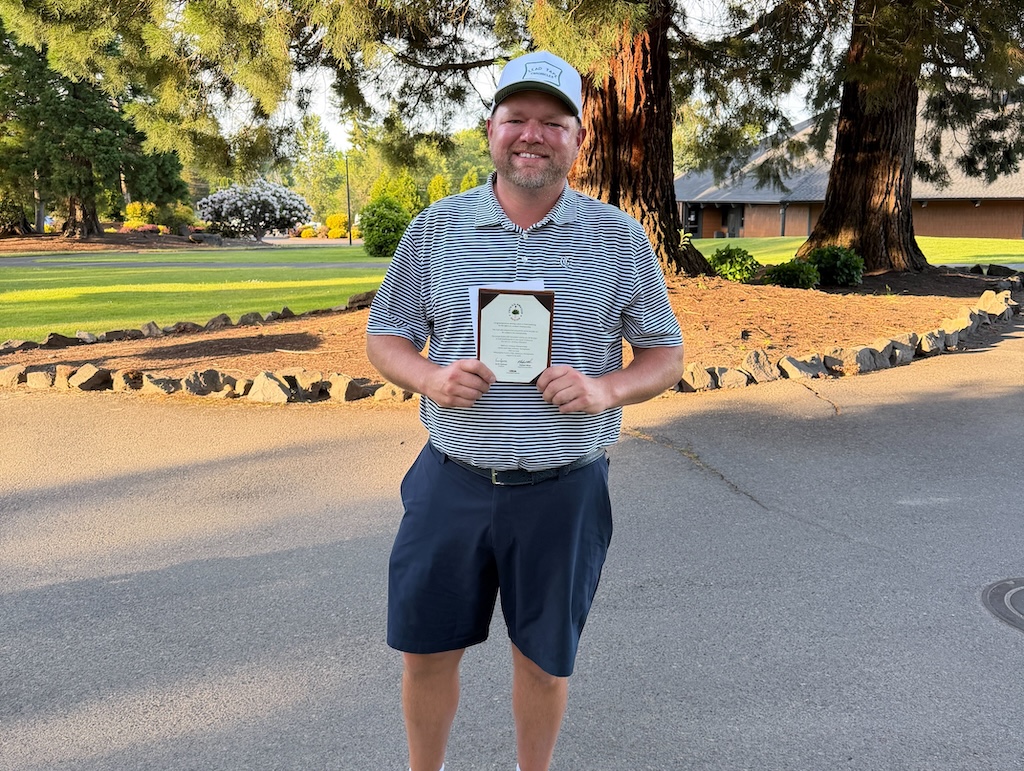
This past Monday, I played in the U.S. Amateur local qualifier at Rock Creek Country Club in Portland, Oregon. A full tee sheet from 7:30 a.m. to 1:55 p.m., the top 11 scores would make it to the U.S. Amateur final qualifying.
I teed off at 10:48 a.m.. With the 7:30 am tee time, you can get a feel for the leaders’ pace, and they were off and running on the challenging setup at Rock Creek.
View this post on Instagram
Getting to the highlight of the round on the par five 17th, a drive up the left side and 212 yards left to the front hole location. I took out a 5-iron with plans of middle of the green. The ball ended up 8 feet left of the hole, pin high. A slight downhill putt dropped in for an eagle 3 on the 17th. With the cut line looking to be anywhere from -2 to even par. This was the boost I had been waiting for all day.
With making par from the trees on 18, it was time to wait for a potential playoff with a posted score of one under par 71.
Three hours later, it was playoff time. 8 players for 6 spots. I made par on the playoff hole, which was good enough to advance to the U.S. Amateur final qualifying in July. USGA qualifiers sure deliver on all of the emotions in golf!
Club Junkie
Building my 2026 gamer WITB: Ranking the contenders and new putter projects – Club Junkie Podcast

The annual What’s In The Bag build is underway, and on this episode of Club Junkie, Brian breaks down the clubs currently leading the race for a spot in his 2026 gamer setup. From drivers and fairway woods to irons, wedges, and shafts, he ranks the equipment that’s performing best and explains what’s separating the front runners from the rest of the field.
Brian also heads into the workshop to discuss several putter projects currently on the bench. From head options and shaft choices to build ideas and testing plans, he shares what he’s working on and which putters could become serious contenders for the bag this season.
If you’re a gear junkie who loves equipment testing, club building, and the never-ending pursuit of the perfect setup, this episode is for you.
Follow Club Junkie:
Instagram: @clubjunkiepod
TikTok: @clubjunkiepod
Threads: @clubjunkiepod
X: @ClubJunkiePod
Club Junkie
Tour Edge Exotics mini driver review + TaylorMade Spider ZT Max first look – Club Junkie

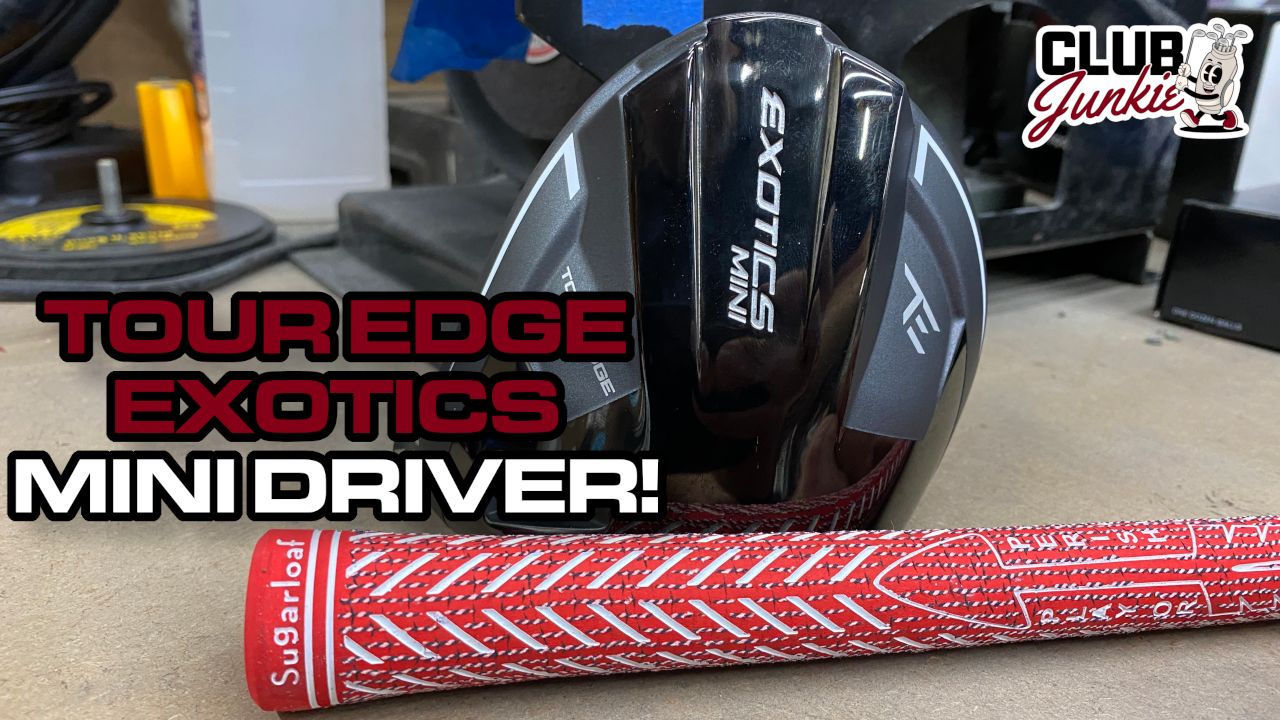
On this episode of Club Junkie, I put the new Tour Edge Exotics Mini Driver to the test and break down the performance, forgiveness, distance, and where it fits compared to a traditional driver or strong fairway wood. If you have been curious about adding a mini driver to the bag, this one is worth a look.
I also dive into the new TaylorMade Spider ZT Max putter that was recently spotted and discuss the growing zero torque putter trend. Plus, there is a closer look at the new Project X Titan Yellow shaft showing up on the PGA Tour and what makes it different from other profiles currently out there.

What’s the story behind Webb Simpson’s custom-stamped irons?

Memorial Tournament Tour Report: Rory McIlroy, Cameron Young switch up drivers, and more

Cadillac Championship Tour Report: Spieth’s sizable changes, McLaren Golf launches, and more

Russell Henley’s winning WITB: 2026 Charles Schwab Challenge

Kristoffer Reitan’s winning WITB: 2026 Truist Championship

Best irons 2026: Best irons overall, most forgiving irons, and more

J.T. Poston’s winning WITB: 2026 Memorial Tournament

Aaron Rai’s winning WITB: 2026 PGA Championship

Cameron Young’s winning WITB: 2026 Cadillac Championship

Details on Jason Day’s latest prototype Avoda iron setup


Christiaan Maas WITB 2026 (June)
Driver: TaylorMade Qi4D LS (8 degrees) Shaft: Fujikura Ventus TR Blue 6 X 3-wood: TaylorMade Qi10 (15 degrees) Shaft: Fujikura Ventus Black...


Ryan Palmer WITB 2026 (June)
Driver: Callaway Quantum Triple Diamond (9 degrees) Shaft: Project X HZRDUS Smoke Blue RDX 60 TX 3-wood: TaylorMade Qi10 (15 degrees) Shaft:...


Bud Cauley WITB 2026 (June)
Bud Cauley had >14 clubs in his bag when photographed prior to the Memorial Tournament. Driver: Titleist GTS2 (8 degrees) Shaft: Fujikura...


Hannah Green WITB 2026 (June)
Driver: Titleist GTS3 (10 degrees, D4 SureFit setting) Shaft: Mitsubishi Chemical Diamana RB 53 S 3-wood: Titleist GT3 (15 degrees,...
-
 Equipment6 days ago
Memorial Tournament Tour Report: Rory McIlroy, Cameron Young switch up drivers, and more
-
 News2 weeks ago
Russell Henley’s winning WITB: 2026 Charles Schwab Challenge
-
 Equipment3 days ago
Best irons 2026: Best irons overall, most forgiving irons, and more
-
 Whats in the Bag4 days ago
J.T. Poston’s winning WITB: 2026 Memorial Tournament
-
 Equipment1 week ago
Details on Jason Day’s latest prototype Avoda iron setup
-
 Equipment3 weeks ago
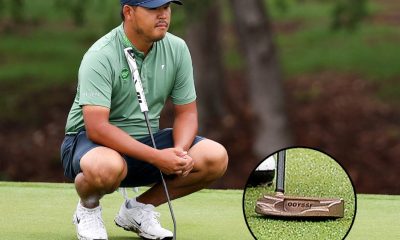
CJ Cup Byron Nelson Tour Report: Koepka and Kim’s newest putters finally get hot
-

 News2 weeks ago
Charles Schwab Challenge Tour Report: MacIntyre, Åberg and Spaun all switch putters, TaylorMade launches new Spider
-
 Equipment2 weeks ago
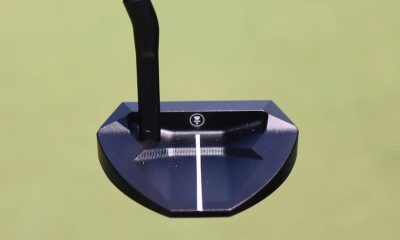
Details on J.J. Spaun’s surprise putter switch


Ian
Jan 16, 2018 at 5:53 pm
Hiya
One of the best wrx articles I’ve seen in a long time.
There is a trend, recently, to a lot of “here’s what the pros do” instruction. Shoulder tilt angles, hip rotation, weight shift etc.
This is all based on observation and probably decent information.
When I am at the range, however, “what the pros do” is the last thing I see. I see all ages, all body shapes and all athletic abilities except “what the pros do”.
This is article is great advice to get yourself in shape before attempting anything that the guys that spend 10hrs a day, every day, training, do.
Rodger
Jan 8, 2018 at 4:50 pm
I wish you would create a printable option so that we could print out exercises, drills, and such. Impossible to remember these without referring to a print out.
Chris Finn
Jan 10, 2018 at 8:36 am
Hi Rodger, we have a print version of these tests on our resources page at http://www.par4successgo.com just click on free resources and download the home assessment for the printed version of the tests. Hope that helps!
emil
Jan 7, 2018 at 4:20 pm
So, how does the average slightly obese soft bellied recreational golfer compensate for his failures?
Simply by rotating his hips and shoulders in near unison with little to no X-factor differential between the hips and shoulders in both back and down swings.
In the backswing this means the lead foot comes off the ground to release the hips so they follow shoulder rotation.
In the downswing the hips and shoulders rotate in near lockstep and the torso has little kinetic core power output and the belly sags forwards and whips around to just before impact. Then the torso rotation blocks to stall the belly from being flung around and threatening the spinal column.
There is a delayed weight shift even after the lead heel is replanted and the swing can easily degenerate into a reverse shift that promotes an OTC swing.
The commercialized “Natural Swing” promotes compensations for this recreational swing. In his later years, Moe Norman had this kind of ‘windmilling’ style of swing and couldn’t generate enough clubhead speed to get drives over 200 yards. I saw it in person at his live demoes.
allan
Jan 8, 2018 at 12:37 pm
“OTC swing”? Over The Counter swing? 🙂
Chris Finn
Jan 10, 2018 at 8:37 am
Hey Emil, This is a great question, I see a lot of golfers just like you described. Size of the belly aside, the golfer still needs to have full rotation (or as much as possible) in the 4 areas described above. If they have limited motion in any of these areas and improve just simple that, 90% of them see swing speed gains.
Once that is cleared (they can come close to or do pass the tests above) the next step from a sport science perspective is sequence training as well as anti rotational core training to increase the amount of “x-factor” or separation at impact increasing the amount of stored energy to be released.
Once should also test the golfers ability to generate power from the lower and up body as well as their total rotational power. This gives you insight into what your body can create in terms of raw power and these three areas correlate extremely closely to club head speed. *be on the lookout for an article here omg golfwrx on this coming soon for more details*
If there is not interest in changing the size of the belly, these are the areas to start. Once you’ve cleared all that..let me know and happy to guide further.
-chris