
Opinion & Analysis
Bobby Clampett: Why I Could Never Go Back to My Old Swing


In my last article, “Why Tiger and I Could Never Find a Golf Coach,” I described my journey of working with many of the top golf coaches in the world. They all wanted to change my “style” of swing without focusing on how the style change would affect my impact — the only thing that really matters in improving one’s golf game.
Times have really not changed since I began that journey midway into the 1983 PGA Tour season. Style-based teaching is still an epidemic in our game. Golfers rarely improve through traditional instruction because it isn’t focused on improving impact — just the “style” or preferred “style” of a given instructor. This epidemic has pushed countless golf stars right off the tour. David Duval, Ian Baker Finch, Mike Weir and many more all ran into style-based issues once they were influenced by this type of teaching.
In a previous GolfWRX article, one reader asked a very fair question: “Why didn’t you go back to your old swing”? He was referring to the fact that my original swing was good enough to be the No. 1 amateur in the world, earn two Fred Haskins Awards, win a record-setting 12 NCAA tournaments in three years and be a top-20 money winner in my first two years on the PGA Tour. I could write a book on this topic, but I’ll keep the discussion short for the purpose of this article.
The answer is that I probably could have, but in and of itself, it would have been quite a long process. I spent many years on the PGA Tour trying to build new golf swings. By the time the late mid 80’s rolled around, I was settling into one instructor’s style and was committed to it. I started to have a little more success and remember shooting a final-round 66 in Phoenix to finish T6 in 1987. In mid 1987, I decided to work less with a coach and be my own coach, but I still committed to the swing changes I made. I nearly won the Anheuser-Busch Golf Classic at Kingsmill in the summer of 1987. I actually set a new tournament scoring record, shooting four-consecutive rounds in the 60’s, but I was beat out by a shot by Mark McCumber.
I continued on that journey like Tiger is doing now without a swing coach, choosing to focus on scoring and playing. I wish I had my understanding of Impact-Based instruction back then to guide me, but I was still searching for the elusive perfect swing. I was a hard-worker, but I still struggled and my frustrations continued to mount. By the time the 1989 season was over, my energy for playing was waning.
There was a time that I could have made the decision to go back to my old swing, but the changes were pretty grooved after seven years of trying different swing styles and ultimately settling on one. It would have taken a herculean effort to revert back to the old swing, and it certainly would have looked different. My body had changed, and the “muscle memory” or brain mylan supporting the new swing was now engrained.
Fortunately, legendary television golf producer Frank Chirkinian came to my rescue and offered me an opportunity as a television broadcaster at CBS in 1991. The pressure to perform on the PGA Tour was off, and I could focus on studying the best players in the world through the lens of the CBS cameras. I was fascinated by what I saw. All the top players have very different styles of swings — some were even darn right ugly. Upright, flat, laid-off, across-the-line. Cupped, flat and arched left wrists at the top. Big and little hip turns. Short and long backswings. Stationery and moving heads… on and on and on. The best players in the world had movements in their swings that I was trying to remove from my swing. I was intrigued and had to figure out why.
When CBS developed the Bizhub Swing Vision Camera, I had the opportunity to study the golf swing very closely — and I did. It hit me like a 2×4 across the head. Impact was virtually the same for the world’s best players, but how they got there — their individual “style” — was completely different. All the instructors were teaching styles of swings that many of the best players weren’t even using. What if I started to work from impact and go backward with my swing? What if I could be released from worrying about my style and work on impact alone?
My energy for playing the game started to return. It was the late 90’s. I was raising three small children and traveling 30 weeks a year. I had almost no time to play golf. The U.S. Open was scheduled for Pebble Beach in 2000, so I gave myself a two-year goal to try to qualify since Pebble Beach was my home course growing up. I gave myself what time I had, 10 minutes a day to practice. I wasn’t hitting balls; I simply worked on grooving a style of swing that I could own, kind of a morph between my old swing and my new one that would be good enough to produce the kind of impact I knew I needed — the impact all the best players have. I gave myself the freedom to let go of my previously held convictions that there was an ideal style of swing.
This was the genesis of my five dynamics that are illustrated in my book, “The Impact Zone,” and the cornerstone of Impact-Based instruction. After taking months to groove my swing, mostly indoors without hitting a ball, I started to hit my first shots. I would allow myself one hour per week to hit balls and would start to play on the course one day a month. That’s all the time I had for golf. I focused intently on my impact, studying my divots and watching my ball flight. I didn’t have the luxury of the technology we have today like high-speed cameras, accurate launch monitors and force-plate systems that make studying impact so much easier.
I played a six-round golf marathon one day, helping to raise money for a friend. In the final round, I shot 63 playing in less than 2 hours by myself. Months later, I qualified for the U.S. Open. I led the tournament through much of the first round and made the cut, finishing T37. When I shared the story with the press after the first round, they were amazed that I could have performed this well on 10 minutes a day of practice, a bucket of balls a week and a round of golf a month after not having competed in two years. The key, I shared, was focusing on my impact and letting go of my swing style.
I’ve never looked back with regret, and I have learned so much through the process. I joined the PGA Champion’s Tour in 2010 and played 87 events, earning more money than I did in my 400 events on the PGA Tour. My biggest passion, however, is sharing my discoveries with others in hope that frustrated golfers will be a thing of the past and others will realize the lasting improvement Impact-Based instruction brings. That’s why I left playing the Champion’s Tour three years ago. I went on to become the only PGA Tour winner in history to attain the PGA of America’s highest level of teaching certification, Master of Teaching and Coaching. I’ve discovered that if you improve your impact, you improve your game. It’s really that simple.




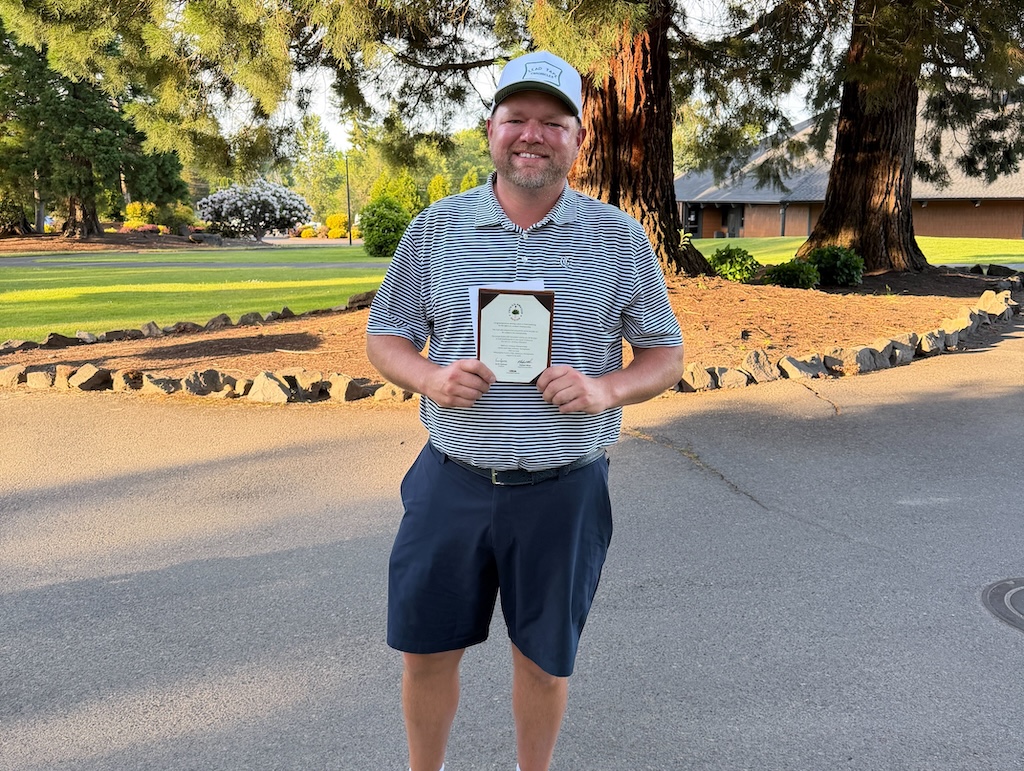
This past Monday, I played in the U.S. Amateur local qualifier at Rock Creek Country Club in Portland, Oregon. A full tee sheet from 7:30 a.m. to 1:55 p.m., the top 11 scores would make it to the U.S. Amateur final qualifying.
I teed off at 10:48 a.m.. With the 7:30 am tee time, you can get a feel for the leaders’ pace, and they were off and running on the challenging setup at Rock Creek.
View this post on Instagram
Getting to the highlight of the round on the par five 17th, a drive up the left side and 212 yards left to the front hole location. I took out a 5-iron with plans of middle of the green. The ball ended up 8 feet left of the hole, pin high. A slight downhill putt dropped in for an eagle 3 on the 17th. With the cut line looking to be anywhere from -2 to even par. This was the boost I had been waiting for all day.
With making par from the trees on 18, it was time to wait for a potential playoff with a posted score of one under par 71.
Three hours later, it was playoff time. 8 players for 6 spots. I made par on the playoff hole, which was good enough to advance to the U.S. Amateur final qualifying in July. USGA qualifiers sure deliver on all of the emotions in golf!
Club Junkie
Building my 2026 gamer WITB: Ranking the contenders and new putter projects – Club Junkie Podcast

The annual What’s In The Bag build is underway, and on this episode of Club Junkie, Brian breaks down the clubs currently leading the race for a spot in his 2026 gamer setup. From drivers and fairway woods to irons, wedges, and shafts, he ranks the equipment that’s performing best and explains what’s separating the front runners from the rest of the field.
Brian also heads into the workshop to discuss several putter projects currently on the bench. From head options and shaft choices to build ideas and testing plans, he shares what he’s working on and which putters could become serious contenders for the bag this season.
If you’re a gear junkie who loves equipment testing, club building, and the never-ending pursuit of the perfect setup, this episode is for you.
Follow Club Junkie:
Instagram: @clubjunkiepod
TikTok: @clubjunkiepod
Threads: @clubjunkiepod
X: @ClubJunkiePod
Club Junkie
Tour Edge Exotics mini driver review + TaylorMade Spider ZT Max first look – Club Junkie

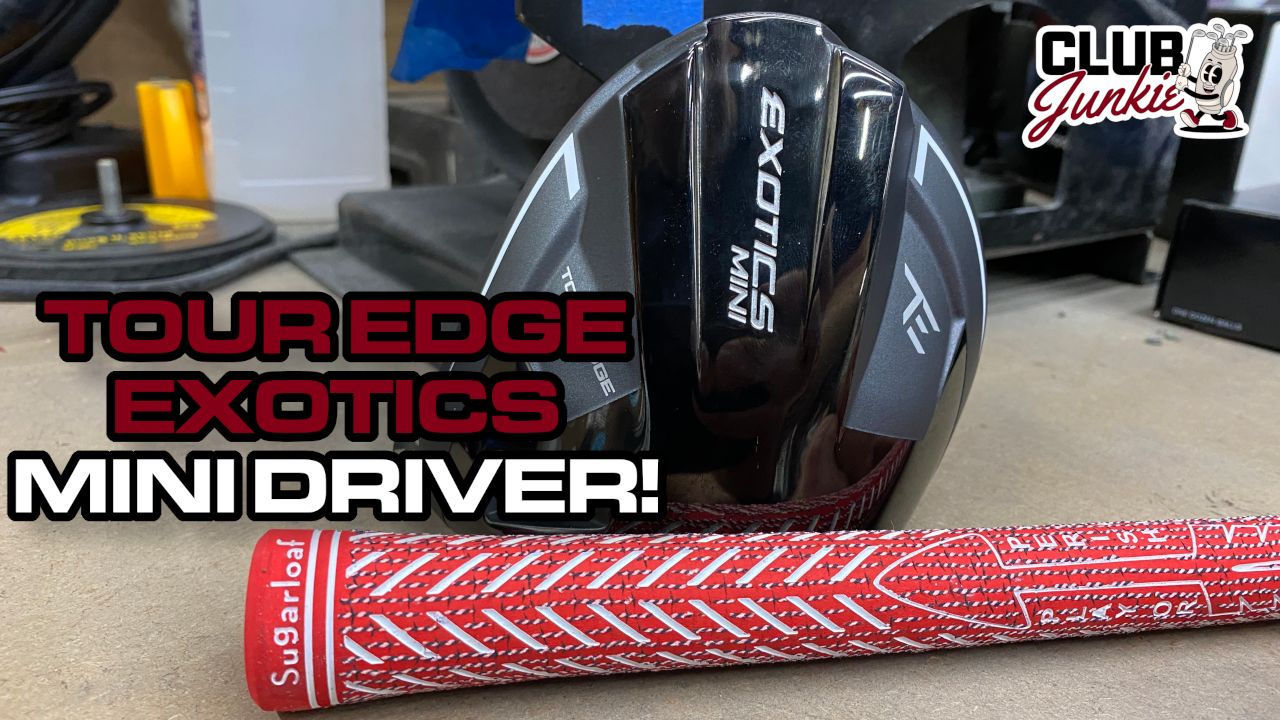
On this episode of Club Junkie, I put the new Tour Edge Exotics Mini Driver to the test and break down the performance, forgiveness, distance, and where it fits compared to a traditional driver or strong fairway wood. If you have been curious about adding a mini driver to the bag, this one is worth a look.
I also dive into the new TaylorMade Spider ZT Max putter that was recently spotted and discuss the growing zero torque putter trend. Plus, there is a closer look at the new Project X Titan Yellow shaft showing up on the PGA Tour and what makes it different from other profiles currently out there.

Justin Rose WITB 2026 (April): Full WITB breakdown with new McLaren irons

What’s the story behind Webb Simpson’s custom-stamped irons?

Memorial Tournament Tour Report: Rory McIlroy, Cameron Young switch up drivers, and more

Cadillac Championship Tour Report: Spieth’s sizable changes, McLaren Golf launches, and more

Russell Henley’s winning WITB: 2026 Charles Schwab Challenge

Kristoffer Reitan’s winning WITB: 2026 Truist Championship

Best irons 2026: Best irons overall, most forgiving irons, and more

J.T. Poston’s winning WITB: 2026 Memorial Tournament

Aaron Rai’s winning WITB: 2026 PGA Championship

Cameron Young’s winning WITB: 2026 Cadillac Championship


Ryan Palmer WITB 2026 (June)
Driver: Callaway Quantum Triple Diamond (9 degrees) Shaft: Project X HZRDUS Smoke Blue RDX 60 TX 3-wood: TaylorMade Qi10 (15 degrees) Shaft:...


Bud Cauley WITB 2026 (June)
Bud Cauley had >14 clubs in his bag when photographed prior to the Memorial Tournament. Driver: Titleist GTS2 (8 degrees) Shaft: Fujikura...


Hannah Green WITB 2026 (June)
Driver: Titleist GTS3 (10 degrees, D4 SureFit setting) Shaft: Mitsubishi Chemical Diamana RB 53 S 3-wood: Titleist GT3 (15 degrees,...


Asterisk Talley WITB 2026 (June)
Driver: TaylorMade Qi4D (9 degrees) Shaft: Fujikura Ventus Blue 6 S 3-wood: TaylorMade Qi4D (16.5 degrees) Shaft: Fujikura Ventus Blue...
-
 Equipment6 days ago
Memorial Tournament Tour Report: Rory McIlroy, Cameron Young switch up drivers, and more
-
 News2 weeks ago
Russell Henley’s winning WITB: 2026 Charles Schwab Challenge
-
 Equipment3 days ago
Best irons 2026: Best irons overall, most forgiving irons, and more
-
 Whats in the Bag4 days ago
J.T. Poston’s winning WITB: 2026 Memorial Tournament
-

 Equipment1 week ago
Details on Jason Day’s latest prototype Avoda iron setup
-

 Equipment3 weeks ago
CJ Cup Byron Nelson Tour Report: Koepka and Kim’s newest putters finally get hot
-

 News2 weeks ago
Charles Schwab Challenge Tour Report: MacIntyre, Åberg and Spaun all switch putters, TaylorMade launches new Spider
-

 Equipment2 weeks ago
Details on J.J. Spaun’s surprise putter switch


Billable Hours
Jan 30, 2018 at 10:04 am
Bobby Clampett loves himself some Bobby Clampett
gord
Mar 6, 2018 at 11:35 am
Is Bobby still a proponent of Homer Kelley and TGM.. the stupidest golf book ever written?
SV
Jan 30, 2018 at 8:13 am
Studying divots and watching ball flight, pure John Jacobs teaching. It was good 40+ years ago and is good today.
CB
Jan 30, 2018 at 1:49 am
Just gotta have bloody good and strong hands, is what I read from Clampett’s musings
Mark
Jan 29, 2018 at 11:35 pm
Not only do I find the subjects of his articles to be interesting but I also enjoy reading them. His standard of writing is so much higher than the many others who write for GolfWRX (editorial staff most definitely included).
Reeves
Jan 29, 2018 at 11:19 pm
Had you just watched Moe Norman for 10 minutes you would have seen clearly how you got to impact was up to you. add to that 2 minutes of John Daly and Lee Trevino in their prime and impact would clearly be the only similarity….
gord
Mar 6, 2018 at 11:32 am
Anybody who attempts to copy dopey Moe is a Moe-ron ….!
Scott
Jan 29, 2018 at 3:37 pm
thank you for sharing
Ben
Jan 29, 2018 at 5:01 pm
I hope Bobby shares his thoughts on TGM as well.
Engineer Bob
Jan 30, 2018 at 10:43 am
I can tell you what I think of TGM: IT’S TOTAL RUBBISH!!!
the dude
Jan 29, 2018 at 2:02 pm
….and if you want to know more…..buy my Impact golf DVD…..all the secrets are in there…
Brett Weir
Jan 29, 2018 at 11:43 am
Thank you Mr. Clampett for your philosophy of being impact oriented. For years and years I’ve been focusing on having the perfect backswing, downswing, and follow through and never broke 80. I almost quit the game until I came across your teachings and focused on impact. For the past 2 years I didn’t care what my backswing and follow through looked like and focused on impact (keeping the clubface as square through impact for as long as I can with a lot of shaft lean). Because of that, my scores are in the 70s. One day, I decided to video my new swing and to my shock, my backswing, downswing, and follow through were the most ideal I’ve seen in years. You will naturally have the ideal swing for yourself if you focus on having the ideal position at impact.
Ben
Jan 29, 2018 at 4:59 pm
” For years and years I’ve been focusing on having the perfect backswing, downswing, and follow through and never broke 80.”
This suggests to me that you were overly conscious about your swing rather than swinging free of swing thoughts. IOW, you were trying tho think your way through the swing. By focusing your thoughts on impact you liberated your conscious mind and went into automatic mode. Your swing became more natural and simply, worry free.
Allan
Jan 29, 2018 at 11:13 am
Interesting insight into your swing evolution. Could you tell us how your swing was influenced by Homer Kelley’s The Golfing Machine. You were a proponent of TGM but now you seem to have found your own golf swing philosophy. What changed? Thanks
OB
Feb 1, 2018 at 5:14 pm
Clampett Cricketts …. * * * *
Justin Roser
Aug 24, 2018 at 3:49 pm
Silence because everything Bobby and every other teacher knows and talks about is a dumb downed, repackaged, plagerism of TGM period. Anyone who says it’s rubbish is hiding the fact they can read and comprehend basic physics and geometry. It’s all about these guys egos and making money off someone else’s work never giving them credit!