
Opinion & Analysis
Stop Bothering Me! Why NCAA golf coaches already get too many emails


This article was written in collaboration between Brendan Ryan and Estefania Acosta. To research more on the subject of college golf from these authors, please check out their book, The College Golf Almanac, that is now for sale on Amazon for $19.99.
Are you a future college golfer or parent who is stressed out about the process of finding a school? Tired of sending emails and not getting a response? Unsure what to do next?
Good news, in this article we are going to show you why proper research and the subject of your email are the keys to you playing college golf!
To help parents, coaches and junior golfers in the process, I did a survey of 100+ college coaches trying to understand the recruiting process from their perspective. To help, I asked them, via an online survey on Facebook their thoughts on the following questions:
- What level of golf do you coach?
2. What gender do you coach?
3. How many incoming emails do you get per day?
4. What percent of emails come from recruiting companies?
5. What percent of emails from recruits are of interest to you?
6. What is the most important thing you look for on a resume?
What Coaches told Us
Of the coaches who responded, we had 76 percent from Division I institutions, 15 percent from Division II institutions, 4 percent from Division III institutions, 2 percent from NJCAA institutions and 3 percent from NAIA institutions. Also, 74 percent of the respondents coached men’s college golf and 26 percent of the respondents coached women’s college golf.
Of these coaches…
- 22 percent got up to 3650 emails per year
- 15 percent got between 3650-5475 emails per year
- 16 percent got between 5840-7300 emails per year
- 4 percent got between 7665-9125 emails per year
- 24 percent got between 9490-18250 emails per year
- 19 percent got over 18615 emails per year
Among Division I coaches, 87 percent of respondents noted that less than 10 percent of the emails they received interested them, with higher-ranked schools moving closer to 1 percent or not at all. So, for the coach getting 3650 emails per year, about 360 of them are getting responses, however a response is not necessarily
going to lead to a spot. Those getting responses need to understand that beyond those students who are sending emails, the coach is probably chasing another 200-300 students. This means the odds of converting the email into a scholarship opportunity is probably close to 1 in 300+.
In the data collection, we also asked college coaches what percent of the emails are coming from “recruiting services,” and 27 percent of coaches are getting less than 10 percent from recruiting services, while 38 percent of coaches are getting up to 25 percent, 23 percent are getting up to 50 percent, and 12 percent are getting more than 50 percent of their emails from recruiting services.
The last question we asked coaches, is “what are you looking for on a resume?” This is maybe the most important question since, if you’re one of the 43 percent of coaches getting approximately 10,000 emails or more, you’re probably not looking at the resume very long. Not surprisingly, 92 percent of coaches listed scores, with 23 percent of schools also listing academics.
What the Data Tells Us
Parents, coaches and student athletes need to use resources available including our previous articles on GolfWRX, as well as research on school’s websites. The process of looking at schools should include:
1. Going on the team’s website to see how many players will graduate
2. Check the scoring average of the best 3 players. Average it. If you are at that or better, then you have a chance. If not, consider other schools.
3. Check the NJGS rankings of their players from the previous year, do you fall within 10 percent of them? How does your scoring differential compare to theirs?
4. Ask yourself, are you at least at the average SAT of the school?
5. Ask yourself, can you afford at least 60 percent of the cost of attendance (for boys) of the school?
If you answer yes to all the questions, you have a fit and should email the school with your information, including your NJGS ranking and SAT in the subject line. If you don’t have a yes to these, then start over until you do, as these are the schools that are highly likely to respond.
The data collected in this survey shows that up to 90 percent of people are not looking in the right place which points to a combination of lack of information, poor feedback and in some cases pure narcissism. The fact is that there are 300 Division I teams, each are going to take about 2 players per year, that means you need to be in the top 600 players in the world.
The fact is that today’s college players, especially at major conference schools are ridiculously good. Don’t believe me? Well the University of Arkansas women’s golf team is a combined 57-under par for their first two events and the University of Florida men’s team boast 4 current players or recruits within the top 52 players in the WAGR (Tosti, Axelson, Hong and Zhang), as well as the No. 1 player from NJGS in 2017 (Lee).
The results also demonstrate that 35 percent of coaches are getting significant amounts of emails from “recruiting services.” If you are signing up for these services, BEWARE; some coaches are getting up to 2000 emails per year from these services. I will let you figure out the odds this will turn into an opportunity for you (Hint: it rhymes with hero).
Concluding Thoughts
When considering college sport, it is important to see the value of the experience; playing sport keeps young people engaged and allows them to build valuable developmental assets like time management and leadership. It also gives them the opportunity to get up to 50+ tournaments of experience, which can prove transformational. In my opinion these opportunities are a fantastic reason to choose college sport over other opportunities.



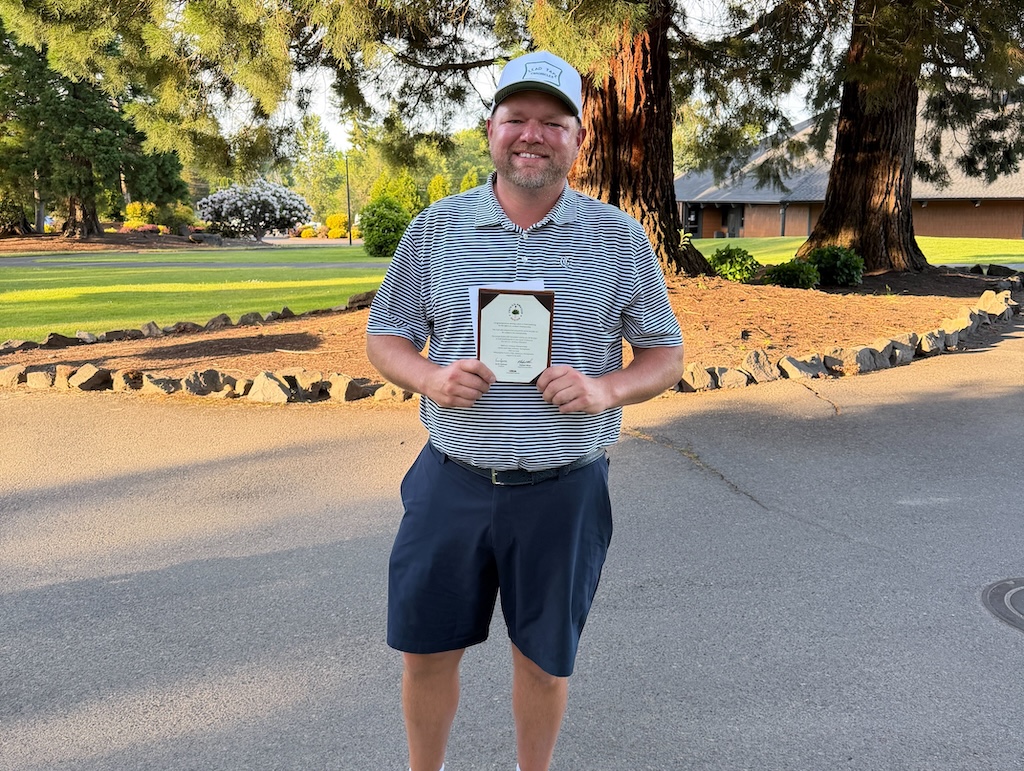
This past Monday, I played in the U.S. Amateur local qualifier at Rock Creek Country Club in Portland, Oregon. A full tee sheet from 7:30 a.m. to 1:55 p.m., the top 11 scores would make it to the U.S. Amateur final qualifying.
I teed off at 10:48 a.m.. With the 7:30 am tee time, you can get a feel for the leaders’ pace, and they were off and running on the challenging setup at Rock Creek.
View this post on Instagram
Getting to the highlight of the round on the par five 17th, a drive up the left side and 212 yards left to the front hole location. I took out a 5-iron with plans of middle of the green. The ball ended up 8 feet left of the hole, pin high. A slight downhill putt dropped in for an eagle 3 on the 17th. With the cut line looking to be anywhere from -2 to even par. This was the boost I had been waiting for all day.
With making par from the trees on 18, it was time to wait for a potential playoff with a posted score of one under par 71.
Three hours later, it was playoff time. 8 players for 6 spots. I made par on the playoff hole, which was good enough to advance to the U.S. Amateur final qualifying in July. USGA qualifiers sure deliver on all of the emotions in golf!
Club Junkie
Building my 2026 gamer WITB: Ranking the contenders and new putter projects – Club Junkie Podcast

The annual What’s In The Bag build is underway, and on this episode of Club Junkie, Brian breaks down the clubs currently leading the race for a spot in his 2026 gamer setup. From drivers and fairway woods to irons, wedges, and shafts, he ranks the equipment that’s performing best and explains what’s separating the front runners from the rest of the field.
Brian also heads into the workshop to discuss several putter projects currently on the bench. From head options and shaft choices to build ideas and testing plans, he shares what he’s working on and which putters could become serious contenders for the bag this season.
If you’re a gear junkie who loves equipment testing, club building, and the never-ending pursuit of the perfect setup, this episode is for you.
Follow Club Junkie:
Instagram: @clubjunkiepod
TikTok: @clubjunkiepod
Threads: @clubjunkiepod
X: @ClubJunkiePod
Club Junkie
Tour Edge Exotics mini driver review + TaylorMade Spider ZT Max first look – Club Junkie

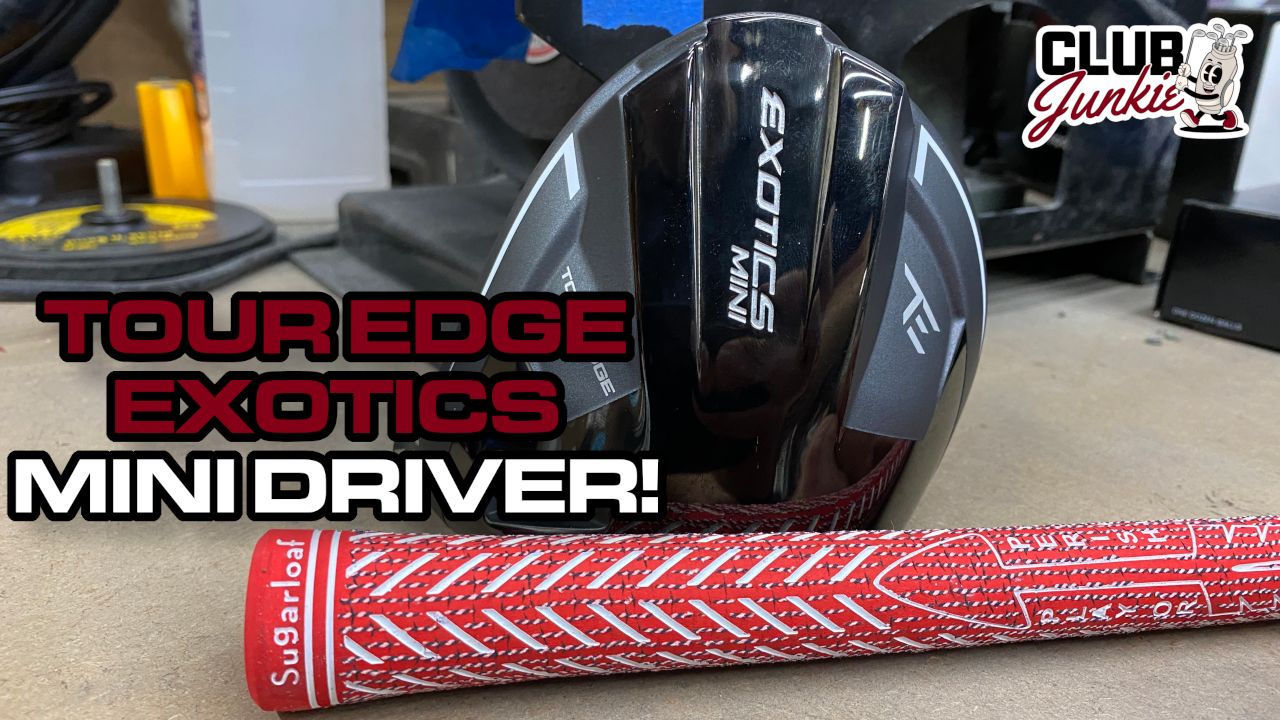
On this episode of Club Junkie, I put the new Tour Edge Exotics Mini Driver to the test and break down the performance, forgiveness, distance, and where it fits compared to a traditional driver or strong fairway wood. If you have been curious about adding a mini driver to the bag, this one is worth a look.
I also dive into the new TaylorMade Spider ZT Max putter that was recently spotted and discuss the growing zero torque putter trend. Plus, there is a closer look at the new Project X Titan Yellow shaft showing up on the PGA Tour and what makes it different from other profiles currently out there.

Justin Rose WITB 2026 (April): Full WITB breakdown with new McLaren irons

What’s the story behind Webb Simpson’s custom-stamped irons?

Memorial Tournament Tour Report: Rory McIlroy, Cameron Young switch up drivers, and more

Cadillac Championship Tour Report: Spieth’s sizable changes, McLaren Golf launches, and more

Russell Henley’s winning WITB: 2026 Charles Schwab Challenge

Kristoffer Reitan’s winning WITB: 2026 Truist Championship

Best irons 2026: Best irons overall, most forgiving irons, and more

J.T. Poston’s winning WITB: 2026 Memorial Tournament

Aaron Rai’s winning WITB: 2026 PGA Championship

Cameron Young’s winning WITB: 2026 Cadillac Championship


Ryan Palmer WITB 2026 (June)
Driver: Callaway Quantum Triple Diamond (9 degrees) Shaft: Project X HZRDUS Smoke Blue RDX 60 TX 3-wood: TaylorMade Qi10 (15 degrees) Shaft:...


Bud Cauley WITB 2026 (June)
Bud Cauley had >14 clubs in his bag when photographed prior to the Memorial Tournament. Driver: Titleist GTS2 (8 degrees) Shaft: Fujikura...


Hannah Green WITB 2026 (June)
Driver: Titleist GTS3 (10 degrees, D4 SureFit setting) Shaft: Mitsubishi Chemical Diamana RB 53 S 3-wood: Titleist GT3 (15 degrees,...


Asterisk Talley WITB 2026 (June)
Driver: TaylorMade Qi4D (9 degrees) Shaft: Fujikura Ventus Blue 6 S 3-wood: TaylorMade Qi4D (16.5 degrees) Shaft: Fujikura Ventus Blue...
-
 Equipment6 days ago
Memorial Tournament Tour Report: Rory McIlroy, Cameron Young switch up drivers, and more
-
 News2 weeks ago
Russell Henley’s winning WITB: 2026 Charles Schwab Challenge
-
 Equipment3 days ago
Best irons 2026: Best irons overall, most forgiving irons, and more
-
 Whats in the Bag4 days ago
J.T. Poston’s winning WITB: 2026 Memorial Tournament
-

 Equipment1 week ago
Details on Jason Day’s latest prototype Avoda iron setup
-
 Equipment3 weeks ago
CJ Cup Byron Nelson Tour Report: Koepka and Kim’s newest putters finally get hot
-

 News2 weeks ago
Charles Schwab Challenge Tour Report: MacIntyre, Åberg and Spaun all switch putters, TaylorMade launches new Spider
-

 Equipment2 weeks ago
Details on J.J. Spaun’s surprise putter switch


KCCO
Oct 25, 2017 at 8:05 pm
I know it’s kind of apples to oranges, but I played baseball at a very (I guess you would call it) a highly regarded baseball high school, among others in surrounding area. I think colleges, and major league scouts were way ahead of who they were looking at as if you are that good, you are already on everyone’s list. We had kids giving their word and getting partial contracts their junior year. Some made it, some didn’t. The same goes for colleges. They knew who was good enough as there is such a small percentage. Again it’s not golf, but being it’s a smaller sample as baseball is more dominant they know who they are looking at. Not saying it’s not worth trying, but if your in top 500 in the country, they are aware. Top 100 your already being spoken too. Just my .02
emb
Oct 23, 2017 at 7:15 pm
I doubt Coaches getting that many emails just from jr golfers. That many emails total maybe, but only a small percentage of the total from jr golfers. I played D1 golf and I agree with the 5 recommendations the author gives on which schools you email, but dont be afraid to shoot high. Once you have a good template created you can fire off dozens of emails in a short period of time and it doesn’t cost anything to send an email, the worst thing that can happen is they don’t respond. In which case, most people aren’t getting responses so don’t worry. In the end, practicing hard and getting the best results possible matters more than sending a good email. Play good golf and the rest will sort itself out.
alexdub
Oct 21, 2017 at 7:05 pm
Maybe they are counting their spam emails too?