
Opinion & Analysis
Why NCAA Division II, III and NAIA is a great option for women golfers

This article was written in collaboration between Brendan Ryan and Estefania Acosta. To research more on the subject of college golf from these authors, please check out their book, The College Golf Almanac, that is now for sale on Amazon for $19.99.
Almost all junior girl golfers aspire to play for a team in college. However, many of these girls only set their eyes on the possibility of playing for a Division I team.
While being a Division I collegiate athlete is very impressive, players can often get the same, if not a more rewarding experience playing below the DI level. In my opinion, a junior player should never rule out the possibility of playing for a Division II, Division III, or NAIA (National Association of Intercollegiate Athletes) college team. Even though the average scores may be higher in these divisions, players still get an opportunity to travel the country and play golf at a competitive level. And, as you will see in this post, these opportunities are much more abundant than you would think.
I took a look at the list of the 2016 Early Signees found on the National Junior Golf Scoreboard (NJGS). For this story, I will be examining girls that signed to DII, DIII, and NAIA schools and compare them with the National Junior Golf 2014 Class Ranking, as well as the World Amateur Golf Ranking. Using the data that I have collected, below is a bird’s eye view on what it takes to be recruited in these three divisions.
In 2016, 267 girls signed early to women’s teams, 39 of which signed to Division II schools. Thirty six of these girls were from the United States and six were international players. There were only three girls who signed to Division III teams and 11 girls who signed to NAIA teams, all of whom were from the United States. Because the number of girls who signed to DIII and NAIA schools was so small, I decided to average the NJGS rankings of DII, DIII, and NAIA early signees together. The average NJGS Ranking for these girls was 1343, which sets them out to have a scoring average of about 85. The average WAGR for the Division II early signees was 2158, meaning that international players held a scoring average of about 82.2. Therefore shooting in the mid-to-low 80s by the time a girl begins her recruitment process as a junior will give her a great shot at playing Division II, III, and NAIA golf.
Please note that these scoring and ranking averages are slightly skewed given the fact that 17 of the girls that signed to DII teams and 7 of the girls signed to NAIA teams were not ranked in either the NJGS or the WAGR
Golf is only one half of the student-athlete experience, however. After all, a player is always a student before they are an athlete. DII, III, and NAIA programs take this very seriously. Because there is less of an academic commitment as it relates to schools below the DI level, students have more of an opportunity to focus on their studies. Moreover, while it is of course expected that a player wants to be recruited to a team to follow her passion, a girl can use golf as a vehicle to get a better academic experience. The fact of the matter is that women’s DII programs can award 5.4 scholarships and NAIA programs can award 5 grants annually. So playing for a DII or NAIA school can make it a lot easier on the family finances. While DIII schools are not permitted to award scholarships, many of these schools are superb academic institutions. Mount Holyoke, Williams College, Ithaca College, Washington & Lee, and Washington University in Saint Louis are just a few colleges that offer Division III women’s golf. So if you happen to get contacted by a coach from one of these divisions, it is definitely worth taking a look at a school’s academic programs and standings before you before you cast it to the side.
All three of these collegiate divisions offer programs that are easier to play for than DI programs and still offer a superior level of play. Yet, despite the fact that there are 191 colleges with Division II women’s golf teams, 196 Division III women’s golf teams, and 138 NAIA women’s golf teams, many junior golfers believe that they are “too good” to play below the Division I level. As a result, they will earn a spot on a DI team, but remain on the practice squad for all four years.
Although it is indeed nice to say that you play on a DI team, being on the practice squad won’t necessarily make you a better golfer if you never actually getting an opportunity to travel. In his article on the NJGS website, Coach Brooks, a former Division II coach states:
“Competing is the key, and no player, regardless of team, will ever improve as a player if he is not a member of the team’s five-person traveling squad. Some Division I players, who face this exact situation, would be much better off as either Division II or Division III players.”
The fact of the matter is that players could probably get a more competitive college experience if they played for one of these schools. So don’t sell these schools short. You might be able to get a better experience at them than you’ve ever imagined.
Related



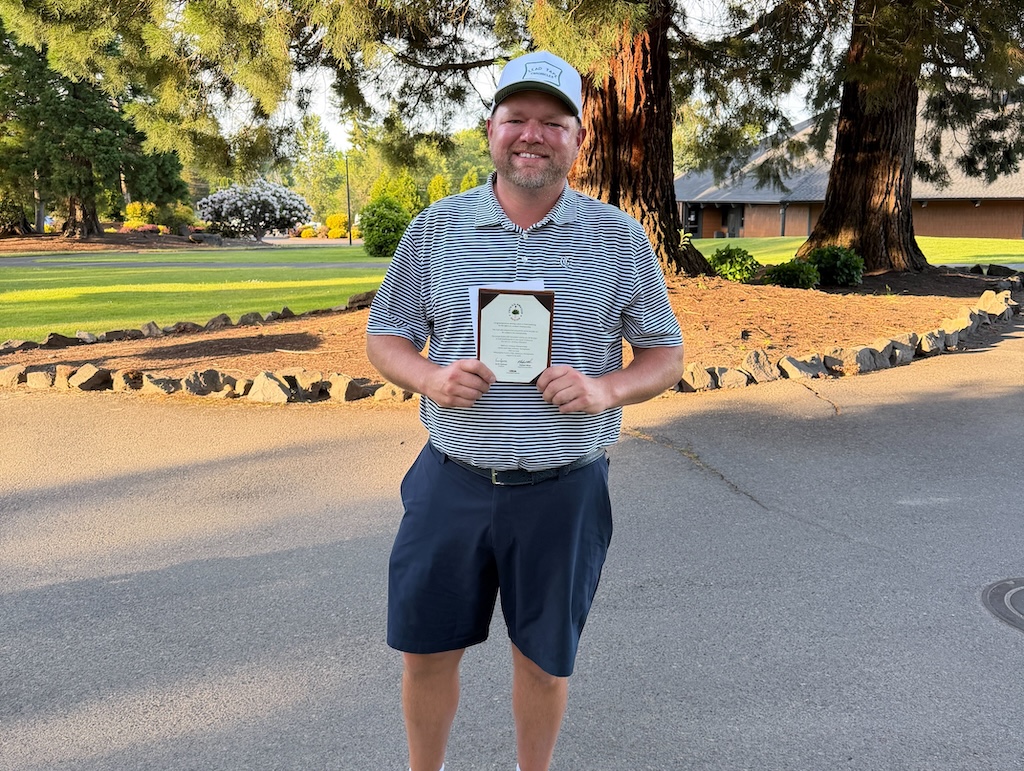
This past Monday, I played in the U.S. Amateur local qualifier at Rock Creek Country Club in Portland, Oregon. A full tee sheet from 7:30 a.m. to 1:55 p.m., the top 11 scores would make it to the U.S. Amateur final qualifying.
I teed off at 10:48 a.m.. With the 7:30 am tee time, you can get a feel for the leaders’ pace, and they were off and running on the challenging setup at Rock Creek.
View this post on Instagram
Getting to the highlight of the round on the par five 17th, a drive up the left side and 212 yards left to the front hole location. I took out a 5-iron with plans of middle of the green. The ball ended up 8 feet left of the hole, pin high. A slight downhill putt dropped in for an eagle 3 on the 17th. With the cut line looking to be anywhere from -2 to even par. This was the boost I had been waiting for all day.
With making par from the trees on 18, it was time to wait for a potential playoff with a posted score of one under par 71.
Three hours later, it was playoff time. 8 players for 6 spots. I made par on the playoff hole, which was good enough to advance to the U.S. Amateur final qualifying in July. USGA qualifiers sure deliver on all of the emotions in golf!
Club Junkie
Building my 2026 gamer WITB: Ranking the contenders and new putter projects – Club Junkie Podcast


The annual What’s In The Bag build is underway, and on this episode of Club Junkie, Brian breaks down the clubs currently leading the race for a spot in his 2026 gamer setup. From drivers and fairway woods to irons, wedges, and shafts, he ranks the equipment that’s performing best and explains what’s separating the front runners from the rest of the field.
Brian also heads into the workshop to discuss several putter projects currently on the bench. From head options and shaft choices to build ideas and testing plans, he shares what he’s working on and which putters could become serious contenders for the bag this season.
If you’re a gear junkie who loves equipment testing, club building, and the never-ending pursuit of the perfect setup, this episode is for you.
Follow Club Junkie:
Instagram: @clubjunkiepod
TikTok: @clubjunkiepod
Threads: @clubjunkiepod
X: @ClubJunkiePod
Club Junkie
Tour Edge Exotics mini driver review + TaylorMade Spider ZT Max first look – Club Junkie

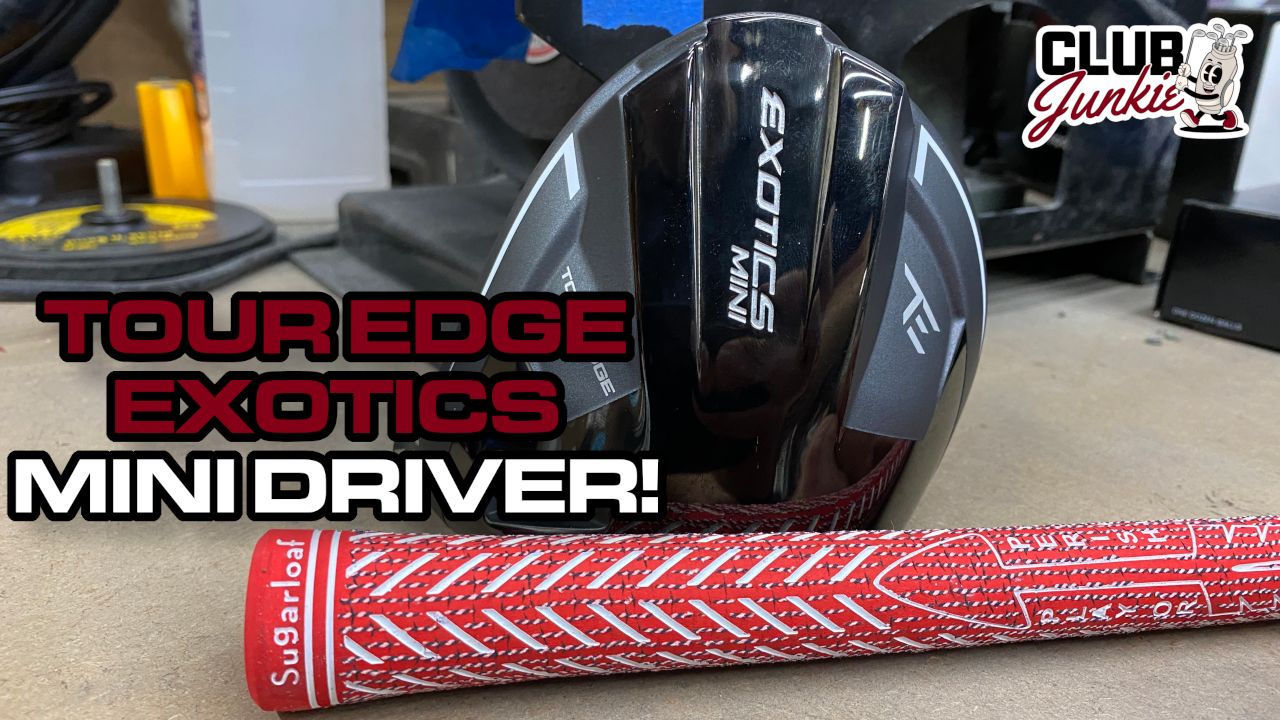
On this episode of Club Junkie, I put the new Tour Edge Exotics Mini Driver to the test and break down the performance, forgiveness, distance, and where it fits compared to a traditional driver or strong fairway wood. If you have been curious about adding a mini driver to the bag, this one is worth a look.
I also dive into the new TaylorMade Spider ZT Max putter that was recently spotted and discuss the growing zero torque putter trend. Plus, there is a closer look at the new Project X Titan Yellow shaft showing up on the PGA Tour and what makes it different from other profiles currently out there.

What’s the story behind Webb Simpson’s custom-stamped irons?

Memorial Tournament Tour Report: Rory McIlroy, Cameron Young switch up drivers, and more

Cadillac Championship Tour Report: Spieth’s sizable changes, McLaren Golf launches, and more

Russell Henley’s winning WITB: 2026 Charles Schwab Challenge

Kristoffer Reitan’s winning WITB: 2026 Truist Championship

Best irons 2026: Best irons overall, most forgiving irons, and more

J.T. Poston’s winning WITB: 2026 Memorial Tournament

Aaron Rai’s winning WITB: 2026 PGA Championship

Cameron Young’s winning WITB: 2026 Cadillac Championship

Details on Jason Day’s latest prototype Avoda iron setup


Christiaan Maas WITB 2026 (June)
Driver: TaylorMade Qi4D LS (8 degrees) Shaft: Fujikura Ventus TR Blue 6 X 3-wood: TaylorMade Qi10 (15 degrees) Shaft: Fujikura Ventus Black...


Ryan Palmer WITB 2026 (June)
Driver: Callaway Quantum Triple Diamond (9 degrees) Shaft: Project X HZRDUS Smoke Blue RDX 60 TX 3-wood: TaylorMade Qi10 (15 degrees) Shaft:...


Bud Cauley WITB 2026 (June)
Bud Cauley had >14 clubs in his bag when photographed prior to the Memorial Tournament. Driver: Titleist GTS2 (8 degrees) Shaft: Fujikura...


Hannah Green WITB 2026 (June)
Driver: Titleist GTS3 (10 degrees, D4 SureFit setting) Shaft: Mitsubishi Chemical Diamana RB 53 S 3-wood: Titleist GT3 (15 degrees,...
-
 Equipment7 days ago
Memorial Tournament Tour Report: Rory McIlroy, Cameron Young switch up drivers, and more
-
 News2 weeks ago
Russell Henley’s winning WITB: 2026 Charles Schwab Challenge
-
 Equipment4 days ago
Best irons 2026: Best irons overall, most forgiving irons, and more
-
 Whats in the Bag4 days ago
J.T. Poston’s winning WITB: 2026 Memorial Tournament
-
 Equipment1 week ago
Details on Jason Day’s latest prototype Avoda iron setup
-
 Equipment3 weeks ago
CJ Cup Byron Nelson Tour Report: Koepka and Kim’s newest putters finally get hot
-

 News2 weeks ago
Charles Schwab Challenge Tour Report: MacIntyre, Åberg and Spaun all switch putters, TaylorMade launches new Spider
-

 Equipment2 weeks ago
Details on J.J. Spaun’s surprise putter switch


Steve
Oct 26, 2017 at 4:57 pm
I believe its “athletic” and not “academic” typo
Acemandrake
Oct 15, 2017 at 5:54 pm
“Because there is less of an academic commitment as it relates to schools below the DI level, students have more of an opportunity to focus on their studies.”
Can someone explain this to me?
Thanks!
Deadeye
Oct 16, 2017 at 2:02 pm
I don’t understand this one either.
Walt Bismarck
Oct 15, 2017 at 5:13 pm
Third wave feminism is cancer. Women belong at home with the family.
Genn
Oct 15, 2017 at 5:34 pm
Most ‘female’ pro golfers are trannies …. believe it
M. Vegas
Oct 15, 2017 at 4:47 pm
Everyone belongs where he/she will be appreciated and valued….
Let’s stop the bullying
2putttom
Oct 15, 2017 at 1:09 pm
“many junior golfers believe that they are “too good” to play below the Division I level. As a result, they will earn a spot on a DI team, but remain on the practice squad for all four years…”
This is fact based on my interactions with junior golf programs. Better to compete in a field/division where you’ll get noticed rather than be an egg in a carton.
ActualFacts
Oct 15, 2017 at 1:38 pm
@2putttom – Very well written… I don’t have anything constructive to add.