
Opinion & Analysis
Golf Training Aids: Do They Ever Actually Work?

Swing gadgets and training aids have been around in some form or another since… forever, I suppose. Some are really good, while others are really bad. Some serve a specific problem and some are more universal in their intent. Do they work? It’s a fair question.
If I had to choose the one thing that has amazed me more thing else over the years, it’s how ingenious and creative golfers are. Golfers are really adept at finding the golf ball. By hook or crook, if they play enough, they will find a way to put the club on the ball. This is a skill called “proprioception,” and it also plays a huge part in the inconsistency of golfers and their related inability to score better.
Here’s why: A compensatory move in the downswing that corrects a faulty position in the backswing is ingenious… but also costly. When the golf club gets to the top of the swing out of position, golfers — especially those who play often — will adjust the club coming down to find a way (any way) to get the golf club on the golf ball. This happens at all levels, of course, including the top players in the world.
Let’s consider some swing positions that have to be re-routed in the downswing:
- A golf club that is “laid off” at the top of the swing is effectively outside the hands. It has to be brought back into line to avoid shanking and hitting the heel.
- A golf club that is across the line at the top is effectively inside the hands, and it has to be brought back into line to avoid hitting off the toe.
- A golf clubface that is wide open at the top of the swing has to be closed coming into impact.
- A golf clubface that is too closed at the top of the swing has to be opened on the way down to square it.
And in transition…
- A golf club that starts down too steeply has to be flattened to get it into a better incline to come down into the golf ball.
- A hand path that goes out to start the downswing requires a fall back inside to get the bottom of the arc to the ball.
- A hand path that is vertical or tight coming down requires a club head that is swinging more out than down to avoid hitting the toe.
Swing trainers are designed for a specific purpose often miss the cause of the swing flaw and attempt to re-train the fault itself. Consider the example of getting way ahead of the ball. Most of the time, golfers who run ahead of the ball do so because they release the club far too early. The movement ahead is to avoid hitting the ground behind the ball. Well, if you find a device that helps you stay behind the ball better and you still release too early, guess what happens? Fat shots, of course. Conversely, if you find a device that helps you hold the angle a little longer and you continue to run ahead of it… well, you guessed it. Skulls and late tops.
Another: Let’s say you find a device that helps you get off the rear foot into impact. It’s one designed to help you get “through the ball” better. Well, if you were “hanging back” because the golf club is coming down far too steeply and you simply improve the “turn-through” motion, you will hit the ball fat, late, and sometimes shank it. Why? Because the steep transition was not corrected. So you’re off your back foot, that’s alright, but if your club face is wide open and you’re steep into impact, you’ll likely also be really late. That means a lot of thin shots and some shanks.
And Another: You find a device that helps you stop coming over the top, and you’re able to get the club more inside coming down. Great… but a lot of over-the-toppers shift their weight to the back foot in order to get the bottom of the swing arc near the ball. In fact, many single-digit handicaps have this move! You see, if you’re over the top, you’re moving the bottom of the arc forward. Many more experienced golfers feel this, and instinctively they shift their weight back to get the golf club to bottom out a little earlier.
See the point?
If the root cause of your swing issue is not corrected, the device that’s designed to correct the reaction is not enough. The bottom line is you have to correct the core swing issue to eventually avoid the reaction. Work with an instructor to help you identify the root cause and go from there.




This past Monday, I played in the U.S. Amateur local qualifier at Rock Creek Country Club in Portland, Oregon. A full tee sheet from 7:30 a.m. to 1:55 p.m., the top 11 scores would make it to the U.S. Amateur final qualifying.
I teed off at 10:48 a.m.. With the 7:30 am tee time, you can get a feel for the leaders’ pace, and they were off and running on the challenging setup at Rock Creek.
View this post on Instagram
Getting to the highlight of the round on the par five 17th, a drive up the left side and 212 yards left to the front hole location. I took out a 5-iron with plans of middle of the green. The ball ended up 8 feet left of the hole, pin high. A slight downhill putt dropped in for an eagle 3 on the 17th. With the cut line looking to be anywhere from -2 to even par. This was the boost I had been waiting for all day.
With making par from the trees on 18, it was time to wait for a potential playoff with a posted score of one under par 71.
Three hours later, it was playoff time. 8 players for 6 spots. I made par on the playoff hole, which was good enough to advance to the U.S. Amateur final qualifying in July. USGA qualifiers sure deliver on all of the emotions in golf!
Club Junkie
Building my 2026 gamer WITB: Ranking the contenders and new putter projects – Club Junkie Podcast

The annual What’s In The Bag build is underway, and on this episode of Club Junkie, Brian breaks down the clubs currently leading the race for a spot in his 2026 gamer setup. From drivers and fairway woods to irons, wedges, and shafts, he ranks the equipment that’s performing best and explains what’s separating the front runners from the rest of the field.
Brian also heads into the workshop to discuss several putter projects currently on the bench. From head options and shaft choices to build ideas and testing plans, he shares what he’s working on and which putters could become serious contenders for the bag this season.
If you’re a gear junkie who loves equipment testing, club building, and the never-ending pursuit of the perfect setup, this episode is for you.
Follow Club Junkie:
Instagram: @clubjunkiepod
TikTok: @clubjunkiepod
Threads: @clubjunkiepod
X: @ClubJunkiePod
Club Junkie
Tour Edge Exotics mini driver review + TaylorMade Spider ZT Max first look – Club Junkie

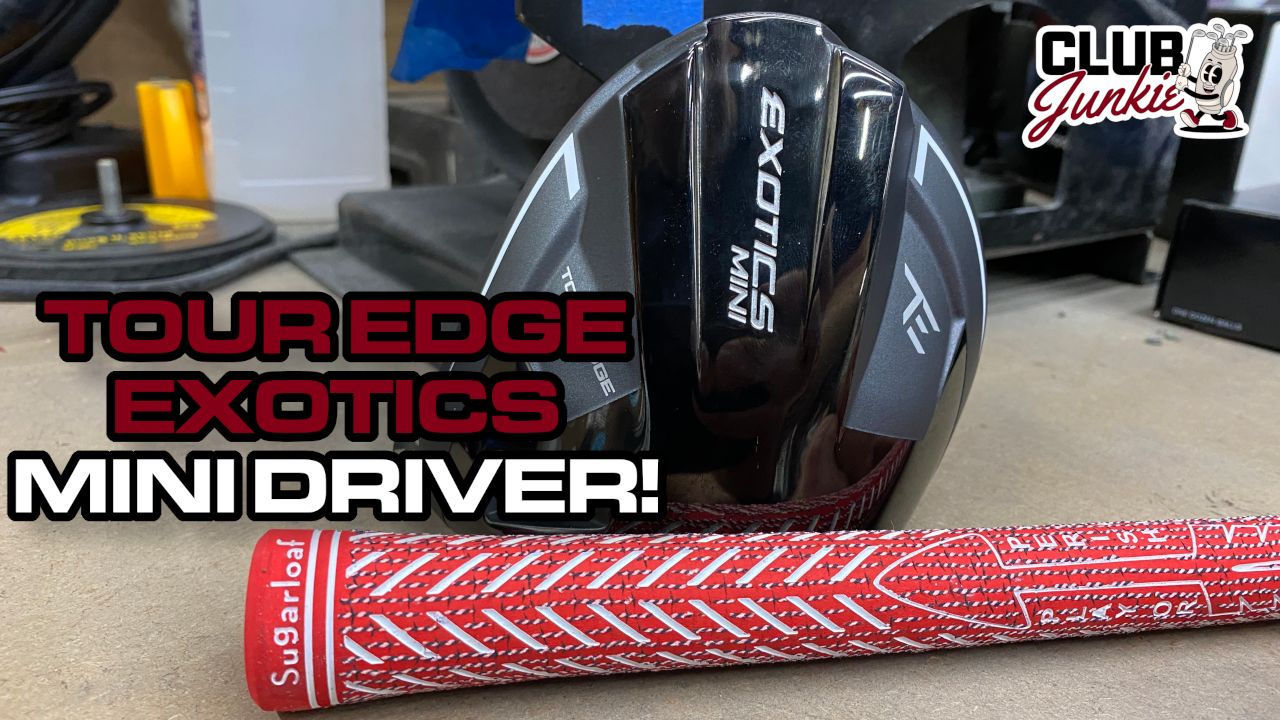
On this episode of Club Junkie, I put the new Tour Edge Exotics Mini Driver to the test and break down the performance, forgiveness, distance, and where it fits compared to a traditional driver or strong fairway wood. If you have been curious about adding a mini driver to the bag, this one is worth a look.
I also dive into the new TaylorMade Spider ZT Max putter that was recently spotted and discuss the growing zero torque putter trend. Plus, there is a closer look at the new Project X Titan Yellow shaft showing up on the PGA Tour and what makes it different from other profiles currently out there.

Justin Rose WITB 2026 (April): Full WITB breakdown with new McLaren irons

What’s the story behind Webb Simpson’s custom-stamped irons?

Memorial Tournament Tour Report: Rory McIlroy, Cameron Young switch up drivers, and more

Cadillac Championship Tour Report: Spieth’s sizable changes, McLaren Golf launches, and more

Russell Henley’s winning WITB: 2026 Charles Schwab Challenge

Kristoffer Reitan’s winning WITB: 2026 Truist Championship

Best irons 2026: Best irons overall, most forgiving irons, and more

J.T. Poston’s winning WITB: 2026 Memorial Tournament

Aaron Rai’s winning WITB: 2026 PGA Championship

Cameron Young’s winning WITB: 2026 Cadillac Championship


Bud Cauley WITB 2026 (June)
Bud Cauley had >14 clubs in his bag when photographed prior to the Memorial Tournament. Driver: Titleist GTS2 (8 degrees) Shaft: Fujikura...


Hannah Green WITB 2026 (June)
Driver: Titleist GTS3 (10 degrees, D4 SureFit setting) Shaft: Mitsubishi Chemical Diamana RB 53 S 3-wood: Titleist GT3 (15 degrees,...


Asterisk Talley WITB 2026 (June)
Driver: TaylorMade Qi4D (9 degrees) Shaft: Fujikura Ventus Blue 6 S 3-wood: TaylorMade Qi4D (16.5 degrees) Shaft: Fujikura Ventus Blue...

Brianna Do WITB 2026 (June)
Driver: Callaway Quantum Triple Diamond (9 degrees) Shaft: KBS PGW 3-wood: Callaway Elyte Titanium (15 degrees) Shaft: KBS PGW 5-wood:...
-
 Equipment6 days ago
Memorial Tournament Tour Report: Rory McIlroy, Cameron Young switch up drivers, and more
-
 News2 weeks ago
Russell Henley’s winning WITB: 2026 Charles Schwab Challenge
-
 Equipment3 days ago
Best irons 2026: Best irons overall, most forgiving irons, and more
-
 Whats in the Bag4 days ago
J.T. Poston’s winning WITB: 2026 Memorial Tournament
-

 Equipment1 week ago
Details on Jason Day’s latest prototype Avoda iron setup
-
 Equipment3 weeks ago
CJ Cup Byron Nelson Tour Report: Koepka and Kim’s newest putters finally get hot
-

 News2 weeks ago
Charles Schwab Challenge Tour Report: MacIntyre, Åberg and Spaun all switch putters, TaylorMade launches new Spider
-
 Equipment2 weeks ago
Details on J.J. Spaun’s surprise putter switch


anthony aguilar
Oct 25, 2017 at 1:51 pm
A great training club will instantly give you correct feel and feedback every time you use it. A great training aid will show your flaws and showing you make a pure stroke.It will give you great Rhythm and timing so you can repeat itself and shoot your lowest score ever. Putting alone is almost half your score! see flexputter.com
Dennis clark
Sep 27, 2017 at 8:53 pm
Moguls , simple mounds of dirt are some of the very best training aids one can use. And there is always one available.
chinchbugs
Sep 27, 2017 at 10:22 am
I gave this a like and didn’t even read it purely based on the excellent photo choice used for the cover. Well done!
larrybud
Sep 27, 2017 at 7:28 am
Absolutely spot on, and I was a training aid collector (some bought, some home built) before I understood that if you don’t fix the root cause, you’ll just revert back to your old habits.
So to those training aids which “force” your body into a certain position, those don’t work. But I have had aids, such as a putting mirror, which gives me feedback which I then fix myself (such as poor shoulder alignment at setup), which lasts a long time. To expand on that:
My problem was I would cut across the ball. I tried a device which would control the path of my putter, and it worked when I used the device. But take me off of it, and in 4 or 5 strokes I would revert back. Why? Because I didn’t fix the root cause of the issue, which was poor shoulder alignment. The device was just artificially creating the proper path of the putter rather than fixing why that putter had a bad path to begin with.
Gearhead
Sep 27, 2017 at 11:25 am
The root cause is that you’re human, and just not very good at the game, no matter what you try. lol
LD
Sep 27, 2017 at 12:22 pm
Your first sentence was spot-on, and then you had to needlessly throw in an insult.
Gearhead
Sep 28, 2017 at 3:05 am
Idiot, it’s human to thrown in insults. Where would we be without it
OB
Sep 26, 2017 at 10:57 pm
Before you can utilize any golf training aid that attempts to help you hit the ball you must first prepare your body with general conditioning. If your body is not properly conditioned any sport-specific training aid will not work… plain and simple.
Golfers want to cheat and go directly into sport-specific training and avoid general conditioning which takes a lot of time and consistent effort for physical preparation. Golfers who want to believe some training contraption will fix their swing are gullible. They buy the gizmo, try it a few times and then run to the golf course/range to see what will happen. Squat happens because their body is not conditioned for proprioceptive activity. IOW, they are too decrepit to swing consistently after training with these gizmos.
Caroline
Sep 26, 2017 at 6:18 pm
do they work, yes they do, for the better not always…I played to a 11 15 years ago playing from a open stance and hitting every club with a little fade…then on vacation I saw an add for a “swing Magic club”, did it work, well yes and no after practicing with it at home for hours because it just felt neat I went out for my first round with this neat feeling I had gained…first shot a nine iron on a short par 3, first hook I had seen in years, right out of bounds…ok no more open stance, second 9 iron hooked right out of bounds…finished the day loosing 8 golf balls where I never loose any…15 years later still cannot find that fade I had and cannot get down from a 16…..
HeineyLite
Sep 26, 2017 at 3:56 pm
When used for feedback and working slowly on your swing…
JE
Sep 26, 2017 at 12:33 pm
Do you have a golf watch?
WFWP
Sep 26, 2017 at 12:19 pm
Hello Dennis,
Your reasoning for the limited application of swing aids can be applied to swing drills, too. Drills and swing aids need to be used with understanding and technique to create positive changes. There are many skills to develop to produce a reliable swing. Calling “proprioception” a skill is a stretch since it is simplification of the bodies dynamic mental and physical system of coordinating movement (https://www.bettermovement.org/blog/2008/proprioception-the-3-d-map-of-the-body, retrieved 2017). Developing awareness of the movement of the hands arms, torso, core, feet and legs are skills, which improve proprioception. In my opinion, having awareness of the clubhead (14 clubs) in golf is the challenge for the proprioceptive system as the club is an external component. I agree: equilibrium, safety and pain avoidance create adaptive moves in golf as well as other sports activities, so seeking guidance from a skilled individual is important to obtaining safety, efficiency and performance potential. However, certain swing aids and drills have wide reaching benefits and have stood the test of time.
Jon
Dennis Clark
Sep 26, 2017 at 2:09 pm
No question Jon; some training aids are very effective and work across a wide spectrum. Particularly those that assist in getting to the player to the top of the swing effectively. In my experience compensating moves are the result of a poor club face, poor plane or direction or a misdirected center of pressure. The training aids that help us to the top are great for reducing the amount of compensation coming down. Golfer are VERY creative, VERY creative in avoiding the horrible shot! Thx for reading…