
Opinion & Analysis
Was this the Yip Heard ‘Round the World? Or not a yip at all…

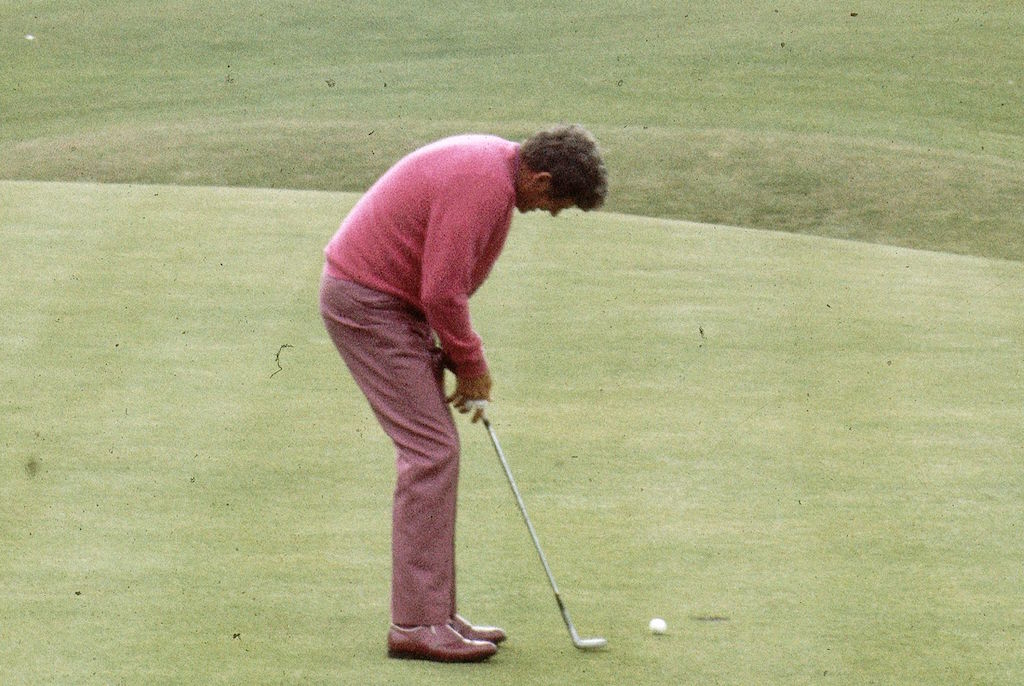
The other day while doing research on an article about “the yips,” I happened to watch the replay of the 1970 Open Championship at St. Andrews with Henry Longhurst calling the play-by-play.
This was the tournament in which Doug Sanders missed a short putt on the final hole to win the championship. In his defense, the putt was a downhill left-to-right slider, the most challenging putt for a right-handed player.
David Pelz, NASA scientist turned putting guru, refers to these sidewinders as “facing putts,” meaning that when the player sets up to the ball, they can see the hole in their periapical vision. This is opposed to right-to-left putts, in which the hole is essentially blocked from view by the player’s body.
The tendency with a “facing putt” is for the player to direct the ball at the hole, rather than on a line above the cup, causing the ball to finish on the low side. What happened as Doug Sanders stood over the ball? We’ll come back to that moment shortly. In the meantime, let’s see what events led up to that point.
The Road Hole
The tendency when examining a win or a loss is to focus only on what happened at the end of the contest, ignoring what led up to the penultimate moment. In this case, to put that final putt into its proper context, we need to go back to the 17th tee, which is where Sanders began to unwind.
Sanders and Trevino were playing together in the final group. Trevino had started the day at 8-under par, but he had slipped down the leaderboard to 2-under by the time they’d reached the 17th hole. Sanders was first to play off the 17th tee, but only after a bizarre series of events occurred. As Sanders stood over the ball with the hotel looming to his right, he turned his head back and forth, looking down his target line more than 20 times. Then, when it appeared that he was ready to pull his club away from the ball, he stepped away to wipe the grip of his driver with a towel.
Sanders then returned to the ball and the ritual began again, but this time the number of looks exceeded the first. And finally, when it appeared that he would never hit the ball, he began his swing, hitting the ball weakly down the right side of the fairway. Trevino played his tee shot down the left side, and with that, the two players started walking down the fairway.
Sander’s ball finished a good 20 yards behind Trevino, leaving him a considerable distance away from the green. After talking with his caddie, Sanders chose to play a fairway wood toward the right side of green. Sanders pulled it slightly to the left, and he and his caddie watched as his ball bounded into the left front bunker.
In 1970, the face of the Road Hole Bunker was not as steep as it is today, but it still represented a significant challenge to those who found themselves in it. The pin was tucked just behind the bunker, leaving Sanders only a few feet of green to work with. He dug his feet into the sand and then proceeded to play a brilliant shot, leaving the ball just a few inches away from the hole. He tapped in for a par, preserving his one-shot lead over Nicklaus.
Valley of Sin
On the 18th hole, the two men drove down the left side of the fairway. The pin was located just a few feet behind the “Valley of Sin.” Sanders walked from his ball all the way to the green, and then, taking a long look at the position of the pin, he walked back to his ball. Sanders was the first to play. His wedge shot landed well past the pin, stopping some 25 feet away. Trevino, who at this point nothing to gain or lose, played his wedge shot to roughly 15 feet behind the pin.
After Trevino had played, the two men walked up through the “Valley of Sin” together and made their way toward the back of the green. They each marked their ball and walked forward toward the hole to survey the area around it. The obvious challenge facing Sanders was that he needed to roll the ball to the hole, but at the same time, not run it too far by the cup.
For The Win
Sanders, looking first at the hole and then back again at the ball, proceed to take several glances back and forth before hitting his first putt. It stopped about 2.5 feet from the hole. The championship belonged to Sanders if he could negotiate the next putt. If he were to miss it, he would fall into a tie with Jack Nicklaus, who was already in the clubhouse waiting for him to finish. In the event that the two should tie, it would be broken by an 18-hole playoff the following day.
In preparation to hit what he hoped was his final putt of the tournament, Sanders placed his putter behind the ball. And then, as he had done before, he began to swivel eyes back and forth… to the ball, to the hole, to the ball, to the hole, to the ball, to the hole. And then, perhaps sensing that he had already spent more time than he should over the ball, he appeared to rush the putt once he’d settled over it.
The unthinkable happened.
Sanders missed the putt, letting it slide to the right below the hole. The following day, Nicklaus won the 18-hole playoff, ending Sander’s bid for his first and only major.
Did He Yip It?
And now to the point. Do you think Sanders yipped that final putt? The answer to that question would depend on how you define the yips, so let me help you. There are any number of people who say they have yipped a putt or that they have “the yips.” In fact, they are more likely suffering from poor mechanics that are exacerbated by performance anxiety.
“The True Yips,” as I define the condition, are only present when there is a visible muscular spasm in anticipation of striking the ball. And to the question as to whether Doug Sanders yipped the putt, I’d invite you to watch the replay on the internet. What you will observe as you watch him putt is that there is no visible spasm present at any point in his stroke.
Sanders just made the same mistake as any other golfer might who was playing with his friends on a Saturday morning; he didn’t start the ball on a line high enough above the cup when playing a left-to-right putt.
And so, for the record, Doug Sanders’ miss at the final hole of the 1970 British Open was not a “true yip,” but just a miscalculation of line and speed.
—
Rod Lidenberg is the author of a new book based on this experience treating students with The Yips. The book is entitled “The Yips: Dancing with the Devil, Rewiring Your System for Success.” The book will be released for publication sometime before the end of the year.





This past Monday, I played in the U.S. Amateur local qualifier at Rock Creek Country Club in Portland, Oregon. A full tee sheet from 7:30 a.m. to 1:55 p.m., the top 11 scores would make it to the U.S. Amateur final qualifying.
I teed off at 10:48 a.m.. With the 7:30 am tee time, you can get a feel for the leaders’ pace, and they were off and running on the challenging setup at Rock Creek.
View this post on Instagram
Getting to the highlight of the round on the par five 17th, a drive up the left side and 212 yards left to the front hole location. I took out a 5-iron with plans of middle of the green. The ball ended up 8 feet left of the hole, pin high. A slight downhill putt dropped in for an eagle 3 on the 17th. With the cut line looking to be anywhere from -2 to even par. This was the boost I had been waiting for all day.
With making par from the trees on 18, it was time to wait for a potential playoff with a posted score of one under par 71.
Three hours later, it was playoff time. 8 players for 6 spots. I made par on the playoff hole, which was good enough to advance to the U.S. Amateur final qualifying in July. USGA qualifiers sure deliver on all of the emotions in golf!
Club Junkie
Building my 2026 gamer WITB: Ranking the contenders and new putter projects – Club Junkie Podcast

The annual What’s In The Bag build is underway, and on this episode of Club Junkie, Brian breaks down the clubs currently leading the race for a spot in his 2026 gamer setup. From drivers and fairway woods to irons, wedges, and shafts, he ranks the equipment that’s performing best and explains what’s separating the front runners from the rest of the field.
Brian also heads into the workshop to discuss several putter projects currently on the bench. From head options and shaft choices to build ideas and testing plans, he shares what he’s working on and which putters could become serious contenders for the bag this season.
If you’re a gear junkie who loves equipment testing, club building, and the never-ending pursuit of the perfect setup, this episode is for you.
Follow Club Junkie:
Instagram: @clubjunkiepod
TikTok: @clubjunkiepod
Threads: @clubjunkiepod
X: @ClubJunkiePod
Club Junkie
Tour Edge Exotics mini driver review + TaylorMade Spider ZT Max first look – Club Junkie

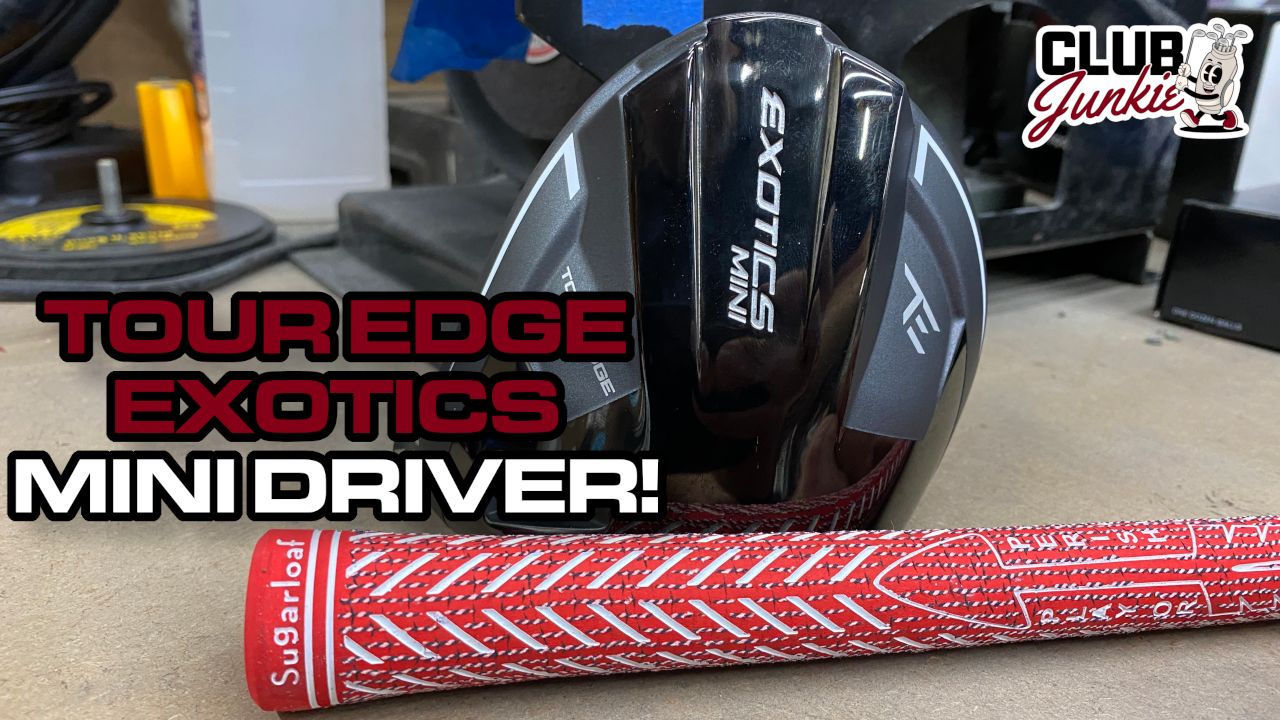
On this episode of Club Junkie, I put the new Tour Edge Exotics Mini Driver to the test and break down the performance, forgiveness, distance, and where it fits compared to a traditional driver or strong fairway wood. If you have been curious about adding a mini driver to the bag, this one is worth a look.
I also dive into the new TaylorMade Spider ZT Max putter that was recently spotted and discuss the growing zero torque putter trend. Plus, there is a closer look at the new Project X Titan Yellow shaft showing up on the PGA Tour and what makes it different from other profiles currently out there.

Justin Rose WITB 2026 (April): Full WITB breakdown with new McLaren irons

What’s the story behind Webb Simpson’s custom-stamped irons?

Memorial Tournament Tour Report: Rory McIlroy, Cameron Young switch up drivers, and more

Cadillac Championship Tour Report: Spieth’s sizable changes, McLaren Golf launches, and more

Russell Henley’s winning WITB: 2026 Charles Schwab Challenge

Kristoffer Reitan’s winning WITB: 2026 Truist Championship

Best irons 2026: Best irons overall, most forgiving irons, and more

J.T. Poston’s winning WITB: 2026 Memorial Tournament

Aaron Rai’s winning WITB: 2026 PGA Championship

Cameron Young’s winning WITB: 2026 Cadillac Championship


Ryan Palmer WITB 2026 (June)
Driver: Callaway Quantum Triple Diamond (9 degrees) Shaft: Project X HZRDUS Smoke Blue RDX 60 TX 3-wood: TaylorMade Qi10 (15 degrees) Shaft:...


Bud Cauley WITB 2026 (June)
Bud Cauley had >14 clubs in his bag when photographed prior to the Memorial Tournament. Driver: Titleist GTS2 (8 degrees) Shaft: Fujikura...


Hannah Green WITB 2026 (June)
Driver: Titleist GTS3 (10 degrees, D4 SureFit setting) Shaft: Mitsubishi Chemical Diamana RB 53 S 3-wood: Titleist GT3 (15 degrees,...


Asterisk Talley WITB 2026 (June)
Driver: TaylorMade Qi4D (9 degrees) Shaft: Fujikura Ventus Blue 6 S 3-wood: TaylorMade Qi4D (16.5 degrees) Shaft: Fujikura Ventus Blue...
-
 Equipment6 days ago
Memorial Tournament Tour Report: Rory McIlroy, Cameron Young switch up drivers, and more
-
 News2 weeks ago
Russell Henley’s winning WITB: 2026 Charles Schwab Challenge
-
 Equipment3 days ago
Best irons 2026: Best irons overall, most forgiving irons, and more
-
 Whats in the Bag4 days ago
J.T. Poston’s winning WITB: 2026 Memorial Tournament
-

 Equipment1 week ago
Details on Jason Day’s latest prototype Avoda iron setup
-

 Equipment3 weeks ago
CJ Cup Byron Nelson Tour Report: Koepka and Kim’s newest putters finally get hot
-

 News2 weeks ago
Charles Schwab Challenge Tour Report: MacIntyre, Åberg and Spaun all switch putters, TaylorMade launches new Spider
-

 Equipment2 weeks ago
Details on J.J. Spaun’s surprise putter switch


David
Dec 27, 2017 at 6:47 pm
That is not a yip
Stan
Dec 27, 2017 at 3:04 pm
Not the yips, a misread
“But was it really a choke? Before Sanders took the putter back, the man who set the pin, Gerald Micklem, told those in the Members Room in the clubhouse that Sanders would miss it because he “won’t see the break because you can’t see the break”.
Source
http://www.nydailynews.com/archives/sports/old-st-andrews-article-1.878308
peter
Dec 27, 2017 at 1:17 am
Yep, rushed the stroke and pushed it.
Drbopperthp
Dec 26, 2017 at 6:04 pm
He choked, plain and simple.
John K
Dec 26, 2017 at 3:30 pm
The instant the ball left his putter it appears he tried to guide it. Been there done that! I would call it uncertainty in his decision more then a yip!
Michael
Dec 26, 2017 at 2:12 pm
See the guy quite often hitting balls at the range. He is the nicest dude in the world and talks to everyone about the game. I personally find it stupid to call this putt a choke when the hole before he hit one of the greatest bunker shots ever. Sure he might of screwed up moving whatever he saw in his line but it was one hell of an effort to get to that point. The fact is he should of played safer on his approach and played for par.
Hugh
Dec 26, 2017 at 1:43 pm
Pretty sure you meant “peripheral vision,” not “periapical” unless he was lining up the putt with his teeth.
Dan Retief
Dec 26, 2017 at 1:11 pm
I had always believed that Doug Sanders addressed that short putt then leant forward to sweep a pebble, or something, off his line and then went back into his stance and missed. I might even have read it in Sanders’ entertaining autobiography “Come Swing With Me.” The story went that when Ben Hogan, watching on TV in Texas, saw Sanders move to sweep the line he cried out, “step away!” Sanders didn’t and might have slightly altered his stance and alignment. However this is not shown in the clip you have attached. Did it happen? That little putt on the 18th at St Andrews to this day breaks to the right… wonder if poor old Doug at the last second thought he was lining up too far outside the left of the cup and, like the rest of us, self-corrected his stroke by slightly opening the putter face and pushing it to straight, thus it took the break and missed right. Agree that it was not a yip.
Frank Korfanta
Jul 1, 2022 at 12:39 am
Your assessment Dan is 100% correct! The author of this article fails to mention this critical error by Sanders. He didnt rush the putt or yip it, he failed to step off and re-align this challenging slippery left to rignt downhill putt. After he reached over brushed the pebble away or whatever it was he saw, he altered his stance just enough to change his original line. It never had a chance…sadly! Why he didnt step off and re-align the putt is the real mystery?
John Grossi
Dec 26, 2017 at 11:58 am
Sorry, I cannot watch again that stroke.
I truly believe he yipped that putt.
Todd
Dec 26, 2017 at 11:18 am
Agreed, ball never started left of the hole like it needed.
Pete O'Tube
Dec 26, 2017 at 10:59 am
Not quite a yip, but a shove with the right shoulder!