
Opinion & Analysis
So Junior wants to play pro golf, does he?

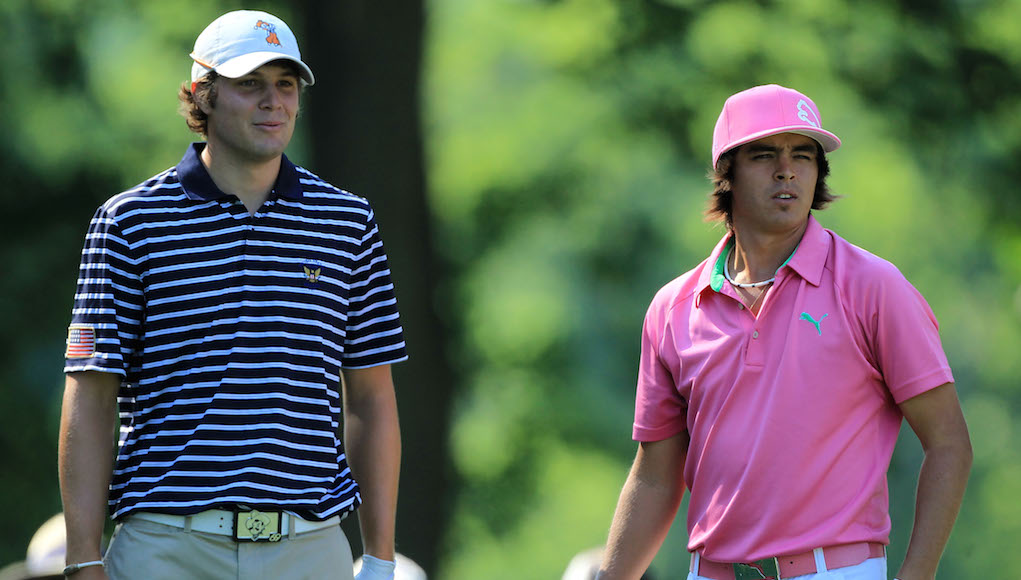
Over the past 15 years, I’ve had a front-row seat to elite junior golf. I have watched more than 1,500 rounds of golf and evaluated upward of 10,000 junior golfers. Over that time, I can remember only four truly great rounds of competitive golf in big-time moments. The rest were average, below average, or wildly disappointing for a group of golfers who are very, very good, but not PGA Tour-level great.
The implication is simple; most junior golfers — something like 99.99 percent of them — have no chance of earning a PGA Tour card. I don’t say this to scare you or your loved one; I say this because it’s the truth, and it might motivate Junior. To play on the PGA Tour, you have to be in the top 1 percent of the top 1 percent to have a chance, and even then making millions by playing golf professionally is unlikely. For every Rickie Fowler there’s a Ty Tryon; and then there are thousands more who had professional aspirations that Tyron and Fowler used to whoop up on. And there’s always a constant crop of new, PGA-Tour ready golfers that cycle in every year.
For the ones who are trying to “make it” and believe they have the talent and work ethic, I have compiled a list of tips that can help the best of the best increase their odds of making it to the PGA Tour.
20-Year Life Cycle: It’s a Marathon, Not a Sprint
Every sport has a life cycle. For example, gymnastics has a life cycle of approximately seven years; students specialize at about 13 years old, and their careers end when they are about 20 (if they’re lucky). For golfers, that life cycle is closer to 20 years and hopefully longer. That means that an elite golfer who takes up the game at 6 should not expect to become a world-class golfer or touring pro until age 26. This presents a unique problem; a lot happens between the ages of 6 and 26 to a person, including puberty, college, dating, and so much more. Even the most driven person is going to have a problem staying completely focused on one thing for 20 years. It’s a marathon, not a sprint, so it’s important that all aspiring golfers take breaks and time away from the game to relax and rejuvenate. Balance is extremely important.
There Is A Formula: It’s Called Hard Work and Planning
As a coach and mentor helping junior golfers and their parents, I always start at the same place; realize that what you want has a simple, straightforward process. You need to set a goal, get the proper support, work way harder than you think you should, and evaluate the results along the way. I believe strongly in this process and have seen great results, even for those who eventually focus on something other than golf. Why do they become successful? Because if a junior learns to set goals, work hard, evaluate, and repeat, it works. The problem is not the process, but sticking to it.
The Secret Sauce: Motivation
Beyond teaching the process I highlighted above, as a player or parent you must also understand that being motivated and staying motivated is a large differentiator in sports, as in life. The story of the kid who plays basketball from the moment he wakes up until the moment he goes to sleep is not an urban myth; it’s a simple fact. Some kids put in a lot more hours, and the success stories generally come from this group.
For PGA Tour players, if you aren’t motivated or built this way, then remember there is a kid out there who is. He or she is out there practicing when you’re texting or hanging at the mall with your friends. And he or she is likely to beat you… and beat you bad.
Parents can lead their kids to the foot of the mountain, but they can’t climb it for them. What motivates your child will change throughout his or her life, and it is your job to help junior find it. For example, when a player is younger, they may enjoy golf because they get an ice cream at the end of every round. Then they might enjoy the ability to beat their peers, and later the ability to earn a college scholarship. None of these motivations are right or wrong. Your job as a parent is to help your child have the motivation to keep following the process of setting goals, getting support, working hard, and evaluating.
Early Specialization May Not Be All It’s Cracked Up To Be
Science suggests that juniors who specialize early are at a greater risk of injury. Dr. Neeru Jayanthi of Loyola University found that early specialization in a single sport is one of the strongest predictors of injury. Athletes in the study who specialized were 70-to-93 percent more likely to be injured than children who played multiple sports. A 2013 American Medical Society for Sports Medicine survey found that 88 percent of college athletes surveyed participated in more than one sport as a child.
Other sports can also help junior golfers develop different skills. For example, playing baseball might help junior golfers fine tune their ambient motor system. Soccer might help golfers improve their cardiovascular system. Tennis might teach them about controlling their emotions. In the future, it is likely that junior golfers will draw on these experiences to help them in their golf careers.
The Canadian Class Of 2009: Who Made It and Who Didn’t
The year 2009 was an awesome one for Canadian amateur golf; Nick Taylor was the No. 1-ranked amateur in the world for approximately 20 weeks and Matt Hill won every competition he played in during his spring semester at NC State, including the NCAA Championships. This was also the year that a gentleman from the University of Louisville named Adam Hadwin turned pro. In 2010, a player from Boise State named Graeme DeLaet turned pro.
At the time, nobody paid much attention to Hadwin or DeLaet. It was all about Taylor and Hill. Fast forward seven years: Hadwin and DeLeat are PGA Tour players and Hadwin is a PGA Tour winner. This goes to show you that early talent is not always the strongest predictor or longevity.
The Best Advice I Ever Heard
The best advice I have heard on this subject comes from Steve Runge, Head Men’s Golf Coach at the University of Central Arkansas. I once asked Runge, a former Ohio State stand-out and a three-time winner on the Nationwide Tour, “Who makes it and who doesn’t?” Without hesitation he responded, “It’s simple. If you’re good enough, you will make it.”



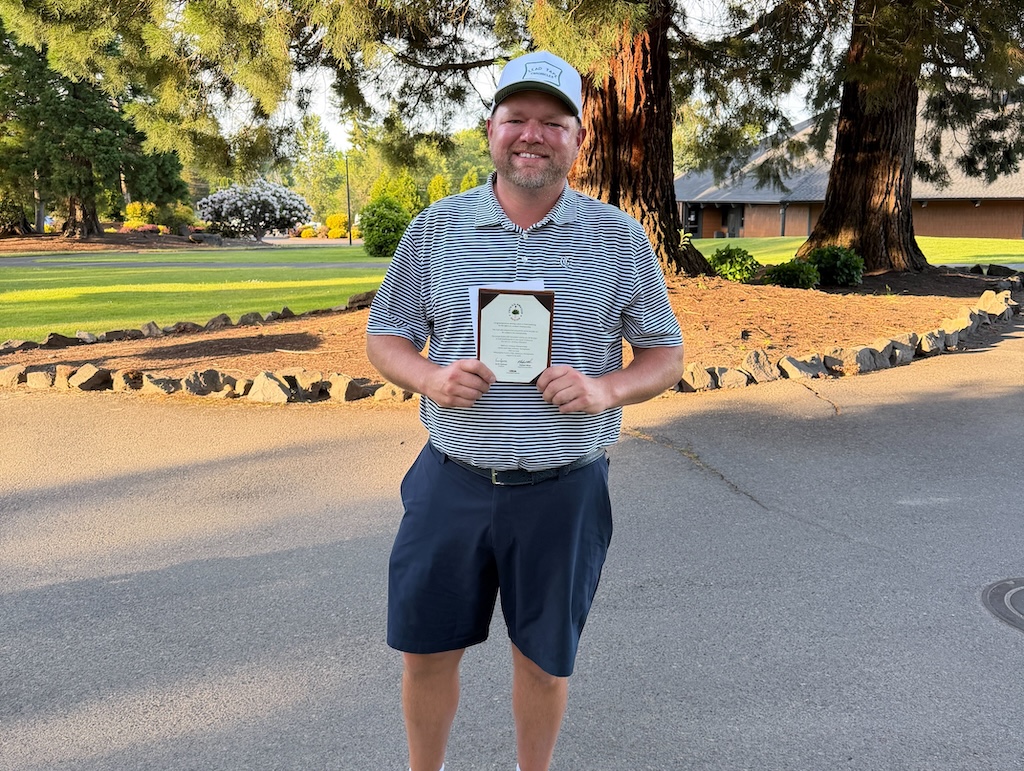
This past Monday, I played in the U.S. Amateur local qualifier at Rock Creek Country Club in Portland, Oregon. A full tee sheet from 7:30 a.m. to 1:55 p.m., the top 11 scores would make it to the U.S. Amateur final qualifying.
I teed off at 10:48 a.m.. With the 7:30 am tee time, you can get a feel for the leaders’ pace, and they were off and running on the challenging setup at Rock Creek.
View this post on Instagram
Getting to the highlight of the round on the par five 17th, a drive up the left side and 212 yards left to the front hole location. I took out a 5-iron with plans of middle of the green. The ball ended up 8 feet left of the hole, pin high. A slight downhill putt dropped in for an eagle 3 on the 17th. With the cut line looking to be anywhere from -2 to even par. This was the boost I had been waiting for all day.
With making par from the trees on 18, it was time to wait for a potential playoff with a posted score of one under par 71.
Three hours later, it was playoff time. 8 players for 6 spots. I made par on the playoff hole, which was good enough to advance to the U.S. Amateur final qualifying in July. USGA qualifiers sure deliver on all of the emotions in golf!
Club Junkie
Building my 2026 gamer WITB: Ranking the contenders and new putter projects – Club Junkie Podcast

The annual What’s In The Bag build is underway, and on this episode of Club Junkie, Brian breaks down the clubs currently leading the race for a spot in his 2026 gamer setup. From drivers and fairway woods to irons, wedges, and shafts, he ranks the equipment that’s performing best and explains what’s separating the front runners from the rest of the field.
Brian also heads into the workshop to discuss several putter projects currently on the bench. From head options and shaft choices to build ideas and testing plans, he shares what he’s working on and which putters could become serious contenders for the bag this season.
If you’re a gear junkie who loves equipment testing, club building, and the never-ending pursuit of the perfect setup, this episode is for you.
Follow Club Junkie:
Instagram: @clubjunkiepod
TikTok: @clubjunkiepod
Threads: @clubjunkiepod
X: @ClubJunkiePod
Club Junkie
Tour Edge Exotics mini driver review + TaylorMade Spider ZT Max first look – Club Junkie

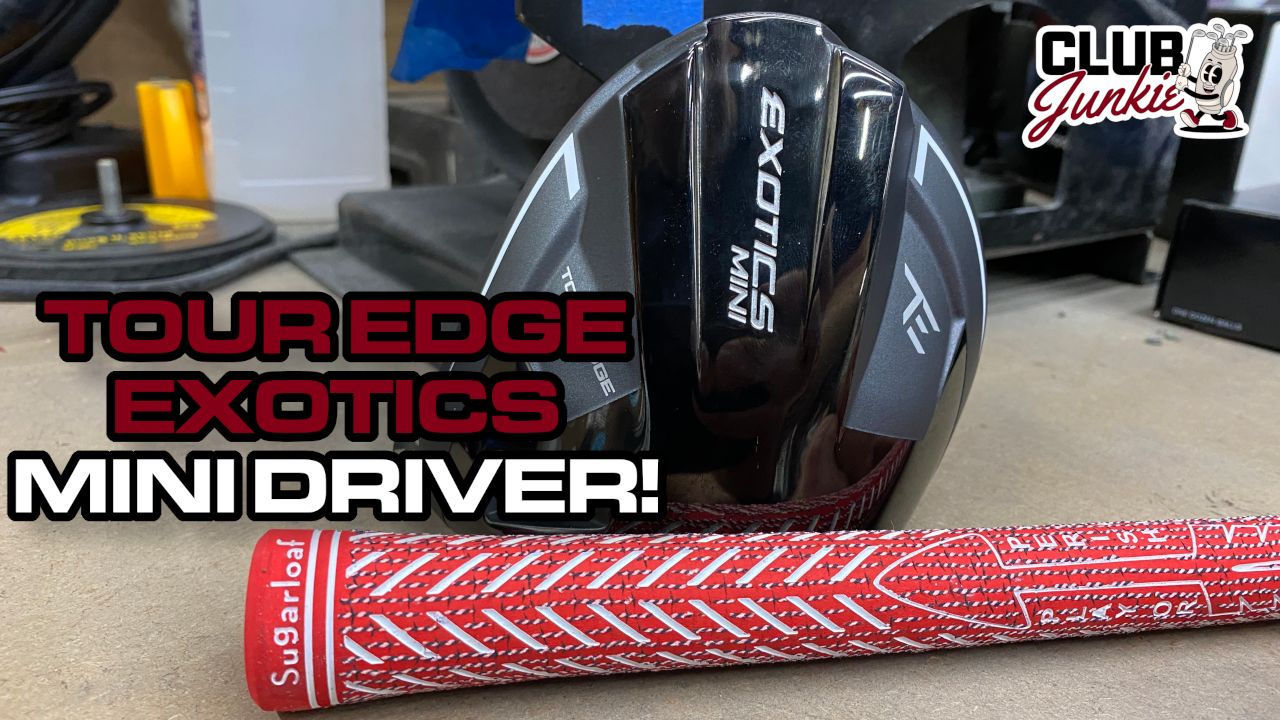
On this episode of Club Junkie, I put the new Tour Edge Exotics Mini Driver to the test and break down the performance, forgiveness, distance, and where it fits compared to a traditional driver or strong fairway wood. If you have been curious about adding a mini driver to the bag, this one is worth a look.
I also dive into the new TaylorMade Spider ZT Max putter that was recently spotted and discuss the growing zero torque putter trend. Plus, there is a closer look at the new Project X Titan Yellow shaft showing up on the PGA Tour and what makes it different from other profiles currently out there.

Justin Rose WITB 2026 (April): Full WITB breakdown with new McLaren irons

What’s the story behind Webb Simpson’s custom-stamped irons?

Memorial Tournament Tour Report: Rory McIlroy, Cameron Young switch up drivers, and more

Cadillac Championship Tour Report: Spieth’s sizable changes, McLaren Golf launches, and more

Russell Henley’s winning WITB: 2026 Charles Schwab Challenge

Kristoffer Reitan’s winning WITB: 2026 Truist Championship

Aaron Rai’s winning WITB: 2026 PGA Championship

Cameron Young’s winning WITB: 2026 Cadillac Championship

J.T. Poston’s winning WITB: 2026 Memorial Tournament

Best irons 2026: Best irons overall, most forgiving irons, and more


Bud Cauley WITB 2026 (June)
Bud Cauley had >14 clubs in his bag when photographed prior to the Memorial Tournament. Driver: Titleist GTS2 (8 degrees) Shaft: Fujikura...


Hannah Green WITB 2026 (June)
Driver: Titleist GTS3 (10 degrees, D4 SureFit setting) Shaft: Mitsubishi Chemical Diamana RB 53 S 3-wood: Titleist GT3 (15 degrees,...


Asterisk Talley WITB 2026 (June)
Driver: TaylorMade Qi4D (9 degrees) Shaft: Fujikura Ventus Blue 6 S 3-wood: TaylorMade Qi4D (16.5 degrees) Shaft: Fujikura Ventus Blue...

Brianna Do WITB 2026 (June)
Driver: Callaway Quantum Triple Diamond (9 degrees) Shaft: KBS PGW 3-wood: Callaway Elyte Titanium (15 degrees) Shaft: KBS PGW 5-wood:...
-
 Equipment6 days ago
Memorial Tournament Tour Report: Rory McIlroy, Cameron Young switch up drivers, and more
-
 News1 week ago
Russell Henley’s winning WITB: 2026 Charles Schwab Challenge
-
 Whats in the Bag3 days ago
J.T. Poston’s winning WITB: 2026 Memorial Tournament
-
 Equipment3 days ago
Best irons 2026: Best irons overall, most forgiving irons, and more
-

 Equipment1 week ago
Details on Jason Day’s latest prototype Avoda iron setup
-
 Equipment3 weeks ago
CJ Cup Byron Nelson Tour Report: Koepka and Kim’s newest putters finally get hot
-

 News2 weeks ago
Charles Schwab Challenge Tour Report: MacIntyre, Åberg and Spaun all switch putters, TaylorMade launches new Spider
-
 Equipment2 weeks ago
Details on J.J. Spaun’s surprise putter switch


CCGolfTx
Sep 14, 2017 at 10:16 pm
Ty Tyron. Haven’t heard that name in a minute. Interesting bringing him into the mix to make your point. I like it. Rickie v Ty comparison is almost as interesting as the rest of the article.
Matt Abramson
Sep 14, 2017 at 1:17 pm
Trash, like usual
J.R.
Sep 13, 2017 at 11:04 am
You almost had me, but… Nick Taylor won 2 years before Adam Hadwin. Fact check, fact check, fact check… Nick Taylor has made 1.25 mil this year. Thats not exactly scrapping by. His name should’ve been left out of this post. Don’t get lazy on your research. When your audience has access to the same information you do at their fingertips, you can’t just go about writing up nonsense like this all willy nilly.
Canucknut
Sep 13, 2017 at 1:27 am
In general, Canadian golfers suck and the only one of recent note is Mike Weir, who played hockey and that must have helped his golf swing. Most decent Canadian golfers seek out US college scholarships to improve their golf game.
Curiously, many Canadians play golf in their short summer season and their participation rate is quite high compared to most countries.
Riley
Sep 13, 2017 at 9:03 am
Canada has one of the best National programs around, curious comment. Take a look at the collegiate ranks, they pump out some players, men and women.
Leezer
Sep 12, 2017 at 7:37 pm
I believe what Mr. Ryan is saying but I’m not sure this was the direction the article should have gone or was intended to go. Would have been nice to speak to the mystery four rounds that were “truly great” or even given some guidance to those that are looking to achieve this goal. Saying, work harder than others is a given and motivation is such a fickle topic when speaking about juniors it’s almost throwaway material. I’ll definitely be looking into Mr. Ryan’s past musings since it seems like he has ‘been there, done that’ so maybe there are other insights he can provide. Would definitely like to see more articles on this topic in the future.
edwardt2
Sep 12, 2017 at 5:02 pm
So you mention it, but never say what they were. What were the four greatest rounds in big-time situations?
Mike
Sep 12, 2017 at 1:48 pm
Nick Taylor won on tour before Adam Hadwin…..
Philip
Sep 12, 2017 at 2:14 pm
Yeah, I was wondering about that so I did something that writers often appear to fail at … fact checking … I guess some writers have it and some never quite get to the top
SH
Sep 12, 2017 at 3:49 pm
I think he was referring to overall success on tour in correlation to the amount of hype/success of the player as an amateur. But, I guess, some people need to troll in the comment section and some don’t.
Philip
Sep 12, 2017 at 5:10 pm
I gathered that – but there is already too much misinformation out there and too many people that take whatever is on the internet as factual, accurate and truthful, because it is in words … but if expecting a writer to be careful in what they write and ensuring the facts they present is considered trolling then have at it …
Scott
Sep 13, 2017 at 11:18 am
+1
SH
Sep 14, 2017 at 12:58 pm
You were inferring that he did not fact check, when in reality, he said nothing about Hadwin winning before Taylor in his article. That was something that was written in the comments. So, it is you that is attempting to mislead people and should be fact checked, not the author.