
Opinion & Analysis
Avoiding the “Athletic Swing”

When Amy Schumer’s nude photo exploded on the internet she expressed laughing disappointment with the public reception: “When a nude photo of yourself goes viral, the word you don’t want people to use to describe it is ‘brave’.” Just as Schumer was wary of the “brave” modifier, there’s an equivalent adjective that golfers need to accept with caution: “athletic.”
Before we go further, we should be clear: few things are more athletically challenging than hitting the golf ball solidly and consistently. Hall of Fame baseball sluggers have been brought to their knees by stationary spheres of dimpled rubber in ways that 90 mph fastballs or wicked curves never could. However, it is because the striking of the golf ball in an effective and consistent manner is such a daunting feat that we must not make it any more complicated than absolutely necessary.
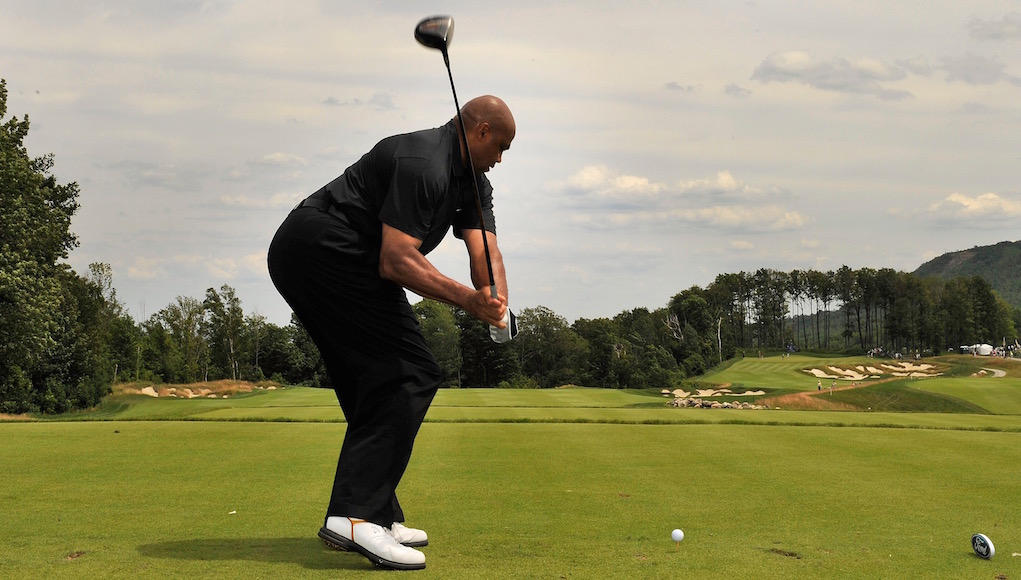
A few years ago I set a goal of becoming a single-digit handicapper, and I began the journey by crowd sourcing my golf swing and posting videos of my swing on social media along with requests for feedback. Nothing pleased this former all-conference hoopster more than to have some of the most accomplished golfers I knew describe videos of my swing as “athletic.” Surely that had to be a good thing. Months later I would learn, not so much. I found that when it comes to golf, “athletic” can be a way of saying that a swing is encumbered by more movement than necessary. Charles Barkley’s golf swing is athletic. In contrast, while Dustin Johnson may be strong and agile, athletic in multiple facets, when it comes to his swing, we see only smooth efficiency. Barkley’s swing looks like a circus act, a miraculous feat he performs each time he strikes the ball. By comparison, Johnson’s swing is a funnel of pragmatism, a vehicle for reliably utilizing his gifts to strike the ball in a consistent and repeatable fashion.
When I first crossed paths with master teacher Brad Clayton, he watched me hit a 7-iron for several minutes before stopping me and forcing me to make a choice. “Win, you can dance the merengue, or you can play golf, but you can’t do them both at the same time,” he said. I couldn’t believe what I saw when he played back some of my swings. What I had pictured in my mind as a Nicklaus-esque swing was in reality a spastic thrusting of the lower body, where knees and thighs expended energy that in no manner contributed to the physics of hitting the golf ball. By the end of the lesson he had settled my lower body; he had me focus on “smooth feet.” The next day I broke 80 for the first time. That single lesson was the biggest stepping stone in my eventually reaching the golf goals I had set for myself.
If an “athletic swing” is a problem for the casual golfer, it’s an even greater obstacle for someone who wants to play competitively. Intricate swings that can awe onlookers on the range are the first to break down under pressure. Conversely, efficient swings whose components are spare and utilitarian can be put on auto-pilot when the heat is on. Back in 1951, the legendary Byron Nelson convinced the fairly accomplished amateur Ken Venturi, winner of the California State Amateur title, to discard his swing and start from scratch. Nelson maintained that the young Venturi’s swing was too wristy and unnecessarily complicated. Venturi eventually capitulated, sticking with the new swing for months in what was a difficult and winless transition period. The effort paid huge dividends, however, and Venturi went on to be a Walker Cup hero, an accomplished professional and U.S. Open champion, and later in life, a mainstay in golf broadcasting booths.
So while it might be initially pleasing to hear one’s golf swing referred to as athletic, we should not be satisfied with such a description. Just as Schumer smiled at those who called her pics in the buff “brave” and then moved on with her career, we should realize that an “athletic” swing is a starting point, not a final destination.
Note: Of late, Mr. Barkley has been working hard to streamline his swing and seems to be on the way to a much more effective approach to hitting the golf ball.




This past Monday, I played in the U.S. Amateur local qualifier at Rock Creek Country Club in Portland, Oregon. A full tee sheet from 7:30 a.m. to 1:55 p.m., the top 11 scores would make it to the U.S. Amateur final qualifying.
I teed off at 10:48 a.m.. With the 7:30 am tee time, you can get a feel for the leaders’ pace, and they were off and running on the challenging setup at Rock Creek.
View this post on Instagram
Getting to the highlight of the round on the par five 17th, a drive up the left side and 212 yards left to the front hole location. I took out a 5-iron with plans of middle of the green. The ball ended up 8 feet left of the hole, pin high. A slight downhill putt dropped in for an eagle 3 on the 17th. With the cut line looking to be anywhere from -2 to even par. This was the boost I had been waiting for all day.
With making par from the trees on 18, it was time to wait for a potential playoff with a posted score of one under par 71.
Three hours later, it was playoff time. 8 players for 6 spots. I made par on the playoff hole, which was good enough to advance to the U.S. Amateur final qualifying in July. USGA qualifiers sure deliver on all of the emotions in golf!
Club Junkie
Building my 2026 gamer WITB: Ranking the contenders and new putter projects – Club Junkie Podcast

The annual What’s In The Bag build is underway, and on this episode of Club Junkie, Brian breaks down the clubs currently leading the race for a spot in his 2026 gamer setup. From drivers and fairway woods to irons, wedges, and shafts, he ranks the equipment that’s performing best and explains what’s separating the front runners from the rest of the field.
Brian also heads into the workshop to discuss several putter projects currently on the bench. From head options and shaft choices to build ideas and testing plans, he shares what he’s working on and which putters could become serious contenders for the bag this season.
If you’re a gear junkie who loves equipment testing, club building, and the never-ending pursuit of the perfect setup, this episode is for you.
Follow Club Junkie:
Instagram: @clubjunkiepod
TikTok: @clubjunkiepod
Threads: @clubjunkiepod
X: @ClubJunkiePod
Club Junkie
Tour Edge Exotics mini driver review + TaylorMade Spider ZT Max first look – Club Junkie

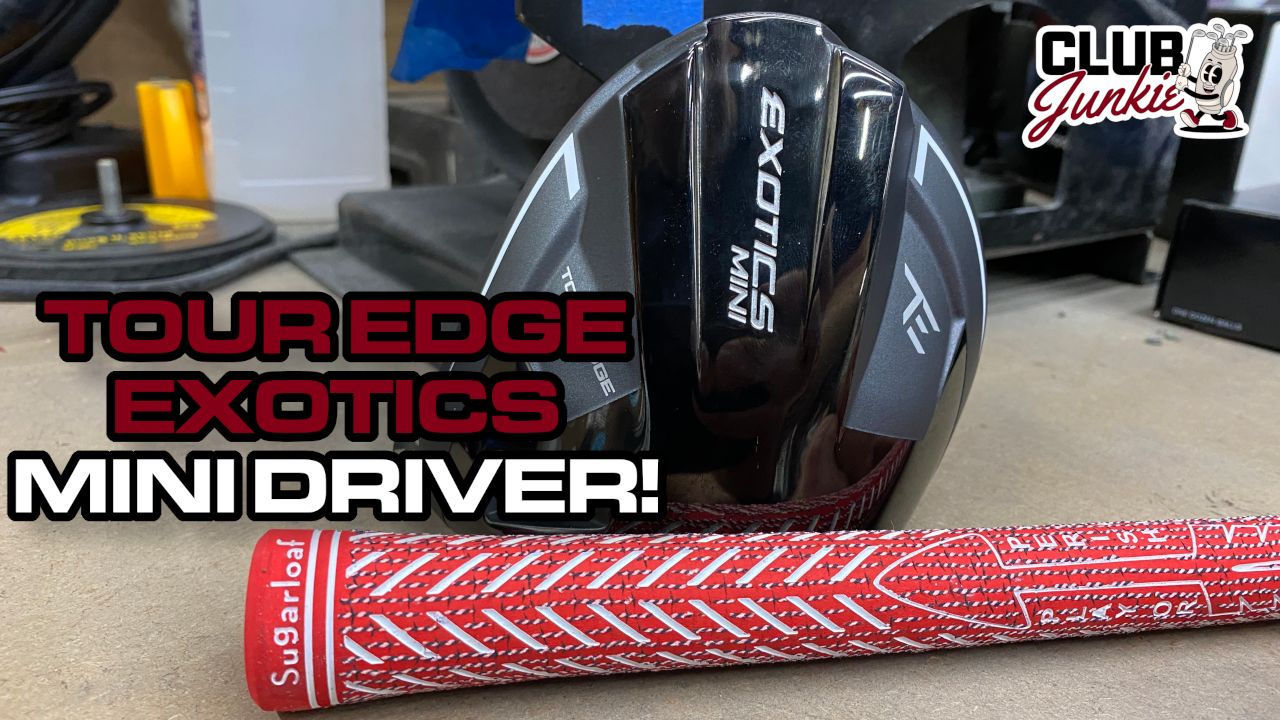
On this episode of Club Junkie, I put the new Tour Edge Exotics Mini Driver to the test and break down the performance, forgiveness, distance, and where it fits compared to a traditional driver or strong fairway wood. If you have been curious about adding a mini driver to the bag, this one is worth a look.
I also dive into the new TaylorMade Spider ZT Max putter that was recently spotted and discuss the growing zero torque putter trend. Plus, there is a closer look at the new Project X Titan Yellow shaft showing up on the PGA Tour and what makes it different from other profiles currently out there.

Justin Rose WITB 2026 (April): Full WITB breakdown with new McLaren irons

What’s the story behind Webb Simpson’s custom-stamped irons?

Memorial Tournament Tour Report: Rory McIlroy, Cameron Young switch up drivers, and more

Cadillac Championship Tour Report: Spieth’s sizable changes, McLaren Golf launches, and more

Russell Henley’s winning WITB: 2026 Charles Schwab Challenge

Kristoffer Reitan’s winning WITB: 2026 Truist Championship

Aaron Rai’s winning WITB: 2026 PGA Championship

J.T. Poston’s winning WITB: 2026 Memorial Tournament

Best irons 2026: Best irons overall, most forgiving irons, and more

Cameron Young’s winning WITB: 2026 Cadillac Championship


Bud Cauley WITB 2026 (June)
Bud Cauley had >14 clubs in his bag when photographed prior to the Memorial Tournament. Driver: Titleist GTS2 (8 degrees) Shaft: Fujikura...


Hannah Green WITB 2026 (June)
Driver: Titleist GTS3 (10 degrees, D4 SureFit setting) Shaft: Mitsubishi Chemical Diamana RB 53 S 3-wood: Titleist GT3 (15 degrees,...


Asterisk Talley WITB 2026 (June)
Driver: TaylorMade Qi4D (9 degrees) Shaft: Fujikura Ventus Blue 6 S 3-wood: TaylorMade Qi4D (16.5 degrees) Shaft: Fujikura Ventus Blue...

Brianna Do WITB 2026 (June)
Driver: Callaway Quantum Triple Diamond (9 degrees) Shaft: KBS PGW 3-wood: Callaway Elyte Titanium (15 degrees) Shaft: KBS PGW 5-wood:...
-
 Equipment6 days ago
Memorial Tournament Tour Report: Rory McIlroy, Cameron Young switch up drivers, and more
-
 News1 week ago
Russell Henley’s winning WITB: 2026 Charles Schwab Challenge
-
 Whats in the Bag3 days ago
J.T. Poston’s winning WITB: 2026 Memorial Tournament
-
 Equipment3 days ago
Best irons 2026: Best irons overall, most forgiving irons, and more
-
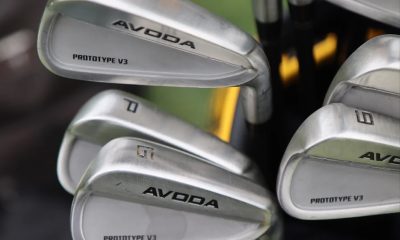
 Equipment1 week ago
Details on Jason Day’s latest prototype Avoda iron setup
-
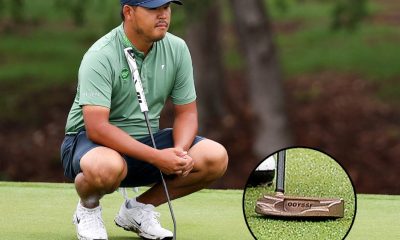
 Equipment3 weeks ago
CJ Cup Byron Nelson Tour Report: Koepka and Kim’s newest putters finally get hot
-

 News2 weeks ago
Charles Schwab Challenge Tour Report: MacIntyre, Åberg and Spaun all switch putters, TaylorMade launches new Spider
-
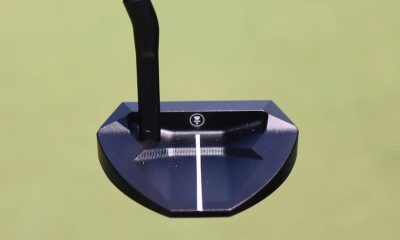
 Equipment2 weeks ago
Details on J.J. Spaun’s surprise putter switch

