
Opinion & Analysis
Learn from the Best: A Q&A with Mental Game Guru Karl Morris

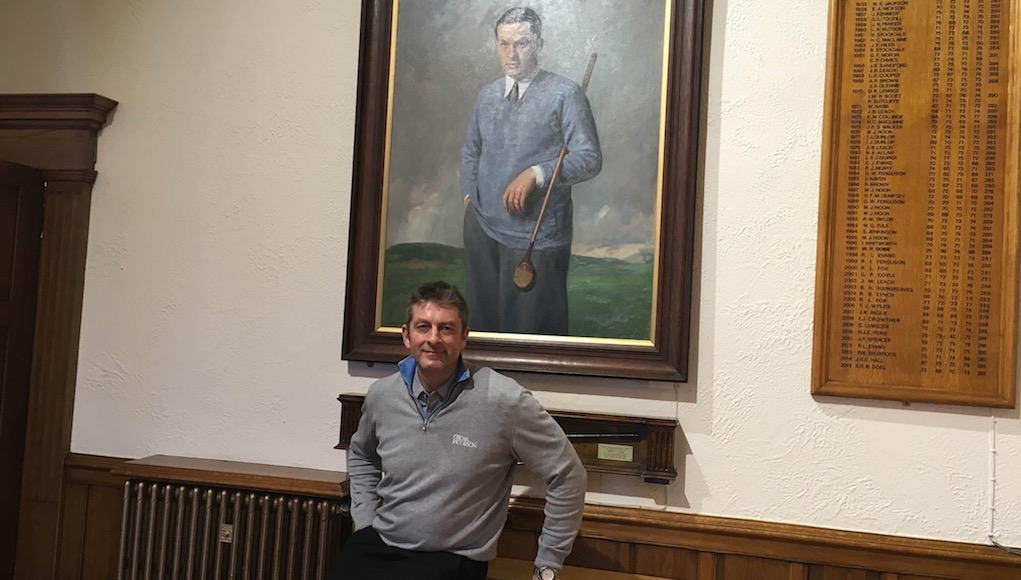
My name is Richard Cartwright, and I’m a PGA Professional in the UK. I teach golf for a living, and I’ve always made it a point in my career to seek out the best and brightest minds in the game so I can pick their brains. I thought, why not share what I learn with the GolfWRX Community?
For my second installment of “Learn from the Best,” I speak with mental game guru Karl Morris. Morris has worked with major winners Darren Clarke, Graeme McDowell and Louis Oosthuizen, and he has also written the very popular book, “Golf: The Mind Factor” with Darren Clarke.
With his experience of coaching some of the best in the world, Morris gives his expert analysis on Alex Noren’s win at The BMW Championship at Wentworth, as well as an insight into how a tour winner thinks. Note: This Q&A has been lightly edited for grammar and style.
Richard Cartwright: Let’s talk about Alex Noren, who just recently won the European Tour’s BMW PGA Championship. Apart from the work he has done with (swing coach) Matt Belsham and his recovery from tendonitis in both wrists in 2014, what other contributing factors have stood out for you when it comes to Alex Noren’s rise to No. 8 in the world?
Karl Morris: One thing is for sure Noren looks supremely confident with the work he has done with his coach to the great credit of Matt Belsham. Having real clarity on what you are working on technically allows you to free up mentally. Having really good pictures of how your swing functions so that when the swing misfires you know why. This allows the mind to then get on with the job of PLAYING golf, as you are not in constant “fix-it” mode.
It is also clear that Noren now “sees” himself as a winner, and he is now in that wonderful position of finding ways to win as opposed to finding ways to lose. There is a phrase that goes along the lines of “what the thinker thinks, the prover proves.” A part of our psyche seeks to “prove” what we believe. If I truly believe I can win, then my brain goes in search of evidence to support that. So even in unlikely circumstances like Wentworth, from way back in the field, Noren found a way to win.
There’s a now famous picture on social media of Alex and his “workman’s hands,” showing his audience how much he practices. Is this sort of work ethic advisable, or is it over the top and not always necessary to reach the top of the world of professional golf?
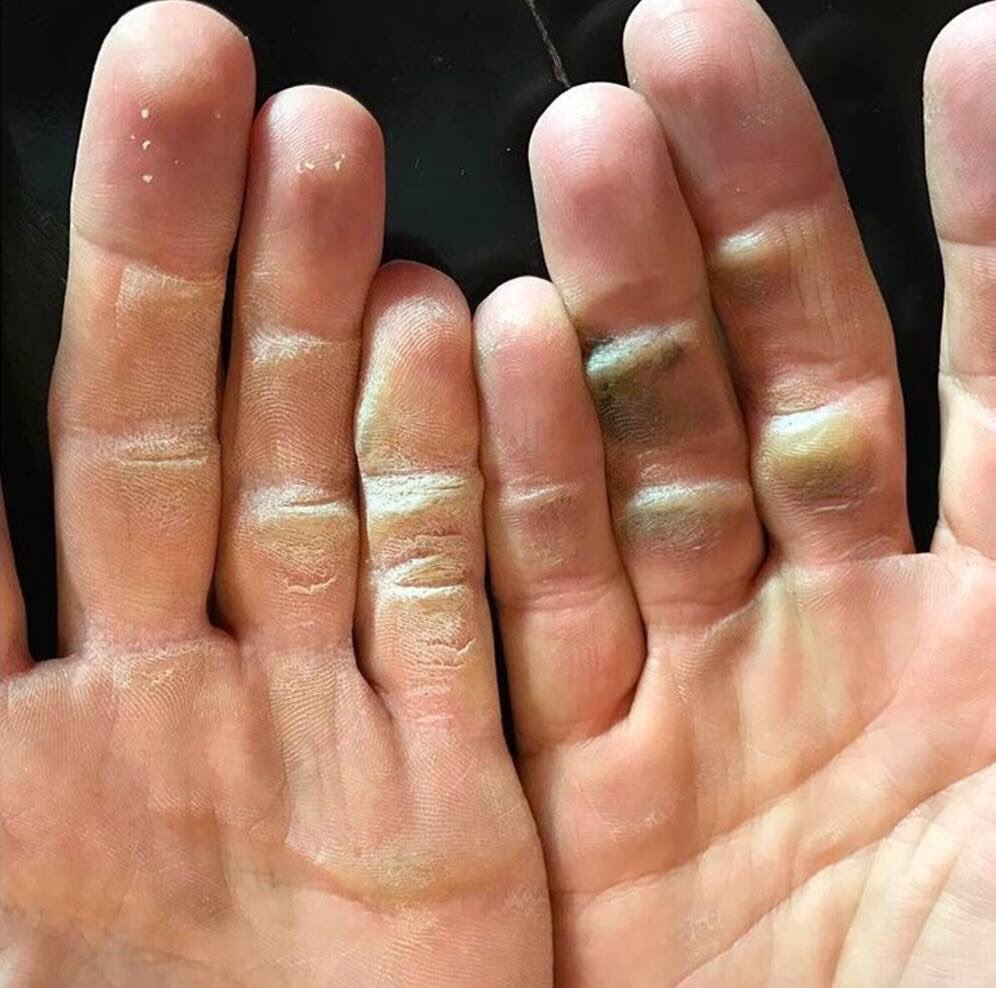
A photo of Alex Noren’s hands after a practice session.
A lot has been made of Alex Noren’s work ethic, his calloused hands bearing testimony to the time he puts into practice. This works wonderfully well for him. What I would say, though, is that the individual is “sacred.” What works for one doesn’t necessarily transfer to all. In golf, we need to avoid absolutism. It is not about finding THE way to do it, but YOUR way.
I have worked with some of the best players in the world, and some of them need to hit lots of shots in practice. Others hit relatively few shots on the range, but they spend a lot of time on the course. You need to put the time in, but it needs to be time that suits you as opposed to some model of what is “correct.” The most important person a golfer needs to find out about is himself or herself.
Noren talks about when he approaches a shot, he tends to work on “feel” of a swing rather than technique. This is despite a lot of his practice swings, where he’s trying to exaggerate a leftwards path to help encourage a fade. Is a feel-based game the best way to help the average golfer, and is one or two swing thoughts to be completely discouraged in a round of golf?
Noren talks about “feeling” his swing out on the course as opposed to thinking about it.
Again, this is key. On the golf course, you do not want to be over the ball giving yourself lots of conscious commands of what to do in the swing. Having your attention on a certain feel in your swing is fine as long as it’s a singular focus of attention.
The mistake many players make is to allow their attention to flit around various “solutions” to what the ball is doing. This comes back to the answer in the first question of working with a good coach and having absolute clarity on how your swing functions, especially through impact. Know what your impact tendencies are and work with that. Noren knows his path tendency is left through impact and that lovely powerful fade is built around that.
Predictions for the U.S. Open? Who’s your favourite to win and why?
I don’t make predictions! It is something I actively get my players to avoid. The only thing we really know is that we don’t know what will happen. Predicting is just wasting mental energy.
A better way to go is to “expect nothing, but deal with everything.” The problem is that if we make predictions and they don’t look like working out, we can feel lost. There is a big difference between having a belief that you have the capability to win and predicting it will actually happen. One has you lost in a fantasy perceived future; the other one has you focused on the task in front of you.
Thank you for the chat, Karl.



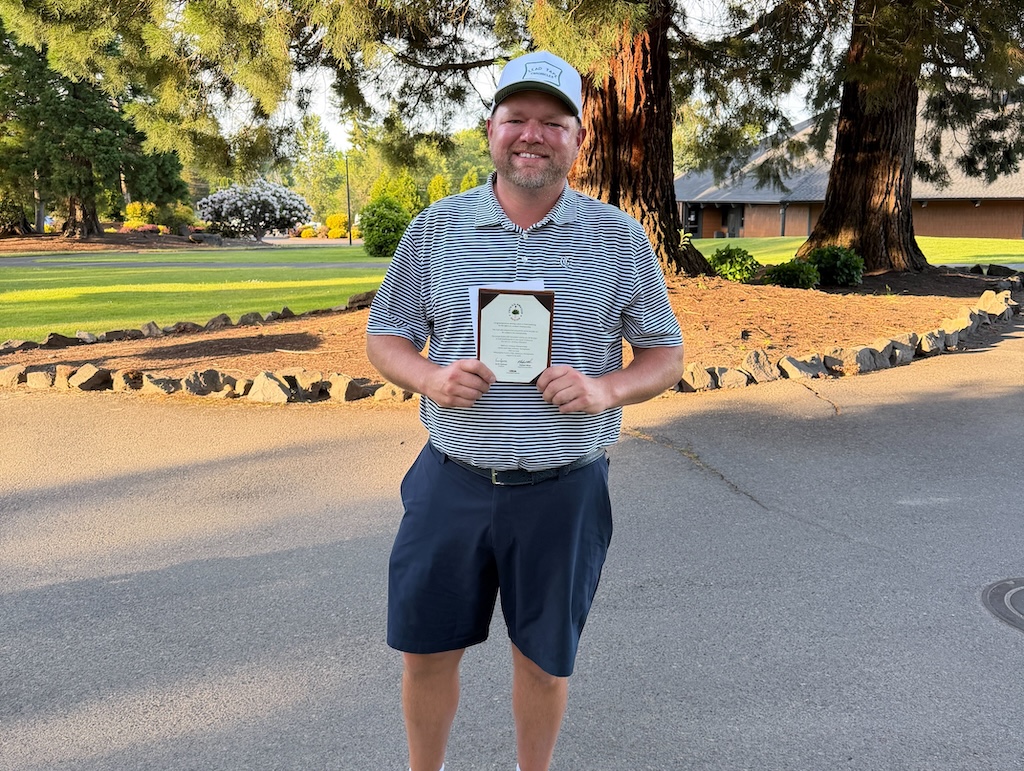
This past Monday, I played in the U.S. Amateur local qualifier at Rock Creek Country Club in Portland, Oregon. A full tee sheet from 7:30 a.m. to 1:55 p.m., the top 11 scores would make it to the U.S. Amateur final qualifying.
I teed off at 10:48 a.m.. With the 7:30 am tee time, you can get a feel for the leaders’ pace, and they were off and running on the challenging setup at Rock Creek.
View this post on Instagram
Getting to the highlight of the round on the par five 17th, a drive up the left side and 212 yards left to the front hole location. I took out a 5-iron with plans of middle of the green. The ball ended up 8 feet left of the hole, pin high. A slight downhill putt dropped in for an eagle 3 on the 17th. With the cut line looking to be anywhere from -2 to even par. This was the boost I had been waiting for all day.
With making par from the trees on 18, it was time to wait for a potential playoff with a posted score of one under par 71.
Three hours later, it was playoff time. 8 players for 6 spots. I made par on the playoff hole, which was good enough to advance to the U.S. Amateur final qualifying in July. USGA qualifiers sure deliver on all of the emotions in golf!
Club Junkie
Building my 2026 gamer WITB: Ranking the contenders and new putter projects – Club Junkie Podcast

The annual What’s In The Bag build is underway, and on this episode of Club Junkie, Brian breaks down the clubs currently leading the race for a spot in his 2026 gamer setup. From drivers and fairway woods to irons, wedges, and shafts, he ranks the equipment that’s performing best and explains what’s separating the front runners from the rest of the field.
Brian also heads into the workshop to discuss several putter projects currently on the bench. From head options and shaft choices to build ideas and testing plans, he shares what he’s working on and which putters could become serious contenders for the bag this season.
If you’re a gear junkie who loves equipment testing, club building, and the never-ending pursuit of the perfect setup, this episode is for you.
Follow Club Junkie:
Instagram: @clubjunkiepod
TikTok: @clubjunkiepod
Threads: @clubjunkiepod
X: @ClubJunkiePod
Club Junkie
Tour Edge Exotics mini driver review + TaylorMade Spider ZT Max first look – Club Junkie

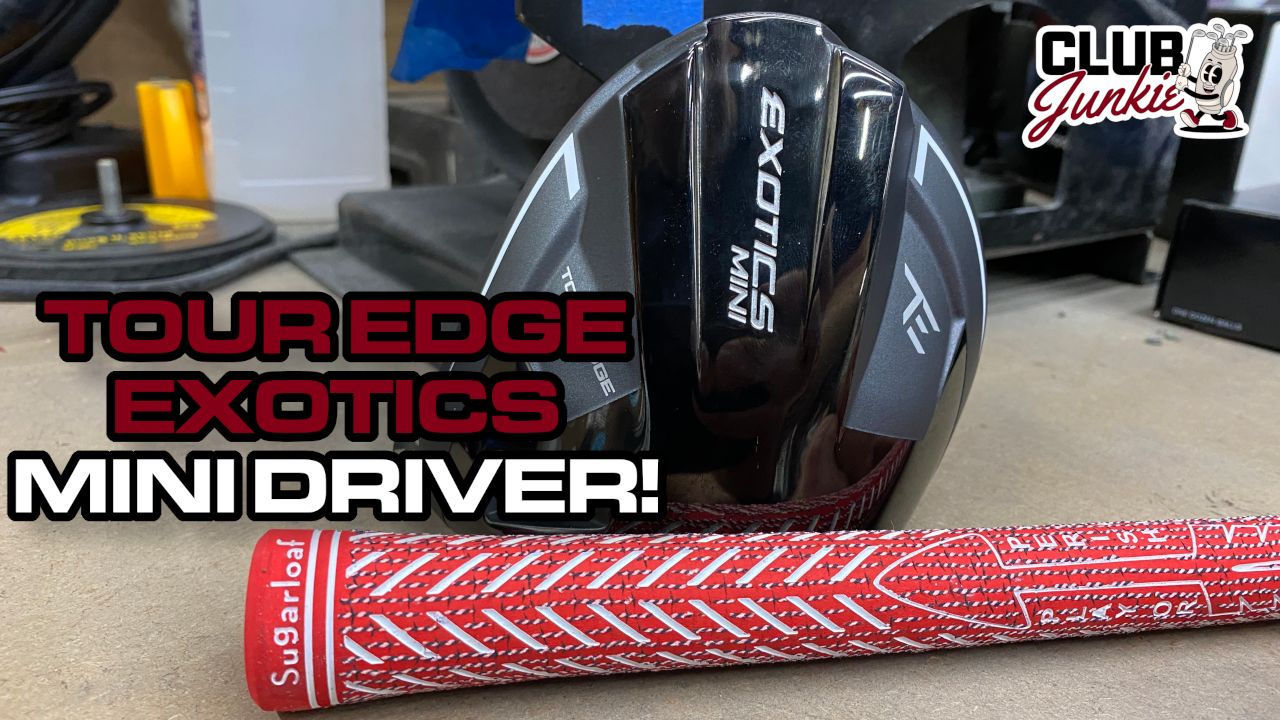
On this episode of Club Junkie, I put the new Tour Edge Exotics Mini Driver to the test and break down the performance, forgiveness, distance, and where it fits compared to a traditional driver or strong fairway wood. If you have been curious about adding a mini driver to the bag, this one is worth a look.
I also dive into the new TaylorMade Spider ZT Max putter that was recently spotted and discuss the growing zero torque putter trend. Plus, there is a closer look at the new Project X Titan Yellow shaft showing up on the PGA Tour and what makes it different from other profiles currently out there.

Justin Rose WITB 2026 (April): Full WITB breakdown with new McLaren irons

What’s the story behind Webb Simpson’s custom-stamped irons?

Memorial Tournament Tour Report: Rory McIlroy, Cameron Young switch up drivers, and more

Cadillac Championship Tour Report: Spieth’s sizable changes, McLaren Golf launches, and more

Russell Henley’s winning WITB: 2026 Charles Schwab Challenge

Kristoffer Reitan’s winning WITB: 2026 Truist Championship

Aaron Rai’s winning WITB: 2026 PGA Championship

J.T. Poston’s winning WITB: 2026 Memorial Tournament

Cameron Young’s winning WITB: 2026 Cadillac Championship

Best irons 2026: Best irons overall, most forgiving irons, and more


Bud Cauley WITB 2026 (June)
Bud Cauley had >14 clubs in his bag when photographed prior to the Memorial Tournament. Driver: Titleist GTS2 (8 degrees) Shaft: Fujikura...


Hannah Green WITB 2026 (June)
Driver: Titleist GTS3 (10 degrees, D4 SureFit setting) Shaft: Mitsubishi Chemical Diamana RB 53 S 3-wood: Titleist GT3 (15 degrees,...


Asterisk Talley WITB 2026 (June)
Driver: TaylorMade Qi4D (9 degrees) Shaft: Fujikura Ventus Blue 6 S 3-wood: TaylorMade Qi4D (16.5 degrees) Shaft: Fujikura Ventus Blue...

Brianna Do WITB 2026 (June)
Driver: Callaway Quantum Triple Diamond (9 degrees) Shaft: KBS PGW 3-wood: Callaway Elyte Titanium (15 degrees) Shaft: KBS PGW 5-wood:...
-
 Equipment6 days ago
Memorial Tournament Tour Report: Rory McIlroy, Cameron Young switch up drivers, and more
-
 News1 week ago
Russell Henley’s winning WITB: 2026 Charles Schwab Challenge
-
 Whats in the Bag3 days ago
J.T. Poston’s winning WITB: 2026 Memorial Tournament
-
 Equipment3 days ago
Best irons 2026: Best irons overall, most forgiving irons, and more
-

 Equipment1 week ago
Details on Jason Day’s latest prototype Avoda iron setup
-

 Equipment3 weeks ago
CJ Cup Byron Nelson Tour Report: Koepka and Kim’s newest putters finally get hot
-

 News2 weeks ago
Charles Schwab Challenge Tour Report: MacIntyre, Åberg and Spaun all switch putters, TaylorMade launches new Spider
-

 Equipment2 weeks ago
Details on J.J. Spaun’s surprise putter switch


Dave R
Jun 12, 2017 at 8:31 pm
I knew a guy with hands like that only had a finger missing. He was a welder.
Chuck
Jun 11, 2017 at 5:28 pm
I’d like to know where the photo was taken. Is it inside the clubhouse of the Royal and Ancient? Wentworth? Sunningdale?
Bob Jones’ history at St. Andrews is well known. He also shot one of the great rounds of his career, a flawless 66 with almost no long putts made, at Sunningdale. (Every hole a 3 or a 4; 33 strokes and 33 putts.)
G
Jun 11, 2017 at 9:09 pm
You pathetic POSh — trying to imposter Obs
doesnotno
Jun 12, 2017 at 9:30 am
http://www.wallaseygolfclub.com/clubhouse/lounge/