
Opinion & Analysis
The Stubborn Tale of 1924 U.S. Open Champion Cyril Walker

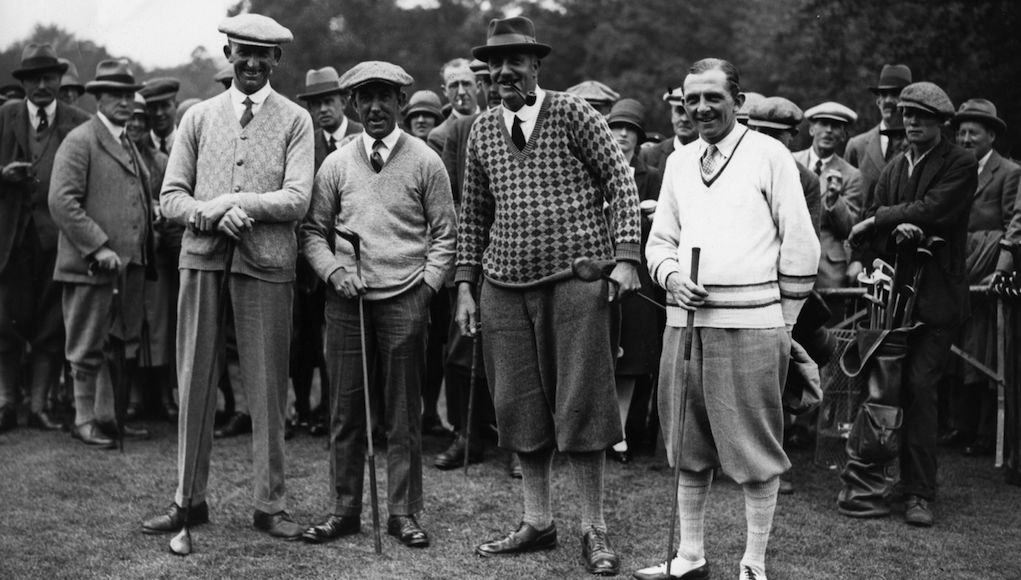
On June 6th, 1924, Cyril Walker of Manchester, England, won the U.S. Open at Oakland Hills Country Club for his sole major title. In the process, he defeated eventual Augusta National Founder Bobby Jones, who happened to be the reigning champion of the event.
At the time, Walker was a club professional at Englewood Golf Club in the New Jersey sector, and he had been playing on the professional tour since 1917. After many attempts, he had finally flourished in a major championship. Many big names were in the field and contesting for the title, including two-time winner Walter Hagen, Leo Diegel, Bobby Cruickshank, and 1922 champion Gene Sarazen.
Fun Fact: The 1924 U. S. Open marked the first time the USGA allowed the use of steel-shafted putters.
The decisive point of the round came at the 16th hole, where a dogleg par-4 with water protecting the green was playing especially difficult. Wind was pushing back toward the players, which made them think twice about getting home in two. Walker’s playing partner, Leo Diegel, went for it and got caught up in the wind before his ball was summoned to the drink. In the scheme of things, Diegel was out of contention and the penalty stroke made no difference to him, but if Walker would share the same fate it could have cost him the tournament.
Walker, known for his slow play, studied the shot meticulously and walked out the yardage over and over again. He kept switching from a mid-iron to a driving iron before settling on the driving iron and sticking one to 8 feet. This shot was awed by spectators as “the finest ever seen in championship play.” There were many other great shots during the final round, but none counted as much as this particular one.
What won the event for Walker was his amazing consistency. He shot three rounds of 74 and a final round of 75 for a 297 total to claim the title. Jones, Melhorn, and Cruickshank all finished with final rounds of 78. This, of course, is just one day of Walker’s life. What happened to him after he won the 1924 U.S. Open is more astonishing than the win.
The 1929 Los Angeles Open
As noted above, Walker was a slow golfer. He studied and over analyzed every shot, which made playing alongside him irritating over 18 holes of golf. This brings us to Cyril Walker’s disqualification from the 1929 Los Angeles Open held at Riviera Country Club.
Walker was usually paired in the last group or with a marker so he didn’t even have the opportunity to hold other players up. By the time he reached No. 5, he was far behind the next group in front of him. Tournament officials requested two police officers to ask Walker to “speed up” pace of play. Walker refused, recanting that he was a major champion and he could play as slow as he wants. Some time passed and Walker looked like he was playing slower than before. Tournament officials did not hesitate any longer. The next scene was an unusual one for a professional golf tournament, as two police officers forcibly removed Walker for the golf course.
Walker’s Rapid Fall and Decline
Walkers decline did not stop there. His career demised as the years went on, and he faltered in business and was left penniless in 1930 after a bad real-estate investment. In 1937, The Eugene Register reports of him returning to the caddy ranks and working at a driving range at a Florida golf club.
On August 14th, 1931 Walker was accused of beating a minor at Saddle River Golf Club. John Pagano, 15 at the time, claimed the former U.S. Open Champion struck him with his fists. The case was later dropped when Pagano admitted it was a case of mistaken identity.
On June 15th 1934, Walker’s driver’s license was revoked for two years on a charge of driving a vehicle while intoxicated, and he was fined $262.50 including costs. It should be noted that Walker was arrested on Main Street in the middle of the afternoon. After being fined, he proclaimed that he didn’t have the money, and stayed in a jail cell until it was paid for him.
In 1948, The Toledo Blade reported Walkers death at a local New Jersey prison where he went for shelter. Guards found Walkers body while making their morning rounds.



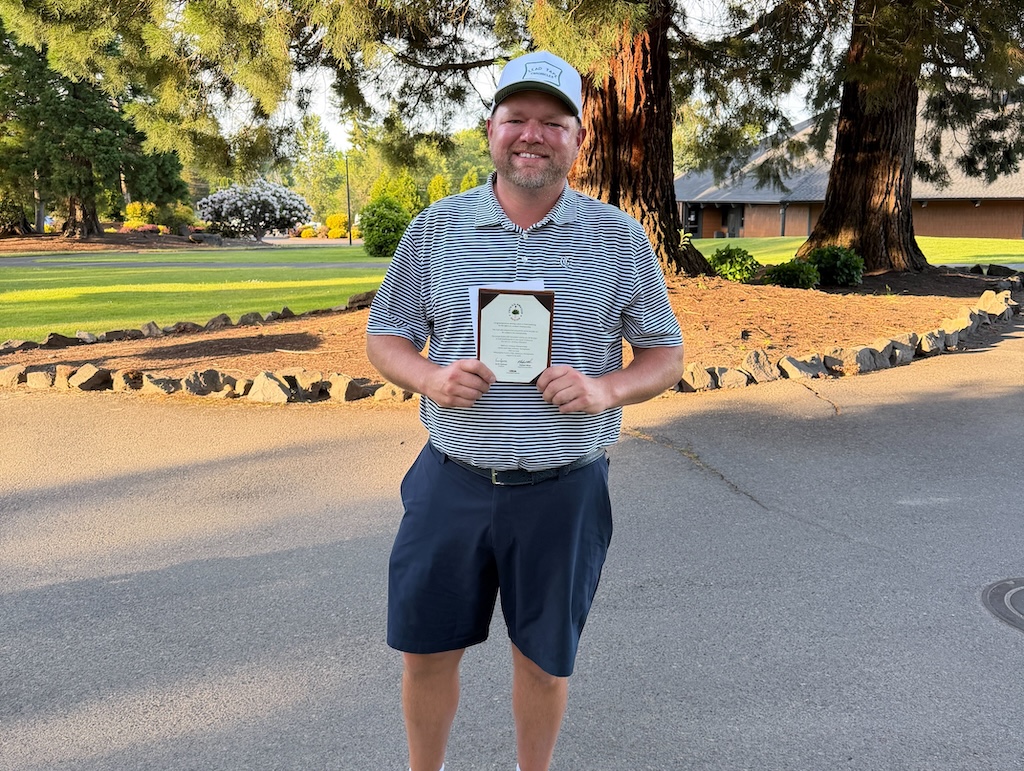
This past Monday, I played in the U.S. Amateur local qualifier at Rock Creek Country Club in Portland, Oregon. A full tee sheet from 7:30 a.m. to 1:55 p.m., the top 11 scores would make it to the U.S. Amateur final qualifying.
I teed off at 10:48 a.m.. With the 7:30 am tee time, you can get a feel for the leaders’ pace, and they were off and running on the challenging setup at Rock Creek.
View this post on Instagram
Getting to the highlight of the round on the par five 17th, a drive up the left side and 212 yards left to the front hole location. I took out a 5-iron with plans of middle of the green. The ball ended up 8 feet left of the hole, pin high. A slight downhill putt dropped in for an eagle 3 on the 17th. With the cut line looking to be anywhere from -2 to even par. This was the boost I had been waiting for all day.
With making par from the trees on 18, it was time to wait for a potential playoff with a posted score of one under par 71.
Three hours later, it was playoff time. 8 players for 6 spots. I made par on the playoff hole, which was good enough to advance to the U.S. Amateur final qualifying in July. USGA qualifiers sure deliver on all of the emotions in golf!
Club Junkie
Building my 2026 gamer WITB: Ranking the contenders and new putter projects – Club Junkie Podcast

The annual What’s In The Bag build is underway, and on this episode of Club Junkie, Brian breaks down the clubs currently leading the race for a spot in his 2026 gamer setup. From drivers and fairway woods to irons, wedges, and shafts, he ranks the equipment that’s performing best and explains what’s separating the front runners from the rest of the field.
Brian also heads into the workshop to discuss several putter projects currently on the bench. From head options and shaft choices to build ideas and testing plans, he shares what he’s working on and which putters could become serious contenders for the bag this season.
If you’re a gear junkie who loves equipment testing, club building, and the never-ending pursuit of the perfect setup, this episode is for you.
Follow Club Junkie:
Instagram: @clubjunkiepod
TikTok: @clubjunkiepod
Threads: @clubjunkiepod
X: @ClubJunkiePod
Club Junkie
Tour Edge Exotics mini driver review + TaylorMade Spider ZT Max first look – Club Junkie

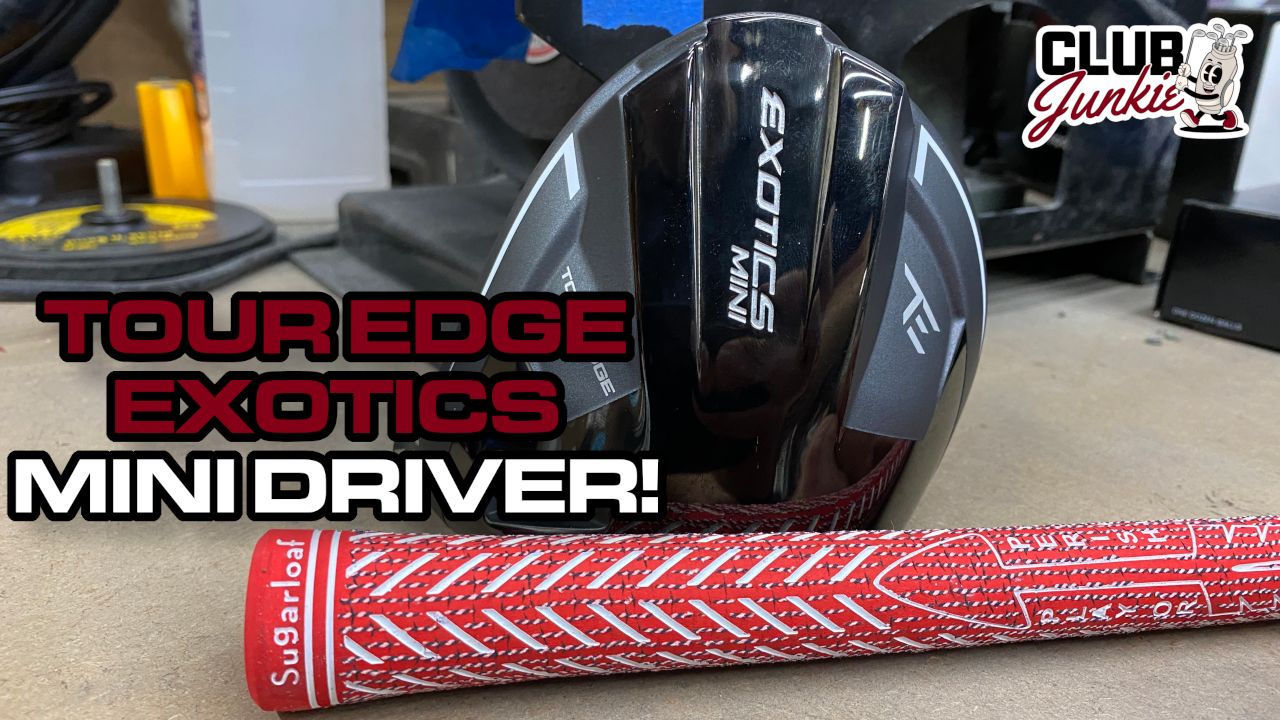
On this episode of Club Junkie, I put the new Tour Edge Exotics Mini Driver to the test and break down the performance, forgiveness, distance, and where it fits compared to a traditional driver or strong fairway wood. If you have been curious about adding a mini driver to the bag, this one is worth a look.
I also dive into the new TaylorMade Spider ZT Max putter that was recently spotted and discuss the growing zero torque putter trend. Plus, there is a closer look at the new Project X Titan Yellow shaft showing up on the PGA Tour and what makes it different from other profiles currently out there.

What’s the story behind Webb Simpson’s custom-stamped irons?

Memorial Tournament Tour Report: Rory McIlroy, Cameron Young switch up drivers, and more

Cadillac Championship Tour Report: Spieth’s sizable changes, McLaren Golf launches, and more

Russell Henley’s winning WITB: 2026 Charles Schwab Challenge

Kristoffer Reitan’s winning WITB: 2026 Truist Championship

Best irons 2026: Best irons overall, most forgiving irons, and more

J.T. Poston’s winning WITB: 2026 Memorial Tournament

Aaron Rai’s winning WITB: 2026 PGA Championship

Cameron Young’s winning WITB: 2026 Cadillac Championship

Details on Jason Day’s latest prototype Avoda iron setup


Christiaan Maas WITB 2026 (June)
Driver: TaylorMade Qi4D LS (8 degrees) Shaft: Fujikura Ventus TR Blue 6 X 3-wood: TaylorMade Qi10 (15 degrees) Shaft: Fujikura Ventus Black...


Ryan Palmer WITB 2026 (June)
Driver: Callaway Quantum Triple Diamond (9 degrees) Shaft: Project X HZRDUS Smoke Blue RDX 60 TX 3-wood: TaylorMade Qi10 (15 degrees) Shaft:...


Bud Cauley WITB 2026 (June)
Bud Cauley had >14 clubs in his bag when photographed prior to the Memorial Tournament. Driver: Titleist GTS2 (8 degrees) Shaft: Fujikura...


Hannah Green WITB 2026 (June)
Driver: Titleist GTS3 (10 degrees, D4 SureFit setting) Shaft: Mitsubishi Chemical Diamana RB 53 S 3-wood: Titleist GT3 (15 degrees,...
-
 Equipment6 days ago
Memorial Tournament Tour Report: Rory McIlroy, Cameron Young switch up drivers, and more
-
 News2 weeks ago
Russell Henley’s winning WITB: 2026 Charles Schwab Challenge
-
 Equipment3 days ago
Best irons 2026: Best irons overall, most forgiving irons, and more
-
 Whats in the Bag4 days ago
J.T. Poston’s winning WITB: 2026 Memorial Tournament
-
 Equipment1 week ago
Details on Jason Day’s latest prototype Avoda iron setup
-
 Equipment3 weeks ago
CJ Cup Byron Nelson Tour Report: Koepka and Kim’s newest putters finally get hot
-

 News2 weeks ago
Charles Schwab Challenge Tour Report: MacIntyre, Åberg and Spaun all switch putters, TaylorMade launches new Spider
-
 Equipment2 weeks ago
Details on J.J. Spaun’s surprise putter switch


Rich
Mar 12, 2023 at 11:14 am
Have you ever come across Cyril Walker Special golf clubs? Kro-Flite cushion neck irons?
ROY
Jun 14, 2017 at 10:25 am
Interesting info – thanks