
Opinion & Analysis
The Encouraging Statistics from Jamie Sadlowski’s PGA Tour Debut

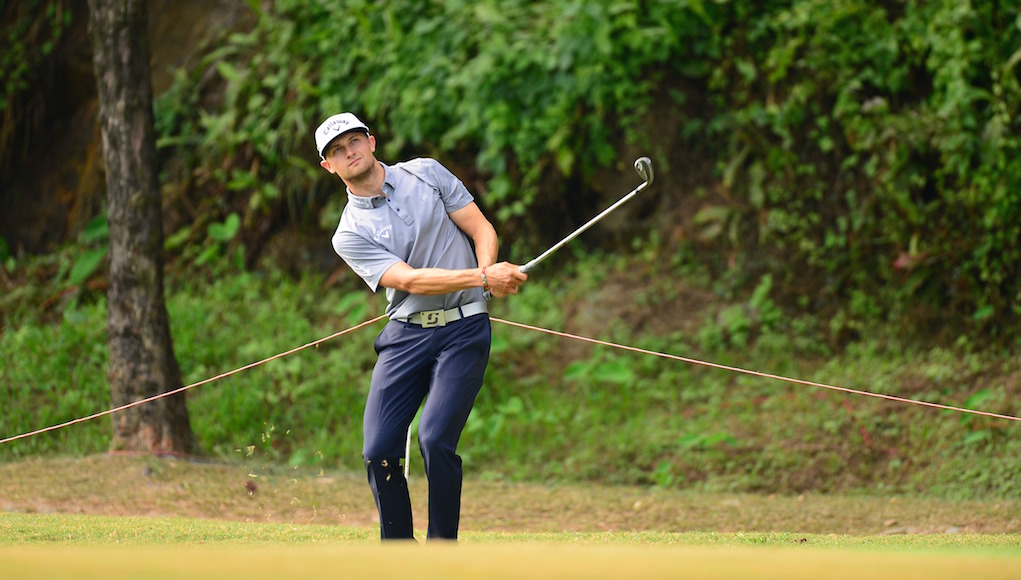
This past week former long-drive champion, Jamie Sadlowski, took to the PGA Tour by playing the Dean & Deluca Invitational at Colonial Country Club. I was very interested in how he would perform, as we have not seen many long-drive champions actually compete on the PGA Tour level. Sadlowski is not only extremely long (his club speeds in long-drive competitions are upward of 148 mph), but he’s remarkably accurate for a long driver. As a witness to his performance in clinics, he usually hits a tiny draw with a miss that’s a small flare to the right.
Previous long drive champions that have tried to compete in “normal” events generally tend to not only lack the complete game to make the cut, but are too wild off the tee to be taken seriously. But by the same token, we are seeing more top-tier PGA Tour players swinging at higher speeds. The very top of the PGA Tour in club speed also tends to be rising each year. For example, PGA Tour rookie Ryan Brehm has reached speeds of 131 mph in competition this season and routinely gets out-driven by fellow PGA Tour player, Brandon Hagy. It’s clear that there is a trend toward more club speed on the PGA Tour, and I believe that sometime in the future we will see a legitimately competitive Tour player that averages 135+ mph club speed.
Why Speed Matters
This has been often debated, but my statistical research on the subject shows that distance is the great equalizer. A few years ago, AimPoint Founder Mark Sweeney did a study showing the average length of a player’s birdie putt on Tour and found a strong, indirect mathematical correlation between driving distance and the length of the average birdie putt. Simply put, golfers who hit the ball farther are more likely to have a shorter birdie putt on average when they hit the green in regulation. This allows less skilled putters that hit it long to compete on the PGA Tour.
While golfers who hit it farther may have lesser skill with the flatstick, they are more likely to leave themselves birdie putts that have better make percentages. That is, in part, how bombers that have struggled with their putting over the years like Bubba Watson, Robert Garrigus and Rory McIlroy have been able to compete and win on Tour. They are simply giving themselves more makable birdie putts when they hit the green in regulation.
The rub is that while longer hitters are more likely to have shorter birdie putts when they hit the green in regulation, there is also a direct correlation between driving distance and the length of the average shot when they miss the green in regulation. Longer hitters are more likely to wind up in danger off the tee, and that may result in less than ideal approach shots that miss the green by a larger margin.
Here’s one of the questions I frequently get asked as a PGA Tour Statistician. Would you rather be:
- Super-long, inaccurate and a weak putter?
- Short, very accurate and a pretty good putter?
If I were a Tour player, I would take the former. If a super-long hitter can happen to get four days of accuracy off the tee and four days of good putting (+0.5 strokes gained per round or better), he has a good chance of winning. A classic example of that is John Daly in 1991, where the soft conditions at Crooked Stick helped him find fairways. He also putted insanely well. It became arguably the most unexpected victory in the history of golf.
Driving
I used Driving Effectiveness in order to determine a player’s skill off the tee. Driving Effectiveness is an algorithm that utilizes: distance, hit fairways, average distance from the edge of the fairway, hit fairway bunkers and missed fairway – other percentages and then simulates the data, and not just on the course that was played. I had Sadlowski second in the field in Driving Effectiveness. Granted, he only played two rounds, but the data greatly respected his performance off the tee.
Sadlowski averaged 299.9 yards off the tee on every drive he hit. Jon Rahm was first in driving distance on all drives at 308.1 yards. Sadlowski also hit 50 percent of his fairways compared to the field average of 54 percent. The reason for Sadlowski’s shorter-than-expected distance off the tee is that Colonial is a very tight, dog-leggy type of course that requires a frequent amount of lay-up shots off the tee. In fact, I think this was the biggest factor working against Sadlowski; Colonial is one of the worst golf courses on Tour for his game. It places more of a premium on accuracy off the tee and difficult approach shots to smaller greens.
A bomber like Sadlowski needs a course that will allow him to hit a lot of drivers. From my experience working with numerous Tour players and players that get that special invite, a course with bigger and flatter greens helps as well. Courses like Bay Hill (Arnold Palmer Invitational), The Golf Club of Houston (Shell Houston Open) and Las Colinas (Byron Nelson) would be better suited for Sadlowski.
Iron Play
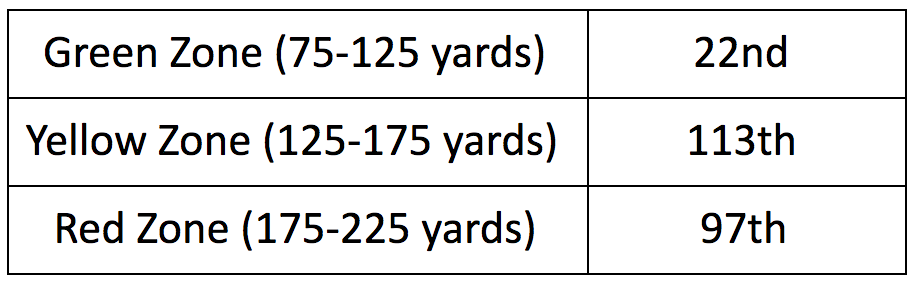
Rankings based on 118 players.
Sadlowski performed poorly with his irons at Colonial. The typical skepticism with somebody that hits it as long as Sadlowski does is that he would have trouble with his wedges (since he hits them so far), but Green Zone shots (75-125 yards) was where he actually performed best. His Yellow Zone shots (125-175 yards) really hamstrung him, and because of his length off the tee he was getting more Yellow Zone shots instead of shots from the Red Zone like the rest of the field. The problem was that he could not take advantage of them, which is one of the reasons he finished 10-over par and missed the cut.
Short Game
Sadlowski also finished second-to-last in shots from less than 30 yards. For long hitters (who tend to hit some shots offline and miss some greens by a larger margin), his inability to perform well from around the green presents problems for him in the future. Sadlowski was only able to hit 18 out of 36 greens in regulation, and he needed his short game to make up for his mistakes.
Putting
Sadlowski finished gaining +0.817 strokes per round with his putter. Here is a breakdown of his make percentages by putt distance.
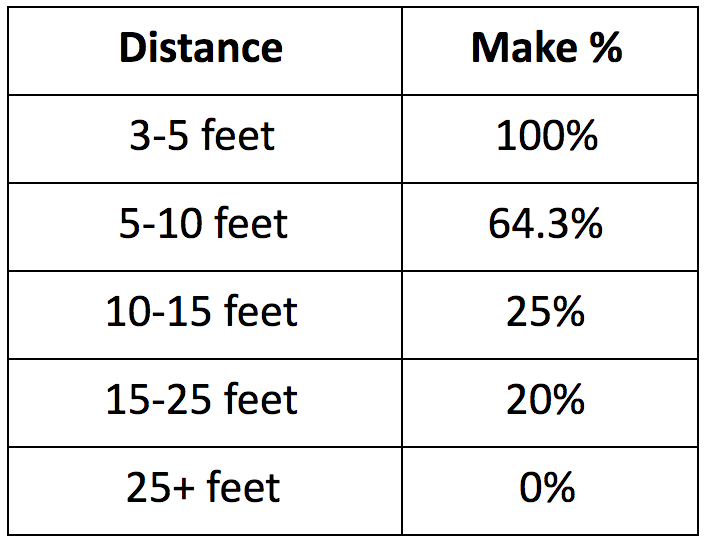
Most of Sadlowski’s strokes gained on the greens came from his putting from 3-10 feet. He had 14 opportunities from 5-10 feet and only four chances from 10-15 feet. This discrepancy is indicative of a player who missed a lot of greens and had to make a lot of par saves from 5-10 feet.
Overview and Outlook
The great news is that Sadlowski was fantastic off the tee and very good with the putter. This was particularly impressive since Colonial does not fit Sadlowski very well off the tee, and he still had a great performance driving the ball.
He struggled to play what I call “complementary golf.” He couldn’t take advantage of his long driving and putting because his iron play was abysmal and his short game around the green was even worse. He was gaining on the field from his tee shots, but after he hit his approach shot he was behind the field. Then he fell further behind the field with his short-game shots, and he needed to putt out of his mind just to score close to the field average and make the cut — which of course he didn’t.
Going forward, I would not be surprised if Sadlowski could sustain this type of effectiveness off the tee, as he showed that hitting layups off the tee are fairly easy for him (as I mentioned earlier, bombers on Tour can put together four days of decent accuracy off the tee with good putting and can instantly contend in an event). Sadlowski showed some potential of being able to drive the ball very long and well and combine that with quality putting, but until he improves his iron play and short game, he will be hamstrung by those glaring inefficiencies.
To succeed on the PGA Tour, Sadlowski would need to get on a course that allows him to hit driver more often so he can gain an even greater advantage off the tee in order to counter his weaknesses with the irons and short game.



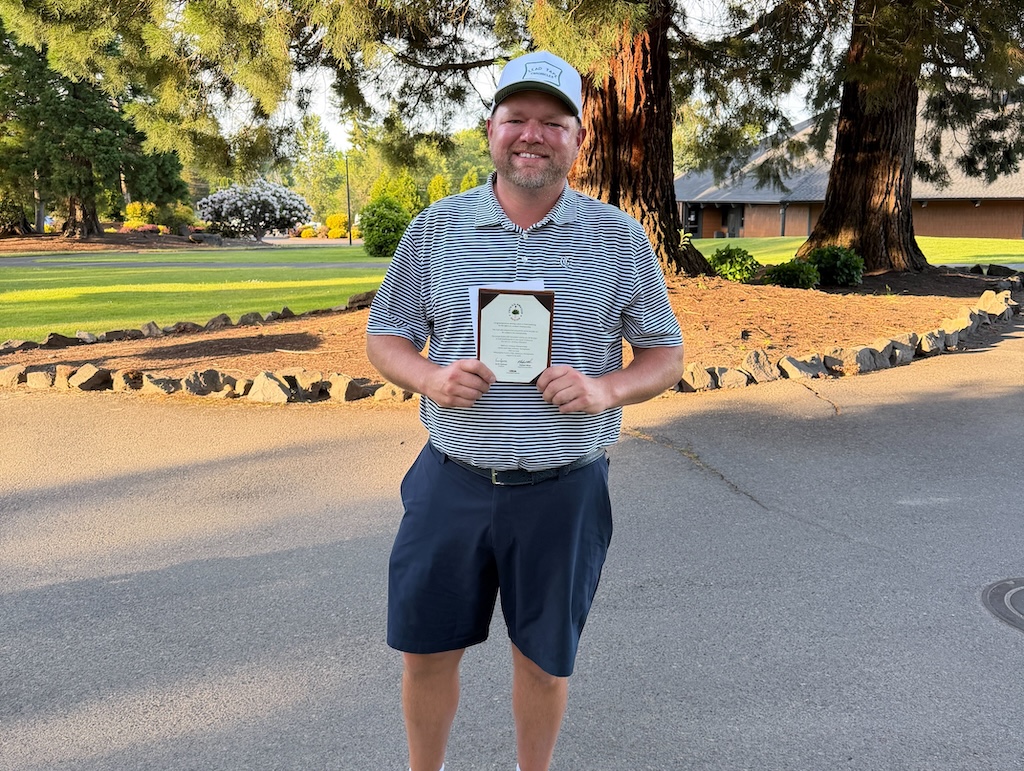
This past Monday, I played in the U.S. Amateur local qualifier at Rock Creek Country Club in Portland, Oregon. A full tee sheet from 7:30 a.m. to 1:55 p.m., the top 11 scores would make it to the U.S. Amateur final qualifying.
I teed off at 10:48 a.m.. With the 7:30 am tee time, you can get a feel for the leaders’ pace, and they were off and running on the challenging setup at Rock Creek.
View this post on Instagram
Getting to the highlight of the round on the par five 17th, a drive up the left side and 212 yards left to the front hole location. I took out a 5-iron with plans of middle of the green. The ball ended up 8 feet left of the hole, pin high. A slight downhill putt dropped in for an eagle 3 on the 17th. With the cut line looking to be anywhere from -2 to even par. This was the boost I had been waiting for all day.
With making par from the trees on 18, it was time to wait for a potential playoff with a posted score of one under par 71.
Three hours later, it was playoff time. 8 players for 6 spots. I made par on the playoff hole, which was good enough to advance to the U.S. Amateur final qualifying in July. USGA qualifiers sure deliver on all of the emotions in golf!
Club Junkie
Building my 2026 gamer WITB: Ranking the contenders and new putter projects – Club Junkie Podcast

The annual What’s In The Bag build is underway, and on this episode of Club Junkie, Brian breaks down the clubs currently leading the race for a spot in his 2026 gamer setup. From drivers and fairway woods to irons, wedges, and shafts, he ranks the equipment that’s performing best and explains what’s separating the front runners from the rest of the field.
Brian also heads into the workshop to discuss several putter projects currently on the bench. From head options and shaft choices to build ideas and testing plans, he shares what he’s working on and which putters could become serious contenders for the bag this season.
If you’re a gear junkie who loves equipment testing, club building, and the never-ending pursuit of the perfect setup, this episode is for you.
Follow Club Junkie:
Instagram: @clubjunkiepod
TikTok: @clubjunkiepod
Threads: @clubjunkiepod
X: @ClubJunkiePod
Club Junkie
Tour Edge Exotics mini driver review + TaylorMade Spider ZT Max first look – Club Junkie

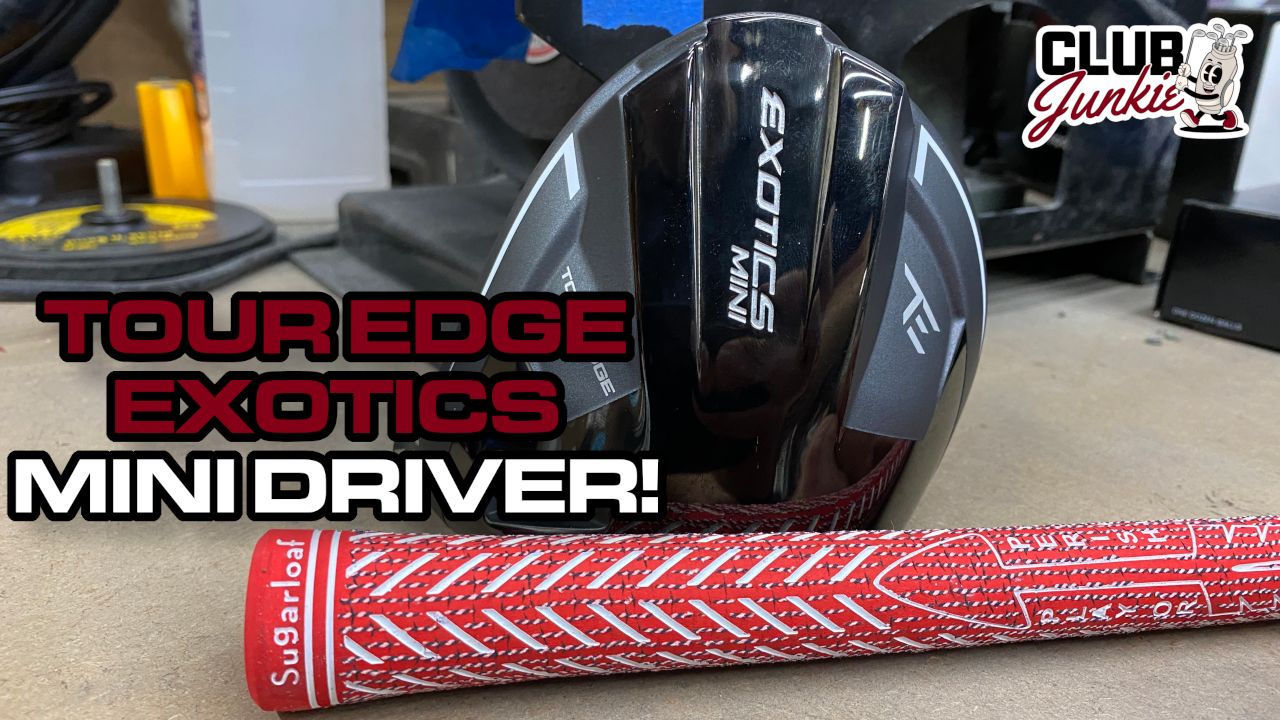
On this episode of Club Junkie, I put the new Tour Edge Exotics Mini Driver to the test and break down the performance, forgiveness, distance, and where it fits compared to a traditional driver or strong fairway wood. If you have been curious about adding a mini driver to the bag, this one is worth a look.
I also dive into the new TaylorMade Spider ZT Max putter that was recently spotted and discuss the growing zero torque putter trend. Plus, there is a closer look at the new Project X Titan Yellow shaft showing up on the PGA Tour and what makes it different from other profiles currently out there.

Justin Rose WITB 2026 (April): Full WITB breakdown with new McLaren irons

What’s the story behind Webb Simpson’s custom-stamped irons?

Memorial Tournament Tour Report: Rory McIlroy, Cameron Young switch up drivers, and more

Cadillac Championship Tour Report: Spieth’s sizable changes, McLaren Golf launches, and more

Russell Henley’s winning WITB: 2026 Charles Schwab Challenge

Kristoffer Reitan’s winning WITB: 2026 Truist Championship

J.T. Poston’s winning WITB: 2026 Memorial Tournament

Aaron Rai’s winning WITB: 2026 PGA Championship

Best irons 2026: Best irons overall, most forgiving irons, and more

Cameron Young’s winning WITB: 2026 Cadillac Championship


Bud Cauley WITB 2026 (June)
Bud Cauley had >14 clubs in his bag when photographed prior to the Memorial Tournament. Driver: Titleist GTS2 (8 degrees) Shaft: Fujikura...


Hannah Green WITB 2026 (June)
Driver: Titleist GTS3 (10 degrees, D4 SureFit setting) Shaft: Mitsubishi Chemical Diamana RB 53 S 3-wood: Titleist GT3 (15 degrees,...


Asterisk Talley WITB 2026 (June)
Driver: TaylorMade Qi4D (9 degrees) Shaft: Fujikura Ventus Blue 6 S 3-wood: TaylorMade Qi4D (16.5 degrees) Shaft: Fujikura Ventus Blue...

Brianna Do WITB 2026 (June)
Driver: Callaway Quantum Triple Diamond (9 degrees) Shaft: KBS PGW 3-wood: Callaway Elyte Titanium (15 degrees) Shaft: KBS PGW 5-wood:...
-
 Equipment6 days ago
Memorial Tournament Tour Report: Rory McIlroy, Cameron Young switch up drivers, and more
-
 News1 week ago
Russell Henley’s winning WITB: 2026 Charles Schwab Challenge
-
 Whats in the Bag3 days ago
J.T. Poston’s winning WITB: 2026 Memorial Tournament
-
 Equipment3 days ago
Best irons 2026: Best irons overall, most forgiving irons, and more
-

 Equipment1 week ago
Details on Jason Day’s latest prototype Avoda iron setup
-
 Equipment3 weeks ago
CJ Cup Byron Nelson Tour Report: Koepka and Kim’s newest putters finally get hot
-

 News2 weeks ago
Charles Schwab Challenge Tour Report: MacIntyre, Åberg and Spaun all switch putters, TaylorMade launches new Spider
-
 Equipment2 weeks ago
Details on J.J. Spaun’s surprise putter switch


Mordaunt
Jun 2, 2017 at 3:57 pm
We must remember Jamie is a very “new” pro. He already excels at the most demanding parts of the game, and the short game is an area where huge improvements can be made with sheer repetition to groove feel, reading conditions, effects of spin, contours, green type, etc.
If Jamie were an established pro, or coming off a long competitive amateur career, then he’d have to play around a weak short game, since he probably would already have maximized his abilities in that area. As it is, I’m much more hopeful of him making large strides in the short game and reaching a level where he can make it on tour.
Jasian Day
Jun 2, 2017 at 3:30 pm
Have should go to the European Tour….
We all know why
Jasian Day
Jun 2, 2017 at 3:31 pm
Meant He not Have
Wha
Jun 2, 2017 at 12:13 pm
Are those Iron Play stats from the fairway only?
Rich Hunt
Jun 3, 2017 at 8:22 pm
No, they are from the fairway and rough.
Jack Nash
Jun 2, 2017 at 8:20 am
Costas is working with Jamie so that’s a good start. Talking about his iron play Costas stated his arms and body need to sync better because he’s so fast. Once he dials that in the rest will come quickly, because unlike most long drivers, Jamie’s swing looks like a natural golf swing, not over exerted.
Wha
Jun 2, 2017 at 12:14 pm
It’s because Jamie is only 5’11” and 165 pounds
cgasucks
Jun 2, 2017 at 1:05 pm
Yep. Jamie is tall, but lanky. Just like Tiger in his first few years on tour and he was frickin’ long. I hope he doesn’t bulk up like him.
CrashTestDummy
Jun 2, 2017 at 1:31 pm
Agreed. Bulking up causes a lot of problems in the golf swing. Limits range of motion, makes the swing less fluid and more twitchy. Strength is important, but only to a point where you still can remain very loose and flexible.
B
Jun 2, 2017 at 2:37 pm
You should only bulk up around the belly area
Chris
Jun 2, 2017 at 2:44 pm
I wouldn’t call 5’11 tall. That’s about average height for men
cgasucks
Jun 3, 2017 at 9:47 am
I guess you don’t live in Asia…
Jack
Jun 5, 2017 at 11:47 am
It’s 5’9 in the US. He’s not super tall but a little taller than average.
Nigel
Jun 2, 2017 at 1:22 pm
Bob Costas teaches golf? Peter Kostis might be a better choice.
CrashTestDummy
Jun 2, 2017 at 1:33 pm
Haha. I know who wants a news commentator teaching you golf. Peter Kostis is a pro.
Tiemco
Jun 2, 2017 at 7:55 am
He should play the Travelers in Hartford. It’s a wide open course with a traditionally weak field.
Dr Troy
Jun 2, 2017 at 10:00 pm
Im sure he would/will if he’s lucky enough to get a sponsor’s invite. He can only accept so many of those also, because he has no status on Tour.
I thought he did well in his debut. Hell, look at the small group of guys he beat and these are PGA Tour vets:
Jason Bohn
Davis Love
Boo
Johnny Vegas
James Hahn
Mac Hughes
Jason Kokrak
Not bad Sads, not bad!