
Equipment
What It Takes To Be The Hottest Shaft On The PGA Tour

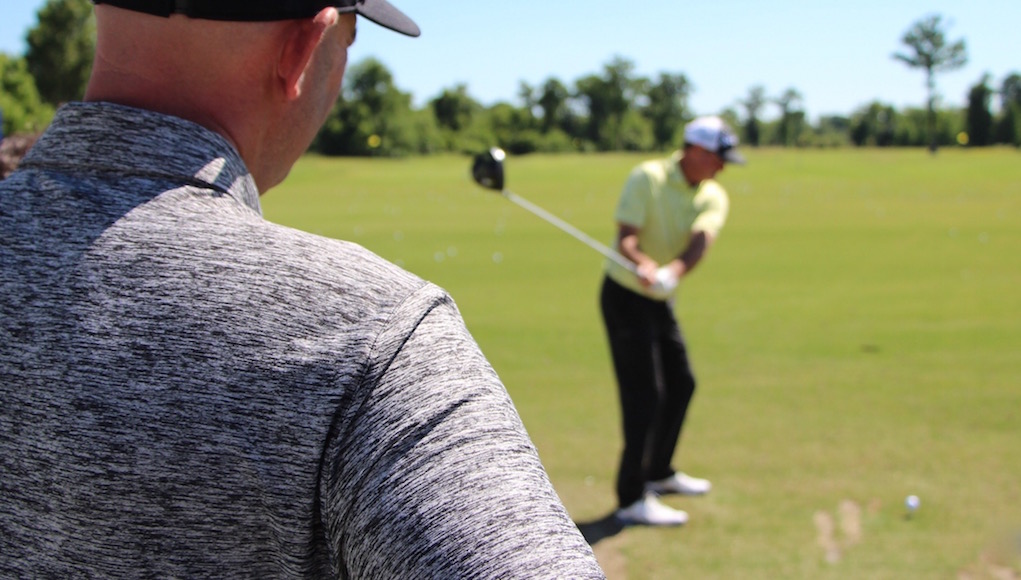
The Zurich Classic of New Orleans is one of the most laid-back PGA Tour events of the season, but as I watched Jerry Kelly hit drivers on the range I could tell things were already getting serious. And it was only Monday.
Next to me on the range was Pat McCoy, who was fitting Kelly for a new TaylorMade driver. Kelly’s “gamer” driver was a 2016 TaylorMade M2, an 8.5-degree version that was only made available to PGA Tour players. For weeks, Kelly had been anticipating the release of the 2017 M2 driver. He wanted to see if it could help him add a few yards to his drives, and earlier in the day the first batch of 8.5-degree 2017 M2 drivers were made available for PGA Tour players to test. Along with the new driver head, Kelly also wanted to test one of the hottest new driver shafts on the PGA Tour. For that he reached out to McCoy, the Director of Tour Operations for Fujikura.
McCoy estimated he had fit Kelly for new golf equipment roughly 35 times in his 17 years with Fujikura. “It’s not hard to know when I’ve failed and when I’ve been successful,” he said. Standing next to McCoy, however, it felt as if the success of this particular fitting was out of his control. McCoy wasn’t fazed, though.
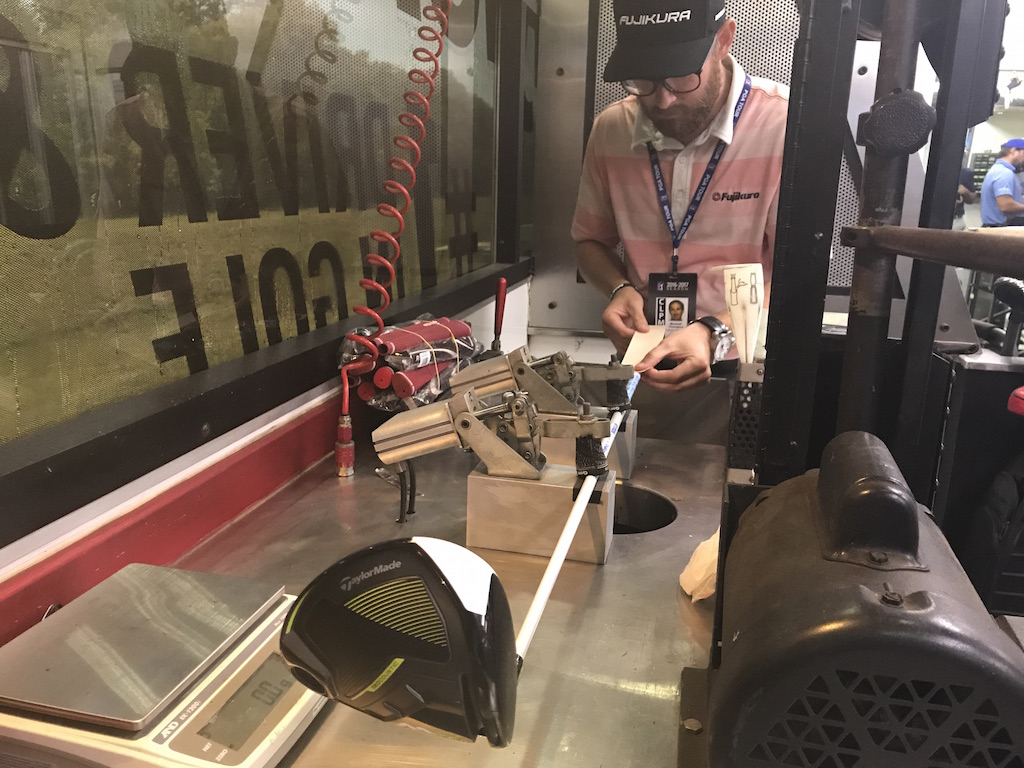
Fujikura Tour Rep Marshall Thompson building Kelly’s new driver in TaylorMade’s Tour Truck.
The fitting started with Kelly comparing his gamer to the new driver. The new driver was built to exactly match Kelly’s gamer on TaylorMade’s Tour Truck, a mobile golf club fitting facility that travels with the PGA Tour each week. Both driver heads were digitally measured and had lofts of exactly 8.5 degrees. Their lengths were precisely 45.75 inches and they had matching lie angles of 61 degrees. They also had the same D2 swing weight, a measurement of the balance point of a driver. Aside from the updated design of the club head, the only difference was the shafts. Kelly’s gamer had an Aldila NV 2KXV Blue 60TX. The new driver had Fujikura’s new Atmos Tour Spec Black 6X.
McCoy called Kelly, who turned 50 in November, “old school” in the way he tests his equipment. He began his test by hitting about 10 shots with each driver, switching back and forth every few shots. Even without a launch monitor, Kelly could tell that the new driver head and shaft were creating a lower-launching, lower-spinning trajectory than his gamer. He liked what what he saw, but he wanted to see the data on a launch monitor.
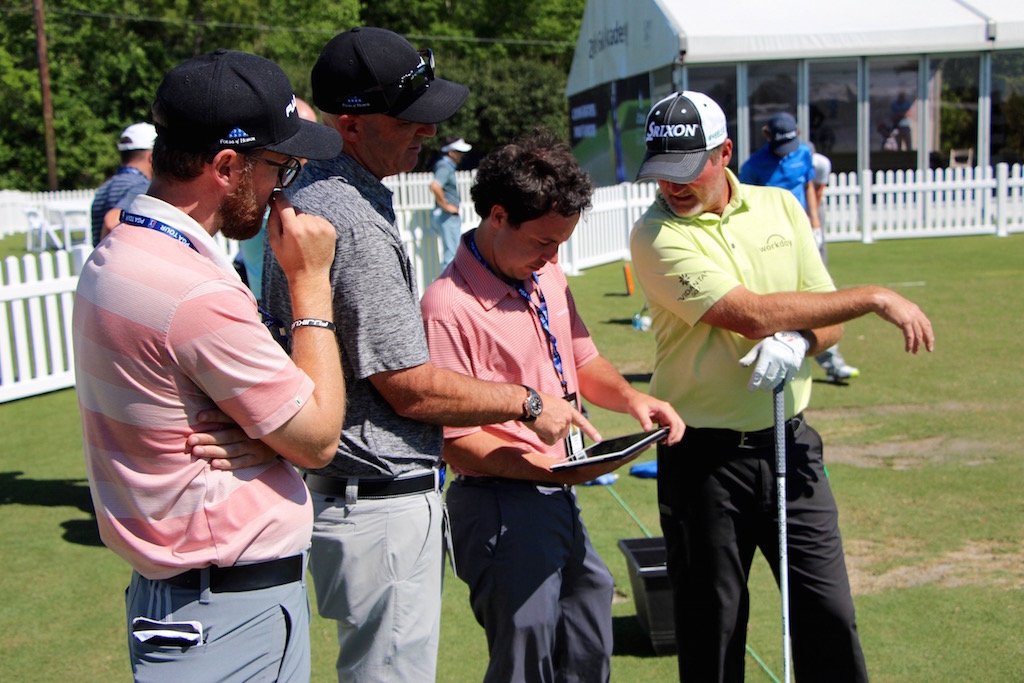
Jerry Kelly (right) looks at launch monitor data with Pat McCoy (gray shirt) and Marshall Thompson (left).
A $35,000 golf ball-tracking device called Trackman was brought to Kelly’s spot on the range. It uses Doppler radar to tell golfers exactly what their ball golf ball is doing from the time it leaves the clubface to the time it hits the ground. In doing so, it offers dozens of readings, but the one McCoy was focused on was “land angle,” or the angle at which the ball hits the ground. With Kelly’s gamer, his drives were hitting the ground at about 40 degrees, which is too steep by PGA Tour standards. With the new driver head and the Atmos Tour Spec Black shaft, Kelly’s land angle was reduced to 34 degrees, which was giving him more roll. It seemed liked a slam-dunk, but Kelly still wasn’t sold. He was concerned with his “ball speed,” the measure of how fast a golf ball leaves a driver head. It was 1-2 mph lower with the new driver head and the new driver shaft. That was costing him carry distance, but McCoy had a fix.
“What I try not to do is fit my swing into the club. “I fit the club into my swing.” — Jerry Kelly
Along with the Atmos Tour Spec Black, McCoy also had an Atmos Tour Spec Blue shaft prepared for Kelly to test. It was built to Kelly’s specifications should such a situation arise. The Atmos Tour Spec Blue is almost identical to the Atmos Tour Spec Black with one important difference: the mid and tip sections of the shaft are more flexible, which creates a mid-launching, mid-spinning trajectory. The theory was that the more flexible design of the Atmos Tour Spec Blue would create more “kick” to help Kelly improve his ball speed. That turned out to be true, but it was now a game of whack-a-mole. Like Kelly’s gamer shaft, the Atmos Tour Spec Blue increased Kelly’s land angle. Looking a little frustrated, Kelly started rotating between the three shafts — Atmos Tour Spec Black, Atmos Tour Spec Blue and his Aldila — as well as the old and new driver heads.
“This is where you just let them go,” McCoy told me.
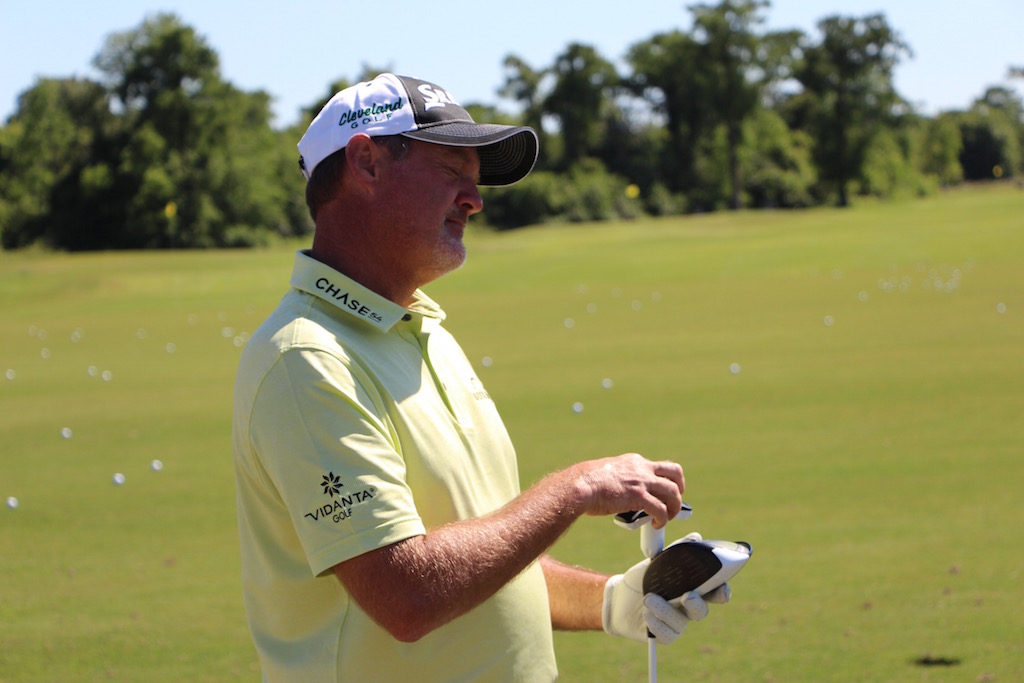
Jerry Kelly adjusting his driver on the range at the Zurich Classic.
TaylorMade drivers have 12 different hosel settings, which adjust the loft, lie and face angle of a driver in combination. Kelly was hitting all three shafts in just about every one of the combinations. In the midst of the rapid fire, McCoy turned the fitting over to Marshall Thompson, a fellow PGA Tour Shaft Rep for Fujikura. McCoy walked to the far end of the range to talk to Daniel Summerhays, who uses Fujikura shafts in his metal woods.
Every week, McCoy receives an email from PGA Tour Statistician Rich Hunt. It includes a spreadsheet with launch monitor data of all the players on the PGA Tour. The data is pulled from ShotLink and plots weekly launch monitor stats, as well as averages for the season. McCoy keeps a close eye on every PGA Tour player’s data, making him a walking encyclopedia of which golfers are driving it well on the PGA Tour and which golfers aren’t. Reviewing the data each week, McCoy noticed that Summerhays’ launch conditions were creeping toward the high side of optimal due to changes Summerhays was making in his swing. There were a few ways to approach the problem, but the easiest was for Summerhays to reduce the loft of his driver by 0.5 degrees, which lowered both his launch angle and his spin rate. After chatting with Summerhays about it, McCoy was confident that he would go that direction.
McCoy’s start in the golf industry came as an instructor. At age 20, he became an Assistant PGA Professional at PGA West in La Quinta, California, making him the youngest teacher at the time to hold the position at the famed course. He said he was quickly frustrated teaching golf because his students rarely practiced in between their lessons. That made it almost impossible for him to improve their games. He found that in most cases he could help his students improve more quickly and more permanently by changing their equipment, which made it possible for them to have more fun playing golf. “Isn’t that what it’s all about?” he said. Ultimately, that’s what led him to the golf equipment world.
McCoy’s distinction as a PGA Professional is well known on the PGA Tour, and one of the reasons he’s so popular with Tour players. Another reason is his approach, which focuses on building long-term relationships with players that aren’t tied to their interest in Fujikura shafts. PGA Tour player William McGirt has used Fujikura shafts in his metal woods for years, and he said the main reason why is his trust in McCoy. “He’s not going to put something in my hands if it’s not going to work,” McGirt said. “It’s going to be perfect. And if it’s not perfect, it’s going to be damn near close.”

There are two drawers of Fujikura shafts on TaylorMade’s Tour Truck.
Unlike the major golf equipment manufacturers on the PGA Tour, shaft makers like Fujikura don’t pay golfers to use their products. For that reason, McCoy takes a different approach to get his products in the hands of the world’s best. He maintains relationships with all the major equipment manufacturers, making sure they’re stocked with the Fujikura shafts they need. And he’s always sure to keep them fully informed of the work he’s doing with the PGA Tour players they pay to use their clubs. Not doing so could not only compromise his relationship with an equipment manufacturer, but it could also create a scenario where a PGA Tour player is getting conflicting information about what’s best for him. According to McGirt, that can wreak havoc on a Tour player’s game.
On the PGA Tour, a big-name player’s usage of a golf club or shaft can result in millions of dollars in sales for a golf equipment manufacturer. It can be the difference between a company like TaylorMade putting a Fujikura shaft in its latest driver release or choosing the shaft of one of its competitors. While Fujikura has maintained a healthy amount of business with both major golf equipment manufacturers and after-market custom club fitters for more than a decade, some shaft companies are less stable. McGirt described a situation he said he’s observed frequently on the PGA Tour, where in an effort to get a new shaft in play, a shaft rep pushed a player into a product that wasn’t right for his game.
“You can work yourself into some bad habits trying to make [a shaft] work,” McGirt said. “Honestly, I could probably get [a shaft] that performed a little better than what I’m using now, but then I’d have to get used to it. Coming down under the gun, knowing what a [shaft] is going to do is the biggest then for me.”
Wade Liles, a PGA Tour Truck Technician for TaylorMade, echoed McGirts sentiments. “We want our players to play better, not just switch to get a new shaft in play.” In Liles’ 17 years on the PGA Tour, he said he’s seen an incredible shift in the clubs and shafts PGA Tour players use. Most of the shafts made 17 years ago would be “worthless” on the PGA Tour due to advances in technology, he said. “Shaft manufacturers aren’t going to come out with the same shaft year after year,” he said. “It’s going to be a new shaft and it’s going to be a better shaft.”
McCoy estimated that it takes at least 50 different driver shaft models to optimize the performance of the roughly 300 golfers who play on the PGA Tour each season. For that reason, PGA Tour equipment trucks are stocked with dozens of shafts from multiple shaft manufacturers. They all vary slightly in materials and constructions, as well as in weights, flex and kick point. Kevin Napier, a Senior Tour Technician for Callaway, said that in some cases getting a player to change to a new shaft has nothing to do with performance at all. It can come down to a shaft manufacturer’s willingness to make a shaft in a custom paint color.
“[PGA Tour Players] remember the people who are honest with them. And when they’re struggling, they usually come back to me to see if I can help.” — Pat McCoy
In an effort to meet the needs of PGA Tour players and amateur golfers across the globe, Fujikura had released an abundance of shaft models in recent years. There was consistent feedback from PGA Tour players, golf equipment manufacturers and custom-club fitters, however, that having so many models was complicating the fitting process. Fujikura stopped getting that feedback this year, and there has also been a significant uptick in the amount of Fujikura shafts used on the PGA Tour. At the Zurich Classic, for example, Fujikura led all shaft manufacturers with 41 driver shafts in play (25.6 percent), and McCoy attributes the growth directly to Atmos Tour Spec.
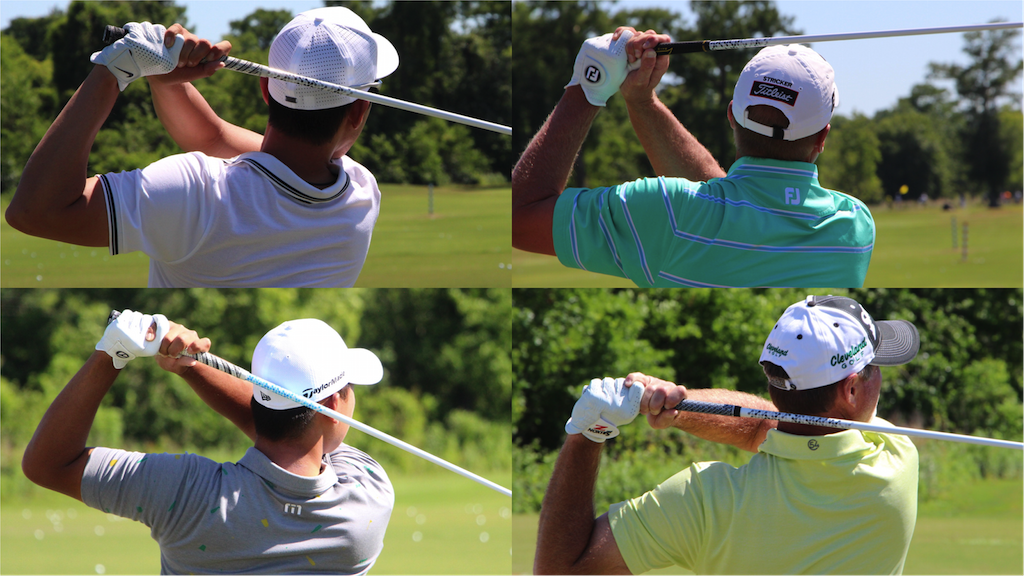
Seung Yul Noh (upper left), Steve Stricker (upper right), Si Woo Kim (lower left) and Jerry Kelly (lower right) with Fujikura Atmos Tour Spec shafts at the Zurich Classic.
Atmos Tour Spec is divided into three models (Black, Blue and Red). Each of them are available in a wide range of weights and flexes. The Atmos Tour Spec Black offers the lowest trajectory, the Atmos Tour Spec Red offers the highest trajectory, and the Atmos Tour Spec Blue fills the middle ground. All three are inspired by successful shaft designs that Fujikura has been perfecting for the better part of two decades, which McCoy said is the real reason for their success. Like other leading shaft makers, Fujikura is using the latest technologies and materials to create Atmos Tour Spec shafts, but “it’s not really about the materials,” he said. “It’s about learning what works and what doesn’t, and then why,” he said. “We’ve always made high-quality product, but it’s learning from it.”
McCoy said that unlike in years past, he’s able to explain the benefits of the Atmos shafts to PGA Tour players with ease. He doesn’t have to tell them about the new carbon fiber materials that the shafts use. He doesn’t have to explain the years of study that went into improving the way the shafts load and unload for different swings. Tour players immediately understand the black-blue-red story. Just as importantly, they trust that McCoy wouldn’t ask them to test a product that he didn’t think could help their game.
McCoy said he’s been approached by dozens of PGA Tour players who have never used a Fujikura shaft before, but now want to try one. In many cases, Atmos gave them better results. In other cases, McCoy would find that a PGA Tour player’s current shaft was perfect for them. He said he never hesitates to tell them so. “They remember the people who are honest with them,” McCoy said. “And when they’re struggling, they usually come back to me to see if I can help.”
There were 15 PGA Tour players hitting golf balls on the range at the Zurich Classic on Monday afternoon. Five of them were hitting drivers, and all five of them were swinging Fujikura shafts. One was Jerry Kelly, who was wrapping up his test of the Atmos Tour Spec Black and Atmos Tour Spec Blue for the day. Fujikura rep Marshall Thompson had showed him that he could get better results from the 2017 TaylorMade M2 driver head and the Atmos Tour Spec Blue shaft if he was willing to lower the loft to 7.5 degrees. Doing that, he got both the ball speed and the trajectory he wanted, but Kelly said would need to do some more testing at home. By this time, McCoy had returned to the fitting. “What I try not to do is fit my swing into the club,” Kelly told Thompson. “I fit the club into my swing.”
“Did you hear that,” McCoy said to me. “That’s the truth there.”




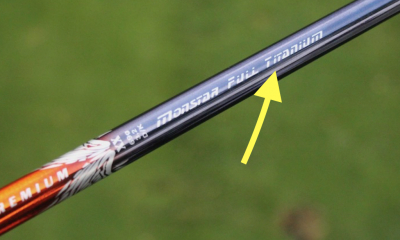




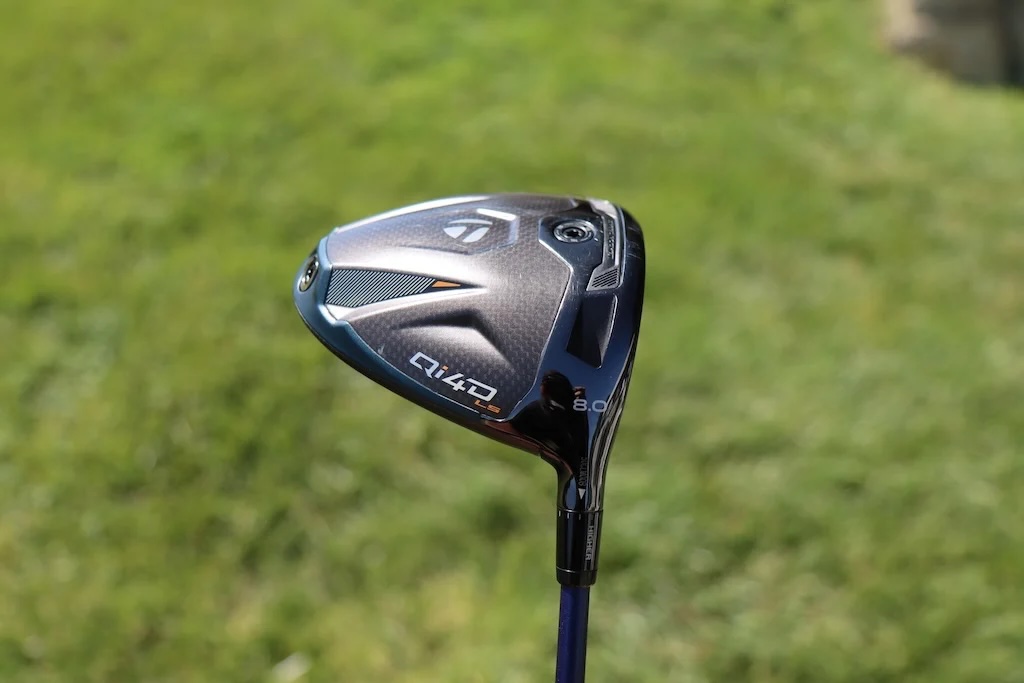
Driver: TaylorMade Qi4D LS (8 degrees)
Shaft: Fujikura Ventus TR Blue 6 X
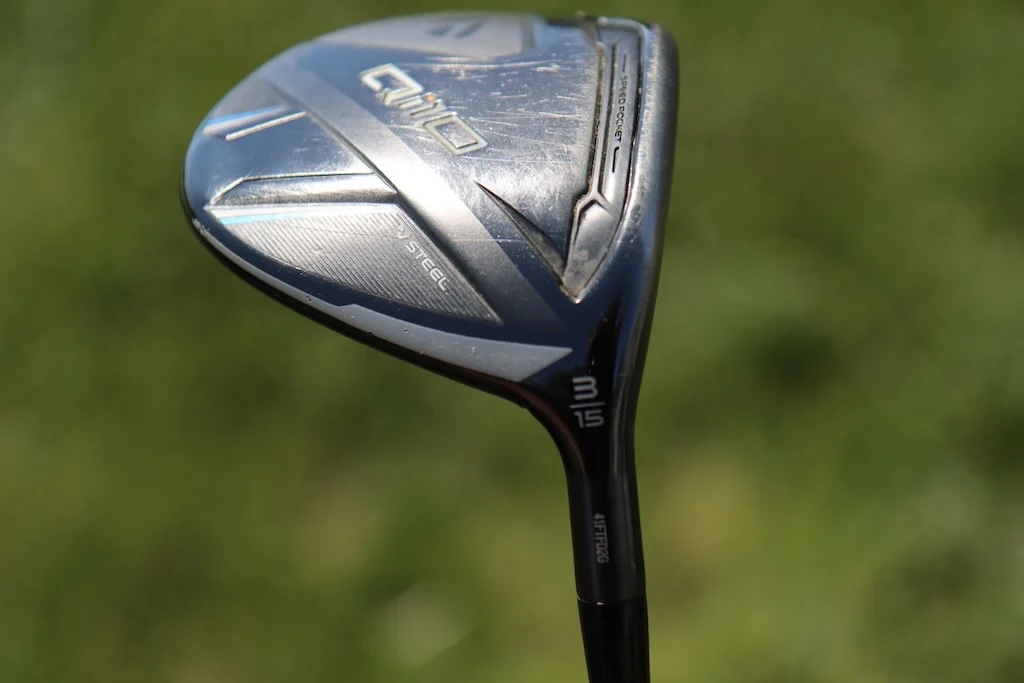
3-wood: TaylorMade Qi10 (15 degrees)
Shaft: Fujikura Ventus Black 9 TX
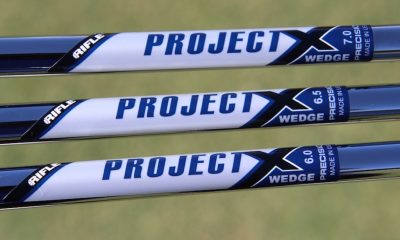
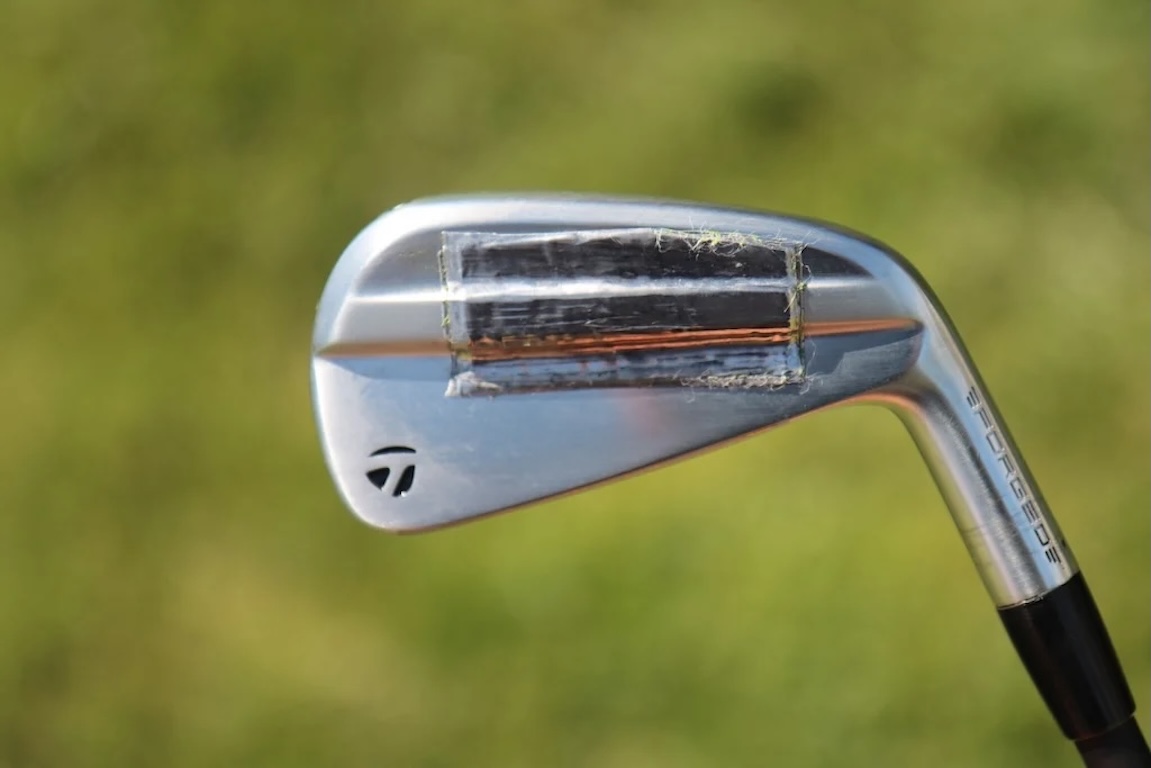
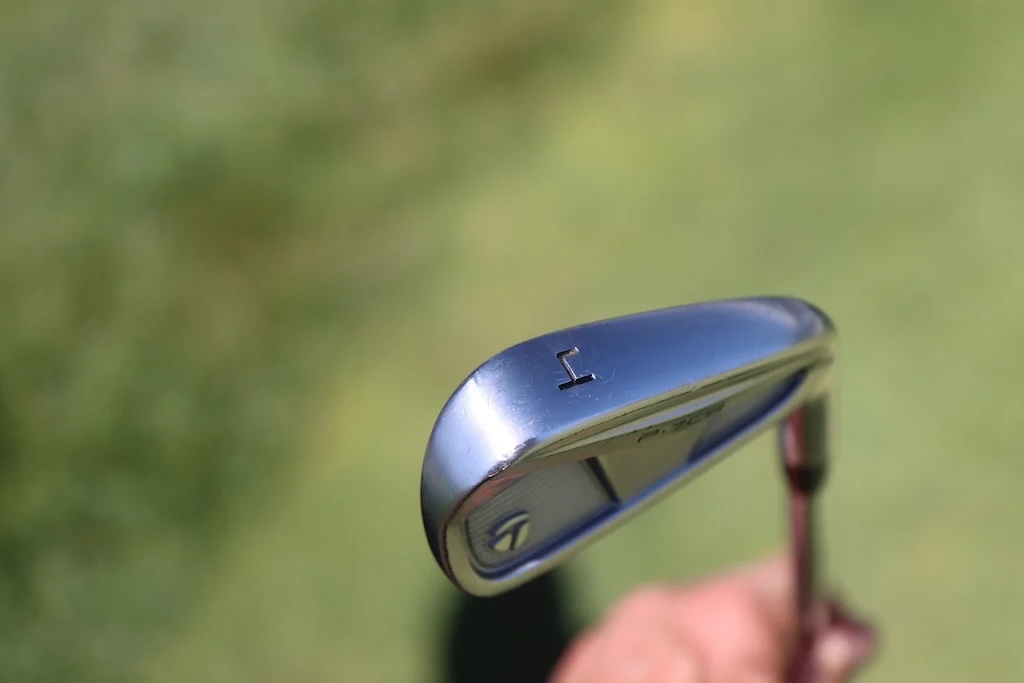
Irons: TaylorMade P770 (3), TaylorMade P7CB (4), TaylorMade P7TW (5-PW)
Shafts: Fujikura Ventus Black HB 10 X, True Temper Dynamic Gold X100
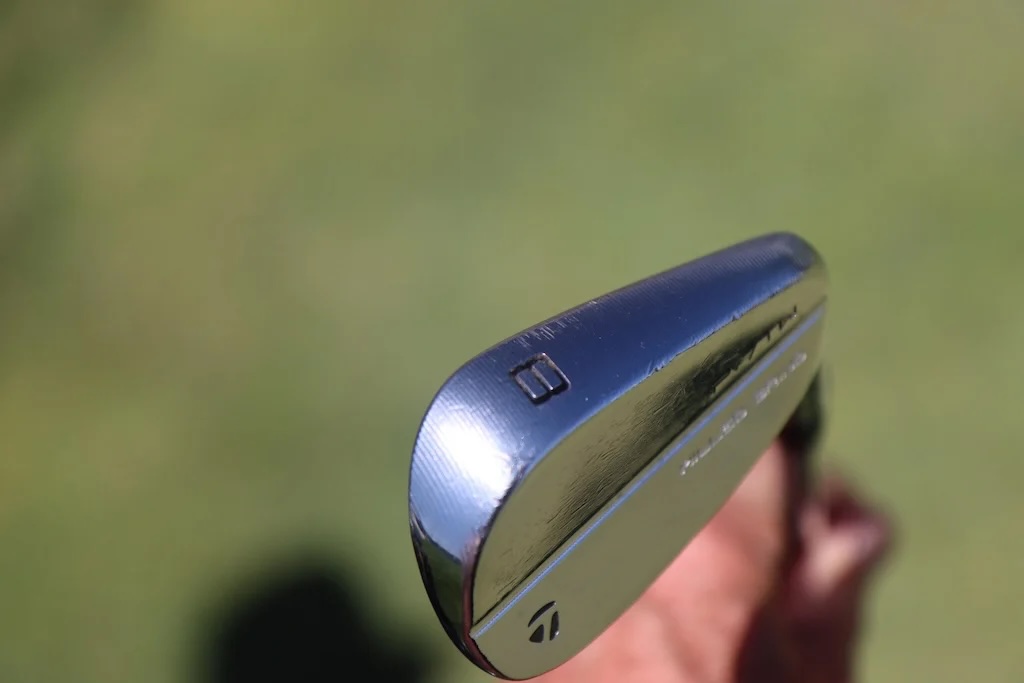
Wedges: TaylorMade Prototype (50-SB09), TaylorMade MG5 (56-HB12, 60-LV07)
Shafts: True Temper Dynamic Gold S400
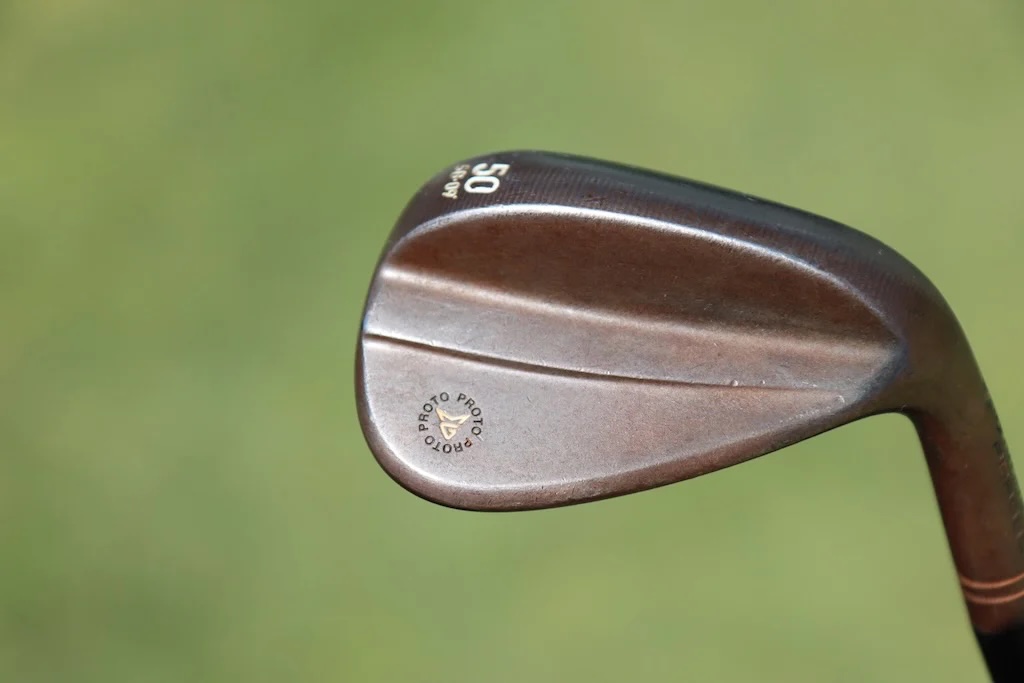
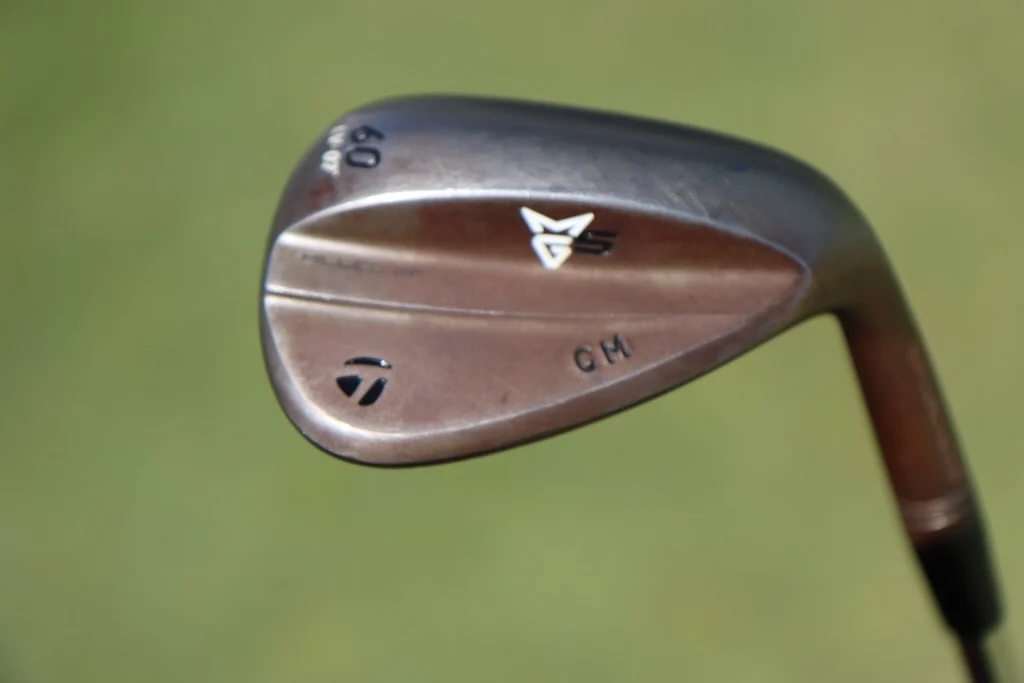
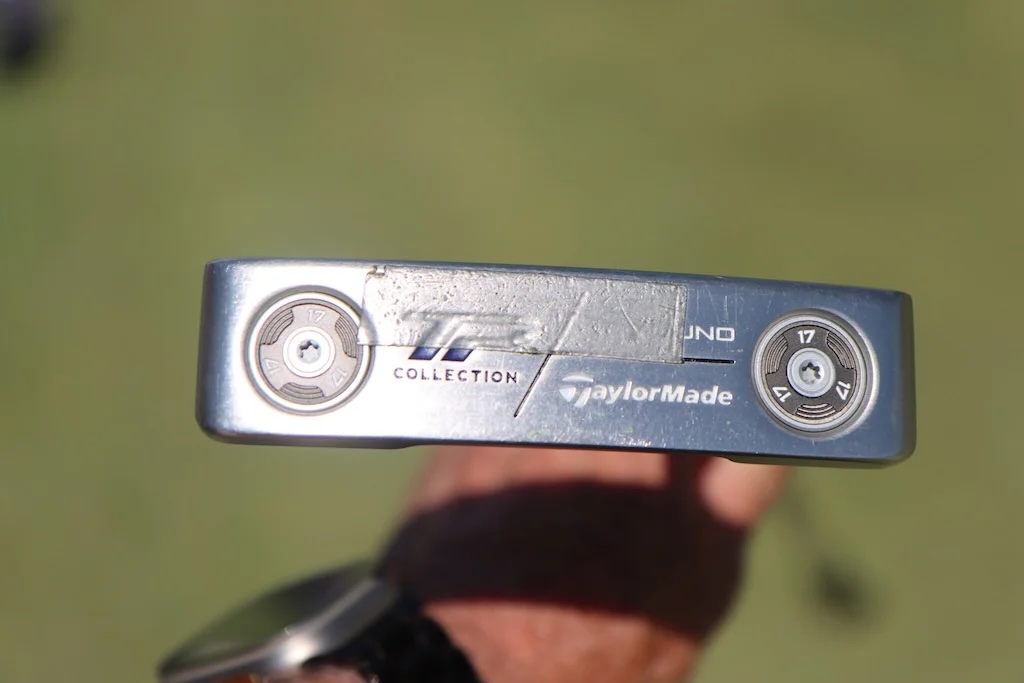
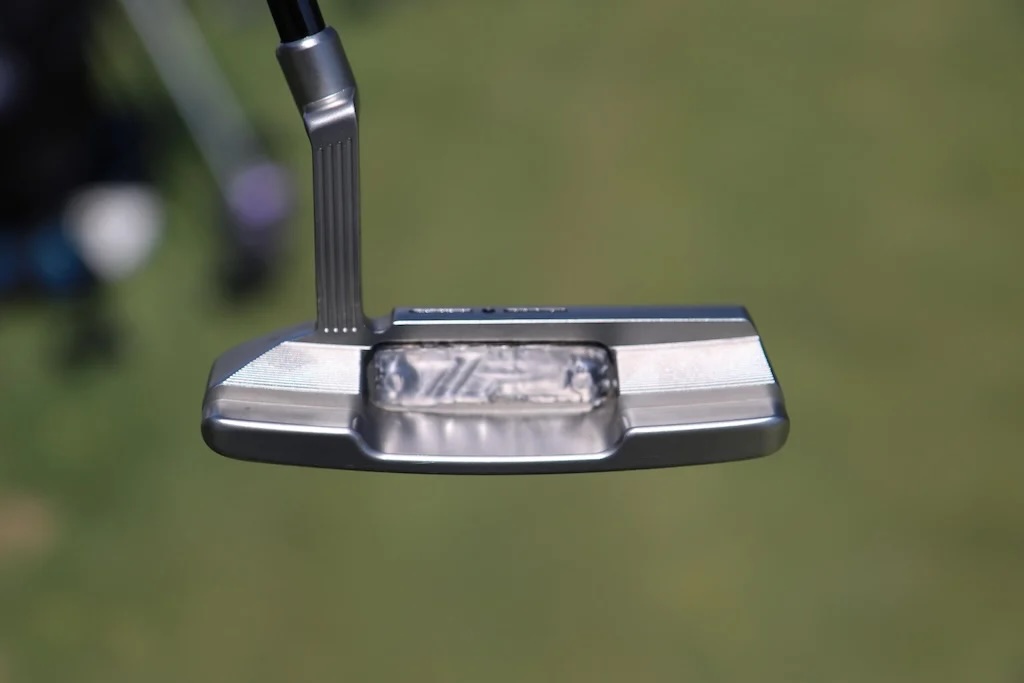
Putter: TaylorMade TP Juno
Ball: Titleist Pro V1x
Grips: Golf Pride Tour Velvet Cord
Check out more in-hand photos of Christiaan Maas’ clubs here.
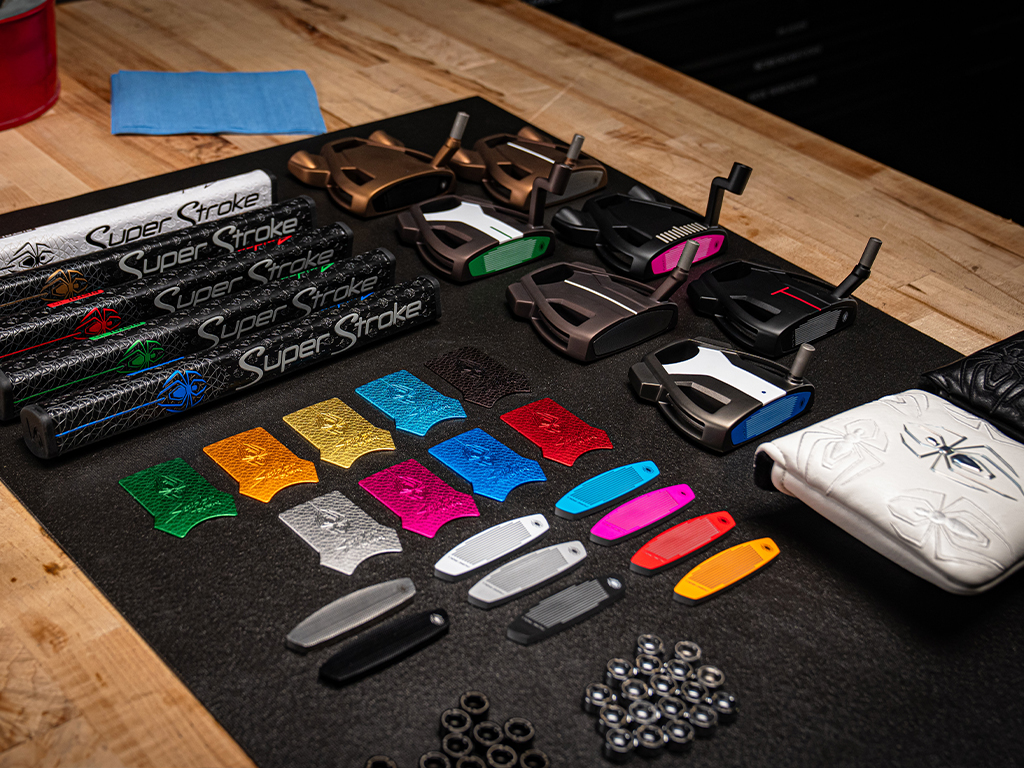
TaylorMade Golf’s MySpider program underwent a substantial overhaul over the last month. Firstly, the company launched the option to customize the Spider ZT model, and now the program has returned with the MySpider Tour and MySpider Tour X.
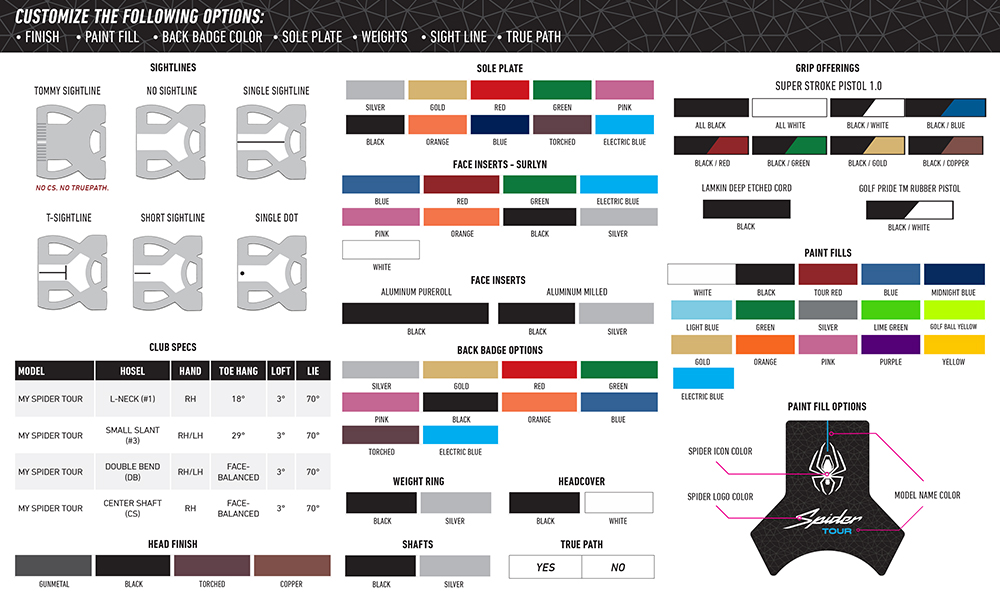
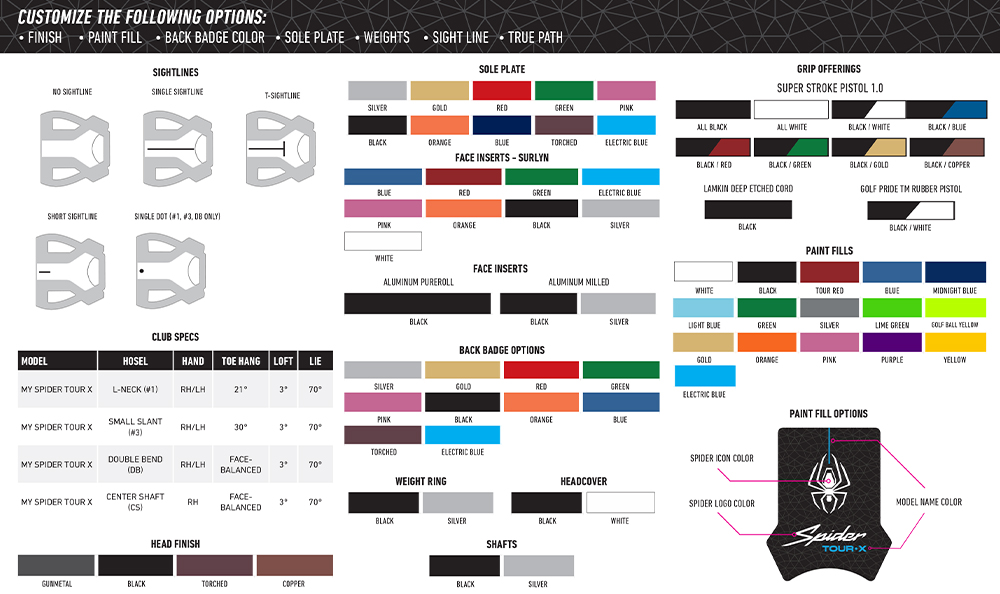
The revamped page now gives golfers complete control over every visual and functional detail of their putter on the popular Tour and Tour X head, with every cosmetic idea thought of. In MySpider Tour, golfers can choose from four head finishes, 16 paint fill colors, nine Surlyn face insert colors, three aluminum insert options, six sightline configurations, and four hosel options — L-neck, small slant, double bend, center shaft. Six sightline options are available in MySpider Tour, including the optically engineered True Path alignment system. MySpider Tour X gives builders the option of four head finishes, four hosel configurations, and five sightline options, also including True Path alignment.
One of the more interesting features of the new MySpider program is the availability of three distinct face insert options. Along with the usual Surlyn Pure Roll insert trusted by Scottie Scheffler and Rory McIlroy, which can be customized from nine colors, golfers can now also select firmer options. Two are offered with the black aluminum Pure Roll insert, slightly firmer than the traditional insert, or for the firmest feel, golfers can choose from two colors of milled aluminum inserts.
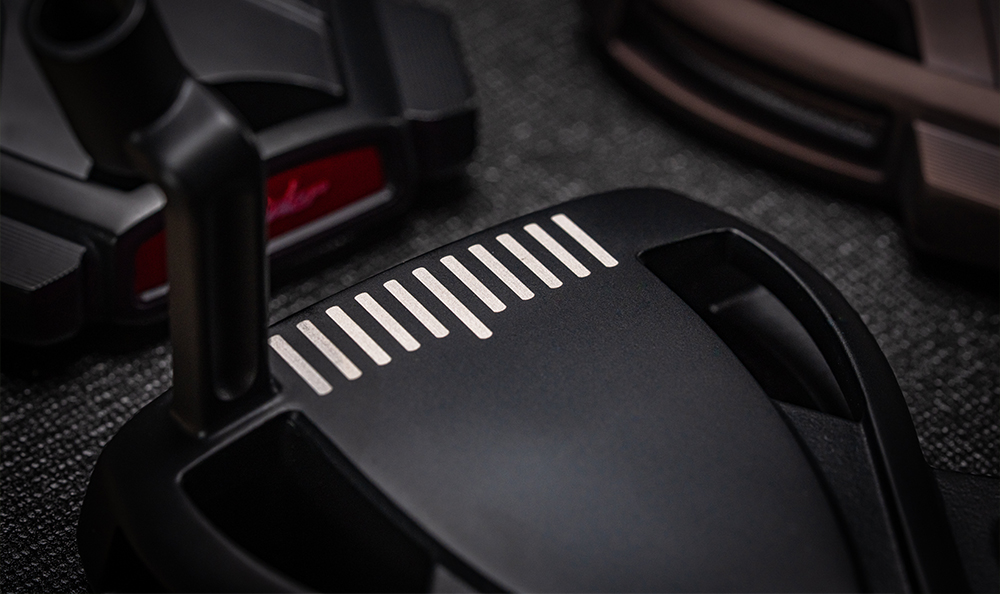
Another fun addition to the MySpider Tour is the ability to use the “Tommy Sightline.” The custom alignment aid design, which was first drawn onto Tommy Fleetwood’s putter by PGA Tour Rep James Holley, is based on the milled sightline on his Spider ZT head. There are five shorter lines on the left and right of a longer central line serving as the traditional short line alignment aid.
See below for the full specifications sheet for MySpider Tour and Tour X:
MySpider Tour
MySpider Tour X
Equipment
Then and now: Comparing Rory McIlroy’s current setup to his record-breaking 2019 Canadian Open victory

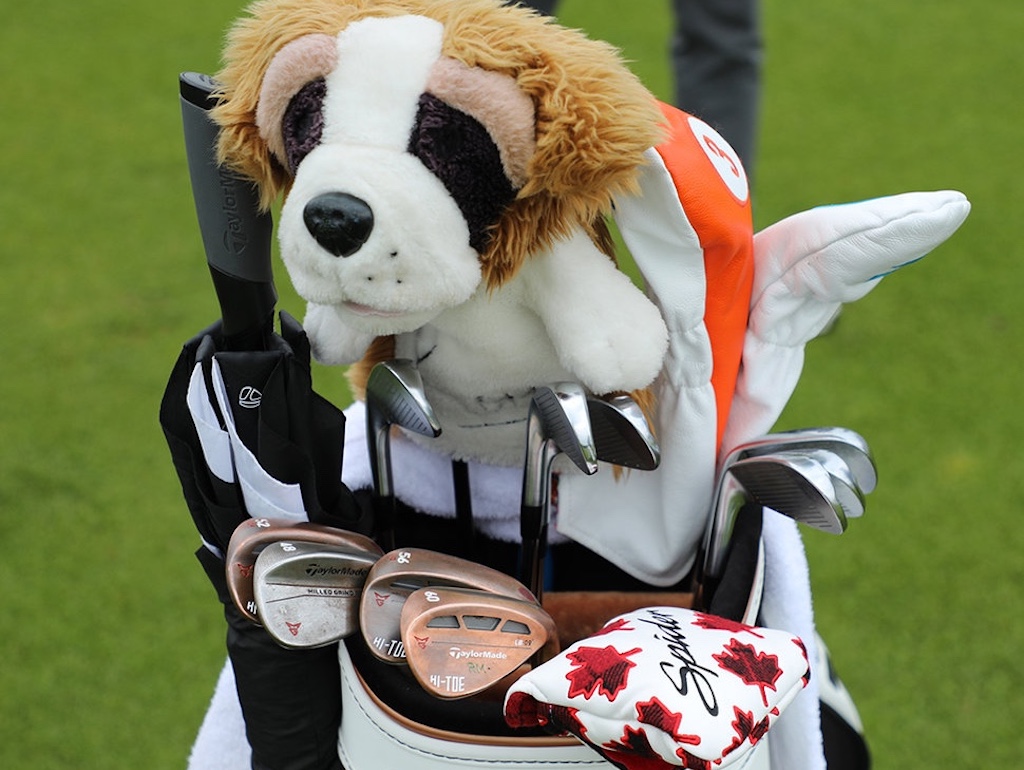
In Rory McIlroy’s first appearance at the 2019 RBC Canadian Open, he crushed the record books to earn his 16th PGA Tour title in dominating fashion, winning by seven shots over Shane Lowry and Webb Simpson.
McIlroy’s score of 22-under-par 258 is the lowest 72-hole score to date at the Canadian Open, and his closing 61 is also the best final-round score in the history of one of golf’s oldest tournaments. Finally, with his win in 2019, McIlroy became only the sixth player to win the career Triple Crown, adding to his victories at the U.S. Open in 2011 and The Open Championship in 2014, joining Tommy Armour, Walter Hagen, Arnold Palmer, Lee Trevino and Tiger Woods in a coveted list.
So, with that, why not compare his current setup to the clubs he used to break all the records?
Driver
2019: TaylorMade M5 (9 degrees), Shaft: Mitsubishi Tensei CK Pro White 70 TX
2026: TaylorMade Qi4D (9 degrees @8), Shaft: Fujikura Ventus Black 7X (45 5/8 inches)
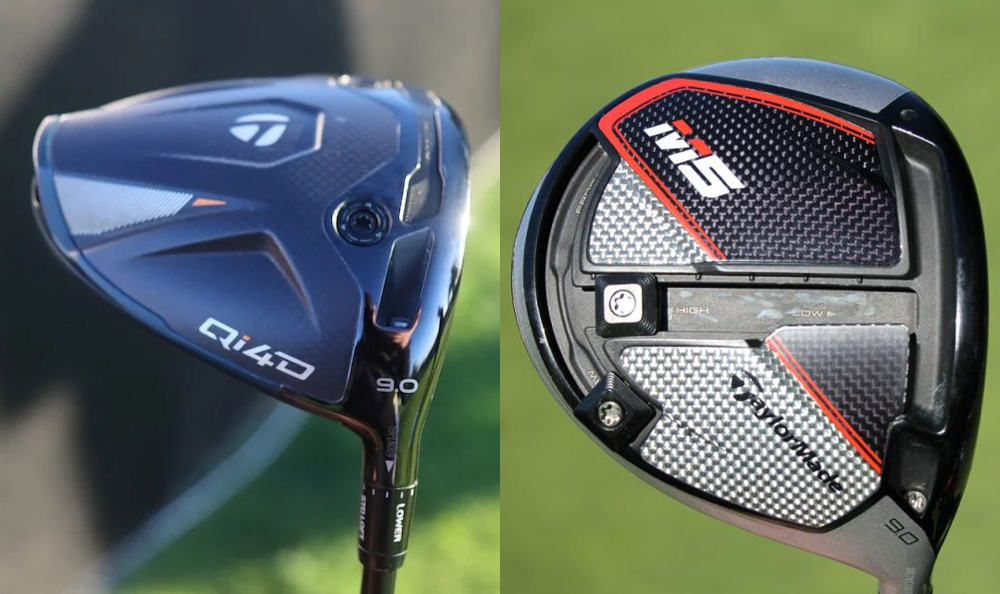
McIroy led the Tour in Strokes Gained: Off-the-Tee in 2019; he’s doing the same in 2026. Between now and then, McIlroy has switched from the Mitsubishi Tensei CK Pro White 70 TX (a shaft with slightly more feeling in the tip) to the original Fujikura Ventus Black 7X, having just made the change to the heavier version from playing the 60X.
What’s interesting about McIlroy’s 2019 setup is that the weighting on his driver is actually set in the high-draw setting, using the T-Track weighting system, whereas in the Qi4D, he’s currently using a heavily rear-weighted setup. (Two 13-gram weights in the rear and only two 4-gram front weights.)
The TaylorMade M5 driver he played in during his Canadian Open win was the company’s first head that they claimed to design to initially exceed the USGA’s COR limit, and then injected with tuning resin to bring it back in bounds.
Fairway woods
2019: TaylorMade M6 3-wood (15 degrees), Shaft: Mitsubishi Tensei CK Pro White 80 TX; TaylorMade M5 5-wood (19 degrees), Shaft: Mitsubishi Tensei CK Pro White 90 TX
2026: TaylorMade Qi4D 3-wood (15 degrees), Shaft: Fujikura Ventus Black 8X; TaylorMade Qi4D 5-wood (18 degrees), Shaft: Fujikura Ventus Black 9X

The TaylorMade M6 fairway wood that McIlroy was using during the 2019 season is still in the bag of some of the best golfers on Tour in 2026. Just check out Justin Rose’s winning setup from the Farmers Insurance Open earlier this year. This year, though, McIlroy has still been searching for his top-end-of-the-bag setup, having played both the new Qi4D and the Qi10, which he won the Masters with.

The same shaft swap can be seen in the fairway woods as the driver, along with slightly less loft on the 5-wood.
Irons
2019: TaylorMade P750 (4) Buy here, TaylorMade P730 (5-9), Shafts: Project X 7.0
2026: TaylorMade P760 (4), TaylorMade Rors Proto (5-9), Shafts: Project X 7.0

The biggest difference between McIlroy’s custom set and the stock P730s is the groove design. While the P730s were constructed with 14 MX-9 grooves on their milled faces, McIlroy’s proto heads instead use the higher-spinning, 16-groove layout of the TW2 grooves. Other big differences between the sets are that McIlroy’s 7- and 8-irons have thinner toplines, are 1 degree stronger in loft, and are 1/4 inch longer than the original P730 builds.
With McIlroy’s 4-iron, the switch from P750 to P760 sees a transition to a two-piece construction with Speed Foam in it, which allows McIlroy to launch the ball slightly higher, with more workability.
Wedges
2019: TaylorMade Milled Grind (48-09SB), TaylorMade MG Hi-Toe (52-09SB, 56-09SB, 60-LB09), Shafts: Project X Rifle 6.5
2026: TaylorMade MG5 (46-09SB, 50-09SB, 54-11SB, 60-08LB @61), Shafts: Project X 6.5 (46-54), Project X 6.5 Wedge (60)

Between 2019 and 2026, McIlroy’s focus on his short game has been much more apparent. It was the reason why he switched back to the TP5 golf ball, to help with launch, spin and control with his wedges leading up to his career Grand Slam victory in 2025. The most apparent changes to McIlroy’s wedge setup are his lofts and bounce. He’s slowly delofted his pitching to a sand wedge, but has increased the loft on the lob wedge, bending his current 60-degree to 61. With that, adding more loft to his lob wedge also slightly increases the bounce and leading-edge sit point, so, as a result, he plays a lower-bounce lob wedge compared to 2019. The MG5 wedges are also softer than the first Milled Grind option from 2019. McIlroy also no longer plays the full-face grooves found on the Hi-Toe.
Putter
2019: TaylorMade Spider X
2026: TaylorMade Spider Tour X
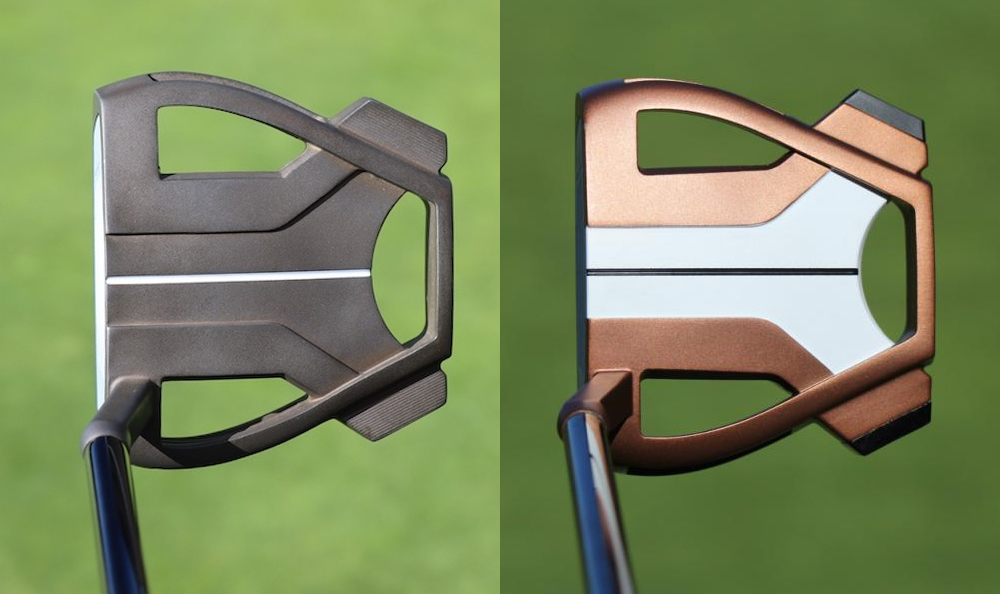
Notice anything similar. Yes, the copper finish on Rory McIlroy’s Spider X putter in 2019 is a slightly more reflective finish than the recently released torched PVD finish. McIlroy was using the True Path alignment system, but now uses only a single white sightline.
Ball
2019: 2019 TaylorMade TP5 (#22)
2026: 2025 TaylorMade TP5 (RORS)
As mentioned above, McIlroy had transitioned from the TP5 to TP5x golf ball since his victory in Canada in 2019, but now is black with the same style of golf ball as his victory at Hamilton Golf & Country Club.
Grips
2019: Golf Pride Tour Velvet Cord
2026: Golf Pride MCC
Interesting, McIlroy actually used Golf Pride’s Tour Velvet Cord grips during his victory in 2019 (it was during a 2+ year switch to the corded TV) as opposed to his usual MCC grips, which he has played for most of his career.

What’s the story behind Webb Simpson’s custom-stamped irons?

Memorial Tournament Tour Report: Rory McIlroy, Cameron Young switch up drivers, and more

Cadillac Championship Tour Report: Spieth’s sizable changes, McLaren Golf launches, and more

Russell Henley’s winning WITB: 2026 Charles Schwab Challenge

Kristoffer Reitan’s winning WITB: 2026 Truist Championship

Best irons 2026: Best irons overall, most forgiving irons, and more

J.T. Poston’s winning WITB: 2026 Memorial Tournament

Aaron Rai’s winning WITB: 2026 PGA Championship

Cameron Young’s winning WITB: 2026 Cadillac Championship

Details on Jason Day’s latest prototype Avoda iron setup


Christiaan Maas WITB 2026 (June)
Driver: TaylorMade Qi4D LS (8 degrees) Shaft: Fujikura Ventus TR Blue 6 X 3-wood: TaylorMade Qi10 (15 degrees) Shaft: Fujikura Ventus Black...


Ryan Palmer WITB 2026 (June)
Driver: Callaway Quantum Triple Diamond (9 degrees) Shaft: Project X HZRDUS Smoke Blue RDX 60 TX 3-wood: TaylorMade Qi10 (15 degrees) Shaft:...


Bud Cauley WITB 2026 (June)
Bud Cauley had >14 clubs in his bag when photographed prior to the Memorial Tournament. Driver: Titleist GTS2 (8 degrees) Shaft: Fujikura...


Hannah Green WITB 2026 (June)
Driver: Titleist GTS3 (10 degrees, D4 SureFit setting) Shaft: Mitsubishi Chemical Diamana RB 53 S 3-wood: Titleist GT3 (15 degrees,...
-
 Equipment7 days ago
Memorial Tournament Tour Report: Rory McIlroy, Cameron Young switch up drivers, and more
-
 News2 weeks ago
Russell Henley’s winning WITB: 2026 Charles Schwab Challenge
-
 Equipment4 days ago
Best irons 2026: Best irons overall, most forgiving irons, and more
-
 Whats in the Bag4 days ago
J.T. Poston’s winning WITB: 2026 Memorial Tournament
-
 Equipment1 week ago
Details on Jason Day’s latest prototype Avoda iron setup
-

 Equipment3 weeks ago
CJ Cup Byron Nelson Tour Report: Koepka and Kim’s newest putters finally get hot
-

 News2 weeks ago
Charles Schwab Challenge Tour Report: MacIntyre, Åberg and Spaun all switch putters, TaylorMade launches new Spider
-

 Equipment2 weeks ago
Details on J.J. Spaun’s surprise putter switch


Adam
May 29, 2017 at 4:29 pm
There are other JDM shafts that haven’t crossed the Pacific yet: Basilieus, Crazy, Design Tuning, and more. Maybe a shaft from one of these would suit Kelly better. Unfortunately for him, they don’t have reps dropping stuff into tour van stockpiles. Old Jerry needs to take out the pacifier out and go do some legwork. PGA players are a bunch of spoiled brats who don’t know squat about their own tools.
mikey t
May 12, 2017 at 11:59 am
idiots !!!!!
Kd
May 12, 2017 at 9:21 am
Fuji Pat is a stud. Been around the game a long time time and is a straight shooter. Nice work.
SH
May 11, 2017 at 9:55 pm
Wait – you told Jerry Kelly to go to 7.5? Whatever happened to LOFT UP! ? So now it’s back to put weight in the back of the head and loft down – again. Nothing to do with the right shaft. The new shaft didn’t give him the numbers, so he just went ahead and started clicking the head around until he found the right flight numbers – at 7.5 loft. Duh. You just debunked your own advertorial.
Chris
May 15, 2017 at 1:26 am
Who is “you”? This article wasn’t written by TM, do the Fuji rep in this piece have a reputation for being a fanatical loft up advocate?
Cdub
May 11, 2017 at 7:11 pm
Great article!! Thank you Zak.
Zak Kozuchowski
May 12, 2017 at 8:04 am
Thank you, Cdub! I’m glad you enjoyed it.
Tour Wives
May 11, 2017 at 5:59 pm
Year after year
DJ has the hottest shaft on the pga tour
rebfan73
May 11, 2017 at 9:35 pm
+1
Golf Scientist
May 11, 2017 at 3:50 pm
It’s all in the shaft, boyz….. and the clubhead is just an inertial mass that is detrimental to the golfswing. The golfswing takes about a second of time while the impact event is only 0.5 milliseconds or so …..!!!
There are 1000 milliseconds in 1 second… so that orgasmic impact event is only 0.05% of the golfswing… soooo impact = 0.05%…. and swing = 99.05%.
So now tell me the clubhead is extra significant in the golfswing, and the shaft is just something you stick into the clubhead to get it to the ball.
—————–
Clubhead aerodynamics, weight distribution, size, material, cosmetics, are somewhat insignificant in the entire golfswing… but wait!!!…. it’s the clubhead that hitshitshits the golfball…. therefore ….. I love my clubheads soooo muuuuch because they are soooo purtty ….!!!!
Kevin
May 11, 2017 at 5:26 pm
Not even close
Kenn
May 12, 2017 at 12:03 pm
Agreed…. the impact of the clubhead is not even close to the duration of the golfswing ….!
Ron
May 12, 2017 at 12:31 pm
Fine….I’ll be the guy to point out your math doesn’t equal 100%…
DB
May 11, 2017 at 1:41 pm
Interesting article. But I still think the #1 factor in being the hot shaft on the PGA Tour is marketing.
Looking at the distance stats over the years, it seems players aren’t gaining distance or accuracy with newer shafts. Maybe they find one they like better, or it feels better, looks cooler, etc. And that’s all well and good, I’m fine with that, but let’s be realistic about it.
Paul
May 11, 2017 at 7:39 pm
if a shaft doesn’t have the right bend profile for me i hit it all over the face. I am not the only person like that. all quick transition people need a specific shaft type. slower swingers can hit anything that feels good or works.
Don
May 12, 2017 at 10:48 am
Right track, with a correction. I’m both slower swinging and suffer a quick transition. I need a high launch but stiff shaft to keep the ball in a reasonable dispersion pattern. I consider the shaft to be 50-75% of the value of a fitting. Just swap the heads to get to the correct loft for the shaft. I’d prefer to state it that casual players can hit anything that feels good or works. Just don’t lump all slow swingers into that group.
Mitch Young
May 11, 2017 at 1:02 pm
my take away from this article is that even in the hands of the best players in the world, a shaft can’t fill all the gaps, its like the rock paper scissor paradigm. There isn’t shaft out that can optimize your spin, launch and ball speed, one of those aforementioned attributes will have to give. great article.
Zak Kozuchowski
May 11, 2017 at 1:36 pm
Thanks for the comment, Mitch, and I appreciate your feedback. What I hoped to get across what how hard it was to make a successful product on the PGA Tour, and all the elements that are a part of it. A good product or a good story or good relationships aren’t enough. It takes everything.
Scott
May 11, 2017 at 12:52 pm
Yes, I thought it was a bit of an advertorial also, but it was very interesting. Now I have to find out if my current club has the right “land angle”. Geeze
Dell Man
May 11, 2017 at 11:49 am
I don’t understand the comments about it being an “advertorial”. It’s a feature story on Fujikura Shafts and the fitting process for Tour Players. That’s what publications do, feature stories. This is just a well reported and interesting story about a guy who is in the mix of fitting players every week who happens to work for Fujikura. It could have been any shaft company, it just happens to be that the writer had a relationship, or built one, with this guy who works at said company. Great story, well done.
Bert
May 12, 2017 at 8:42 am
Then title the article that way! It’s marketing pure and simple.
carl spackler
May 11, 2017 at 10:37 am
Fujikura’s product line wasnt confusing b/c it had to many products, it was confusing b/c they named everything speeder. Come up with some new names and new ways to describe what profile the shaft is.
Cris
May 11, 2017 at 8:40 am
How much to run an advertorial here these days? I’ve seen many of them lately.
SirBigSpur
May 11, 2017 at 10:08 am
Took the words right out of my mouth. Pretty much confirmed that this “article” was an ad when I looked at Rory’s WITB article and saw a “buy now” link under only the Fujikura shaft in his bag (and the full graphical Fujikura logo). Sad.
TCJ
May 11, 2017 at 7:59 am
I think the title should read: What It Takes To Be The Hottest Shaft On The Champions PGA Tour
AH
May 11, 2017 at 7:58 am
Aldila still #1
Ian
May 11, 2017 at 7:13 am
Tl;dr – don’t worry if you swing like a rusty gate, just buy a new driver (with a fujikura shaft obviously). Ask for the Atmos Tour Spec Red.