
Opinion & Analysis
Junior Golfers: Ask Yourself These 4 Questions Before Picking Summer Tournaments


The summer is quickly closing in, and surely junior golfers across the globe are busy picking out and finalizing their summer schedules. For some, this means hitting the road for tournaments, while others need to budget more wisely — both time and money — and should find competitive local options.
Trying to decide what’s really important for your game and your career can be very difficult. That’s why I’ve developed 4 important questions to ask yourself, or for the parents to ask of their juniors, when formulating a plan of attack.
1. Have you developed ball control?
Prior to any significant tournament play, it is my opinion that juniors should spend several years learning and practicing the motor control patterns of the swing. This skill is called ball control; the ability to deliver the club in a way the player can regulate distance, trajectory and shot shape. This should include hitting countless range balls, putts and chips.
According to the Royal Canadian Golf Association Long Term Development Plan, which is available for download here, players should be hitting upwards of 2,200 practice shots per week by middle adolescence. Their skills should be developed under the watchful eye of a strong technical instructor, and students should be encouraged to develop other skills through participation in a wide variety of sports.
If the junior is discovering golf in their teenage years, parents are wise to still engage in this process; a strong level of ball control is the foundation for scoring. Although it is tempting, taking a short cut will lead to problems later in the development of the player. When in doubt, keep practicing and playing as much as possible.
2. Can you consistently break 75 on your home golf course?
In my opinion, you’re not ready for national tournaments until this happens. Also consider that playing your home golf course is about 2-3 shots easier than playing in a tournament. This means if you shoot 78 on average at your home golf course, you are going to be lucky to break 80 in a national tournament.
My research suggests that in 2016, the average American Junior Golf Association (AJGA) qualifying required a score of 75.4 for boys to earn a spot and 77.6 for girls. Also, breaking par is becoming a common theme in junior golf. My research suggests that last year in the AJGA, boys shot in the 60s over 900 times and girls over 600 times. This means, based on my 2-3 shot rule, these juniors are shooting in the mid-60’s in practice!
If you average 80 or above in national caliber junior golf, my advice is to stay local until your game develops. The local PGA Sections in many regions run great tours, and the Mid Atlantic and The Met Section in New York are two of many great opportunities. It may be more damaging to your career, confidence and bank account to continue playing in national tournaments when you’re playing poorly or your game is simply not ready. Build confidence and round out your game in local tours before you move back up to the big leagues.
3. How do I make the most of my summer?
In my experience, the first and crucial step on the competitive golf ladder is spending considerable time on a home golf course where the junior learns the nuances of the game in a competitive environment. By the summer after their freshman year in high school, the junior should be playing multiple days of 18+ holes where they are ideally playing with others of a similar caliber and set consequences. The more matches that come down to the last hole, the better.
4. Do I need to take the travel money and sink it into a private club membership?
The quality of the golf course is far, far, far less important than the access to the facilities and the opportunity to play with other talented players on a daily basis. The trap of being a member can come when junior does not play enough holes or doesn’t have anyone to compete against.
Golf is about consistency over long durations. Playing nine holes a few times a week is not going to help. Juniors must extend themselves and try as often as possible to play 18. They must also learn to compete, ideally playing for something of consequence. This means responsible gambling; playing for something that they would hate to lose, but nothing ridiculous. A candy bar, or even push ups, can add enough incentive and pressure to win.
Too many juniors, fueled by misinformation, are in a hurry to build their tournament resume. Students who are willing to invest the time to build strong technical skills and then learn all the nuances of golf are going to arrive at tournaments prepared to shoot the scores necessary to earn trophies. Until then practice, compete and stay local.




This past Monday, I played in the U.S. Amateur local qualifier at Rock Creek Country Club in Portland, Oregon. A full tee sheet from 7:30 a.m. to 1:55 p.m., the top 11 scores would make it to the U.S. Amateur final qualifying.
I teed off at 10:48 a.m.. With the 7:30 am tee time, you can get a feel for the leaders’ pace, and they were off and running on the challenging setup at Rock Creek.
View this post on Instagram
Getting to the highlight of the round on the par five 17th, a drive up the left side and 212 yards left to the front hole location. I took out a 5-iron with plans of middle of the green. The ball ended up 8 feet left of the hole, pin high. A slight downhill putt dropped in for an eagle 3 on the 17th. With the cut line looking to be anywhere from -2 to even par. This was the boost I had been waiting for all day.
With making par from the trees on 18, it was time to wait for a potential playoff with a posted score of one under par 71.
Three hours later, it was playoff time. 8 players for 6 spots. I made par on the playoff hole, which was good enough to advance to the U.S. Amateur final qualifying in July. USGA qualifiers sure deliver on all of the emotions in golf!
Club Junkie
Building my 2026 gamer WITB: Ranking the contenders and new putter projects – Club Junkie Podcast

The annual What’s In The Bag build is underway, and on this episode of Club Junkie, Brian breaks down the clubs currently leading the race for a spot in his 2026 gamer setup. From drivers and fairway woods to irons, wedges, and shafts, he ranks the equipment that’s performing best and explains what’s separating the front runners from the rest of the field.
Brian also heads into the workshop to discuss several putter projects currently on the bench. From head options and shaft choices to build ideas and testing plans, he shares what he’s working on and which putters could become serious contenders for the bag this season.
If you’re a gear junkie who loves equipment testing, club building, and the never-ending pursuit of the perfect setup, this episode is for you.
Follow Club Junkie:
Instagram: @clubjunkiepod
TikTok: @clubjunkiepod
Threads: @clubjunkiepod
X: @ClubJunkiePod
Club Junkie
Tour Edge Exotics mini driver review + TaylorMade Spider ZT Max first look – Club Junkie

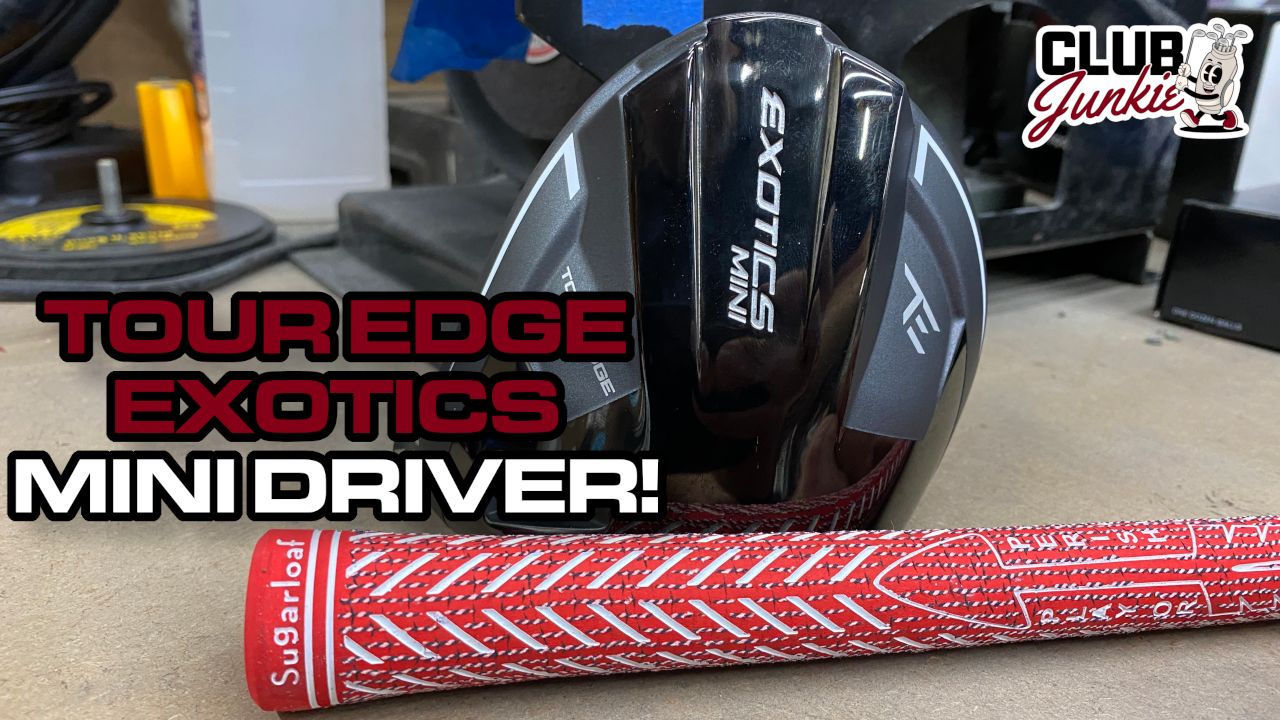
On this episode of Club Junkie, I put the new Tour Edge Exotics Mini Driver to the test and break down the performance, forgiveness, distance, and where it fits compared to a traditional driver or strong fairway wood. If you have been curious about adding a mini driver to the bag, this one is worth a look.
I also dive into the new TaylorMade Spider ZT Max putter that was recently spotted and discuss the growing zero torque putter trend. Plus, there is a closer look at the new Project X Titan Yellow shaft showing up on the PGA Tour and what makes it different from other profiles currently out there.

Justin Rose WITB 2026 (April): Full WITB breakdown with new McLaren irons

What’s the story behind Webb Simpson’s custom-stamped irons?

Memorial Tournament Tour Report: Rory McIlroy, Cameron Young switch up drivers, and more

Cadillac Championship Tour Report: Spieth’s sizable changes, McLaren Golf launches, and more

Russell Henley’s winning WITB: 2026 Charles Schwab Challenge

Kristoffer Reitan’s winning WITB: 2026 Truist Championship

Aaron Rai’s winning WITB: 2026 PGA Championship

J.T. Poston’s winning WITB: 2026 Memorial Tournament

Best irons 2026: Best irons overall, most forgiving irons, and more

Cameron Young’s winning WITB: 2026 Cadillac Championship


Bud Cauley WITB 2026 (June)
Bud Cauley had >14 clubs in his bag when photographed prior to the Memorial Tournament. Driver: Titleist GTS2 (8 degrees) Shaft: Fujikura...


Hannah Green WITB 2026 (June)
Driver: Titleist GTS3 (10 degrees, D4 SureFit setting) Shaft: Mitsubishi Chemical Diamana RB 53 S 3-wood: Titleist GT3 (15 degrees,...


Asterisk Talley WITB 2026 (June)
Driver: TaylorMade Qi4D (9 degrees) Shaft: Fujikura Ventus Blue 6 S 3-wood: TaylorMade Qi4D (16.5 degrees) Shaft: Fujikura Ventus Blue...


Brianna Do WITB 2026 (June)
Driver: Callaway Quantum Triple Diamond (9 degrees) Shaft: KBS PGW 3-wood: Callaway Elyte Titanium (15 degrees) Shaft: KBS PGW 5-wood:...
-
 Equipment6 days ago
Memorial Tournament Tour Report: Rory McIlroy, Cameron Young switch up drivers, and more
-
 News1 week ago
Russell Henley’s winning WITB: 2026 Charles Schwab Challenge
-
 Whats in the Bag3 days ago
J.T. Poston’s winning WITB: 2026 Memorial Tournament
-
 Equipment3 days ago
Best irons 2026: Best irons overall, most forgiving irons, and more
-

 Equipment1 week ago
Details on Jason Day’s latest prototype Avoda iron setup
-

 Equipment3 weeks ago
CJ Cup Byron Nelson Tour Report: Koepka and Kim’s newest putters finally get hot
-

 News2 weeks ago
Charles Schwab Challenge Tour Report: MacIntyre, Åberg and Spaun all switch putters, TaylorMade launches new Spider
-

 Equipment2 weeks ago
Details on J.J. Spaun’s surprise putter switch


jersey boys london cheap tickets
May 30, 2017 at 3:00 am
jersey boys london cheap tickets | China football
jersey wholesale, NHL, MLB, NCAA, and other Majestic Jerseys For
Sale from best jerseys suppliers and wholesalers, free
shipping service and authentic quality sports jerseys.
H
May 5, 2017 at 2:14 am
That #4 had me cracking up to no end. Private club membership pfffft. So funny. Whatever happened to can we make golf affordable at the grassroots level and not admit that it’s an elitist rich man’s sport. Play Golf America! PGA!
Judge Smells
May 4, 2017 at 4:57 pm
So basically set junior up with 315 range balls per day, force them to play 18 holes every time they play, kick back and wait for that scholarship letter
Ben
May 4, 2017 at 3:14 pm
Great article!! I think when I first embarked on tournament golf, I wasn’t well prepared for the variety in golf courses. Course management is key; once you have developed the skills mentioned above. Going from a wide open, mid-length golf course, to narrower, shorter courses, nobody ever showed me the true meaning to course management (aiming for the middle of the green, hitting three wood to stay short of bunkers, etc.). Playing a variety of courses, will help you embrace the many challenges a golf hole, and also introduce you to a broader spectrum of course conditions (speed of greens, wind, thick rough, pine straw, tightly mowed fairways, etc.). I also encourage kids to play golf on family vacations, where the courses are comprised of different grasses (Bermuda took me a while to get used to in college).
Best,
Ben
PETE
May 3, 2017 at 5:55 pm
Great, now my kid will have to track down the local loan shark because he’s down 250 snickers bars this month. It took guts to blatantly advocate gambling to minors.