
Opinion & Analysis
The 4 Biggest Myths About Biomechanics

So what’s the point of biomechanics anyways?
It seems that I hear more negative comments about this word “biomechanics” than positive. “It’s making golf too complicated” is what I hear most. I have to admit that I thought this for a long time myself, but when I dived into the subject and started talking with actual “biomechanists” (PhDs doing the research) and coaches who have a deep understanding of the concepts, things started to change for me.
I realized no one had actually explained to me what biomechanics was or how we should look at it. Now, I’m excited to dive into the topic and help spread the word about what’s actually going on. To that end, let’s break down the 4 biggest myths about biomechanics so we can separate fact from fiction.
Myth #1: It’s a Method or Model of Teaching Golf
First, let’s define what biomechanics is so we’re all on the same page. It’s “the study of the structure and function of biological systems by means of the methods of mechanics.”
What I’ve picked up when talking with biomechanists is that they’re trying to figure out WHAT’S going on and WHY with golfers. It’s not about one method of swinging the golf club or finding people with some perfect metrics; it’s a study of a topic just like anything else in the world. And in their study, biomechanists are observing tremendous variability among golfers, regardless of skill level.
“What we’re finding is a lot of variability even if we have really good players,” says Dr. Scott Lynn.
Biomechanics isn’t just a term that’s related to golf. In fact, there are biomechanists that work in other sports like gymnastics, track and field and in the medical arena. You’ll find that most biomechanists who work in golf also do research in other sports and arenas.
Myth #2: It Makes Things More Complicated
Does biomechanics make golf instruction more complicated? It might seem that way if you’re looking at the data and some of the scientific papers for the first time. There are a lot of measurements, theories and concepts to learn, and there’s no question they can be overwhelming at first.
The best instructors I know have invested a lot of time educating themselves on biomechanics because they say it helps them make SMARTER decisions and communicate with more SIMPLICITY to their students.
“It just helps me to get there quicker,” says Top-100 Instructor John Dunigan of his study of biomechanics.
When you look up the word biomechanics you’ll find two goals. The first is to improve PERFORMANCE; the second is to avoid the risk of INJURY. To do that, there are two fields that are being looked at in biomechanics: kinetics and kinematics.
“Kinetics” is the study of forces that produce motion. A force is happening anytime two things come in contact (your hand on the club, your feet on the ground). There are three forces that act on the golf club during the swing: gravity, air resistance and the forces that the golfer applies to the grip with their hands. The last one, the forces the golfer applies to club, are by far and away are the major determinants of how the club moves.
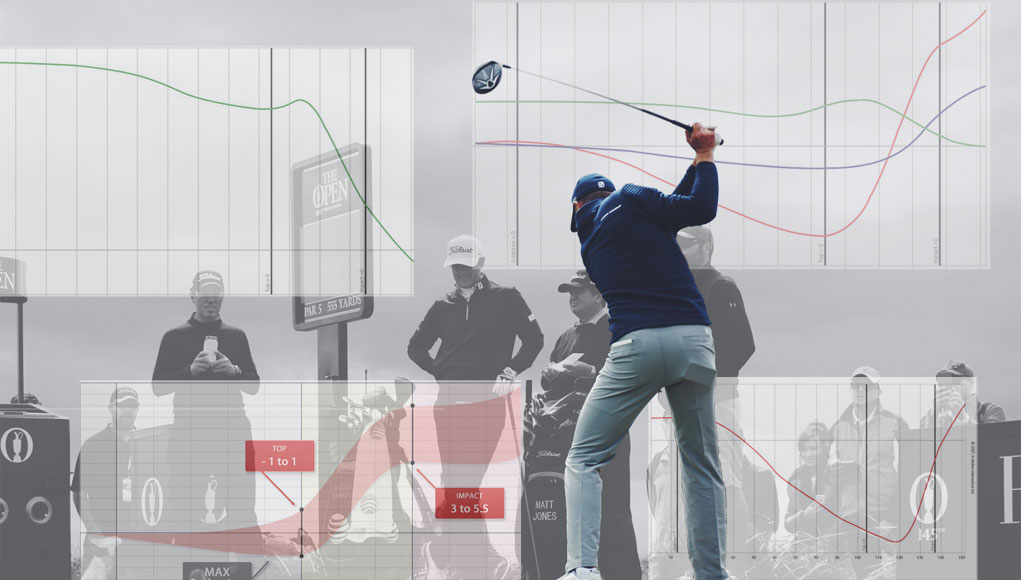
The second area of study is “kinematics,” which examines actual motion without regard to the forces producing it. Anything that looks at movement is going to be related to kinematics, and this is what we’ve spent most of our time talking about in the golf world over the years. One aspect of kinematics you might have heard of is the kinematic sequence, which shows rotational velocities of different body segments. Using this data, we can learn to optimize efficiency and produce more power.
Myth #3: It’s All Graphs and Numbers
When you measure a golf swing and look at what’s going on you get a lot of numbers, graphs and data, but biomechanics isn’t just data. It’s not just motion-capture info or a pressure-mat reading. Biomechanics is looking at what those numbers mean and their influence on people and their movement patterns.
Without great tools to measure and assess the coaching, the training and study of biomechanics will always be limited. In fact, it’s because of the new technologies and new measurement devices that the study of biomechanics has been able to grow.
The goal of any instructor is to take all the data and make a smarter decision. Ultimately, a golfer has to get feedback in a way that allows them to make a meaningful change. That might be a certain swing “feel” from a biofeedback device like K-Vest or a swing thought about weight shift from a pressure mat like BodiTrak. At the end of the day, the numbers are observational tools that can establish baselines to help golfers and golf instructors make meaningful and quantifiable changes.
Besides looking to improve performance, biomechanics also attempts to help reduce the risk of injury. This aspect is definitely difficult to look at and follow through with in the real world. Telling players to reduce their performance potential to decrease likelihood of injuries is a line most players aren’t willing to cross.
“There’re just so many factors that go into injury,” says Dr. Sasho Mackenzie, a top expert in the field of biomechanics. “It’s subjective to the individual in terms of their body’s tissues ability to repair itself, to sustain multiple repeated forces over and over again. It becomes really, really challenging to predict…”
Myth #4: I’m just trying to break 90. Does it really matter?
A lot of people ask if they should get fit for clubs if they’re not an elite golfer, and the answer is typically going to be a resounding “yes” from any coach or instructor. The same is true for biomechanics.
Wouldn’t you want to have an instructor or coach with knowledge of how the body and swing works? Someone’s whose studied the best science and research and can make better decisions about what path to take you down?
Again, biomechanics is not about swinging the club in a specific way. The goal is to help you improve your performance as quickly as possible while reducing the chance of injury. That’s beneficial to any level of player.
So, what’s the future for biomechanics in golf?
The future is bright for biomechanics. As technology improves, it’s only going to be easier to capture more data and analyze what’s really going on and why in the golf swing.
“I think we’re still in our infancy,” says Dr. Phil Cheetham. “I mean, there are a million things we can look at and man, it’s a fun time right now.”
The biggest shift is going to be golf instructors taking their education seriously and understanding the topic so well that they improve their communication and decision making when working with golfers.
If you’re interested in learning more, over at the Golf Science Lab we’re spending the next few months diving into biomechanics and making it as simple and understandable as possible. Check out the podcast here.




This past Monday, I played in the U.S. Amateur local qualifier at Rock Creek Country Club in Portland, Oregon. A full tee sheet from 7:30 a.m. to 1:55 p.m., the top 11 scores would make it to the U.S. Amateur final qualifying.
I teed off at 10:48 a.m.. With the 7:30 am tee time, you can get a feel for the leaders’ pace, and they were off and running on the challenging setup at Rock Creek.
View this post on Instagram
Getting to the highlight of the round on the par five 17th, a drive up the left side and 212 yards left to the front hole location. I took out a 5-iron with plans of middle of the green. The ball ended up 8 feet left of the hole, pin high. A slight downhill putt dropped in for an eagle 3 on the 17th. With the cut line looking to be anywhere from -2 to even par. This was the boost I had been waiting for all day.
With making par from the trees on 18, it was time to wait for a potential playoff with a posted score of one under par 71.
Three hours later, it was playoff time. 8 players for 6 spots. I made par on the playoff hole, which was good enough to advance to the U.S. Amateur final qualifying in July. USGA qualifiers sure deliver on all of the emotions in golf!
Club Junkie
Building my 2026 gamer WITB: Ranking the contenders and new putter projects – Club Junkie Podcast

The annual What’s In The Bag build is underway, and on this episode of Club Junkie, Brian breaks down the clubs currently leading the race for a spot in his 2026 gamer setup. From drivers and fairway woods to irons, wedges, and shafts, he ranks the equipment that’s performing best and explains what’s separating the front runners from the rest of the field.
Brian also heads into the workshop to discuss several putter projects currently on the bench. From head options and shaft choices to build ideas and testing plans, he shares what he’s working on and which putters could become serious contenders for the bag this season.
If you’re a gear junkie who loves equipment testing, club building, and the never-ending pursuit of the perfect setup, this episode is for you.
Follow Club Junkie:
Instagram: @clubjunkiepod
TikTok: @clubjunkiepod
Threads: @clubjunkiepod
X: @ClubJunkiePod
Club Junkie
Tour Edge Exotics mini driver review + TaylorMade Spider ZT Max first look – Club Junkie

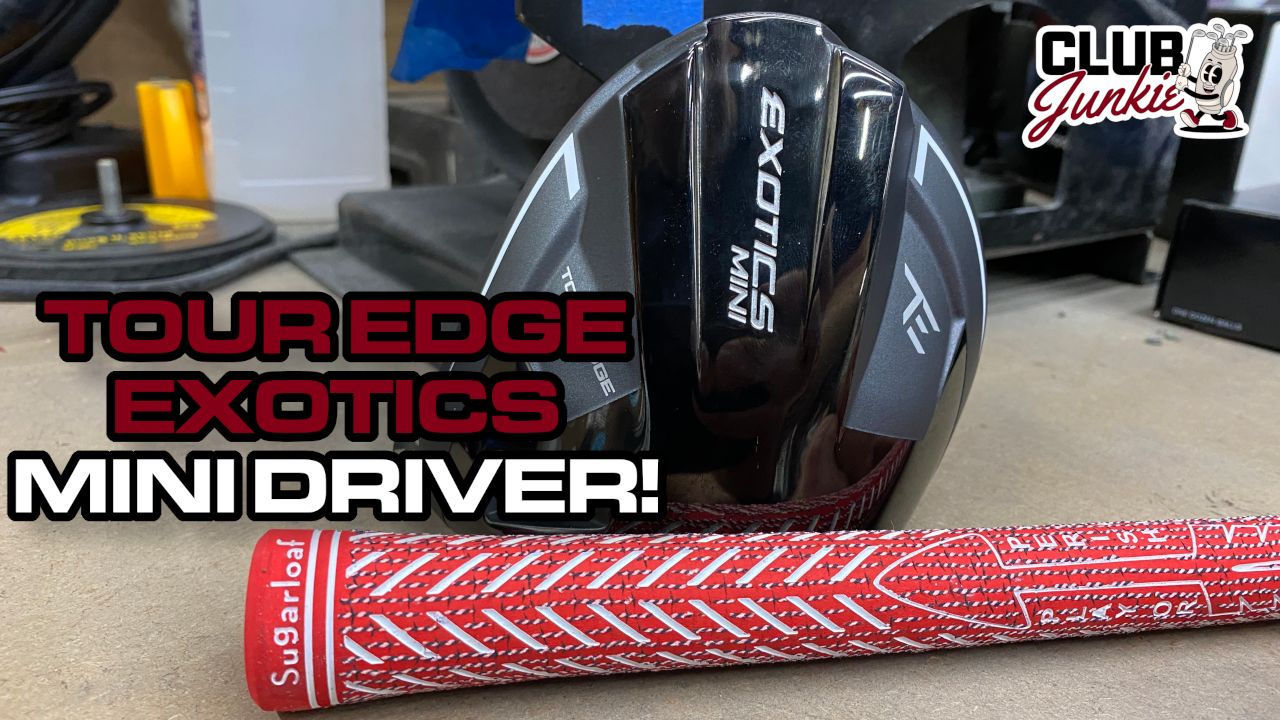
On this episode of Club Junkie, I put the new Tour Edge Exotics Mini Driver to the test and break down the performance, forgiveness, distance, and where it fits compared to a traditional driver or strong fairway wood. If you have been curious about adding a mini driver to the bag, this one is worth a look.
I also dive into the new TaylorMade Spider ZT Max putter that was recently spotted and discuss the growing zero torque putter trend. Plus, there is a closer look at the new Project X Titan Yellow shaft showing up on the PGA Tour and what makes it different from other profiles currently out there.

Justin Rose WITB 2026 (April): Full WITB breakdown with new McLaren irons

What’s the story behind Webb Simpson’s custom-stamped irons?

Memorial Tournament Tour Report: Rory McIlroy, Cameron Young switch up drivers, and more

Cadillac Championship Tour Report: Spieth’s sizable changes, McLaren Golf launches, and more

Russell Henley’s winning WITB: 2026 Charles Schwab Challenge

Kristoffer Reitan’s winning WITB: 2026 Truist Championship

Aaron Rai’s winning WITB: 2026 PGA Championship

J.T. Poston’s winning WITB: 2026 Memorial Tournament

Cameron Young’s winning WITB: 2026 Cadillac Championship

Best irons 2026: Best irons overall, most forgiving irons, and more


Bud Cauley WITB 2026 (June)
Bud Cauley had >14 clubs in his bag when photographed prior to the Memorial Tournament. Driver: Titleist GTS2 (8 degrees) Shaft: Fujikura...


Hannah Green WITB 2026 (June)
Driver: Titleist GTS3 (10 degrees, D4 SureFit setting) Shaft: Mitsubishi Chemical Diamana RB 53 S 3-wood: Titleist GT3 (15 degrees,...


Asterisk Talley WITB 2026 (June)
Driver: TaylorMade Qi4D (9 degrees) Shaft: Fujikura Ventus Blue 6 S 3-wood: TaylorMade Qi4D (16.5 degrees) Shaft: Fujikura Ventus Blue...

Brianna Do WITB 2026 (June)
Driver: Callaway Quantum Triple Diamond (9 degrees) Shaft: KBS PGW 3-wood: Callaway Elyte Titanium (15 degrees) Shaft: KBS PGW 5-wood:...
-
 Equipment6 days ago
Memorial Tournament Tour Report: Rory McIlroy, Cameron Young switch up drivers, and more
-
 News1 week ago
Russell Henley’s winning WITB: 2026 Charles Schwab Challenge
-
 Whats in the Bag3 days ago
J.T. Poston’s winning WITB: 2026 Memorial Tournament
-
 Equipment3 days ago
Best irons 2026: Best irons overall, most forgiving irons, and more
-

 Equipment1 week ago
Details on Jason Day’s latest prototype Avoda iron setup
-

 Equipment3 weeks ago
CJ Cup Byron Nelson Tour Report: Koepka and Kim’s newest putters finally get hot
-

 News2 weeks ago
Charles Schwab Challenge Tour Report: MacIntyre, Åberg and Spaun all switch putters, TaylorMade launches new Spider
-

 Equipment2 weeks ago
Details on J.J. Spaun’s surprise putter switch


Bob Pegram
Apr 24, 2017 at 3:58 am
K-Vest does help, in certain circumstances, reduce the likelihood of future injury, but only when used by a highly trained professional or clubfitter. Titleist does the training for injury prevention and for swing efficiency. They are separate training. In other words, somebody trained in one may not be trained in the other one.
Bob Pegram
Apr 24, 2017 at 3:53 am
All that matters is what any swing changes do in the hitting zone. As long as the changes don’t increase the likelihood of injury, or, better yet, reduce them, the path, speed, and aim of the head at impact are what matter.
Do machines that measure this part of the swing help? Yes, but the teacher needs to explain why angle of attack, inside-out or outside in swing path, and face angle are important. He also needs to explain how any swing mistakes affect these.
Smiller
Apr 19, 2017 at 11:36 pm
When I try to lean my shaft properly I cannot feel the pressure. Am I doing something wrong? I am thinking my shaft is not quite stiff enough.
Ron
Apr 13, 2017 at 10:31 pm
While its good to gather different information or opinions, a good teacher adapts to the student rather than force the student into a hard set of guidelines and structured teachings.
Jim
Apr 14, 2017 at 3:54 pm
There’s a thousand miles between those two statements….Adapt to the student? At what point? When they can break 100 or 80. Maybe 1 out of a thousand who comes in a ridiculous set up, grip is breaking 90 and they’re stuck. They’ll never break that plateau – unless like a junkie or alcoholic they admit there’s a problem they can’t fix themselves and make the changes necessary to get better. Period. You can’t polish a 15 year shitty golf swing for someone to finally drop 15 shots and break 80….BUT that’s not saying there’s always the special few already playing & scoring really well with some pretty ugly moves….
But, they’re generally happy and don’t take lessons…..NOW, if one starts really hurting his back and seeks my help to fix it, I can identify what he’s doing poorly that’s increasing the stress on the back and show him how to fix it….THAT’S NOT A ‘HARD SET’ of guidelines… What you are describing is someone teaching their swing method or philosophy. Good / bad biomechanics are just that and only that. You’re either moving efficently and maximizing the body’s effforts for the task at hand – or not.
Come to me for help, you’ll get 110%. Refuse to change something I absolutely know is screwing up your ability to do the next move or stop the pain?
Go away – I can’t fix stupid, and odds are you’re no Jim Furyk
larrybud
Apr 13, 2017 at 10:09 pm
Like anything else in golf instruction, the information is only as good as the instructor. The study of biomechanics is certainly not bad in and of itself, but how that information is used. Same goes with things like video and launch monitor data. It’s just information.
However, when sequencing charts are misunderstood, or when instructors don’t understand camera angles and parallax errors, or when they go chasing launch monitor numbers, you’re going to be in a world of hurt.
BTW, #2 certainly isn’t a myth in the hands of a bad instructor, or even with a good instructor but with a student who doesn’t learn using technical information. If you’re blathering about spine angle, P3, P4, Px, or smash factor to a student who doesn’t care and doesn’t want to know about that, then you’re teaching incorrectly for that particular student.
Forthewin!!
Apr 12, 2017 at 11:28 pm
Learning the concept can help your current swing. The hardest part is getting all the info to slowly become a natural part of your swing. I think the key is to not try and become a different golfer, but use the knowledge to enhance your current athletic ability.
Progolfer
Apr 12, 2017 at 9:54 pm
I worked with a bio-mechanical coach, and unfortunately, the “myths” were realities. My game never got so bad, and I developed aches and pains. All the while, he kept telling me to stick with it. I won’t name him, but he is one of the sought-out bio-mechanical coaches in the country. Don’t waste your time or money trying it!!
Mat
Apr 13, 2017 at 5:56 am
Yup. +1
Nathan
Apr 12, 2017 at 4:55 pm
Golf bio-mechanics is unfortunately a joke at this point.
Bio-mechanics are just analyzing the ‘effects’ without getting to the ’cause’.
Tiger is with a bio-mechanic and can’t keep Tiger from getting stuck.
Obviously Como’s bio-mechanical ‘knowledge’ is not effective or worse…
Jack
Apr 12, 2017 at 2:30 pm
There is a “tremendous variability among golfers, regardless of skill level”? You need to read “Swing like a Pro: The Breakthrough Scientific Method of Perfecting Your Golf Swing” co-authored by Dr. Ralph Mann and Fred Griffin. They found there is hardly any variability among the swings of professional golfers. Dr. Mann is a former Olympic hurdler who has a Ph.D in Biomechanics. Griffin is a golf professional. I think I’ll stick with their findings.
cgasucks
Apr 12, 2017 at 11:59 am
Butch Harmon said himself he doesn’t know what biomechanics even is and he seems to have an ok career as the coach. His record speaks for itself.
david
Apr 12, 2017 at 11:52 am
I would take Harvey Penick as a teacher any day of the century over technical/biomechanical teachers such as Leadbetter or Sean Foley. I’ve watched their teachings and get dumfounded.
Steve S
Apr 12, 2017 at 10:00 am
I’m all for using biomechanics in golf. Just like I think using physics in analyzing the golf swing has resulted in the exploding of myths about the golf swing. However, both need to be applied by people well versed in the subject. That ain’t happening with your typical golf coach. Any PhD and MD versed in biomechanics is not going to come cheap.
ooffa
Apr 12, 2017 at 9:03 am
Nothing can replace feel.
Jalan
Apr 12, 2017 at 9:19 am
Can’t agree with that. I can ‘feel’ as though I made certain moves in the golf swing, yet when I see a video of that swing, I find I did not do what I felt. That doesn’t mean it was a bad swing, it means it wasn’t executed the way if ‘felt’.
bver
Apr 12, 2017 at 9:53 am
Really? You can “feel” that you’re reverse pivoting and over rotating? I’ve given thousands of lessons, and I can tell you that nobody can “feel” what they’re actually doing.
Mower
Apr 12, 2017 at 11:35 am
Well, you know the saying, “Feel & Real are two different things.”
Andrew Cooper
Apr 12, 2017 at 12:42 pm
The feel is always real, it just may not match up with the visual.
larrybud
Apr 13, 2017 at 10:04 pm
Rarely does a player feel what is real.