
Opinion & Analysis
Don’t fret U.S. golf’s future, watch the Web.com Tour


By Christopher Webber
GolfWRX Contributor
Most golf fans spent their Sunday afternoon watching some unfortunate history unfold for the U.S. Ryder Cup Team at Medinah. I put my faith in the U.S. team and my DVR on record and headed off to watch what turned out to be a riveting final round of the in Charlotte, N.C.
While the superstar-packed U.S. Ryder Cup team was squandering a 4-point lead in Chicago, some of the best young talent that haven’t earned a place on golf’s biggest stage were locked up in a heavyweight bout in the southeast. The marquee pairing of the day included Russell Henley, a former Georgia Bulldog whose most recent accolades include winning the 2011 Stadion Classic on the Web.com Tour, as well as receiving the 2010 Haskins award for most outstanding player in college golf.
Playing alongside Henley was Patrick Cantlay, who you may know from the blistering 10-under-par 60 he fired at the Travelers Championship in 2011 when he was a 19-year-old amateur. Others may know him from his short, but stellar career at UCLA that included four wins, including the Mickleson Award for top freshmen, as well as the same Haskins Award that Henley earned just a year prior.
Cantlay started the day at 15-under, five shots off the 54-hole pace set by Canadian Brad Fritsch and Henley. Morgan Hoffman, once a decorated amateur at Oklahoma St., was also close by at 15-under.
The play certainly lived up to the expectation — fans expected a great finish with those names perched atop the leaderboard. The drama started to heat up on the 16th hole, a sharp dogleg left par 4 with a relatively small landing area guarded by a large fairway bunker. Going into the hole, Cantlay and Henley were tied at 23-under.
Henley, who had the honor, took an iron off the tee, came off the shot slightly and flared it into the right rough. After a bad bounce he ended up with a buried lie in some of the deepest secondary rough, the swing showing the first signs that he may have been feeling the Sunday afternoon pressure that comes along with holding the lead on the back nine.
Cantlay, who was next to play, smoked a fairway wood into the far right side of the fairway, giving him a great angle into the back-left hole location. This shot was indicative of Cantlay’s ball striking throughout the day.
Henley was first to play from the fairway, and hit a brilliant long iron shot from a horrible lie that ended up on the front-right portion of the green, about 40 feet from the hole, which was cut on the back tier and most elevated portion of the treacherous Jack Nicklaus-designed green.
Cantlay had about 140 yards left, and played a beautiful shot right at the flagstick that ended up just short of the tier 15 feet from the hole. Both players went on to two putt for par, with Henley almost holing his bomb from the front of the green.
On No. 17, a 520-yard par 5, both players were around the green in two shots. Henley played his pitch first to six feet from the front right of the green. Cantlay who had just hit it long of the green, had a seemingly easier chip shot than Henley, but failed to get it inside 10 feet. Cantlay hit his putt solid, but suffered a vicious lip out and went on to tap in for par. This was Henley’s chance to regain the solo lead, as Hoffman was tied with him in the clubhouse at 23-under. Henley did just that, burying his birdie putt dead center.
On No. 18, things got more difficult for Henley. He hit his tee shot in the left fairway bunker, leaving him a difficult second shot into a long par 4 guarded by water down the entire right side of the hole. Cantlay hit a solid tee shot into the right center of the fairway. Again, Henley was to play first, and made a similar swing to the one on the 16th tee, which never had a chance. His ball went immediately right and flew into the water, forcing him to drop and then play an 80-yard wedge over the water again.
Cantlay played a safe second shot 30 feet to the left of the back-right hole location after seeing Henley’s misfortune. Henley hit a great recovery shot after his drop, landing it pin high and spinning it back to 10 feet. He put himself in position to tie Hoffman and Cantley for the lead, that is, as long as Cantlay didn’t make his birdie putt to win outright. Cantlay missed his putt, giving Henley the opportunity he needed. He hit a perfect putt that was online the entire way followed by an emphatic right-cross fist pump. Cantlay followed with a par to make the playoff official.
Cantlay found the same bunker Henley was in on No. 18 during the playoff, forcing a safe lay up and a bogey, and Hoffman found the water with his second from the fairway. All Henley had to do was make a routine par for the win.
Although many Americans are still devastated from the performance they saw from their boys this weekend at Medinah, the future of American golf is certainly not looking grim. These three players, all under the age of 24, have very promising futures on the PGA Tour, possibly as soon as next year. It is difficult to predict who will make the U.S Team when the Ryder Cup shifts to Gleneagles in Scotland 2014, but Americans shouldn’t be surprised if they see a name like Cantlay or Henley rounding out their roster.
Rory McIlroy has emerged as the premier young international talent in the game; the U.S. is still waiting on its young players coming out of our ultra competitive collegiate golf system to live up to there potential and follow the path Tiger Woods blazed for young players both internationally and on the PGA Tour. I was thoroughly impressed with the level of play I saw on the Web.com Tour, and can certainly see why the PGA Tour has shifted its qualifying to be based more on performance at this level. The development of players on the Web.com Tour will certainly translate to longer and less turbulent careers for players on the PGA Tour, and Americans can only hope that will translate into success at the Ryder Cup that the nation is yearning for.







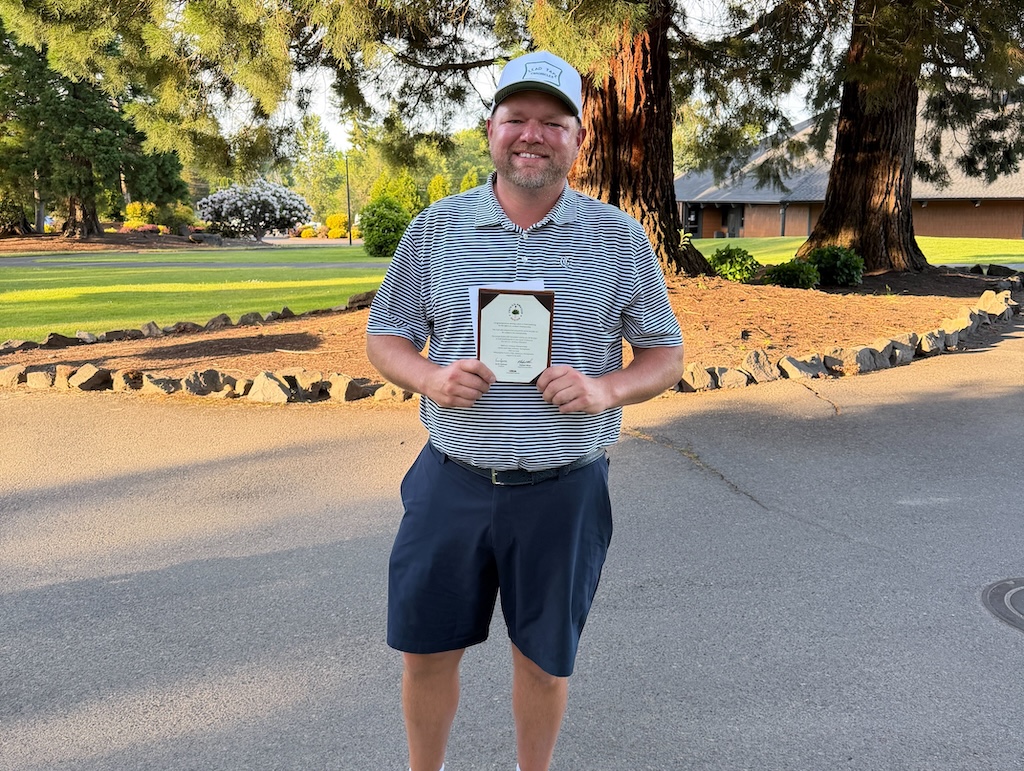
This past Monday, I played in the U.S. Amateur local qualifier at Rock Creek Country Club in Portland, Oregon. A full tee sheet from 7:30 a.m. to 1:55 p.m., the top 11 scores would make it to the U.S. Amateur final qualifying.
I teed off at 10:48 a.m.. With the 7:30 am tee time, you can get a feel for the leaders’ pace, and they were off and running on the challenging setup at Rock Creek.
View this post on Instagram
Getting to the highlight of the round on the par five 17th, a drive up the left side and 212 yards left to the front hole location. I took out a 5-iron with plans of middle of the green. The ball ended up 8 feet left of the hole, pin high. A slight downhill putt dropped in for an eagle 3 on the 17th. With the cut line looking to be anywhere from -2 to even par. This was the boost I had been waiting for all day.
With making par from the trees on 18, it was time to wait for a potential playoff with a posted score of one under par 71.
Three hours later, it was playoff time. 8 players for 6 spots. I made par on the playoff hole, which was good enough to advance to the U.S. Amateur final qualifying in July. USGA qualifiers sure deliver on all of the emotions in golf!
Club Junkie
Building my 2026 gamer WITB: Ranking the contenders and new putter projects – Club Junkie Podcast

The annual What’s In The Bag build is underway, and on this episode of Club Junkie, Brian breaks down the clubs currently leading the race for a spot in his 2026 gamer setup. From drivers and fairway woods to irons, wedges, and shafts, he ranks the equipment that’s performing best and explains what’s separating the front runners from the rest of the field.
Brian also heads into the workshop to discuss several putter projects currently on the bench. From head options and shaft choices to build ideas and testing plans, he shares what he’s working on and which putters could become serious contenders for the bag this season.
If you’re a gear junkie who loves equipment testing, club building, and the never-ending pursuit of the perfect setup, this episode is for you.
Follow Club Junkie:
Instagram: @clubjunkiepod
TikTok: @clubjunkiepod
Threads: @clubjunkiepod
X: @ClubJunkiePod
Club Junkie
Tour Edge Exotics mini driver review + TaylorMade Spider ZT Max first look – Club Junkie

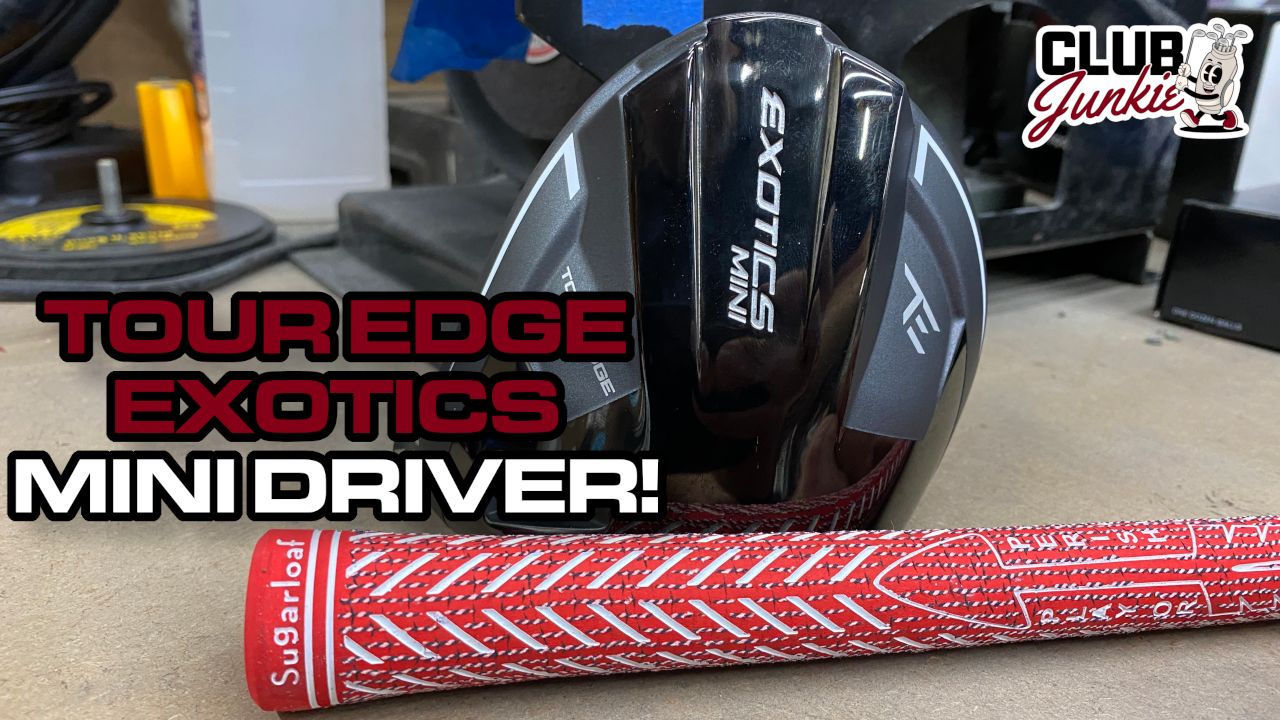
On this episode of Club Junkie, I put the new Tour Edge Exotics Mini Driver to the test and break down the performance, forgiveness, distance, and where it fits compared to a traditional driver or strong fairway wood. If you have been curious about adding a mini driver to the bag, this one is worth a look.
I also dive into the new TaylorMade Spider ZT Max putter that was recently spotted and discuss the growing zero torque putter trend. Plus, there is a closer look at the new Project X Titan Yellow shaft showing up on the PGA Tour and what makes it different from other profiles currently out there.

Justin Rose WITB 2026 (April): Full WITB breakdown with new McLaren irons

What’s the story behind Webb Simpson’s custom-stamped irons?

Memorial Tournament Tour Report: Rory McIlroy, Cameron Young switch up drivers, and more

Cadillac Championship Tour Report: Spieth’s sizable changes, McLaren Golf launches, and more

Russell Henley’s winning WITB: 2026 Charles Schwab Challenge

Kristoffer Reitan’s winning WITB: 2026 Truist Championship

Best irons 2026: Best irons overall, most forgiving irons, and more

J.T. Poston’s winning WITB: 2026 Memorial Tournament

Aaron Rai’s winning WITB: 2026 PGA Championship

Cameron Young’s winning WITB: 2026 Cadillac Championship


Ryan Palmer WITB 2026 (June)
Driver: Callaway Quantum Triple Diamond (9 degrees) Shaft: Project X HZRDUS Smoke Blue RDX 60 TX 3-wood: TaylorMade Qi10 (15 degrees) Shaft:...


Bud Cauley WITB 2026 (June)
Bud Cauley had >14 clubs in his bag when photographed prior to the Memorial Tournament. Driver: Titleist GTS2 (8 degrees) Shaft: Fujikura...


Hannah Green WITB 2026 (June)
Driver: Titleist GTS3 (10 degrees, D4 SureFit setting) Shaft: Mitsubishi Chemical Diamana RB 53 S 3-wood: Titleist GT3 (15 degrees,...


Asterisk Talley WITB 2026 (June)
Driver: TaylorMade Qi4D (9 degrees) Shaft: Fujikura Ventus Blue 6 S 3-wood: TaylorMade Qi4D (16.5 degrees) Shaft: Fujikura Ventus Blue...
-
 Equipment6 days ago
Memorial Tournament Tour Report: Rory McIlroy, Cameron Young switch up drivers, and more
-
 News2 weeks ago
Russell Henley’s winning WITB: 2026 Charles Schwab Challenge
-
 Equipment3 days ago
Best irons 2026: Best irons overall, most forgiving irons, and more
-
 Whats in the Bag4 days ago
J.T. Poston’s winning WITB: 2026 Memorial Tournament
-
 Equipment1 week ago
Details on Jason Day’s latest prototype Avoda iron setup
-
 Equipment3 weeks ago
CJ Cup Byron Nelson Tour Report: Koepka and Kim’s newest putters finally get hot
-

 News2 weeks ago
Charles Schwab Challenge Tour Report: MacIntyre, Åberg and Spaun all switch putters, TaylorMade launches new Spider
-
 Equipment2 weeks ago
Details on J.J. Spaun’s surprise putter switch

