
Opinion & Analysis
Head to Head: Callaway Apex CF ’16, Mizuno JPX-900 Forged and Srixon Z565 irons


A few weeks ago, GolfWRX Members voted for the three game-improvement irons they most wanted to see tested head-to-head. The winners were: Callaway Apex CF ’16, Mizuno JPX-900 Forged and Titleist 716 AP1. Unfortunately, I was not able to access a Titleist 716 AP1 at my desired specs (62-degree lie, 32-degree loft), so it was replaced in the test by the iron that got the next highest amount of votes, Srixon’s Z565 irons.
I do a lot of these head-to-head equipment test videos on my YouTube Channel, but for this video I stepped it up. Each of the three irons were tested with the same shafts of the exact same length, and all the clubs had the same grips, lofts, lies and swing weights, courtesy of Tour X Golf fitters.
As always, post your comments and questions below.
Related
- Head to Head: Mizuno MP-5, PXG 0311T and Titleist 716 AP2 irons









This past Monday, I played in the U.S. Amateur local qualifier at Rock Creek Country Club in Portland, Oregon. A full tee sheet from 7:30 a.m. to 1:55 p.m., the top 11 scores would make it to the U.S. Amateur final qualifying.
I teed off at 10:48 a.m.. With the 7:30 am tee time, you can get a feel for the leaders’ pace, and they were off and running on the challenging setup at Rock Creek.
View this post on Instagram
Getting to the highlight of the round on the par five 17th, a drive up the left side and 212 yards left to the front hole location. I took out a 5-iron with plans of middle of the green. The ball ended up 8 feet left of the hole, pin high. A slight downhill putt dropped in for an eagle 3 on the 17th. With the cut line looking to be anywhere from -2 to even par. This was the boost I had been waiting for all day.
With making par from the trees on 18, it was time to wait for a potential playoff with a posted score of one under par 71.
Three hours later, it was playoff time. 8 players for 6 spots. I made par on the playoff hole, which was good enough to advance to the U.S. Amateur final qualifying in July. USGA qualifiers sure deliver on all of the emotions in golf!
Club Junkie
Building my 2026 gamer WITB: Ranking the contenders and new putter projects – Club Junkie Podcast

The annual What’s In The Bag build is underway, and on this episode of Club Junkie, Brian breaks down the clubs currently leading the race for a spot in his 2026 gamer setup. From drivers and fairway woods to irons, wedges, and shafts, he ranks the equipment that’s performing best and explains what’s separating the front runners from the rest of the field.
Brian also heads into the workshop to discuss several putter projects currently on the bench. From head options and shaft choices to build ideas and testing plans, he shares what he’s working on and which putters could become serious contenders for the bag this season.
If you’re a gear junkie who loves equipment testing, club building, and the never-ending pursuit of the perfect setup, this episode is for you.
Follow Club Junkie:
Instagram: @clubjunkiepod
TikTok: @clubjunkiepod
Threads: @clubjunkiepod
X: @ClubJunkiePod
Club Junkie
Tour Edge Exotics mini driver review + TaylorMade Spider ZT Max first look – Club Junkie

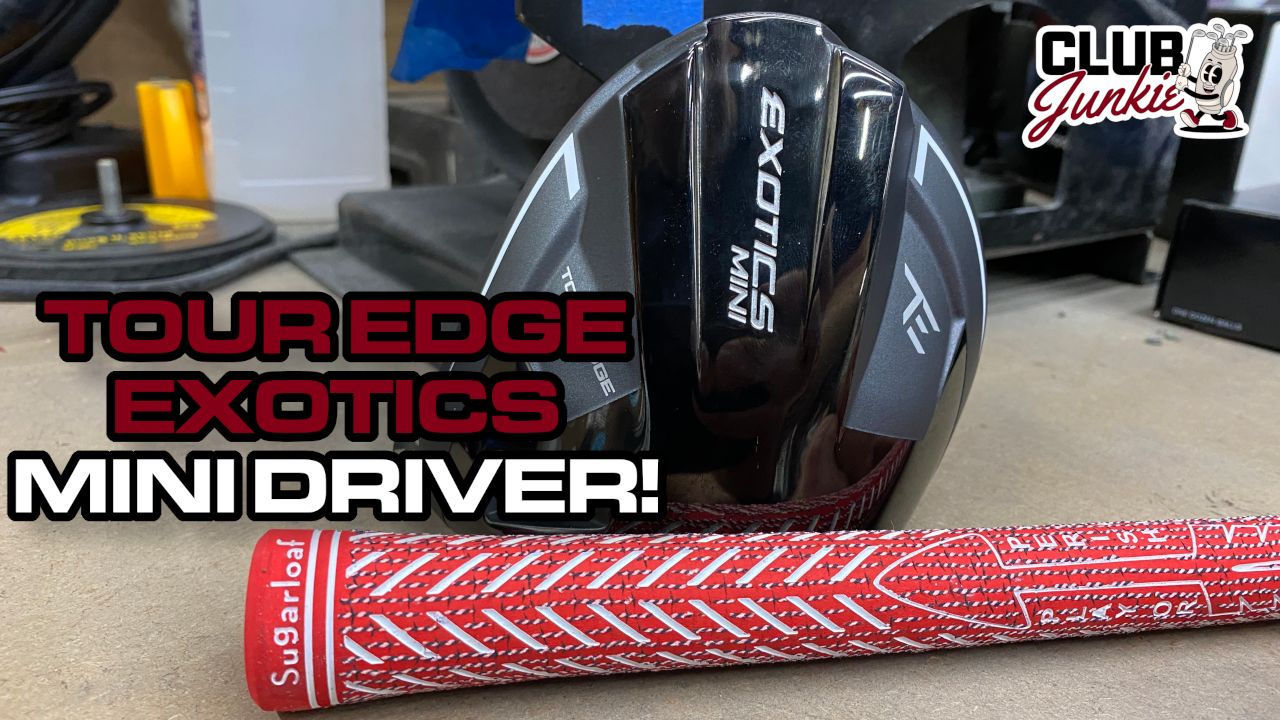
On this episode of Club Junkie, I put the new Tour Edge Exotics Mini Driver to the test and break down the performance, forgiveness, distance, and where it fits compared to a traditional driver or strong fairway wood. If you have been curious about adding a mini driver to the bag, this one is worth a look.
I also dive into the new TaylorMade Spider ZT Max putter that was recently spotted and discuss the growing zero torque putter trend. Plus, there is a closer look at the new Project X Titan Yellow shaft showing up on the PGA Tour and what makes it different from other profiles currently out there.

What’s the story behind Webb Simpson’s custom-stamped irons?

Memorial Tournament Tour Report: Rory McIlroy, Cameron Young switch up drivers, and more

Cadillac Championship Tour Report: Spieth’s sizable changes, McLaren Golf launches, and more

Russell Henley’s winning WITB: 2026 Charles Schwab Challenge

Kristoffer Reitan’s winning WITB: 2026 Truist Championship

Best irons 2026: Best irons overall, most forgiving irons, and more

J.T. Poston’s winning WITB: 2026 Memorial Tournament

Aaron Rai’s winning WITB: 2026 PGA Championship

Cameron Young’s winning WITB: 2026 Cadillac Championship

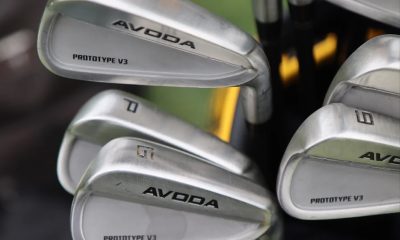
Details on Jason Day’s latest prototype Avoda iron setup


Christiaan Maas WITB 2026 (June)
Driver: TaylorMade Qi4D LS (8 degrees) Shaft: Fujikura Ventus TR Blue 6 X 3-wood: TaylorMade Qi10 (15 degrees) Shaft: Fujikura Ventus Black...


Ryan Palmer WITB 2026 (June)
Driver: Callaway Quantum Triple Diamond (9 degrees) Shaft: Project X HZRDUS Smoke Blue RDX 60 TX 3-wood: TaylorMade Qi10 (15 degrees) Shaft:...


Bud Cauley WITB 2026 (June)
Bud Cauley had >14 clubs in his bag when photographed prior to the Memorial Tournament. Driver: Titleist GTS2 (8 degrees) Shaft: Fujikura...


Hannah Green WITB 2026 (June)
Driver: Titleist GTS3 (10 degrees, D4 SureFit setting) Shaft: Mitsubishi Chemical Diamana RB 53 S 3-wood: Titleist GT3 (15 degrees,...
-
 Equipment6 days ago
Memorial Tournament Tour Report: Rory McIlroy, Cameron Young switch up drivers, and more
-
 News2 weeks ago
Russell Henley’s winning WITB: 2026 Charles Schwab Challenge
-
 Equipment3 days ago
Best irons 2026: Best irons overall, most forgiving irons, and more
-
 Whats in the Bag4 days ago
J.T. Poston’s winning WITB: 2026 Memorial Tournament
-
 Equipment1 week ago
Details on Jason Day’s latest prototype Avoda iron setup
-
 Equipment3 weeks ago
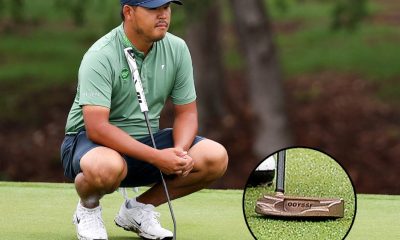
CJ Cup Byron Nelson Tour Report: Koepka and Kim’s newest putters finally get hot
-

 News2 weeks ago
Charles Schwab Challenge Tour Report: MacIntyre, Åberg and Spaun all switch putters, TaylorMade launches new Spider
-
 Equipment2 weeks ago
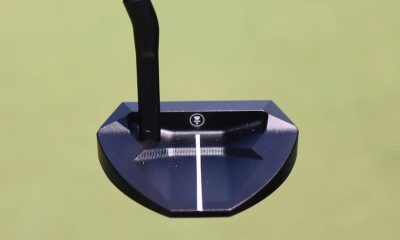
Details on J.J. Spaun’s surprise putter switch


sumsum
Nov 16, 2016 at 6:23 pm
Rick,
It seems you Averaged 4mm toe on the Apex, and 5mm toe on the srixon – and the shots all went left….. Mizuno averaged 1mm toe and actually dispersed tighter to the line, not all grouped left. Also, you had 1.4deg and 1.6 deg of side spin with the Callaway and Srixon respectively, vs. 3.6 degrees of side spin with mizuno. This could’ve held it from achieving more distance, but more like it seems, it was third in your test, and you miss hit it more often as you tired. I would like to see you stagger the test, 1 callaway, 1 srixon, 1 mizuno…etc to produce a real test. Also, Mizuno is the only full forged head in the group – the other are multi-material constructions.
Tom
Nov 17, 2016 at 11:30 am
Huh? and there it is. ….to the rescue.
Tom
Nov 16, 2016 at 2:23 pm
Are we gonna get “impact” comments again?
Tom
Nov 16, 2016 at 2:01 pm
Wait for it……wait…… for …… it…….
Jim
Nov 16, 2016 at 1:03 pm
It doesn’t matter what the loft is. The COG and even proscribed shaft the engineers (occasionally) designed it around to produce the loft needed for the ‘X’ to play as it should. A (‘7’) iron needs to achieve a ball flight apex to land softly. If it does and yields more distance then they did thier job – well.
In ’97 I played Diawa Comps. Took a bit of ‘getting used to’
as they looked like shovels compared to my Miura’s, TZoids
or VIP’s but the thin Titanium face and sharp grooves
allowed for Tungsten inserts to lower the CG enough they
went plenty high, stopped dead with 5irons or got nice draw with a 6 on the greens and were almost 20yds longer. A well needed boost following 3 fractured vertibrea and lead shoulder/hand injuries.
Everyrhing has changed dramatically in 40 years. Jack coulda hit a 200yd 7 iron back then, it just never would of stopped on the green. Even most ‘players’ clubs PW have gone from 48 to 46 or 46.5 because the balls & shafts and better head design allow for it.
Great work running these tests – and yes, even the grip should be the same. The heads however should be checked to be exact MFR lofts – whether or not there’s a difference between the club’s designated ‘number’…the launch data will tell us if one has been made ‘too strong’ and comes into a green too hot.
thanks for doing these 🙂
Jack
Nov 16, 2016 at 8:11 am
So what you are saying is a lot more people are striping 2 or even 1 irons down the fairway nowadays. Amazing.
Philip
Nov 15, 2016 at 10:40 pm
I like that you are getting away from numbers on the clubs as that loft was called a 5 iron when I started playing golf. You shouldn’t even mentioned the marketing number on the bottom of the club, but if someone needs to think that they hit their club with a 7 on it the same distance as my club with a 5 on it – whatever turns their crank. What was the length of the irons? All 37 inches?
Brian
Nov 16, 2016 at 10:12 am
I get so sick of listening to people complain about the loft vs. Number on the bottom of your club. Nobody cares what the 5i was back in your day…you also walked to school in the snow, uphill, both ways.
I bet your 5 iron of yester-year didn’t launch the ball as high as the current 7 irons.
Philip
Nov 16, 2016 at 11:34 am
Wow – hit a nerve eh? Didn’t know back in the day was only 5 years ago – what, you age in dog years? Chill dude – reviewing taking about lofts inside of what has become a meaningless number only makes it easier to compare apple to apples. Oh, and a higher launch isn’t always needed or better – horses for courses.
Spanky
Nov 16, 2016 at 10:58 am
You score is what counts in golf, right? If it makes you feel better to have a “traditional” lofted 7 iron, go for it. I see no difference though in someone wanting a non “traditional” 7 iron, than what you want and as long as fitted for the clubs. It makes zero difference. Heck, you are free to use a persimmon 1 wood with a 20 year old steel shaft if that makes you feel better. Just hit the ball and have fun. If it worries you that someone says they hit their 7 iron longer than your 7 iron, eh, I think you just need to let it go and learn to give jabs right back about something else.
For kicks though, go take a 7 iron from decades ago and get on trackman and compare to these newer lower lofted 7 irons. I think you’ll quickly understand the reasons for lower lofts these days vs more traditional lofts. If that doesn’t make sense to you, then go bend the loft down on a 20 year old 7 iron to match today’s lofts (~30 degrees) and see what you get on the course. Let me know how those bullets work out as they only go a few yards off the ground and skid off the back of a green. It is more than just the loft.
No matter how you look at it, everyone has to hit the club and post a score no matter what is stamped on the club. And if you really think about it, there is no “standard” loft any longer.
And beyond lofts, the is no standard on what “regular”, “stiff” etc. means in shafts yet many take it for granted those all mean the same thing across manufacturers. They don’t.
Get fitted. If you end up with a 35 degree 7 iron, bravo. If its 28 degrees, bravo as well.
Philip
Nov 16, 2016 at 11:53 am
Another nerve pinched :o) – for the record I have been getting fitted for a while and have ended up with clubs from 2006 that are only “one” number behind the current crop and from what I see there never was a standard so why even bother with random numbers on clubs. Personally I couldn’t care less about the numbers because in the end I decide on clubs via lofts to space my yardages. However, the effect of the decreased lofts and increased lengths just means I have to tweak lofts more than before and add more lead tape than before after cutting down the shaft lengths, as the OEMs use lighter heads to prevent the swing weights from getting to heavy with the longer lengths. My club selection is based on what I need to get my lowest score. I don’t care about the numbers on my clubs, I figure out the lofts that work – my 3W is the length of a 2W (42.5 inches) with the loft of a 4W (18), or is that a 7W now… I don’t care, as in the end all I need is to figure out the length/loft combination that maximizes my potential – the numbers on the clubs are irrelevant other than to make it easier to pull a club. Only makes it a bit trickier when looking for clubs to replace worn out ones.