
Opinion & Analysis
Helping you make the decision of a lifetime: “Where should I play college golf?”


During the second week of every November — the early signing period for prospective NCAA golfers — high schoolers can announce to the world where they intend to go to college. Golf Channel wasn’t knocking on my door or anything, but in November 2007 I announced that I was going to Rutgers University to play college golf. I had an awesome experience there, and if I could go back I wouldn’t change a thing. But if we’re being honest, I got lucky with the decision I made, because I had no idea what I was doing as a 17-year-old kid making such an important decision in my life.
Unfortunately, some college golfers don’t get as lucky as I did with their decision, and are left unhappy and dissatisfied, and they seek to make a change.
“By January of my freshman year, I was already looking at where I could transfer,” said one of our survey participants (learn more about the survey below).
As the second week in November approaches each year, I think about all of the high-school golfers who may or may not be making the wrong decision for themselves and their future. This year when the thought crossed my mind, I decided to do something to help. I asked my former teammates, competitors, friends and fellow employees (and their friends) who played college golf to rank the importance of five key factors in choosing a college golf program:
- Academics and Job Prospects
- Campus Life
- Financial Burden
- Strength of Team and Schedule
- Team Dynamics
In total, 17 former college golfers responded, representing Division I, Division II and Division III universities, and along with their rankings they each also answered four short-answer questions that provided further insight on their decisions. Click here to see the survey they took.
Use these results as a guideline (not the be-all and end-all) to help you and your family in your quest to make the right choice. In the breakdown below, I include quotes taken from the survey, as well as some of my own opinions.
Note: Factors below are in order of importance as decided by voters, starting with the least important (5) and moving to the most important (1).
5) Campus Life
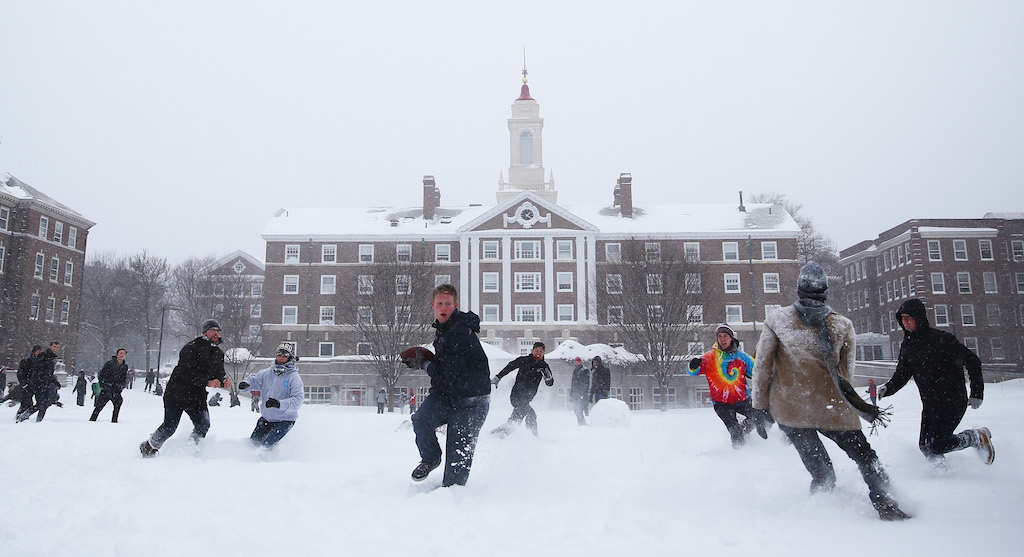
College students play football after a snowstorm on the Harvard University campus.
College is most likely the first time that a young man or woman will be living on their own away from parents. As such, high schoolers may be interested in things that aren’t related to school or golf.
As a common rule, there are three main “S” words for college athletes: school, sports and social life. Most student-athletes can be stars in one or two, but almost none can lead the way in all three. There just aren’t enough hours in the day. According to former college golfers, “social” proved to be the least important S-word, as “Campus Life” was ranked the least important factor of the five in this survey.
Therefore, if you’re a prospective college golfer and you’re choosing a school based on how pretty the campus is, how good the parties are, how attractive the people are, the weather, or whether they have the frat/sorority you want to pledge or not, you may want to reevaluate your priorities.
“You’re going to [play] golf, not play ultimate frisbee,” a survey participant said.
Other comments on “campus life” from survey participants:
- “Every university has good people and plenty to do. I really focused on school and athletics. There will always be parties and fun activities, regardless of which uni you choose.”
- “All colleges will have athletics, extracurriculars, partying, etc. If you are looking to be an athlete at the collegiate level, anything that comes with campus life is just a bonus.”
- “You are there to compete.”
Related articles
- Colleges with the “best student life”
- 50 colleges and university with the happiest freshman
- Top party schools in America
- The 100 most beautiful campuses
4) Academics and Job Prospects

Attending a “good” school is important to starting the career you want and to simply gain knowledge; that’s the point of college after all. But maybe a college’s academic programs and prestige aren’t as important as they’re made out to be. That’s at least the conclusion that can be drawn from this particular survey, as “Academics and Job Prospects” of a university ranked fourth in our five key factors.
“Academics and Job prospects [are least important],” a survey participant said. “In my opinion, most schools offer 75 percent of the same courses. The person who takes those courses and makes connections will be a factor in getting hired or not.”
Views on this subject varied greatly in the survey. Some ranked this category as the most important factor, and were vocally supportive of attending a good academic school, while others deemed academics and their degree as relatively less important to their future.
Deciding whether academic prestige of a university is important to you or not will take self reflection. But remember, no matter what school you choose, it’s crucial to expand your knowledge and garner skills that will later be employable. And if you don’t choose a university that will challenge you academically, you may be stunting your intellectual growth.
More thoughts on Academics and Job Prospects from survey participants:
- “Academics [were most important]. Pro golf was on my radar, but I knew it was a long shot so golf was my ticket to a great degree.”
- “Academics [were most important]. Cash flow from a great job trumps everything.”
- “You’re probably going to have to continue to rely on your own swing coach, fitness trainer or mental-game expert if you truly want to be [an elite golfer]. What you can’t provide for yourself, however, is the atmosphere of a great academic school and the exposure to ideas and people you never would have encountered at home. That’s why it’s so important to attend as excellent of a university as you can, whatever that means for you.”
Related articles
- Top Men’s College Division 1 golf schools (academics and golf combined)
- Top degrees for getting hired in 2016
- U.S. News: Best Colleges
3) Financial Burden

Don’t forget this word: reality. Money will impact your life in one way or another, and debt up to your eye balls is not a myth.
“College golf lasts four years, but student loans can last 10 times that if the scholarship doesn’t cover enough of your tuition,” a survey participant said.
But that doesn’t mean there aren’t options to help relieve that burden.
“The listed cost of tuition and board is generally much less than what you read in the magazines,” a survey participant said. “There are so many academic scholarships and financial aid packages available that can bring down the cost. And if you choose the right school and major, your education should more than pay for itself.”
Again, no one can make this decision for you. Figure out what you can afford right now, and what you can afford after college, too. And then decide whether it matters for you. When it doubt, work hard in the classroom and in your sport to score as many scholarships as possible. Then once you’ve uncovered all the scholarships you think you can get, start your research again. There’s more out there.
Other thoughts from survey participants about Financial Burden:
- “Financial burden [is the least important factor]. Take loans. Enjoy college. You can’t do it twice.”
- “Cost of school determined where I went.”
- “Financial (Burden was least important) because that should not influence your decision, although it is a reality.”
Related articles
- Best undergraduate finance programs
- Colleges with The College Board’s Net Price Calculator
- What’s the price tag for a college education?
2) Strength of Team and Schedule

Oregon won the 2016 NCAA Men’s golf championship in front of a large hometown crowd.
For this factor, you’ll have to take a hard look at your golf game, and then look equally as hard at a college’s golf team.
By doing some research online*, you’ll be able to find results and tournament schedules for just about any college in America. This will give you a good idea of the strength of the team, what scores its players are shooting and how the team placed in recent tournaments. By doing your research, you’ll be able to estimate if you can play right away and if you’ll be playing in the caliber of tournaments that you desire.
*Don’t forget to look at course yardage and weather to gauge the playing conditions and accurately measure your game. Generally, college tournaments are played on difficult courses, so you can expect your scoring average to rise compared to high school tournaments.
Remember, just as there are prospective college golfers who want to play for a national championship, there are also students who just want to play golf and don’t care how prestigious the tournaments are. Maybe you’re happy with low-pressure college tournaments and aren’t striving to play against stiff competition. Think about what you really want, because it will ultimately have a major impact on your success and happiness in college.
“The strength of the schedule to me is the least important,” a survey participant said. “Whether you are in Division 1 or Division 3, it does not affect the outcome of what you can be. It is up to you as the player to push yourself and see how high the level of your talent can be.”
With avenues like qualifying school, local professional tours and national USGA events, don’t feel pressured if you end up at a less-competitive school than you desired. You can still “make it.”
A club golf program is also be a great alternative for a competitive golfer. Find out more about the NCCGA (National Collegiate Club Golf Association) here.
Other thoughts from survey participants on Strength of Team and Schedule:
- “Strength of golf team and schedule (are most important) to play against the best competition.”
- “Strength of team (was most important). Regardless of other factors, winning takes top priority.”
- “Most important: Can I play right away? Least important: Location. It is important to play and get the experience of college golf. Where you have to go to do that shouldn’t particularly matter.”
Related articles
- Division I Men’s Golf Rankings
- Division II Men’s Golf Rankings
- NCAA Men’s Golf Division III
- Golfweek Division I rankings with strength of schedule
1) Team Dynamics
There are a lot of factors that are involved in golf team dynamics, and all are equally important to not only your personal success and happiness, but the success of the team as whole. You spend a whole lot of time with the people on your team, and the atmosphere and attitude can certainly have an affect on you.
“Team dynamics [are most important],” a survey participant said. “For the next four years you are going to spend so much time with these people. If you can’t get along it will leak into other aspects of college. It’s more or less a family because you eat together, workout together, play together. It’s a necessity to like the people.”
And this is especially true from a competitive standpoint. How competitive are the people around you, and how competitive do you really want to be?
“I played both D3 and D1, and the difference in competition was DRAMATIC,” a survey participant said. “D3 nobody cared. D1 people wanted to win.”
If you’re not looking to put 100 percent into golf and the team, that’s OK. Just make sure your goals aren’t drastically different than your teammates and coaches. High-level college golf requires a serious time commitment including workouts, range time, qualifying rounds, practice rounds, tournaments, study hall, classes — and then finding time to rest and have a semblance of a social life. College golf, or any college sport, is NOT for everyone.
“How do you know the team dynamics before you even get there?” you may be asking. My advice: take full advantage of official and unofficial visits, paying close attention the attitudes, habits and priorities of the players.
Other thoughts from survey participants on Team Dynamics:
- “A good group of guys and coach can bring the best of your game and talents out.”
- “I ranked the team chemistry the most important because it is what keeps you pushing to better yourself. You need a great connection with your coaches and teammates in order to continue the want to push yourself. In my experience, the lack of connection between coach and player caused a loss of interest in the sport and the will of the team.”
Related articles



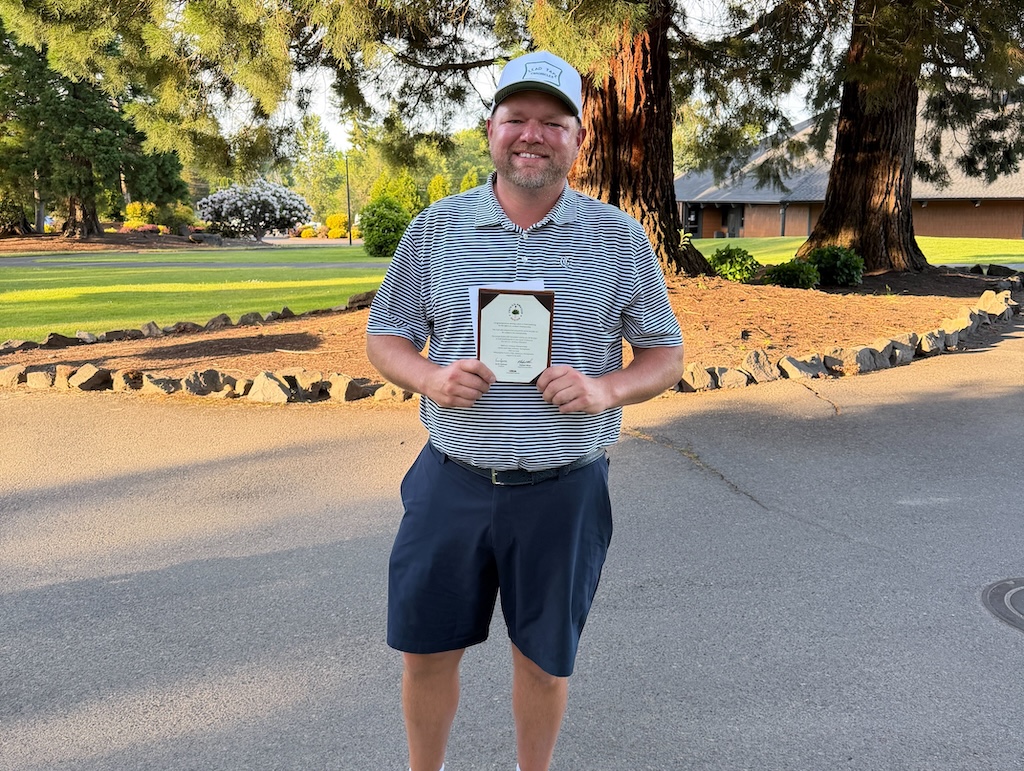
This past Monday, I played in the U.S. Amateur local qualifier at Rock Creek Country Club in Portland, Oregon. A full tee sheet from 7:30 a.m. to 1:55 p.m., the top 11 scores would make it to the U.S. Amateur final qualifying.
I teed off at 10:48 a.m.. With the 7:30 am tee time, you can get a feel for the leaders’ pace, and they were off and running on the challenging setup at Rock Creek.
View this post on Instagram
Getting to the highlight of the round on the par five 17th, a drive up the left side and 212 yards left to the front hole location. I took out a 5-iron with plans of middle of the green. The ball ended up 8 feet left of the hole, pin high. A slight downhill putt dropped in for an eagle 3 on the 17th. With the cut line looking to be anywhere from -2 to even par. This was the boost I had been waiting for all day.
With making par from the trees on 18, it was time to wait for a potential playoff with a posted score of one under par 71.
Three hours later, it was playoff time. 8 players for 6 spots. I made par on the playoff hole, which was good enough to advance to the U.S. Amateur final qualifying in July. USGA qualifiers sure deliver on all of the emotions in golf!
Club Junkie
Building my 2026 gamer WITB: Ranking the contenders and new putter projects – Club Junkie Podcast


The annual What’s In The Bag build is underway, and on this episode of Club Junkie, Brian breaks down the clubs currently leading the race for a spot in his 2026 gamer setup. From drivers and fairway woods to irons, wedges, and shafts, he ranks the equipment that’s performing best and explains what’s separating the front runners from the rest of the field.
Brian also heads into the workshop to discuss several putter projects currently on the bench. From head options and shaft choices to build ideas and testing plans, he shares what he’s working on and which putters could become serious contenders for the bag this season.
If you’re a gear junkie who loves equipment testing, club building, and the never-ending pursuit of the perfect setup, this episode is for you.
Follow Club Junkie:
Instagram: @clubjunkiepod
TikTok: @clubjunkiepod
Threads: @clubjunkiepod
X: @ClubJunkiePod
Club Junkie
Tour Edge Exotics mini driver review + TaylorMade Spider ZT Max first look – Club Junkie


On this episode of Club Junkie, I put the new Tour Edge Exotics Mini Driver to the test and break down the performance, forgiveness, distance, and where it fits compared to a traditional driver or strong fairway wood. If you have been curious about adding a mini driver to the bag, this one is worth a look.
I also dive into the new TaylorMade Spider ZT Max putter that was recently spotted and discuss the growing zero torque putter trend. Plus, there is a closer look at the new Project X Titan Yellow shaft showing up on the PGA Tour and what makes it different from other profiles currently out there.

What’s the story behind Webb Simpson’s custom-stamped irons?

Memorial Tournament Tour Report: Rory McIlroy, Cameron Young switch up drivers, and more

Cadillac Championship Tour Report: Spieth’s sizable changes, McLaren Golf launches, and more

Russell Henley’s winning WITB: 2026 Charles Schwab Challenge

Kristoffer Reitan’s winning WITB: 2026 Truist Championship

Best irons 2026: Best irons overall, most forgiving irons, and more

J.T. Poston’s winning WITB: 2026 Memorial Tournament

Aaron Rai’s winning WITB: 2026 PGA Championship

Cameron Young’s winning WITB: 2026 Cadillac Championship

Details on Jason Day’s latest prototype Avoda iron setup


Christiaan Maas WITB 2026 (June)
Driver: TaylorMade Qi4D LS (8 degrees) Shaft: Fujikura Ventus TR Blue 6 X 3-wood: TaylorMade Qi10 (15 degrees) Shaft: Fujikura Ventus Black...


Ryan Palmer WITB 2026 (June)
Driver: Callaway Quantum Triple Diamond (9 degrees) Shaft: Project X HZRDUS Smoke Blue RDX 60 TX 3-wood: TaylorMade Qi10 (15 degrees) Shaft:...


Bud Cauley WITB 2026 (June)
Bud Cauley had >14 clubs in his bag when photographed prior to the Memorial Tournament. Driver: Titleist GTS2 (8 degrees) Shaft: Fujikura...


Hannah Green WITB 2026 (June)
Driver: Titleist GTS3 (10 degrees, D4 SureFit setting) Shaft: Mitsubishi Chemical Diamana RB 53 S 3-wood: Titleist GT3 (15 degrees,...
-
 Equipment7 days ago
Memorial Tournament Tour Report: Rory McIlroy, Cameron Young switch up drivers, and more
-
 News2 weeks ago
Russell Henley’s winning WITB: 2026 Charles Schwab Challenge
-
 Equipment4 days ago
Best irons 2026: Best irons overall, most forgiving irons, and more
-
 Whats in the Bag4 days ago
J.T. Poston’s winning WITB: 2026 Memorial Tournament
-
 Equipment1 week ago
Details on Jason Day’s latest prototype Avoda iron setup
-

 Equipment3 weeks ago
CJ Cup Byron Nelson Tour Report: Koepka and Kim’s newest putters finally get hot
-

 News2 weeks ago
Charles Schwab Challenge Tour Report: MacIntyre, Åberg and Spaun all switch putters, TaylorMade launches new Spider
-

 Equipment2 weeks ago
Details on J.J. Spaun’s surprise putter switch


Bill
Oct 20, 2016 at 9:01 pm
A red flag is a program which relies on transfers to fill their roster every year or every other year. You will more than likely walk into a dysfunctional program.
Pingback: Helping you make the decision of a lifetime: “Where should I play college golf?” | Swing Update
Dan
Oct 19, 2016 at 6:58 pm
Make sure you go somewhere you can play! I had a few guys on my team with zero chance of making a tournament and I really felt bad for them.
Double Mocha Man
Oct 19, 2016 at 5:46 pm
I read your comments first… then said to myself, that must be Smizzle. Yep!
The Dude
Oct 19, 2016 at 4:05 pm
Ball State!!!…..Go Coach Fleck!
Grizz01
Oct 19, 2016 at 3:53 pm
If you are talented enough to go to a Top D1 school much of this will sort itself out. You are going to be sought out to play at top schools. You are also going to have a broad range of Major choices. The smaller the school the smaller the choices you will have for what you want to Major. That is when it starts getting difficult with travel, finances and ‘team dynamics.’
WashedUpHasBeen
Oct 19, 2016 at 3:29 pm
Only placing the top-15 in a few AJGA events, and not winning any of them or finishing under par, I knew then that I wasn’t good enough to play competitive D1 golf or professional golf. This lead me to choose a school with the best academic reputation and it was the best decision I ever made. I now have a great career, met a wife in school who also has a great career, and together we are able to enjoy being members of a country club where I still play about 50-60 rounds a year at a scratch level.
My advice would be, unless you are winning 1-2 AJGA events a year, be careful going somewhere to play golf that doesn’t suit you academically. A good degree and a good career can take you a very long way.
farmer
Oct 19, 2016 at 5:20 pm
You must have been a very mature, thoughtful young man to make an honest self assessment of your game, and prospects going forward. Good for you, glad it has worked out.
Progolfer
Oct 20, 2016 at 1:24 am
Well said! I’m a professional golfer, and I’ve seen and heard of guys who sacrificed their education to play D2 and D3 golf. Most of them turn pro and play mini-tour golf, struggle, and end up quitting the game with no education to fall back on. A lot of kids have big dreams of stardom from watching tv, never knowing how much work, physical and mental strain, commitment, and time it takes to be a successful pro (and usually a lot of failures, too). Unless you’re 100% committed to being a pro and not quitting until you make it– which may involve getting a second job; sacrificing friends, family, a social life, and a romantic partner– make an education your #1 priority!! Golf will always be waiting for you if you decide to turn pro. Get an education first.
Matt
Oct 19, 2016 at 3:04 pm
I think that one major factor is missing from here, which is “what do you want to get out of college golf?” I think it is an important thing to ask. I previously worked in the Athletics Department at Oklahoma State. Their golf prowess is well documented, along with one of the best golf courses in America. They do not hide from stating that their program is for kids who want to make a career out of playing golf. If you are not serious about being a pro, then it probably is not the place for you. Other places probably do not have that emphasis. If you are not serious about being a pro, or continuing your golf career after college, then maybe you are someone that falls into a smaller D1 or a D2 or D3 program.
Teens
Oct 19, 2016 at 1:36 pm
Andrew,
Overall great article, although I wish you included more info from your sources like what school they played for and what their financial situation was, especially the one JB mentioned above about not worrying about loans in the future–ahhhh!!!
I absolutely agree with #1! Although I would add one more thing: The best advice I got before picking a school to play for was, “Make sure you like your coach and your teammates.” I continue to pass that down to young players I meet. I ended up playing for a top 25 ranked DI golf program. My coach became a mentor to me and my teammates were amazing! The coach is crucial when it comes to things like choosing a major– some coaches put academics first and whether you choose engineering, pre-med or nursing, they will be very supportive. Other coaches will tell you, you have to choose between golf and certain majors. It’s not an issue for someone on the pro tour track, but it’s definitely something to discuss when you make your visits if you’re passionate about a certain career.
To all the future college golfers: It’s a grind and it’s a blast! There will be a lot of sweat and tears along the way, but enjoy it because it goes by in the blink of an eye!
Mike
Oct 19, 2016 at 12:45 pm
This is a highly under rated topic. I made a terrible decision on where to play. It was a new program, and it was a 30 minute commute from campus to the golf course. The program was very poorly run at the time.
I wish I had made a better decision. Hopefully this helps others!
Jack Helgrom
Oct 19, 2016 at 11:10 am
Great article Andrew! I think you did a great job, but forgot to mention club golf and the NCCGA. I was a club golfer in college at Virginia Tech and this was the best possible option since I did not have a chance to play on the varsity team at my school and there was a club golf team on campus. I think you should look into the National Collegiate Club Golf Association since they provide an opportunity for thousands of kids to play college golf at their dream schools.
JB
Oct 19, 2016 at 10:56 am
Looks like your survey may have touched on a broader subject
“Financial burden [is the least important factor]. Take loans. Enjoy college. You can’t do it twice.”
Wonder how many people still paying off loans wish they had given a ittle more weight to this one??
Grizz01
Oct 19, 2016 at 3:54 pm
I concur. That is really poor advice. Especially if you are going to major in something that you have no opportunity to find decent work.
Scooter McGavin
Oct 19, 2016 at 10:42 pm
Agreed. Lending companies drool over people saying things like this. They dream about people going out of state and having to take out 30 or 40 grand a year for school. Go in state. Major in something that has good job prospects. Try to minimize your loans as much as possible.