
Opinion & Analysis
Why chasing quick fixes keeps you from getting better (and what to do about it)


I’m sure you’ve done this yourself or had a buddy do it. You head to the range on the weekend determined to fix your swing during a range session with an extra large bucket of balls. And it starts out pretty rough.
The ball flight is inconsistent. Your typical miss won’t go away. Then about halfway through the session you “find it.” Most of the shots you’re hitting are perfect, and contact is solid. Actually, PGA Master Professional Dennis Clark just wrote about this phenomenon for GolfWRX, and his explanation of it was perfect.
“If golfers hit enough balls, they can start to time their compensations perfectly.”
You compensate well on the range, but when the next match or game with your buddies rolls around it’s gone. The only consistencies are poor shots and double bogeys.
There’s a good reason this keeps happening. The research shows that this kind of repetitive practice (same shot, same club, same lie) will lead to better short-term performance, but it doesn’t mean what you’ve learned will transfer to the golf course in a day or two.
Embracing the quick fix doesn’t help you get better and build skills that consistently transfer to the golf course. In fact, practice that leads to rapid improvement in performance doesn’t support retained long-term learning. We explored this topic with researcher Dr Robert Bjork and coach Adam Young here.
But it’s not your fault. The golf industry has ingrained the concept of the quick fix. A new driver that’s promising 10 yards more distance? It’s the same game as the YouTube video that promises to fix your slice in 5 minutes.
Think of it this way. If you wanted to learn Spanish, you wouldn’t expect to practice once a week, see a tutor twice a month, and attempt to have a conversation in Spanish on Saturday morning and be fluent in a year. It takes consistent coaching and an environment that facilitates growth. In fact, practice that leads to rapid improvement in performance doesn’t support retained long-term learning.
The Alternative
The concept of long-term group coaching has been catching on in golf. Instead of seeing an instructor in a 1-on-1 setting for 30-60 minutes once or twice a month, why not make a plan and commit to 3-6 months or even 12 months of coaching? Doing that, you and your coach can build a game plan and get the proper practice and coaching you need. There’s even the possibility of getting out on the golf course and getting some course strategy lessons.
This type of coaching is highly effective, and yet more affordable than the traditional model of 1-on-1 instruction. Instead of just standing there hitting balls and getting some info every once in awhile, you’ll be working on all aspects of your game that you might not otherwise.

Will Robins
Will Robins is a coach in Sacramento who has embraced long-term group coaching (groups of 6 getting together once a week for 90 minutes over 12 weeks) because of the difference in results he’s seen in students.
I asked him about the difference when he switched from 1-on-1 instruction to group coaching, and his response is below.
Robins: Prior to the coaching model, people came to me with their problems and wanted quick fixes. I wasn’t happy with the model and they weren’t getting better as quickly as they should. So I sat down with a group of 16 guys and explained that I had enough of that model and told them they needed to learn how to play the game and score better instead of always trying to figure out how to hit their driver. So we set up a plan and they came out to practice and play with me.
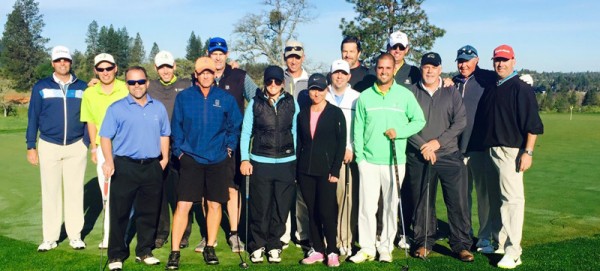
I helped them with all aspects of their games and got them the skills and information they needed to actually shoot lower scores. For one, it freed me up so I became a coach and no longer the teacher who was the source of knowledge. I could work with the players on what I knew they needed to work on… because I was their coach.
Another hidden aspect of working with a group of students is the competitiveness of the team and getting used to the pressure of people watching. The big thing with long-term coaching is you put your game on the line and it forces the coach to step up and really get the results. The coach has to be committed.
The Results
According to Robins, the 16 golfers dropped an average of 11 shots on their average round over the first 12 weeks of group coaching.
Since that time, he has coached thousands of students in the group-coaching model, and has seen its power. In fact, he’s worked with dozens of coaches to help their use the same model in their coaching (if you’re a coach find out more about this here). It’s a true win-win situation, he says, as group coaching is not only more fun for the student (and the coach), but more affordable than the traditional 1-on-1 model.
Who’s tried long-term group coaching before? Let me know in the comments section.



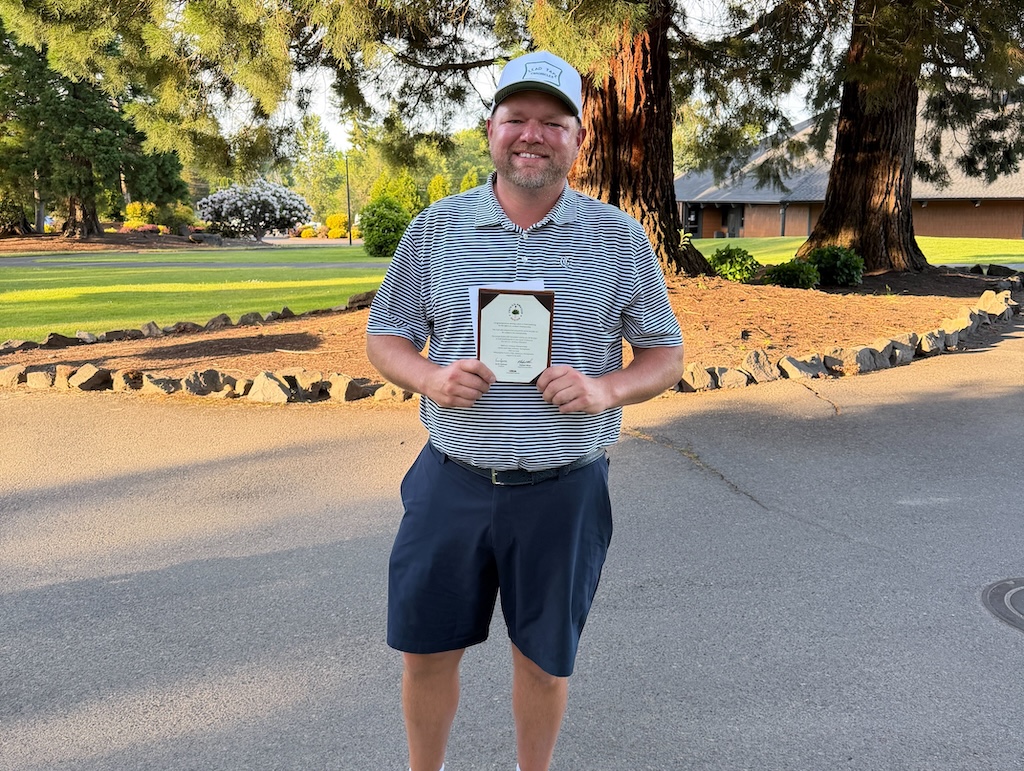
This past Monday, I played in the U.S. Amateur local qualifier at Rock Creek Country Club in Portland, Oregon. A full tee sheet from 7:30 a.m. to 1:55 p.m., the top 11 scores would make it to the U.S. Amateur final qualifying.
I teed off at 10:48 a.m.. With the 7:30 am tee time, you can get a feel for the leaders’ pace, and they were off and running on the challenging setup at Rock Creek.
View this post on Instagram
Getting to the highlight of the round on the par five 17th, a drive up the left side and 212 yards left to the front hole location. I took out a 5-iron with plans of middle of the green. The ball ended up 8 feet left of the hole, pin high. A slight downhill putt dropped in for an eagle 3 on the 17th. With the cut line looking to be anywhere from -2 to even par. This was the boost I had been waiting for all day.
With making par from the trees on 18, it was time to wait for a potential playoff with a posted score of one under par 71.
Three hours later, it was playoff time. 8 players for 6 spots. I made par on the playoff hole, which was good enough to advance to the U.S. Amateur final qualifying in July. USGA qualifiers sure deliver on all of the emotions in golf!
Club Junkie
Building my 2026 gamer WITB: Ranking the contenders and new putter projects – Club Junkie Podcast

The annual What’s In The Bag build is underway, and on this episode of Club Junkie, Brian breaks down the clubs currently leading the race for a spot in his 2026 gamer setup. From drivers and fairway woods to irons, wedges, and shafts, he ranks the equipment that’s performing best and explains what’s separating the front runners from the rest of the field.
Brian also heads into the workshop to discuss several putter projects currently on the bench. From head options and shaft choices to build ideas and testing plans, he shares what he’s working on and which putters could become serious contenders for the bag this season.
If you’re a gear junkie who loves equipment testing, club building, and the never-ending pursuit of the perfect setup, this episode is for you.
Follow Club Junkie:
Instagram: @clubjunkiepod
TikTok: @clubjunkiepod
Threads: @clubjunkiepod
X: @ClubJunkiePod
Club Junkie
Tour Edge Exotics mini driver review + TaylorMade Spider ZT Max first look – Club Junkie

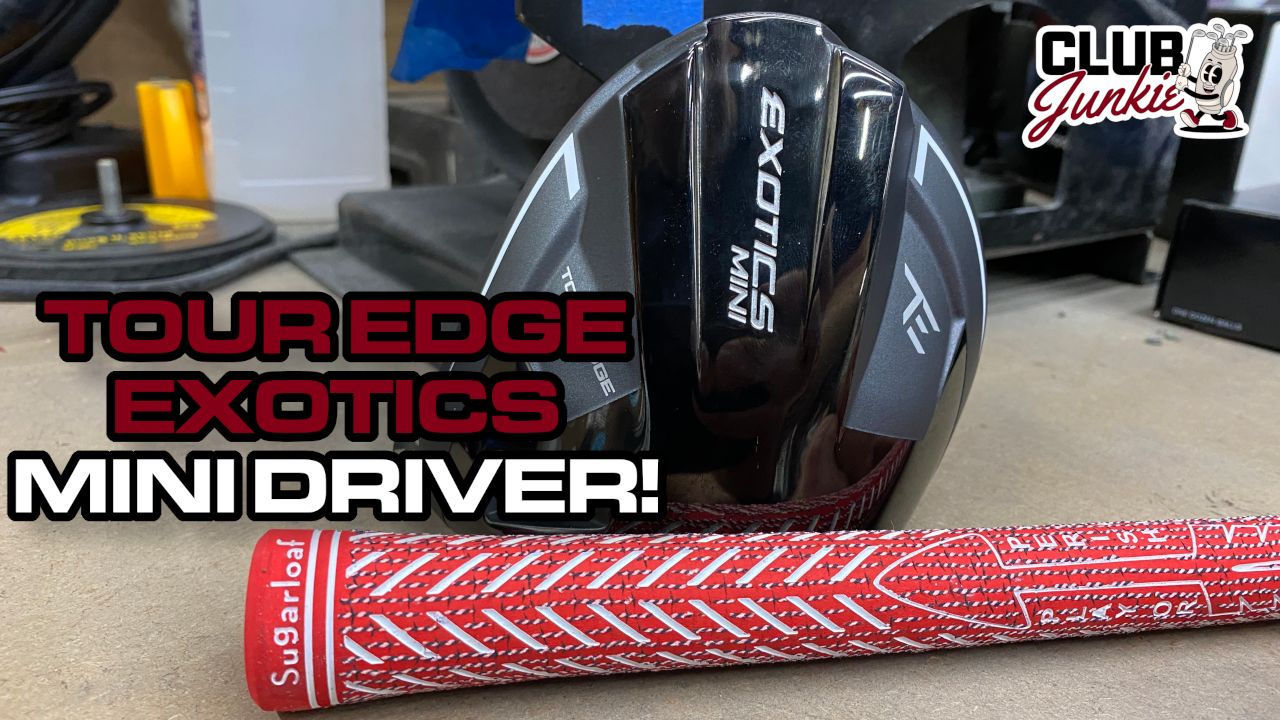
On this episode of Club Junkie, I put the new Tour Edge Exotics Mini Driver to the test and break down the performance, forgiveness, distance, and where it fits compared to a traditional driver or strong fairway wood. If you have been curious about adding a mini driver to the bag, this one is worth a look.
I also dive into the new TaylorMade Spider ZT Max putter that was recently spotted and discuss the growing zero torque putter trend. Plus, there is a closer look at the new Project X Titan Yellow shaft showing up on the PGA Tour and what makes it different from other profiles currently out there.

Justin Rose WITB 2026 (April): Full WITB breakdown with new McLaren irons

What’s the story behind Webb Simpson’s custom-stamped irons?

Memorial Tournament Tour Report: Rory McIlroy, Cameron Young switch up drivers, and more

Cadillac Championship Tour Report: Spieth’s sizable changes, McLaren Golf launches, and more

Russell Henley’s winning WITB: 2026 Charles Schwab Challenge

Kristoffer Reitan’s winning WITB: 2026 Truist Championship

Best irons 2026: Best irons overall, most forgiving irons, and more

J.T. Poston’s winning WITB: 2026 Memorial Tournament

Aaron Rai’s winning WITB: 2026 PGA Championship

Cameron Young’s winning WITB: 2026 Cadillac Championship


Ryan Palmer WITB 2026 (June)
Driver: Callaway Quantum Triple Diamond (9 degrees) Shaft: Project X HZRDUS Smoke Blue RDX 60 TX 3-wood: TaylorMade Qi10 (15 degrees) Shaft:...


Bud Cauley WITB 2026 (June)
Bud Cauley had >14 clubs in his bag when photographed prior to the Memorial Tournament. Driver: Titleist GTS2 (8 degrees) Shaft: Fujikura...


Hannah Green WITB 2026 (June)
Driver: Titleist GTS3 (10 degrees, D4 SureFit setting) Shaft: Mitsubishi Chemical Diamana RB 53 S 3-wood: Titleist GT3 (15 degrees,...


Asterisk Talley WITB 2026 (June)
Driver: TaylorMade Qi4D (9 degrees) Shaft: Fujikura Ventus Blue 6 S 3-wood: TaylorMade Qi4D (16.5 degrees) Shaft: Fujikura Ventus Blue...
-
 Equipment6 days ago
Memorial Tournament Tour Report: Rory McIlroy, Cameron Young switch up drivers, and more
-
 News2 weeks ago
Russell Henley’s winning WITB: 2026 Charles Schwab Challenge
-
 Equipment3 days ago
Best irons 2026: Best irons overall, most forgiving irons, and more
-
 Whats in the Bag4 days ago
J.T. Poston’s winning WITB: 2026 Memorial Tournament
-

 Equipment1 week ago
Details on Jason Day’s latest prototype Avoda iron setup
-
 Equipment3 weeks ago
CJ Cup Byron Nelson Tour Report: Koepka and Kim’s newest putters finally get hot
-

 News2 weeks ago
Charles Schwab Challenge Tour Report: MacIntyre, Åberg and Spaun all switch putters, TaylorMade launches new Spider
-

 Equipment2 weeks ago
Details on J.J. Spaun’s surprise putter switch


Jason Helman
Apr 5, 2016 at 6:52 pm
I have been saying this for years. The word lesson and quick have been removed from all marketing. I’m experimenting with a 21 day fix this year but for all intense in purposes I’m not really a big fan of “fix” merely spinning it off the show much like I did with a Biggest Loser contest which was very successful a couple of years ago.
I’m going to have to disagree. It’s more important that the student be committed and held to some accountability in the long term coaching programs. The coach has already committed into the program by planning the process or pathway to success. If there is a fail, it comes when the student does not measure up and stay on task. The coach can only motivate so far.
Group coaching can work. Never had any success with it from the male perspective and it’s very dependent on your club members and personalities.
Big Slice
Apr 4, 2016 at 5:01 pm
As with other commenters, I would also like more information on where to find these coaches and sessions. Sounds like it could be a good option. My whole issue with private lessons is about finding the right instructor. You could waste a lot of money trying to find the right instructor, the one who works well for your game. I wish there was a better repository of reviews for instructors to make a better decision. There aren’t many out there, leaving you to go by either word of mouth, or trial and error (which could be expensive).
Cordie Walker
Apr 6, 2016 at 9:23 am
Definitely feel the pain! Where are you located?
Might be able to refer you to someone who runs a group coaching program like this.
Big Slice
Apr 6, 2016 at 12:50 pm
That would be great. I’m in the suburbs around Philadelphia. Thanks!
Cornfused...
Apr 4, 2016 at 3:15 pm
This article was like a teaser for an actual article on group coaching. I don’t have anywhere near enough information to know what it is or why it would be better.
Cordie Walker
Apr 6, 2016 at 9:24 am
Maybe this warrants a follow up article! What info would you like to see covered?
Hawk
Apr 4, 2016 at 2:44 pm
Ok I’m confused. You say: “In fact, practice that leads to rapid improvement in performance doesn’t support retained long-term learning.”
And follow it up with: “According to Robins, the 16 golfers dropped an average of 11 shots on their average round over the first 12 weeks of group coaching.”
To me that is counter intuitive to your point. How can I expect 16 golfers who dropped an average of 11 shots be able to retain that long-term based on what you said earlier? Am I missing something?
For me personally, I never see improvement at the range, I don’t see how anyone does. I always see the improvement after the fact on the course. Maybe I’m practicing differently? When I hit the range I use the same theory: one club, one lie, one target. I repetitively try to hit my target. However; my goal isn’t in ball flight. When I practice I practice one distinct flaw in my swing and I only practice that correct form for that one flaw. Then as if it were ingrained, it changes almost permanently, and the new form carries over to the course. Maybe that is the difference, I don’t practice hitting balls, I practice a more perfect swing.
Cordie Walker
Apr 6, 2016 at 9:26 am
Over the 12 weeks they did on course assessments, on course playing lessons, and focused on the entire game not just swing.
I would say most golfers expect to improve after a swing lesson or two. Getting together once a week for 12 weeks and really practicing in a great learning environment (not just hitting balls on the range) can see some serious improvements and retained skills.
Having a “coach” also means you have someone telling you what to work on. They set up the training session depending on what they see in your game when they watch you play on the golf course.
Shaun
Apr 4, 2016 at 1:04 pm
Mike, I am only guessing here but I assume the benefit would come from the repetition. Meaning not everyone can afford to see a $60+ coach twice a week for the time it would take to improve. it sounds like you either pay less or pay more but get more time with a coach in terms of frequency. That is the hardest part, imho, getting far away from your last lesson without seeing a coach.
Howard
Apr 4, 2016 at 11:36 am
Ditto the first comment. I’m intrigued but have no idea how it works. How about a description of the process when you’ve got 16 people all working on different aspects of the game? Where’s the “coach” if all 16 are on the course at the same time? Are the students seen together or in smaller groups on different days? How are the students charged?
Mike
Apr 3, 2016 at 9:27 pm
Well this is a nice article. So it exposes the
Benefits of group coaching…..hmmm. So it is better than 1 on 1? How can that be? If I can’t learn by direct teaching, I will learn more efficiently by group teaching? Call me a non- believer, skeptic, whatever. Really trying to understandn it, but a non-starter for me.