
Equipment
Titleist answers questions about the 716 AP1 irons

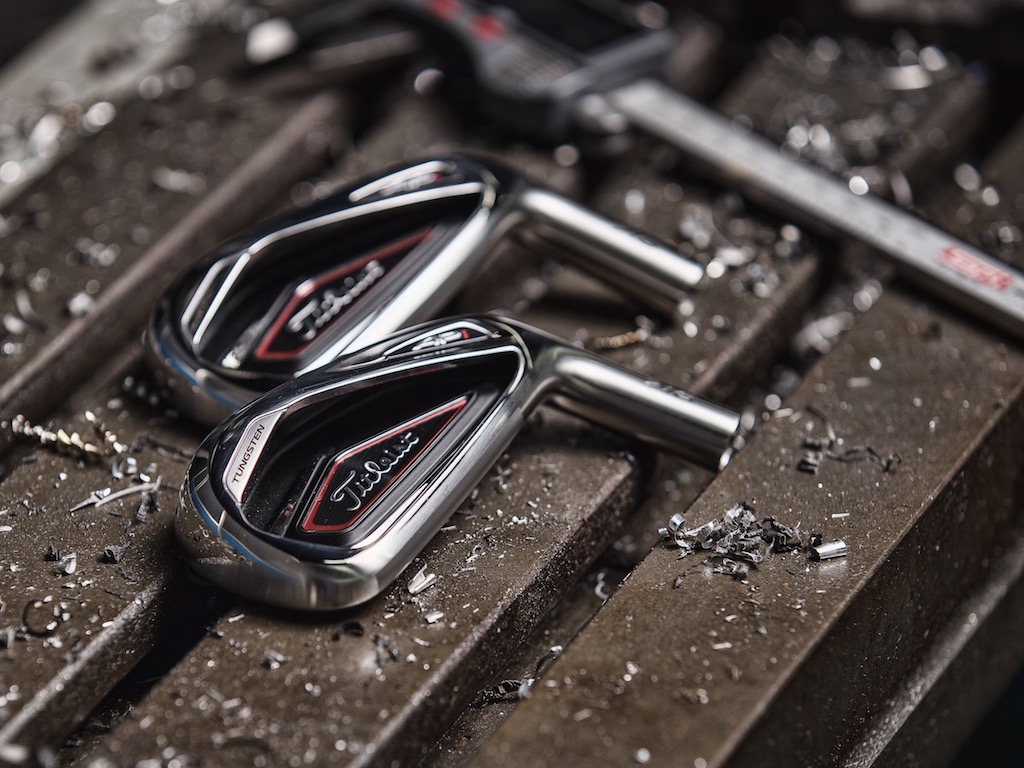
When it comes to irons, Titleist is historically known for tour-inspired models such its MB, CB and AP2 irons. With its 716 iron launch, however, more attention has shifted to the company’s larger, more-forgiving AP1 irons — and for good reason. They’re arguably the most improved irons in the company’s new line.
“With an impressive boost in distance, the uber-forgiving 716 AP1 irons can compete against any model in their class,” we wrote in our review.” Their design boasts an attention to detail that will give them the nod with discerning golfers.”
Our editor, Zak Kozuchowski, spoke with two members of Titleist’s top brass — Vice President of Marketing, Chris McGinley, and Vice President of R&D, Dan Stone — to discuss the changes made to the new irons.
Why were the changes made, and what do they mean for game-improvement iron shoppers? You’ll learn that and more in the Q&A below.
ZK: When we talked to top club fitters about AP1 irons of the past, they usually described them as “forgiving” or “very consistent,” but never “long.” Why did Titleist decide to focus on distance with the new AP1 irons?
Chris McGinley: I think the answer to that question quite is simple. We did a lot of research before we developed this line, and part of that research was aimed at what you brought up earlier — positioning these irons properly, because we listened to what golfers said. There’s a lot of golfers out there that want maximum distance and maximum forgiveness, particularly those golfers looking to improve. Distance was an important variable. For a lot of golfers, it was the most important variable and we wanted to deliver on that. That’s really the simple reason behind AP1 being a more distance-focused product. We are in the distance game with this product. But I think it’s important to note that the way we went about it may be a little different. We didn’t want just raw distance; we wanted distance at a playable trajectory so that the player could have the right ball flight to stop the ball near the pin, and we believe our technology package delivers on that. We’re confident that we’re firmly in the distance game, and we’re delivering it in a very effective way.
ZK: You talk about creating distance, but also creating a consistent, playable trajectory. What challenges did you face when you redesigned AP1 to achieve those goals?
Dan Stone: Well, we felt we were really poised already to attack this problem … The materials we’re using allows us to be better suited to make a more playable trajectory from the stronger loft targets that we went after with this generation of product. It’s a lower CG, but with higher inertia values. We also thinned out the face and really created a full cavity. That’s the reason for the acoustical difference.
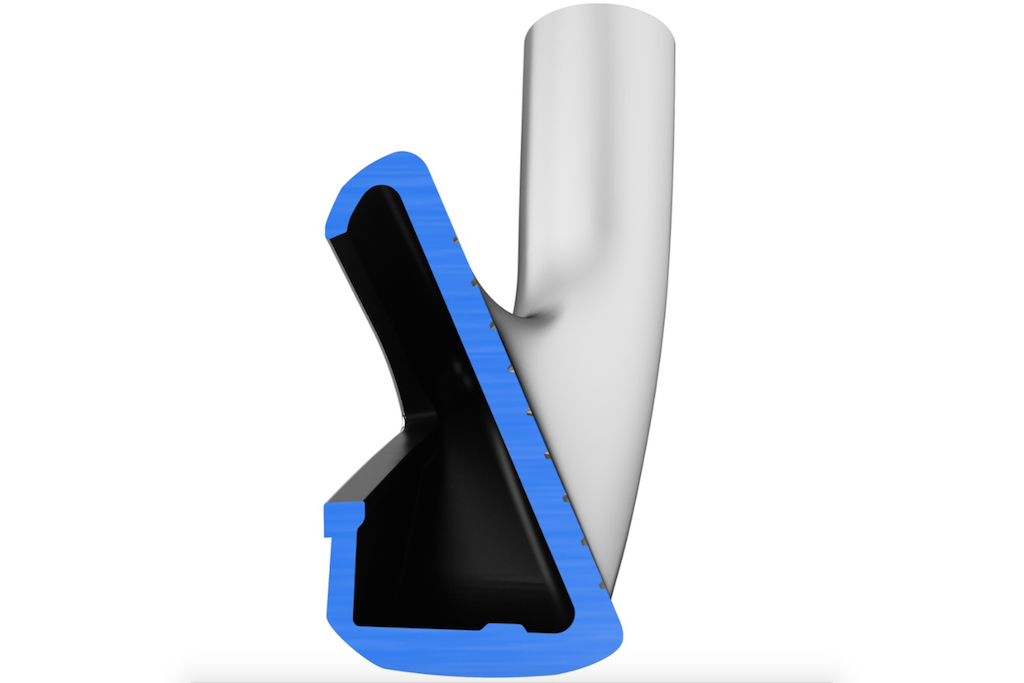
Previous AP1 irons had reinforced club faces. The new irons have unsupported club faces, which create more discretionary weight and allow the club faces to flex at impact.
The trajectory is really a function of where the CG is. Also, off-center, we maintain ball speed. The AP1 player doesn’t always hit it on the screws. A lot of the distance issues or the trajectory issues come from off-center hits, and that’s where our product really shines, both on center and off-center. We know we have the most playable trajectory in the marketplace in terms of giving players the distance that we wanted them to have, but also making it more consistent.
ZK: If you look back through the years at the lofts of the AP1, you see that the 3 iron had a stock loft of 20 degrees and the PW had a stock loft of 45 degrees. Now the long irons are a degree stronger and the short irons, in some cases, are 2 degrees stronger. Can you explain specifically why you need to do that and what it does for golfers who are a fit for AP1?
Dan Stone: I think originally we were conservative on our lofts. We did not want to give players trajectories that were unplayable. So we kind of started from scratch with this product … We went from about 28 grams to 43 or so grams of tungsten. We didn’t take this project lightly. To reposition the CG location, strengthen the loft, make sure the CG depth was appropriate — especially in the long irons — was essential to achieving the distance parameters we were after. From there, we don’t like to have 5-degree gaps as we go up to the wedges. A lot of our competitors, as you gap from 9 iron to pitching wedge, you’ll see 5-degree gaps. We just don’t believe that a 5-degree gap is something you want to have in your bag when you’re talking about a gap between two irons. We have’t found a way to achieve the appropriate distance gapping between shorts irons. The use of tungsten, lowering CG, having inertia, and the feedback has been very, very good. We knew that going into this. The feedback we were getting in the marketplace was not a surprise. All the testing has proved out that we were able to maintain the trajectory that we had, but achieve more distance and not have balls fall out of the air with the stronger lofts.
ZK: You spoke about tungsten and you see several golf equipment manufacturers use tungsten in their players iron, but no where near as much as Titleist does. In the game improvement category, none of the leading manufacturers have tungsten in their game improvement irons except Titleist. Why is that?
Dan Stone: I think in the game-improvement category, it’s probably price-related. Obviously, these other manufacturers aren’t seeing a significant performance vs. cost ratio that they’re willing to go ahead and pull the trigger on. I’ll also say we have intellectual property in areas of tungsten, in terms of inertia. Not to get into detail with patents, but we have intellectual property in the last five years plus that we feel is pretty strong and has locked some competitors out of the tungsten business in terms of using it in the way we’re using it. We also have manufacturing intellectual properties because of the co-forging process. We know how to put tungsten in irons and we have a lot of experience doing it. It’s not a trivial task. It requires more effort and cost in the manufacturing process to do it, but I would say over the last couples generations we’ve made some significant improvements and strides in making our manufacturing process more efficient as we’ve come out.
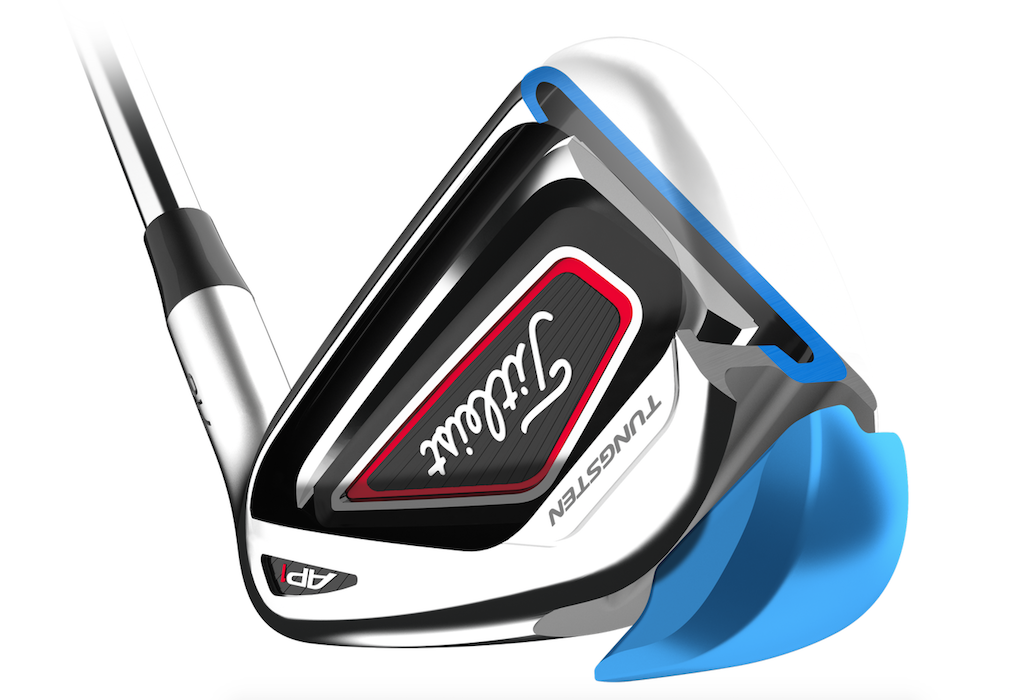
Titleist engineers increased the amount of tungsten by 50 percent in the 716 AP1 irons. The 3-7 irons have an average of 42.5 grams of tungsten per head.
We have no plans to go away from the use of tungsten. We believe in it, we know there’s a performance advantage.
I think what you’re seeing in the AP1 is that it’s our best effort thus far, but the acoustic feedback the players get, and the trajectory and feel of the product … a lot of that comes from the use of tungsten. A solid shot feels really good. You can be a little bit more off-center with this club and it still feels solid and sounds good. We went thru a lot of effort to tune the face and I don’t know if you’re aware of the construction, but we got rid of the bar in back of the AP1. We went to a full-cavity concept and that took a little effort. Our initial prototypes, we made a few duds that didn’t sound good. We went with our FEA team and went back and tweaked face-thickness, tweaked the tungsten location until we got it just right. In this situation, each iron is a unique club. Each of them have to be looked at uniquely so that you dial in the appropriate performance. The feel is one of the ones where we can predict that in FEA, but we also have to take the product out and hit it. There were some adjustments after we got our first few sets in that had to go back in and modify to appropriately locate the tungsten and face thickness.
Chris McGinley: I think that’s a key point. As Dan said, it’s our fifth generation iron where we’re using tungsten in a meaningful way. One of the things we’ve learned is that tungsten really helps feel … When you’re making a thinner-faced, distance-oriented iron, it was really key to us to make sure that AP1 had that great feel, and that use of tungsten really delivers there.
Q: Can you explain the co-forging process, and how that’s different from the way tungsten is added to the AP1 irons?
In the co-forging process (which is used on the 716 AP2 and 716 CB irons), the tungsten is put in at the date of the forging itself. So you’re applying tungsten in a cavity and putting steel over that cavity, welding it, and then it goes into a forging operation and it’s forged so that all the material is compressed. In the AP1 program, we use a welding process. The tungsten is mechanically welded because the AP1 is a cast product. So it’s mechanically welded in place, and we’ve become experts in that area because we’ve used the welding process for many years. There are tricks and in-house know-how to be able to appropriately weld that. Because obviously you don’t want to have rattles. You want the tungsten and the steel to work as one. We use a pure tungsten, 17-gram-per-CC tungsten, and we use that high-density tungsten to get the effect, get the inertia. Lower-density tungsten has also been used in the past, but we prefer to use a higher-grade tungsten because it improves our CG properties and inertia values. As a result though, that tungsten does not metallurgically bond directly to steel so we use an interface — a welding — to mechanically lock it in place.
ZK: A lot is said about CG, and as you said the structure of the new AP1 freed up discretionary weight to be moved where it needed to go. Where exactly are you trying to place the discretionary mass to give the golfer the most performance benefit?
Dan Stone: Our CG is placed in the AP1 in the middle of the scorelines. You have a hosel, you have a blade length, and you have the bulls eye. We found players with AP1 hit it, in terms of left-to-right, right-to-left, they hit very good shots when we positioned the CG in the middle of the scorelines. It seems obvious, but probably previous generations of irons were probably a little more heel-biased. We found through testing that we had more consistent trajectories by moving this a little bit more toward the toe. The tungsten is located in the low toe. Part of the reason for that is it counter-balances the hosel and positions the CG low and toward the perimeter of the golf club.
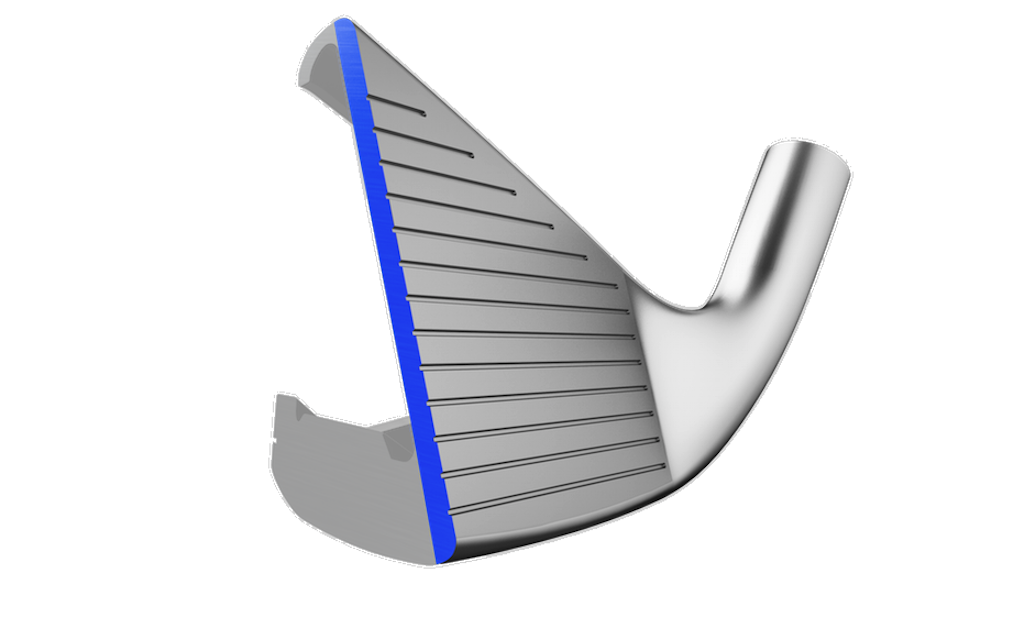
The new AP1 club faces are made of thin, heat-treated, 17-4 stainless steel, and increase launch angle and ball speed to give golfers more distance.
You asked the question about the ideal location for center of gravity; we’re at 17.5 mm above the ground plane. We think that’s a fantastic location for this AP1 product, and it’s lower than any competitors in this category. The most interesting thing is that it’s got significantly higher inertia values. There’s a few other competitors closer to 18, so we have been able to go a little lower than that and we think that’s a very good spot — 17.5. Those competitors, they’re in the 220-230 range (in terms of inertia) while we’re up in the 275-280 range. That’s a huge difference in terms of what a player’s going to feel, what he’s going to hear and we think our product hands-down give players more confidence just because we’re incorporating a huge amount of tungsten into the golf club. That makes a huge difference, particularly in these long irons categories.
ZK: Each year your engineers are trying to design the best products they can, but another crucial part to performance is fitting. That’s what I want to ask you about, Chris. Golfers who use game-improvement irons have specific challenges. How do the AP1 irons specifically address those challenges.
Chris McGinley: Fitting is certainly a big part of what we do and how we go to market. With game-improvement players, you want to deliver on all those things Dan talked about — playable trajectory, high MOI for speed on off-center hits — and I think the two most important variables with that group are achieving that playable trajectory and finding that right set composition for them. When do they stop their set of irons and move into the long-game category? AP1 long irons are great products, but there typically comes a point with the game-improvement golfer that he no longer has a playable trajectory with those long irons and he needs to move to a different product, typically a hybrid. One of the most important things we did for this launch was we changed our launch cadence. We’re launching hybrids with irons for the very first time and that’s a big deal for us. While 915 hybrids are a great product, we felt this was so important to match irons and hybrids together because the way you can benefit that golfer is to fit them for both irons and hybrids at the same time. You do all the things we do in fitting, you get all the physical specs right — loft, lie, shaft weight, shaft flex — and then you work on their set composition. So where they lose that playable trajectory and those yardage gaps, you go back and improve them with a hybrid club if not two hybrid clubs. I think that’s the biggest thing with fitting with this launch.
ZK: Is there a tip you can offer for golfers interested in a new set of irons? Maybe they’re on the fence between the AP1 and something a little smaller like the T-MB or the AP2. Are there any tips or tricks you can offer for which iron might be best for them?
Chris McGinley: AP1 is certainly a game-improvement iron. At the same time, we have a tour player or two who might put an AP1 long iron in play, and we have a lot of very skilled club professionals who choose AP1, so it really cuts a pretty broad path. At the same time, the AP2, while it has tremendous tour success and heritage, it is a very forgiving iron. We’re talking MOI values that approach the previous generation AP1. Because of that, AP2 really fits from the tour player on up in the 10-, 12-handicap range. If you’re the type of player who prefers a smaller blade size but still wants something forgiving, AP2 is an incredible choice. There’s definitely some overlap there and part of the fitting process that we go through is to determine what model is best for that golfer. Some of that is driven by preference, what they like to look at. A lot of that is driven by their ball flight and what they can do with that. In terms of the T-MB, that’s such an interesting long-game club. We don’t really see that for the AP1 player. We feel T-MB is going to be a great choice for primarily AP2, CB and MB golfers — guys who still need help at the long end of the set. There’s plenty of tour players who fall in that category; they still want help with their long irons, but they don’t want to play a hybrid either because it looks too big to them or it spins too much. That’s where T-MB comes in. We’ve seen a bunch of guys put T-MB in play, and not just a single club, several clubs to help them out at the long-end of the set. Between the four iron models and the T-MB utility iron and the new hybrids, you have a great lineup there to find the right combination for your game.
ZK: Thanks so much for your time, Chris and Dan.
Related






This week, we have our Tour Photographer, Greg Moore, on the ground at the OccuNet Classic at Tascosa Golf Club in Amarillo, Texas, for the 14th event of the 2026 Korn Ferry Tour season. With that, we see some great things in the Lead Tape Report as we roll into Amarillo.
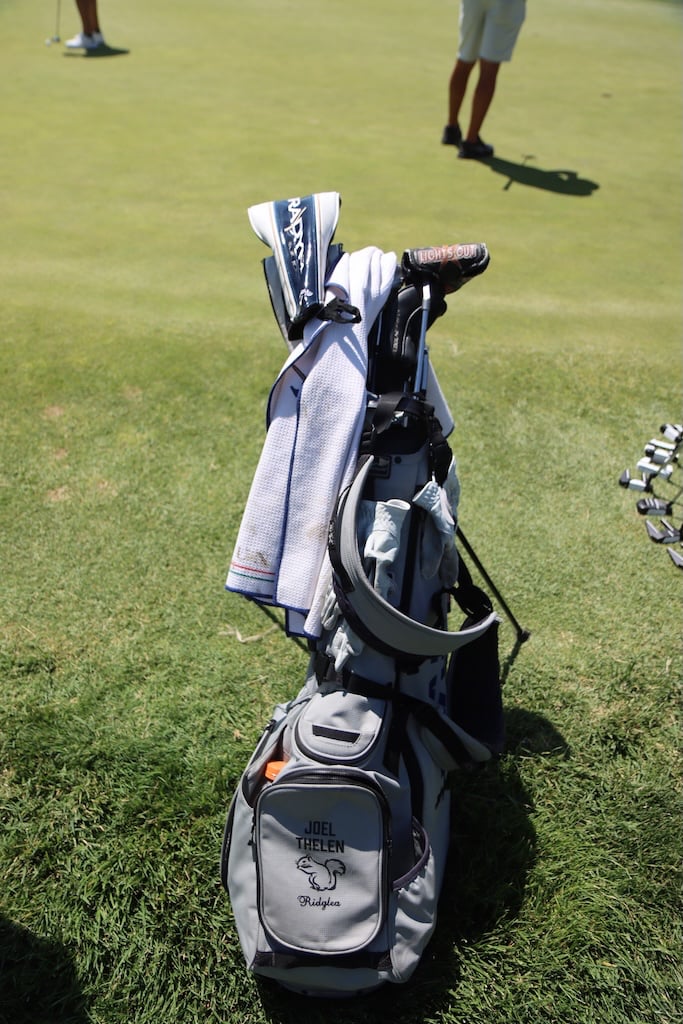
Joel Thelen
Monday Qualifier, Joel Thelen is in the field this week. He has played on the Korn Ferry Tour for a full season in 2023, and he is back in action this week. A couple of clubs caught my eye this week in his bag.
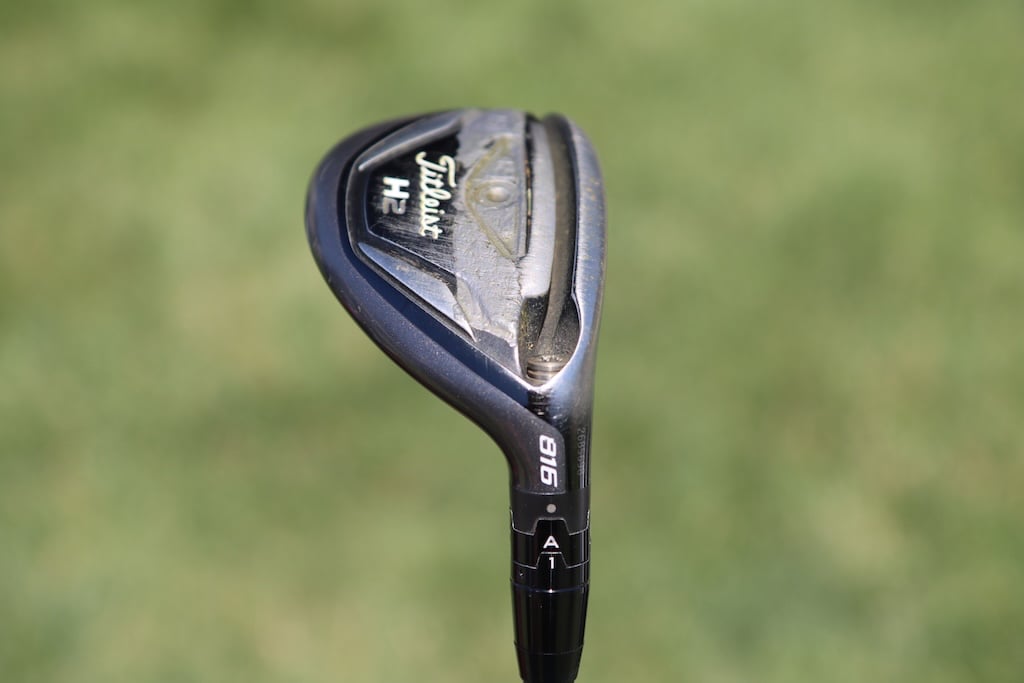
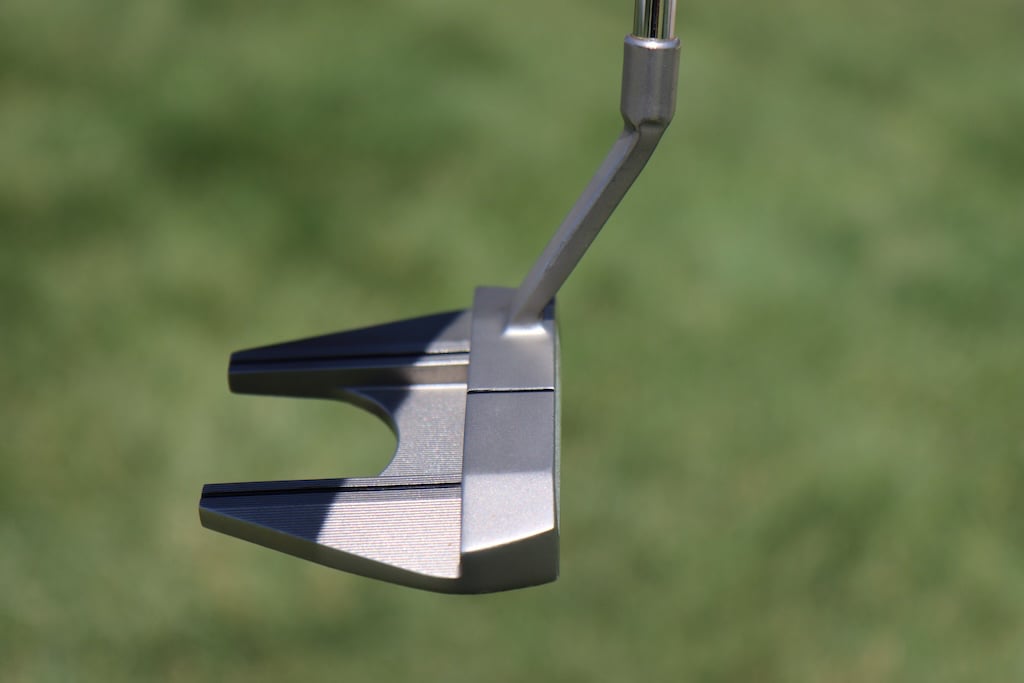
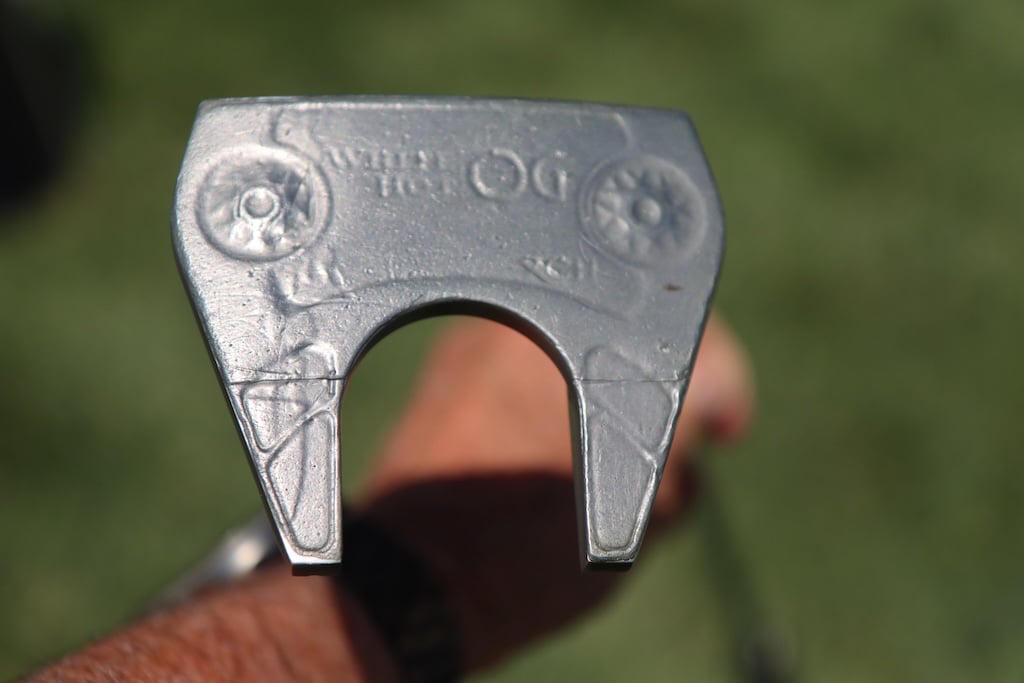
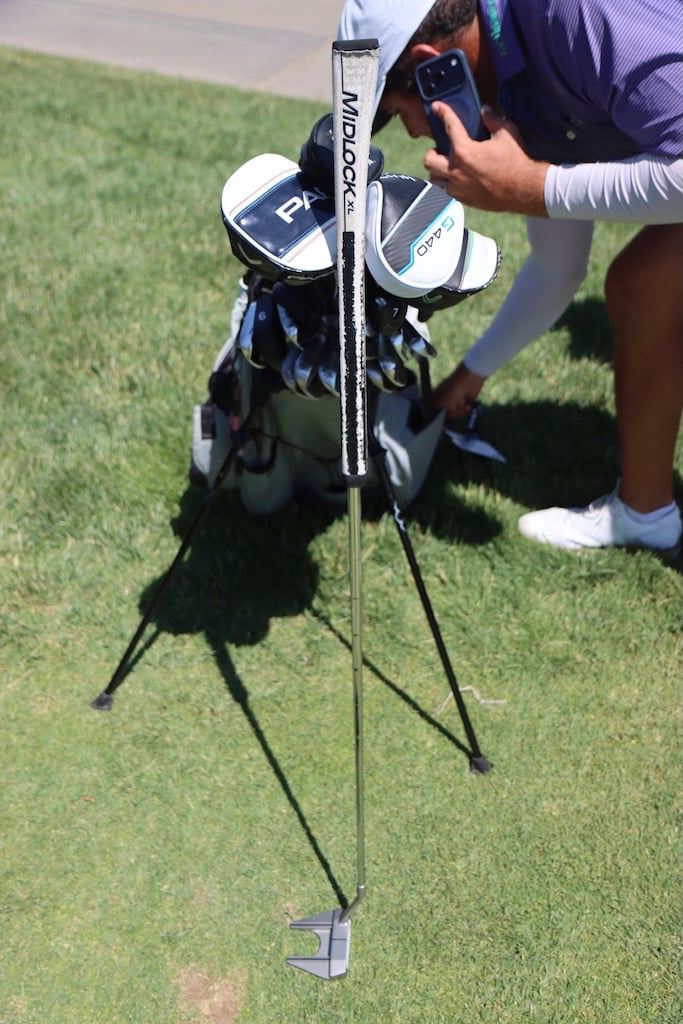
First off: His trusted Titleist 816 H2 hybrid. This club came out in October of 2015, and it still remains strong in the bag. Also, take a look at this Odyssey White Hot OG 7, putting a capital S in the 7S model. This custom neck has some impressive lean for an arm-lock-style putter. The bottom of the putter is covered in tape for optimal weighting.
Mitchell Meissner
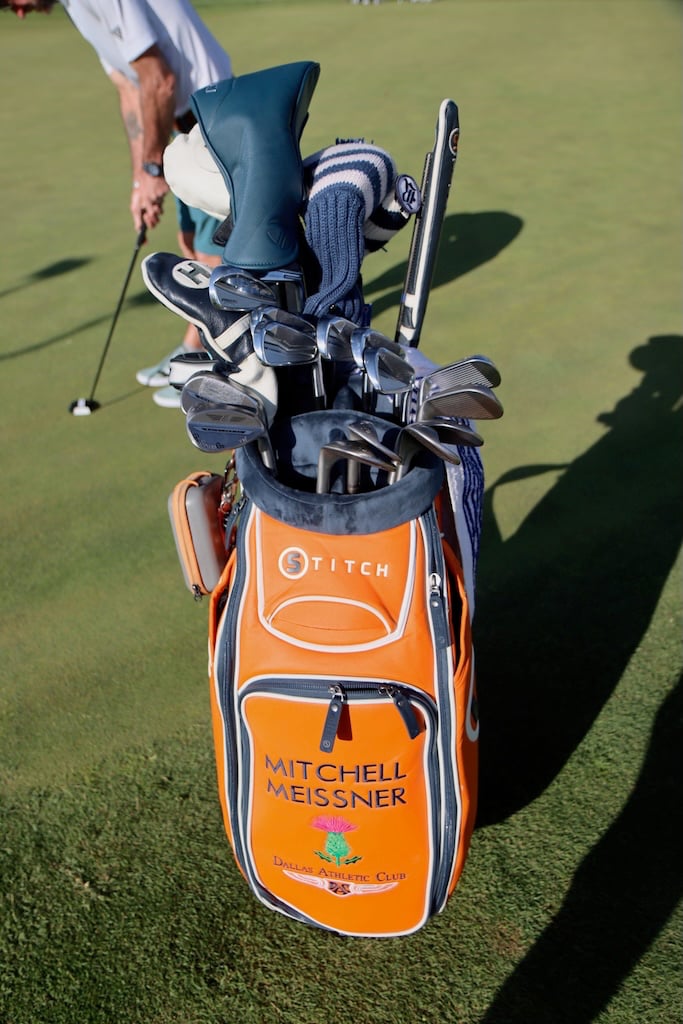
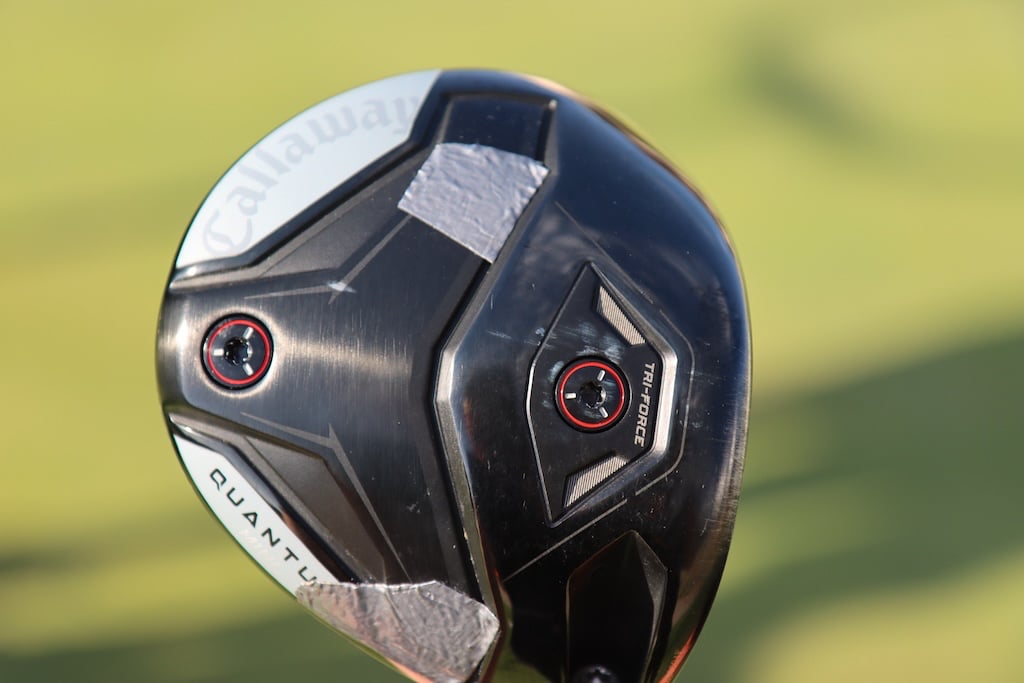
Taking a look at Mitchell Meissner’s bag this week, we have some great lead tape coverage. Top to bottom working from fairway metals, irons, and wedges. We can see on the short irons and wedges that there is tape at the base of the grip, adding a little counterbalance. Along with that, some tape on the short irons and wedges as well. Moving to his putter, he rolls the Odyssey 7 Bird putter. Meissner putts left-handed and strikes the ball right-handed.
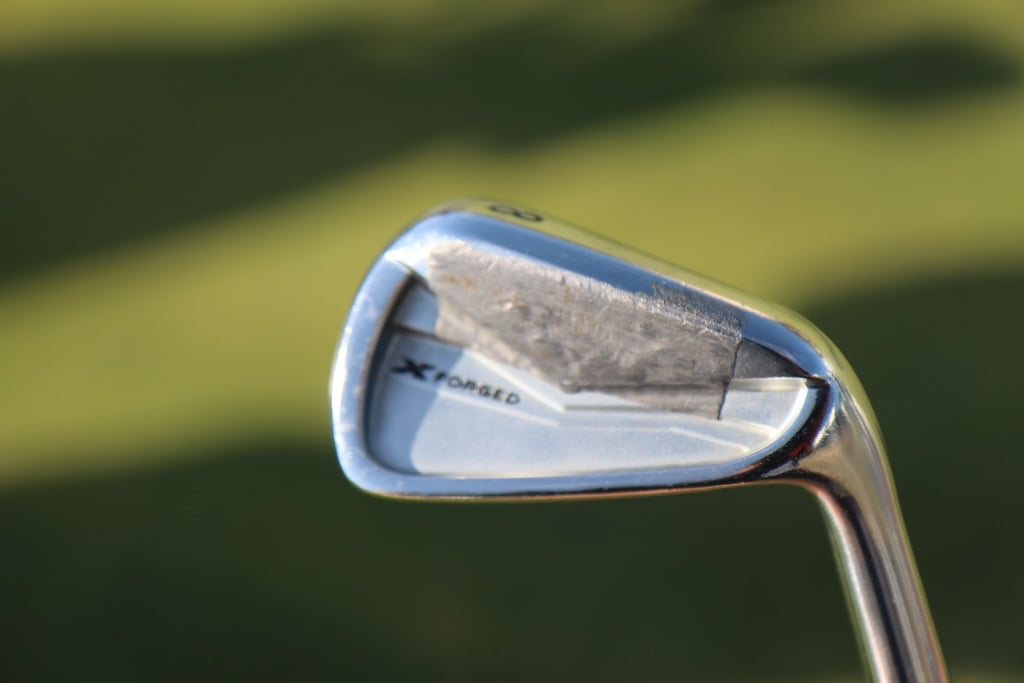

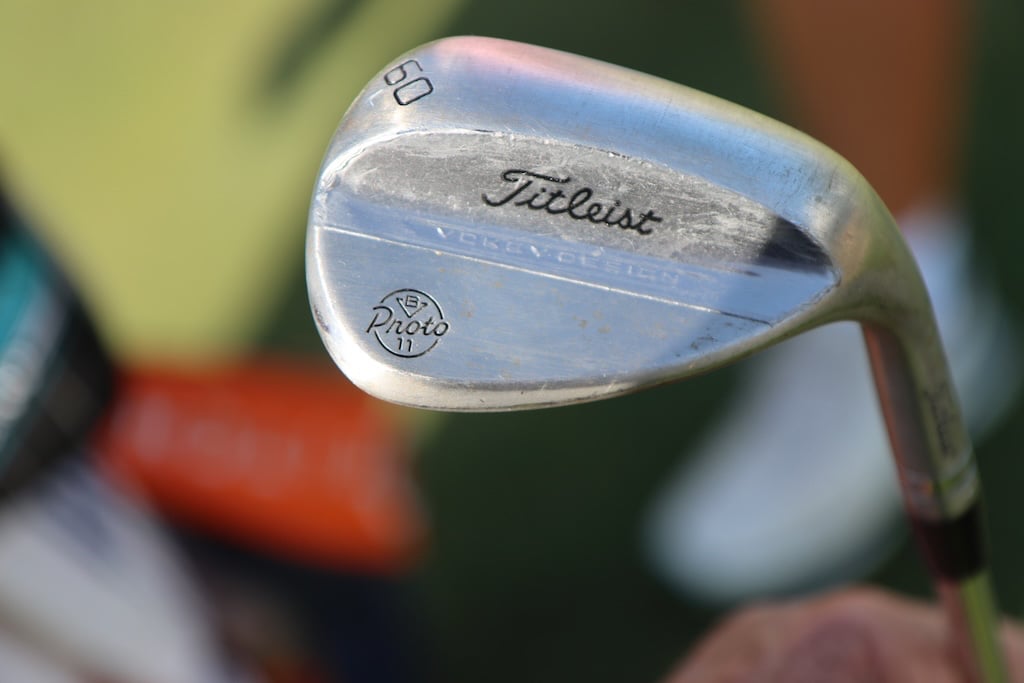

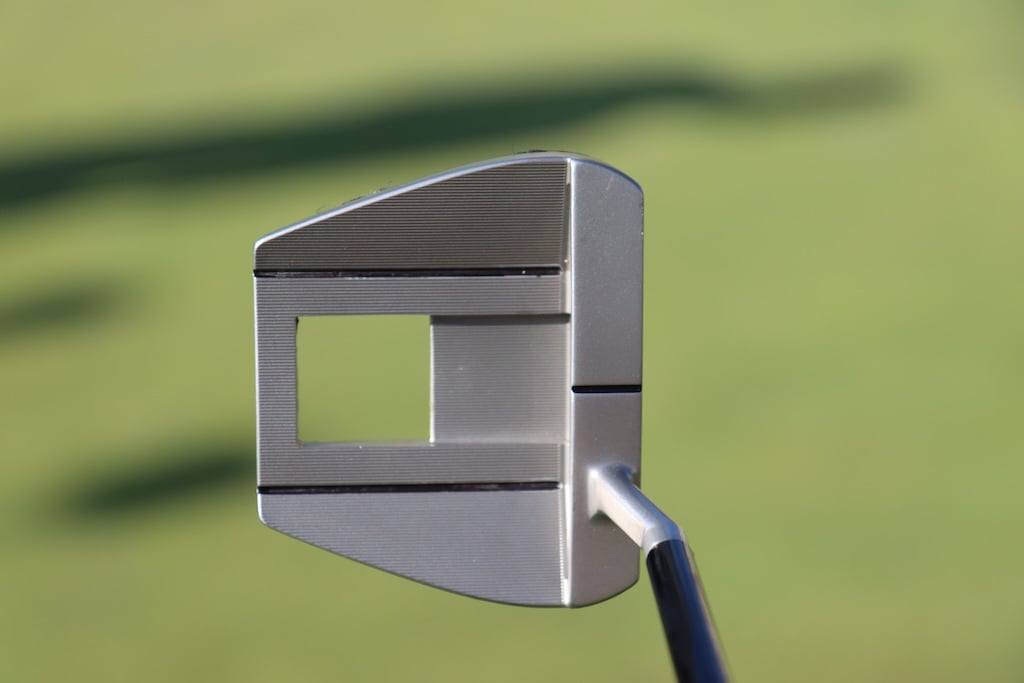


Bud Cauley had >14 clubs in his bag when photographed prior to the Memorial Tournament.
Driver: Titleist GTS2 (8 degrees)
Shaft: Fujikura Ventus Black 6 X
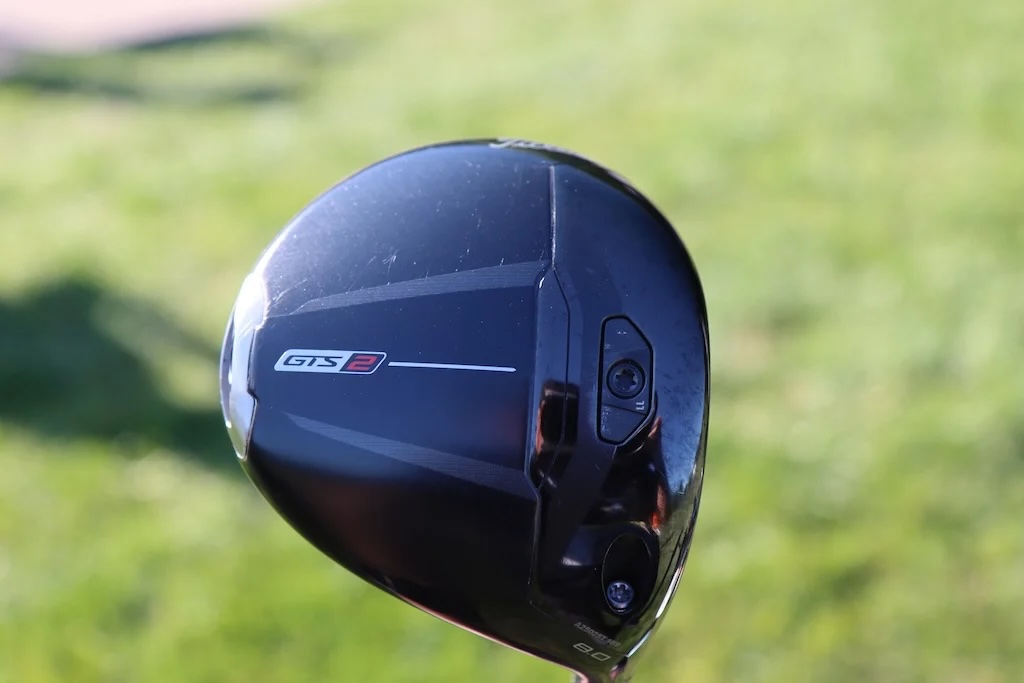
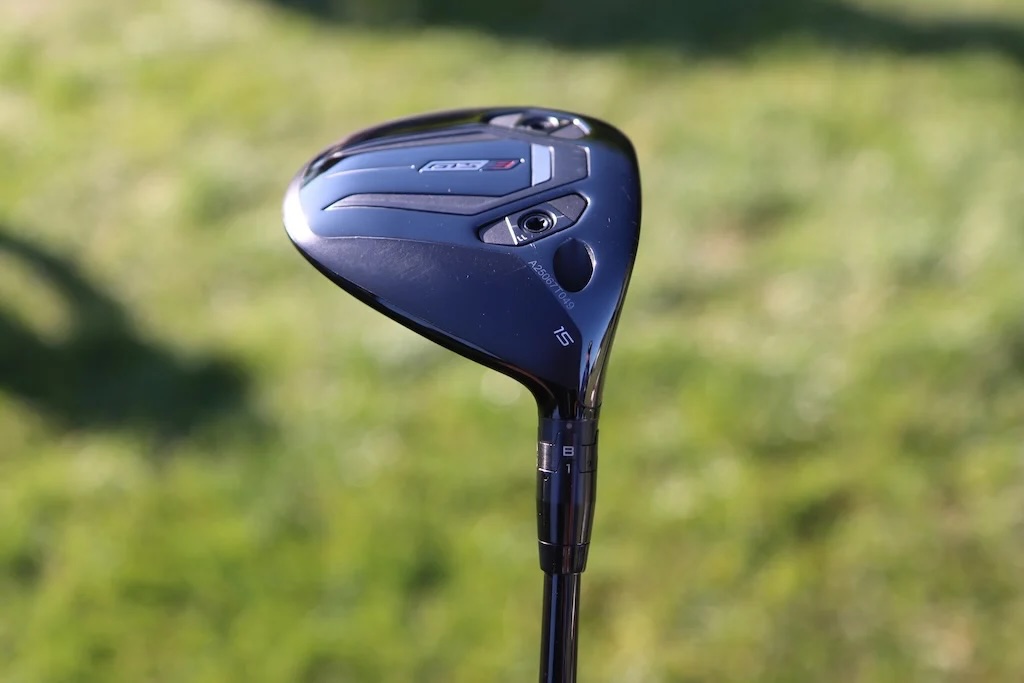
3-wood: Titleist GTS3 (15 degrees, B1 SureFit setting)
Shaft: Mitsubishi Chemical Tensei 1K Pro Red 70 TX
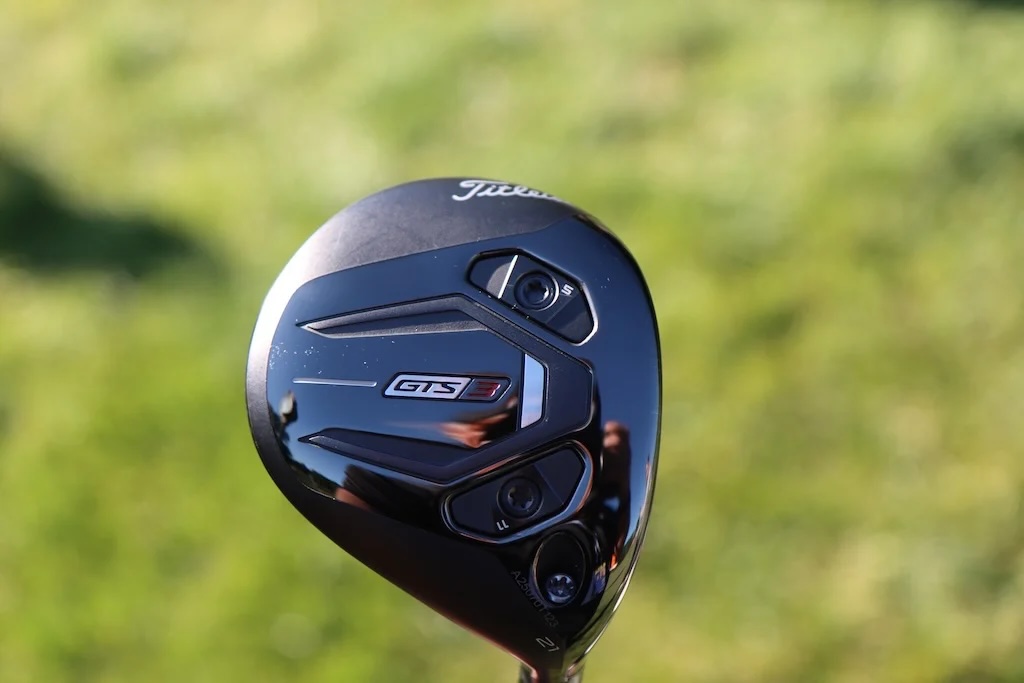
7-wood: Titleist GTS3 (21 degrees, D1 SureFit setting)
Shaft: Mitsubishi Chemical Tensei 1K Pro Red 80 TX
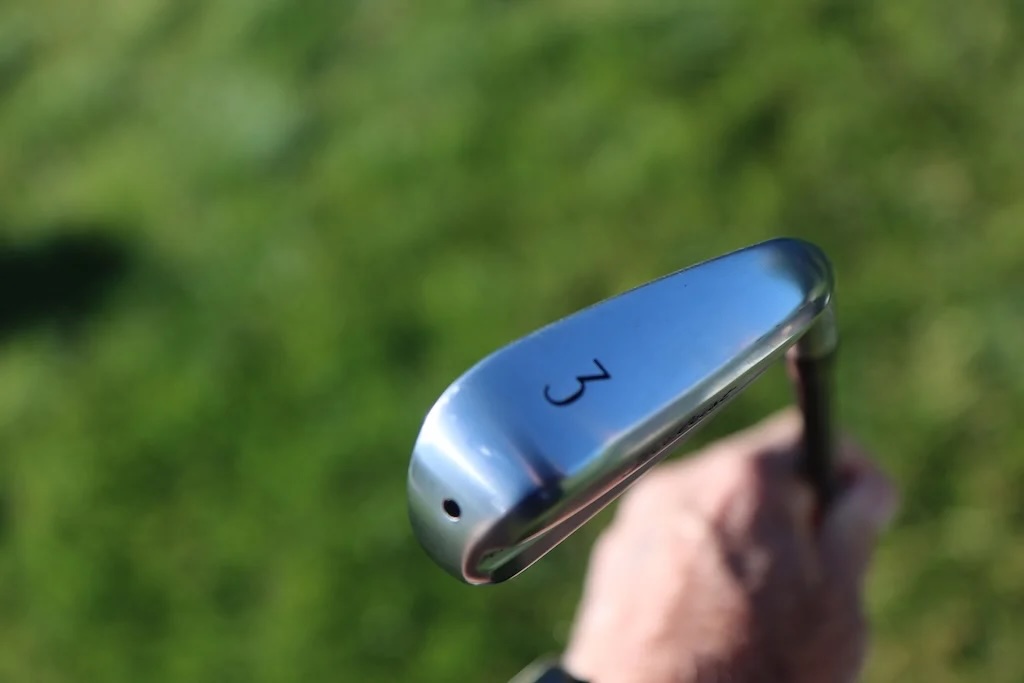
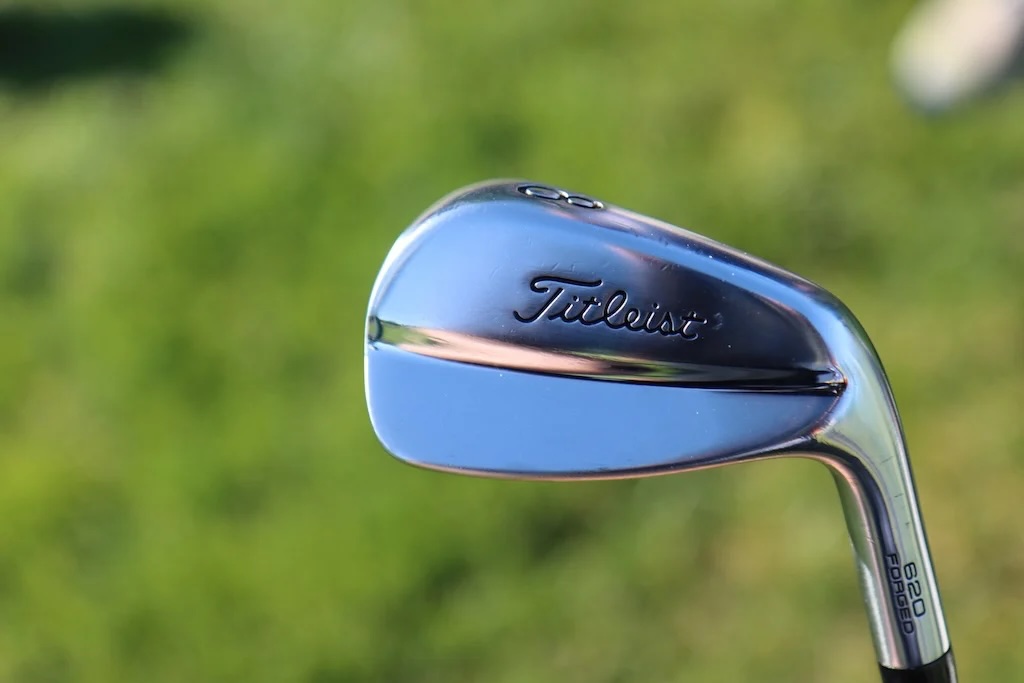
Irons: Titleist U505 (3), Titleist 620 MB (4-9)
Shafts: Fujikura Ventus Black HB 8 X, True Temper Dynamic Gold Tour Issue
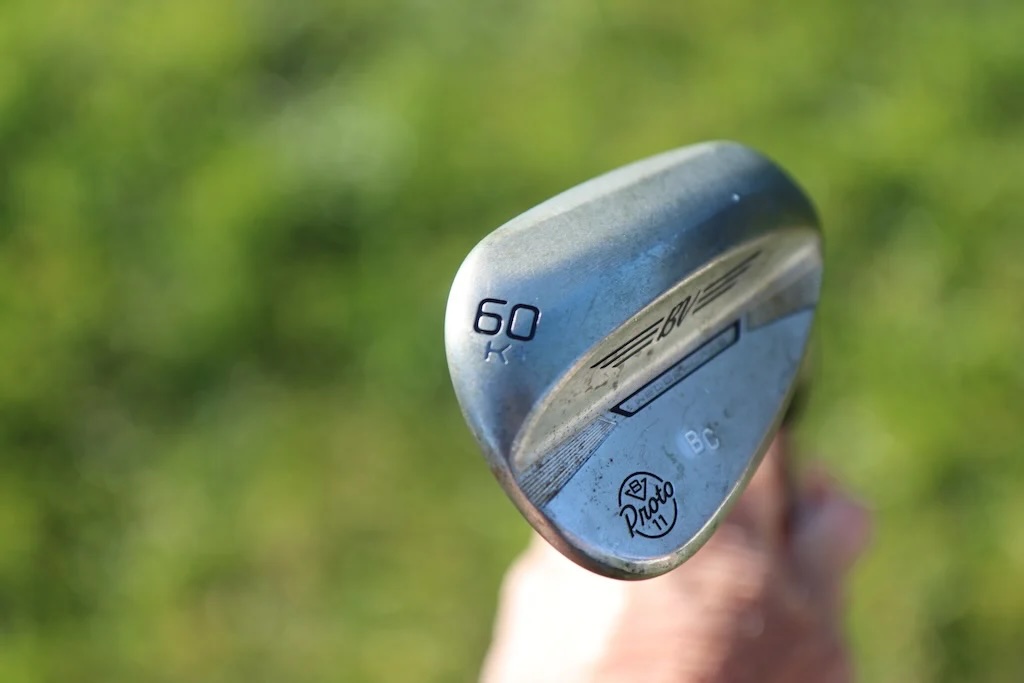
Wedges: Titleist Vokey Design SM11 (48-10F, 52-12F, 56-14F), WedgeWorks (60-K*)
Shafts: True Temper Dynamic Gold Tour Issue S400
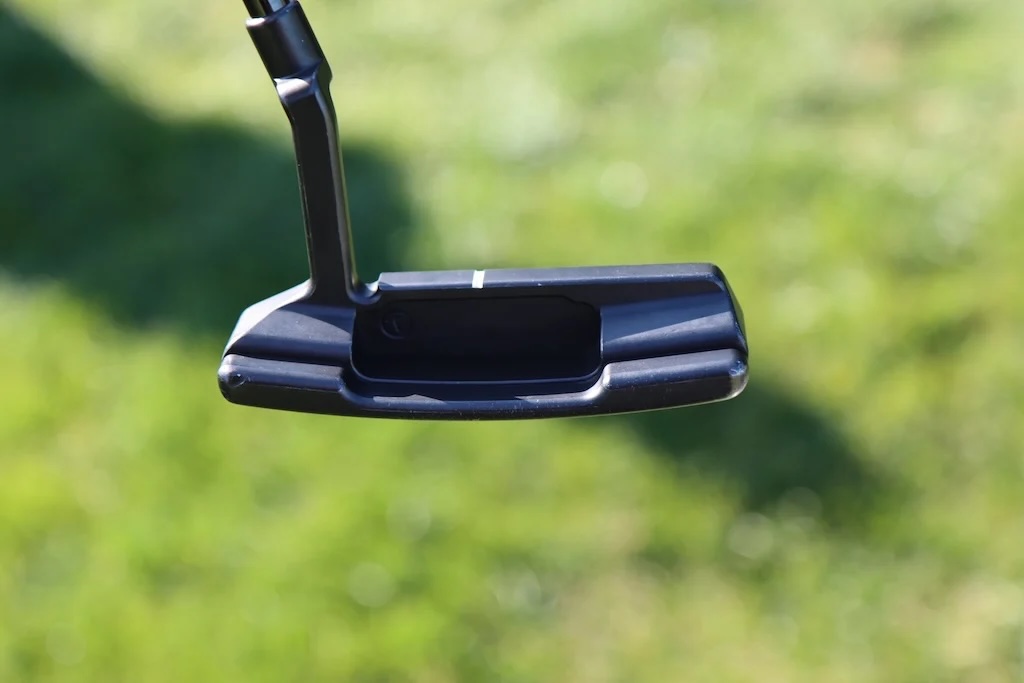
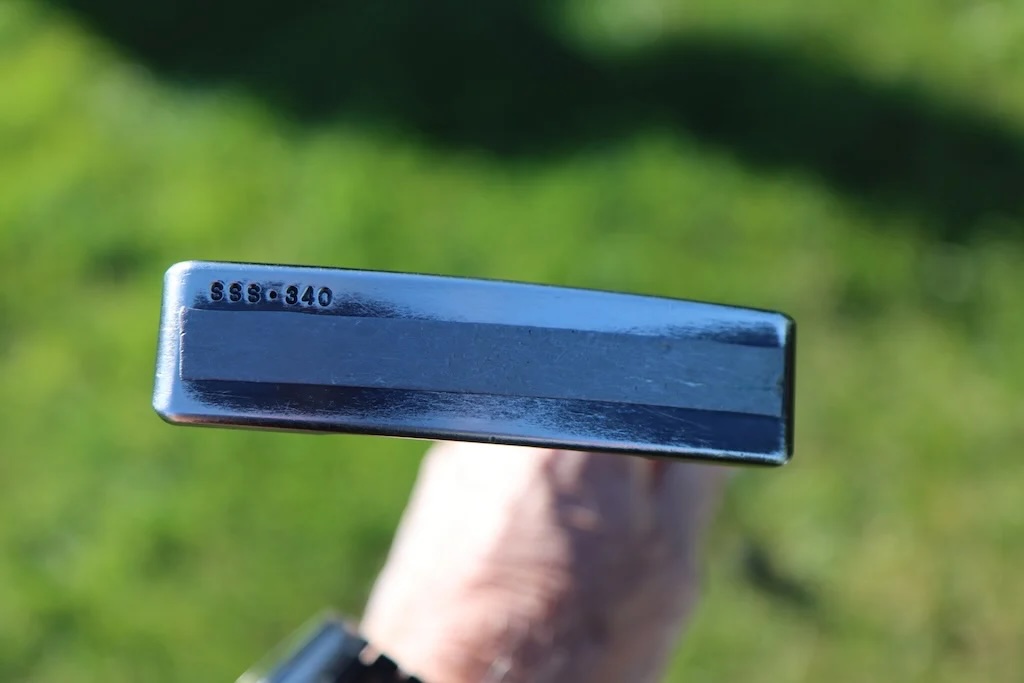
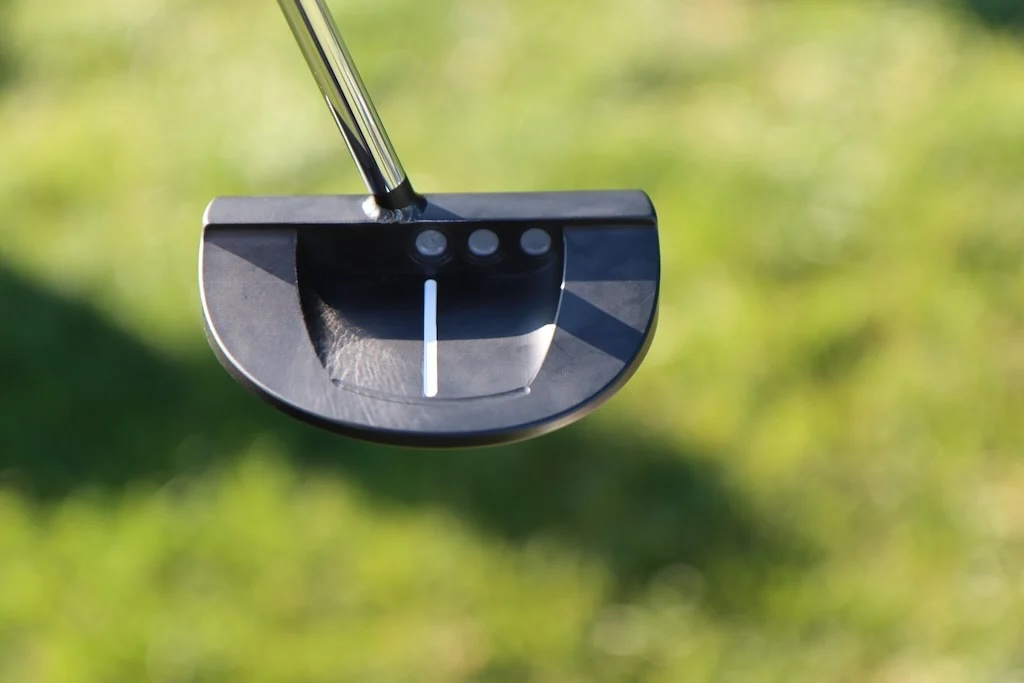
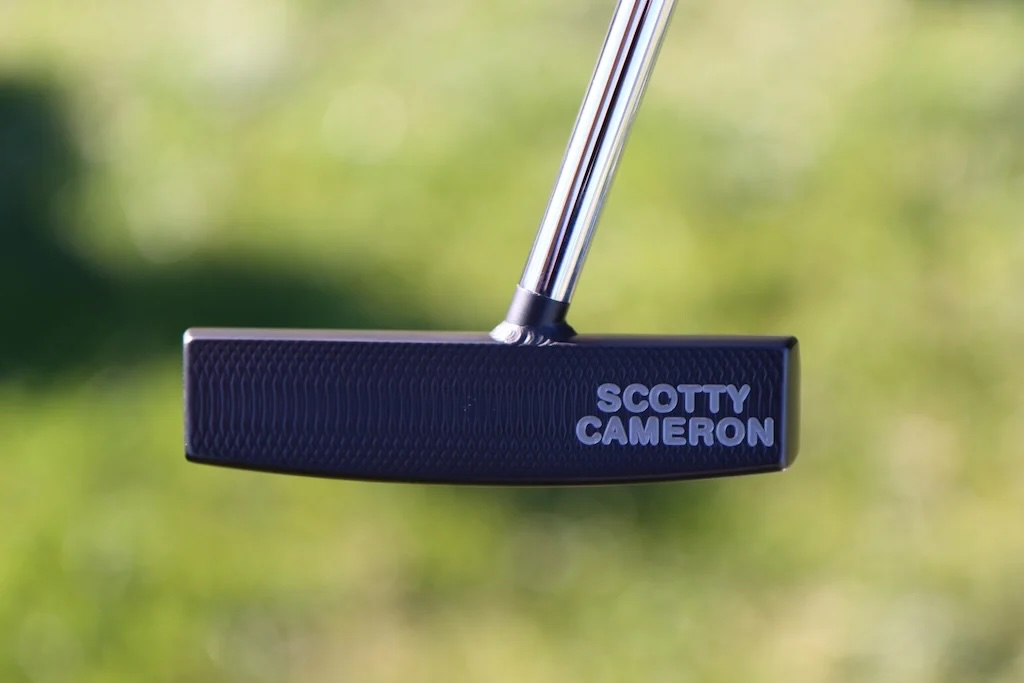
Putters: Scotty Cameron Tour Prototype, Scotty Cameron GOLO 6.3 Prototype
Grips: Golf Pride Tour Velvet Align
Ball: Titleist Pro V1
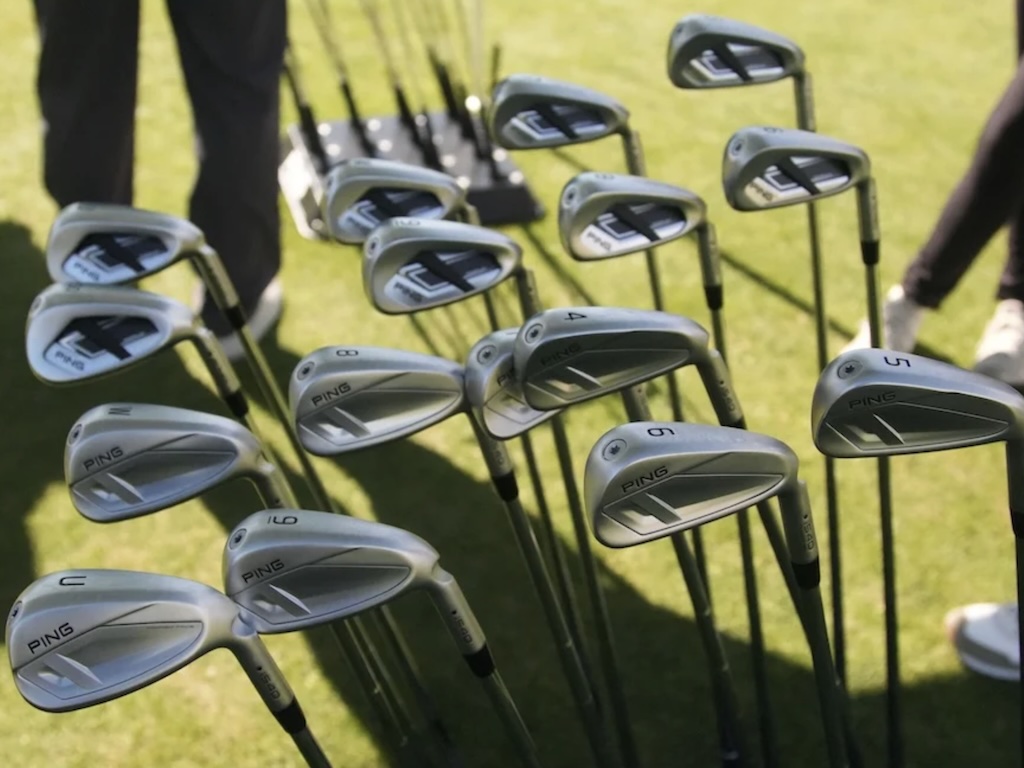
In our forums, one user has offered up a prompt for the true sickos, inviting fellow forum members to share every set of irons they’ve ever owned. As to be expected, this is a lengthy forum topic.
@Lamosteve began:
Can you name every set of irons you’ve owned? Here’s mine
Spalding Dots
Spalding Eclipse
Ram Lazer FX
Lynx Parallax
Mizuno EZ Comp
Ben Hogans
Cleveland CG Red
Taylor Made R9s
PING i20
PING iE1
Taylor Made M6
Our members in the forum have been offering up their own collections. Here are a few posts from the thread, but make sure to check out the entire discussion and have your say at the link below.
- macedan: “Started with a hand-me-down Golden Bear set from my brother when I was in high school, never really played more than once a year or got into the game until about summer of 2017. First purchased a set of Cleveland CG4’s (I actually really miss this set sometimes, soft & not terribly large for a GI iron), moved into Nike Vapor Fly’s by the end of the year. Those lasted until spring of 18 when I decided I wanted new, so I traded them in for TM Rbladez. Honestly, although I liked the Rbladez, poor decision on my part, I think this was really about the only time so far that after a week or two I was kicking myself for not staying with what I had. Rbladez stayed with me until late last summer when I switched to P790’s and (knock on wood) I am hoping this will be my longest lasting set.”
- JimmyC59: “MacGregor Jack Nicklaus Triple Crown. Palmer The Standard. Still play these.”
- jgrzask: “Tommy Armour 845u
Mizuno MP-32
Mizuno MP-33 (2 sets)
Bridgestone J33cb – still own
Srixon i-302 (2 sets) – still own
Tourstage X-Blades – still own
Mizuno Hot Metal – still own
Nike Forged Blades – still own
Titleist 714 AP1 – still own
Cobra Forged SS – still own”

Justin Rose WITB 2026 (April): Full WITB breakdown with new McLaren irons

What’s the story behind Webb Simpson’s custom-stamped irons?

Memorial Tournament Tour Report: Rory McIlroy, Cameron Young switch up drivers, and more

Cadillac Championship Tour Report: Spieth’s sizable changes, McLaren Golf launches, and more

Russell Henley’s winning WITB: 2026 Charles Schwab Challenge

Kristoffer Reitan’s winning WITB: 2026 Truist Championship

J.T. Poston’s winning WITB: 2026 Memorial Tournament

Best irons 2026: Best irons overall, most forgiving irons, and more

Aaron Rai’s winning WITB: 2026 PGA Championship

Cameron Young’s winning WITB: 2026 Cadillac Championship


Bud Cauley WITB 2026 (June)
Bud Cauley had >14 clubs in his bag when photographed prior to the Memorial Tournament. Driver: Titleist GTS2 (8 degrees) Shaft: Fujikura...


Hannah Green WITB 2026 (June)
Driver: Titleist GTS3 (10 degrees, D4 SureFit setting) Shaft: Mitsubishi Chemical Diamana RB 53 S 3-wood: Titleist GT3 (15 degrees,...


Asterisk Talley WITB 2026 (June)
Driver: TaylorMade Qi4D (9 degrees) Shaft: Fujikura Ventus Blue 6 S 3-wood: TaylorMade Qi4D (16.5 degrees) Shaft: Fujikura Ventus Blue...

Brianna Do WITB 2026 (June)
Driver: Callaway Quantum Triple Diamond (9 degrees) Shaft: KBS PGW 3-wood: Callaway Elyte Titanium (15 degrees) Shaft: KBS PGW 5-wood:...
-
 Equipment6 days ago
Memorial Tournament Tour Report: Rory McIlroy, Cameron Young switch up drivers, and more
-
 News1 week ago
Russell Henley’s winning WITB: 2026 Charles Schwab Challenge
-
 Whats in the Bag3 days ago
J.T. Poston’s winning WITB: 2026 Memorial Tournament
-
 Equipment3 days ago
Best irons 2026: Best irons overall, most forgiving irons, and more
-
 Equipment1 week ago
Details on Jason Day’s latest prototype Avoda iron setup
-
 Equipment3 weeks ago
CJ Cup Byron Nelson Tour Report: Koepka and Kim’s newest putters finally get hot
-

 News2 weeks ago
Charles Schwab Challenge Tour Report: MacIntyre, Åberg and Spaun all switch putters, TaylorMade launches new Spider
-
 Equipment2 weeks ago
Details on J.J. Spaun’s surprise putter switch


Rex235
Nov 3, 2015 at 2:12 am
MOTO program?
RH ONLY?
Big Mike
Oct 29, 2015 at 10:11 pm
Picked mine up today after ordering to my specs on Saturday. First range session tonight was fantastic. They feel good, look good, forgive misfits and are long in part do to the lofts. The 4 iron is so easy to hit I am thinking I may no longer need my hybrid. I am a 6 hcp who has gamed player irons including blades mainly because of my ego. Decided to check ego at door and go for something more forgiving and hence 716 AP1. First round Saturday and then off to the desert for vacation and more on course testing
Jim H
Oct 28, 2015 at 3:02 pm
“Probably in previous generations the CG was a little more heel-biased.”
I bought the 714 AP-1 irons a year ago and after roughly 5-6 rounds I discovered that my best shots came after I purposely tried to hit the ball closer to the heel. Now I understand why, but it would have been nice if that info was shared by Titleist at the time of purchase, instead of in an article a year later.
I like my irons currently as they seem almost laser straight, but are a full club short of my Mizuno MP-32, even with their stronger lofts.
Chuck
Oct 25, 2015 at 11:29 pm
Are they shipping any clubs with AMT’s yet? Are there any AMT’s in any shops yet?
Trab
Oct 27, 2015 at 2:48 am
I seen the CB and AP2 with the AMT in them at my local shop hanging off the displays
Andy
Oct 25, 2015 at 8:51 pm
Recieved mine on the 23rd, and having played a variety of other GI irons these simply take the cake in terms of feel and just overall performance without a doubt
Alan
Oct 25, 2015 at 8:11 pm
Will be interesting to see what Vokey wedges they recommend with the 716 AP1s. Kinda will screw up my set if I change from AP2.