
Opinion & Analysis
From idea to reality: Golf club design at major OEMs

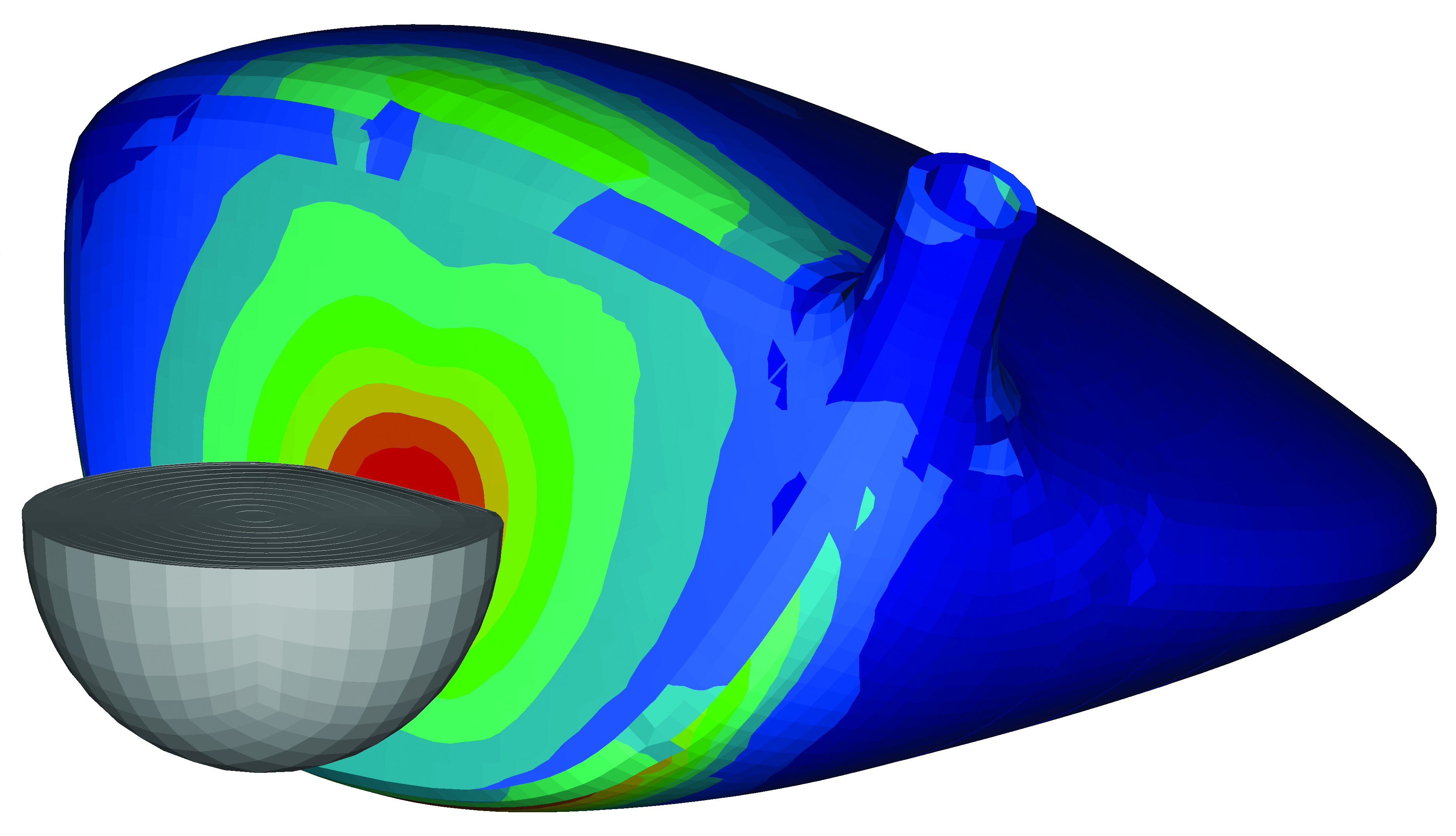
Like nearly every modern project of sophisticated design, the club creation process begins with computer-aided design (CAD) software. Ping, an Arizona-based equipment company, primarily drafts using a product design suite called Creo, according to VP of Engineering Paul Wood, although there are several software options that do essentially the same thing.
The ultimate objective in the early design stages, according to Wood? “Essentially using the tools as a sketchbook.”
Everyone on the Ping team is adept using Creo, so moving to another platform would “be like starting over again.” Cleveland golf, for its part, uses Altair’s suite of design applications.
So that G30 in you hand? It began as a digital sketch on Wood’s team’s computer screens.
Wood, who holds a PhD in Applied Mathematics from the University of St. Andrews, said Ping uses different software for different aspects of the design process. Alternatively, specialists have particular preferences, which may not speak to the inherent merits of one software over another, but rather to what a particular person doing a particular job is comfortable with.
[quote_box_center]”We use some Altair stuff to do our finite element analysis: taking a model … a driver head or whatever, simulating impact, looking at where the stress and strains are … predictions of performance … We have a guy that’s full time,” Wood said. “He’ll work with the design team and pull the design from CREO. We also have aerodynamics packages that will simulate airflow, which is another specialist role.”[/quote_box_center]
I asked Dustin Brekke, Engineering Manager, Research and Development for Cleveland, how the company uses the same Altair software. He said the ultimate objective with the software use is “to evaluate, eliminate, and improve designs prior to spending the time and money to make samples.” The process of evaluating design concepts is different for each club. For woods, the company is assessing the strength of materials and face thickness and simulating impact conditions.
So, regardless of the particular software and its specific applications, the objective is the same: model initial concepts in CAD software and test them prior to production.
How CAD software was a game changer
Todd Beach, VP Product Development, TaylorMade Golf Company, laid out the differences between the pre-1990s method of club design and CAD-based design.
Before the 1990s, Beach said, clubmakers hand-shaped master designs “based on external cosmetics.” Companies would then use the masters to make the tools for the casting process. Adjustments and improvements would then be made.
[quote_box_center]
“Now clubs are designed with high powered CAD systems, which model all of the complex internal features and adjustability features,” Beach said. “The mass properties can be optimized on the computer before ever launching a prototype.
“The sound/feel, durability, aerodynamics and launch performance can also be simulated using sophisticated finite element methods [virtual prototyping]. Using these tools, it is possible to iterate multiple times to optimize performance before launching the first test prototype.”
[/quote_box_center]
Cleveland’s Brekke highlighted the speed of the CAD-based design process. In the case of creating a “master” design prior to CAD software, not only was the process significantly more time consuming, a company was left with just one design to test, rather than multiple variations.
[quote_box_center]”That is how the industry has changed so much in the last few decades,” Brekke said. “With all the advances in modeling, simulation, and rapid prototyping exponentially more design concepts can be evaluated and therefore new discoveries are constantly within reach.”[/quote_box_center]
So from process, innovation, and speed-to-market standpoints, CAD suites like Creo and Altair have changed the game.
Working outside the product cycle
There are two modes of operation in the engineering world of major OEMs: inside and outside the product cycle. The companies try to do as much as they can outside of the product cycle, which isn’t surprising, given the innovation imperative in golf equipment and the need to produce game-improving, marketable products.
Rather than thinking about next year’s driver or specific clubs, outside the product cycle, the engineers are more concerned with concepts and technologies. As Wood says, outside the product cycle, “we try to do things generally,” saying, “this would apply to any driver,” rather than worrying about specific constraints or what was on the shelf last year.
However, at Ping at least, there’s a team that is perpetually working outside of specific product cycles whose only imperative is innovation.
[quote_box_center]”We have a dedicated innovation team that is much more outside of the specific product cycle, aiming at technology development, knowledge development, things that the design team can kind of plug into the next club they have.”[/quote_box_center]
The end goal, of course, is a market-beating offering. However, to deliver, say, the next great driver, said driver needs to be loaded with innovative components. It’s to this end that Wood says, “we want to know as much as we can about technology and materials and the specifics of what’s going on and what the customer needs.”
TaylorMade’s Todd Beach echoed Wood’s sentiments about the market and customer needs as well as the ongoing pursuit of innovation.
[quote_box_center]“We have several teams working on … concepts, which are more breakthrough, next-generation stuff. Stuff where you don’t know if it’s going to work, so you don’t have a specific time frame on it. And our product marketing group is constantly looking at the marketplace and seeing what products are resonating in the marketplace.”[/quote_box_center]
Interestingly, Beach added, R&D may continue to work on a concept for a long time, even in excess of 10 years if the marketing team feels a technology is truly groundbreaking.
Within the product cycle
Inside the product cycle, as you’d expect, things are more systematized, coordinated and deadline driven.
How long is the product cycle? Anywhere from one year to three years.
And rather than seeking to reinvent the wheel, companies often begin with the most recent design for, say a driver, and seek to improve upon it/implement technologies they’ve been working on.
[quote_box_center]“You’re taking ideas you might want to incorporate into the next model,” Wood said. “So for some of that, you can take an existing prototype … For example, we can take the G30 iron and mess around with it.”[/quote_box_center]
After the club in question has been sufficiently “messed around with” to create something worth investigating further, the company will produce a few prototypes for initial testing.
Alternatively, as Wood indicated, designers may want to build a few prototypes merely to test a new technology to arrive at a point called “concept validation,” which determines the viability of a technology for inclusion in a future club offering.
Beach said TaylorMade often begins a product cycle with the question: “What’s the best fit given the technologies the Phase I group has been working on?”
Beyond messing around to see what works and prototype creation, the rubber meets the road once a company enters into product development and firmer decisions must be made.
[quote_box_center]“Once you start to get into product development … we’ll start to make decisions like ‘this is going to be a cast iron,’” Wood says. “You start worrying about every little detail and that’s when maybe you’d start working with a supplier.”[/quote_box_center]
And an interesting note about product development, particularly iron development. Ping will often start with a 7-iron then build backward (6, 5, 4) and forward (8, 9) until they have a whole set, tweaking the initial 7-iron design. Likewise, driver design often begins with the 9-degree, right-handed model.
A component of club production, of course, is tool creation. For example, producing the metal blocks used in the iron casting process. And a big part of scaling up production is getting overseas manufacturers the appropriate tools with the appropriate tolerances to create quality products.
During this time, TaylorMade moves between durability, player and consumer testing as a lead-up to mass production.
Following these preliminaries, a company will usually initiate a pilot run to work out the details of production, costs (including scrap rates) and tolerances. At this point, a U.S.-based club company can authorize its overseas production facility to manufacture a run of five of 10,000 units.
Assuming the above goes off without a hitch, “ownership” of the project transfers from the design team to what Wood referred to as the “quality group.”
“Once you’ve gone through the pilot and have done all the tweaking and adjusting specs, it’s now a quality function … On our supplier’s end, it’s gone from product development to factory floor production … What they’re doing is developing these very detailed work instructions, which we help with … But it’s now a factory procedure … it’s the same thing if you’re Intel making chips.”
Likewise, Beach said that at this point in production, “It’s probably not that much different than other technical products.”
So that, in a nutshell, is how a team of designers in Carlsbad or Phoenix created the M1 or G30 that’s in your bag.



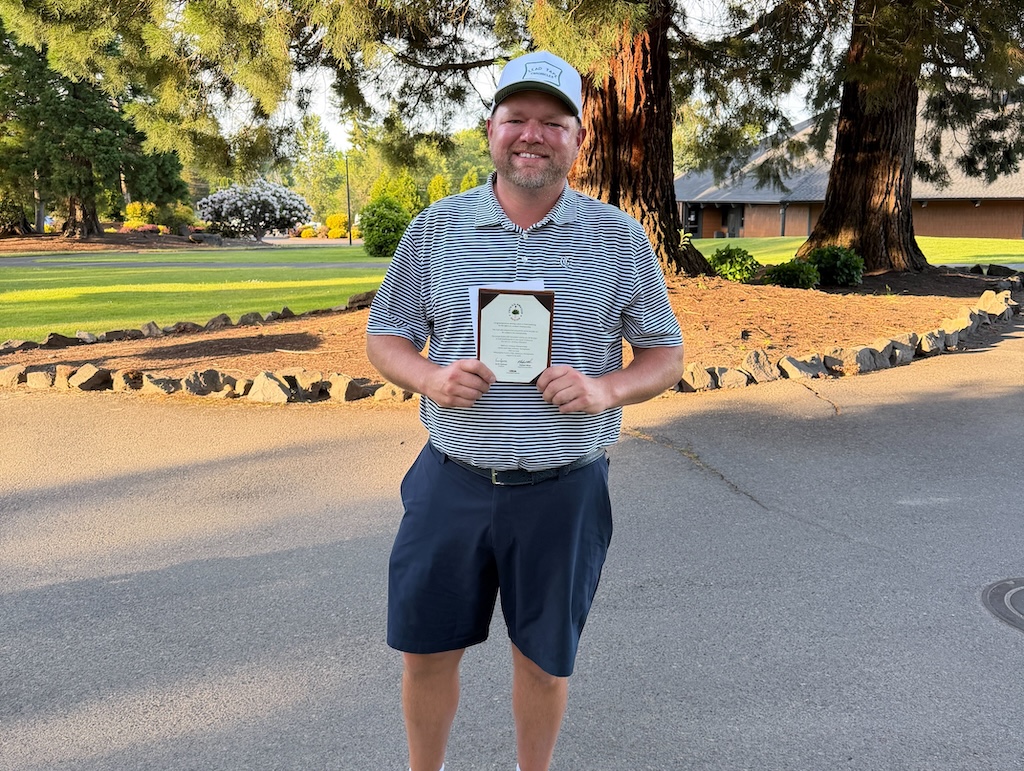
This past Monday, I played in the U.S. Amateur local qualifier at Rock Creek Country Club in Portland, Oregon. A full tee sheet from 7:30 a.m. to 1:55 p.m., the top 11 scores would make it to the U.S. Amateur final qualifying.
I teed off at 10:48 a.m.. With the 7:30 am tee time, you can get a feel for the leaders’ pace, and they were off and running on the challenging setup at Rock Creek.
View this post on Instagram
Getting to the highlight of the round on the par five 17th, a drive up the left side and 212 yards left to the front hole location. I took out a 5-iron with plans of middle of the green. The ball ended up 8 feet left of the hole, pin high. A slight downhill putt dropped in for an eagle 3 on the 17th. With the cut line looking to be anywhere from -2 to even par. This was the boost I had been waiting for all day.
With making par from the trees on 18, it was time to wait for a potential playoff with a posted score of one under par 71.
Three hours later, it was playoff time. 8 players for 6 spots. I made par on the playoff hole, which was good enough to advance to the U.S. Amateur final qualifying in July. USGA qualifiers sure deliver on all of the emotions in golf!
Club Junkie
Building my 2026 gamer WITB: Ranking the contenders and new putter projects – Club Junkie Podcast

The annual What’s In The Bag build is underway, and on this episode of Club Junkie, Brian breaks down the clubs currently leading the race for a spot in his 2026 gamer setup. From drivers and fairway woods to irons, wedges, and shafts, he ranks the equipment that’s performing best and explains what’s separating the front runners from the rest of the field.
Brian also heads into the workshop to discuss several putter projects currently on the bench. From head options and shaft choices to build ideas and testing plans, he shares what he’s working on and which putters could become serious contenders for the bag this season.
If you’re a gear junkie who loves equipment testing, club building, and the never-ending pursuit of the perfect setup, this episode is for you.
Follow Club Junkie:
Instagram: @clubjunkiepod
TikTok: @clubjunkiepod
Threads: @clubjunkiepod
X: @ClubJunkiePod
Club Junkie
Tour Edge Exotics mini driver review + TaylorMade Spider ZT Max first look – Club Junkie

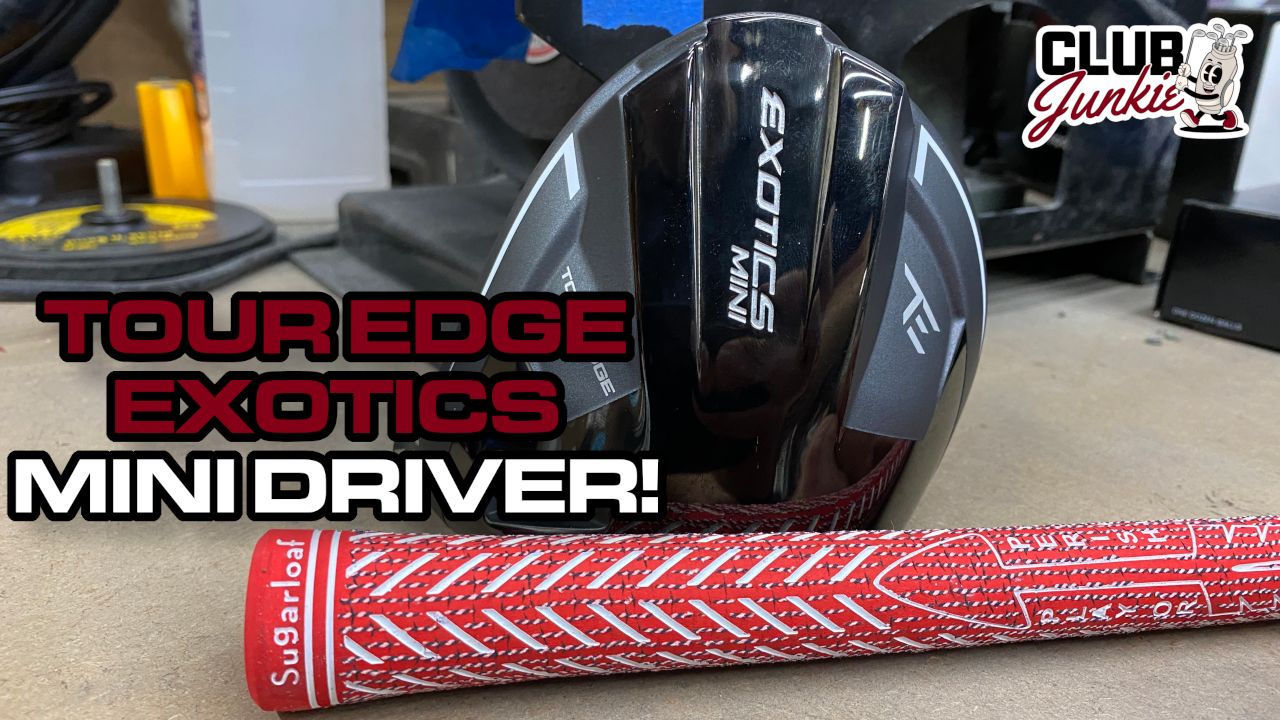
On this episode of Club Junkie, I put the new Tour Edge Exotics Mini Driver to the test and break down the performance, forgiveness, distance, and where it fits compared to a traditional driver or strong fairway wood. If you have been curious about adding a mini driver to the bag, this one is worth a look.
I also dive into the new TaylorMade Spider ZT Max putter that was recently spotted and discuss the growing zero torque putter trend. Plus, there is a closer look at the new Project X Titan Yellow shaft showing up on the PGA Tour and what makes it different from other profiles currently out there.

Justin Rose WITB 2026 (April): Full WITB breakdown with new McLaren irons

What’s the story behind Webb Simpson’s custom-stamped irons?

Memorial Tournament Tour Report: Rory McIlroy, Cameron Young switch up drivers, and more

Cadillac Championship Tour Report: Spieth’s sizable changes, McLaren Golf launches, and more

Russell Henley’s winning WITB: 2026 Charles Schwab Challenge

Kristoffer Reitan’s winning WITB: 2026 Truist Championship

J.T. Poston’s winning WITB: 2026 Memorial Tournament

Best irons 2026: Best irons overall, most forgiving irons, and more

Aaron Rai’s winning WITB: 2026 PGA Championship

Cameron Young’s winning WITB: 2026 Cadillac Championship


Bud Cauley WITB 2026 (June)
Bud Cauley had >14 clubs in his bag when photographed prior to the Memorial Tournament. Driver: Titleist GTS2 (8 degrees) Shaft: Fujikura...


Hannah Green WITB 2026 (June)
Driver: Titleist GTS3 (10 degrees, D4 SureFit setting) Shaft: Mitsubishi Chemical Diamana RB 53 S 3-wood: Titleist GT3 (15 degrees,...


Asterisk Talley WITB 2026 (June)
Driver: TaylorMade Qi4D (9 degrees) Shaft: Fujikura Ventus Blue 6 S 3-wood: TaylorMade Qi4D (16.5 degrees) Shaft: Fujikura Ventus Blue...


Brianna Do WITB 2026 (June)
Driver: Callaway Quantum Triple Diamond (9 degrees) Shaft: KBS PGW 3-wood: Callaway Elyte Titanium (15 degrees) Shaft: KBS PGW 5-wood:...
-
 Equipment6 days ago
Memorial Tournament Tour Report: Rory McIlroy, Cameron Young switch up drivers, and more
-
 News1 week ago
Russell Henley’s winning WITB: 2026 Charles Schwab Challenge
-
 Whats in the Bag3 days ago
J.T. Poston’s winning WITB: 2026 Memorial Tournament
-
 Equipment3 days ago
Best irons 2026: Best irons overall, most forgiving irons, and more
-

 Equipment1 week ago
Details on Jason Day’s latest prototype Avoda iron setup
-

 Equipment3 weeks ago
CJ Cup Byron Nelson Tour Report: Koepka and Kim’s newest putters finally get hot
-

 News2 weeks ago
Charles Schwab Challenge Tour Report: MacIntyre, Åberg and Spaun all switch putters, TaylorMade launches new Spider
-
 Equipment2 weeks ago
Details on J.J. Spaun’s surprise putter switch


Sean
Oct 26, 2015 at 8:25 pm
Enjoyed the article. Constantly tweaking current model for the next model. That makes sense, however, I would think they need some kind of “out of the box” ideas as well. 🙂
TR1PTIK
Oct 26, 2015 at 3:45 pm
Though I have no experience with it (or even a real desire to learn it), I’ve always been fascinated with CAD. It’s amazing how much can be done with a computer these days. Tom, aside from the time spent on the design and production of new clubs you have to also consider all of the costs associated with CAD software, tooling, and R&D among many other things. I’m not thrilled with the current prices for a new set of clubs, but I fully understand the reasoning for those prices as someone who works in manufacturing and technology.
Really good read Ben.
Tom
Oct 26, 2015 at 3:30 pm
“Interestingly, Beach added, R&D may continue to work on a concept for a long time, even in excess of 10 years if the marketing team feels a technology is truly groundbreaking.” Well that blows my criticism of this technology saving time and money for companies and yet cost to consumers remains at an all time high.
Tom Wishon
Oct 29, 2015 at 1:52 pm
LOL!!! How well you pointed that out. I guess in a sense it is a different type of oxymoron to say that they use CAD to instantly create different iterations for analysis yet they take pride in saying that they spend several years before it goes to market.
Having started in clubhead design in 1986 when it was only done by machining master models from which the dies and molds were cut by EDM off the master, it’s really been interesting for me to evolve my own head design methods from all “dinosaur” to a combination of dinosaur and modern so I can still be comfortable with it. I still love to hand make my own master models of new designs and couple that with 2D old school drawings – call it a sense of pride in the hand skills and the fact that I have always designed a lot with my eyes for the look of a head in various ways.
But then of course these days I then have a CAD operator take my models and drawings and create 3d models for me to approve plus the CAD file so the die/mold production can be done more easily. And depending the model, FEA is very nice as a means to predict performance. But in the end nothing passes for me until people hit it and a robot offers what it can offer to help verify performance.
At the same time, not saying this to blow any horn whatsoever, but in any of the many technology firsts I was privileged to contribute to head design in my career, not one of them took longer than 8 months from start to finish to do and to get right. So when I read this 2-3 yrs in development, I see that as a big company with too many people having some part of the say so over what the company brings to market such that it just slows things down.
other paul
Oct 26, 2015 at 1:56 pm
I thought that was interesting.
redneckrooster
Oct 26, 2015 at 10:13 am
SOOO THERE IS NOTHING BETTER TO DO WITH OUR TIME ?
Michael
Oct 26, 2015 at 12:29 pm
Well you clearly have better things to do.
Easy on the caps lock, bro.
MARCUS
Oct 26, 2015 at 1:43 pm
Helped pass my time here at work. 10 hr work days seem to draq without something good to read.
Trab
Oct 27, 2015 at 2:39 am
How about actually doing work? You Eejit, Marcus