
Opinion & Analysis
Paderson Shafts: Entering the market ‘with a sledgehammer’

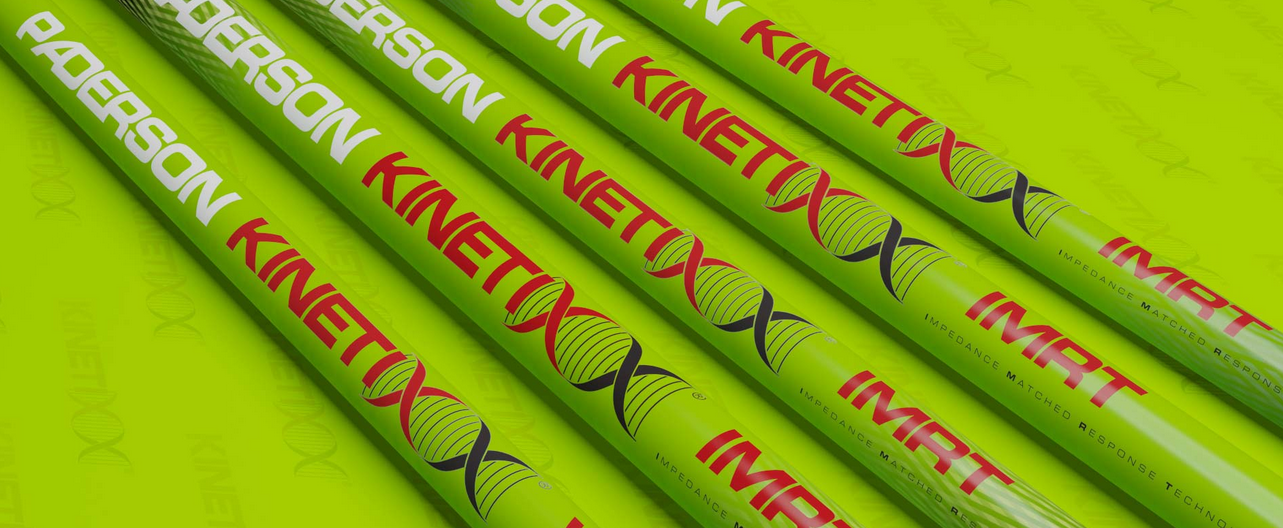
Paderson Shafts has stepped out from “behind the beaded curtain,” in the words of CEO Jason Horodezky. The company has shifted its focus from OEM contract manufacturing to private label manufacturing.
Paderson was the company that developed shaft technology for Original ADAMS Golf Tight Lies and Orlimar Trimetal woods, as well as Rapport composites.
The company’s Kinetixx shafts feature breakthrough technology, according to the company, which compelled Paderson to hang a shingle and build a network of dealers, fitters and retail establishments to sells its wares.
Paderson specializes in carbon fiber and high and low modulus FRP Composites, resin matrix formulation and core process technologies.
The company presently offers four driver shafts: Kinetixx IMRT Green, Kinetixx IMRT Blue, Kinetixx VMT Vacuum Cured, Kinetiix IMRT Limited Edition. The Green and Blue shafts are available for woods and hybrids, as well as irons.
I spoke with CEO Jason Horodezky about company history, the shaft market, key technologies and Paderson’s product line.

Tell me about the decision to get into the crowded and competitive shaft space…
It’s a very convoluted and crowded marketplace. It looks a lot like it did in the 90s…between ‘96 and ‘99, except the volume-quantity turnover in the segment isn’t the same. There aren’t as many home builders as there were. We’ve been in the game the longest of almost anybody. We’ve been behind the beaded curtain. So we’re not new: we’re new to the consumer.
We’ve made a few significant breakthroughs, and we decided it was time to make our brand known, because we’ve been doing it for other people for so long.
We were the power behind two brands: a company called Rapport Composites, and they then spunoff into a company called Swing Science. So we’re coming into the market with a sledge hammer.
Why come out from behind the “beaded curtain” now?
The industry is stagnant in a lot of areas.
At the end of the day, honesty and integrity coupled with the transparent technology (the world’s only visible fiber technology)…was conducive to telling the world of golf…our story.
There’s a lot of people who have exploited us for their own gain, but not for ours, so to speak.
What is your take on the shaft market? It’s a convoluted space, as you indicated…
What we have is cutting edge. We have the only array of iron shafts in the world with true, concentric, spineless technology. We tailor it on three orders of measure; very high order of magnitude stuff. The science we use to model our products is extremely noble. Our methods and manufacturing enable us to do a lot of extraordinary things that other have tried and failed miserably and continuously with.
For instance, you hear people talk about xylon and liquid crystal polymers. It has a very high density and no modulus, therefore they don’t get the order of magnitude and the effect, and this becomes a very heavy weighted composite.
So from our perspective, we’re actually tailoring it to tension, damping, high-order resonance with impedance (and recovery in the shaft), and that’s on the merits of our wound platform, which is unlike any other in the world.
Tell me more about Paderson’s key technologies.
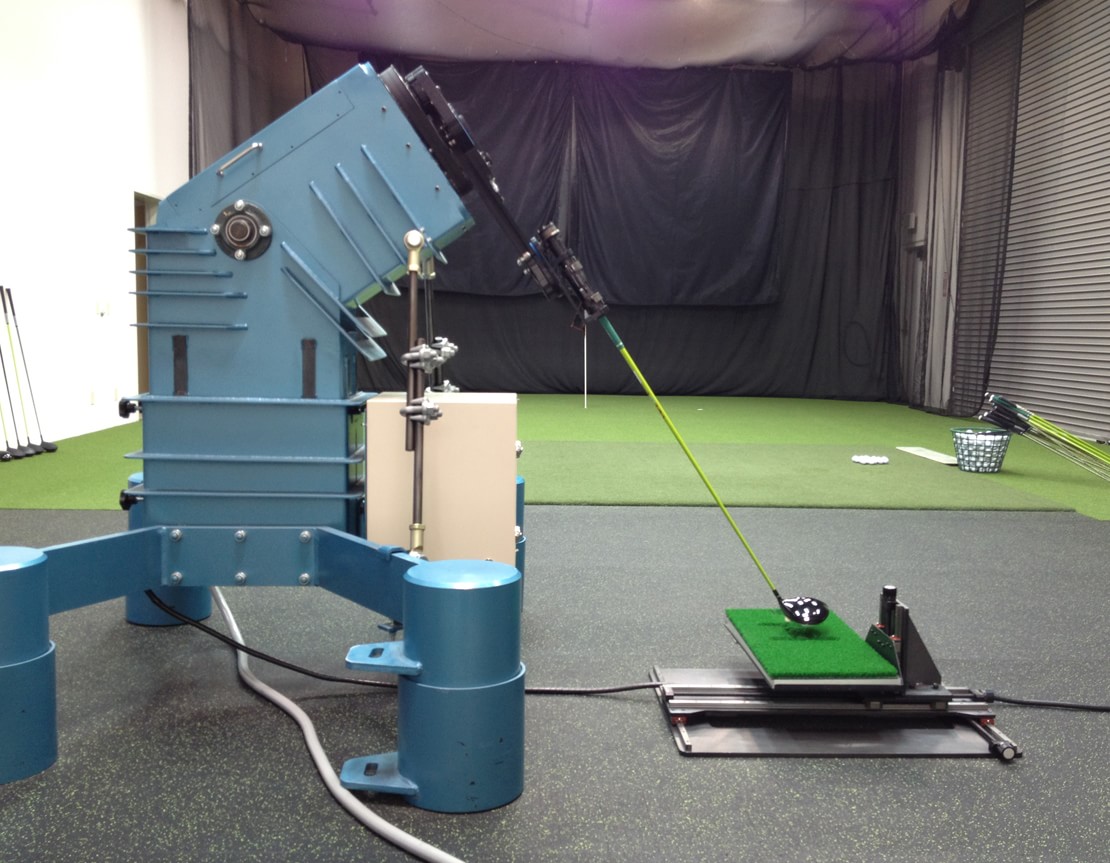
We had in excess of 50 permutations when we started in our R&D room. We reduced the lineup to be tailored to the commercial exploit. So, we have three construction platforms, and those get reduced per category segment.
Unlike any other shaft company, we provide three different constructions, because there isn’t a one-size-fits-all golf shaft. One of our three shafts will fit everybody. In essence, how you make something will determine what materials you use. Construction is the confluence of craftsmanship and materials. That’s why we’ve put into practice a couple of different materials no one else has.
Our flagship is that we’ve patented processes for wound technology. We’re the foremost leader in tension fiber structures: structural architecture that you can see. Think of a tennis racket with a pre-tension net head. You can see and feel the tension in our shafts. We have a pre-loaded shaft. It’s pre-loaded to respond to a golfer’s swing, and it’s visible in two of our three shafts.
Fitted with our shafts, golfers will see ball speed increase. When they start searching for things that are spin related and launch, it gets to be a different golfer speak phenomenon. Our shafts are designed to [increase speed].
Wound technology is the baseline of what we do. It’s because of wound technology that we have our vacuum curing system, and that benefits our laminated, cable-rolled structures.
And we’re transparent. We’re not making claims and hiding things under paint. You can see everything that we’re made of: visible technology.
Tell me about Paderson’s shaft offerings.
Each of our constructions separates themselves based on who they’re for. Our wound series, the Kevlar Green, fits every golfer. Our green table rolled vacuum cured amorphous is very similar, but it’s more tailored to someone who is flat/positive attack angle and is looking for a lighter weight alternative.
Our Kevlar Blue is tailored around someone who is smooth in transition but has a negative to flat attack angle. We’ve tailored all of the product line around a golfer’s swing and particularly arc and speed. So the length of someone’s arc and where they’re fastest: that’s the fitting paradigm from which we tailored our product.
So again, our Kevlar Green is capable of fitting all golfers, but golfers who may be looking for a lighter weight alternative would benefit from our table rolled component.
The wound series is available through the bag. There’s nothing that outperforms it; that’s why we reduced our line. We have three constructions in driver, two in fairways, and the reason for that is performance.
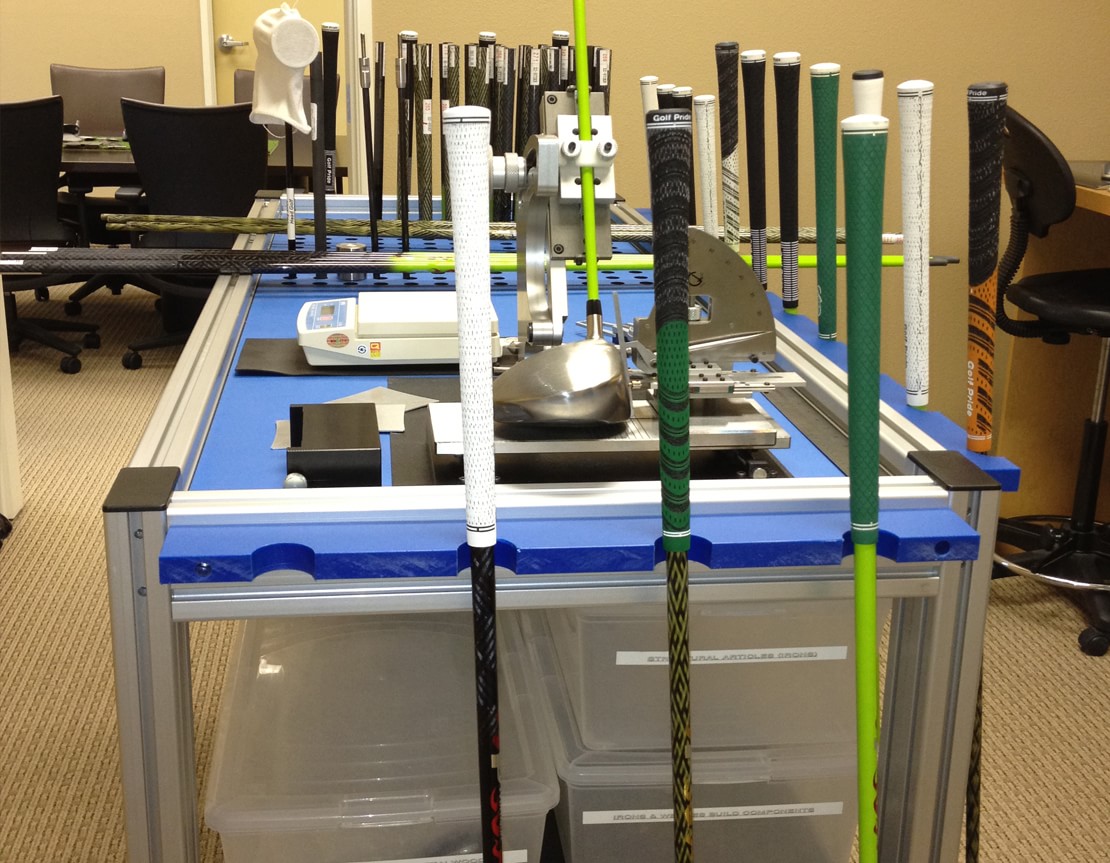
Going forward, are you more focused on relationships with OEMs? A tour presence? Appealing to clubmakers?
Our focus is on getting to the end user in the most efficient manner possible. And there are two forms of growth in the industry right now. You’ve got new retail, which is like the PGA Superstore. And then you’ve got the bespoken category.
We’re building that relationship with the dealer networks—they’re critical. But we really just want to get to the end consumer with the best technology and price relationship. Our paradigm there is incomparable. We have the world’s only polymer shaft, but we don’t charge $1000 for our shafts. Our shaft is the most expensive by way of materials and process of any golf shaft in the world. Yet because we are designing and making all organically, we don’t exploit consumer weakness or this “deep pocket opportunity.” That’s not our objective. We present unique, technical value propositions.
That all relates to where we go into the market. Some of the bespoken guys want the $500 shaft opportunity or a make-up program. There’s no real reason for a shaft to be $300 and installed at $500, but it helps them with their margins.
But consumers love our product. We have a 97 percent success rate in fitting golfers at arm’s length, and in the field it’s 100 percent. We’ll outperform anything that they have in our green grass demo events.




This past Monday, I played in the U.S. Amateur local qualifier at Rock Creek Country Club in Portland, Oregon. A full tee sheet from 7:30 a.m. to 1:55 p.m., the top 11 scores would make it to the U.S. Amateur final qualifying.
I teed off at 10:48 a.m.. With the 7:30 am tee time, you can get a feel for the leaders’ pace, and they were off and running on the challenging setup at Rock Creek.
View this post on Instagram
Getting to the highlight of the round on the par five 17th, a drive up the left side and 212 yards left to the front hole location. I took out a 5-iron with plans of middle of the green. The ball ended up 8 feet left of the hole, pin high. A slight downhill putt dropped in for an eagle 3 on the 17th. With the cut line looking to be anywhere from -2 to even par. This was the boost I had been waiting for all day.
With making par from the trees on 18, it was time to wait for a potential playoff with a posted score of one under par 71.
Three hours later, it was playoff time. 8 players for 6 spots. I made par on the playoff hole, which was good enough to advance to the U.S. Amateur final qualifying in July. USGA qualifiers sure deliver on all of the emotions in golf!
Club Junkie
Building my 2026 gamer WITB: Ranking the contenders and new putter projects – Club Junkie Podcast

The annual What’s In The Bag build is underway, and on this episode of Club Junkie, Brian breaks down the clubs currently leading the race for a spot in his 2026 gamer setup. From drivers and fairway woods to irons, wedges, and shafts, he ranks the equipment that’s performing best and explains what’s separating the front runners from the rest of the field.
Brian also heads into the workshop to discuss several putter projects currently on the bench. From head options and shaft choices to build ideas and testing plans, he shares what he’s working on and which putters could become serious contenders for the bag this season.
If you’re a gear junkie who loves equipment testing, club building, and the never-ending pursuit of the perfect setup, this episode is for you.
Follow Club Junkie:
Instagram: @clubjunkiepod
TikTok: @clubjunkiepod
Threads: @clubjunkiepod
X: @ClubJunkiePod
Club Junkie
Tour Edge Exotics mini driver review + TaylorMade Spider ZT Max first look – Club Junkie

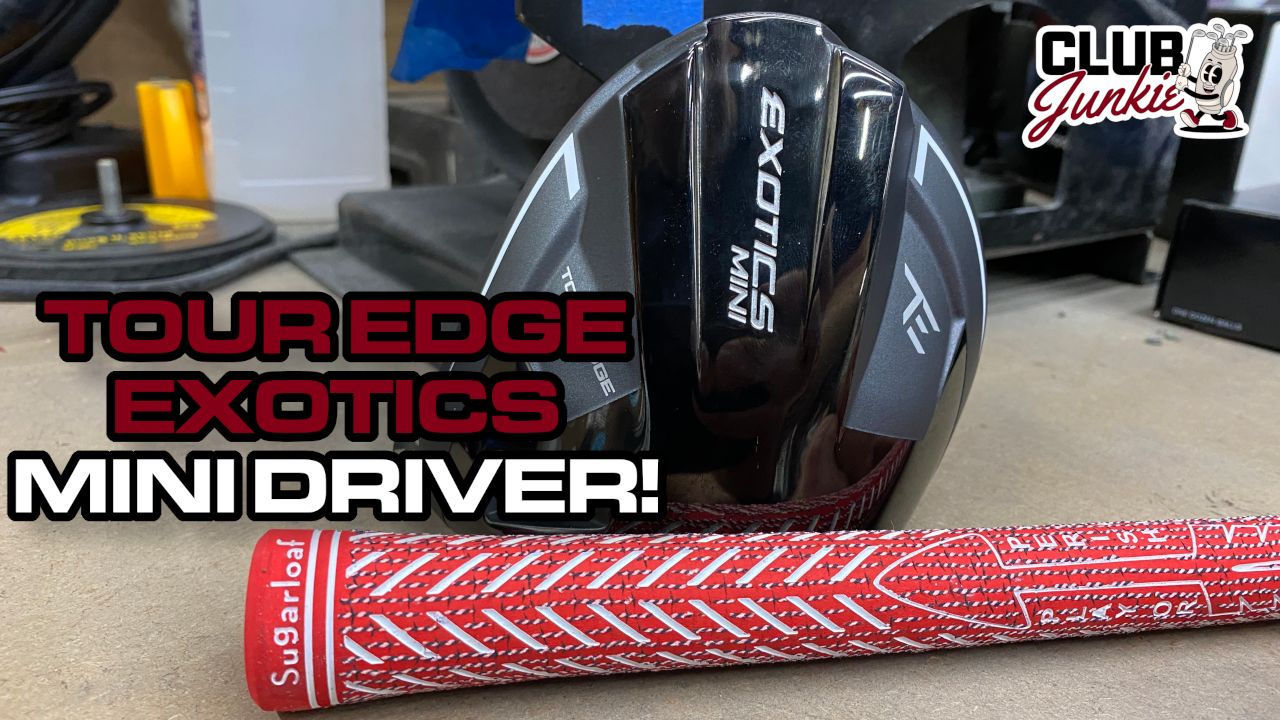
On this episode of Club Junkie, I put the new Tour Edge Exotics Mini Driver to the test and break down the performance, forgiveness, distance, and where it fits compared to a traditional driver or strong fairway wood. If you have been curious about adding a mini driver to the bag, this one is worth a look.
I also dive into the new TaylorMade Spider ZT Max putter that was recently spotted and discuss the growing zero torque putter trend. Plus, there is a closer look at the new Project X Titan Yellow shaft showing up on the PGA Tour and what makes it different from other profiles currently out there.

Justin Rose WITB 2026 (April): Full WITB breakdown with new McLaren irons

What’s the story behind Webb Simpson’s custom-stamped irons?

Memorial Tournament Tour Report: Rory McIlroy, Cameron Young switch up drivers, and more

Cadillac Championship Tour Report: Spieth’s sizable changes, McLaren Golf launches, and more

Russell Henley’s winning WITB: 2026 Charles Schwab Challenge

Kristoffer Reitan’s winning WITB: 2026 Truist Championship

Aaron Rai’s winning WITB: 2026 PGA Championship

J.T. Poston’s winning WITB: 2026 Memorial Tournament

Best irons 2026: Best irons overall, most forgiving irons, and more

Cameron Young’s winning WITB: 2026 Cadillac Championship


Bud Cauley WITB 2026 (June)
Bud Cauley had >14 clubs in his bag when photographed prior to the Memorial Tournament. Driver: Titleist GTS2 (8 degrees) Shaft: Fujikura...


Hannah Green WITB 2026 (June)
Driver: Titleist GTS3 (10 degrees, D4 SureFit setting) Shaft: Mitsubishi Chemical Diamana RB 53 S 3-wood: Titleist GT3 (15 degrees,...


Asterisk Talley WITB 2026 (June)
Driver: TaylorMade Qi4D (9 degrees) Shaft: Fujikura Ventus Blue 6 S 3-wood: TaylorMade Qi4D (16.5 degrees) Shaft: Fujikura Ventus Blue...

Brianna Do WITB 2026 (June)
Driver: Callaway Quantum Triple Diamond (9 degrees) Shaft: KBS PGW 3-wood: Callaway Elyte Titanium (15 degrees) Shaft: KBS PGW 5-wood:...
-
 Equipment6 days ago
Memorial Tournament Tour Report: Rory McIlroy, Cameron Young switch up drivers, and more
-
 News1 week ago
Russell Henley’s winning WITB: 2026 Charles Schwab Challenge
-
 Whats in the Bag3 days ago
J.T. Poston’s winning WITB: 2026 Memorial Tournament
-
 Equipment3 days ago
Best irons 2026: Best irons overall, most forgiving irons, and more
-

 Equipment1 week ago
Details on Jason Day’s latest prototype Avoda iron setup
-

 Equipment3 weeks ago
CJ Cup Byron Nelson Tour Report: Koepka and Kim’s newest putters finally get hot
-

 News2 weeks ago
Charles Schwab Challenge Tour Report: MacIntyre, Åberg and Spaun all switch putters, TaylorMade launches new Spider
-

 Equipment2 weeks ago
Details on J.J. Spaun’s surprise putter switch


BOB
Sep 11, 2015 at 7:39 pm
I HAVE LOOKED AT THEIR WEBSITE AND HAVE READ ALL THEIR COMMENTS . I AM WILLING TO TRY ONE OF THEIR SHAFTS AND MAKE MY JUDGEMENT FROM HOW IT PERFORMS FOR ME AND MY CUSTOMERS. I AGREE THAT THERE IS TOO MUCH TECHNICAL JARGON IN THE ARTICLE BRING IT ALL DOWN TO WHERE THE LAYMAN CAN UNDERSTAND ABOUT THE SHAFTS.
I WILL POST ANOTHER COMMENT AFTER I RECEIVE MY SHAFT AND HAVE TRIED ITS PERFORMANCE FOR MYSELF.
myron miller
Aug 26, 2015 at 6:04 pm
From this article, I have no clue if these shafts would work for my game or not. I really didn’t understand the verbiage. Non-standard shaft terminology doesn’t help us end-users. Where’s the kick point? What are the flexes at head, butt, middle?
According to the website, the torque is not what I’d call low torque by any means. 5.7 to 5.9 is not low torque when lots of shafts are available with 3.5 or even lower. Fujikura has them down to 2.8 and most are 3.5 or less. I thought advanced tech made torque lower not higher.
Charlie
Aug 19, 2015 at 2:04 pm
http://www.golfworks.com/product.asp?pn=PK0009&gclid=CNTMwbfctccCFZKKaQodgyMCvw
$199.00 here.
Allen
Aug 16, 2015 at 9:51 pm
I would love to try these, but at almost $90 a shaft for the irons, I am not sure I can justify the money. I cant believe they will give me $90 worth of improvement, or very much improvement.
other paul
Aug 16, 2015 at 9:44 pm
Sounds like the steel fiber shafts to me… Aerotech has been around for quite some time.
Mac n Cheese
Aug 26, 2015 at 9:58 am
If they actually found a way to create a shaft out of woven steel fibers, it could be a potential game changer considered steel fibers would have a stronger resistance to twisting upon impact. Especially if they drop the weight over traditional steel shafts.
KK
Aug 16, 2015 at 3:10 pm
Some of the tech sounds great, some of the phrasing seems a bit too much like meaningless rhetoric; e.g. the virtues of showing the carbon structure underneath vs painting over it. It’s like saying your car is better because the hood is made of glass and you can see the engine vs other car companies who don’t have glass hoods.
Mac n Cheese
Aug 26, 2015 at 10:04 am
The theory is more in line with carbon fiber hoods vs. traditional hoods. Basically with carbon fiber you don’t have to paint over it, and some people like the look of just carbon fiber in general over painted. Also by having some carbon fiber visible it shows that the product is actual carbon fiber instead of taking their word for it. Really the paint scheme or lack there of is an aesthetic marketing campaign to make their shafts look cooler. Which they do. I want green shafts! lol
Mo
Aug 15, 2015 at 8:29 pm
Some independent reviews would mean a lot.
Tom Duckworth
Aug 15, 2015 at 6:48 pm
I must admit he doesn’t talk like a sales department guy. He’s deeply into the construction of his shafts. I found that refreshing.
Tom Duckworth
Aug 15, 2015 at 6:28 pm
Very cool reminds me of Eminence Speaker Co. they made speakers for all kinds of guitar amps and PA systems for other people. One of the largest speaker makers in the world. Now they make them under their own name some of the best on the market. It can only be a good thing for Paderson to enter the marketplace. It will be interesting to see how they do.
Matthew
Aug 15, 2015 at 3:04 pm
Gotta echo Mark. Less infomercial and more substance.
Christosterone
Aug 15, 2015 at 12:27 pm
Not to nitpick but they’ve been doing golf shafts with polymer in Japan for years:
https://books.google.com/books?id=kAqKgu0AQK0C&pg=PA173&lpg=PA173&dq=polymer+golf+shaft&source=bl&ots=Z4zQEfCgs5&sig=AMMQbyck8Km-iWtSnUunK4czqog&hl=en&sa=X&ved=0CCEQ6AEwAWoVChMI5ryx9r-rxwIVRtWACh28xg2D#v=onepage&q=polymer%20golf%20shaft&f=false
Mac n Cheese
Aug 26, 2015 at 10:06 am
Yes, but they found a new method of doing so, as the article pointed out.