
Opinion & Analysis
30 years later, how is Bernhard Langer still so good?

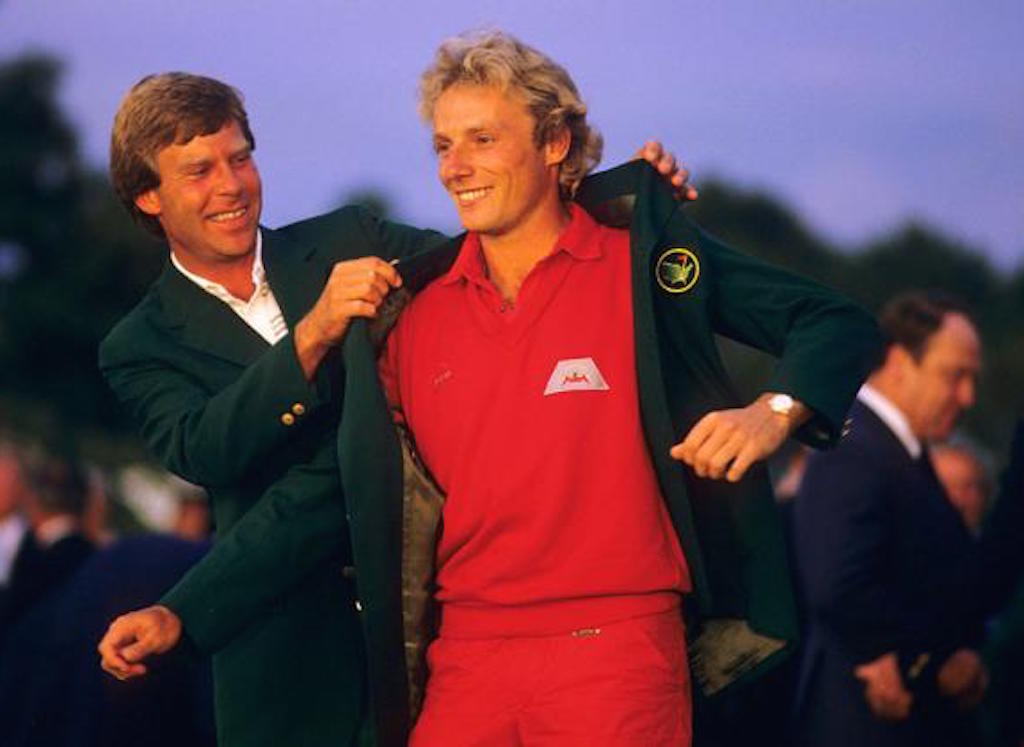
[dropcap]B[/dropcap]ernhard Langer will celebrate the 30th anniversary of winning his first Green Jacket at the Masters this year, and he’ll be in the field competing for another one. He’s not coming to Augusta for the memories or nostalgia. Both are readily available, but he’s playing to win.
Last year at 56 years old, Langer finished in eighth place on a course that is supposed to be far too long for his age. The year before, he finished in the top-25. So what’s his secret? How is he still so good?
To find out, I traveled to Boca Raton, Fla., to spend the day on the course with Langer. I came back with answers to those questions, but they weren’t what I expected.
The German’s Genesis
As he explained, Langer comes from a poor background in West Germany, and started caddying to earn money at the age of 12. When he was 15, he became the assistant pro at a local golf club in Germany, and after a few years of helping members with their swings, he turned professional at 18.
[quote_box_center]”I’ve never been an amateur,” Langer said over steak filets after our round.[/quote_box_center]
Langer began traveling and playing golf events, but he found that he couldn’t afford the cab fare. With a shag bag of golf balls and a bag of clubs slung over his shoulder, he’d take buses and trains to tournaments. Now, the Hall of Famer takes helicopters and jets to events.
[quote_box_center]”I had no idea I’d have this kind of career,” Langer said. “I just wanted to earn a living for a few years. It’s amazing what’s happened.”[/quote_box_center]
Young and Overlooked
Langer turned pro 39 years and 96 wins ago. While he’s recognized as a two-time Masters champion, most golf fans think his dominance started after he reached the Champions Tours, where he’s won 23 events and counting. But he doesn’t see it that way.
[quote_center]”I had good years in my 20s and 30s,” Langer said. “It’s just because I didn’t play much in America that people don’t know about it.”[/quote_center]
As Langer tells it, the Masters was his last tournament in America every year. He’d sometimes leave Augusta as the leader of the PGA Tour’s money list, he said, but then return to Europe for the rest of the season and play in relative obscurity.
[quote_center]“There was no Golf Channel then, and no American golf writers saw us (Europeans) so we weren’t interesting,” he said.[/quote_center]
In his later years, he’s received far more media coverage. It’s his work ethic that has been credited for his strong play and longevity, but again, Langer has a different take.
[quote_box_center]”People think all I do is practice and it’s simply not true,” he said. “I’ll take four or five days off from golf after a tournament … I eat right, stay healthy and fit, but most of all I take breaks from the game. I spend time with my family and my kids. If I just played golf all the time I’d wear myself out.”[/quote_box_center]
There’s an important lesson here for junior and amateur players — even the young golfers on professional tours. You can love golf and work hard, but keep a balance.
Augusta, a rare beauty… that can cook

Langer is a family man. You can tell by the way he speaks of his wife and kids that he’s a husband and father before anything else. But you can also tell he has another love — Augusta National.
Maybe it’s the food.
[quote_box_center]”It’s the best German food I’ve ever had… in America at least,” Langer said, describing his first Champions’ Dinner.[/quote_box_center]
Langer told me a story about the time he and three friends played Augusta one weekend. They played the course multiple times in two days, but his best memory of that weekend was the eating experience.
[quote_center]”The cooks make any food you want, and they’ll deliver it to the cabins for you,” Langer said. “It’s awesome.”[/quote_center]
Of course, it’s more than the food at Augusta. As a course designer, Langer says Augusta ranks highly on his list of the best courses of the world. But his admiration for the course won’t be as essential to his success in this year’s tournament as his razor sharp iron play, and more importantly, the local knowledge he’s acquired in his 31 Masters appearances.
[quote_box_center]”I’ve played (300) or 400 times,” Langer said. “The trick to Augusta is you need to hit great iron shots. You need creativity and you need to know where to miss.”[/quote_box_center]
Langer admits he wasn’t a great driver of the ball in his prime, and Augusta’s wide fairways helped his cause. But those were the days of small-headed persimmon drivers, and in 1993, Langer was the last Masters Champion to win using the old technology.
New equipment, same simplicity
The introduction of hybrids and the modern driver have greatly improved Langer’s ability to compete. He told me that he thinks he’s a better driver now than he’s even been. He’s also since found a friend in the soon-to-be-outlawed anchored putter.
A few years after he won his second Green Jacket in 1993, Langer began using a long putter, which he anchors to his chest. He said he learned the technique from Sam Torrance and Peter King in 1997. But after nearly 20 years, Langer will have to switch back to a conventional stroke when the anchored putter ban takes effect in 2016.
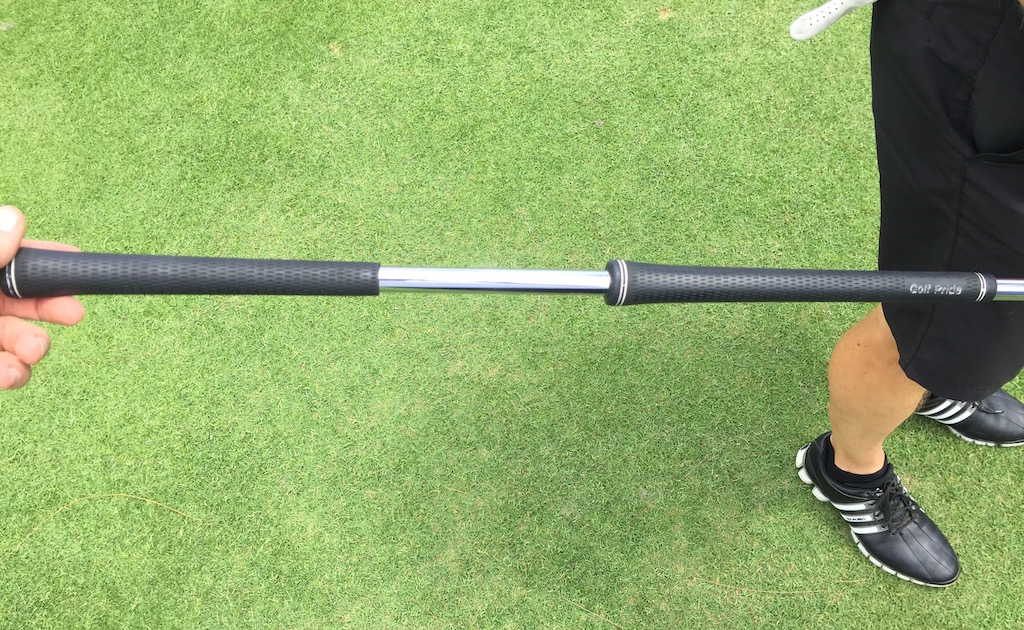
Langer’s split-grip putter, which is actually just a homemade concoction of two standard grips.
[quote_box_center]”It makes no sense,” Langer said regarding the ban. “If everyone thought [an anchored putter] was an advantage, trust me, they would do it. Who’s using big drivers? Or hybrids? Everyone, because it’s an advantage. Who’s using an anchored putter? 12-to-14 percent of the guys.”[/quote_box_center]
Come November, when the Champions Tour season is over, Langer will start messing around with short putters to find something he likes. But for now, he’s not worried about it.
While Langer’s been known to fidget around with a lot of different putters and techniques, his swing remains eerily similar to his younger years. That’s part of his secret, he said. He keeps it simple at all times, even when he’s hitting what seem to be complicated shots.

Langer putting on a clinic at the range of Delaire Country Club.
[quote_center]”To hit different shots, I keep the same swing as if I’m hitting a straight shot,” Langer said.[/quote_center]
To hit a cut, he opens the stance and the club face and then simply tries to hit it straight. To hit a draw, he closes the stance and the club face. To hit it low, he puts the ball back in the stance. To hit it high… you get the picture.
His swing philosophy is much like his mentality on equipment — he doesn’t tinker much, and uses whatever works best. At Delaire Country Club’s range, in front of 50 or so people, he took one swing with the Adams Red — a straight bullet that went about 240 yards without a breath of fade or draw.
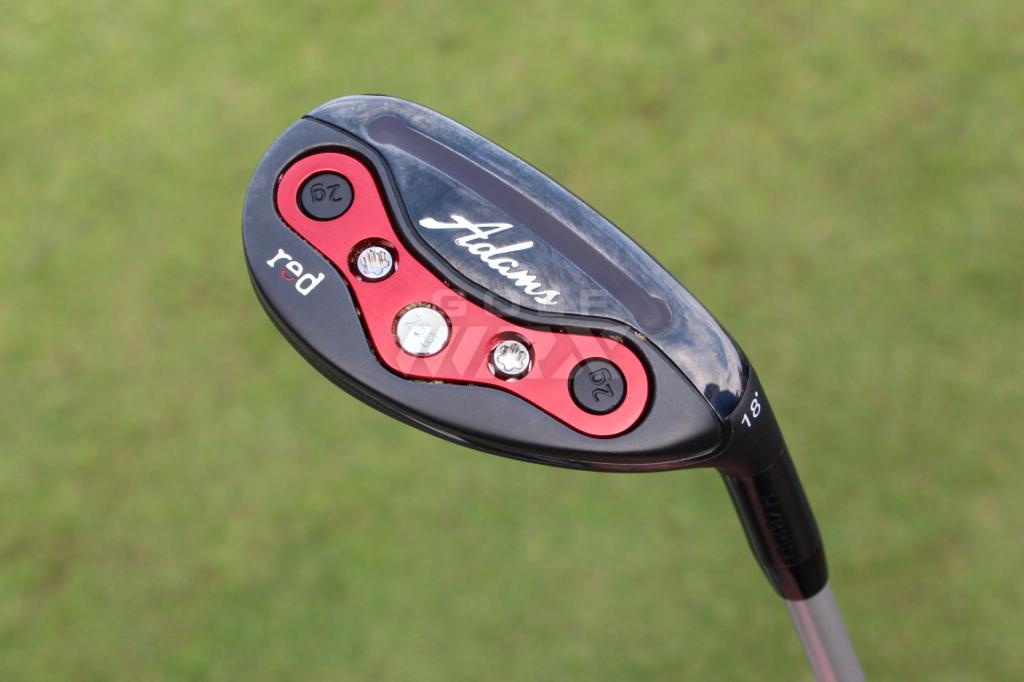
Adams Pro Red has interchangeable weights on the sole to dial in ball flight.
[quote_box_center]”Well, this club is going in the bag,” he told the audience.[/quote_box_center]
With Adams reps looking on, Langer could have just been fulfilling his duty as company spokesman, but he doesn’t come across that way. He seems to tell it like he hits a golf ball — straight.
It’s a chess game to me
After watching him stripe shot after shot on the range, I asked the question I heard onlookers asking each other.
[quote_center]Doesn’t it get boring, hitting perfect shots all the time?[/quote_center]
The approach shot on hole No. 5 at Delaire CC isn’t the easiest. There’s water short and left of the green, and on that day the pin was tucked on the left side. Langer, standing in the middle of the fairway, told me he was aiming at a spot 20 feet to the right of the pin, and anticipated that the 20 mph wind would bring the ball back to the hole.
“If the wind takes it, then fine,” he said. “If it doesn’t I’m putting.”
The wind didn’t take it, but I better understood why Langer hasn’t gotten bored with golf. He might be able to hit perfect shot after perfect shot, but as a tournament golfer and world traveler, he’s always playing different courses in different conditions. The strategy and planning is one of his biggest golf thrills.
[quote_box_center]”It’s like a chess game to figure out the right shot to play,” he said. “Or where not to miss it.”[/quote_box_center]
Many golfers, even some tour pros, play checkers. Langer plays chess.
A competitor at heart
What keeps a 57-year-old Hall of Famer competing with the same fire he had in his prime?
[quote_box_center]”I like winning,” Langer said with a smirk.[/quote_box_center]
That’s the real secret to Langer’s longevity in golf — not his healthy lifestyle, his swing, or his family life… although none of that hurts.
When I asked Langer what he’d be doing if he never played golf, he said he’d probably be a soccer coach, or have some other job in sports. He’s just four wins shy of his 100th professional golf win, but if he never picked up a golf club, it was clear that he’d be chasing another competitive milestone.
How long will he continue to play in the Masters?
[quote_box_center]”Until I can’t break 80,” he said.[/quote_box_center]
If that’s the case, we could be waiting a while.



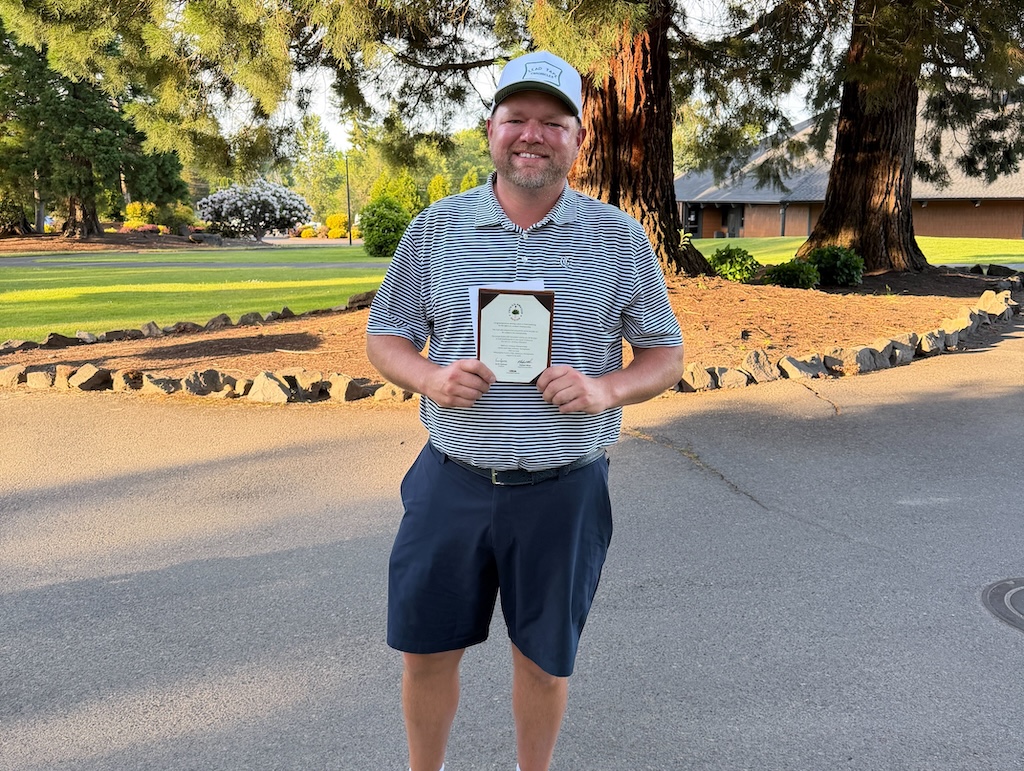
This past Monday, I played in the U.S. Amateur local qualifier at Rock Creek Country Club in Portland, Oregon. A full tee sheet from 7:30 a.m. to 1:55 p.m., the top 11 scores would make it to the U.S. Amateur final qualifying.
I teed off at 10:48 a.m.. With the 7:30 am tee time, you can get a feel for the leaders’ pace, and they were off and running on the challenging setup at Rock Creek.
View this post on Instagram
Getting to the highlight of the round on the par five 17th, a drive up the left side and 212 yards left to the front hole location. I took out a 5-iron with plans of middle of the green. The ball ended up 8 feet left of the hole, pin high. A slight downhill putt dropped in for an eagle 3 on the 17th. With the cut line looking to be anywhere from -2 to even par. This was the boost I had been waiting for all day.
With making par from the trees on 18, it was time to wait for a potential playoff with a posted score of one under par 71.
Three hours later, it was playoff time. 8 players for 6 spots. I made par on the playoff hole, which was good enough to advance to the U.S. Amateur final qualifying in July. USGA qualifiers sure deliver on all of the emotions in golf!
Club Junkie
Building my 2026 gamer WITB: Ranking the contenders and new putter projects – Club Junkie Podcast


The annual What’s In The Bag build is underway, and on this episode of Club Junkie, Brian breaks down the clubs currently leading the race for a spot in his 2026 gamer setup. From drivers and fairway woods to irons, wedges, and shafts, he ranks the equipment that’s performing best and explains what’s separating the front runners from the rest of the field.
Brian also heads into the workshop to discuss several putter projects currently on the bench. From head options and shaft choices to build ideas and testing plans, he shares what he’s working on and which putters could become serious contenders for the bag this season.
If you’re a gear junkie who loves equipment testing, club building, and the never-ending pursuit of the perfect setup, this episode is for you.
Follow Club Junkie:
Instagram: @clubjunkiepod
TikTok: @clubjunkiepod
Threads: @clubjunkiepod
X: @ClubJunkiePod
Club Junkie
Tour Edge Exotics mini driver review + TaylorMade Spider ZT Max first look – Club Junkie

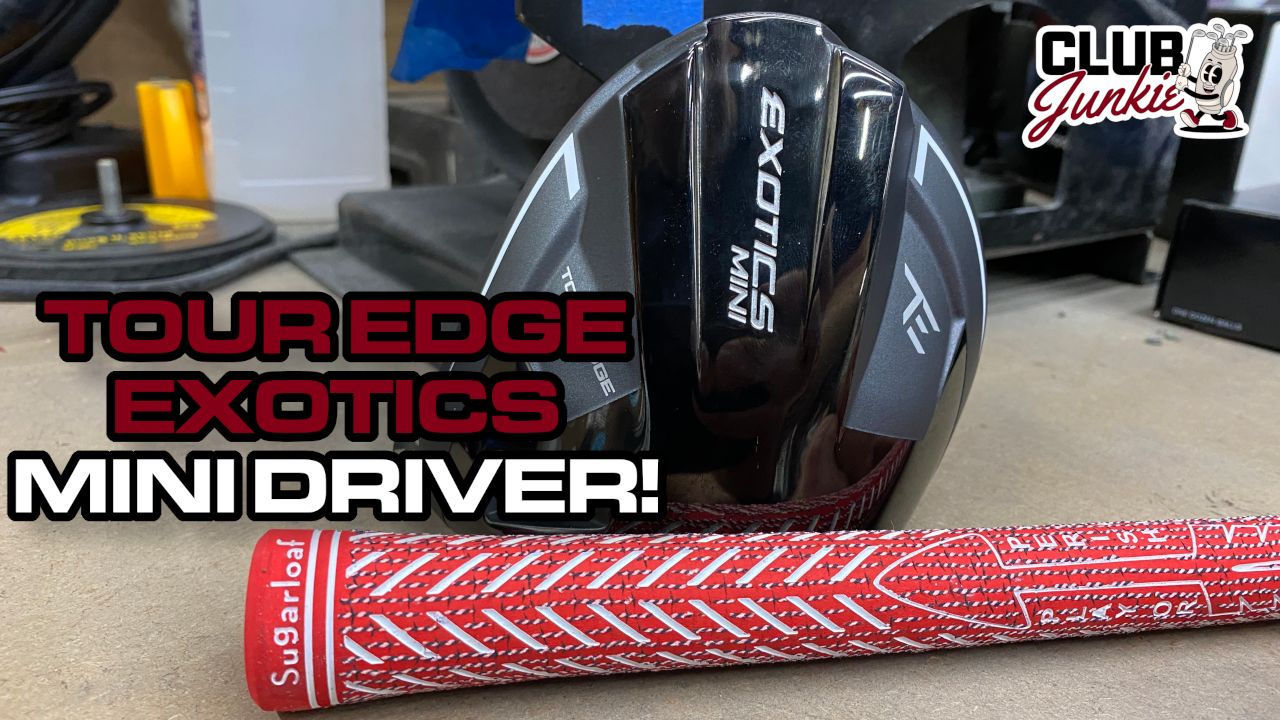
On this episode of Club Junkie, I put the new Tour Edge Exotics Mini Driver to the test and break down the performance, forgiveness, distance, and where it fits compared to a traditional driver or strong fairway wood. If you have been curious about adding a mini driver to the bag, this one is worth a look.
I also dive into the new TaylorMade Spider ZT Max putter that was recently spotted and discuss the growing zero torque putter trend. Plus, there is a closer look at the new Project X Titan Yellow shaft showing up on the PGA Tour and what makes it different from other profiles currently out there.

What’s the story behind Webb Simpson’s custom-stamped irons?

Memorial Tournament Tour Report: Rory McIlroy, Cameron Young switch up drivers, and more

Cadillac Championship Tour Report: Spieth’s sizable changes, McLaren Golf launches, and more

Russell Henley’s winning WITB: 2026 Charles Schwab Challenge

Kristoffer Reitan’s winning WITB: 2026 Truist Championship

Best irons 2026: Best irons overall, most forgiving irons, and more

J.T. Poston’s winning WITB: 2026 Memorial Tournament

Aaron Rai’s winning WITB: 2026 PGA Championship

Cameron Young’s winning WITB: 2026 Cadillac Championship

Details on Jason Day’s latest prototype Avoda iron setup


Christiaan Maas WITB 2026 (June)
Driver: TaylorMade Qi4D LS (8 degrees) Shaft: Fujikura Ventus TR Blue 6 X 3-wood: TaylorMade Qi10 (15 degrees) Shaft: Fujikura Ventus Black...


Ryan Palmer WITB 2026 (June)
Driver: Callaway Quantum Triple Diamond (9 degrees) Shaft: Project X HZRDUS Smoke Blue RDX 60 TX 3-wood: TaylorMade Qi10 (15 degrees) Shaft:...


Bud Cauley WITB 2026 (June)
Bud Cauley had >14 clubs in his bag when photographed prior to the Memorial Tournament. Driver: Titleist GTS2 (8 degrees) Shaft: Fujikura...


Hannah Green WITB 2026 (June)
Driver: Titleist GTS3 (10 degrees, D4 SureFit setting) Shaft: Mitsubishi Chemical Diamana RB 53 S 3-wood: Titleist GT3 (15 degrees,...
-
 Equipment6 days ago
Memorial Tournament Tour Report: Rory McIlroy, Cameron Young switch up drivers, and more
-
 News2 weeks ago
Russell Henley’s winning WITB: 2026 Charles Schwab Challenge
-
 Equipment4 days ago
Best irons 2026: Best irons overall, most forgiving irons, and more
-
 Whats in the Bag4 days ago
J.T. Poston’s winning WITB: 2026 Memorial Tournament
-
 Equipment1 week ago
Details on Jason Day’s latest prototype Avoda iron setup
-
 Equipment3 weeks ago
CJ Cup Byron Nelson Tour Report: Koepka and Kim’s newest putters finally get hot
-

 News2 weeks ago
Charles Schwab Challenge Tour Report: MacIntyre, Åberg and Spaun all switch putters, TaylorMade launches new Spider
-
 Equipment2 weeks ago
Details on J.J. Spaun’s surprise putter switch


TheInfidel
Apr 13, 2015 at 8:55 am
“relative obscurity” is a very USA-centric way to describe the European Tour. There were a great many players from that era who were successful on both sides of the pond so just because the NY Times or the LA Gazette didn’t write articles about them didn’t make them obscure. Remember above all that golf is a global game.
It’s the Europeans who beat the US like a drum right now in the Ryder Cup, but in 10 years time the “obscure” Asian Tour players will potentially be beating everyone at everything as the game grows……
DearWatson
Apr 11, 2015 at 1:25 am
Why has he survived?
One answer:
Anchored Long Putter.
Yes, Sherlock!
RG
Apr 9, 2015 at 6:15 pm
Another great article Andrew, you’re on fire! So I saw Brnhard here in Orlando at the PNC Father/Son (which the Langer’s won by the way) and his clubs are phenomenal. When you look in this guys bag it is a window into the truth about golf equipment. The only thing missing from you article is a picture of it.
Again, another great article and congrats on playing with one of the greats of the game. Keep up the good work!
other paul
Apr 8, 2015 at 6:33 pm
This is the first thing I have read about this guy. Seems like an interesting guy.
Golfraven
Apr 8, 2015 at 5:23 pm
Good article and interview. Hope to see some good golf from him this week.
Pat M
Apr 8, 2015 at 12:11 pm
I have always been a fan. Bernhard is a very nice guy and a great golfer.