
Opinion & Analysis
Do you really need to buy new wedges?

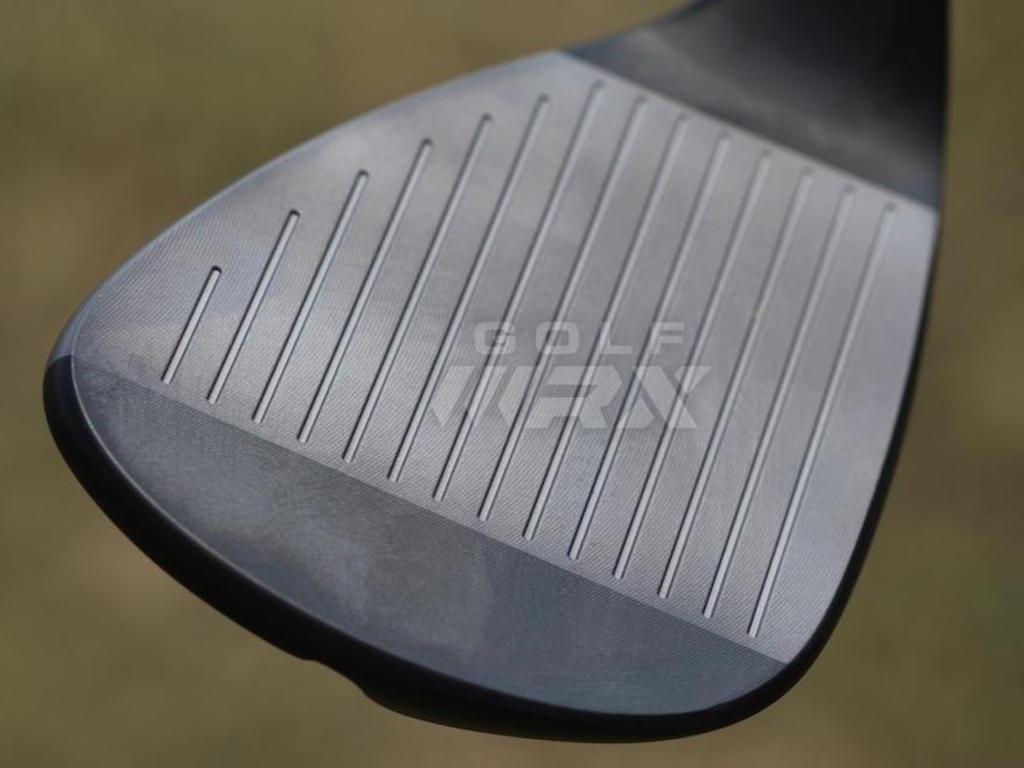
I’m as guilty as the rest of the golfing population when it comes to replacing my wedges too infrequently. Quite frankly, the only time I’ve changed them over the last few years is when I’ve been sent new clubs to test by my equipment sponsor.
If I was left on my own, I’m sure I would use my wedges until the paint fell off. It’s NOT the best idea, but my attitude has been like a lot of you in the golfing world: “It really doesn’t matter for as little golf as I play.”
This story was prompted by a few new wedges I was sent to try. We all hear about how often PGA Tour players change their wedges, and how much spin we’re losing by not changing our wedges more frequently. It is true?
To help you understand the real impact of worn grooves, I put it to the test. I hit four common wedge shots with three different wedges on Trackman that included:
- A new, 58-degree wedge
- A worn-out, 58-degree wedge (used for one season)
- A “super” worn-out, 58-degree wedge (used for multiple seasons)
The New Wedge

The Worn-Out Wedge

The “Super” Worn-Out Wedge

The Results
10-Yard Flop
- Super Worn: 3398 rpm
- Worn: 4262 rpm
- New: 4226 rpm
25-Yard Stock Shot
- Super Worn: 5249 rpm
- Worn: 4613 rpm
- New: 5291 rpm
40-Yard Stock Shot
- Super Worn: 6739 rpm
- Worn: 6195 rpm
- New: 6710 rpm
The only thing I can tell you about the 25- and 40-yard shot is that the super worn-out wedge seemed to have a sharper leading edge, and it felt like it was digging perfectly for my motion. As you can see in the Trackman screen shots at the bottom of this story, the ball was coming out flatter than the worn-out wedge, which decreased my spin loft and added spin.
For more information on spin loft with wedges, see “The Wedge Project” by Andrew Rice at www.andrewricegolf.com
Full Shot (80 Yards)
- Super Worn: 9435 rpm, peak spin rate of 10,117 rpm
- Worn: 10,260 rpm, peak spin rate of 10,400 rpm
- New: 10,641 rpm, peak spin rate of 11,121 rpm
The numbers tell us that wedge gurus are correct in saying that new wedges work better than the old ones when it comes to creating spin. The older the wedge, the less it will likely spin at all distances.
For that reason, I would suggest changing your wedges when you begin to see the initial effects of wear so you can keep your “grip” on the greens. The first signs include wedge shots that launch higher than normal — particularly from the rough — and don’t stop or spin back as much as they once did.





This past Monday, I played in the U.S. Amateur local qualifier at Rock Creek Country Club in Portland, Oregon. A full tee sheet from 7:30 a.m. to 1:55 p.m., the top 11 scores would make it to the U.S. Amateur final qualifying.
I teed off at 10:48 a.m.. With the 7:30 am tee time, you can get a feel for the leaders’ pace, and they were off and running on the challenging setup at Rock Creek.
View this post on Instagram
Getting to the highlight of the round on the par five 17th, a drive up the left side and 212 yards left to the front hole location. I took out a 5-iron with plans of middle of the green. The ball ended up 8 feet left of the hole, pin high. A slight downhill putt dropped in for an eagle 3 on the 17th. With the cut line looking to be anywhere from -2 to even par. This was the boost I had been waiting for all day.
With making par from the trees on 18, it was time to wait for a potential playoff with a posted score of one under par 71.
Three hours later, it was playoff time. 8 players for 6 spots. I made par on the playoff hole, which was good enough to advance to the U.S. Amateur final qualifying in July. USGA qualifiers sure deliver on all of the emotions in golf!
Club Junkie
Building my 2026 gamer WITB: Ranking the contenders and new putter projects – Club Junkie Podcast

The annual What’s In The Bag build is underway, and on this episode of Club Junkie, Brian breaks down the clubs currently leading the race for a spot in his 2026 gamer setup. From drivers and fairway woods to irons, wedges, and shafts, he ranks the equipment that’s performing best and explains what’s separating the front runners from the rest of the field.
Brian also heads into the workshop to discuss several putter projects currently on the bench. From head options and shaft choices to build ideas and testing plans, he shares what he’s working on and which putters could become serious contenders for the bag this season.
If you’re a gear junkie who loves equipment testing, club building, and the never-ending pursuit of the perfect setup, this episode is for you.
Follow Club Junkie:
Instagram: @clubjunkiepod
TikTok: @clubjunkiepod
Threads: @clubjunkiepod
X: @ClubJunkiePod
Club Junkie
Tour Edge Exotics mini driver review + TaylorMade Spider ZT Max first look – Club Junkie

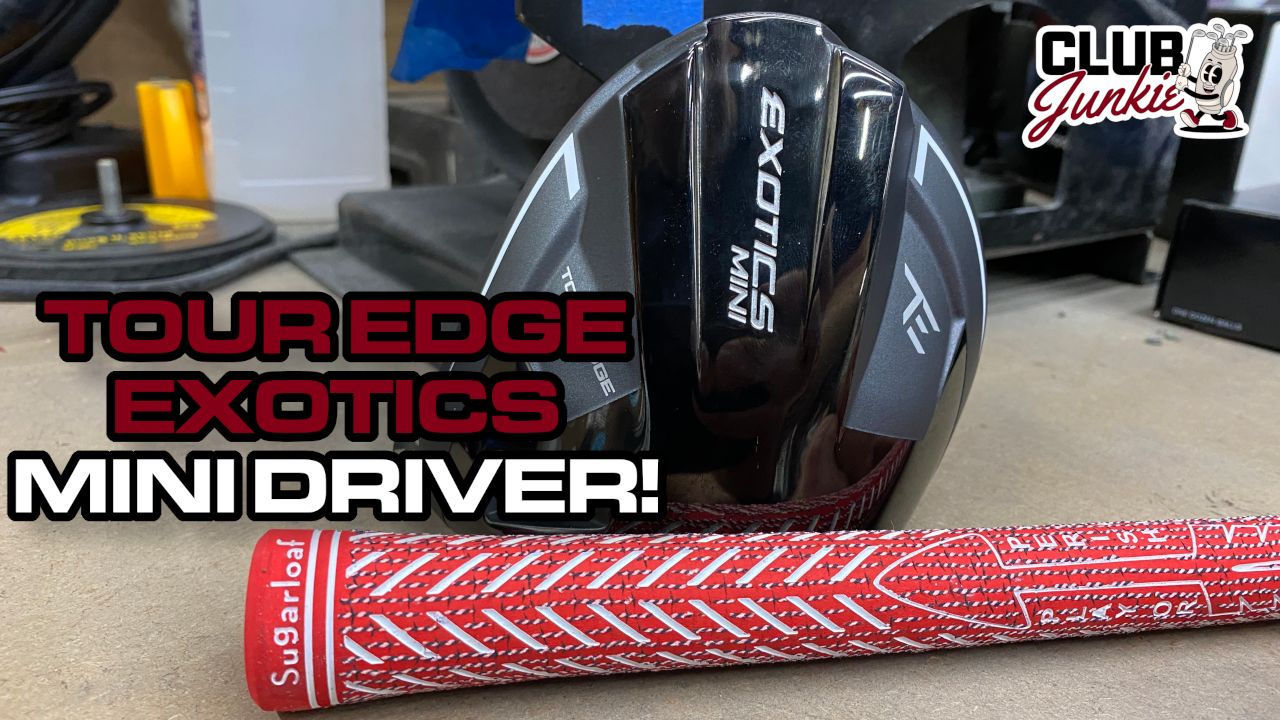
On this episode of Club Junkie, I put the new Tour Edge Exotics Mini Driver to the test and break down the performance, forgiveness, distance, and where it fits compared to a traditional driver or strong fairway wood. If you have been curious about adding a mini driver to the bag, this one is worth a look.
I also dive into the new TaylorMade Spider ZT Max putter that was recently spotted and discuss the growing zero torque putter trend. Plus, there is a closer look at the new Project X Titan Yellow shaft showing up on the PGA Tour and what makes it different from other profiles currently out there.

Justin Rose WITB 2026 (April): Full WITB breakdown with new McLaren irons

What’s the story behind Webb Simpson’s custom-stamped irons?

Memorial Tournament Tour Report: Rory McIlroy, Cameron Young switch up drivers, and more

Cadillac Championship Tour Report: Spieth’s sizable changes, McLaren Golf launches, and more

Russell Henley’s winning WITB: 2026 Charles Schwab Challenge

Kristoffer Reitan’s winning WITB: 2026 Truist Championship

Aaron Rai’s winning WITB: 2026 PGA Championship

J.T. Poston’s winning WITB: 2026 Memorial Tournament

Cameron Young’s winning WITB: 2026 Cadillac Championship

Best irons 2026: Best irons overall, most forgiving irons, and more


Bud Cauley WITB 2026 (June)
Bud Cauley had >14 clubs in his bag when photographed prior to the Memorial Tournament. Driver: Titleist GTS2 (8 degrees) Shaft: Fujikura...


Hannah Green WITB 2026 (June)
Driver: Titleist GTS3 (10 degrees, D4 SureFit setting) Shaft: Mitsubishi Chemical Diamana RB 53 S 3-wood: Titleist GT3 (15 degrees,...


Asterisk Talley WITB 2026 (June)
Driver: TaylorMade Qi4D (9 degrees) Shaft: Fujikura Ventus Blue 6 S 3-wood: TaylorMade Qi4D (16.5 degrees) Shaft: Fujikura Ventus Blue...

Brianna Do WITB 2026 (June)
Driver: Callaway Quantum Triple Diamond (9 degrees) Shaft: KBS PGW 3-wood: Callaway Elyte Titanium (15 degrees) Shaft: KBS PGW 5-wood:...
-
 Equipment6 days ago
Memorial Tournament Tour Report: Rory McIlroy, Cameron Young switch up drivers, and more
-
 News1 week ago
Russell Henley’s winning WITB: 2026 Charles Schwab Challenge
-
 Whats in the Bag3 days ago
J.T. Poston’s winning WITB: 2026 Memorial Tournament
-
 Equipment3 days ago
Best irons 2026: Best irons overall, most forgiving irons, and more
-

 Equipment1 week ago
Details on Jason Day’s latest prototype Avoda iron setup
-

 Equipment3 weeks ago
CJ Cup Byron Nelson Tour Report: Koepka and Kim’s newest putters finally get hot
-

 News2 weeks ago
Charles Schwab Challenge Tour Report: MacIntyre, Åberg and Spaun all switch putters, TaylorMade launches new Spider
-

 Equipment2 weeks ago
Details on J.J. Spaun’s surprise putter switch


cody
Jul 2, 2015 at 2:11 pm
This article makes no sense. your data does not back up your conclusion.
Steve Daniel
Apr 18, 2015 at 8:24 am
I would rather know the difference in “raw” vs “chrome” or other finishes. the golf ball I use has a bigger influence on spin than this test with new vs. old.
A
Apr 9, 2015 at 1:53 pm
So, a super worn wedge spins just as much or up to 1000 rpm less than a brand new wedge? That’s the real take-away, right? I suppose that can be also regarded as a 0% or 10-20% reduction.
How much spin does the ball have when it lands?
My understanding, I can’t reproduce the trackman article as I can’t find it at the moment, is that on full shots the spin rate of a ball when it hits the green will roughly be the same (about 500 rpm) and the “lift” aspect has worn off and so it descends.
My understanding is that the more spin that is generated at the start of the ball’s flight, the higher the launch, the shorter the distance the ball flies and the steeper the landing angle. And that it’s this last element, the landing angle, that allows the ball to land and spin back.
Not every player wants or needs that. Did this “study” compare the deviation in spin rates shot to shot? Did the new wedge spin the ball more consistently at the same rate vs the super old wedge, or was there more variance shot to shot? I’d rather know my shot will react similarly on each shot than be concerned solely with the quantity of spin. It’s rather frustrating when you hit the middle of the green and it spins back off the front, or you expect it to spin with your brand new wedge so you hit it 10 yards past and it just stays there. At least in the process of wearing down a wedge, you’ve become familiar with how it reacts. But if you have access to a tour van and you’re familiar with how a brand new wedge reacts, than by all means, swap ’em out every round.
Gary Gutful
Apr 7, 2015 at 3:41 am
There are some super smug gits that comment on these articles.
Personally, I am glad that there are contributors that bother with these experiments (even if the methods aren’t accredited by the Society of Data Crunching Golf Noobs).
Loving the rusty look of my Mack Daddys but would happily replace if/when they stop cutting the pistachios in the spin department.
marcus
Apr 6, 2015 at 9:49 am
This study is scientifically un-measurable. Thanks for trying though.
TheCityGame
Apr 7, 2015 at 10:31 am
I love it when a guy thinks he’s sounding smart but ends up saying something completely stupid.
“This study is scientifically unmeasurable”.
What the hell does that even mean, dude? Are you trying to measure the study? The STUDY is scientifically unmeasurable?
Is there a way that it is measurable but just not in a scientific way?
Do you mean the spin rate on the clubs is not measurable?
If you’re going to be that smug about it (“thanks for trying though”), you better be able to come up with better reasoning than “this study is unscientifically unmeasurable”. Nonsense.
Bob Pegram
Jun 15, 2015 at 6:36 pm
Maybe he means that there are so many variables in how each player’s swing, angle of attack, etc. reacts with the club and ball, that it is impossible to make general conclusions. Even the author of the article mentioned that he was used to the sharper front edge of his most worn wedge which may explain the high spin from that wedge. It works for his swing – or he has gotten used to it and made his swing work with it> – who knows?
MRC
Apr 4, 2015 at 12:20 am
Love my Mizuno wedges even after two years.
The grooves look a bit tired but they come alive on the course.
Thanks for the article Tom.
Dave
Apr 2, 2015 at 7:28 pm
So in order to prevent hitting shots that don’t spin, we need to change our wedges when we notice that they’re not spinning? What a waste of a read.
Ken N
Apr 2, 2015 at 4:52 pm
I just wrote to Barney Adams about this very topic a couple of weeks ago, so I was pleased to see it addressed here today. Part of my question that was left unanswered, though, was: aren’t today’s wedges made of tougher stuff, to last longer, than previous generations of wedges? If the limit was, say, 5,000 strikes per wedge five years ago, shouldn’t I expect to get 25% more out of today’s space-age-materials club? The Big Names are marketing them that way, and they’re certainly priced that way.
Scott
Apr 2, 2015 at 2:55 pm
Tom,
Tom,
Were you surprised that the differences were not more pronounced? Maybe I just can not comprehend the difference in 400 to 600 rpm, it does not seem like a lot. Although 1000 rpm on the full shot seems substantial, it would be nice to see was this means on the green in various conditions. I guess that is something that I can play with on my own.
A side question. I have used a grove sharpening tool. Are there tests at a USGA event to see if the wedges comply? If not, do you know of anyone getting call out for illegal grooves?
Thanks
other paul
Apr 2, 2015 at 2:33 pm
I like that the clubs are different but all the same loft. Because not everyone buys a new set of vokeys every year or two. Lots of people buy different brands each time. I played Cleveland two years ago, now vokeys, thinking of Mack daddy’s next time. This is probably more realistic for the majority of golfers.
other paul
Apr 2, 2015 at 2:07 pm
Well Tom, I look forward to the same article in 5 years when you have had time to spend $450 on 3 identical wedges. I hope you enjoy storing one, hitting one 10,000 times to wear it out, and hitting one 30,000 times to really wear it out. And then rewriting this article for all the angry people.
other paul
May 16, 2015 at 1:12 pm
Looks like there are two of us…
AndyP
Apr 2, 2015 at 1:22 pm
What I got from the article is go source some really old worm wedges from the bargain bin. Cheers
petie3_2
Aug 23, 2015 at 7:40 am
My wedges of choice are 30 year old pre-Vokey Titleists; they’re almost identical to Vokeys but slightly heavier and better in the wet, long grass and sand. I had to pay $9 for one. (sob, outrageous).
mark
Apr 2, 2015 at 1:00 pm
All the statements are correct. The article is correct in that a new wedge will give you more backspin. If it doesn’t interest, you then don’t buy a new wedge. Sandblasting the face is a cheaper alternative and makes the old wedge spin like new and you keep the same feel of the familiar wedge.
Philip
Apr 1, 2015 at 11:56 pm
I wonder if this is why we see so many PGA players with rusty wedges. Maybe the rough surface gives them a consistent spin that doesn’t tend to change as they replace wedges.
Mike
Apr 1, 2015 at 7:30 pm
According to Andrew Rice in The Wedge Project, it’s actually the surface area on the clubface between the grooves that through friction impart the majority of the spin on the golf ball. Andrew recommends to find a local business that does sandblasting and have them sandblast the face of your wedge a few time per year with aluminum oxide. I found a place that does it for $5 a club after which it spins like day it came off the rack.
Philip
Apr 1, 2015 at 11:53 pm
Same reason why some PGA players do not clean the sand out of their wedge grooves after coming out of the bunker – extra spin. I could put some water on my wedges and do a few practice shots in the sand before play to get them ready. I guess I could always empty the sand out of my bag after a few weeks or so.
Tom Stickney
Apr 1, 2015 at 5:04 pm
RG– I take umbrage that you feel this way; I do articles based on facts. I don’t sell clubs nor do I get paid to do these articles. Thus I have no bias other than the facts.
RG
Apr 1, 2015 at 10:53 pm
OR
The other thing is you can over spin a wedge. Sam Snead said,” I never made any money with my ball coming back at me.”
Jackie Burke still plays the same wedge he used to win Augusta in the 50’s.
The”facts” that you represent in your article are based on a data set from a machine, and from the photos you attached three dissimilar clubs. .Empirically speaking your data sets are flawed. In addition here are more “facts” that go into visualizing and creating good wedge shots. other than new grooves and more spin. Touch and feel have a lot to do with it and new wedges can be counter productive to this end.
Thank you for sharing and I do not mean any rudeness toward you and your findings, but your experiment is flawed,
Steve Daniel
Apr 18, 2015 at 9:10 am
Tom, don’t take offence.
as a retired engineer I like data, but there are too many things left unsaid in this review. for this to be a valid test you would need several sets of documented clubs with several samples of balls, people, and etc. that doesn’t mean that I didn’t enjoy the article. I do the same types of things myself.
Nathan
Apr 1, 2015 at 5:04 pm
Brand New Pro V1 Ball makes my wedges feel new again
Perry
Apr 1, 2015 at 12:58 pm
The only way I’d buy this is that if all 3 clubs were the exact same model with the exact same shaft. It’s an awesome idea, but I don’t think you’re comparing apples to apples. You’d get similar results if you had three different head/shaft combinations of new clubs.
Dave S
Apr 1, 2015 at 2:42 pm
Took the words right out of my mouth. From the pics, it’s pretty clear they are not the same brand.
RG
Apr 1, 2015 at 4:54 pm
You are 100% correct. This “article” is another in a long line of “you need to go buy new clubs” articles.
OR
The other thing is you can over spin a wedge. Sam Snead said,” I never made any money with my ball coming back at me.”
Jackie Burke still plays the same wedge he used to win Augusta in the 50’s.
Brody
Apr 1, 2015 at 12:15 pm
Tom,
Nice article, I enjoyed it. Would you foresee those Groove Sharpener tools making any difference on spin rates? Replacing wedges every season can certainly get expensive; I’d be interested in seeing if those tools make any difference on Trackman.
Steve
Apr 1, 2015 at 1:00 pm
+1
Jon
Apr 1, 2015 at 1:56 pm
The only problem with groove sharpeners is if you cut the grooves too deep that club becomes non-conforming. Since I don’t play in any USGA sanctioned tournaments and no longer maintain GHIN, I use the groove sharpener at the beginning of every season (Golf Works part no. GW1111) and it does a pretty good job. It saves me $120/year which buys me about 3 rounds of golf.
Mikko U
Apr 1, 2015 at 11:56 am
Interesting to read that there wouldn’t be much difference on partial swings. For me there was a huge difference going from three years old wedges to new ones even on 40-yard chip/pitch shots. They turned into hop and stop rather than hop and roll out.
Also, isn’t there quite a lot of slippage from any 58* wedge? So wouldn’t some 50-52 degree wedges have worked better as there’s less slipping due to the loft and the grooves would have probably made a bigger difference (or showed more precisely that there isn’t a difference)?
Chuck
Apr 1, 2015 at 11:42 am
I don’t doubt the data; but almost as important to spin, is the feel I have developed with older wedges. Weight, balance, bounce, etc. Before the groove rule went into effect, I bought a handful of the kind of gap wedge (Vokey 452.08) and sand wedge (Vokey 258.08) that I love, and I nurse them as much as possible. So while the grooves do get worn, at least they are pre-rule grooves. Legal for me until 2024.
This all gives real meaning to the short-lived (why???) TaylorMade solution, which was to supply exchangeable faces for its XFT series wedges.
http://www.taylormadegolf.asia/bn/xft-wedge-specifications.php