
Opinion & Analysis
Book Review — The Forbidden Game: Golf and the Chinese Dream


It’s ironic that it took Dan Washburn eight years to take The Forbidden Game from first interview to publication. The irony is underscored by the amount of time it takes golf courses in China to progress from shovel to tee shot: fewer than two years. And that’s building five courses, on the same property, simultaneously.
With all of the stateside courses in various stage of development a decade ago, the prescient Washburn anticipated the growth of Chinese golf over the next 10 years and found the perfect subject to provide the inside dope. Golf course architecture insiders had known that Brian Curley and Lee Schmidt, former Pete Dye associates, had entered the Asian market in the 1990s, while the rest of the industry fattened itself on U.S. contracts. Washburn’s journey began partly with them.
Irony and mystery define the mere existence of golf across the land of the Red Dragon. China’s central political government vacillates between denying the existence of new golf courses, forbidding the building of new golf courses, and authorizing the building of new golf courses. If it all seems confusing in print, imagine how it plays out on the ground. Fortunately for the reader, Washburn does a stellar job of raising the blinds and connecting the dots.
The author’s task was not a simple one. In order to create this tone on the growth of a rich man’s game in a common man’s country, Washburn needed to navigate an indecipherable road map made hazy by a massive disconnect between national and local government officials, suspect methods for land acquisition by powerful development companies, and the nuances of a unique subculture in the throes of a transition from semi-feudal agrarian to neo-modern technological.
Dan Washburn identified three interesting individuals from all the potential candidates to symbolize the impact of the Scottish game in the Middle Kingdom:
- Zhou Xunshu, an aspiring professional golfer from the backwoods of Qixin, a mountain village in southwest China.
- Martin Moore, a golf course shaper-turned-project manager from Florida.
- Wang Libo, a non-golfer with no direct connection to the game, who found a way to profit from golf’s arrival on Hainan Island.
Washburn follows Zhou for a year as the self-made professional attempts to succeed as a touring professional. The author spends plenty of time with Moore, learning how a kid from Florida grows up to become a major mover in Asian golf course project development. From Wang, Dan Washburn uncovers the precarious balance between tradition and progress, and how an allegiance to one over the other might prove fortuitous or costly.
As enthralling as the three featured personages are, the list of cast members is enormous. No doubt the culling of characters included David and Kenneth Chu (although Washburn does his best to follow the scant information available) and the myriad local politicians who pushed these exercise and fitness developments through, under the noses of the national pols.
This brings us to the recently-announced purge of just over 60 courses on the mainland. A decade after the 2004 decree that a moratorium on golf courses had been established, the Chinese central government began to flex its muscles.
This actually seems to be one of the rare times that industry rumors ended up becoming reality. Last fall, everyone was abuzz with unofficial word of up to 100 courses being shut down in the coming year, part of a renewed effort to take the long ignored moratorium on course construction seriously. So this could just be the beginning. Course construction has already almost come to a complete halt. Now, the focus is on existing courses.
This is a weird time in China. Xi Jinping’s seemingly never-ending corruption crackdown has created a very tense and uncertain business and political climate.
In the U.S., golf courses receive an unfair share of criticism for environmental impact. There was a time when chemicals were applied haphazardly to make brown courses green, to eliminate insect and rodent pests, to kill off undesirable weeds. In recent decades, the industry has done an about-face and moved in a direction of stewardship. Run-off waters are far less tainted, if at all, by chemicals. Courses in California are reducing the acreage of cared-for land, replacing it with broken ground in spaces between tee and fairway, or in spots off the playing field. Courses are browning all over the country, highlighted by the Pinehurst #2 course in North Carolina, host to both the Women’s and Men’s U.S. Open championships in 2014. Is this the reality in China as well? If so, it’s certainly not the perception of the central government, according to Washburn.
[quote_box_center]The focus this time appears to be not just a golf course’s mere existence, but its impact on arable land and the water supply. These are valid concerns, especially in China, but who knows if these closures will really address those serious issues or just provide fodder for headlines. After all, golf courses account for a tiny, tiny sliver of the real estate development happening throughout rural China — but they seem to get a lot of the focus.[/quote_box_center]
If golf courses in China ever stand as monuments to the perseverance of the business elite, Washburn’s volume on the growth of the game will be recognized as a guidepost, if not the starting gate, for all future.



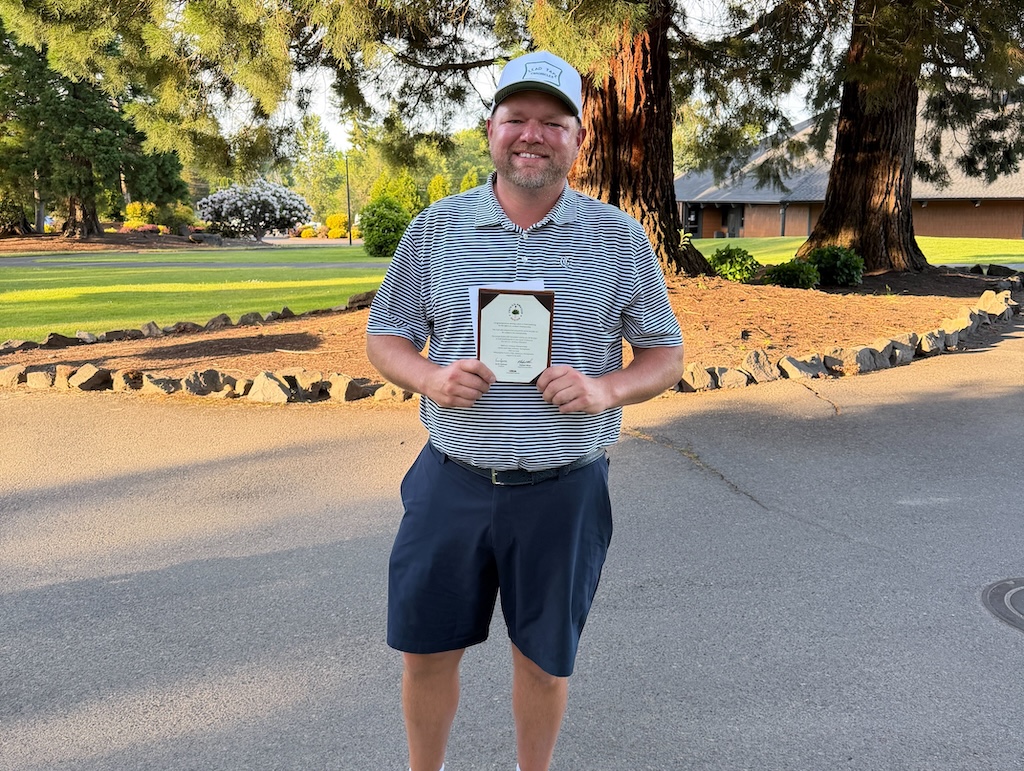
This past Monday, I played in the U.S. Amateur local qualifier at Rock Creek Country Club in Portland, Oregon. A full tee sheet from 7:30 a.m. to 1:55 p.m., the top 11 scores would make it to the U.S. Amateur final qualifying.
I teed off at 10:48 a.m.. With the 7:30 am tee time, you can get a feel for the leaders’ pace, and they were off and running on the challenging setup at Rock Creek.
View this post on Instagram
Getting to the highlight of the round on the par five 17th, a drive up the left side and 212 yards left to the front hole location. I took out a 5-iron with plans of middle of the green. The ball ended up 8 feet left of the hole, pin high. A slight downhill putt dropped in for an eagle 3 on the 17th. With the cut line looking to be anywhere from -2 to even par. This was the boost I had been waiting for all day.
With making par from the trees on 18, it was time to wait for a potential playoff with a posted score of one under par 71.
Three hours later, it was playoff time. 8 players for 6 spots. I made par on the playoff hole, which was good enough to advance to the U.S. Amateur final qualifying in July. USGA qualifiers sure deliver on all of the emotions in golf!
Club Junkie
Building my 2026 gamer WITB: Ranking the contenders and new putter projects – Club Junkie Podcast


The annual What’s In The Bag build is underway, and on this episode of Club Junkie, Brian breaks down the clubs currently leading the race for a spot in his 2026 gamer setup. From drivers and fairway woods to irons, wedges, and shafts, he ranks the equipment that’s performing best and explains what’s separating the front runners from the rest of the field.
Brian also heads into the workshop to discuss several putter projects currently on the bench. From head options and shaft choices to build ideas and testing plans, he shares what he’s working on and which putters could become serious contenders for the bag this season.
If you’re a gear junkie who loves equipment testing, club building, and the never-ending pursuit of the perfect setup, this episode is for you.
Follow Club Junkie:
Instagram: @clubjunkiepod
TikTok: @clubjunkiepod
Threads: @clubjunkiepod
X: @ClubJunkiePod
Club Junkie
Tour Edge Exotics mini driver review + TaylorMade Spider ZT Max first look – Club Junkie

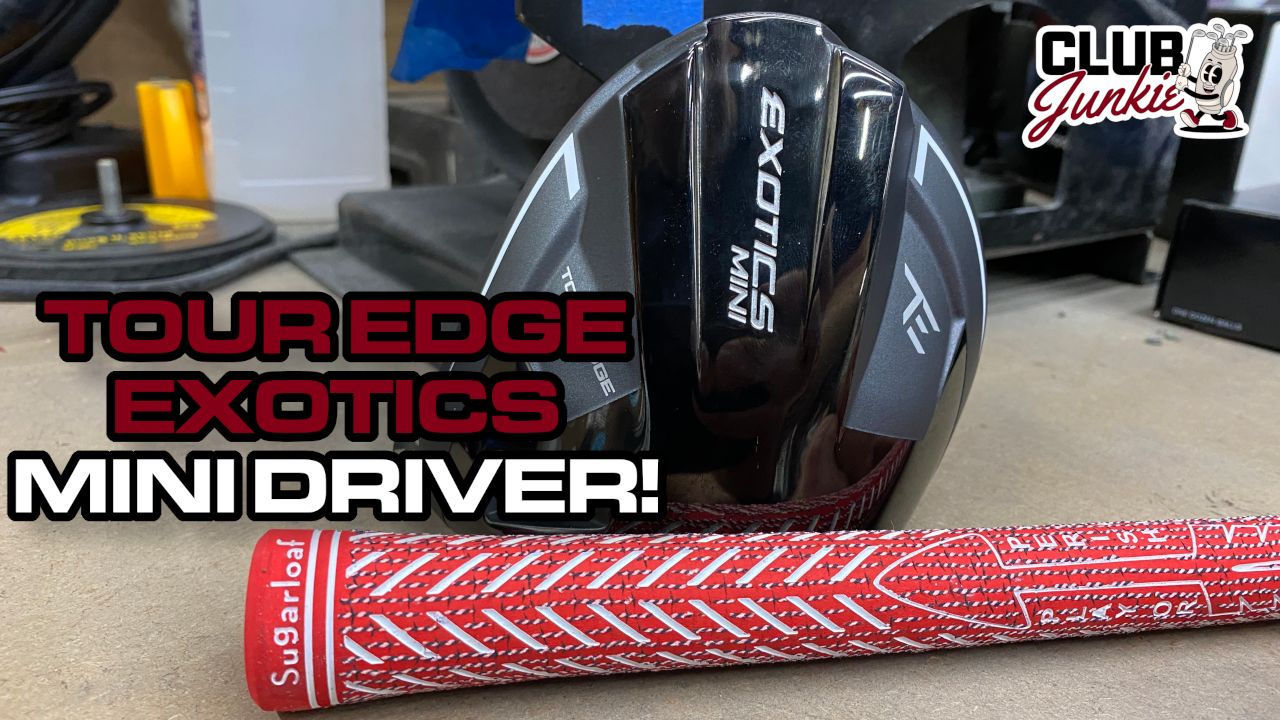
On this episode of Club Junkie, I put the new Tour Edge Exotics Mini Driver to the test and break down the performance, forgiveness, distance, and where it fits compared to a traditional driver or strong fairway wood. If you have been curious about adding a mini driver to the bag, this one is worth a look.
I also dive into the new TaylorMade Spider ZT Max putter that was recently spotted and discuss the growing zero torque putter trend. Plus, there is a closer look at the new Project X Titan Yellow shaft showing up on the PGA Tour and what makes it different from other profiles currently out there.

Justin Rose WITB 2026 (April): Full WITB breakdown with new McLaren irons

What’s the story behind Webb Simpson’s custom-stamped irons?

Memorial Tournament Tour Report: Rory McIlroy, Cameron Young switch up drivers, and more

Cadillac Championship Tour Report: Spieth’s sizable changes, McLaren Golf launches, and more

Russell Henley’s winning WITB: 2026 Charles Schwab Challenge

Kristoffer Reitan’s winning WITB: 2026 Truist Championship

J.T. Poston’s winning WITB: 2026 Memorial Tournament

Best irons 2026: Best irons overall, most forgiving irons, and more

Aaron Rai’s winning WITB: 2026 PGA Championship

Cameron Young’s winning WITB: 2026 Cadillac Championship


Bud Cauley WITB 2026 (June)
Bud Cauley had >14 clubs in his bag when photographed prior to the Memorial Tournament. Driver: Titleist GTS2 (8 degrees) Shaft: Fujikura...


Hannah Green WITB 2026 (June)
Driver: Titleist GTS3 (10 degrees, D4 SureFit setting) Shaft: Mitsubishi Chemical Diamana RB 53 S 3-wood: Titleist GT3 (15 degrees,...


Asterisk Talley WITB 2026 (June)
Driver: TaylorMade Qi4D (9 degrees) Shaft: Fujikura Ventus Blue 6 S 3-wood: TaylorMade Qi4D (16.5 degrees) Shaft: Fujikura Ventus Blue...


Brianna Do WITB 2026 (June)
Driver: Callaway Quantum Triple Diamond (9 degrees) Shaft: KBS PGW 3-wood: Callaway Elyte Titanium (15 degrees) Shaft: KBS PGW 5-wood:...
-
 Equipment6 days ago
Memorial Tournament Tour Report: Rory McIlroy, Cameron Young switch up drivers, and more
-
 News2 weeks ago
Russell Henley’s winning WITB: 2026 Charles Schwab Challenge
-
 Whats in the Bag4 days ago
J.T. Poston’s winning WITB: 2026 Memorial Tournament
-
 Equipment3 days ago
Best irons 2026: Best irons overall, most forgiving irons, and more
-

 Equipment1 week ago
Details on Jason Day’s latest prototype Avoda iron setup
-
 Equipment3 weeks ago
CJ Cup Byron Nelson Tour Report: Koepka and Kim’s newest putters finally get hot
-

 News2 weeks ago
Charles Schwab Challenge Tour Report: MacIntyre, Åberg and Spaun all switch putters, TaylorMade launches new Spider
-

 Equipment2 weeks ago
Details on J.J. Spaun’s surprise putter switch

