
Opinion & Analysis
Three ways to hit longer drives

Those of you who have read my article “How Far Should You Hit Your Golf Clubs” may remember this success story:
“With a 2-degree change in driver loft and some minor adjustments made to his swing path, angle of attack, etc., one of my amateur students went from being an already above-average efficient driver at 2.61 yards/mph to an extremely efficient one at 2.75 yards/mph. So with no change to his 102 mph swing speed, he increased his driving distance average from 266 to 280. Then after some swing speed training, he got up to 112 mph and can now hit drives around 307 yards with that same efficiency of 2.75 yards/mph. That’s 41 more yards!”
Let’s talk about the three reasons this student was able to achieve the extra 41 yards, because they can help every golfer add distance to their drives.
No. 1: Solid Contact
Hitting the ball in the center of the clubface is an important component to hitting the ball farther (and straighter, too). In his article “Impact Location by Handicap,” fellow GolfWRX Featured Writer Tom Stickney II included some great photos of typical impact dispersions broken down by a range of handicaps.
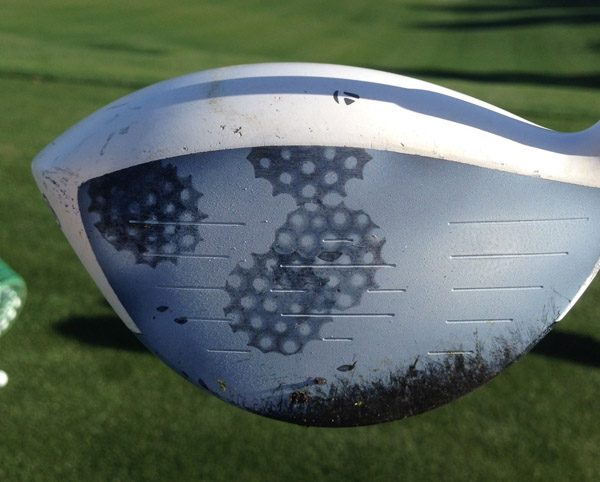
30 Handicap
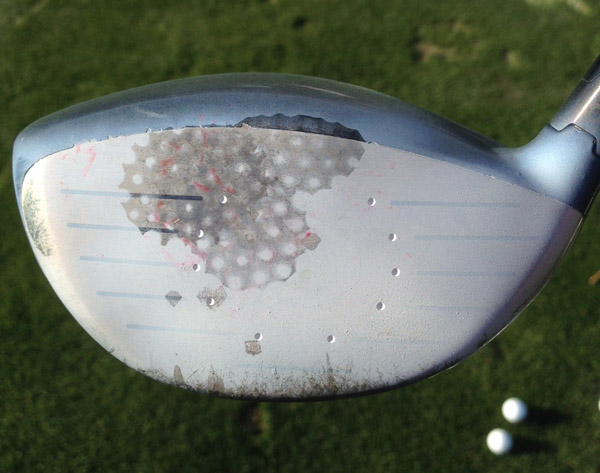
25 Handicap
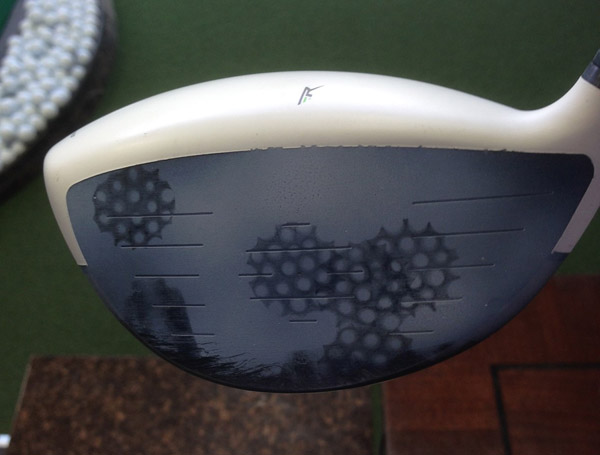
20 Handicap
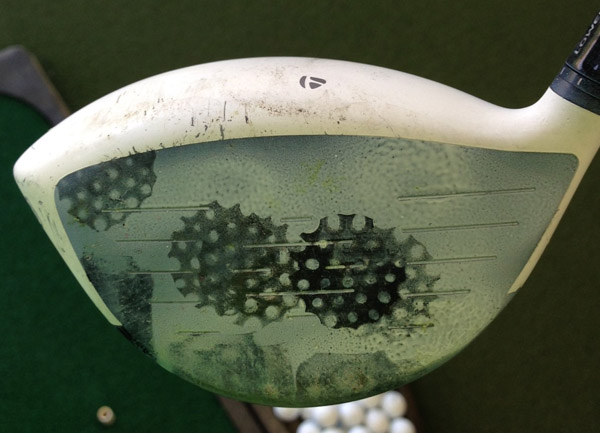
15 Handicap
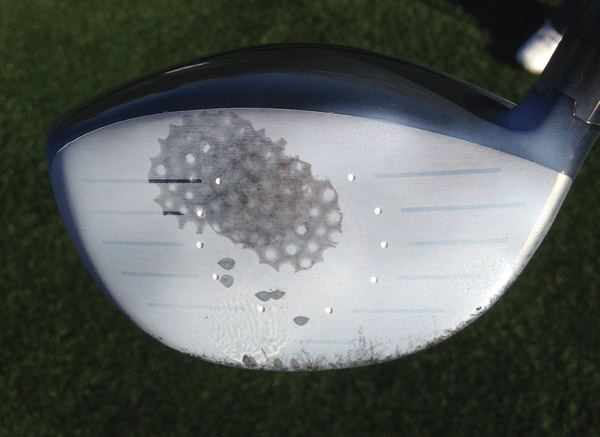
10 Handicap
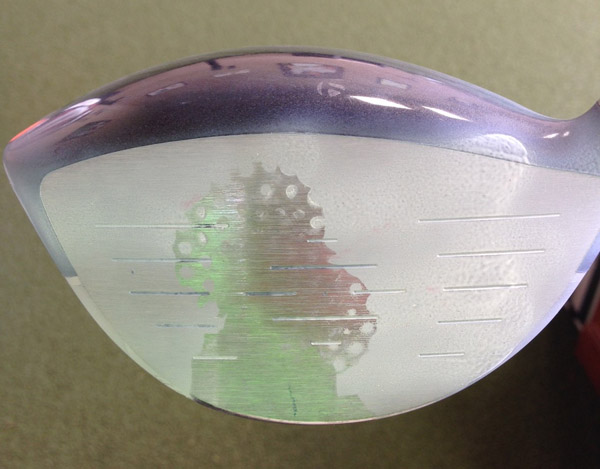
7 Handicap
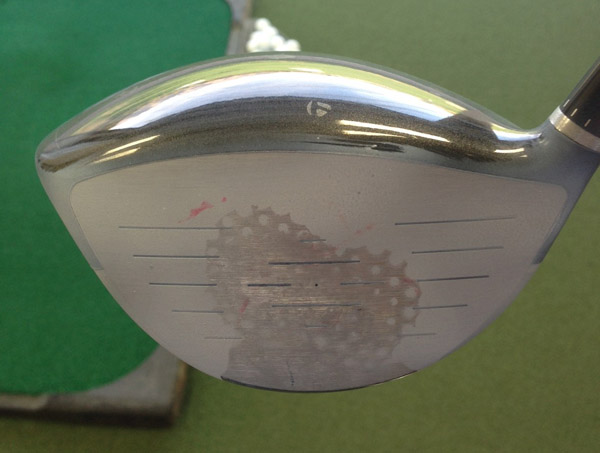
5 Handicap
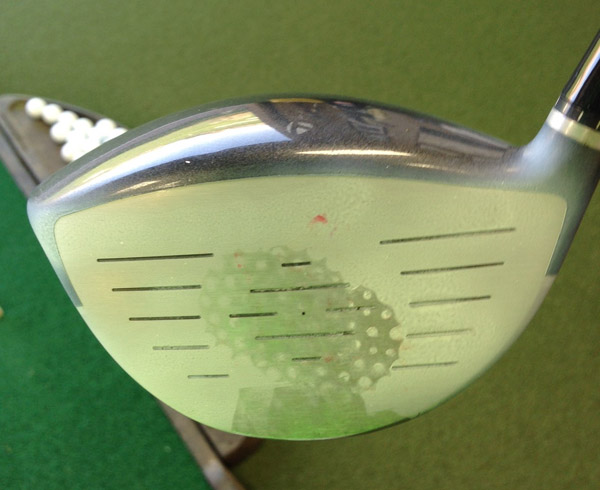
0 Handicap
According to research data from Trackman, the typical 14-to-15 handicapper has an average club head speed of 93.4 mph and hits drives that go about 214 yards. A typical PGA Tour player swings at about 113 mph and hit his drives about 290 yards. That means the average driving distance efficiency for an amateur is 2.29 yards/mph and a tour player gets about 2.57 yards/mph.
Interestingly, PGA Tour players aren’t even the most efficient players. Although they are good ball strikers, they tend to hit the ball too low and with too much spin for maximum driving distance efficiency. LPGA players, on the other hand, get about 2.64 yards/mph. That means that the average golfer gives up in the neighborhood of 35 yards to an LPGA player, despite both of them swinging the driver at approximately the same speed of 93-to-94 mph. Part of this comes down to making better contact as already mentioned, so definitely work on your ball striking.
A cheap and easy way to check your impact location is with Dr. Scholl’s X Foot Powder Spray. Spray it on the face of your clubs so you can quickly see your impact pattern. It wipes off easily and causes no damage to your clubs.
No. 2: Optimal Launch Conditions
In the example above, my student was already a very efficient driver at 2.61 yards/mph. He has aspirations of playing on the Senior Tour in a few years, though, so he flew me to Texas to see if we could eek a few more yards out of him.
We went over to his local range and started hitting balls on the local pro’s Trackman. After a few drives, we determined that he was averaging 102 mph of club head speed, had an 8.9-degree launch angle and was generating 3382 rpm of spin using his 9-degree driver. I felt that we could get more distance out of him without even increasing his club head speed. Ideally, I wanted to increase his launch angle to about 13.8 degrees and decrease his spin rate to around 2508 rpm.
The easiest way to change spin rate if you make consistent contact is to change head loft. Using a bit of algebra, I estimated that we could bring his spin down and accomplish the first goal if we went from his 9-degree driver down to a 6.7-degree driver. We went over to Sellinger’s Power Golf, which carries low-lofted drivers, and we asked for a driver that measured 6.7-degrees (it was actually stamped 6). The nice thing about Sellinger’s is that they carry a good selection of low-lofted drivers and they can often get you a specific head loft. Some top-tier custom club fitters such as Tom Wishon can do this as well.
With the lower-lofted driver, the student and I went back over to the range and started measuring his drives with the new head. His average spin came down to the desired range, so our first goal was complete. Next, we faced the second part of the challenge. He was already hitting the ball low with the 9-degree driver, but now with the 6.7-degree driver he was hitting it even lower. To get him to launch it higher, we had him tee the ball higher and position it slightly more forward in his stance. Due to the D-Plane, we also had him swing slightly more in-to-out. After some practice, we arrived at the precise teeing location and swing direction that we needed for him to swing freely and achieve our desired launch angle of close to 14 degrees.
From a simple 2.3-degree change in driver loft and some slight technical adjustments, we got him up from 266 yards per drive to 280 yards per drive, which is about the maximum amount of distance he could expect under normal average conditions from a club head speed of 103 mph.
Here are 5 steps for how to apply this to your own game.
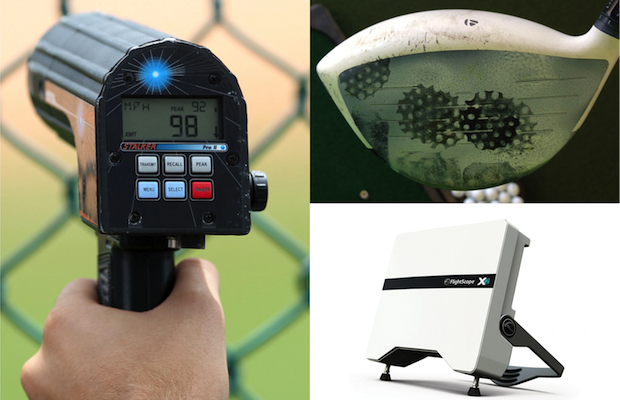
- Find a Doppler Radar launch monitor such as FlightScope or Trackman in your area and get some basic averages for yourself for club head speed, launch angle and spin rate.
- Visit a club fitter who can find out the exact loft of your driver (remember, it’s not always what’s stamped on the head).
- Use the table below and some algebra to estimate the precise head loft you need to achieve your ideal spin rate. All else being equal, going up in loft will add spin. Going down in loft will take off spin.
- Get the precise driver loft that you need.
- Using a Trackman or other launch monitor, play with your tee height, ball position and swing direction until you achieve your goal launch angle from the next table below.

Teeing the ball higher, farther forward in your stance and swinging a bit more in-to-out can help you hit higher drives. Teeing up lower, farther back in your stance and swinging a little less in-to-out can help you bring the launch down.

No. 3: Faster Swing Speed
Once you are hitting the ball solid and have optimized your launch conditions as described above, you can gain additional distance through swing speed training programs such as mine, Swing Man Golf. That’s how my student added another 27 yards to his 280-yard drives, getting him up to an average of 307 yards per drive. With his excellent driving efficiency and now above average clubhead speed, this student won’t be losing anything to the field and he is well on his way to achieving his goal.
Have fun launching the ball farther!




This past Monday, I played in the U.S. Amateur local qualifier at Rock Creek Country Club in Portland, Oregon. A full tee sheet from 7:30 a.m. to 1:55 p.m., the top 11 scores would make it to the U.S. Amateur final qualifying.
I teed off at 10:48 a.m.. With the 7:30 am tee time, you can get a feel for the leaders’ pace, and they were off and running on the challenging setup at Rock Creek.
View this post on Instagram
Getting to the highlight of the round on the par five 17th, a drive up the left side and 212 yards left to the front hole location. I took out a 5-iron with plans of middle of the green. The ball ended up 8 feet left of the hole, pin high. A slight downhill putt dropped in for an eagle 3 on the 17th. With the cut line looking to be anywhere from -2 to even par. This was the boost I had been waiting for all day.
With making par from the trees on 18, it was time to wait for a potential playoff with a posted score of one under par 71.
Three hours later, it was playoff time. 8 players for 6 spots. I made par on the playoff hole, which was good enough to advance to the U.S. Amateur final qualifying in July. USGA qualifiers sure deliver on all of the emotions in golf!
Club Junkie
Building my 2026 gamer WITB: Ranking the contenders and new putter projects – Club Junkie Podcast

The annual What’s In The Bag build is underway, and on this episode of Club Junkie, Brian breaks down the clubs currently leading the race for a spot in his 2026 gamer setup. From drivers and fairway woods to irons, wedges, and shafts, he ranks the equipment that’s performing best and explains what’s separating the front runners from the rest of the field.
Brian also heads into the workshop to discuss several putter projects currently on the bench. From head options and shaft choices to build ideas and testing plans, he shares what he’s working on and which putters could become serious contenders for the bag this season.
If you’re a gear junkie who loves equipment testing, club building, and the never-ending pursuit of the perfect setup, this episode is for you.
Follow Club Junkie:
Instagram: @clubjunkiepod
TikTok: @clubjunkiepod
Threads: @clubjunkiepod
X: @ClubJunkiePod
Club Junkie
Tour Edge Exotics mini driver review + TaylorMade Spider ZT Max first look – Club Junkie

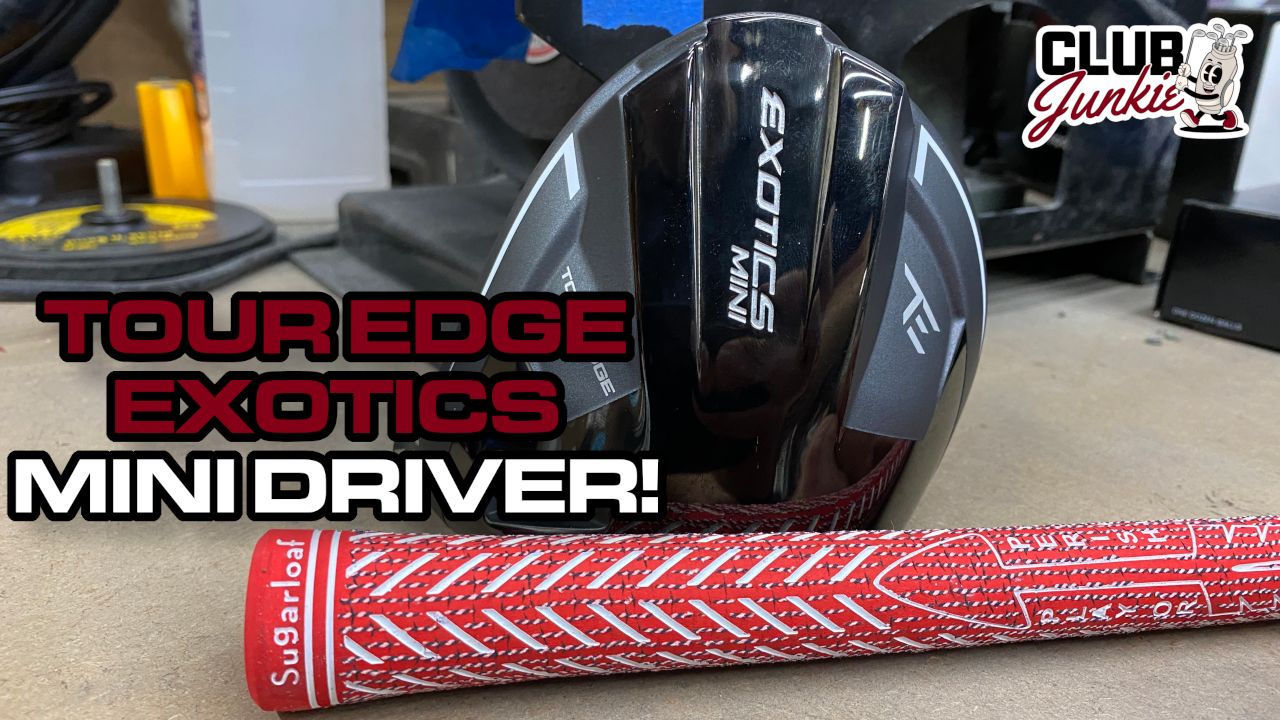
On this episode of Club Junkie, I put the new Tour Edge Exotics Mini Driver to the test and break down the performance, forgiveness, distance, and where it fits compared to a traditional driver or strong fairway wood. If you have been curious about adding a mini driver to the bag, this one is worth a look.
I also dive into the new TaylorMade Spider ZT Max putter that was recently spotted and discuss the growing zero torque putter trend. Plus, there is a closer look at the new Project X Titan Yellow shaft showing up on the PGA Tour and what makes it different from other profiles currently out there.

Justin Rose WITB 2026 (April): Full WITB breakdown with new McLaren irons

What’s the story behind Webb Simpson’s custom-stamped irons?

Memorial Tournament Tour Report: Rory McIlroy, Cameron Young switch up drivers, and more

Cadillac Championship Tour Report: Spieth’s sizable changes, McLaren Golf launches, and more

Russell Henley’s winning WITB: 2026 Charles Schwab Challenge

Kristoffer Reitan’s winning WITB: 2026 Truist Championship

Aaron Rai’s winning WITB: 2026 PGA Championship

Cameron Young’s winning WITB: 2026 Cadillac Championship

J.T. Poston’s winning WITB: 2026 Memorial Tournament

Best irons 2026: Best irons overall, most forgiving irons, and more


Bud Cauley WITB 2026 (June)
Bud Cauley had >14 clubs in his bag when photographed prior to the Memorial Tournament. Driver: Titleist GTS2 (8 degrees) Shaft: Fujikura...


Hannah Green WITB 2026 (June)
Driver: Titleist GTS3 (10 degrees, D4 SureFit setting) Shaft: Mitsubishi Chemical Diamana RB 53 S 3-wood: Titleist GT3 (15 degrees,...


Asterisk Talley WITB 2026 (June)
Driver: TaylorMade Qi4D (9 degrees) Shaft: Fujikura Ventus Blue 6 S 3-wood: TaylorMade Qi4D (16.5 degrees) Shaft: Fujikura Ventus Blue...
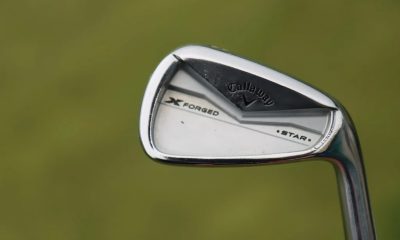

Brianna Do WITB 2026 (June)
Driver: Callaway Quantum Triple Diamond (9 degrees) Shaft: KBS PGW 3-wood: Callaway Elyte Titanium (15 degrees) Shaft: KBS PGW 5-wood:...
-
 Equipment5 days ago
Memorial Tournament Tour Report: Rory McIlroy, Cameron Young switch up drivers, and more
-
 News1 week ago
Russell Henley’s winning WITB: 2026 Charles Schwab Challenge
-
 Whats in the Bag3 days ago
J.T. Poston’s winning WITB: 2026 Memorial Tournament
-
 Equipment2 days ago
Best irons 2026: Best irons overall, most forgiving irons, and more
-

 Equipment1 week ago
Details on Jason Day’s latest prototype Avoda iron setup
-

 Equipment3 weeks ago
CJ Cup Byron Nelson Tour Report: Koepka and Kim’s newest putters finally get hot
-

 News2 weeks ago
Charles Schwab Challenge Tour Report: MacIntyre, Åberg and Spaun all switch putters, TaylorMade launches new Spider
-

 Equipment2 weeks ago
Details on J.J. Spaun’s surprise putter switch


Pingback: How Much Distance is Lost With Age? - Dan Hansen Golf Instruction
Bob Gom
Jan 5, 2015 at 11:52 am
Some great stuff….would love to hear your thoughts on the pic of the two lowest handicaps.
Notice (mainly on the zero cap) how the marks go from lower on the face (heel) to the center to higher (toe)
One can pretty much draw a line at 45 degrees (approximate) threw the center of the ball marks from heel to toe.
This head is a TM SLDR it seems and like many of the past TM offerings, I feel are to up right in lie angle. Does this example not prove this?
It’s obvious that the person who used this club strikes it very well, but as he misses slightly towards the toe, the shots climb up the face and the opposite when they strike it off the heel. Looks to be two face lines (grooves) different in height or about 1/2″ difference. If the head was flatter, you might see one groove difference between all these shots and on a straighter line horizontally and I bet slightly better numbers.
I hear and read about Toe Droop, but to me this is a clear case of a lie being to upright…thoughts?
other paul
Jan 3, 2015 at 11:09 am
I decided to buy into Jaacob’s swing speed program. And then tried to hard and hurt my left shoulder. Oops. But I gained yards after doing the exercises one time (6yardd past my previous record, measured on the same launch monitor, old record was 280, beat it 4 times up to 286). Going to take a week off golf to let my shoulder repair, then back at it again. I like the program so far.
TR1PTIK
Dec 29, 2014 at 7:30 am
No doubt from reading this that ball contact and spin rates are keeping me from hitting the ball farther. The few times that I’ve been able to get in front of a launch monitor I was launching on average between 13-15 degrees with somewhere around 105mph club head speed. My spin rates are usually somewhere in the upper 2000-lower 3000 RPM range which I would expect is largely due to gear effect. According to the Zepp Golf sensor I’ve been toying with I can now swing the club somewhere around 110mph quite comfortably – though I’m not sure I trust that number – and some of my longest drives would indicate that I’m very capable of breaking the 300yrd barrier with some regularity if I can strike it more consistently. My longest drive last season was 324 yards that I tracked using the GolfShot app on my phone. I had at least one other tracked drive over 300 yards and several that were just under, plus a few more that weren’t tracked, but were at least very close to the 300 yard mark. Looks like some Dr. Scholl’s foot spray and range time are in my immediate future.
other paul
Dec 28, 2014 at 10:03 pm
I would love to see some more articles on over speed and long drive training. I swing just over 100mph and would love another 10-15mph. I jumped in a hot tub recently and then hit balls. I was hitting it over 300 yards immediately. I got a taste of effortless power and I want more.
alan
Dec 28, 2014 at 8:31 pm
i did a couple weeks of overspeed training after reading a thread here and picked up substantial gains. really surprised it isnt talked about more often.
caution-i wouldnt recommend overspeed training to a high capper, there are other things(center face contact) that imo a higher capper should worry about.
DaveMac
Dec 28, 2014 at 8:07 pm
Thanks for the article, I liked the launch conditions vs swing speed tables. I have to say the solution to get your student into his optimum launch window, seemed extreme. It required a dangerously low driver loft ( I can’t see many amateurs hitting a 6.7 degree driver straight, unless straight OB counts). It also required a complete change in driver setup and AoA.
There must be a more straight forward way of hitting the magic numbers!
DaveMac
Dec 28, 2014 at 8:17 pm
A different solution (at lower club head speed) by Howard Jones
http://www.golfwrx.com/forums/topic/1106731-angle-of-attack-or-launch-angle-is-that-important-on-a-driver/#entry10524341
Knobbywood
Jan 2, 2015 at 2:19 pm
First of all the student was trying for the champions tour so he is no average amateur… Secondly the change in ball position changes the AOA immediately so not a massive change like changing AOA with the same ball position… But anyway great job coming on wrx and publicly bashing and disagreeing with somebody who obviously has invested considerable time and effort into understanding these things and is also taking time out of their lives to enlighten simpletons such as yourself
The dude
Dec 28, 2014 at 3:43 pm
Speed training…..most under appreciated technique for hitting the ball longer…period